Game review
Turing Complete
7.5 / 10
- Developer
- LevelHead
- Publisher
- LevelHead
- Released
- 2 October 2021
- Platforms
- Windows, macOS, Linux
- Genre
- Engineering Puzzle
- Monetisation
- One-time purchase. No DLC, no in-game purchases.
- Players
- Single-player, with a community schematic hub
The short version
You start with a NAND gate. You end, dozens of hours later, having designed an architecture, written an assembler and run a program on a processor you built yourself. As a concept that is close to unique, and the people it works for are evangelical about it.
The problem is what it promises. The store page says "Learn CPU architecture with puzzles", and **teaching, learning and explanation appear in 57 of the 100 most-helpful negative reviews** — spread evenly across every year since launch. The most-upvoted, at 241 votes, is blunt: "The problem with this game is that it doesn't teach you. It just shows you puzzles and wants you to figure them out."
Biggest strengths
- A genuinely singular premise — NAND gates to a working programmable computer
- Enormous depth, with an architecture and assembler you genuinely design
- Actively developed, including a substantial 2.0 rework in July 2026
Biggest weaknesses
- Presents itself as educational but frequently doesn't explain what it asks for
- Nearly five years in Early Access, with repeated reworks unsettling long-term players
- The 2.0 update replaced systems that veterans had already built around
Who it's for: People who already have some grounding in digital logic, or who enjoy being thrown in and are happy to research independently. Genuine beginners will need outside material.
Our recommendation: Buy it if building a CPU from first principles excites you and you don't need the game to teach you the principles. Note that the 2.0 rework landed on 15 July 2026 with breaking changes, so the current version is three weeks old and reviews written before then describe a different game.
7.5 / 10
The store page for Turing Complete is four words long: "Learn CPU architecture with puzzles."
Fifty-seven of its hundred most-helpful negative reviews are about the first word.
The teaching problem
This isn't a launch wobble or a vocal minority. Dating the complaints gives 10 in 2021, 10 in 2022, 10 in 2023, 4 in 2024, 15 in 2025 and 8 in 2026 — steady across the game's entire life — and 25 of the hundred most recent English reviews mention teaching, learning or explanation. The vote medians per year run 3 to 6, so no single year is an artefact.
The substance is consistent. The top negative, 241 votes: "It just shows you puzzles and wants you to figure them out. That is fine when you are designing simple gates, but when you are supposed to design multiplexer you still rely on the same 'just try something'."
A 66-vote reviewer goes further: "The educational portion of this game is awful. In many cases, it simply tells you to build components without cluing you to how, almost as if they want you to stumble upon them by accident. Once built, they are rarely explained."
That's the crux. A puzzle game is entitled to withhold answers — that's the genre. But a game whose entire pitch is learning has a different obligation: after you solve it, it should tell you what you just did and why it works. Several reviewers report solving components without understanding them, which for an educational product is close to a failure of purpose.
Seven negatives also point at NandGame, a free browser equivalent covering similar ground. That's a fair comparison for a prospective buyer to make at NZ$30.99.
What it's genuinely good at
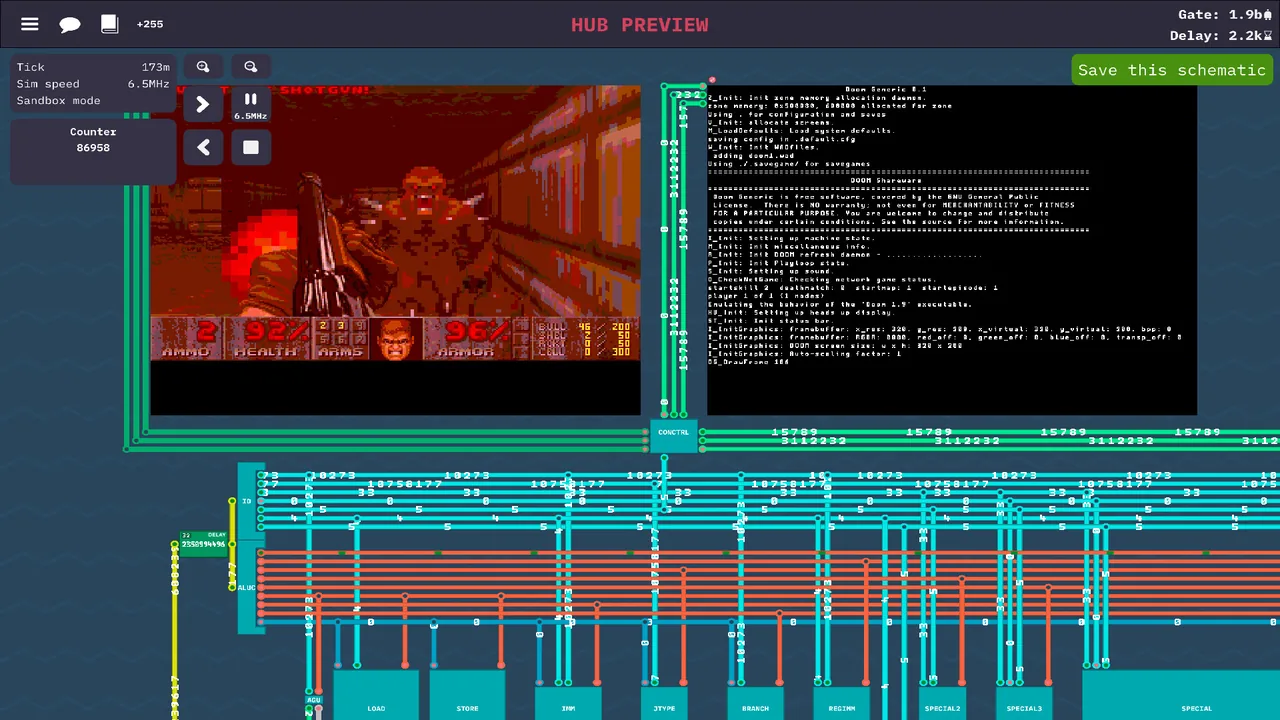
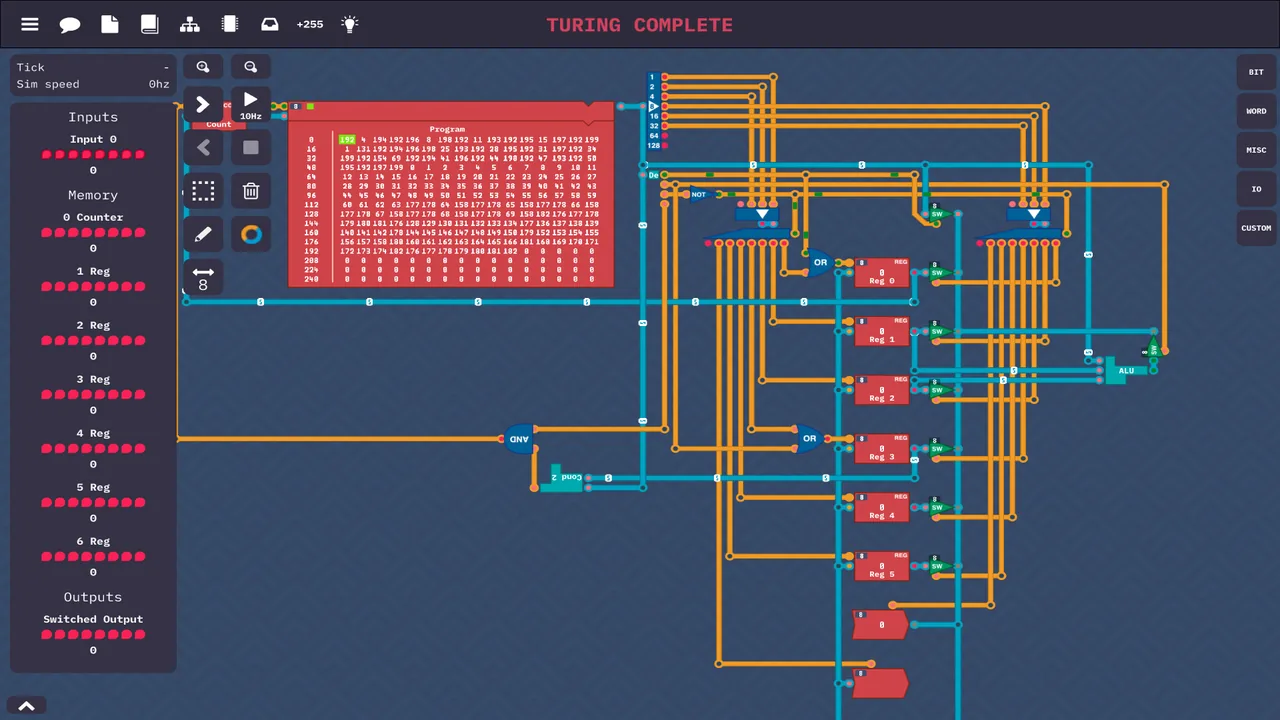
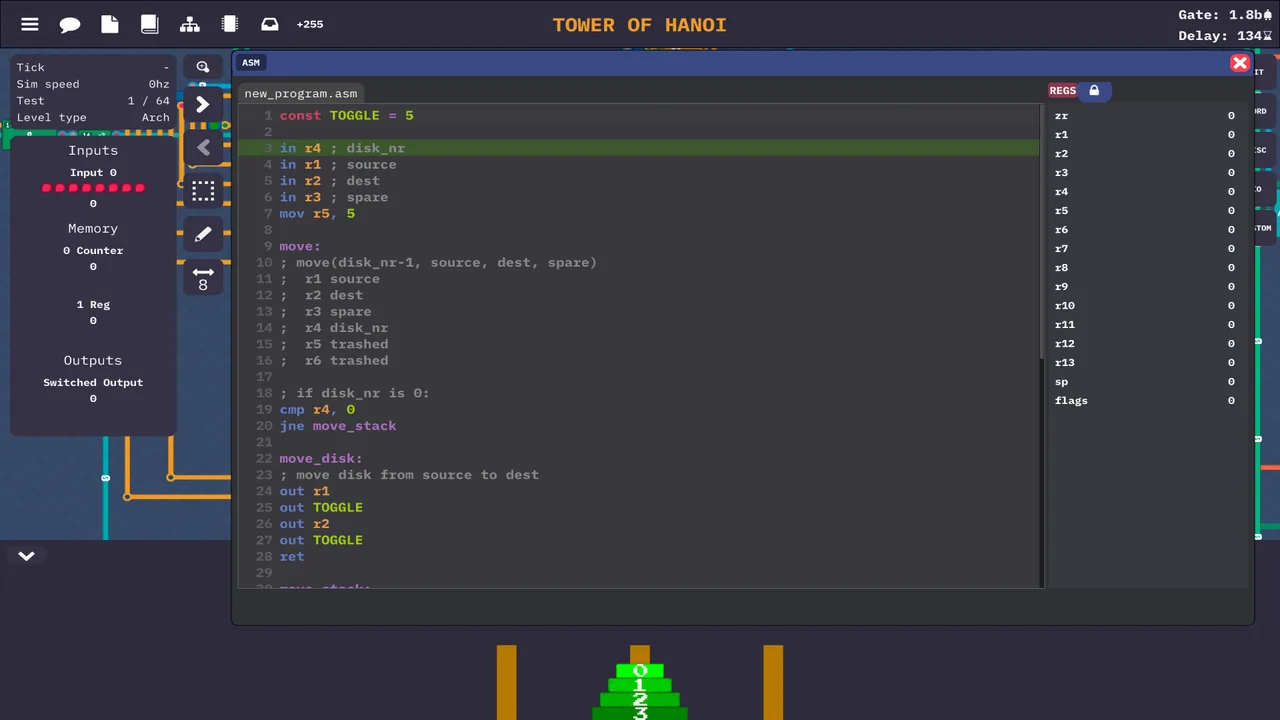
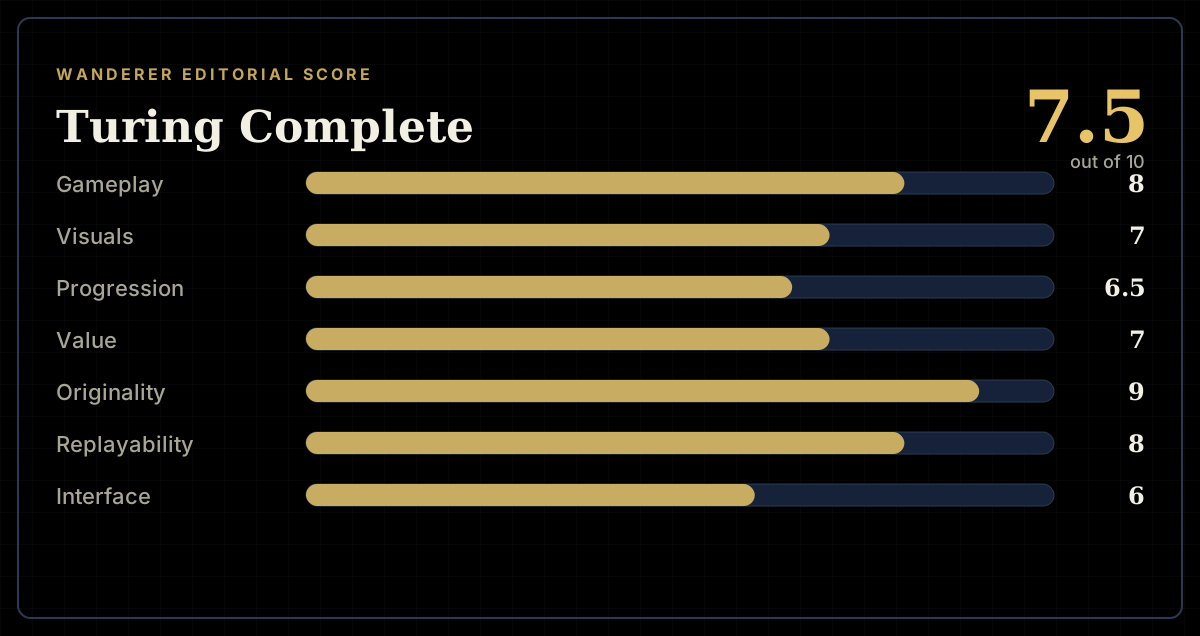
Everything after the teaching. The arc is remarkable: NAND gates become logic components, components become an ALU, the ALU becomes an architecture, and eventually you write an assembler and run your own program on a processor of your own design. Nothing else in games does that, and originality scores a 9 for it.
For players who already have the grounding — or who are happy to read a textbook alongside — it's superb. The critics' median playtime is 6.2 hours, but the maximum is 1,229, which is the familiar shape of a game that either loses you early or never lets go.
The achievement curve confirms how few get deep: 10 achievements, the most common held by 20.4% of players and the median by 3.9%.
Five years, and a rework three weeks old
Turing Complete has been in Early Access since October 2021, and its update history explains the second complaint in the corpus.
A 210-vote reviewer who says they've played every Zachtronics game still can't recommend this one, citing the removal of SR latch and flip-flop components between versions. An 83-vote review from January 2026 argues the solo developer "suffers from a severe case of scope creep and lack of ability to finish." A player with 142.7 hours in March 2026: "I have come back to play this game over many years only to be more frustrated every time I return."
Then, on 15 July 2026, "Turing Complete 2" shipped: a new assembler system, components supporting 2-to-64-bit widths, a new screen, gate shapes redrawn to IEEE standards, simulation 100 times faster, and the old "LEG" architecture replaced. A follow-up on 27 July replaced a character, with the developer explaining the reasoning about visual tone.
That is a serious, substantial update — and also exactly the churn the veterans object to. Both things are true, and the practical consequence for a buyer is simple: the game is three weeks old in its current form, and most reviews on the page describe earlier versions.
The verdict
Turing Complete earns a 7.5. The concept is close to unmatched, the depth is real, and the developer is visibly still building — including a major overhaul that answers several long-standing complaints about speed and flexibility.
It sits at 7.5 because the thing it sells is the thing it does least well. Fifty-seven of a hundred critics, across five years and into the most recent reviews, say it presents problems without teaching the concepts behind them. At 94.8% in English it's also the least-loved of the engineering puzzle games I've assessed today — Opus Magnum sits at 97.1% — and the gap is precisely this.
Buy it if you want to build a CPU and don't need help understanding one. If you want to learn computer architecture, treat this as excellent practice alongside a real course, not as the course itself.
Pros and cons
Pros
- A genuinely singular premise — NAND gates to a working programmable computer
- Enormous depth, with an architecture and assembler you genuinely design
- Actively developed, including a substantial 2.0 rework in July 2026
- Cross-platform on Windows, macOS and Linux, with a community schematic hub
- The moment your own processor runs a program is hard to get anywhere else
Cons
- Presents itself as educational but frequently doesn't explain what it asks for
- Nearly five years in Early Access, with repeated reworks unsettling long-term players
- The 2.0 update replaced systems that veterans had already built around
- Only 10 achievements, with the median held by 3.9% of players
- A free browser alternative covers similar ground, which several reviewers point out
Screenshots
-
Turing CompleteImage: LevelHead via Steam -
Turing CompleteImage: LevelHead via Steam -
Turing CompleteImage: LevelHead via Steam -
How the review scores each part of the gameWanderer Editorial -
The short versionWanderer Editorial