Game review
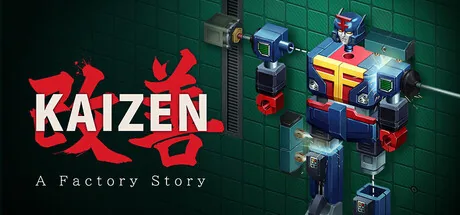
Kaizen: A Factory Story
7 / 10
- Developer
- Coincidence
- Publisher
- Astra Logical, Klei Publishing
- Released
- 14 July 2025
- Platforms
- Windows, macOS
- Genre
- Automation Puzzle
- Monetisation
- One-time purchase, no in-game store
- Players
- Single-player only
The short version
Kaizen: A Factory Story is a 3D assembly-line automation puzzler from Coincidence, the studio Zach Barth formed after closing Zachtronics, published by Astra Logical alongside Klei Publishing. Released 14 July 2025 for NZ$28.99, it holds a large, healthy review base — 92.4% positive across both its 715-review all-language corpus and its 510-review English-language sample. This review reads all 39 of the game's English negative reviews and finds an unusually singular pattern: 26 of the 39 explicitly compare the game to Barth's earlier Zachtronics catalogue — Opus Magnum, Infinifactory, MOLEK-SYNTEZ, SHENZHEN I/O — and find it lighter, easier and shorter than what came before. What sharpens rather than undercuts that reading is that this review's positive sample makes essentially the same comparison and reaches the same conclusion: the single highest-voted positive review, 30 votes, opens by calling it "the eighth best Zachtronics game" while still recommending it. This is a genuinely well-made, well-received puzzle game whose own most devoted audience judges it specifically, and largely fairly, against a bar its creator set unusually high.
Biggest strengths
- Presentation draws consistent, specific praise — soundtrack, voice work and a tactile, well-designed factory UI earn credit even from reviewers disappointed by the puzzle depth, with one calling it the most refined presentation of any of the developer's games
- The core assembly-line puzzle loop remains genuinely fun and approachable, with several reviewers specifically recommending it as a gentler on-ramp to the automation-puzzle genre for players who bounced off Opus Magnum's steeper difficulty
- The slice-of-life narrative setting — 1980s Japanese "bubble economy" era factory life — earns real, specific credit from some reviewers as endearing and well-observed, distinct from the purely mechanical focus of the studio's earlier work
Biggest weaknesses
- Twenty-six of the 39 negative reviews read for this piece explicitly compare the game unfavourably to Barth's earlier Zachtronics catalogue, describing it as noticeably simpler, shorter and less mechanically demanding than Opus Magnum, Infinifactory or SHENZHEN I/O
- A specific, recurring mechanical complaint concerns the removal of part rotation, present in earlier Zachtronics titles, which several reviewers say measurably reduces the puzzle-solving depth and design-space of individual challenges
- Story and dialogue sections draw real pushback from a genre audience that often wants pure puzzle focus, with 22 of the 39 negatives raising story pacing or unskippable dialogue as friction; one review specifically flags a single line of dialogue it calls sexist, worth reporting as a dated, sourced complaint rather than a broader pattern
Who it's for: Newcomers to the genre, or existing Zachtronics fans specifically wanting something lighter and more narrative-forward; a tougher sell for veterans hoping for the mechanical depth and difficulty of Opus Magnum or SHENZHEN I/O.
Our recommendation: A polished, accessible automation puzzler that succeeds as an entry point to the genre and as a "lighter" Zachtronics-style game, but should be understood as exactly that rather than a successor to the studio's hardest, deepest work.
7 / 10
Introduction
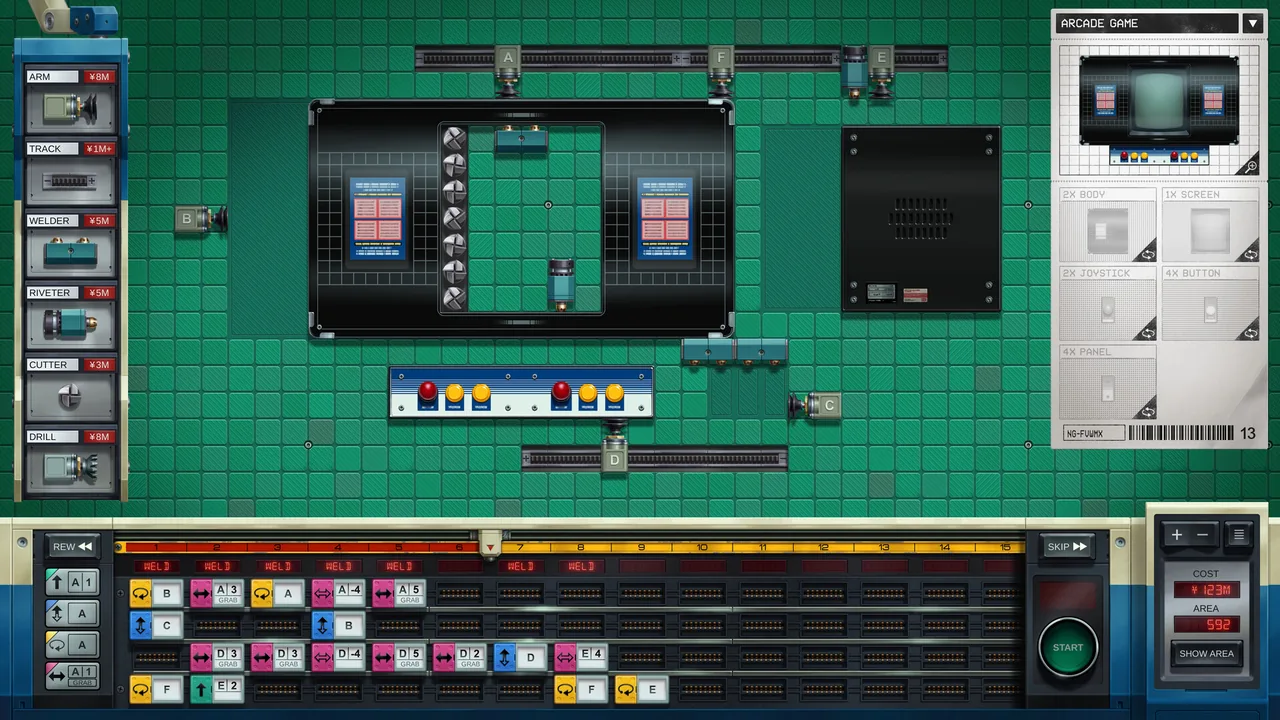
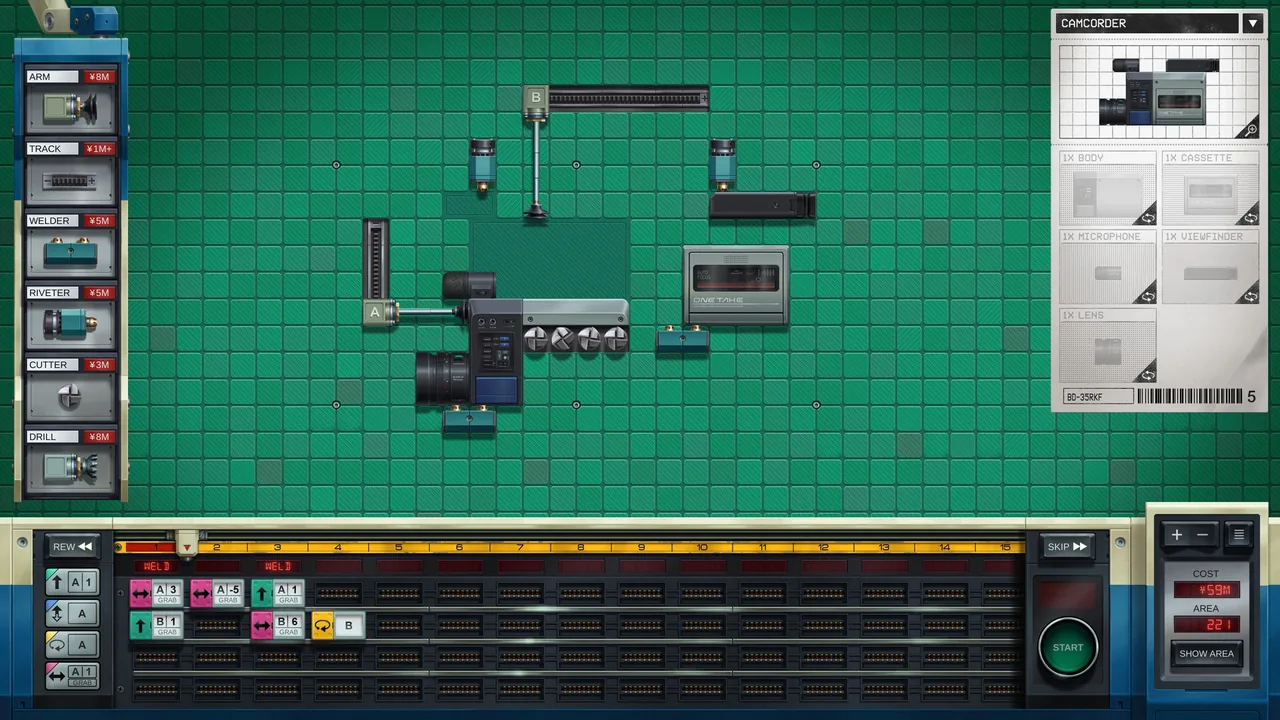
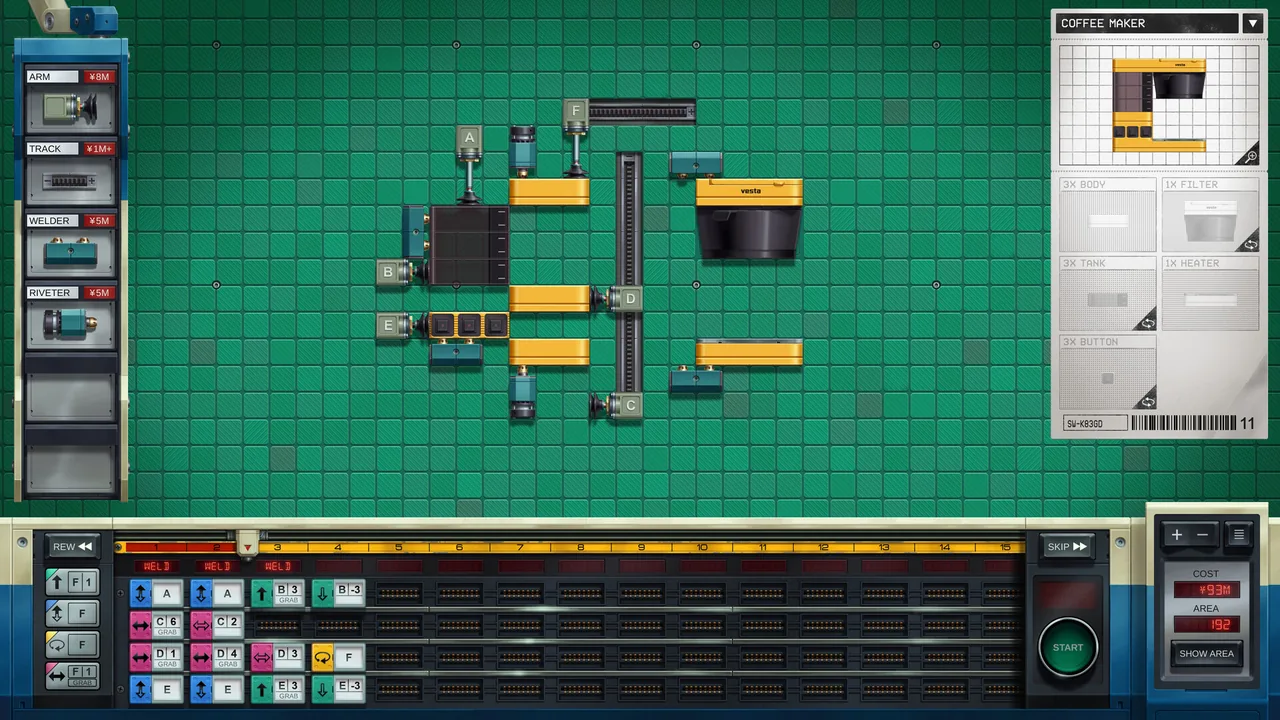
Kaizen: A Factory Story puts the player on a Japanese factory assembly line during the country's 1980s "bubble economy" boom, welding and assembling components in 3D puzzle challenges that scale up in complexity as the story unfolds. It's the debut release from Coincidence, the studio Zach Barth founded after closing Zachtronics — the beloved developer behind Opus Magnum, SHENZHEN I/O, Infinifactory and several other titles this outlet has covered and rated highly. Published by Astra Logical alongside Klei Publishing, it released 14 July 2025 for NZ$28.99 and holds a large, healthy Very Positive rating: 92.4% across both its 715-review all-language corpus and its 510-review English-language sample. This review reads all 39 of the game's English negative reviews in full, and finds something unusual and worth reporting precisely: the negative sample and the positive sample are, to a striking degree, making the same underlying observation and simply weighing it differently.
A comparison neither side avoids
Twenty-six of the 39 negative reviews read for this piece explicitly measure Kaizen against Barth's earlier Zachtronics catalogue by name, and the comparison isn't vague nostalgia — it's specific and mechanical. "I'm a bit disappointed in this one, this just doesn't hit the same as other Zachtronics games," reads one representative review, going on to note the full puzzle set took about 10 hours to complete. Another: "Infinifactory meets Opus Magnum. Either of the original games are better and you should play them instead." What makes this pattern worth taking seriously rather than dismissing as predictable fan conservatism is that this review's positive sample runs the identical comparison and reaches a compatible, if more forgiving, verdict. The single highest-voted positive review in the whole corpus — 30 votes — opens with "the eighth best Zachtronics game is still worth playing," explicitly ranking it last among the studio's output while still recommending it to genre veterans as "a pleasant, if thin, addition." Read together, negative and positive reviewers aren't disagreeing about what Kaizen is relative to its predecessors — they're disagreeing about whether being the weakest entry in an exceptional catalogue is still worth NZ$28.99. That's a genuinely different, more useful finding than a simple thumbs-up/thumbs-down split would suggest.
A specific, mechanical loss: rotation
Beyond the general "simpler than before" framing, this review's sample surfaces one concrete, recurring mechanical complaint worth naming precisely: the removal of part rotation, a tool present in earlier Zachtronics titles that several reviewers say materially reduces the design space of individual puzzles. "The lack of rotation... sticks out like a sore thumb," reads one review, and another lists it among specific missing depth features rather than a vague "it feels easier" impression. That's the kind of granular, comparative critique this outlet weighs more heavily than general disappointment, because it identifies exactly what changed rather than simply asserting a worse feeling.
Story sections split a genre audience that often wants none at all
A second, distinct complaint concerns narrative pacing. Twenty-two of the 39 negatives raise story or dialogue sections as friction, and the underlying tension is genre-specific: automation-puzzle players frequently want pure mechanical focus, and several reviewers explicitly argue that "nobody gives a crap about story" in this kind of game, criticising unskippable dialogue sequences as padding between the puzzles they actually came for. Set against that, this review's positive sample shows real, specific praise for the same narrative content from a different subset of players — the "slice of life" 1980s Japanese factory setting earns credit as endearing and well-observed rather than filler, particularly from reviewers less attached to the mechanical purity of the studio's earlier work. One review in the negative sample raises a specific, sourced complaint worth reporting plainly rather than amplifying: a single line of dialogue the reviewer describes as sexist, involving a female character being told not to worry about workplace politics. This review reports that as a dated, specific claim from one reviewer's reading of the game's text, not a broader pattern corroborated elsewhere in the sample.
A short game, ending abruptly
Several reviewers describe the final act arriving suddenly, with difficulty spiking sharply just as the story concludes — one calling it evidence the game feels unfinished at that point rather than deliberately paced. Steam's achievement data is consistent with a genuinely short overall experience: Kaizen ships only 8 tracked achievements, with a median completion rate of 13.1%, in line with the roughly-10-hour completion times several reviewers report for the full puzzle set.
Final Verdict
Kaizen: A Factory Story is a well-made, warmly presented automation puzzler that succeeds comfortably on its own terms — accessible, polished, and a reasonable entry point for players new to the genre its creator effectively founded. Where this review's sample, on both sides of the recommendation line, converges is a shared, specific judgement that it's a lighter, shorter, less mechanically demanding work than the Opus Magnums and SHENZHEN I/Os that came before it, missing depth features like rotation that measurably narrowed its puzzle design space, and carrying story content some of its genre audience actively didn't want. None of that makes it a bad game — even its harshest critics generally call the fundamentals sound — but it does mean prospective buyers, especially veterans of the developer's earlier work, should calibrate expectations specifically: this is Zach Barth's gentlest, most approachable puzzle game, not his next great difficult one.
Pros and cons
Pros
- Presentation draws consistent, specific praise — soundtrack, voice work and a tactile, well-designed factory UI earn credit even from reviewers disappointed by the puzzle depth, with one calling it the most refined presentation of any of the developer's games
- The core assembly-line puzzle loop remains genuinely fun and approachable, with several reviewers specifically recommending it as a gentler on-ramp to the automation-puzzle genre for players who bounced off Opus Magnum's steeper difficulty
- The slice-of-life narrative setting — 1980s Japanese "bubble economy" era factory life — earns real, specific credit from some reviewers as endearing and well-observed, distinct from the purely mechanical focus of the studio's earlier work
- Structural polish is real: quality-of-life features and interface clarity draw praise across both positive and negative reviews as clear improvements on the studio's earlier UI conventions
Cons
- Twenty-six of the 39 negative reviews read for this piece explicitly compare the game unfavourably to Barth's earlier Zachtronics catalogue, describing it as noticeably simpler, shorter and less mechanically demanding than Opus Magnum, Infinifactory or SHENZHEN I/O
- A specific, recurring mechanical complaint concerns the removal of part rotation, present in earlier Zachtronics titles, which several reviewers say measurably reduces the puzzle-solving depth and design-space of individual challenges
- Story and dialogue sections draw real pushback from a genre audience that often wants pure puzzle focus, with 22 of the 39 negatives raising story pacing or unskippable dialogue as friction; one review specifically flags a single line of dialogue it calls sexist, worth reporting as a dated, sourced complaint rather than a broader pattern
- Several reviewers describe the final act as arriving abruptly, with difficulty spiking suddenly just as the story concludes, an impression corroborated by achievement data showing a short overall completion arc (only 8 tracked achievements, median completion 13.1%)
Screenshots
-
Kaizen: A Factory StoryImage: Astra Logical via Steam -
Kaizen: A Factory StoryImage: Astra Logical via Steam -
Kaizen: A Factory StoryImage: Astra Logical via Steam -
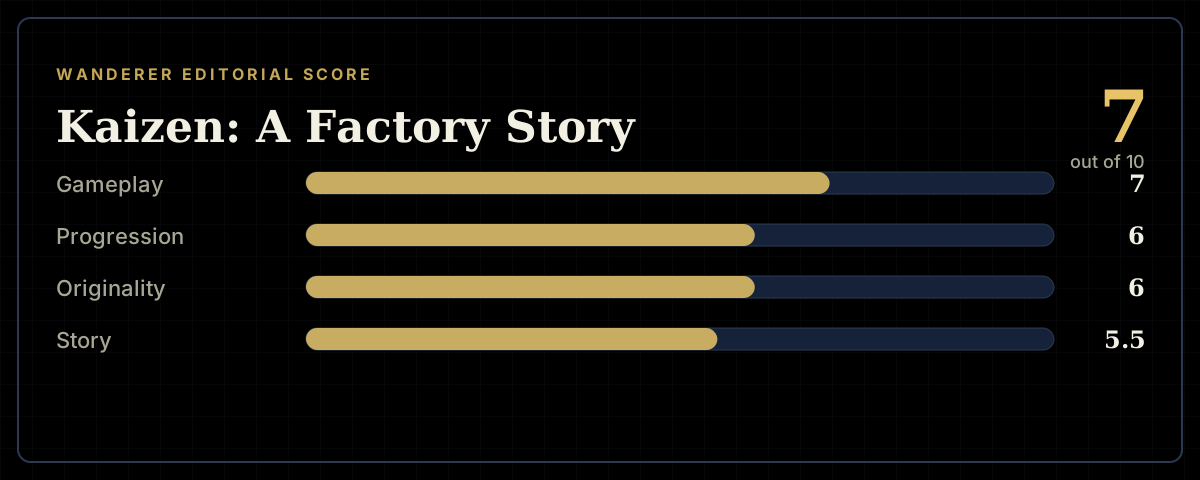
How the review scores each part of the gameWanderer Editorial -
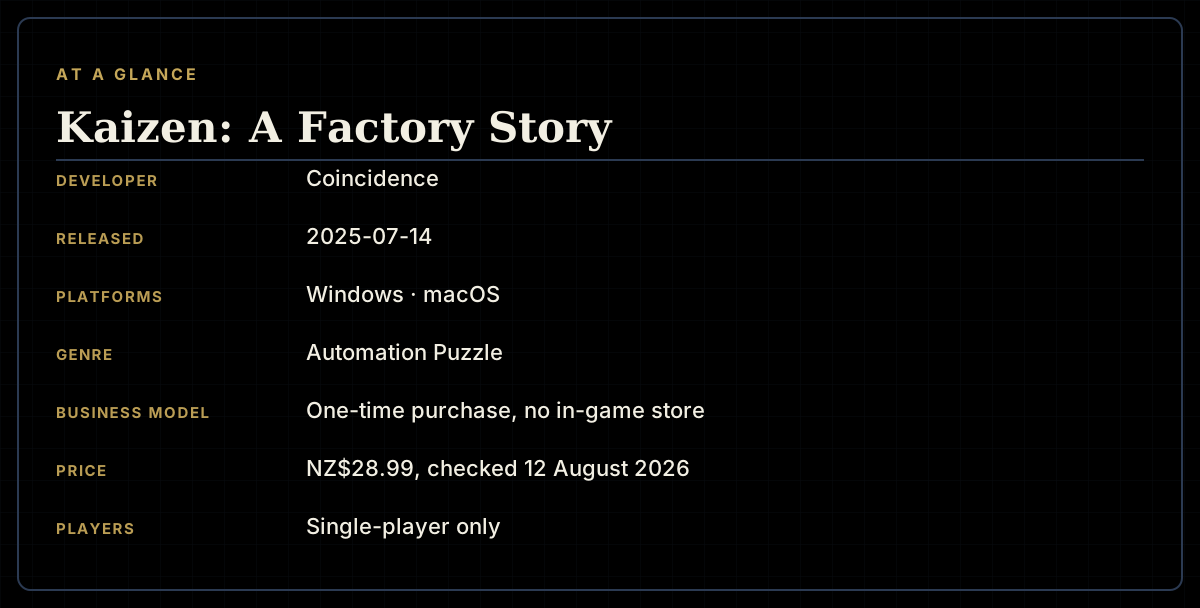
The essentials at a glanceWanderer Editorial -
The short versionWanderer Editorial