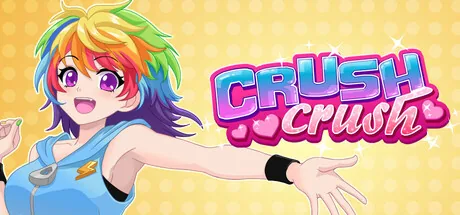
Game review
Crush Crush
7.5 / 10
- Developer
- Sad Panda Studios
- Publisher
- Sad Panda Studios
- Released
- 18 October 2016
- Platforms
- Windows, macOS, Linux, iOS, Android, Browser
- Genre
- Idle Dating Sim
- Monetisation
- Free-to-play with an in-game premium currency, an optional paid 18+ content DLC on Steam only, and a long-running list of paid character and event bundles; near-monthly Themed Events push players toward spending or grinding hard to clear their rewards before the timer runs out
- Players
- Single-player; no chat, trading or PvP
The short version
Strip away the flirting and Crush Crush is one of the more structured idle games on Steam: jobs and hobbies compete for a fixed number of daily time blocks, money buys gifts, gifts advance relationships, and relationships unlock the slots and multipliers that let you take on more of everything at once. That resource-allocation loop is genuinely well built, the roster has grown to 70-odd characters over nearly a decade of consistent updates, and the built-in "Time Blocks" offline system means the game keeps working while you don't. What holds it back is the same thing that holds most live-service idlers back: a near-monthly event calendar that its own players describe as unclearable without spending, sitting on top of a base game that never stops asking for one more premium-currency purchase.
Biggest strengths
- Time Blocks force real trade-offs between working for money, building stats through hobbies, and spending time with a specific girl, rather than letting every activity run in parallel for free
- Seventy-plus characters with fully voiced dialogue give the roster more writing and personality variety than most games in the genre bother with
- The built-in offline system explicitly advances jobs, hobbies and relationships while the game is closed, not just resource counters
Biggest weaknesses
- Steam's own player reviews repeatedly describe Themed Events as impossible to finish without spending real money or a large stash of premium currency
- Every girl runs through the same core seduction beats regardless of her written personality, so the promised variety thins out once the flirting starts
- The mid-game slows into repetitive stat-grinding well before a new character or event resets the pace
Who it's for: Idle-game players who want a genuinely structured time-allocation loop rather than a bigger-number spreadsheet, and who are comfortable with a flirty, anime pin-up presentation; the Steam base game carries Steam's "Some Nudity or Sexual Content" and "General Mature Content" descriptors, and a separate paid 18+ DLC on Steam adds explicit nudity on top of that — not present on the Google Play or App Store builds, which carry Teen and 16+ ratings respectively
7.5 / 10
The dating sim is a disguise
Sad Panda Studios sells Crush Crush as flirting: meet a girl, work through a string of dates, watch a "saucy" pinup reward unlock when the relationship bar tops out. That's the marketing. The actual game underneath is a resource-allocation idler with a constraint most of the genre doesn't bother with — time. Every character in Crush Crush is competing for the same limited pool of daily "Time Blocks," and deciding where those blocks go is the entire loop. That's a more interesting design problem than it gets credit for, and it's worth reviewing Crush Crush as the idle game it actually is rather than the theme it's wearing.
Time Blocks: the real mechanic
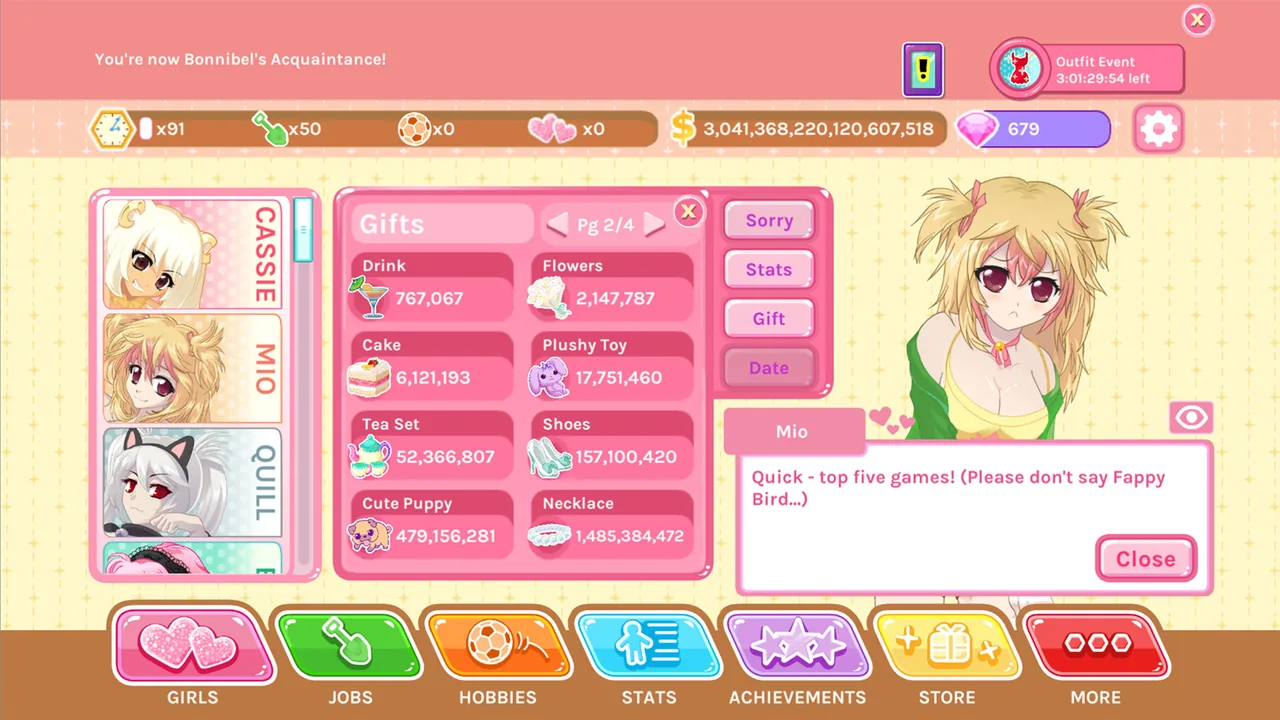
Crush Crush's own store page names the system directly — "Time Blocks," which "advance your progress even while you're not playing." In practice, a fixed number of blocks per day get split between jobs (which pay for gifts and unlock stat requirements), hobbies (which raise the stats a given girl responds to), and direct time with a specific character (which raises her relationship level). None of those run for free in the background the way idle games usually let everything tick simultaneously — assigning a block to one activity is a block not spent on another, and a new player's first real decision is realising that maxing every stat before approaching a girl is a slower path than reading what she actually wants and routing blocks straight at it.
That's a genuinely different shape from the spreadsheet-idlers this site covers most often. AdVenture Capitalist hands you unlimited parallel investments and lets managers run all of them at once — the only decision left once managers are hired is which number to buy next. Crush Crush never lets you buy your way out of the allocation problem entirely; more jobs and hobbies unlock as relationships deepen, which raises the daily ceiling, but the ceiling always exists. It's the closest thing in this genre to an actual scheduling puzzle, and it's the single best reason to take the game seriously past its cover art.
Where the friction actually lives
The early hours are generous by design — cheap jobs, fast stat gains, a new girl to unlock every few sessions. The wall shows up mid-game, once the easy jobs cap out and the stat requirements for the next promotion or the next girl start demanding numbers that take real accumulated time to hit. That's where premium currency becomes visible: it buys instant stat boosts, job promotions and gift purchases that would otherwise take a stretch of grinding to reach the normal way. None of that is unusual for a free idle game. What's more pointed is the Themed Events — Sad Panda runs a near-monthly cadence of them, each with its own time-limited currency and character reward, and multiple current Steam reviews describe the math on these as simply not working out for a free player who doesn't also lean on paid currency: the event clock runs out before the grind does. A studio this consistent about shipping content on a monthly rhythm is also, by definition, running a monthly FOMO calendar, and that's a harder thing to defend than the base game's day-to-day pacing.
Ten years, seventy girls, one format
Longevity is Crush Crush's other real strength, and its other real weakness. The Steam store page currently advertises "70 (and counting) beautiful girls," over 500 high-resolution pinups, more than 150,000 words of fully voiced dialogue, and 30-plus text-based "Phone Flings" on top of the core roster. The Steam news feed backs that up with output, not just marketing copy — new posts landed on 29 July, 27 July, 24 July, 23 July and 17 July 2026 alone, days before this review, and a "10th Anniversary Artbook" DLC shipped in February 2026 ahead of the game's actual October anniversary. Compare that update rhythm to Idle Apocalypse, a similarly aged idle game whose release notes have narrowed to "bug fixes" for over a year — Crush Crush is nowhere near that fate. Sad Panda is still actively building this thing.
The cost of that longevity is coherence. Every new event adds a currency, every new girl adds a full seduction arc, and every arc runs through broadly the same beats regardless of who's delivering them — the tomboy skater and the shy college student flirt through structurally identical stat-and-gift progressions with different dialogue painted over the top. A player arriving today doesn't find a tightly curated decade of content; they find a very large, largely unsorted backlog with no in-game guidance on which of seventy-plus characters or a dozen running events are actually worth the first week's attention.
What's actually for sale, and where the line sits
The Steam base game is genuinely free — no purchase required to unlock any character, job or hobby, and price_overview confirms no upfront cost. What Sad Panda sells, beyond premium currency and event boosts, is a long tail of DLC: a Kaiju Bundle at NZ$21.99, a 10th Anniversary Artbook at NZ$14.75, a Fuzzy Festival Event Bundle and an 18+ Naughty DLC both at NZ$10.49, and a Lumi Bundle at NZ$6.39, as of this writing. Most of that list is straightforward paid content — extra characters, extra events, an artbook — no different in principle from any other live-service idler's cosmetic and character DLC.
The 18+ Naughty DLC is worth being specific about, because it's the one purchase on this list that changes what the game actually shows. Steam's own content descriptors mark the base game with "Some Nudity or Sexual Content" and "General Mature Content." The separate DLC's own listing states plainly that it adds "alternate scenes for each girl's final lover level moment, with full nudity/masturbation, and post-coital imagery," an uncensored "birthday suit" mode, and more explicit alternate dialogue — content Steam classifies with the additional "Adult Only Sexual Content" and "Frequent Nudity or Sexual Content" descriptors on top of the base game's rating. That content sits behind a separate purchase, not a toggle in the free download, and it exists only on the Steam release: the Google Play listing carries a Teen content rating and the App Store listing carries a 16+ rating, both well below what the Steam DLC adds. Anyone installing this on a shared or family device should know that distinction exists before they do, and that it's Steam-specific.
Presentation and audio
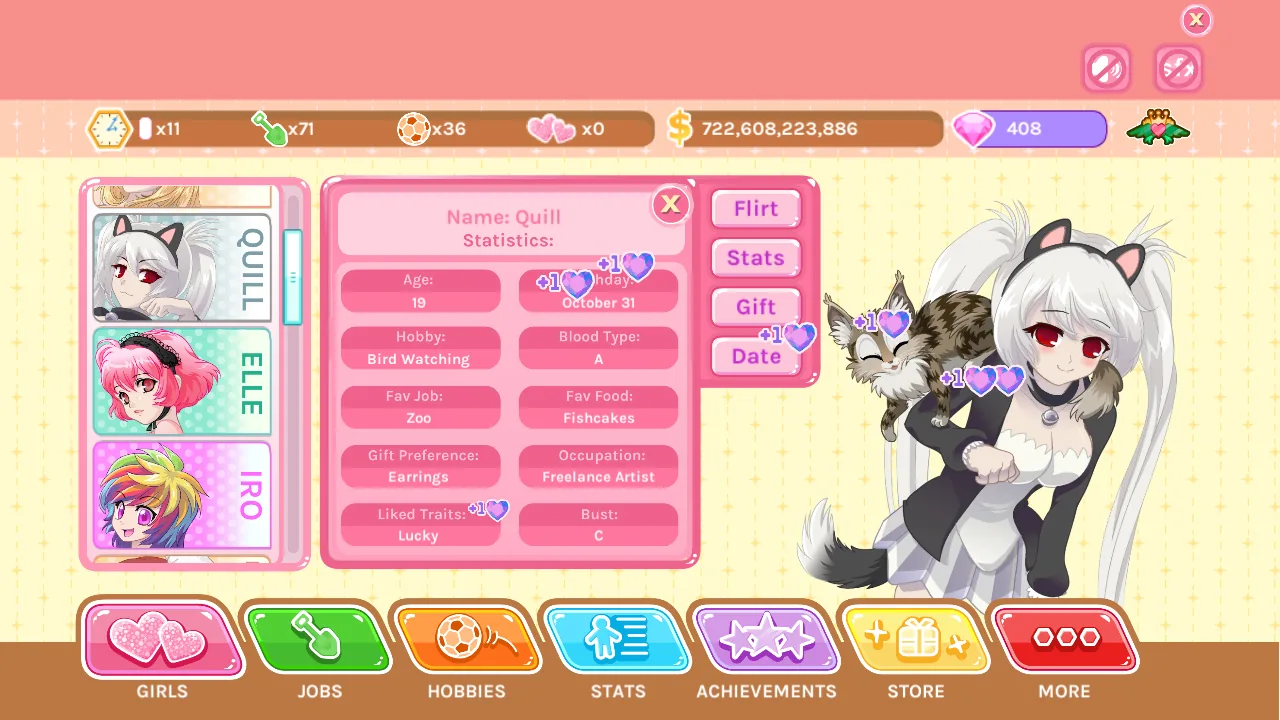
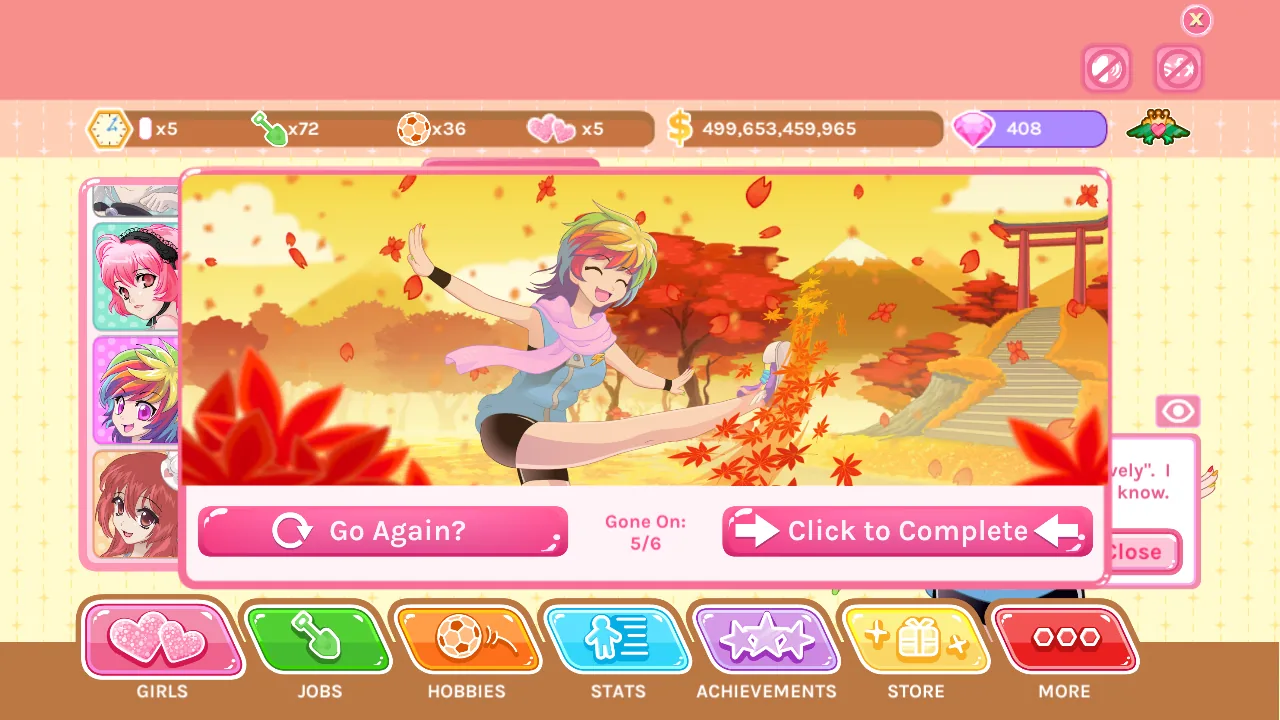
The pinup art is the whole visual pitch and it holds up — clean, consistent anime-style character design across a genuinely large roster, with enough distinct silhouettes and colour palettes that the girls read as different people rather than reskins. The voice work is the more surprising strength: over 150,000 words of scripted dialogue fully voiced is a real production investment for a free idle game, and it's a big part of why the writing lands as characterful even when the underlying progression system treats every character identically.
Verdict
Crush Crush earns more credit as an idle game than its marketing suggests it should. The Time Block system is a genuine scheduling puzzle in a genre that mostly settles for bigger multipliers, the offline progression does real work rather than gesturing at it, and Sad Panda has kept shipping content at a pace most ten-year-old free-to-play games have long since abandoned. It loses ground where most long-running live-service idlers do: a monthly event calendar its own players say doesn't clear without spending, a mid-game grind that outlasts its own pacing, and a decade of accreted characters that a newcomer has to sort out without much help from the game itself. The Steam base game is a fair, honestly labelled free-to-play offer; the separate 18+ DLC is exactly as explicit as its own description says it is, and buying it is a deliberate second step, not something that sneaks up on a free download. Players who want a structured idle loop with genuine allocation decisions, and who don't mind the anime dating-sim wrapper, will get a lot out of this. Players who just want the cleanest possible number-go-up experience should look at AdVenture Capitalist instead — Crush Crush asks for more patience, and more scrolling through a decade of content, in exchange for a better core decision to make.
Pricing, platform availability, content descriptors and Steam review data checked 1 August 2026.
Pros and cons
Pros
- Time Blocks force real trade-offs between working for money, building stats through hobbies, and spending time with a specific girl, rather than letting every activity run in parallel for free
- Seventy-plus characters with fully voiced dialogue give the roster more writing and personality variety than most games in the genre bother with
- The built-in offline system explicitly advances jobs, hobbies and relationships while the game is closed, not just resource counters
- Nearly ten years after launch, the Steam news feed shows new content shipping every few days rather than a studio coasting on legacy
- The Steam base game is honest about what's free versus paid, and 89% of its 19,000-plus Steam reviews are positive
Cons
- Steam's own player reviews repeatedly describe Themed Events as impossible to finish without spending real money or a large stash of premium currency
- Every girl runs through the same core seduction beats regardless of her written personality, so the promised variety thins out once the flirting starts
- The mid-game slows into repetitive stat-grinding well before a new character or event resets the pace
- A separate paid 18+ DLC exists specifically to unlock explicit content the free base game only alludes to, which is a real consideration on a shared or family device
- Ten years of accreted characters, events and DLC bundles land a new player in front of a genuinely large, unsorted backlog with no in-game primer on what to chase first
Screenshots
-
Crush CrushImage: Sad Panda Studios via Steam -
Crush CrushImage: Sad Panda Studios via Steam -
Crush CrushImage: Sad Panda Studios via Steam -
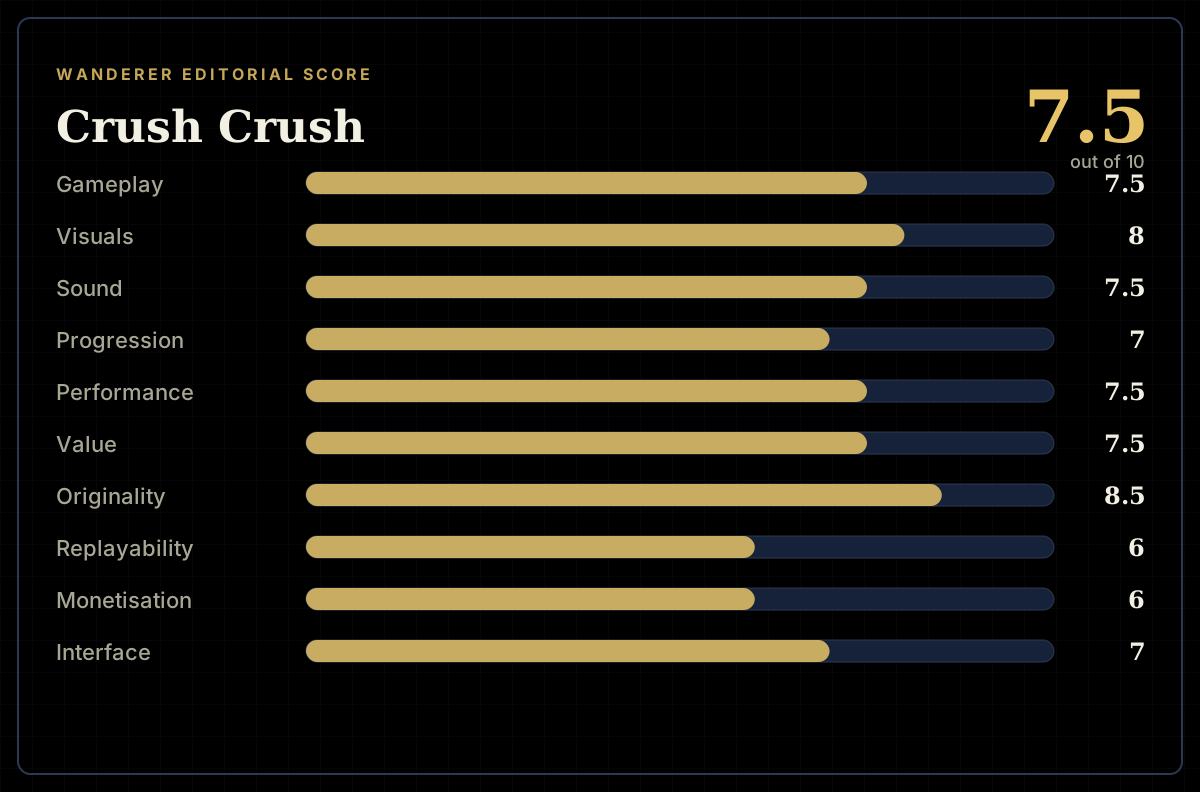
How the review scores each part of the gameWanderer Editorial -
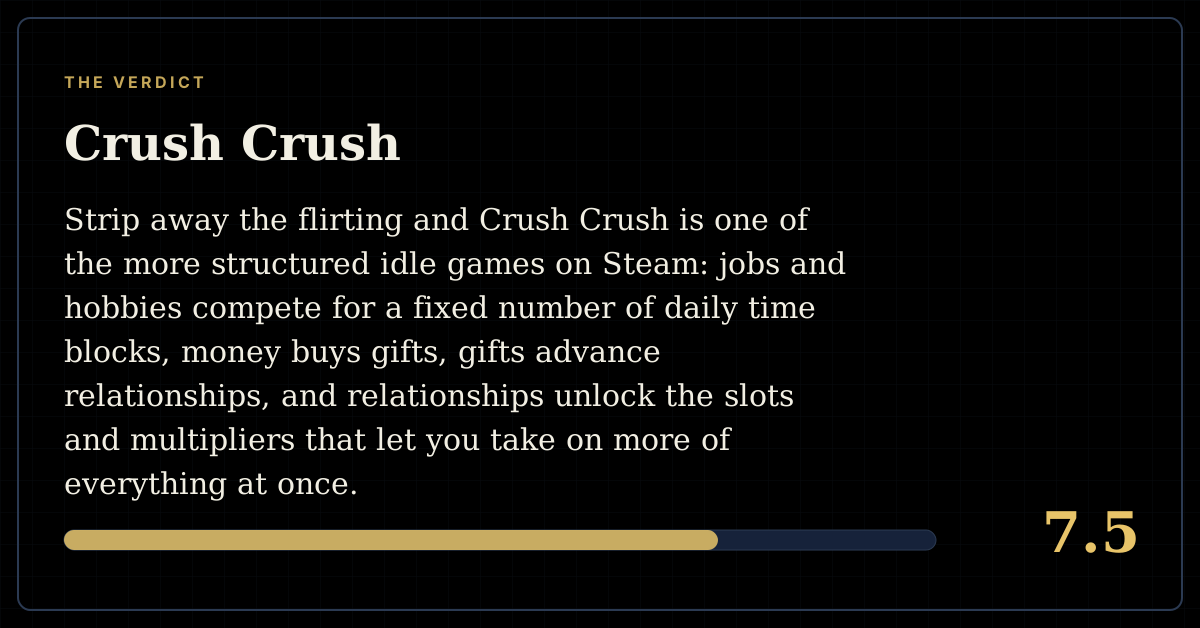
The short versionWanderer Editorial