Game review
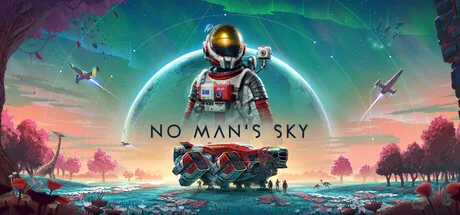
No Man's Sky
8 / 10
- Developer
- Hello Games
- Publisher
- Hello Games
- Released
- 12 August 2016
- Platforms
- Windows
- Genre
- Survival Exploration
- Monetisation
- One-time purchase at NZ$85.99. Every major update, including large systems like multiplayer, base building and creature-collection minigames, has shipped free since 2016.
- Players
- Online co-op and shared-universe multiplayer, added and expanded across several free updates
The short version
No Man's Sky is the best-known comeback in the industry, and the review corpus proves it numerically: 35 of the 100 most-upvoted negative reviews date from launch month alone, while recent English sentiment sits at 90% positive — five points above the 85% lifetime score that still carries 2016's baggage. Hello Games spent nine years turning a broken promise into one of Steam's largest, most consistently updated survival-exploration games, entirely through free content.
What's more interesting than the redemption arc itself is what today's negative reviews say, because it's a completely different complaint from 2016's. Nobody serious argues the game is broken or dishonest anymore. The live objection, often from players with hundreds of hours logged, is that the universe is wide rather than deep — that after years of additions, the core loop of landing on a new planet still feels the same as the last one.
Biggest strengths
- One of the most complete post-launch turnarounds in gaming history, achieved entirely through free updates over nearly a decade
- Visually distinctive procedural universe that still draws praise from reviewers with thousands of collective hours between them
- An enormous amount of content for a single purchase price — base building, fleets, multiplayer, creature taming and combat systems that have each grown into substantial features of their own
Biggest weaknesses
- The core "land on a planet, scan, take off" loop is structurally similar to 2016 despite years of surface-level additions, and multiple 100+ hour reviewers say the game never develops real depth underneath its breadth
- Multiplayer is reported as buggy in group play, particularly for players wanting to build and explore together consistently
- Procedural planets are frequently described as visually varied but mechanically repetitive — "different skins" over the same underlying systems
Who it's for: Explorers and world-lovers first, min-maxers second. Best suited to players who find their own reasons to keep going — a base, a fleet, a specific creature to tame — since the game still doesn't hand you much external structure to chase. Less suited to anyone who needs deep systemic progression to stay hooked long-term.
Our recommendation: Buy it on a sale if you can find one, though it's honestly worth full price given the amount of free content behind it now. Play the early hours for what they are — atmosphere, discovery, low stakes — and don't expect the mid-and-late game to suddenly deepen the core loop; several very-high-playtime reviewers say plainly that it doesn't, and going in with that expectation set correctly will save you the disappointment they describe.
8 / 10
Some games get patched. No Man's Sky got rebuilt, in public, over nine years, without ever asking players to pay for the privilege of finding out if it worked. The review corpus is one of the clearest records of a live redemption arc that exists on Steam, and reading it in order tells the whole story better than any summary of it could.
Two launches, a decade apart
Thirty-five of the 100 most-upvoted negative reviews in this game's history were posted in August 2016, the month it launched. The complaints are specific and, at the time, entirely fair: no real planetary physics, no actual multiplayer despite marketing that implied it, procedural systems that ran out of things to say within hours, and a $60 price tag on what several reviewers, at the time, called an early-access-quality game. One of the most-upvoted reviews in the game's entire history — 8,810 votes — opens by praising the game's "endless possibilities" before a spoiler tag reveals almost none of them made it into the shipped product.
That volume of launch-era anger essentially stops after 2018. By 2021 and 2022, the most-upvoted positive reviews are explicitly about the turnaround itself rather than the game's individual systems — reviewers narrating years of returning after each major update to check in, watching the promised features arrive one at a time, for free, without so much as a season pass. One puts it as plainly as it can be put: "Probably the best redemption story in game history." Recent English sentiment sits at 90% positive, five points above the lifetime 85% — an unusual pattern that means the current build is rated better than the game's own long-term average, not worse.
What today's complaints actually say
Here's the part worth reading closely, because it would be easy to assume the only story left to tell is the comeback itself. It isn't. The negative reviews from 2025 and 2026 describe a completely different game from the 2016 ones — not broken, not dishonest, just shallow at depth. One reviewer with 725 hours calls out flaws that "consistently break the game's sense of order" after hundreds of hours of investment. Another, at 373 hours, says they're "awestruck by the commitment of the developers" while still concluding the game "doesn't work" for them. A third, with 265 hours, opens by saying they wish Steam allowed neutral reviews rather than a binary thumbs-up.
The specific shape of the complaint recurs enough to trust it: procedural planets are visually varied but mechanically similar underneath — "different skins," as one reviewer puts it, "on the same underlying systems." Combat and economy lack real stakes for players who want systemic depth rather than exploration for its own sake. And multiplayer, while functional, draws bug complaints from players specifically trying to build and explore together over long sessions. None of this is the 2016 story wearing new clothes; it's a mature, considered critique from players who have clearly gotten their money's worth several times over and still want more from the game underneath the spectacle.
Nine years of free, and still going
The scale of what Hello Games has shipped without charging for it is genuinely unusual for the industry. Steam's own news feed shows this isn't historical — Xeno Arena, a full creature-collection and battle system one outlet called "an entire multiplayer game all of its own," landed in April 2026, and The Swarm, adding a large-scale robotic-hive threat and new weapons, arrived in May 2026. This is a nine-year-old release still receiving substantial, free, actively marketed content updates, which is a large part of why the value proposition scores as high as it does here regardless of the depth complaints above.
Reading the completion data
The achievement curve tells a story of breadth over depth that matches the modern complaints closely. Early milestones — reaching a specific waypoint, first trade, first alien encounter — sit between 51% and 73%. The long-haul achievements, tied to extreme playtime and rare late-game conditions, fall to 3.1% and below, with the rarest under 1%. That's a wide base of players who sample the early hours and a steep drop into the minority who commit for the long run — consistent with a game built for open-ended exploration rather than a structured endgame.
8 out of 10. No Man's Sky earns a high score for reasons that have almost nothing to do with its 2016 self — nine years of free, substantial content, a visually distinctive universe, and a value proposition that's hard to match at this price point. It loses ground not to its old reputation, which the review corpus shows has been thoroughly repaid, but to a newer and more interesting problem: for a meaningful number of deeply invested players, the game's enormous breadth still hasn't translated into the systemic depth they're waiting for. That's a genuinely different review from the one this game deserved in 2016, and worth knowing before you buy it today.
Pros and cons
Pros
- One of the most complete post-launch turnarounds in gaming history, achieved entirely through free updates over nearly a decade
- Visually distinctive procedural universe that still draws praise from reviewers with thousands of collective hours between them
- An enormous amount of content for a single purchase price — base building, fleets, multiplayer, creature taming and combat systems that have each grown into substantial features of their own
- Recent sentiment (90% of the last 100 English reviews) is meaningfully higher than the lifetime score, meaning the current build is rated better than the game's own history
- Active, frequent free updates continue in 2026 (The Swarm, Xeno Arena), unusual for a nine-year-old release
Cons
- The core "land on a planet, scan, take off" loop is structurally similar to 2016 despite years of surface-level additions, and multiple 100+ hour reviewers say the game never develops real depth underneath its breadth
- Multiplayer is reported as buggy in group play, particularly for players wanting to build and explore together consistently
- Procedural planets are frequently described as visually varied but mechanically repetitive — "different skins" over the same underlying systems
- Progression lacks meaningful challenge for players who want combat or economic systems with real stakes, a complaint that recurs specifically among very long-playtime reviewers
- The 2016 launch remains a legitimate historical black mark — the game shipped without advertised features and with misleading marketing, even though it has since been repaid many times over
Screenshots
-
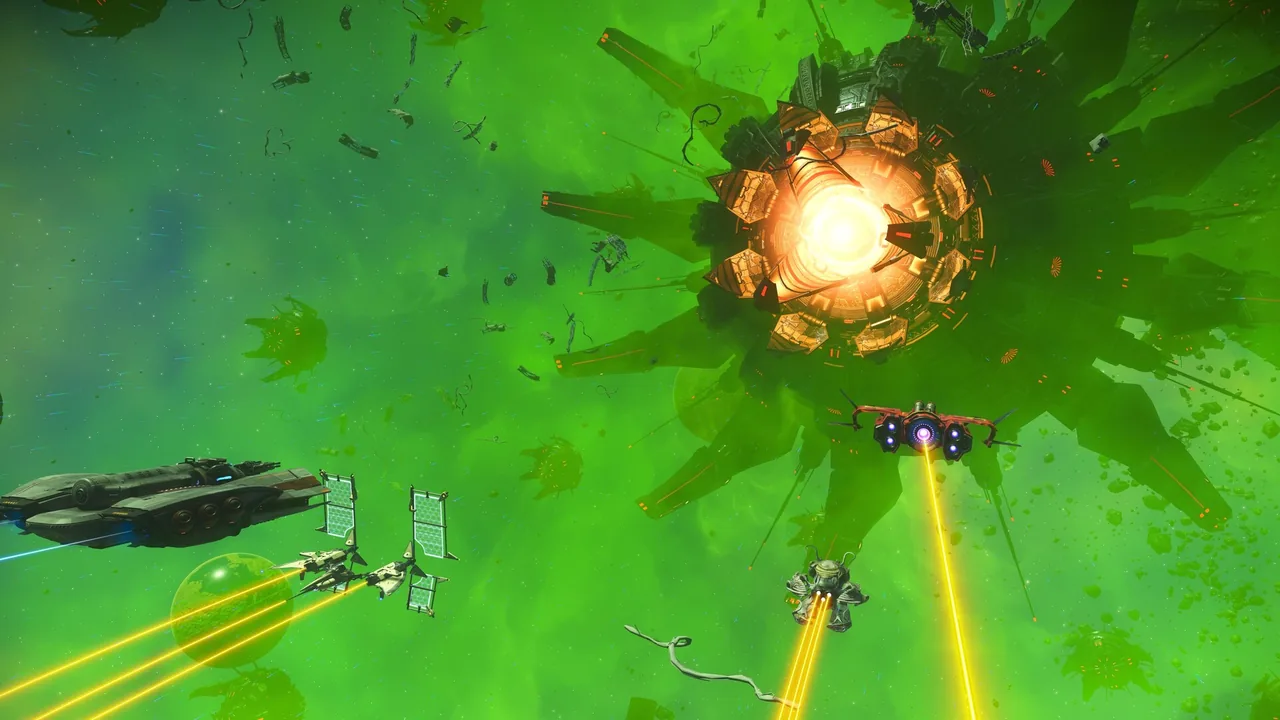
No Man's SkyImage: Hello Games via Steam -
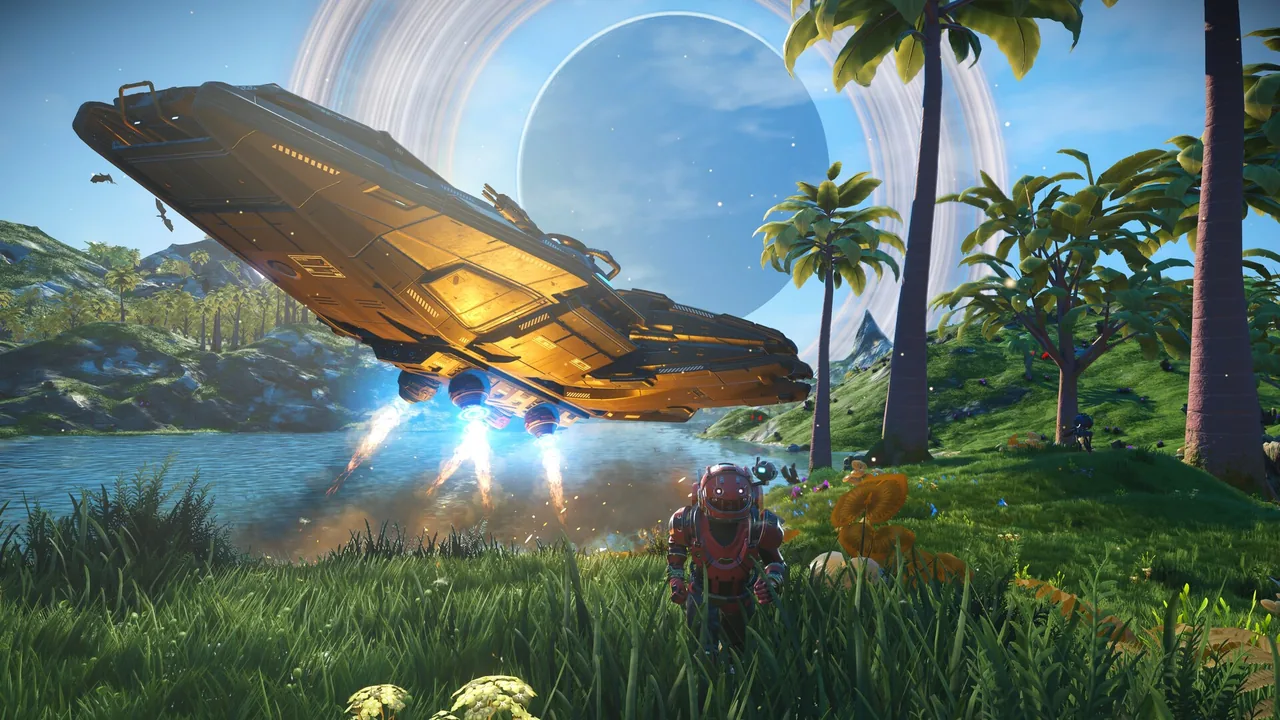
No Man's SkyImage: Hello Games via Steam -
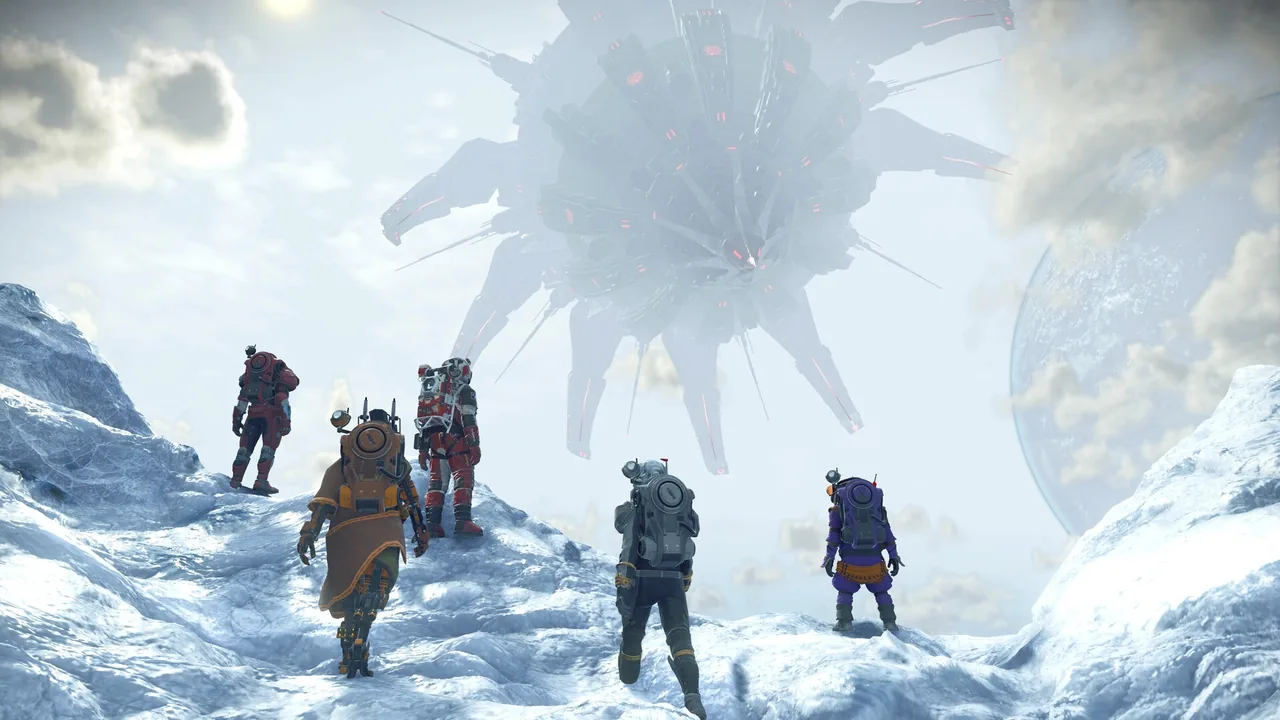
No Man's SkyImage: Hello Games via Steam -
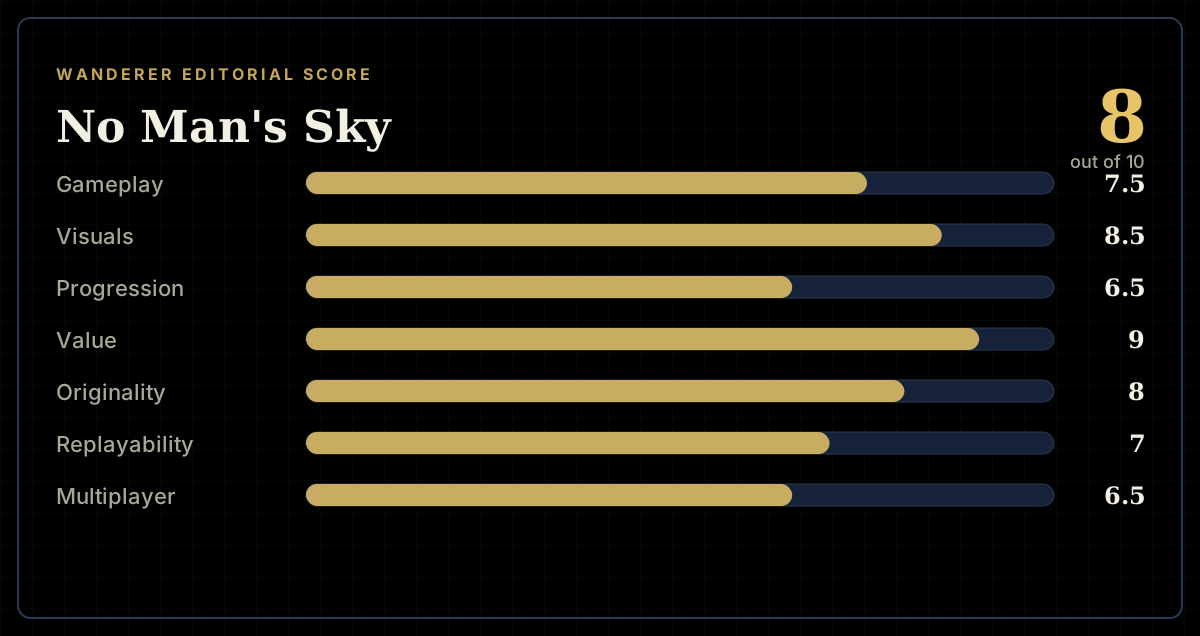
How the review scores each part of the gameWanderer Editorial -
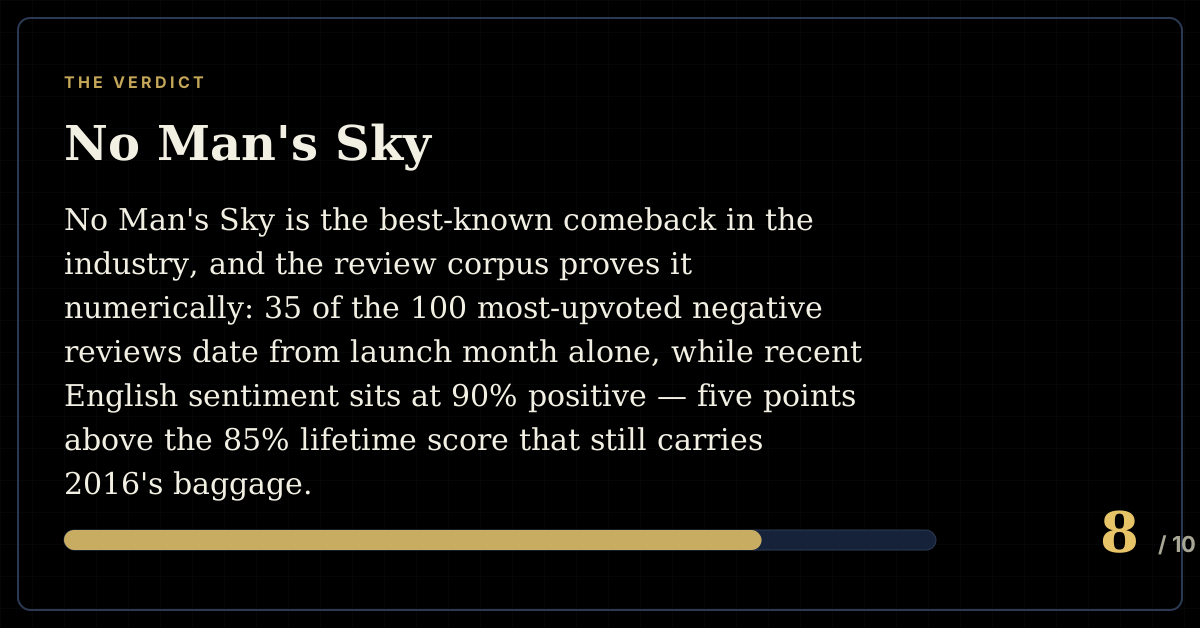
The short versionWanderer Editorial