Game review
Black Desert Online
7.5 / 10
- Developer
- Pearl Abyss
- Publisher
- Pearl Abyss (self-published in North America and Europe since 2022; Kakao Games ran Western publishing from the 2016 launch until Pearl Abyss took it back)
- Released
- 3 March 2016
- Platforms
- Windows, PlayStation 5, Xbox Series X|S
- Genre
- Action MMORPG
- Monetisation
- Buy-to-play with no subscription. The cash shop (the Pearl Shop) sells cosmetic outfits, pets that auto-loot and buff gathering, inventory and storage expansion, and time-limited Value Packs that raise weight limit and grant XP and drop-rate bonuses. Several Pearl Shop purchases can be listed on the in-game marketplace for other players to buy with silver, which is the closest thing this game has to a real-money-to-gold pipeline, and combat enhancement materials are sold separately as convenience items on top of what drops in play
- Players
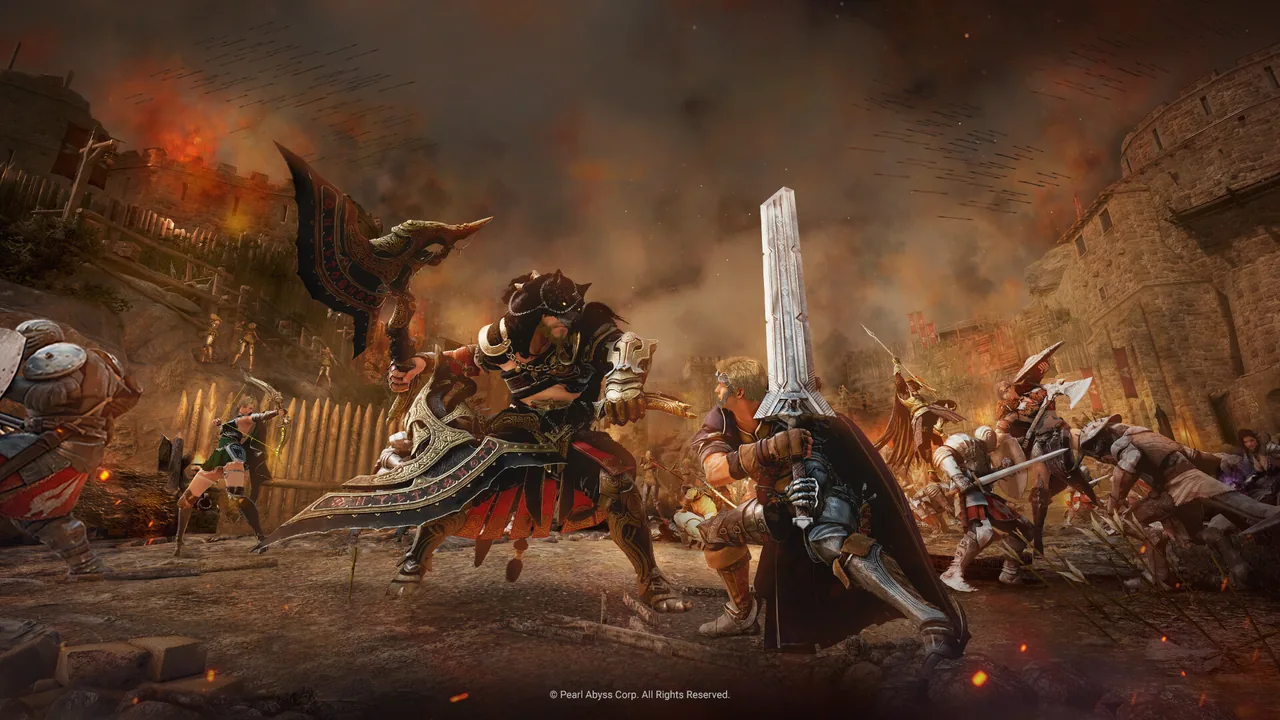
- Persistent open-world MMO with full open-world PvP past a level threshold, guild siege warfare over territory nodes, world bosses, and node/trade competition between players and guilds that never truly pauses
The short version
Black Desert Online is still the best-feeling combat in any MMO on the market — a real action-combat kit with i-frames, animation cancels and weapon-specific combo trees that has no business working as well as it does inside a persistent open world. It backs that up with the deepest life-skill economy in the genre, one built around hired workers who gather and process resources on nodes you own whether or not you're logged in, which makes this one of the very few big MMOs with genuine offline progression built into its core loop rather than bolted on as an afterthought.
What keeps it from an easy recommendation is everything downstream of "keep playing forever": an enhancement system that turns your best gear into a real risk of failure, a cash shop that sells real convenience and a marketplace-laundering path from real money to silver, and a quest and story layer that never earns the attention its combat system does. This is a 10-year-old game built for players who want a second job's worth of systems to master, not a weekend MMO.
Biggest strengths
- Combat genuinely rewards mechanical skill, with class-specific combo strings, invincibility frames and animation cancels that reward players who put in the hours
- The worker and node system runs a real offline economy, gathering and processing raw materials on a clock that keeps advancing while you're logged out
- Trading, cooking, alchemy, fishing and gathering are all deep enough to function as standalone games inside the MMO, not filler between combat sessions
Biggest weaknesses
- Enhancement can destroy or downgrade the exact gear you spent weeks or months assembling, and failstacks turn that risk into a resource-management minigame some players will find compelling and others will find predatory
- The Pearl Shop's Value Packs and inventory coupons apply enough pressure on weight limit and storage that skipping them feels like playing with one hand tied
- Certain cash-shop purchases can be resold on the marketplace for silver, giving wealthier players a real, developer-sanctioned path from cash to in-game wealth
Who it's for: Players who want the deepest action-combat kit in the MMO genre and are willing to spend real hours learning it properly, plus anyone drawn to Wanderer's offline-progression pitch who wants to see the same idea running at MMO scale through nodes, workers and trade runs. A poor fit for anyone who wants a story-driven MMO, a quick weekend of content, or a game where the best gear in the game can't be destroyed by a bad roll.
Our recommendation: Play the early hours for the combat and the life-skill loop, not the main quest — put a worker on a node early and let the passive economy start compounding before you ever touch enhancement. Treat the cash shop as convenience shopping, not a shortcut to power, and don't chase PEN gear until you understand exactly what a failstack is and what it costs to lose one.
7.5 / 10
Most MMOs let you glance away from the screen mid-fight and lose nothing but a few seconds of DPS. Black Desert Online will kill you for it. Its combat is built from directional inputs, invincibility frames and animation-cancel chains that owe far more to a character-action game than to a tab-target RPG, and it's the reason this ten-year-old game still gets brought up whenever players argue about which MMO has the best combat, full stop. The argument underneath that reputation — whether the rest of the game is worth wrapping around it — is a lot messier, and that's the argument worth actually having.
Combat that plays like an action game wearing an MMO's clothes
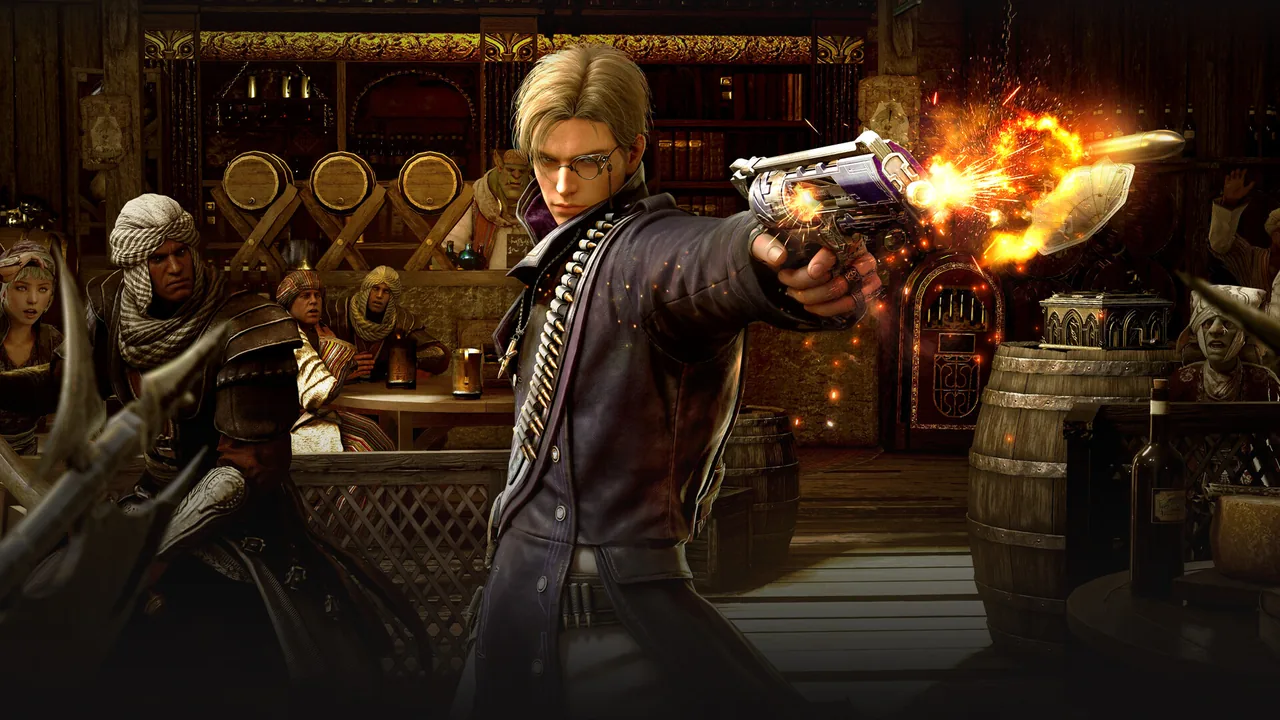
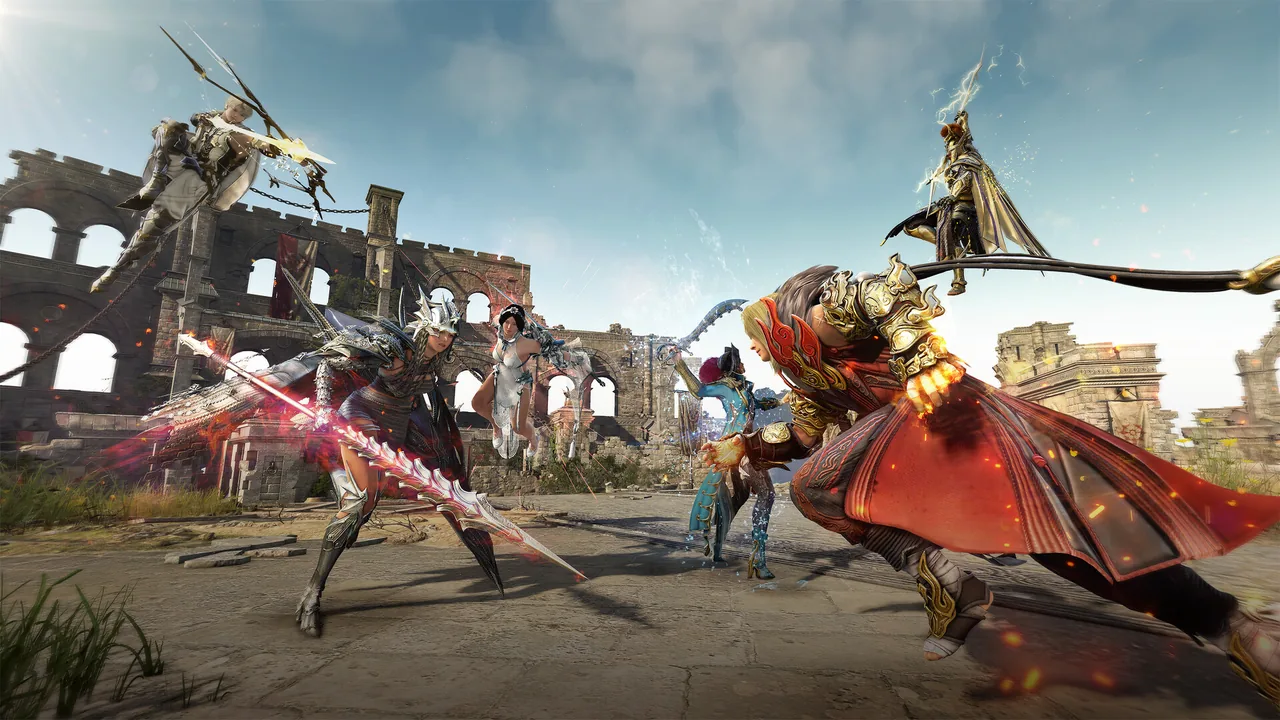
Every class in Black Desert has its own combo tree, built from chained skills that cancel into each other rather than a global cooldown bar you wait out. Dodges carry real invincibility frames. Positioning and timing matter in a way most MMOs only pretend they do, because a badly read attack can genuinely kill you regardless of your gear score. It's closer to a Platinum-style character-action game stretched across an open, persistent world than it is to anything World of Warcraft or Final Fantasy XIV does with their ability rotations.
The question that matters for a ten-year-old game is whether that holds up over hundreds of hours, and the honest answer is: mostly, with a caveat. The skill ceiling here is real — watching a highly skilled player chain a combo through a pack of monsters or a PvP duel looks nothing like watching a beginner do the same class, and that gap never fully closes. What does flatten out is the moment-to-moment decision-making once a class's rotation is memorised; a lot of solo grinding becomes executing the same optimised combo string on repeat rather than reading and reacting. The combat system is at its best against other players or genuinely dangerous world content, and noticeably more rote against the trash mobs that make up most of a leveling character's actual playtime.
The worker economy: Wanderer's readers should pay attention here
This is the section of Black Desert that gets underrated by anyone who dismisses it as "just another grindy Korean MMO." Life skills — gathering, processing, cooking, alchemy, fishing, farming and trading — aren't side content here. They're a second, parallel game built on top of a genuine offline-progression system, and it's more thorough than almost anything else in the MMO genre.
The core of it is the node and worker system. Invest contribution points into a town or resource node, hire a worker (goblin, giant or human, each with different stat leanings) from that town's worker exchange, assign them to a lodging slot, and put them to work on a connected node. From that point the worker gathers or processes raw materials on their own clock, whether or not you're logged in — lumber cut, ore mined, crops harvested, silver accumulating in a warehouse you'll empty next time you log on. Chain enough nodes and workers together and you're running a small production empire that keeps producing while you sleep, work, or simply play something else. Layer trading on top — buying goods cheap in one town and hauling them to a distant one where demand and distance push the sale value up — and Black Desert has built an entire idle economic game that happens to be attached to an action MMO.
It's the same underlying idea EVE Online runs with offline skill training on a real-world clock, just applied to production instead of character advancement. Where EVE's offline system is almost architecturally pure — one number ticking up regardless of what you do — Black Desert's worker empire is messier and more hands-on: you're managing lodging capacity, worker stats, node connections and storage limits rather than watching a single clean progress bar. That makes it more work to learn and more satisfying once it clicks, and it's arguably the single best reason to stick with this game past the opening hours even if the enhancement grind eventually burns you out.
Enhancement and failstacks: the system that defines this game's risk profile
Black Desert's enhancement system is the mechanic every veteran warns newcomers about, and it deserves a straight explanation rather than the usual shorthand of "gambling." Gear is upgraded through numbered tiers, and every attempt at the next tier can fail. Depending on the item and the tier, failure either destroys the material being used to attempt it, downgrades the gear back a step, or — at the system's protected higher tiers — simply fails to progress while consuming the attempt's materials. None of those outcomes are pleasant when the item in question took real time to assemble in the first place.
The mechanic that makes this bearable, and genuinely interesting as design, is the failstack. Deliberately failing lower-value enhancement attempts builds up a stack that raises the success chance of your next real attempt, turning what looks like pure gambling into a resource you can build, bank and spend deliberately. Players farm and trade failstacks the way they'd farm any other crafting material, and a well-built stack is a genuine asset. Cron stones exist as an insurance layer on top of that, letting a player pay an extra material cost to protect an enhancement attempt from destroying the base item outright even on failure. None of this eliminates the risk — it converts raw chance into something you can plan around, at a real resource cost, which is a smarter piece of design than a straight loot-box roll. Whether it's compelling or exhausting depends entirely on how much you enjoy resource-management minigames wrapped around your own equipment; Pearl Abyss's own regular catch-up events, like the HYPERBOOST pass running through this summer that hands new and returning characters a strong gear set for completing a support quest line, are a tacit admission that the base system alone pushes too many players away before they see the good part.
Monetisation: buy-to-play with a cash shop that pushes harder than the price suggests
The base game is cheap, and right now it's cheaper than usual — Steam lists it at NZ$13.00 and has it discounted 90% to NZ$1.30 as of this review, which is closer to the norm than the exception for how often Pearl Abyss runs sales on the entry price. There's no subscription. That part of the pitch is honest.
The Pearl Shop is where it gets more complicated. Costumes and pets are straightforwardly cosmetic and optional. Value Packs are not: they raise your weight limit, unlock unlimited use of a convenience feature for redistributing stats, and boost XP gain for a fixed real-world duration, which means every serious player either buys them regularly or plays with a permanent disadvantage relative to those who do. Inventory expansion coupons work the same way — the base inventory is tight enough that expanding it stops feeling optional within the first several hours. None of that is pay-to-win in the strict sense of buying combat power directly, but it's pay-for-comfort applied with enough pressure that "optional" undersells it.
The sharper edge is what a cash-shop purchase can become once it's inside the game. Certain Pearl Shop items can be listed on the in-game marketplace and bought by other players using silver, the primary in-game currency — a mechanic that gives wealthier players a legitimate, developer-sanctioned route from real money into in-game wealth without ever directly buying combat stats. It's a softer version of the same trade-off EVE Online makes with PLEX, and by the brief definition of pay-to-win — does money buy a competitive advantage a free player can't otherwise earn — the honest answer is: not directly, but it buys a faster route to the silver that eventually funds enhancement materials, and that's close enough to matter for anyone competing at the sharp end of PvP or the marketplace economy. The convenience bundles sold separately on Steam make the same trade explicit, packaging Value Packs, pets, inventory coupons and several thousand Pearls of shop currency into a single purchase aimed squarely at players who want to skip the early grind.
The state of the game in 2026
Ten years after its Korean launch and a decade into Western service, Black Desert is still an actively developed live-service MMO rather than a legacy title on autopilot. Pearl Abyss ships weekly content updates — seasonal events, Hot Time XP and drop-rate boosts, boss rotations, region-specific festivals — on a cadence that's rare for a game this old. A new class, Agent, launched at the end of July 2026 alongside the current HYPERBOOST catch-up event, keeping the roster growing rather than static. Steam's aggregate user rating sits at "Mostly Positive," with roughly three-quarters of all-time reviews positive across more than 62,000 written reviews — a solid, stable number for a game this old rather than a score propped up by early hype that's since soured.
Recent player sentiment does cluster around a few consistent complaints worth taking seriously. Veteran players resent catch-up events like HYPERBOOST for handing new and returning characters gear it took the veterans years to earn, with comparatively little given back to the players who already put in the time. New players still describe the early game as confusing, with systems introduced faster than they're explained and little guidance on which item drops are worth keeping. And a recurring thread of technical complaints — desync in busy areas, connection failures on launch — suggests server stability hasn't been fully solved even a decade in. None of that describes a dying game. It describes a mature one still actively wrestling with the tension between rewarding its veterans and lowering the bar for everyone else.
Where the questing and story never catch up
For a game built on a combat system this good, Black Desert's quests are surprisingly thin as storytelling. Most of the main questline exists to move a character between regions and introduce new systems rather than to build a world worth caring about, and the writing rarely rises above functional. Players coming from story-forward MMOs like Final Fantasy XIV, which structures its entire early game around a single authored Main Scenario Quest, will find nothing comparable here. That gap between the combat system's craft and the story layer's indifference is the single clearest sign of where Pearl Abyss's design priorities actually sit, and it's not with the leveling journey.
Who should actually play this
Black Desert rewards players willing to treat it as a long-term hobby rather than a single playthrough: learn a class's combo kit properly, put workers on nodes early and let the passive economy start compounding, and go into enhancement understanding exactly what a failstack buys you before risking anything valuable. It's a poor fit for anyone who wants a game they can finish, who wants their best gear protected from a bad roll, or who's chasing the kind of narrative momentum games like Final Fantasy XIV or even Lost Ark lean on to carry players through their opening hours. Compared to Albion Online's tighter, more accessible full-loot economy, Black Desert asks for a much bigger time investment before its systems start paying off — but the systems themselves, especially the worker economy and the combat, go deeper than almost anything else the genre currently offers.
Players who like the idea of progress compounding on a clock, whether they're actively playing or not, will recognise the same instinct behind Wanderer.
Verdict
Black Desert Online earns its reputation on two fronts that are genuinely rare in the same game: combat with a real skill ceiling, and an offline worker economy deep enough to function as its own game. Both still hold up a decade in, and Pearl Abyss's continued weekly content cadence means this isn't a game coasting on nostalgia. What keeps it from scoring higher is everything built around those two strengths — a story layer that never earns its combat system's craft, an enhancement system whose risk is real even with failstacks softening it, and a cash shop whose Value Packs and inventory pressure make "optional" a generous word. This is a very good MMO for the specific player willing to meet it on its own demanding terms, and a frustrating one for anyone expecting a gentler curve.
Pros and cons
Pros
- Combat genuinely rewards mechanical skill, with class-specific combo strings, invincibility frames and animation cancels that reward players who put in the hours
- The worker and node system runs a real offline economy, gathering and processing raw materials on a clock that keeps advancing while you're logged out
- Trading, cooking, alchemy, fishing and gathering are all deep enough to function as standalone games inside the MMO, not filler between combat sessions
- Ten years in, Pearl Abyss still ships weekly content and seasonal events rather than letting the live service go quiet
- HYPERBOOST-style catch-up events let new and returning players reach a competitive gear score fast, lowering the barrier that used to keep this game's reputation toxic to newcomers
Cons
- Enhancement can destroy or downgrade the exact gear you spent weeks or months assembling, and failstacks turn that risk into a resource-management minigame some players will find compelling and others will find predatory
- The Pearl Shop's Value Packs and inventory coupons apply enough pressure on weight limit and storage that skipping them feels like playing with one hand tied
- Certain cash-shop purchases can be resold on the marketplace for silver, giving wealthier players a real, developer-sanctioned path from cash to in-game wealth
- Quests exist mainly to move a character between systems rather than to tell a story worth following, and the gap between combat quality and narrative quality is wide
- The interface and onboarding still dump an overwhelming number of systems on a new character with little guidance about which of them actually matter
Screenshots
-
Black DesertImage: Pearl Abyss via Steam -
Black DesertImage: Pearl Abyss via Steam -
Black DesertImage: Pearl Abyss via Steam -
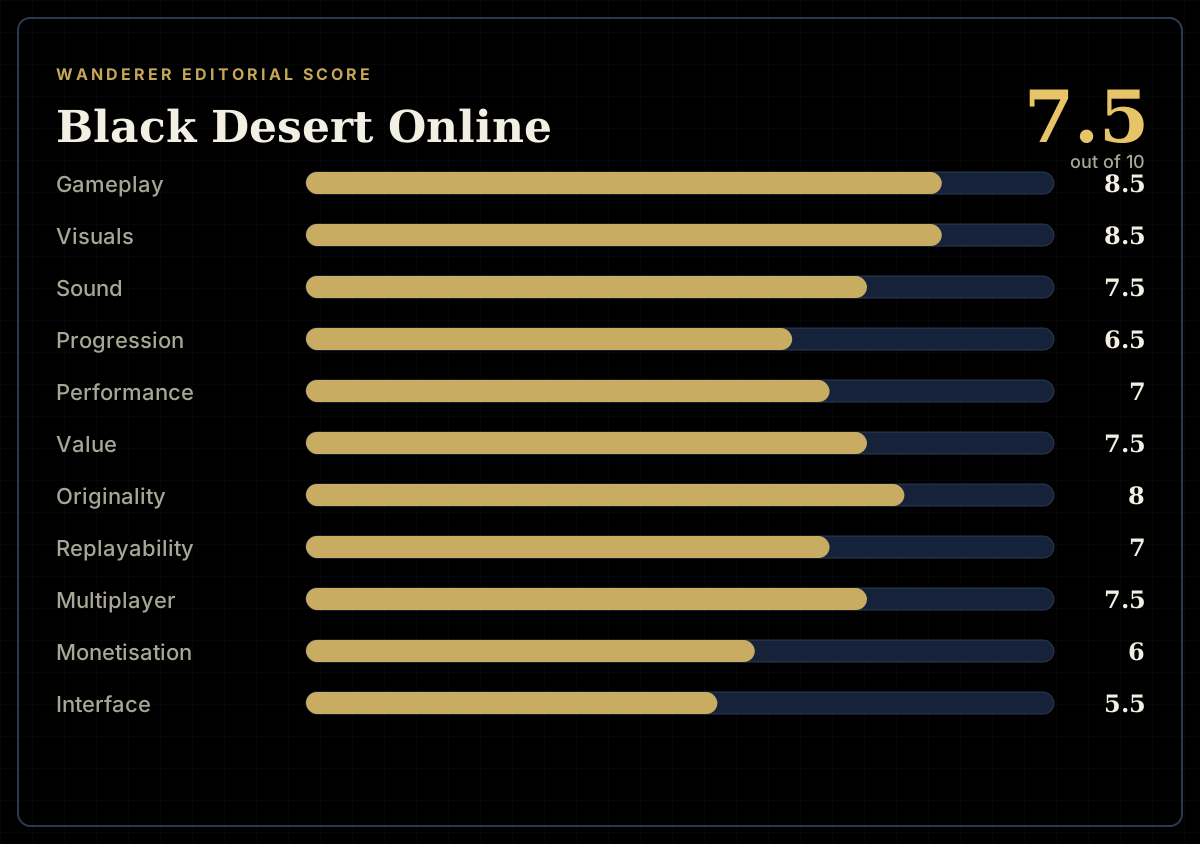
How the review scores each part of the gameWanderer Editorial -
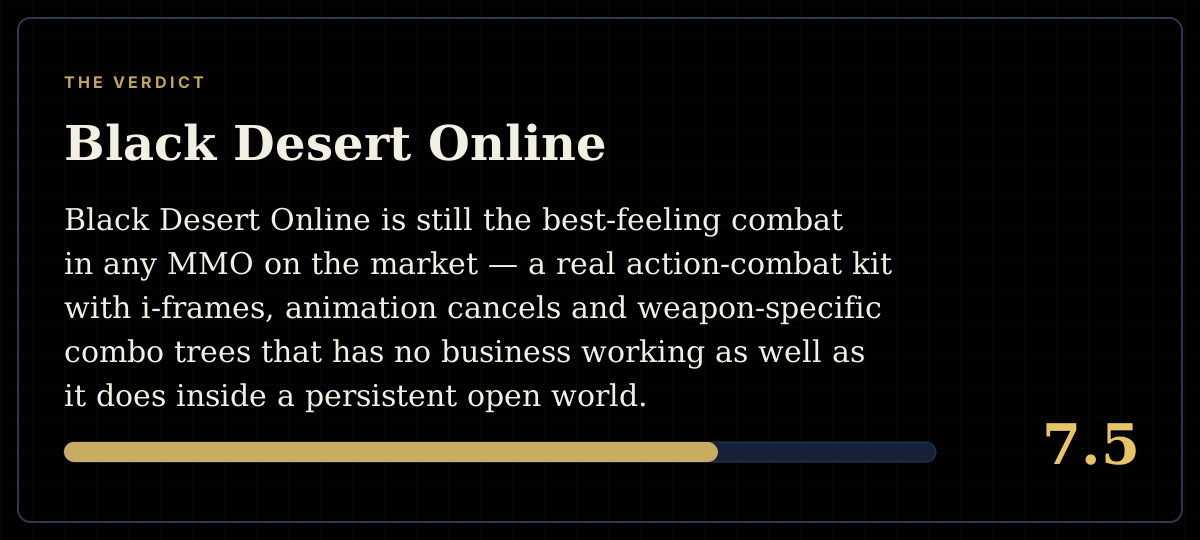
The short versionWanderer Editorial