Game review
Neverwinter
6 / 10
- Developer
- Cryptic Studios
- Publisher
- Arc Games
- Released
- 20 June 2013
- Platforms
- Windows, Xbox One, PlayStation 4
- Genre
- Action MMORPG
- Monetisation
- Free-to-play with no upfront cost and no subscription requirement. The cash shop sells Zen, a premium currency, for character slots, cosmetic packs, mounts, companions, respec tokens and — most contentiously — keys for the game's Lockbox loot boxes, which are the main source of the best-in-slot mounts and companions. Astral Diamonds, an in-game currency earned through play, can be exchanged for Zen on an in-game market, giving free players an indirect path to premium goods, though the exchange rate fluctuates and heavily favours players with more time than money. Checked via the Steam store page and API on 3 August 2026.
- Players
- Core MMO structure built around five-player dungeons and ten-player trials with the standard tank/healer/damage trinity, guilds with their own stronghold system, an open economy run through Astral Diamond and Zen exchanges, and a small PvP mode (Domination-style arena matches) that several long-running player reviews describe as poorly matchmade rather than genuinely competitive.
The short version
Neverwinter's action combat — dodge-and-telegraph, class-distinct, genuinely fast for an MMO built on Dungeons & Dragons rules — is still the reason people play it thirteen years on, and it still works. What has eroded is everything wrapped around it: the Foundry, once the game's signature player-made-content system, was shut down in 2019 and never replaced, and a steady stream of 2025-2026 player reviews from veterans with hundreds or thousands of hours logged describe a game where monetisation has crept from cosmetics and convenience into mechanics players used to take for granted. It's still free, still fun in short bursts, and still updated on a real cadence — but it now asks a returning or new player to draw a line for themselves before the cash shop draws it first.
Biggest strengths
- Action combat rewards reading and dodging enemy telegraphs rather than watching cooldown bars, and it's noticeably faster than most tab-target MMOs built on tabletop rules
- Classes and races are tied to real Forgotten Realms and 5th-edition D&D lore rather than generic fantasy archetypes, and Undermountain's 2019 rework aligned all eight classes to modern 5e naming
- Genuinely free to reach endgame dungeons and trials without a subscription or mandatory purchase
Biggest weaknesses
- Lockboxes gate the best mounts and companions behind randomised keys sold for real money, and a wave of 2025-2026 reviews from players with 500 to over 1,600 hours logged describe monetisation creeping into mechanics that used to be free, including character revival
- The Foundry, the player-made-mission system that once gave the game "infinite" replay value in earlier coverage, was permanently removed in April 2019 and has no replacement
- PvP is limited to a single small-scale arena mode that longtime players consistently describe as badly matchmade rather than a real competitive pillar
Who it's for: Action-RPG fans who want faster, more skill-based combat than a typical tab-target MMO, and Dungeons & Dragons or Forgotten Realms readers curious to see the setting rendered as a live game. Best approached with a clear budget in mind and low expectations for PvP; worst suited to players who were burned by its cash shop before and are hoping a rebrand under new ownership has quietly fixed that.
Our recommendation: Worth installing for free to judge the combat for yourself over a weekend — it earns that much. Go in refusing to buy Lockbox keys on impulse, because the game's own economy is built to make that the path of least resistance, and treat anything beyond a starter pack as a deliberate decision rather than something the interface nudges you into.
6 / 10
Neverwinter has outlived two publisher names, a shut-down flagship feature and, as of a management buyout confirmed in December 2025, the corporate parent that owned it for the last few years — and the thing that's kept it alive through all of that is still, thirteen years in, the combat. This is a free-to-play Dungeons & Dragons MMO where you actually dodge and time attacks instead of watching a global cooldown bar, and in 2026 that's still a genuinely differentiating pitch. What's changed is what surrounds it: a cash shop that a growing chorus of its longest-tenured players describe as having quietly crossed from "annoying" into "structural," in a year where the studio itself just changed hands.
Combat that still holds up
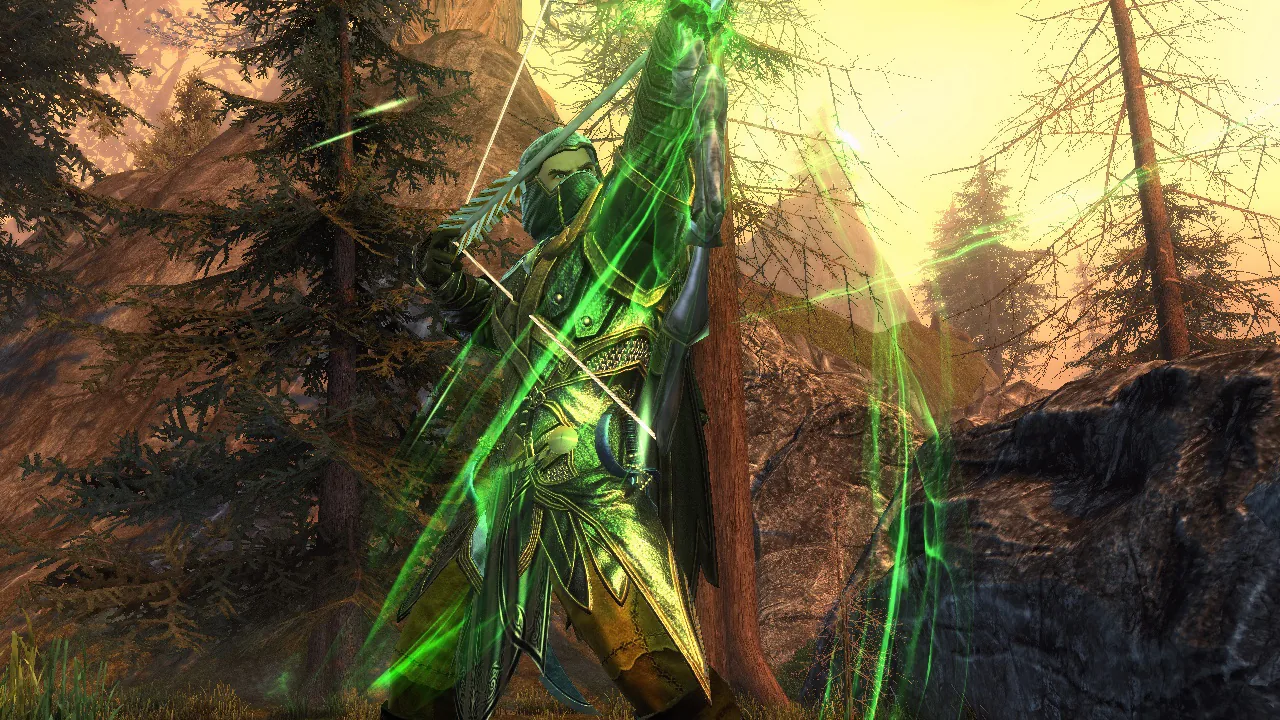
Neverwinter runs on a heavily action-oriented reworking of Dungeons & Dragons rules — closer to fourth edition at launch, retuned toward fifth edition after the 2019 Undermountain expansion — and the headline decision was to throw out tab-targeting in favour of aimed attacks, dodge rolls and telegraphed enemy tells. Eight classes, each renamed to match 5e terminology after Undermountain, give that combat real mechanical range: a Trickster Rogue playing around stealth and burst damage reads nothing like an Oathbound Paladin holding a line with the classic tank-and-heal support kit. Even players writing scathing reviews of the game's economy tend to carve out an exception for the moment-to-moment fighting — it's consistently the one part of Neverwinter that doesn't need a caveat. A recent Steam review from a player with well under twenty hours logged put it plainly: the core action combat is the game's greatest strength, offering a fluid, engaging change of pace from traditional MMORPGs. That's not a minority opinion; it's close to the one thing this review's positive and negative sources agree on.
Forgotten Realms lore that earns its setting
Where a lot of free-to-play MMOs bolt a fantasy skin onto a generic quest engine, Neverwinter's Forgotten Realms setting does real work. Thirteen playable races, from humans and elves through Tieflings, Dragonborn and Drow, sit inside a world that leans on established D&D geography and villains rather than inventing its own — Icewind Dale, Undermountain and the Sword Coast all appear as their own expansions, and the Tyranny of Dragons module in 2014 tied the game's story directly into that era's tabletop and novel storylines. Newer players arriving by way of Baldur's Gate 3, as several recent reviews describe doing, find a setting they already half-know rather than a wiki they need to learn from scratch. It's not doing anything structurally unusual with quest design — this is still hub-and-spoke MMO questing, marker on the map, kill and fetch — but the writing sits on a foundation most competitors in the genre don't have access to.
Progression, dungeons and a trinity that mostly works
Group content is built the traditional way: five-player dungeons and ten-player trials running the tank/healer/damage trinity, unlocked as characters level and gear up. It's a system that rewards knowing your class and reading a fight rather than pure stat-checking, and Neverwinter's action combat makes healer and tank roles feel more actively engaged than the genre's older tab-target equivalents. Where progression gets genuinely uncomfortable is the itemisation layer sitting on top of it — refinement systems, enchantment upgrades and companion/mount power all interact in ways that quietly funnel players toward either heavy grinding or the cash shop, and long-time players consistently describe the climb from "capable of running current content" to "actually competitive in it" as the point where the game starts asking for real money rather than just real time.
The Foundry's absence still matters
Any review written before April 2019 would have called Neverwinter's Foundry — a full toolset that let players build and publish their own missions inside the game — one of its defining features, and older coverage of the game still does exactly that, describing "infinite replay value" as though the system were current. It isn't. Cryptic shut the Foundry down permanently on 11 April 2019 in both Neverwinter and sister game Star Trek Online, citing a loss of the specialised knowledge needed to keep it running to a usable standard, and gave players who'd engaged with it a title and, for prolific authors, a cosmetic cape as a farewell. Nothing has replaced it since. It's worth naming explicitly here because it's the clearest, most concrete example of Neverwinter losing a genuinely distinctive feature rather than merely aging — and it's a detail that stale reviews circulating online will get wrong if you don't already know to check.
Monetisation: where the newest reviews actually disagree with the old ones
This is the part of Neverwinter that has visibly shifted, and it's worth being precise about how. The cash shop has always sold cosmetics, character slots, mounts and companions through Zen, its premium currency, with the best rewards frequently locked behind randomised Lockboxes that need separately purchased keys — a structure that's been criticised as predatory since at least the early 2020s and is well documented in older coverage. What's newer, and what a genuinely large number of 2025 and 2026 Steam reviews independently raise, is a sense that monetisation has moved from optional power and cosmetics into mechanics players used to take for granted — reviewers with hundreds and, in several cases, well over a thousand hours logged describe pressure attached to basics like reviving after death, not just to best-in-slot gear chases. One recent review, from a player with roughly ten hours on the account, summed up returning after years away in one line: after transitioning to what they called an extreme pay-to-win model, that was the thing that made them stop playing. That specific complaint — paying to avoid friction in a mechanic that used to just cost you time — shows up across accounts with wildly different playtime, which is a stronger signal than any single review on its own.
The data backs up that there's real disagreement here, not just noise. Steam's aggregate review score across every language and purchase type sits at "Mostly Positive," 77% positive across 39,600 reviews — a healthy long-term number for a thirteen-year-old MMO. But narrow that same corpus down to English-language reviews from players who made an actual real-money purchase through Steam's own wallet specifically, and the picture flips to "Mixed," under 70% positive on a much smaller sample. The people who have paid real money through the storefront itself are measurably less happy than the player base as a whole — which is close to the worst possible signal for a monetisation system to be sending, even if it's not the number most visitors glance at first. None of this means the in-game economy is unusable for free players; Astral Diamonds, earned through play, can still be exchanged for Zen and gives patient players a path to premium items without spending. It does mean the days of treating Neverwinter's cash shop as merely "there if you want cosmetics" are over, and a newcomer should budget for that reputation being current rather than a fossil of an older, harsher build.
New owners, and what August 2026 actually finds
Neverwinter changed hands twice in its life before this year — Atari to Perfect World Entertainment in 2011, then Perfect World's publishing arm rebranding as Arc Games in 2018 — and it changed hands again in November 2025, when parent company Embracer Group divested Arc Games and Cryptic Studios in a management buyout worth roughly $30 million, moving both into a new holding company called Project Golden Arc, financed by Hong Kong-listed XD Inc. Arc Games publicly confirmed the deal on 5 December 2025, and Cryptic CEO Jack Emmert addressed players directly with a letter in late January
- Practically, that transition hasn't slowed content: Module 33, "Biting Cold," shipped 19 May
2026 after a smaller mid-cycle patch (Module 32.5, "Tempus Arena") in February, and the roughly eleven weeks since Module 33 have carried a steady run of seasonal events — the Celebration of Lliira, a returning Protector's Jubilee, a Challenge of the Gods event — alongside, tellingly, at least two separate Lockbox promotions in that same window. A player installing Neverwinter today will find a studio that is still shipping on a real cadence, not one coasting toward shutdown — but the ratio of monetisation-adjacent news posts to actual story content in that window is a fair preview of what the cash shop's priorities look like month to month.
Visuals, performance and PvP
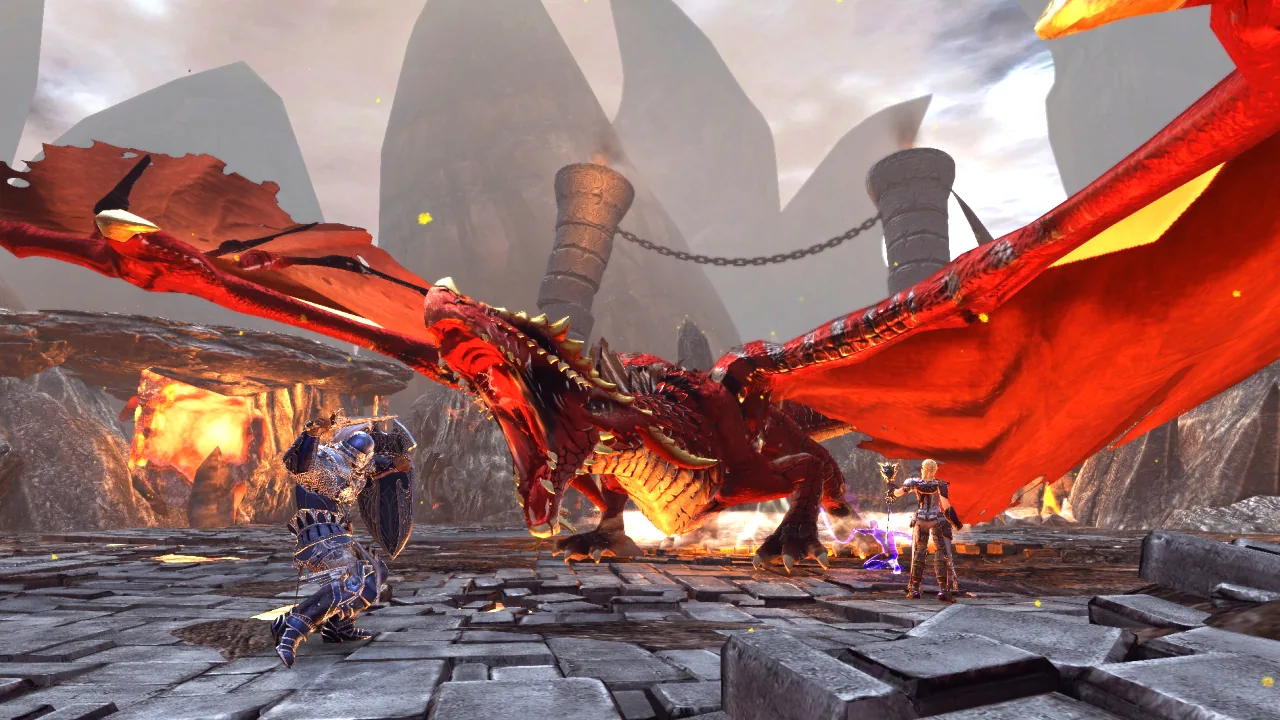
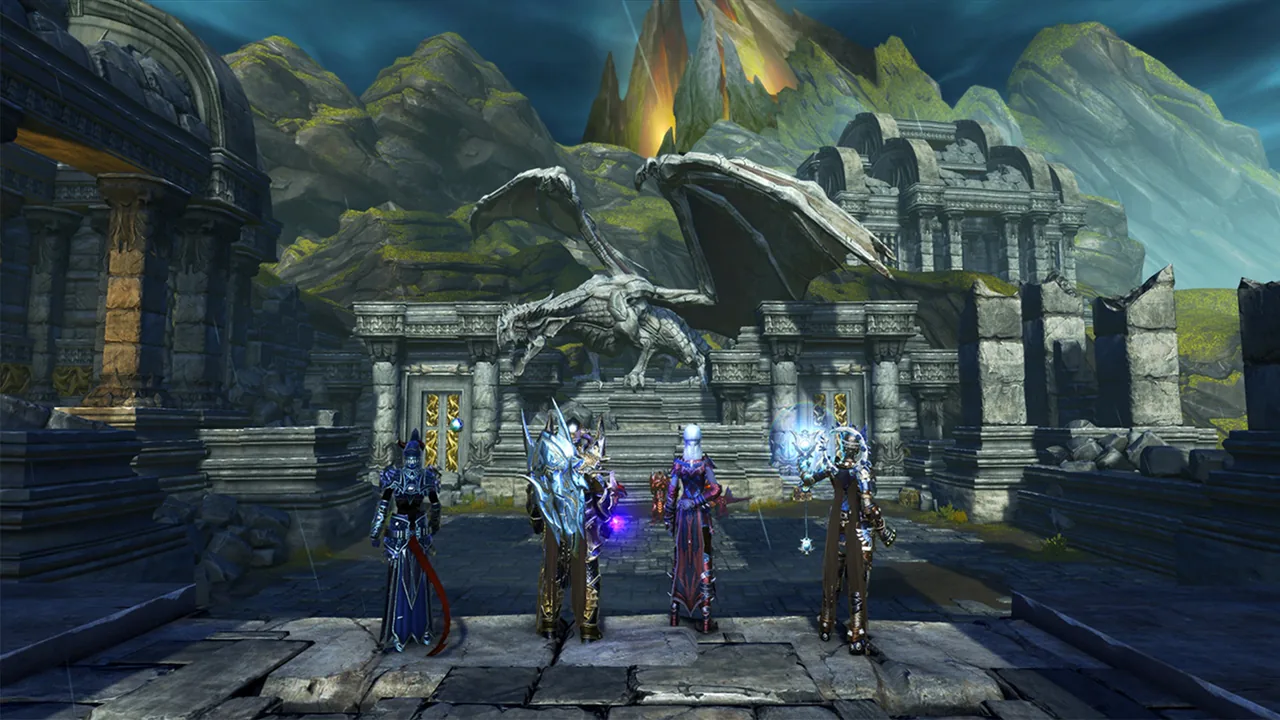
None of Neverwinter's presentation is going to surprise anyone who's seen a screenshot: character models and environment textures are functional rather than striking, and thirteen years of content patches on the same base engine show, particularly next to newer action MMOs built from scratch in the last five years. It runs comfortably on modest hardware, which matters more for a free-to-play game than raw fidelity does — nobody is turned away by their PC here. PvP gets one honest paragraph and no more: it's a small-scale arena mode, described consistently across years of player feedback as poorly matchmade rather than genuinely competitive, and it has never been positioned as a pillar of the game the way the dungeon and trial content has. Anyone drawn to Neverwinter by the promise of open-world PvP or a serious competitive scene should look elsewhere; that was never really on offer here.
Verdict
Six out of ten. Neverwinter earns real credit for combat that's aged better than most of its genre peers and a Forgotten Realms setting it uses properly rather than as window dressing, and it costs nothing to find that out for yourself. What keeps this score from climbing is specific: the Foundry, once its most distinctive system, has been gone for seven years with nothing to replace it, and a genuinely large and recent body of player feedback — not a fossil of an old launch controversy, but reviews written in 2025 and 2026 by people with hundreds or thousands of hours already invested — describes monetisation that has moved from selling convenience into selling relief from mechanics that used to just cost time. New ownership hasn't changed that pattern yet, even if it hasn't slowed content either. Play it for the combat, on your own terms, and decide for yourself where the line is before the cash shop decides it for you.
Players who'd rather their progression kept moving without a cash shop deciding how fast might find Wanderer's offline-friendly pacing a useful point of comparison.
Developer, publisher, ownership history, release dates, pricing and review data checked 3 August 2026.
Pros and cons
Pros
- Action combat rewards reading and dodging enemy telegraphs rather than watching cooldown bars, and it's noticeably faster than most tab-target MMOs built on tabletop rules
- Classes and races are tied to real Forgotten Realms and 5th-edition D&D lore rather than generic fantasy archetypes, and Undermountain's 2019 rework aligned all eight classes to modern 5e naming
- Genuinely free to reach endgame dungeons and trials without a subscription or mandatory purchase
- Update cadence is real, not abandoned — Module 33 shipped in May 2026 and seasonal events have followed roughly every few weeks since
Cons
- Lockboxes gate the best mounts and companions behind randomised keys sold for real money, and a wave of 2025-2026 reviews from players with 500 to over 1,600 hours logged describe monetisation creeping into mechanics that used to be free, including character revival
- The Foundry, the player-made-mission system that once gave the game "infinite" replay value in earlier coverage, was permanently removed in April 2019 and has no replacement
- PvP is limited to a single small-scale arena mode that longtime players consistently describe as badly matchmade rather than a real competitive pillar
- Visuals and animation still show the engine's 2013 origins next to newer action MMOs, even after thirteen years of content patches
- Steam reviewers who paid through Steam's own wallet specifically skew far more negative than the overall player base — the split most visible to a casual Steam-page visitor undersells how the combat itself is received
Screenshots
-
NeverwinterImage: Arc Games via Steam -
NeverwinterImage: Arc Games via Steam -
NeverwinterImage: Arc Games via Steam -
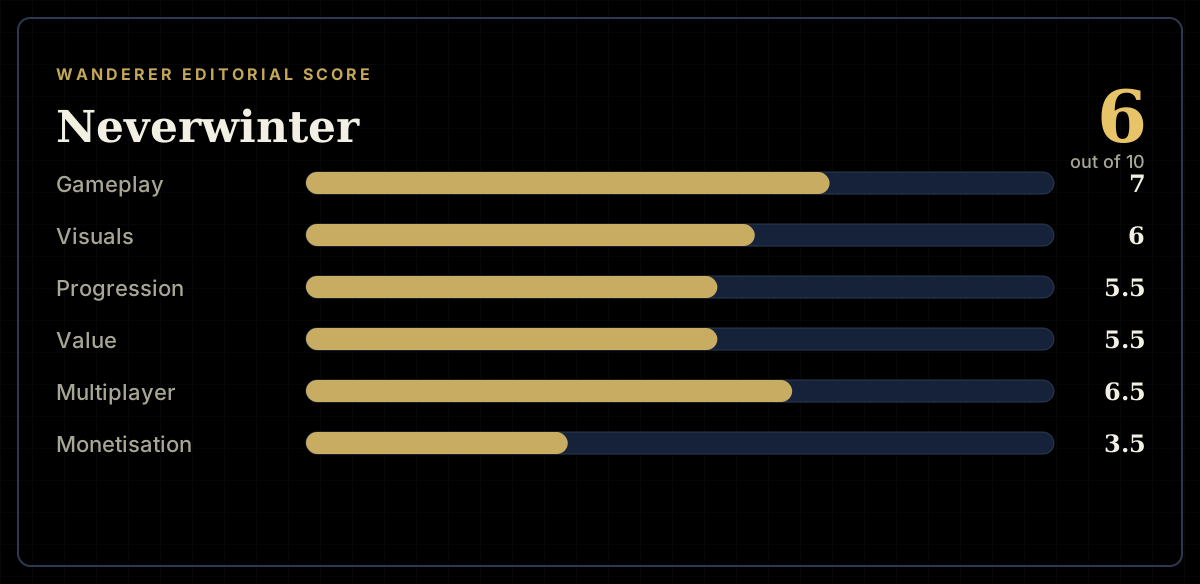
How the review scores each part of the gameWanderer Editorial -
The short versionWanderer Editorial