Game review
Lost Ark
7 / 10
- Developer
- Smilegate RPG
- Publisher
- Amazon Games
- Released
- 4 December 2019
- Platforms
- Windows
- Genre
- Action MMORPG
- Monetisation
- Free-to-play with a cosmetics-and-convenience cash shop paid for in Royal Crystals, a Crystalline Aura subscription for daily-task and rapport bonuses, and permanent T4 Founder's Packs that bundle currency, pets and character slots rather than raw account power. The Western shop does not sell honing materials directly, but Royal Crystals convert into the tradeable in-game currency Blue Crystals, which sells for gold on the open market — so real money still buys a faster climb up the gear ladder, just not through a direct purchase button
- Players
- Massively multiplayer with instanced 8-player raids as the core endgame loop, optional PvP arenas, guilds and a player-driven auction house; solo modes now cover a growing share of the raid roster, including Kazeros Act 4 and Denouement as of July 2026
The short version
Lost Ark's raid design is still some of the sharpest boss-fight choreography an MMO has ever shipped — readable telepaths, real positioning demands, and mechanics that punish a mistake without needing a bigger gear score to compensate for bad play. Getting a character into a raid worth that praise means climbing a honing ladder built on pity-adjusted coin flips, one that Amazon itself is now admitting is too punishing by shipping a September 2026 event that skips most of it entirely. Both things are true about the same game at the same time.
Biggest strengths
- Raid encounters demand genuine positioning and timing rather than rewarding a bigger gear score for standing in bad mechanics
- Individual Revival and an expanding solo-mode roster let a struggling player retry a fight without ending the run for seven other people
- A single free download gives access to dozens of subclasses across five archetypes, so trying a new playstyle never means starting a second account
Biggest weaknesses
- Honing above the early tiers runs on a pity-adjusted success roll that can burn weeks of stockpiled materials on one failed upgrade
- Royal Crystals convert into tradeable Blue Crystals and then into gold, so spending money still buys a faster climb even without a direct pay-for-power purchase
- A second, third or fourth character repeats the entire honing gauntlet from scratch, and endgame content expects several geared alts running weekly raids
Who it's for: Players who enjoy tight, mechanically demanding boss fights and don't mind spending real time — or real money converted sideways into gold — to get a character geared enough to see them. A rough sell for anyone who wants to log in casually and stay current without either a serious weekly habit or a static group carrying the slower alts.
Our recommendation: Start with the free download and one character through the story; decide whether the honing grind sounds like a puzzle or a chore before touching the cash shop. If Warpweaver or the Base Camp express event land as planned in September 2026, that's a better on-ramp than starting cold today.
7 / 10
Lost Ark has spent four years in the West being two different games depending on which system you're looking at. Drop into one of its raids and it's hard to argue with anyone who calls it the best encounter designer working in the MMO space right now — bosses that telegraph a wide attack a full second before it lands, mechanics that ask eight players to split, stack and dodge in patterns that actually change how the fight plays rather than just how much damage it does. Open the honing window that gets a character strong enough to walk into that raid in the first place, and it's a different game entirely: a currency-and-percentage machine that can eat a week of stockpiled materials on a single unlucky roll, sitting behind a cash shop that insists it doesn't sell power while quietly leaving a currency pipeline that does something close to it. Both descriptions are accurate. Neither one is the whole review on its own.
The best boss design the genre has, and it isn't close
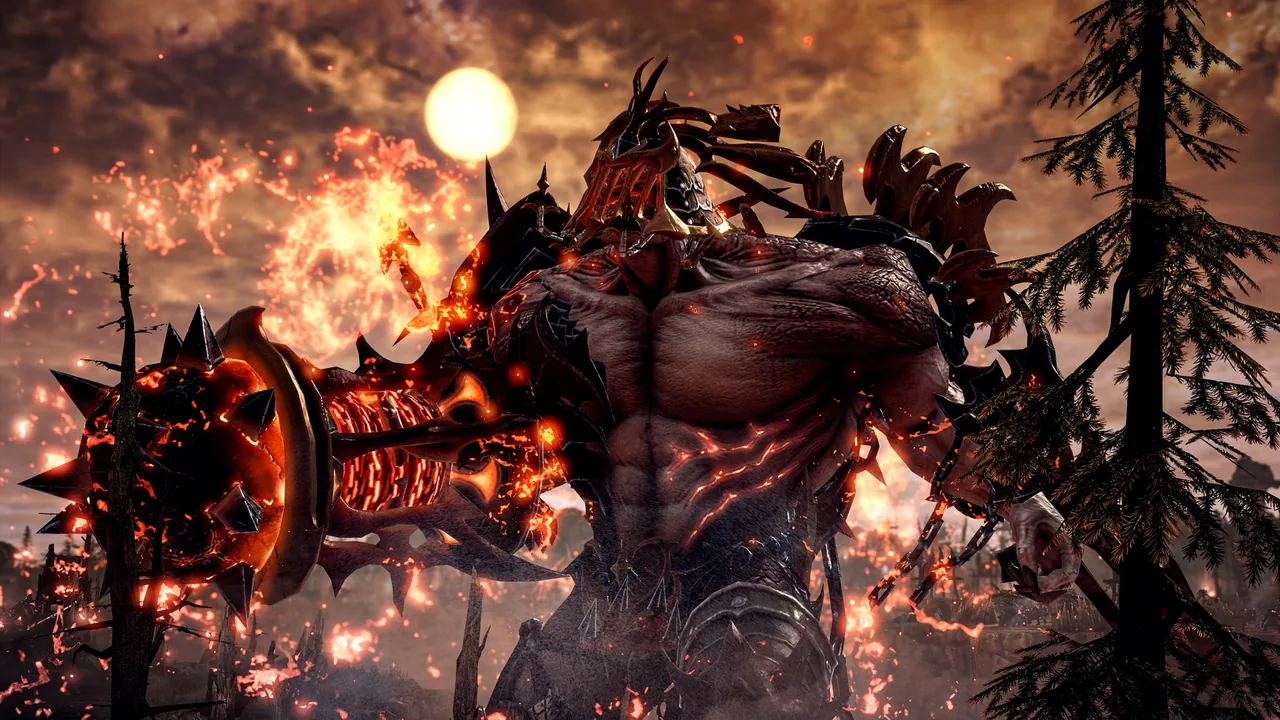
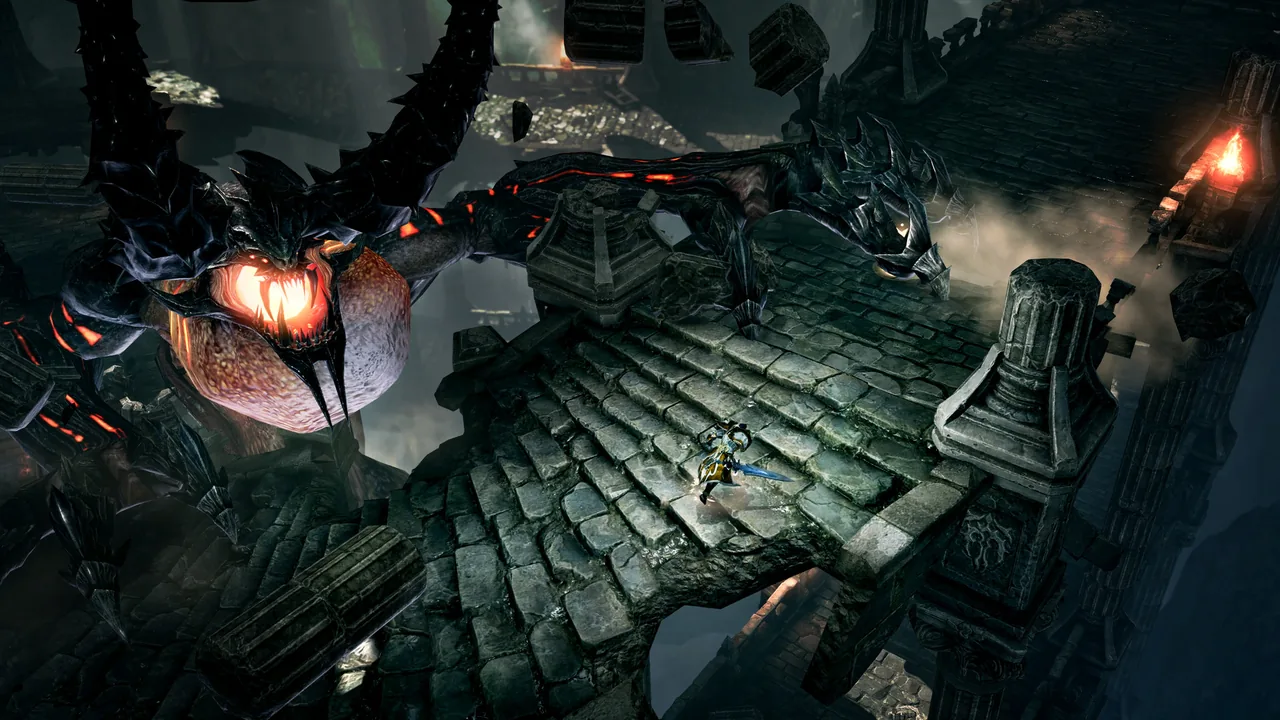
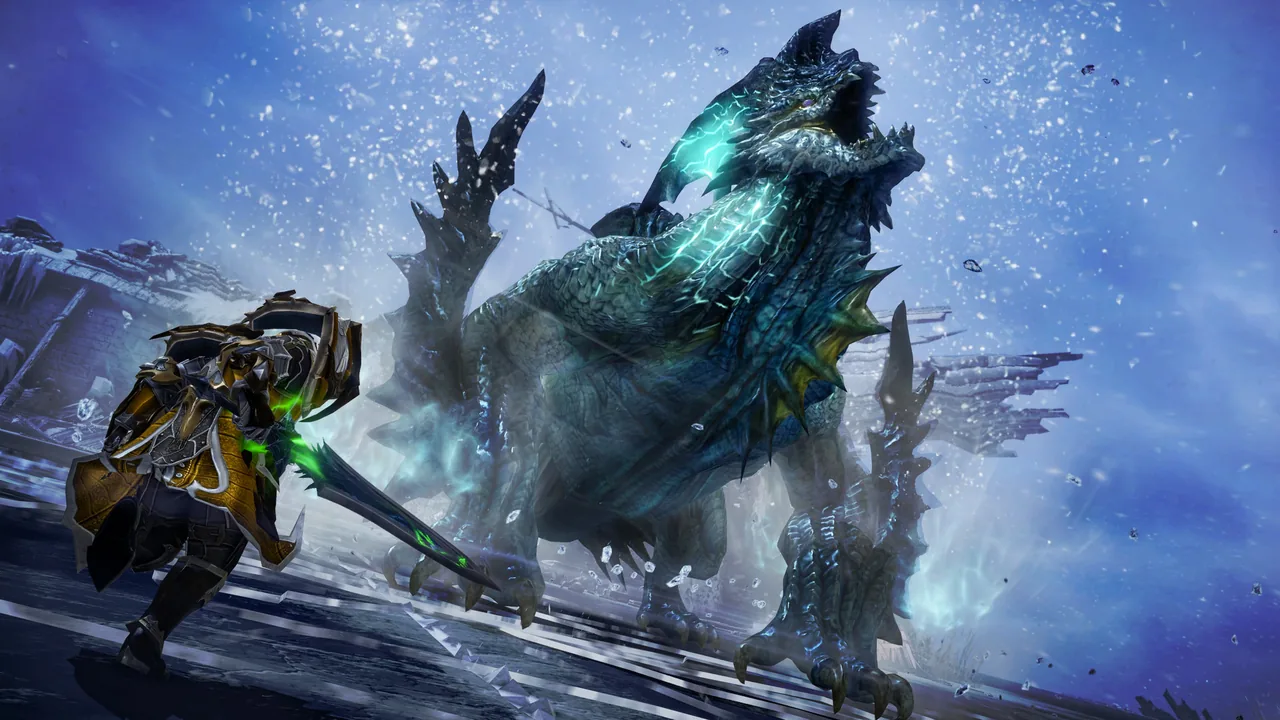
Strip away everything else and Lost Ark's core combat holds up against anything in the action RPG space, not just other MMOs. Each of the game's several dozen subclasses, spread across five broad archetypes, plays with its own animation timing, resource system and combo structure rather than being a reskinned rotation with a different coat of paint — a Berserker's build-and-spend fury meter has nothing in common with a Bard's support-oriented stance dancing or a Reaper's identity-gauge shapeshifting, and switching between them feels like switching games, not skins. That variety would mean little without something worth pointing it at, and raid bosses are where the whole system earns its reputation. Telegraphs are large, readable and genuinely fair — a one-second gap between a boss winding up and the attack landing is enough time to actually react if you're watching the fight instead of a damage meter, which is more than most MMO raid design manages.
July's Summer of Extremes update pushed that further with Kazeros Raid: Act 1 Extreme, adding Normal, Hard and Nightmare difficulty tiers on top of the existing raid with escalating item-level gates and, notably, an active Individual Revival system on Normal and Hard. That single mechanic change matters more than it sounds: traditional Lost Ark raid design has always run on a shared wipe condition, where one player's mistake can end the attempt for everyone in the party, and it's a large part of why party finder listings have historically gatekept so aggressively on gear score and proven clear history. Letting individual players revive and keep fighting instead of resetting the whole group is a genuine concession to how much friction that shared-fail model creates — it doesn't remove the difficulty, it just stops one person's bad pull from punishing seven other people who played the fight correctly.
The other structural fix arriving alongside it is solo-mode expansion. Kazeros Act 4 and the finale raid, Denouement, both became soloable in July 2026, joining a growing list of raids that no longer require assembling or matchmaking a full party at all. For a game whose reputation was built on unforgiving group content, quietly letting more of that content be cleared alone — at a slower pace, presumably with adjusted numbers, but without needing seven strangers to cooperate — is one of the more player-friendly directions Amazon and Smilegate have taken the format in years.
The honing gauntlet, and why a coin flip runs the endgame
None of that combat quality changes what it costs to get a character strong enough to walk into those fights, and this is where Lost Ark asks more of a player than almost any other MMO on the market. Gear doesn't level up by accumulating experience or currency spent on a vendor; it levels up by consuming stacks of tiered materials — Shards, Fusion Materials, Leapstones, Gold and Silver — on an honing attempt that succeeds at a percentage chance, not a guarantee. Fail, and the materials are gone; the next attempt's success chance ticks up slightly, a pity mechanic meant to put a ceiling on how unlucky a stretch can get, but the ceiling is measured in dozens of attempts, not single digits. Early honing tiers succeed often enough that new players rarely notice the system's teeth. Advanced Honing, the material and currency track that governs the item levels current raid content actually requires, is where the teeth show: a single failed attempt at the higher tiers can represent real hours of dungeon runs and market shopping converted into nothing, with no partial credit beyond that small bump to next attempt's odds.
This is not a hidden cost or a bait-and-switch — it's the design, and it has been since the Korean launch in 2019. What's changed is how loudly Amazon itself now seems to be treating it as a problem. September 2026's Base Camp event is being pitched as an express route to item level 1700 using pre-enhanced equipment with, in the update's own framing, no honing required at all. Reading between the lines of that decision is easy: a system that requires shipping a way to skip it for new and returning players is a system whose own designers have concluded is too steep a wall for anyone starting fresh in year seven of the game's life. It's a genuinely useful on-ramp for anyone who's been put off by exactly the grind described above, but its existence is also the clearest admission in this review that the honing ladder, left to run as originally designed, was doing more to keep new players out than to give existing ones something meaningful to chase.
What real money actually buys, checked 30 July 2026
Amazon Games has kept one promise consistently since 2022: the Western cash shop does not sell honing materials, upgrade currency or raid-clearing power directly. What it sells, confirmed on Steam as of this review, is cosmetics, the T4 Founder's Packs (still on permanent sale at NZ$34.49, NZ$71.49 and NZ$128.99, bundling currency, pets, mounts and character slots rather than combat stats) and a Crystalline Aura Plus subscription at NZ$16.99 a month or NZ$32.99 for three, which speeds up daily and weekly task completion, rapport gain and a handful of other quality-of-life timers rather than handing out gear.
The honest asterisk sits one layer down from the shop itself. Royal Crystals, the game's premium currency, convert into Blue Crystals, an in-game currency that trades on the open player market for gold. Gold buys honing materials, upgrade books and enhancement services from other players through that same market. No purchase in the shop directly upgrades a weapon, but a player willing to spend enough real money can convert that spending into gold and buy their way past a meaningful chunk of the grind described above — indirectly, through the player economy, rather than through a "buy power" button that would draw obvious regulatory attention. Calling that pay-to-win requires being precise about what it actually buys: not guaranteed victory, not a stat no free player can reach, but a genuinely faster climb up a ladder that otherwise costs weeks of grinding for the same materials. That distinction is real, and it's also the kind of distinction that matters a lot less to a free player watching a whale's characters climb past theirs in a fraction of the time.
Alts, weeklies, and the chore list that never resets
Lost Ark's endgame doesn't run on one character. Weekly raid lockouts, daily chaos dungeons, Una's tasks and rapport grinds are all built assuming a player maintains a roster of geared alts rather than a single main, both because raid rewards are capped per character per week and because the game's own seasonal and event content regularly rewards spreading currency income across several characters instead of stacking it on one. That's a deliberate design choice with real upside — it's part of why the class variety mentioned earlier gets used rather than sitting in a menu unplayed — but it also means the honing gauntlet from the previous section isn't a one-time toll. It's a bill that comes due again for every alt a player wants raid-ready, and the game's own daily task list is long enough that "catching up" a second character while maintaining a main's weeklies is a real time commitment, not a weekend project.
Steam's own review history reflects the fatigue this produces. Player feedback across recent reviews consistently clusters around three complaints — monetisation, progression pacing and community gatekeeping around gear score in party finder — far more than complaints about the combat itself. That pattern lines up with everything above: the fights are good enough that almost nobody is complaining about them directly, but the road to being allowed into those fights, and the cost of keeping more than one character on that road, is the actual source of the friction.
A smaller West, still being fed content
The Western service in 2026 is not the game that queued a million-plus concurrent players at launch in February 2022. Steam's own review volume tells part of that story on its own — the trickle of new reviews arriving each month now is a fraction of what a game that size drew in its first year, and Amazon's own roadmap confirms the practical consequence: an August 2026 server merge across Western regions, explicitly framed around improving matchmaking and community activity for a population that no longer fills every server the way it once did. That's not a shutdown, and nothing in Amazon's public roadmap through September 2026 — Kazeros Act 2 Extreme, a new class in Warpweaver, fresh seasonal content in Paradise Season 4 — reads like a game being wound down. It reads like a smaller, older game consolidating its population to keep matchmaking and party finder functional, which is a healthier response than pretending the server list still needs to be that long.
It's also worth placing in the context of what's happened elsewhere in Amazon's games division. Layoffs in late 2025 hit Amazon Games hard enough that the company ended development on New World, its own internally built MMO, and shut down that game's servers in 2026. Lost Ark is developed by Smilegate RPG, not Amazon — Amazon is the Western publisher, not the studio building the content — and that distinction appears to be exactly why it's kept receiving Smilegate's Korean-service updates on schedule while New World's in-house team was the one absorbing the cuts. It's a useful reminder that "published by a company doing layoffs" and "developed by a company doing layoffs" are not the same risk, even when the storefront listing makes both games look equally exposed.
Who should actually install this in 2026
The free download is genuinely worth trying for anyone curious about action combat in an MMO shell — there's no cost to seeing whether the class you land on clicks, and the story campaign gets a character to a respectable item level without touching the honing system's worst tiers. Where this stops being an easy recommendation is the moment a player decides they want to be raid-ready for current content on a reasonable timeline. That's the point where the honing ladder, the alt economy and the gear-score gatekeeping in party finder all start compounding on each other, and where either a serious weekly habit or an existing static group willing to carry a slower teammate through their first few clears becomes close to necessary. September 2026's Base Camp event, if it delivers on its billing, is a genuinely better entry point than today — a pre-honed route to item level 1700 removes exactly the part of this review that's hardest to recommend. Anyone starting cold before then should go in knowing the raids are worth reaching and the road there is the actual test.
Verdict
Lost Ark's raid encounters remain some of the best fight design an MMO has produced, and the July 2026 additions — Individual Revival, an expanding solo-mode roster, a genuinely hard Extreme difficulty tier — show a team that still knows exactly what makes this game's combat special. None of that changes the honing system sitting underneath it, a pity-adjusted gamble that can erase a week of grinding on one roll, feeding a currency pipeline that lets real money buy a faster climb without ever pressing a button labelled "power." Amazon's own September 2026 fix for that problem is an admission the grind has been too steep for years, and a shrinking, merging Western population is the honest cost of leaving it that steep for that long. Seven out of ten reflects both halves fairly: a genre benchmark for encounter design, weighed down by the exact system it depends on to keep players geared enough to see it.
Wanderer players who like the idea of raid-tier combat encounters without a honing ladder gating who gets to see them might also want to look at how Wanderer handles equipment upgrades — a much smaller game built on the same instinct that gear progression shouldn't require a side-market economy to make sense of.
Pricing, review data and roadmap details checked 30 July 2026.
Pros and cons
Pros
- Raid encounters demand genuine positioning and timing rather than rewarding a bigger gear score for standing in bad mechanics
- Individual Revival and an expanding solo-mode roster let a struggling player retry a fight without ending the run for seven other people
- A single free download gives access to dozens of subclasses across five archetypes, so trying a new playstyle never means starting a second account
- The Western cash shop still can't sell raw honing materials directly, keeping the worst of the grind a player-economy problem rather than a storefront button
- Base Camp's planned September 2026 express route to item level 1700 is a real acknowledgment that the honing ladder has been too steep for new players
Cons
- Honing above the early tiers runs on a pity-adjusted success roll that can burn weeks of stockpiled materials on one failed upgrade
- Royal Crystals convert into tradeable Blue Crystals and then into gold, so spending money still buys a faster climb even without a direct pay-for-power purchase
- A second, third or fourth character repeats the entire honing gauntlet from scratch, and endgame content expects several geared alts running weekly raids
- An August 2026 server merge across Western regions is Amazon's own admission that the population from launch-week queues has shrunk considerably
- Gear-score and hidden-proficiency checks in party finder listings make joining anything above easy raids intimidating without an established static group
Screenshots
-
Lost ArkImage: Amazon Game Studios via Steam -
Lost ArkImage: Amazon Game Studios via Steam -
Lost ArkImage: Amazon Game Studios via Steam -
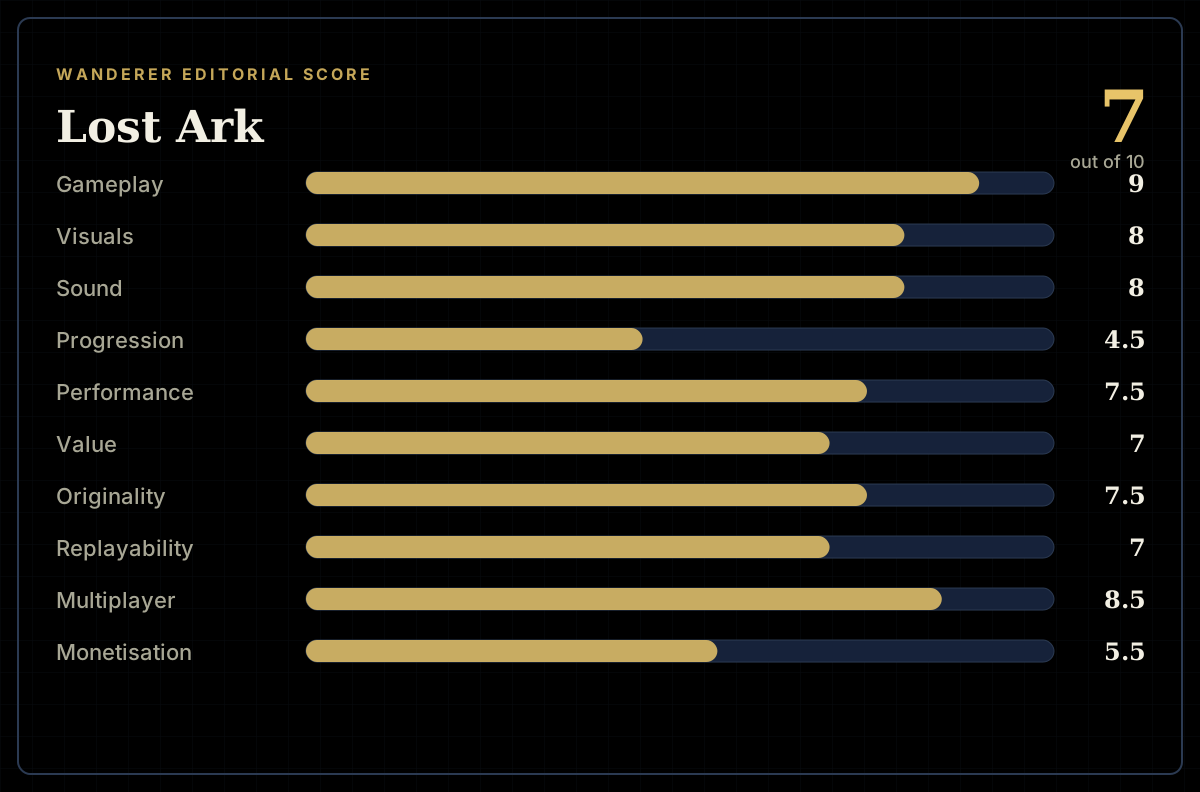
How the review scores each part of the gameWanderer Editorial -
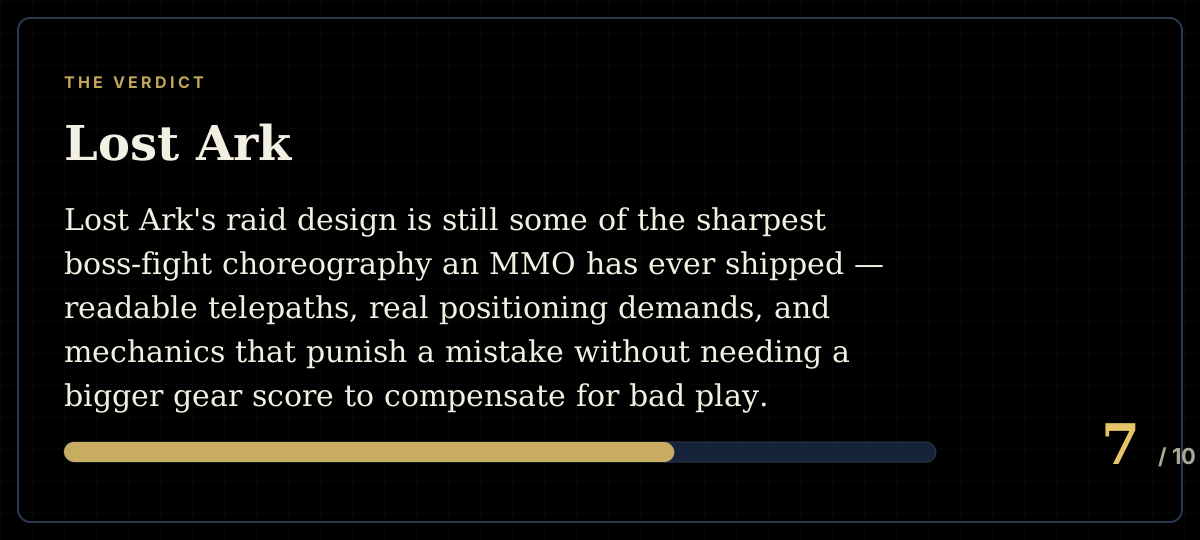
The short versionWanderer Editorial