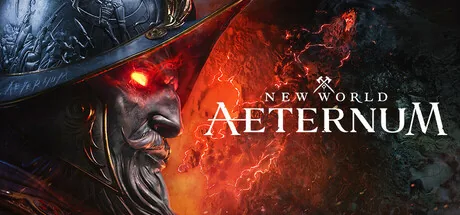
Game review
New World: Aeternum
6 / 10
- Developer
- Amazon Games
- Publisher
- Amazon Games
- Released
- 15 October 2024
- Platforms
- Windows, PlayStation 5, Xbox Series X|S
- Genre
- MMORPG
- Monetisation
- Buy-to-play, no subscription. The shop sold Marks of Fortune, a premium currency spent on cosmetic outfits, mounts, emotes, housing items and a seasonal pass with free and paid tracks (Season 10's Premium Track cost 20,000 Marks of Fortune) — nothing in the storefront was ever sold as direct combat power. Real-money currency purchases were switched off around 20 July 2026 as part of the wind-down, so at the time of writing the shop has nothing left to sell at any price
- Players
- Massively multiplayer persistent world — three-faction open-world PvP, company-run 50-versus-50 territory Wars for control of forts and settlements, 20-versus-20 Outpost Rush, 3-versus-3 Arenas, 5-player Expeditions and a 10-player raid added with the final Nighthaven season
The short version
New World: Aeternum's weapon-swap combat and its company-run territory Wars are still some of the best large-scale action-MMO systems Amazon Games has built, and four years of patches turned a genuinely rocky 2021 launch into a competent, good-looking game. None of that changes the fact a review has to lead with: Amazon delisted the game from every storefront on 15 January 2026, switched off real-money currency purchases in July 2026, and has the whole game scheduled to go dark on 31 January 2027. There is no purchase to make, and soon there will be no world left to log into.
Biggest strengths
- Swapping weapon loadouts mid-fight with a real stamina, dodge and block system still makes New World's combat feel more physical than most tab-target MMOs on the market
- Company-run 50-versus-50 territory Wars stage genuinely large, persistent siege battles over real map objectives rather than an instanced arena dressed up as one
- Weapon Mastery and its Artifact weapons give a reason to keep swinging a favourite weapon long after it stops levelling your character
Biggest weaknesses
- The game was delisted from every storefront on 15 January 2026 and cannot be purchased by a new player at any price
- Full server shutdown is scheduled for 31 January 2027, so even a returning player is looking at, at most, roughly eighteen months of remaining play
- Recent Steam reviews have collapsed to roughly one in six positive, almost entirely players reacting to the shutdown and demanding refunds rather than reviewing the game itself
Who it's for: Existing owners who already have hours invested and want to see the extended Nighthaven season through before the servers close. A poor fit for anyone hoping to start a new MMO this year — there is no way to buy in, and whatever company or war you'd join is winding down alongside the game itself.
Our recommendation: If you already own it, this is exactly the year to finish what you started — the combat, the territory Wars and the Nighthaven raid are all still live, and Amazon has committed to keeping them running through January 2027. If you don't already own it, there is nothing to buy. Put your MMO hours into something with a future instead.
6 / 10
The honest way to open a review of New World: Aeternum is with the sentence that makes most of the rest of it academic: you cannot buy this game. Amazon Games delisted it from Steam and every other storefront on 15 January 2026, switched off real-money currency purchases around 20 July 2026, and has confirmed the servers go dark for good on 31 January 2027. Everything else about New World — the weapon-swap combat, the company-run territory Wars, the four years of patches that turned a rocky 2021 launch into a genuinely good MMO — is still true and still worth writing about, because the systems themselves earned that. But a review's job is to tell a reader whether to spend their time and money on something, and for New World: Aeternum the honest answer to the money half of that question is that there's nothing left to spend it on.
Real-time combat without a class to hide behind
New World never asked players to pick a class at character creation, and that's still its clearest point of difference from most of the MMO field. Any character can wield any weapon, any weapon can be swapped into an active loadout of two at a time, and combat itself runs on a stamina bar, a directional block, and a dodge with real invincibility frames rather than a rotation of tab-target abilities on cooldown. A greatsword swing has weight and wind-up; a war hammer's heavy attack can be interrupted mid-animation if you eat a hit first; a bow user has to actually lead a moving target rather than lock on and wait for a cast bar to finish. It's a combat system built by people who clearly wanted New World to feel like an action game wearing MMO clothing, and on a moment-to- moment level it mostly succeeds — fights against a skilled human opponent in Outpost Rush or an open-world skirmish reward positioning and timing in a way plenty of MMO combat never bothers to.
The relaunch pushed that identity further with Weapon Mastery, a progression track layered on top of each individual weapon rather than the character as a whole. Level a weapon's mastery high enough and it unlocks an Artifact — a named, unique version of that weapon with a built-in passive or active ability that nothing else in the game replicates. It's a smart piece of design because it gives late-game players a reason to keep using the sword and shield they've mained for two years instead of chasing whatever the current numerically-best weapon happens to be, and it rewards specialisation without punishing the freedom to swap loadouts mid-fight that makes the combat distinctive in the first place.
Aeternum's relaunch: a level squish, seven archetypes, and console
"New World: Aeternum" isn't a sequel or a separate product — it's the same Steam listing (appid
- that launched in September 2021, renamed for an October 2024 relaunch that did two things
at once. The obvious one is platform: New World arrived on PlayStation 5 and Xbox Series X|S for the first time, four years after its PC-only launch, bringing full cross-platform play and progression with it. The less visible but more consequential one is a systems overhaul aimed squarely at new players: Amazon compressed the level cap from 66 down to 20, replaced the old attribute-point grind with a faster curve, and introduced seven starting archetypes — the Destroyer, the Mystic and five others — that hand a new character a sensible starting build instead of an intimidating blank slate. Nothing about the archetype system locks you in; the game remains fully classless underneath, and you can reshape a character's build at any point once you understand what you're doing.
That relaunch was a genuinely good call on its own terms. The original New World's biggest complaint from 2021 through 2023 wasn't the combat, it was the wall a new or returning player hit before reaching it — a long, unfocused early game that took real hours to clarify what kind of character you were building. Aeternum's squish and archetypes solve that specific problem cleanly. The trade-off, and it's one Steam's recent reviews still bring up years later, is that a level squish resets a chunk of what long-term players spent hundreds of hours earning; a character that represented real investment at level 66 became one of twenty players clustered at the new level 20 cap overnight. That's a familiar tension in any live MMO that tries to lower its entry barrier without alienating the people who already climbed the old one, and Amazon didn't find a way around it here any more than most MMOs do.
Factions, Companies and the war for the map
Everything New World's endgame is built around eventually points back at territorial control. Every character pledges to one of three factions — Marauders, Syndicate or Covenant — and territories across the map are held by Companies, player-run guilds that can tax the settlements they control, fund upgrades to crafting stations, and build fortifications. Taking a territory away from its current owners means declaring and winning a War: a scheduled, structured 50-versus-50 siege battle with siege weapons, capturable objective points and a real clock, fought over a persistent map state that everyone on the server sees change hands. It's the single system that justifies calling New World an MMO rather than an action RPG with a chat window, and when a server has the population to field two full 50-player Companies willing to organise a siege, it's still one of the more convincing large-scale PvP experiences the genre has ever shipped — messier and more consequential than an instanced arena, because the fort you're fighting over is the same fort everyone else on that world logs in to see.
The catch, four years and one relaunch on, is that this entire system is a population-dependent machine, and New World's population has been in a long, well-documented decline since its 2021 launch spike. Wars still happen on populated servers. They increasingly don't on the ones that lost their critical mass years ago, and a system this dependent on fifty organised players showing up on both sides degrades badly, not gracefully, once that number stops being reliable. That's worth weighing heavily for anyone assessing whether the siege system as advertised is the siege system they'd actually get.
Crafting, gathering, and a Trading Post that never quite trusted its own economy
New World's crafting economy is deep by MMO standards — mining, logging, harvesting and fishing feed refining professions, which feed a genuine crafting tree with trait rolls and gear score variance, and Companies can invest in territory-level crafting station upgrades that give their members a real material or bonus advantage over crafting the same item elsewhere. It's a system built with actual economic thought behind it, which is more than most MMO crafting loops can claim. Its persistent weakness is the Trading Post, which for most of the game's life only let players buy and sell within the specific region they were standing in rather than across the whole map — a structural choice that fragmented supply and demand into dozens of small, illiquid local markets instead of one legible economy. Later updates loosened that regional siloing, but the underlying problem — a crafting-and-trading system that depends on population density to function, running on a population that has spent years shrinking — never fully went away, and it's a large part of why "the market has nothing I need" is a durable complaint across New World's lifetime reviews rather than a launch-specific one.
Endgame, content droughts, and what "final season" means here
New World's content cadence has a well-earned reputation problem that predates its shutdown by years. The original 2021 launch shipped with a real endgame drought — players who rushed to the level cap in the first few weeks found relatively little waiting for them beyond repeatable world events, and Amazon spent much of 2022 catching up on expeditions, raids and server consolidations to compensate for a population that had already started leaving. That pattern of front-loaded launch hype followed by a content gap repeated, in smaller form, more than once across the game's life, and it's a large part of why New World's Steam review history reads as a series of spikes around major content drops rather than a steady climb.
Season 10, Nighthaven, released in October 2025 with a new zone, a 10-player raid and evolving endgame systems, and by Amazon's own account it's the best version of that endgame content the game ever shipped — reasonable, since it's also the last one. What makes Nighthaven unusual isn't its content, it's its runway: rather than cut the season off mid-arc when the decision to end development was made, Amazon extended it to run through the full wind-down period to the January 2027 shutdown. For an industry that more often kills live-service games mid-sentence, leaving players locked out of content they were promised, that's a genuinely more considerate way to close a game out, even if it doesn't change the fact that it's closing.
Monetisation: a shop that just switched itself off
New World's monetisation was never the sharpest edge of this review, and it still isn't, mostly because there's nothing left to evaluate as a live purchase. The shop sold Marks of Fortune, a premium currency spent on cosmetic outfits, mounts, emotes and housing decorations, plus a seasonal Battle Pass-style structure with a free track and a Premium Track — Season 10's cost 20,000 Marks of Fortune. None of it was ever sold as direct combat power; there was no storefront item that handed a buyer a stronger weapon or a shortcut past the crafting or territory systems described above, which puts New World meaningfully below the pay-to-win bar by any of the tests this review applies elsewhere — no advantage sold, no competitive outcome bought, nothing to bypass. Real-money currency purchases stopped around 20 July 2026 as part of the shutdown process, so as of this writing, the shop is simply closed. It's a rare case of a live-service monetisation section getting to end on a genuinely uncomplicated note: whatever New World's flaws turn out to be, "it monetised unfairly" was never the durable one, and there's nothing left in the shop to monetise unfairly with anyway.
Presentation, performance, and the ghost of the 2021 launch
New World's environment art has aged well in a way its early technical reputation didn't. Aeternum Island's biomes — misty highland ruins, volcanic badlands, storm-lashed coastline — remain some of the strongest environmental art in the genre, and that hasn't required the level of forgiveness a four-year-old MMO's combat animations or UI sometimes do. Performance is a harder case to make cleanly, because New World's launch month in 2021 produced one of the more infamous technical controversies an MMO has had this decade: reports that the game was damaging some Nvidia graphics cards (Amazon's own investigation attributed the reports to an unrelated monitor refresh-rate issue, not the game itself, but the story had already spread), on top of login queues, duplication exploits and a server-side bug that deleted player progress in the game's first weeks. None of that reflects the game as it plays today — four years of patches addressed the underlying stability issues long ago — but it's a real reason a meaningful share of New World's lifetime Steam review total skews negative from a period the current build has little in common with, and it's worth naming rather than pretending the game's review history started clean.
Why the servers are actually going dark
The shutdown isn't a New World-specific story so much as a symptom of a larger one. In October 2025, as part of a broader round of Amazon layoffs that also saw the company cancel a separate Lord of the Rings MMO project, Amazon confirmed that Season 10 and the Nighthaven update would be New World: Aeternum's last content release. Three months later, on 15 January 2026, Amazon set the actual timeline: delisting that same day, and a full shutdown across every platform on 31 January
- The decision landed with enough weight in the wider industry that Facepunch Studios' Garry
Newman — whose own Rust has run as a live MMO-adjacent survival game for over a decade — publicly offered $25 million to buy New World outright rather than let it be shut down, arguing games shouldn't simply be allowed to die. Amazon hasn't taken him up on it, and there's no indication the offer was ever seriously on the table. It's a data point worth including anyway, because it says something about how highly at least one experienced live-service operator rated what Amazon is walking away from.
The reviews Steam is getting right now aren't about the game
Steam's lifetime user-review score for New World: Aeternum sits at 67% positive across 296,809 reviews — Mixed by Steam's own bucketing, and a fair reflection of a game whose history genuinely contains both a rough launch and a much-improved present. That number is not what shows up if you look at the last few weeks instead. The 100 most recent English-language reviews at the time of writing run only 17% positive, and reading through them makes the reason obvious immediately: they're almost entirely about the shutdown, not the combat or the content. Players are furious about being unable to refund a game they can no longer play indefinitely, angry at Amazon specifically rather than at any design decision, and using the review score as the only lever left to register that anger. That's a real and understandable reaction to a business decision, and it's worth taking seriously as a data point about how a live-service closure lands with a paying community — but it isn't a verdict on whether the weapon-swap combat or the territory Wars are good, and folding it into the game's overall reputation the way a raw Steam percentage would invites exactly the kind of confusion this review is trying to avoid. Judge the systems on the lifetime record; judge Amazon's handling of the ending on the last few weeks. They're different questions with different answers.
Verdict
New World: Aeternum earns real, specific credit for its combat and its Wars: weapon-swap action combat with genuine weight, a Weapon Mastery system that rewards specialising instead of chasing the newest gear tier, and territory sieges that still deliver on the promise of persistent, consequential large-scale PvP when a server's population can support them. The October 2024 relaunch's level squish and starting archetypes fixed a real onboarding problem the original 2021 launch never solved. None of that changes what a review published in July 2026 has to lead with and end with: this game was delisted on 15 January 2026, its currency shop closed in July, and its servers close permanently on 31 January 2027. There is no purchase decision to make here in the way this section usually asks readers to make one — you either already own New World: Aeternum, in which case the extended Nighthaven season is a genuinely well-handled way to see it out, or you don't, in which case there's nothing on any storefront to buy. 6.0 out of 10 reflects a combat and siege system that would have scored comfortably higher on its own merits, weighed against a product that is administratively over regardless of how good it still plays.
Players weighing whether their next MMO deserves a long-term commitment might also want to look at Amazon's other current live-service MMO, Throne and Liberty, which is very much still being updated — or at Wanderer, a much smaller game with no storefront to close and no server shutdown date on the calendar.
Delisting date, shutdown date, and Steam review figures checked 30 July 2026.
Pros and cons
Pros
- Swapping weapon loadouts mid-fight with a real stamina, dodge and block system still makes New World's combat feel more physical than most tab-target MMOs on the market
- Company-run 50-versus-50 territory Wars stage genuinely large, persistent siege battles over real map objectives rather than an instanced arena dressed up as one
- Weapon Mastery and its Artifact weapons give a reason to keep swinging a favourite weapon long after it stops levelling your character
- Environment art direction remains one of the strongest in the genre, four years and one full relaunch on from a shaky 2021 debut
- Amazon extended the final Nighthaven season to cover the whole wind-down instead of cutting the story off mid-arc, which is a more considerate ending than most sunset MMOs get
Cons
- The game was delisted from every storefront on 15 January 2026 and cannot be purchased by a new player at any price
- Full server shutdown is scheduled for 31 January 2027, so even a returning player is looking at, at most, roughly eighteen months of remaining play
- Recent Steam reviews have collapsed to roughly one in six positive, almost entirely players reacting to the shutdown and demanding refunds rather than reviewing the game itself
- Years of population decline and a historically region-locked Trading Post have already thinned out the player-run economy the crafting system depends on
- The 2021 launch's technical reputation — login queues, duplication exploits, a save-corrupting bug — still colours a meaningful share of the lifetime review total a new visitor sees first
Screenshots
-
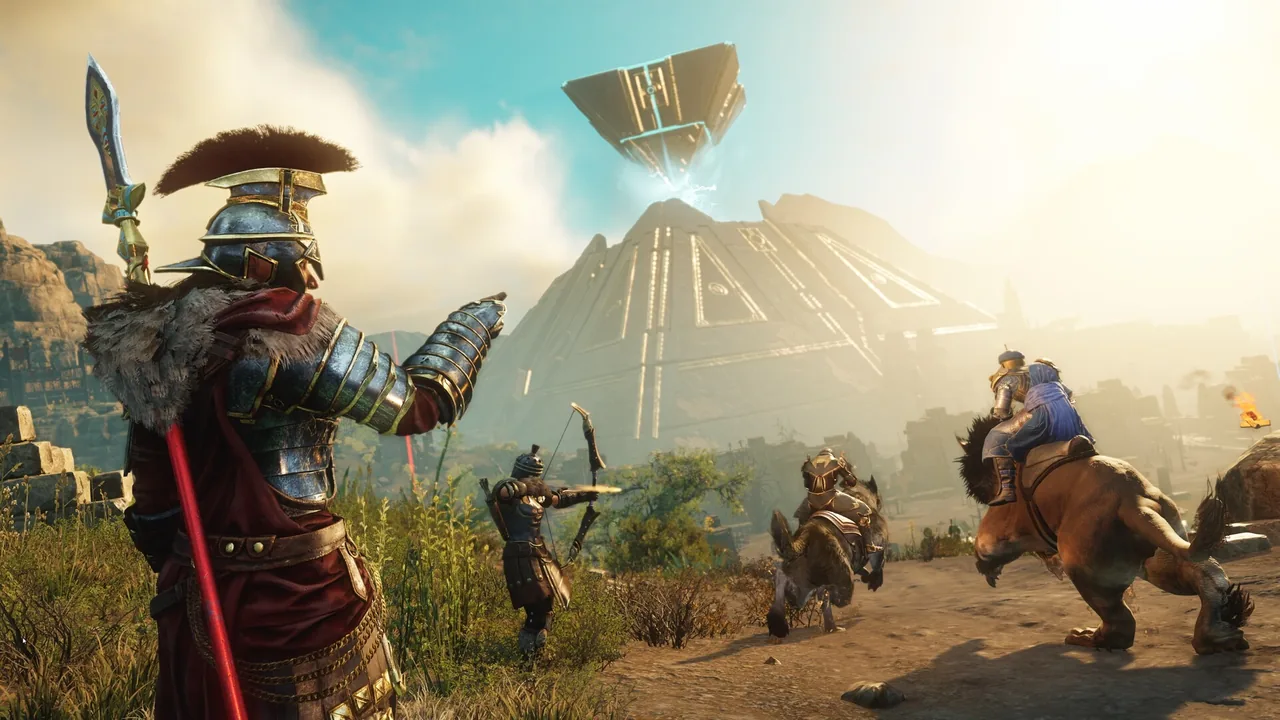
New World: AeternumImage: Amazon Game Studios via Steam -
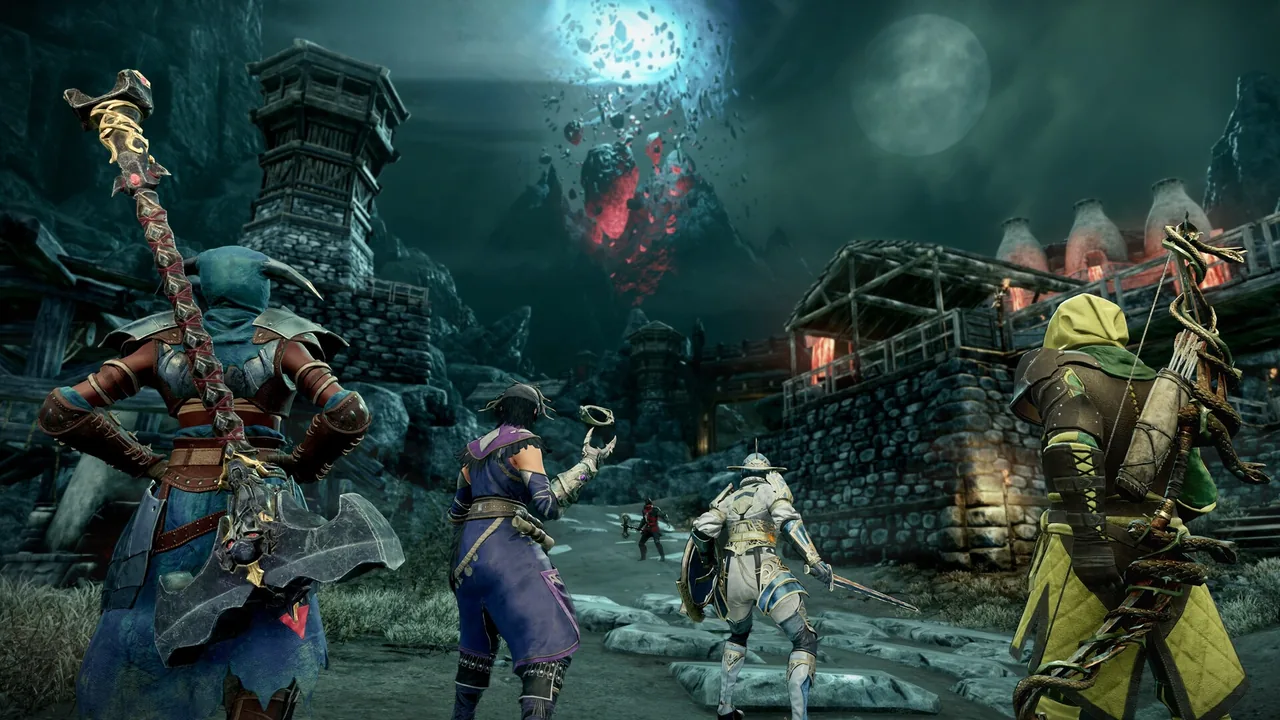
New World: AeternumImage: Amazon Game Studios via Steam -
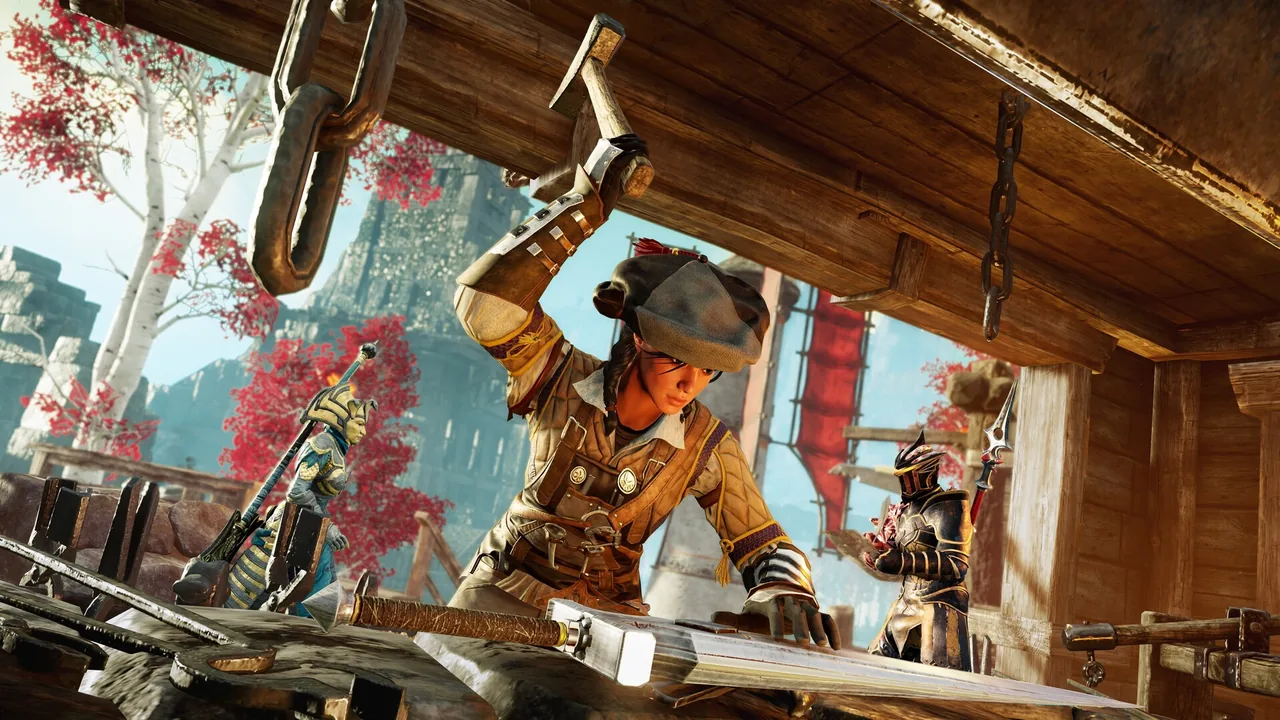
New World: AeternumImage: Amazon Game Studios via Steam -
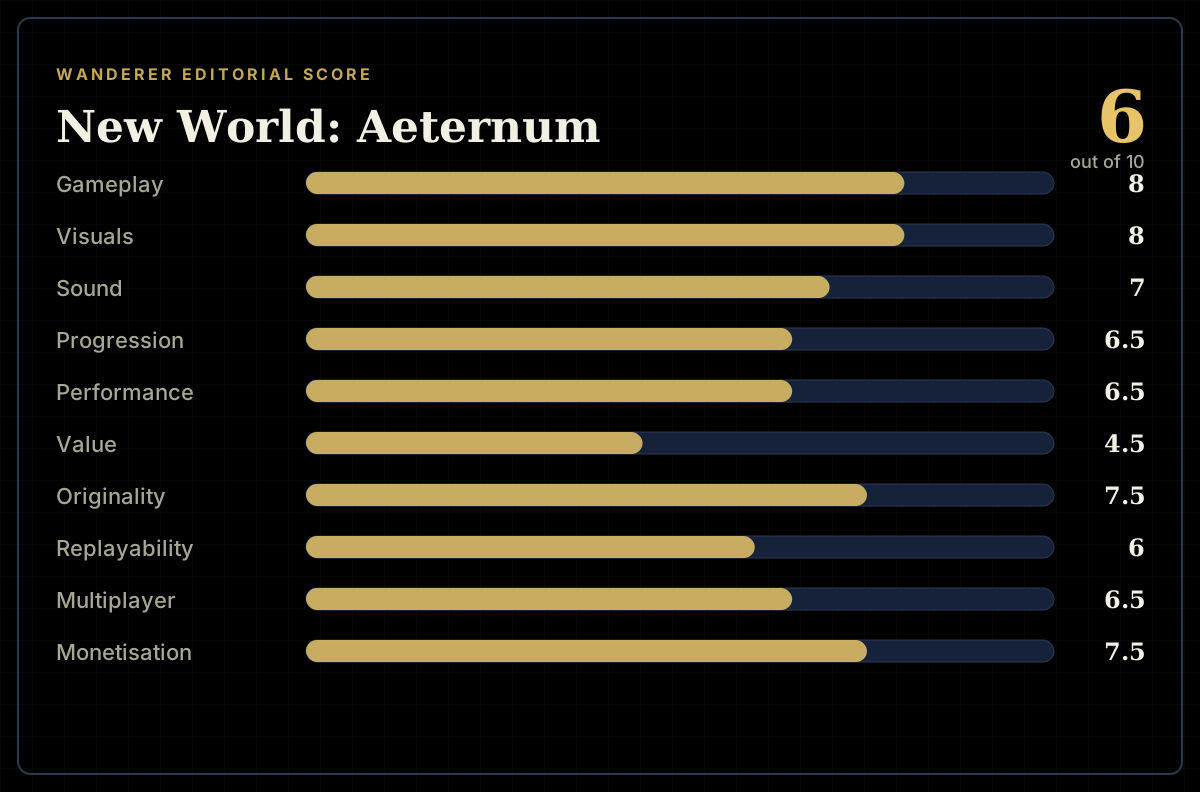
How the review scores each part of the gameWanderer Editorial -
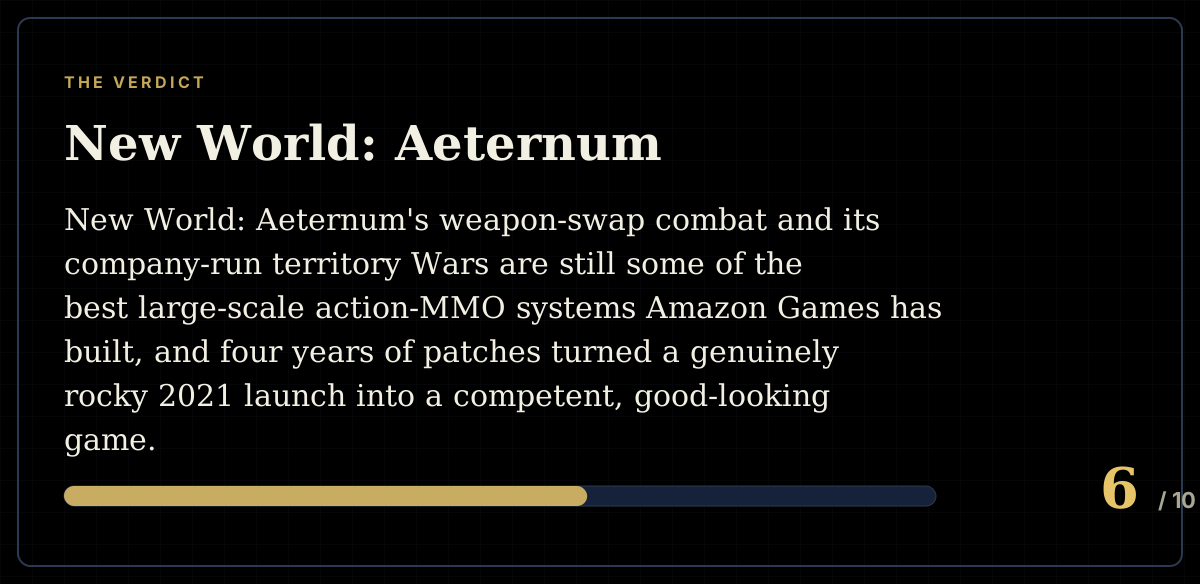
The short versionWanderer Editorial