Game review
EVE Online
8 / 10
- Developer
- Fenris Creations (formerly CCP Games; the studio bought itself back from Pearl Abyss and renamed on 6 May 2026)
- Publisher
- Fenris Creations
- Released
- 6 May 2003
- Platforms
- Windows, macOS
- Genre
- Sandbox MMORPG
- Monetisation
- Free-to-play Alpha clone tier with permanent restrictions, plus an Omega subscription that removes them. PLEX is a tradable in-game item bought with real money that converts directly into subscription time, ships, or ISK via the player market. Skill Extractors and Injectors let a player sell trained skill points to another player for ISK, meaning real money can buy a training-time shortcut indirectly through the player economy
- Players
- Single persistent world shared by every player on a given cluster — no server sharding, no instancing for open space. Corporations and alliances of any size can go to war, and the game's largest recorded fleet battles have run into the tens of thousands of players fighting over hours in one system
The short version
EVE Online is still the only MMO on the market where a decision made badly can cost you months of accumulated progress in about four seconds, and where the game's economy, wars and history are written entirely by the players inside it rather than scripted by a studio. That's not a nostalgia act — Cradle of War's new non-PvP starter region is a genuine, overdue fix to the worst part of joining late, and the underlying systems it's protecting you from learning too fast are still unmatched anywhere else in the genre.
The offline skill-training system is the most quietly important idea here for anyone who reads this site: your character improves on a wall clock, logged in or not, and a subscription buys real progress whether or not you show up. It's the most honest version of "pay for time, not power" the genre has, right up until you notice Skill Injectors let players buy that same progress from each other with real money in one lump sum instead of waiting for it.
Biggest strengths
- Skill training runs on a real-world clock regardless of login state, so a subscription pays for guaranteed character growth rather than gated access to it
- The single-shard economy means nearly every ship, module and structure in the game was built by a player from raw materials someone else mined, making the market itself a genuine strategy layer
- Permanent, insurable-but-real ship loss gives every fight actual stakes that scripted-loss MMOs can't manufacture, and it's the reason EVE's biggest battles get covered as real news events
Biggest weaknesses
- The interface is still built from decades of accumulated overview windows, right-click menus and hotkeys, and nothing in Cradle of War meaningfully shortens the time it takes to become fluent in it
- Skill Injectors mean a wealthy player can buy years of another player's training time in a single purchase, which sits uncomfortably close to pay-to-win even though it never sells a skill Alpha and Omega players can't both eventually train themselves
- Alpha's free tier caps unassisted skill training at 5 million skill points and locks out anything above battleship-class ships, T2 modules and level 4-5 missions, so "free forever" still means a real, permanent ceiling
Who it's for: Players who want their decisions to carry real weight, who find "everything is player-made and losses are permanent" more interesting than reassuring, and who are willing to spend real time — not just money — learning a genuinely unfamiliar interface before the game opens up. A poor fit for anyone who wants combat they can read in a weekend, wants their progress protected from other players, or resents ever being the target of a plan someone else spent a week building.
Our recommendation: Start as a free Alpha clone in the new Exordium starter region rather than jumping straight into open space — it removes the single biggest onboarding failure this game has had for two decades. Queue a long skill plan the moment you understand what you're training for, since that's the one form of progress that never stops, subscribed or not. Decide on Omega only once you've felt the Alpha ceiling yourself, not before.
8 / 10
EVE Online turned twenty-three this May, and the studio that makes it doesn't share a name with the one that made it last year. CCP Games bought itself back from Pearl Abyss on 1 May 2026 for a fraction of the roughly $225 million Pearl Abyss originally paid for it in 2018, and five days later renamed itself Fenris Creations — partly, by its own CEO's account, because "CCP" had started reading as an unwanted acronym in a tense geopolitical climate, and partly as the opening move of an independent chapter that includes a minority-stake AI research partnership with Google DeepMind. None of that changes what New Eden actually is to log into. It changes who signs the checks, and it's worth knowing before you go looking for CCP's name on anything and can't find it.
What hasn't changed, and what actually matters for a review, is the thing EVE has done since 2003 that nothing else in the genre has fully copied: one server, one universe, an economy built entirely by the players in it, and losses that are real. Everything else about this game — the notoriously punishing interface, the skill system, the twenty-year backlog of lore — is downstream of that single design decision. Judge the rest of it against that, not against whichever theme-park MMO you played last.
What actually makes this game different
Most MMOs solve the "everyone needs their own dungeon" problem with instancing or server sharding. EVE doesn't. Every player on a given cluster shares the same star systems, the same market, the same ongoing wars, in real time. That single-shard design is the reason EVE's biggest fights get covered by outlets that don't normally cover games at all — thousands of players committing ships built from materials someone else mined, refined, manufactured and hauled across dangerous space, in a battle whose outcome nobody can undo afterward. There's no server reset, no seasonal ladder wiping the slate. History in New Eden just keeps accumulating, and players — not quest designers — are the ones writing it.
The economy underneath that is almost entirely player-built. Nearly every ship, module, structure and piece of ammunition in the game exists because a player mined the ore, ran the industry job, and hauled the finished product to a market hub, all priced by supply and demand rather than a vendor's fixed sell price. That's the same design philosophy Albion Online runs on a smaller, more accessible scale — full-loot PvP, a fully player-crafted item economy, real consequences for losing a fight — and comparing the two is instructive. Albion compresses that loop into something a newer player can grasp inside a weekend. EVE stretches it across star systems, industry chains and years of accumulated infrastructure, and the payoff for tolerating that scale is a universe whose economy is genuinely global and genuinely emergent, not a close approximation of one.
None of it works, though, without the permanence. Ships in EVE can be insured, but insurance covers a fraction of the replacement cost, not the fitted modules inside, and not the weeks of industry work or ISK that went into assembling the whole package. Lose a well-fitted ship in a fight you shouldn't have taken and that loss is real, immediate and non-negotiable. That's the mechanical engine behind every famous EVE story you've ever half-heard about: it isn't that players are more dramatic than in other games, it's that the game is one of the only MMOs left where a bad decision can cost you something you can't simply respawn to get back.
Skill training: the mechanic this site's readers actually care about
This is the section worth reading closely if you're coming from Wanderer. EVE trains skills on a real-world clock. Queue up a skill plan, log out, go to work, come back three days later, and your character has grown exactly as much as if you'd spent those three days staring at a progress bar. Training speed doesn't depend on being logged in, doesn't require an active session, and doesn't reward marathon play over patient, occasional play. It is, functionally, idle progression applied to an entire MMO's character-advancement system, running continuously for as long as the account exists — which for some subscribers has now been over two decades.
Whether that's respectful or exploitative depends entirely on which side of the Alpha/Omega line you're standing on, and this is where the honest answer gets complicated. As a free Alpha clone, training runs, but at half the speed of a subscribed Omega character, and it stops entirely once you cross roughly 5 million unassisted skill points — after that ceiling, further training on an Alpha account requires Skill Injectors bought from another player, capping out around 20.5 million total. Subscribe to Omega and both limits disappear: full training speed, no skill-point ceiling, access to any ship and skill in the game. The offline-training pitch is genuinely honest at the Omega tier — you are not paying to unlock content, you are paying to keep a background process running at full speed, and it keeps running whether or not you show up that week. It's the closest thing the MMO genre has to Wanderer's own "your progress doesn't stop when you close the tab" philosophy, just wrapped in fifteen years more institutional history and a subscription instead of a free account.
Where it gets murkier is Skill Injectors, which let a well-funded player buy someone else's already- trained skill points outright, converting a lump of real money (via PLEX, see below) into years of someone else's patient offline training compressed into one purchase. That's not technically selling anything an Alpha or Omega player couldn't eventually train for themselves — the queue is the same length for everyone, in theory — but it does mean the "everyone trains at the same absolute rate over time" pitch has a real asterisk on it for anyone with a large enough wallet.
Alpha, Omega and what a new account can actually do right now
Sign up today and you start as an Alpha clone, free forever, no trial timer. That gets you real access to the game: you can fly and fight in anything up to battleship-class combat ships and basic industrial haulers, run missions up through level 3, mine, manufacture, and participate in the same single-shard economy as every subscriber. What Alpha doesn't get is most Tech 2 modules, level 4 and 5 missions, the ability to log in more than one account at a time, and — as covered above — unrestricted skill training past the 5-million-point mark. It's a genuinely playable free tier rather than a demo dressed up as one, and it's more generous than plenty of "free-to-play" MMOs that gate entire zones behind a paywall from hour one.
The bigger change for new players in 2026 isn't the Alpha tier itself, it's Cradle of War's Exordium — the first permanently non-PvP starter region in the game's history. For twenty-three years, EVE's single-shard, no-safe-zones design meant a brand-new character could, in theory, be podded by a veteran player within their first hour in open space, and plenty were. Exordium fixes the specific failure mode that gave EVE its reputation as unwelcoming to newcomers: a dedicated region where rookies run missions, combat sites and hacking content with zero player-versus-player risk while they actually learn the interface, alongside a new epic story arc and a titles and achievements system to give early progress some shape. It's a genuinely overdue design admission, not a cosmetic add-on, and it directly targets the single most common complaint in years of new-player feedback: that the learning cliff and the risk of being ganked before you understand why arrived at the same time.
It does not, and can't, fix the interface itself. Overview windows, right-click context menus stacked three deep, a fitting screen that assumes you already know what a mid-slot is — none of that gets easier just because the space around a new character is safer. Exordium buys you time to learn the UI without also losing a ship while you do it. It doesn't make the UI itself any less of a wall.
PLEX, subscription cost, and whether any of this is pay-to-win
Omega currently runs $20 USD on a rolling monthly plan, dropping to $16 on a 3-month commitment, $14 on 6 months and $12 on a 12-month plan billed at $144 up front — checked directly against the official EVE Online store on 1 August 2026. That's broadly in line with the genre's standard subscription MMO pricing, World of Warcraft included, though EVE's longer-commitment discounts are steeper than most.
PLEX is where EVE's monetisation gets genuinely interesting, and it's worth being precise about what it does rather than reaching for a label. PLEX is a real, tradable in-game item, purchasable for real money (NZ$40 buys 500 on Steam, scaling up to NZ$1,040 for 20,000) or earned entirely through play and sold on the player market for ISK. It converts directly into Omega subscription time, so a player who'd rather grind ISK than pay a subscription fee can, and does — this is a long-standing, developer-sanctioned alternative to a recurring card charge, not a workaround Fenris Creations tolerates reluctantly. That's a genuinely fairer deal than most subscription MMOs offer: the game explicitly builds in a way to pay for your account with time instead of money.
The part that complicates a clean "not pay-to-win" verdict is that PLEX also buys ISK indirectly (sell PLEX on the market, buy ships and modules with the proceeds), and ISK — via Skill Injectors — can buy character progression outright. So the honest answer is layered: EVE doesn't sell stat-boosted gear or exclusive power directly for cash the way a mobile RPG might, and the skill queue's absolute speed cap is the same for every subscriber regardless of spend. But real money can buy a materially faster route to a stronger, better-equipped character than patient play alone, through a chain of legitimate, player-facing systems rather than a direct storefront purchase. Whether that clears the bar for "pay-to-win" depends on how strict your definition is — it doesn't sell victory directly, but it sells a very real head start to whoever can afford the most PLEX, and recurring player feedback treats the resulting gap between older, wealthier accounts and new ones as one of the game's most persistent frustrations.
Combat, and why the interface is the real barrier
EVE's combat reads as slow and clicky to anyone arriving from an action MMO, because it is — targeting, orbiting, module activation and range management are all handled through hotkeyed UI elements rather than direct movement input, and the skill in a fight is closer to fleet positioning and target calling than reflexes. That's by design, and once the vocabulary clicks — tackle, DPS, logistics, EWAR — the tactical layer underneath is genuinely deep, especially at fleet scale where a well-called battle looks more like real-time strategy than an MMO scrap. Getting to that point of fluency is the actual product being sold here, and it takes real hours, not a tutorial's worth.
Current player feedback consistently returns to two specific frustrations that Exordium doesn't touch: gate camping and ganking by organised groups waiting for undefended targets outside safe space, and the widening gap between new characters and veteran accounts running multiple subscriptions in parallel (multiboxing, which Alpha accounts can't do at all and which meaningfully compounds a wealthy veteran's advantage). Neither is new to 2026, and neither is likely to change — they're downstream of the same permanent-consequence design that makes EVE's fights matter in the first place. Read those complaints for what they usually are: not a broken game, but an accurate description of what "the world doesn't protect you" actually costs a newcomer who wanders past Exordium's borders before they're ready.
Who this is actually for, and who should skip it
EVE Online rewards patience, planning and a willingness to lose things you spent real time building. If that description sounds tense rather than appealing, this isn't your game, and no amount of Exordium hand-holding changes that — the safe region is a ramp, not a destination. If you want combat you can learn by feel inside your first session, want your gear protected from other players, or want a single authored story to follow the way Final Fantasy XIV structures its entire early game around one Main Scenario Quest, look elsewhere in the genre. Both of those are well-designed, worthwhile MMOs that solve different problems than EVE is trying to solve.
If instead you're drawn to a genuinely single-shard universe where the economy, the politics and the history are built by players rather than a content calendar, and you're willing to spend real hours becoming fluent in an interface that owes nothing to modern UX conventions, EVE remains unmatched. Nothing else currently on the market delivers stakes this real at this scale.
Verdict
EVE Online in 2026 is the same game it's always fundamentally been — a single-shard, player-built universe where losses are permanent and every fight matters because of it — wearing a new corporate name and, for the first time in two decades, a real answer to its worst onboarding problem. Exordium doesn't fix the interface, and it doesn't close the gap between a brand-new character and a ten-year veteran running four accounts at once, but it does mean a new player's first hours are no longer a coin flip against a gate camper. That's a meaningfully better place to start than this game has offered in years.
The offline skill-training system is the standout idea for anyone reading this on a site built around the same principle: progress that keeps happening while you're away, priced honestly at the Omega tier and free but genuinely capped at the Alpha tier. Skill Injectors put a real asterisk on how level the training queue actually is between a patient player and a wealthy one, and the interface remains the single biggest reason people bounce off a game this well-regarded — but neither of those undercuts what EVE does that nothing else does: make a decision actually cost something. Players who want their own persistent progress to keep ticking along without ever risking it might also want to look at Wanderer.
Pros and cons
Pros
- Skill training runs on a real-world clock regardless of login state, so a subscription pays for guaranteed character growth rather than gated access to it
- The single-shard economy means nearly every ship, module and structure in the game was built by a player from raw materials someone else mined, making the market itself a genuine strategy layer
- Permanent, insurable-but-real ship loss gives every fight actual stakes that scripted-loss MMOs can't manufacture, and it's the reason EVE's biggest battles get covered as real news events
- Cradle of War's Exordium region finally gives new characters a dedicated non-PvP space to learn combat, hacking and industry basics before facing players who've been doing this for years
- PLEX gives players a legitimate, developer-sanctioned way to fund their subscription entirely through in-game trading rather than a recurring card charge, if they're willing to earn it
Cons
- The interface is still built from decades of accumulated overview windows, right-click menus and hotkeys, and nothing in Cradle of War meaningfully shortens the time it takes to become fluent in it
- Skill Injectors mean a wealthy player can buy years of another player's training time in a single purchase, which sits uncomfortably close to pay-to-win even though it never sells a skill Alpha and Omega players can't both eventually train themselves
- Alpha's free tier caps unassisted skill training at 5 million skill points and locks out anything above battleship-class ships, T2 modules and level 4-5 missions, so "free forever" still means a real, permanent ceiling
- Veteran players with years of accumulated skills, ISK and multiboxed alt fleets create a power gap new characters cannot close quickly, and recurring player feedback treats this as the single biggest reason newcomers bounce off
- A meaningful slice of current player sentiment reads as fatigue rather than anger — long-time subscribers who know exactly what they're paying for and are questioning whether the game still respects that time as well as it used to
Screenshots
-
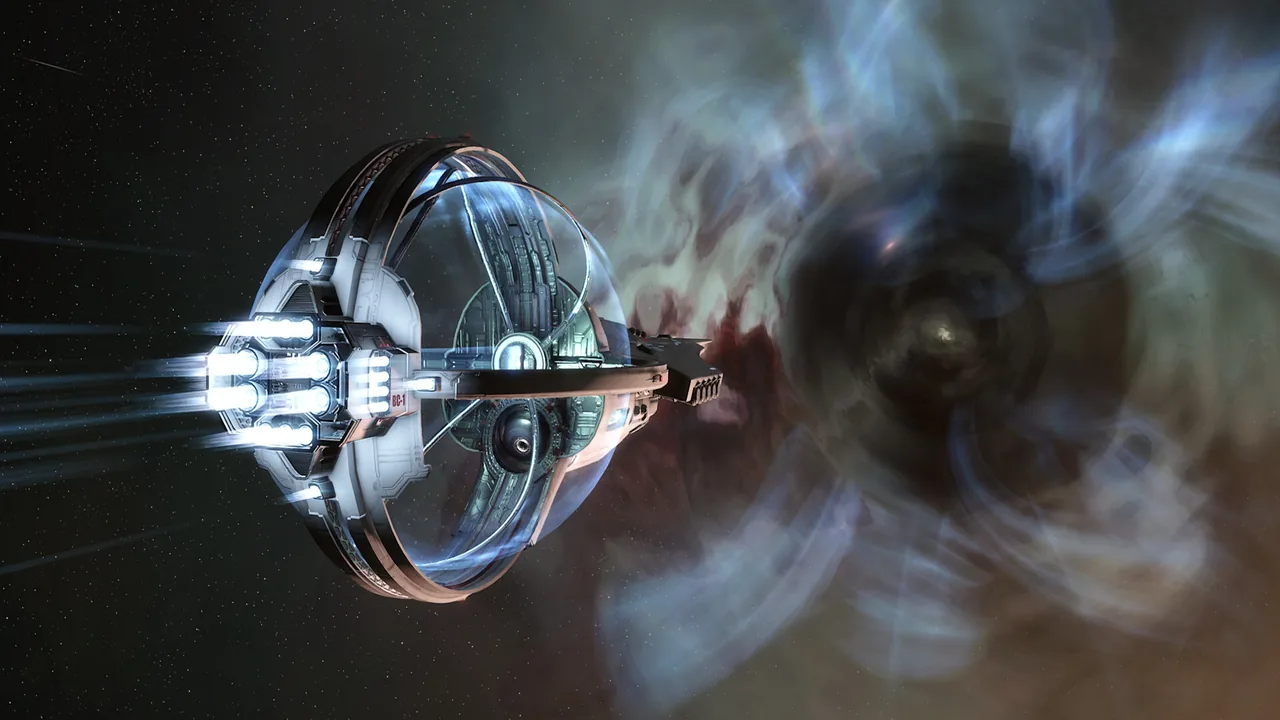
EVE OnlineImage: Fenris Creations via Steam -
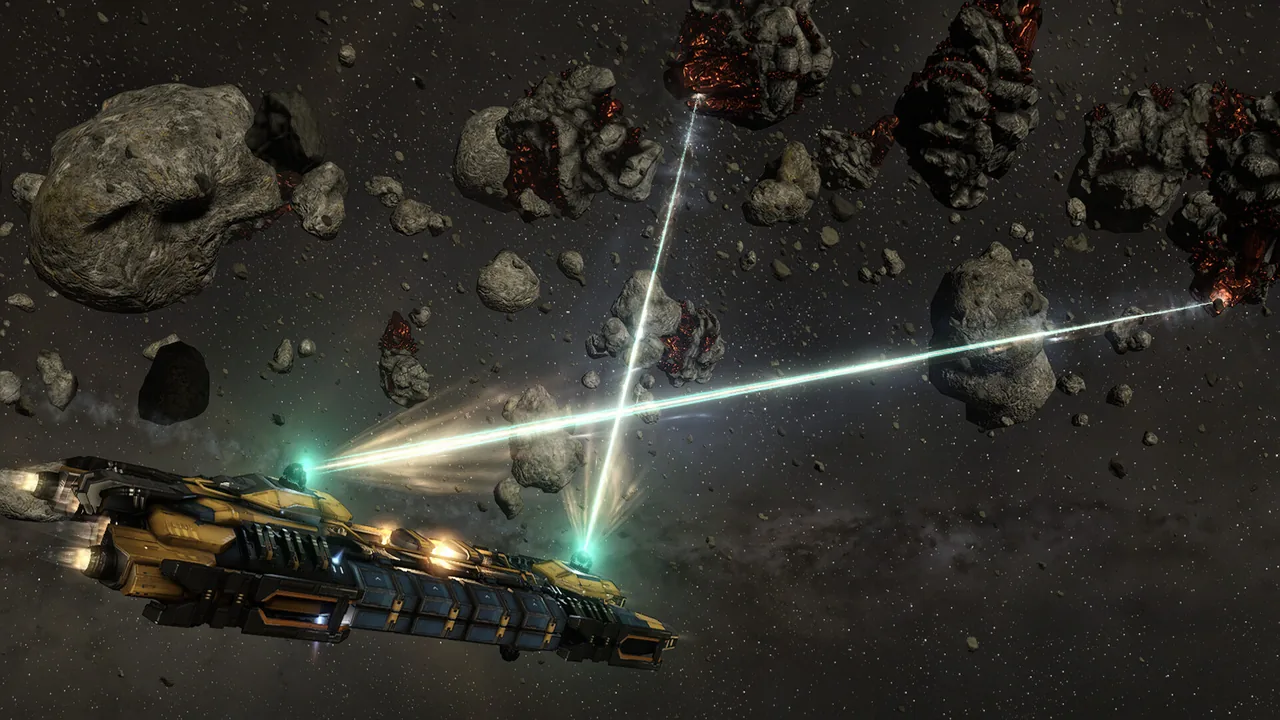
EVE OnlineImage: Fenris Creations via Steam -
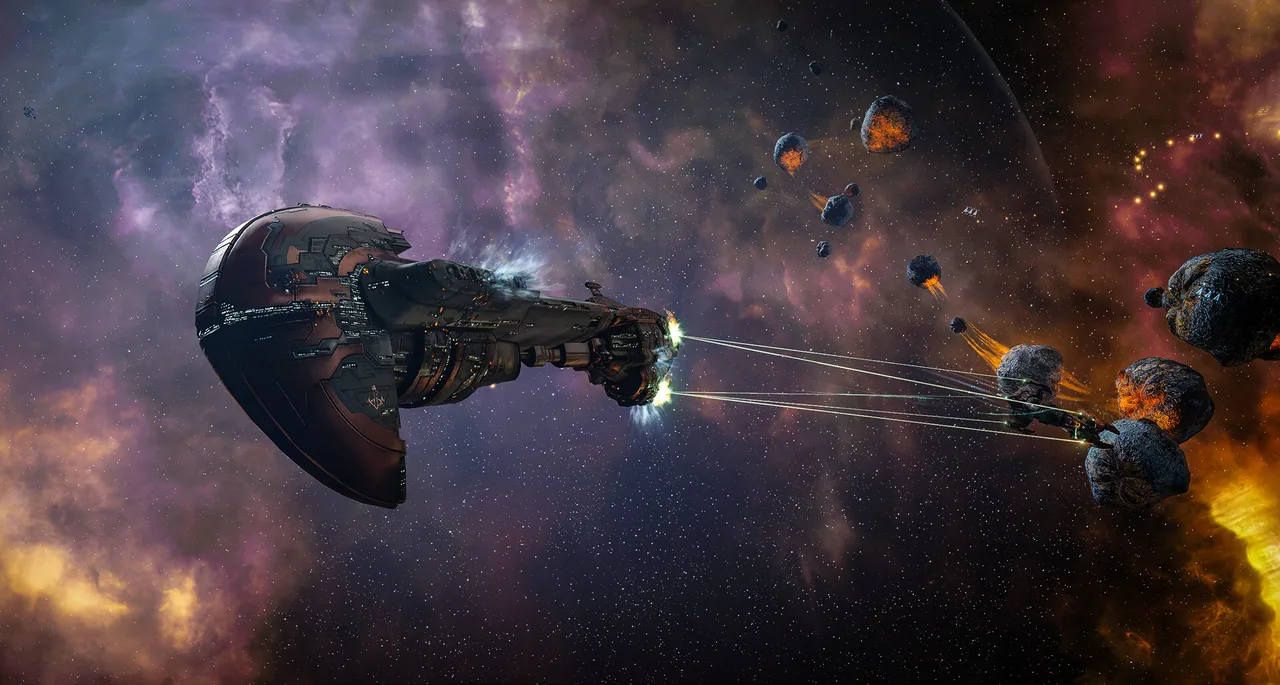
EVE OnlineImage: Fenris Creations via Steam -
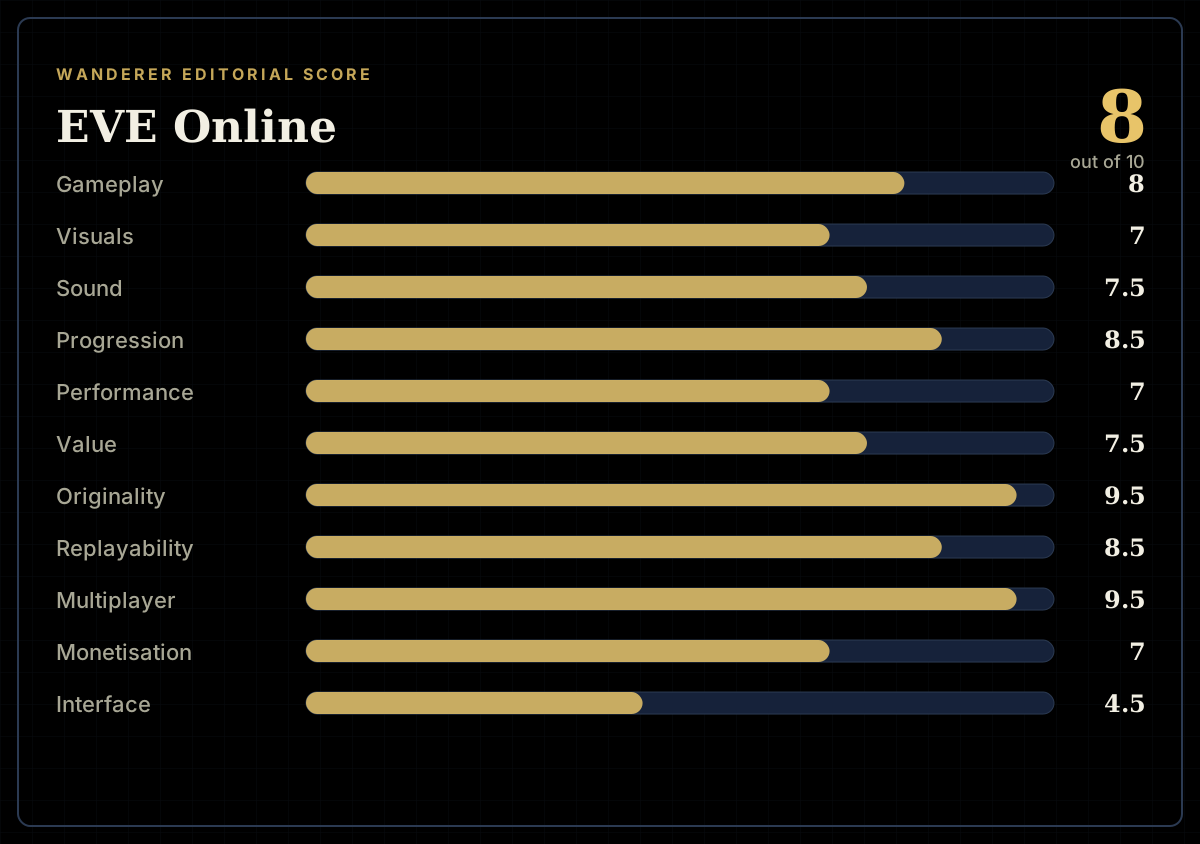
How the review scores each part of the gameWanderer Editorial -
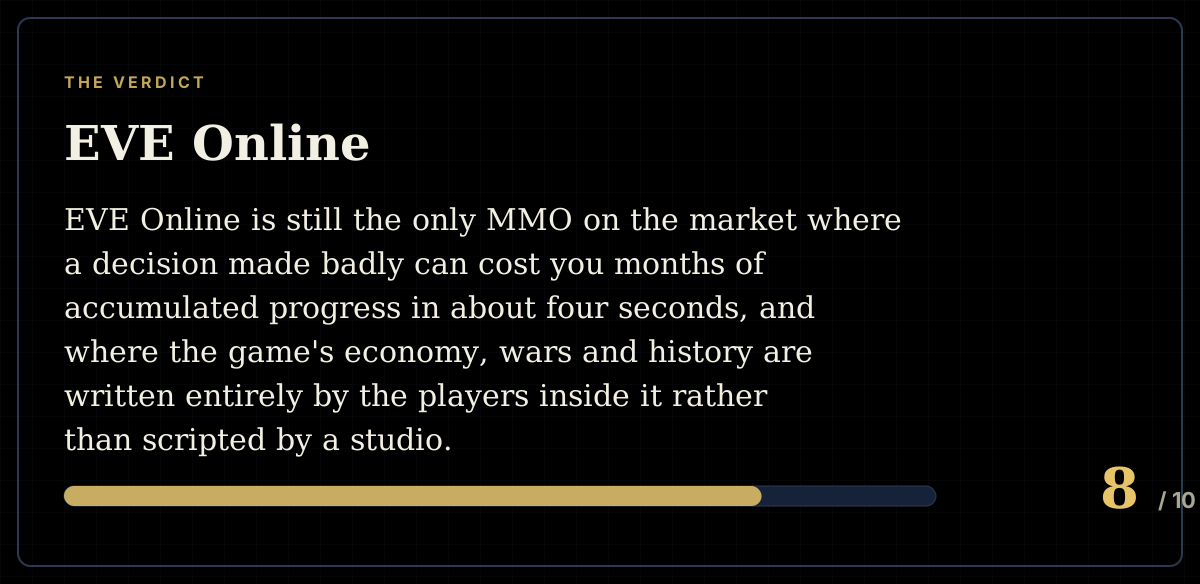
The short versionWanderer Editorial