Game review
The Lord of the Rings Online
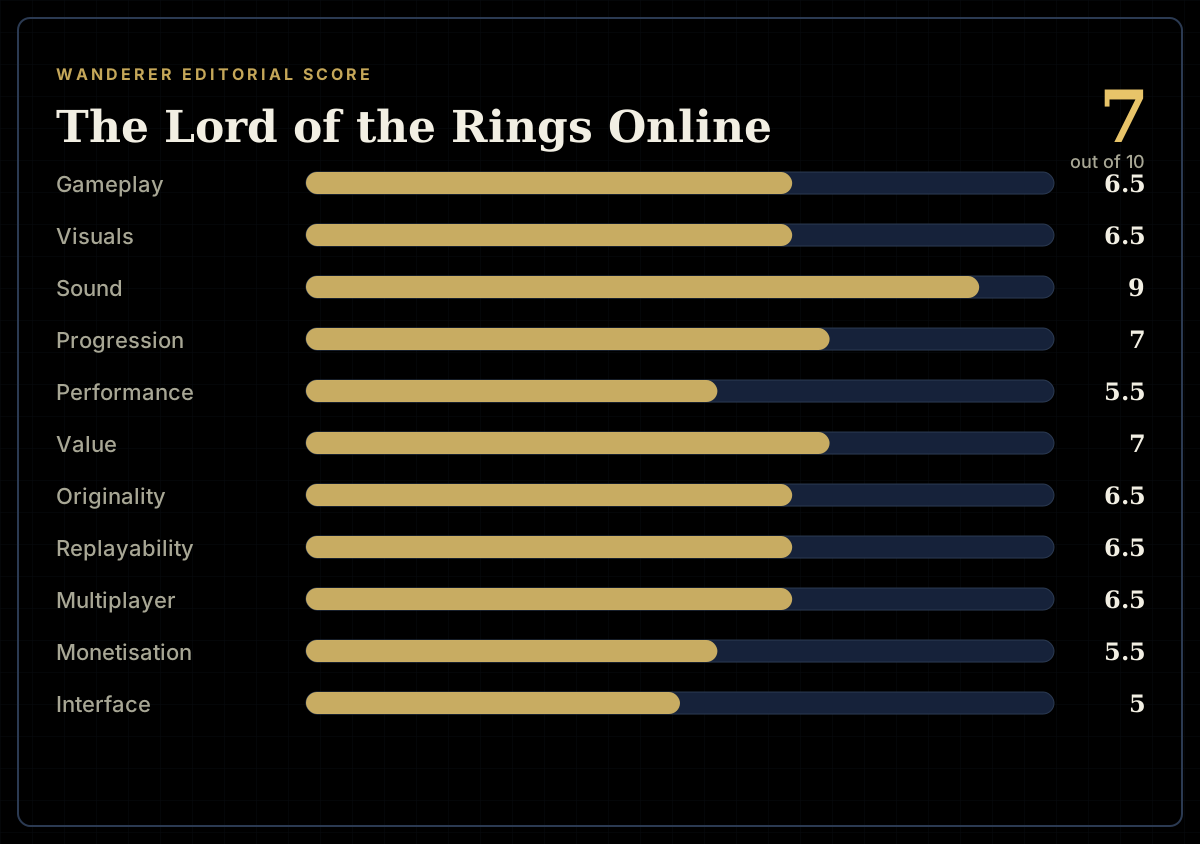
7 / 10
- Developer
- Standing Stone Games
- Publisher
- Daybreak Game Company
- Released
- 24 April 2007
- Platforms
- Windows
- Genre
- MMORPG
- Monetisation
- Free-to-play with three account tiers — Free, Premium (unlocked permanently after spending at least US$1 in the store) and VIP (a recurring subscription) — layered under a LOTRO Points cash shop and separately purchased expansions. VIP does not include the last several years of expansions; those are bought on top regardless of subscription status
- Players
- Massively multiplayer persistent world spread across multiple regional servers, including dedicated Legendary (progression-capped) worlds; six-player fellowships, raid-scale instances, and Monster Play — a class-based PvMP mode pitting players against player-controlled monsters — with population healthy enough to sustain grouping but not large by genre standards
The short version
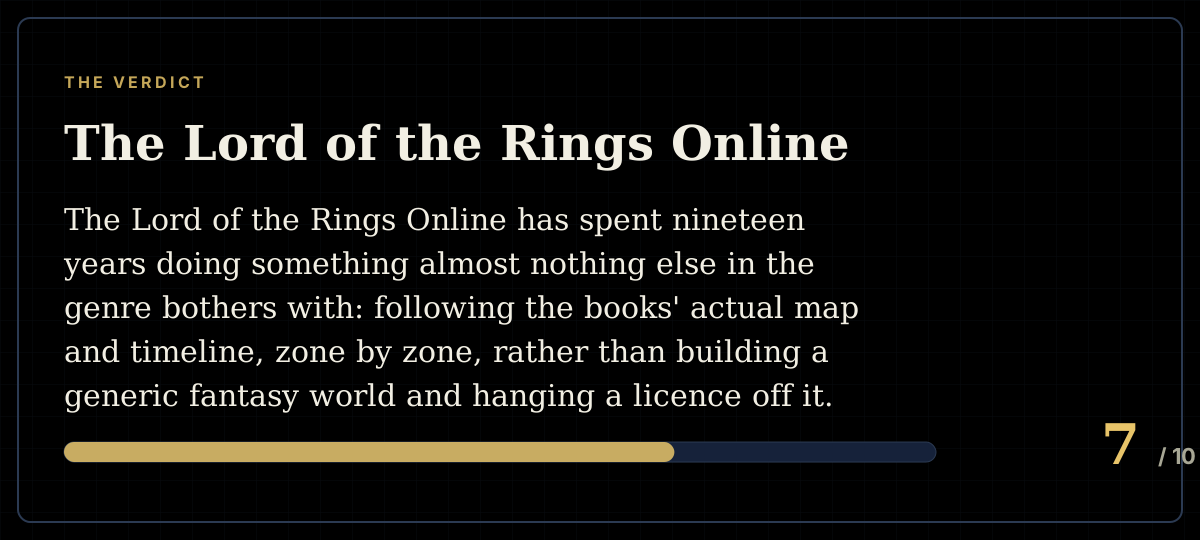
The Lord of the Rings Online has spent nineteen years doing something almost nothing else in the genre bothers with: following the books' actual map and timeline, zone by zone, rather than building a generic fantasy world and hanging a licence off it. Moria is still a genuine multi-level underground region rather than a single instanced dungeon, the Epic Story still runs parallel to the Fellowship's own journey rather than around it, and Kingdoms of Harad just closed an entire arc of that story with real voice work behind it.
None of that erases what nineteen years of accumulated systems, a dated engine and a genuinely confusing purchase structure cost a new player. VIP itself is cheap next to World of Warcraft or Final Fantasy XIV's subscriptions — but it doesn't include the expansions you'll actually want, and Standing Stone Games won't tell you what those cost until you're already at the till.
Biggest strengths
- Moria is still one of the only true multi-zone underground regions in the MMO genre, and the world's geography and timeline follow Tolkien's maps with real discipline rather than gesturing at them
- The player music system supports both free-form instrument playing and ABC-notation sheet music across dozens of instruments, backed by a community library of tens of thousands of shared songs
- Legendary Item Imbuement replaced the old reforging treadmill — an imbued weapon stays finished instead of needing to be rebuilt every few levels
Biggest weaknesses
- Neither VIP nor the Premium tier includes the last several expansions — Fate of Gundabad, Corsairs of Umbar and, by the same pattern, Kingdoms of Harad all have to be bought separately on top of any subscription
- Standing Stone Games doesn't publish a plain price for any Kingdoms of Harad edition outside the in-client checkout, making "what will this actually cost me" needlessly hard to answer before committing
- The client and launcher still generate a steady stream of install, login and stability complaints on Steam, years into an ongoing 32-bit-to-64-bit server migration
Who it's for: Tolkien readers and patient MMO players who value a world built with real discipline around its source material more than they value combat polish or a modern interface. A poor fit for anyone who wants to know exactly what they're signing up for before they start, or who has no tolerance for an engine and UI that still show their 2007 bones.
Our recommendation: Play free first — the Free tier is genuinely playable, not a demo — through at least the Shire and Bree-land before spending anything. If the world and the Epic Story pull you in, VIP at its current price is the better long-term buy over piecemeal LOTRO Points purchases, but budget separately, and honestly, for whichever recent expansion you actually want; VIP won't hand it to you.
7 / 10
Most licensed MMOs treat their source material as a coat of paint. The Lord of the Rings Online has spent nineteen years doing the opposite: it follows Tolkien's actual geography, walks the actual timeline of the War of the Ring in something close to real narrative order, and builds entire regions — Moria chief among them — as genuine, three-dimensional places rather than a single instanced backdrop with a licensed name stapled to the loading screen. That discipline is the whole case for this game in 2026, and it is a real one. It is also not free. Nineteen years of walking that same faithful map has left the game with an engine, an interface and a monetisation structure that all show their age in ways a reader deciding whether to start today needs to hear plainly, not gestured at.
The developer is Standing Stone Games, a Massachusetts studio formed from the remains of Turbine, Inc. after Turbine closed in November 2016; the publisher is Daybreak Game Company, which took over publishing duties the same month and has itself been owned by the Swedish holding group Enad Global 7 since December 2020. Turbine built and shipped the original game on 24 April 2007 as a subscription-only MMO, converted it to free-to-play in September 2010 after subscriber numbers sagged, and that conversion reportedly tripled revenue within six months — the single decision that kept this game alive long enough to still be getting numbered content updates in 2026.
Built to the map, not around it
The corridor from Bree to the Shire to Rivendell exists in Middle-earth's actual relative geography, not a designer's convenient reshuffling of it. Regions unlock roughly in the order the books visit them, the Epic Story quest line runs the player through the same beats as the Fellowship's own journey, and side zones like the Old Forest or the Barrow-downs exist because the book spends real pages there, not because the map needed filling. Moria, added as the game's first expansion in 2008, is still the clearest payoff of that approach: a sprawling, genuinely disorienting underground expanse spanning several connected zones, dark enough that light sources matter, vast enough that new players reliably get lost in it the same way Tolkien's own characters do. Nothing else in the MMO genre has built an underground region with that much actual scale and commitment to the source geography, and Moria alone is worth experiencing even from a player who finds the rest of the game dated.
The cost of that faithfulness is pacing. This is a world built around walking, in the most literal sense — swift travel exists but is metered and partly a VIP perk, and mounted travel time is treated as a feature of the world rather than a delay to design out of it. The earliest zones, dating from 2007 through the Moria era, lean on the kill-ten-wolves and fetch-quest vocabulary that was standard MMO design language at the time and has aged the way you'd expect. Later expansions — Rohan onward, and especially the Gondor and Mordor-era content — noticeably tighten quest structure and pacing, but a new character still has to walk through the earlier, slower design first. That's a real toll for a 2026 newcomer used to more efficiently paced modern MMOs, and the honest trade-off for a world this committed to its source material over retention metrics.
The Epic Story, from Bree to Harad
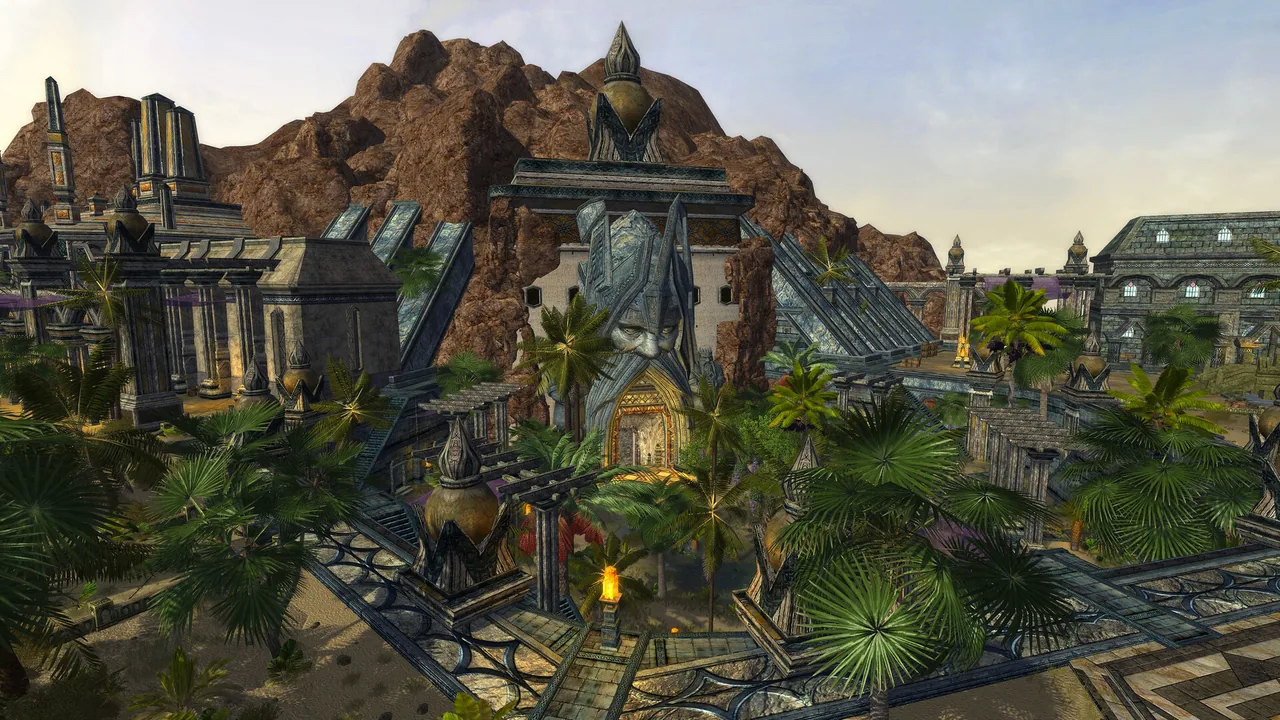
The Epic Story is the game's actual spine, organised into Volumes, Books and Chapters that run parallel to — and eventually alongside — the Fellowship's own journey, following your character through the War of the Ring and well beyond it into original post-trilogy content. It has held up better than most nineteen-year-old MMO main quest lines specifically because Standing Stone Games keeps investing real production value in it rather than treating it as legacy content to maintain and move past. Kingdoms of Harad, the current expansion, closes an entire arc — the "Song of Waves and Wind" — with the level cap rising from 150 to 160, four new regions (the blighted lands of Adagîm, the arid gorges of Kíghan, the scorched plateaus of An Shêru and the lakes of Idagâl), more than 400 quests and upward of 2,300 lines of new voice-over. That's not a museum piece coasting on nostalgia; it's a studio still treating its main story as the flagship content rather than an afterthought bolted onto a loot treadmill, which is more than can be said for several MMOs twice its budget.
Legendary Items, without the old grind
Legendary Items were, for years, the single most criticised system in the game — class-specific weapons that levelled alongside the character but constantly needed reforging, re-identifying and re-slotting legacies as gear thresholds passed, turning what should have been a signature weapon into a recurring chore. The Legendary Item 2.0 revamp replaced the old legacy grind with Traceries, earned through quests, bartering and drops, and Enhancement Runes that improve them. The more important change is Imbuement: an opt-in system, available from level 100, that permanently transforms a Legendary Item once and for all — once imbued, it doesn't need to be reforged or reconfigured again. That's a genuine fix to a genuine, long-standing complaint, even if the system around it, as community guides still note, remains one of the least well-explained parts of the game to a player encountering it cold.
The sound of Middle-earth
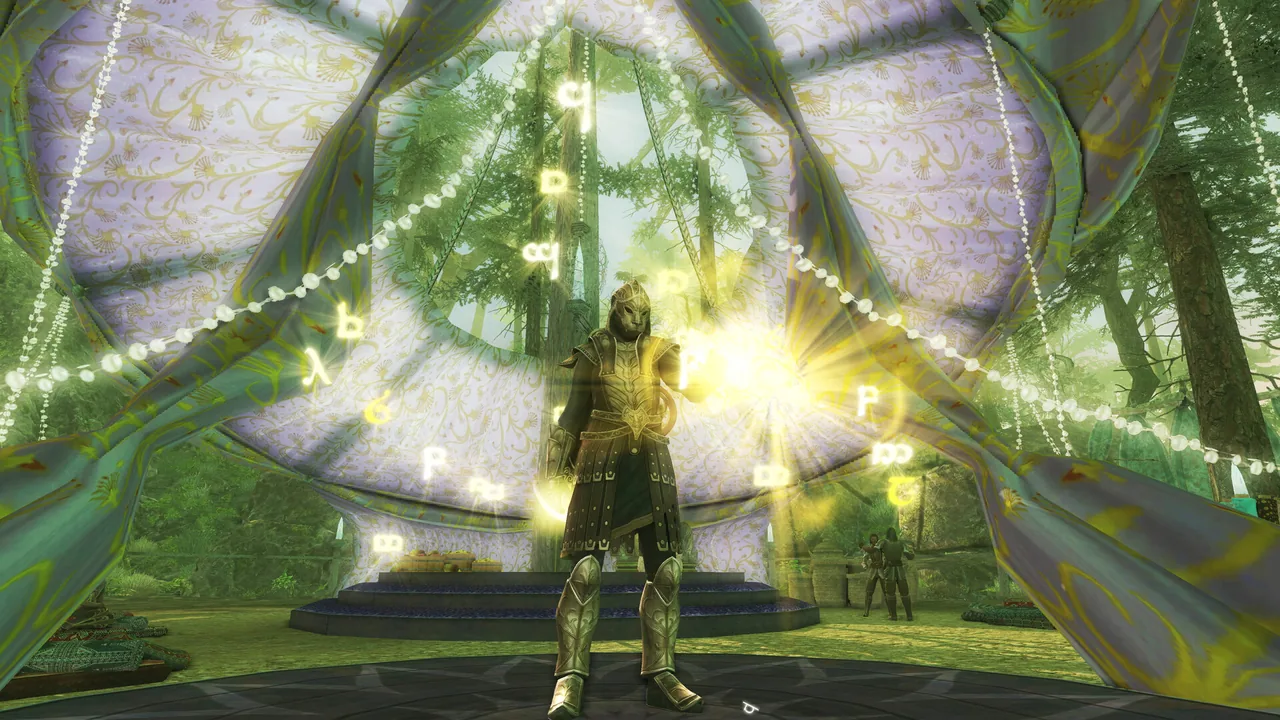
Where this game has never had a competitor is music. Beyond an orchestral score built specifically for the setting, LOTRO ships a genuine player music system: real instruments playable either free-form in real time or by loading ABC-notation sheet music files, with a community that has built and shared more than 20,000 playable songs through third-party tools like the LOTRO Music Book plugin. Bards busk in Bree and the Shire, organised bands perform full arrangements at player events, and the whole system exists as a piece of genuine, still-active player culture nearly two decades in — not a novelty feature quietly abandoned after launch. Combined with environment art that, at its best, genuinely earns the "living watercolour painting" comparisons long-time players reach for, atmosphere is this game's least arguable strength. It's also the strength least visible from a screenshot or a trailer, which is probably why it gets undersold in most coverage.
Free, Premium and VIP: what the tiers actually restrict
LOTRO runs three account tiers, and the differences are concrete rather than vague. A Free account gets two character slots, 45 bag slots, a limited set of quest packs and skirmishes purchasable individually, one Monster Play class, and Rest XP that has to be bought rather than accruing automatically. Spend at least US$1 and the account permanently upgrades to Premium — five character slots, the same 45 bag slots and the same limited quest-pack access, but with a handful of quality-of-life differences unlocked for good. VIP, the recurring subscription, is the only tier that includes every quest pack and all 19 skirmishes by default, opens all seven Monster Play classes, grants seven character slots and 75 bag slots, gives automatic Rest XP and a daily +100% XP bonus, unlocks exclusive Legendary (progression) servers, and pays out 500 LOTRO Points a month toward the cash shop. Judged purely on what it unlocks, VIP at US$14.99 a month — or effectively US$8.33 on the annual plan — is genuinely competitive against World of Warcraft's flat US$14.99 or Final Fantasy XIV's US$14.99 Standard tier.
The asterisk, and it's an important one: VIP's own product page explicitly excludes Fate of Gundabad and Corsairs of Umbar from "all quest packs included," and Kingdoms of Harad follows the same pattern as every expansion before it. Subscribing does not hand you the content that's actually current. A VIP subscriber in good standing on the day Kingdoms of Harad launched still had to buy Kingdoms of Harad separately to play it. That's a materially different deal from Final Fantasy XIV, where the subscription is the entire ongoing cost structure once the expansion is bought, or from World of Warcraft, where a single current-expansion purchase now unlocks the entire back catalogue. LOTRO's model is closer to The Elder Scrolls Online's split between ESO Plus and separately purchased Chapters — except ESO at least prices its Chapters plainly on its own storefront.
What a new player actually has to pay
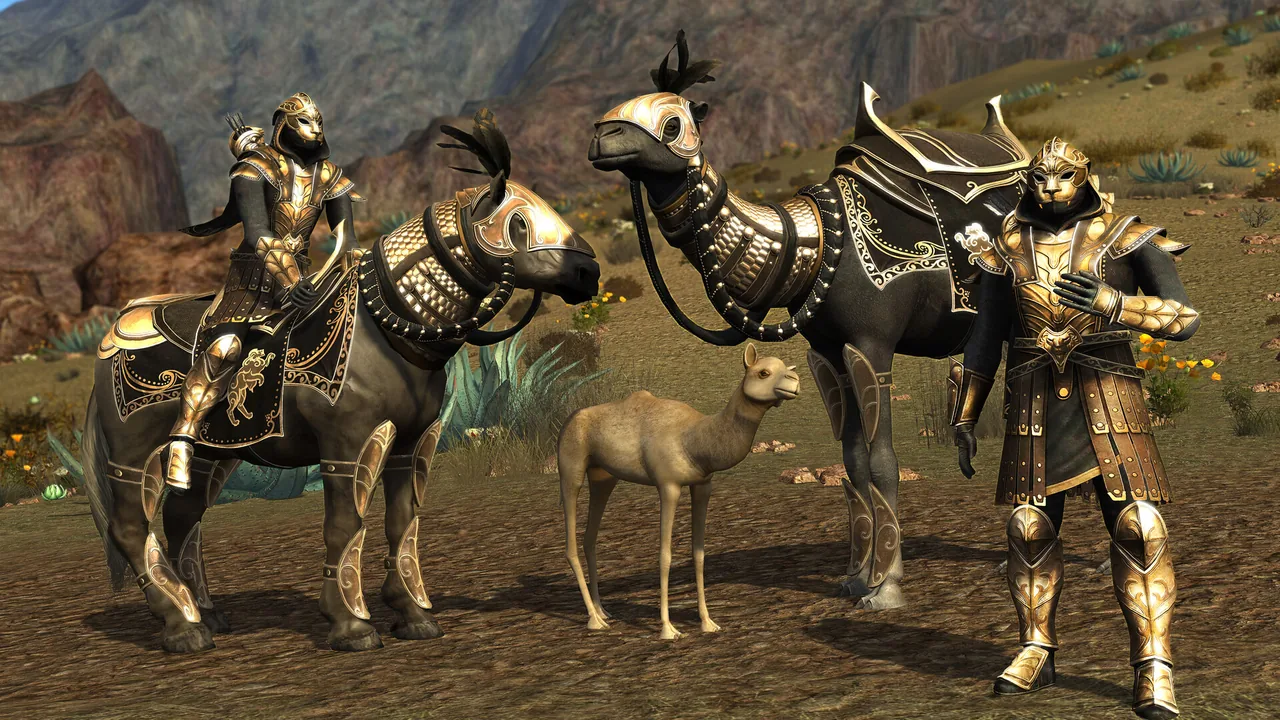
Here is the plain answer, as far as it can be verified: nothing to start. The Free tier is a real, playable account with two character slots and access to a meaningful slice of the base game and early expansions, not a timed trial dressed up as one — and the Steam build carries no price tag, no purchasable DLC and no price_overview at all in Steam's own storefront data, because every transaction happens off-platform through Standing Stone Games' own account store. Spend as little as US$1 and the account permanently upgrades to Premium. Want the current level of endgame content, the honest floor is a VIP subscription at US$14.99 a month (cheaper on longer plans) plus, separately, whichever recent expansions you actually want to play — and that second number is the one this review cannot give you cleanly, because Standing Stone Games doesn't publish it. Kingdoms of Harad ships in Standard, Collector's and Ultimate Fan Bundle editions, each adding cosmetic mounts, pets, outfit slots and a level-150 boost package on top of the base content, but none of that pricing appears anywhere on lotro.com outside the actual purchase flow. That's a genuinely unusual level of opacity next to every other MMO reviewed alongside this one, all of which post a plain sticker price for their expansions on their own storefronts. You may not be able to answer "what will this cost me" until you're already signed in and shopping — and a May 2026 announcement of a VIP price increase, subsequently postponed for infrastructure work, is a reminder that even the one number this review could verify isn't guaranteed to hold.
The state of the game now
Kingdoms of Harad landed 3 December 2025 as Update 46, and Standing Stone Games has kept a steady cadence since — Update 49 shipped in late July 2026, with numbered content updates arriving roughly every three to four months and smaller patches in between most weeks. That's a genuinely active live-service cadence for a game this old, not a skeleton crew coasting on maintenance. Server infrastructure is mid-migration from legacy 32-bit worlds to 64-bit, with the old worlds reopened specifically so players can transfer characters across rather than lose them, and dedicated Legendary servers — fresh-start, progression-capped worlds like Treebeard — remain a live, VIP-exclusive option for players who want to relive the levelling curve from scratch. Player sentiment on population reads as "healthy enough to keep going, not large enough to take for granted" — sufficient for grouping, but thin enough that a third-party GroupFinder plugin, rather than any built-in tool, is what most active players actually use to assemble a fellowship quickly.
Combat, interface and nineteen years of accumulated age
None of the above changes what actually playing this game feels like hour to hour, and that's where the criticism is least avoidable. Combat is standard tab-target MMO fare, functional and class-differentiated but without the mechanical depth World of Warcraft or Final Fantasy XIV have built into their combat over the same stretch of years. The interface still assumes a player willing to configure it, and several basic quality-of-life gaps — efficient group finding chief among them — are filled by community plugins rather than anything built in. Recent Steam feedback keeps returning to the same specific complaints: a launcher that struggles with large patch downloads, corrupted-file errors on install, and an engine that, however faithfully it renders Middle-earth's geography, visibly shows its 2007 foundations next to any MMO built in the last decade. None of that is exaggerated. It's the honest cost of a nineteen-year-old codebase still being actively expanded rather than rebuilt, sitting alongside a world and a story that, at their best, nothing newer has matched for faithfulness to the source.
Verdict
The Lord of the Rings Online earns its place on the strength of one genuinely rare thing: a licensed MMO that treats faithfulness to its source material as a real design constraint rather than a marketing line, and has kept following that constraint for nineteen years without cutting the corner. Moria, the Epic Story's continued investment through Kingdoms of Harad, and a player music system nothing else in the genre has matched are not small achievements, and Legendary Item Imbuement fixed a system that genuinely needed fixing.
What keeps this from scoring higher is everything sitting underneath that world: an engine and interface that need real patience from a 2026 player, quest design in the earliest zones that hasn't aged gracefully, and a purchase structure that makes a subscriber pay again for the content they actually want while declining to say how much that will cost until they're at the till. VIP itself is a fair, even cheap, price for what it unlocks. It just isn't the whole answer, and Standing Stone Games could make that a great deal clearer than it currently does.
If you want the deepest licensed world the MMO genre has built and you're willing to meet a nineteen-year-old game on its own terms, this is still worth the time. Readers weighing it against the rest of the genre's subscription models should also read Wanderer's reviews of World of Warcraft and Final Fantasy XIV for two very different answers to the same question, or Guild Wars 2 for a look at what an MMO with no subscription at all costs instead. Players who'd rather their progress kept building quietly in the background, with a much smaller and much plainer price tag attached, might also want to look at Wanderer.
Pros and cons
Pros
- Moria is still one of the only true multi-zone underground regions in the MMO genre, and the world's geography and timeline follow Tolkien's maps with real discipline rather than gesturing at them
- The player music system supports both free-form instrument playing and ABC-notation sheet music across dozens of instruments, backed by a community library of tens of thousands of shared songs
- Legendary Item Imbuement replaced the old reforging treadmill — an imbued weapon stays finished instead of needing to be rebuilt every few levels
- VIP membership undercuts World of Warcraft and Final Fantasy XIV's subscription pricing, especially on a 12-month plan working out to roughly US$8.33 a month
- Kingdoms of Harad closes an entire Epic Story arc with more than 2,300 lines of new voice-over, treating the main quest line as the actual event rather than a levelling chore
Cons
- Neither VIP nor the Premium tier includes the last several expansions — Fate of Gundabad, Corsairs of Umbar and, by the same pattern, Kingdoms of Harad all have to be bought separately on top of any subscription
- Standing Stone Games doesn't publish a plain price for any Kingdoms of Harad edition outside the in-client checkout, making "what will this actually cost me" needlessly hard to answer before committing
- The client and launcher still generate a steady stream of install, login and stability complaints on Steam, years into an ongoing 32-bit-to-64-bit server migration
- Quest design in the pre-Moria and Moria-era zones leans heavily on repetitive kill-and-fetch objectives that later zones mostly grew out of
- The default interface offloads basic jobs like group-finding to a community plugin ecosystem a new player has no reason to know exists
Screenshots
-
The Lord of the Rings Online™Image: Daybreak Game Company LLC via Steam -
The Lord of the Rings Online™Image: Daybreak Game Company LLC via Steam -
The Lord of the Rings Online™Image: Daybreak Game Company LLC via Steam -
How the review scores each part of the gameWanderer Editorial -
The short versionWanderer Editorial