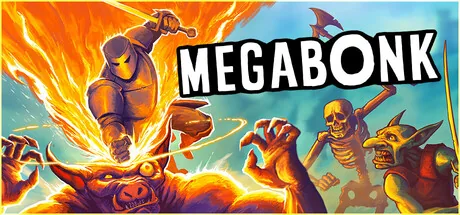
Megabonk
One person made a NZ$14.75 survivors-like that sold a million copies in a fortnight and sits at 94% across 104,643 reviews — and whose most invested players have been asking for the same balance pass since October 2025.
8 / 10
Browse by platform
550 games we have reviewed that run on Windows PC, best first.
550 reviews
One person made a NZ$14.75 survivors-like that sold a million copies in a fortnight and sits at 94% across 104,643 reviews — and whose most invested players have been asking for the same balance pass since October 2025.
8 / 10
A factory game where your conveyor belts double as your ammo supply, so a bottleneck in copper isn't a spreadsheet problem, it's a hole in your wall. Free and open source on Android and itch.io, a paid one-off on Steam, and one of the most distinctive marriages of automation and tower defence around.
8 / 10
A genetics-driven frog-breeding sim from one half of the APICO team, built around discovering and cross-breeding dozens of frog species across a waking and a dreaming world -- beautifully drawn and warmly received, with real friction in its navigation, inventory and pacing that a year and a half of updates hasn't fully resolved.
8 / 10
A free, PS1-textured love letter to World at War and Black Ops 1's original Zombies mode, built by a small team that shipped ten hotfixes in its first five days — including one that directly fixed the exact balance complaint players were posting about at the same time.
8 / 10
A top-down sandbox RPG that spent six years in Early Access building the one system that actually separates it from the Terraria-likes around it — recruit settlers, hand them jobs, and your colony keeps working while you're off fighting something in a cave.
8 / 10
A hex-grid roguelike that swaps a conventional deck for a board you draft and build tile by tile, from the maker of the well-regarded mobile hit Cards of Terra — hitting 1.0 to a small but completely unanimous chorus of praise after what several reviewers admit was months of criminally low visibility.
8 / 10
A three-to-four-hour premium incremental about harvesting nodes and defending against waves of invaders, built with a hard ending instead of an infinite number-go-up treadmill — and popular enough to spawn an entire micro-genre of imitators.
8 / 10
A turn-based extraction roguelike where every mercenary is a disposable clone, every mission can end in a single unlucky turn, and the cosmic horror waiting beneath the corporate PMC contracts is exactly as unforgiving as the combat.
8 / 10
A memory-matching roguelike deckbuilder its own fans nickname "Memory Balatro," executed well enough to hold a near-spotless Steam record, with the honest asterisk — raised by fans and by its rare negative reviews alike — that it borrows its structure from Balatro closely enough that some players see homage where others see imitation.
8 / 10
A faithful, modernised remake of the 1993 Super Famicom cult classic that still asks players to inherit an empire across generations and accept that mindless grinding makes enemies stronger, not weaker — a design philosophy Steam's own userbase is visibly still arguing about, thirty years on, even as the remake itself lands close to universal critical acclaim.
8 / 10
A solo-developed, critically adored twin-stick shooter from a Housemarque alumnus, widely hailed by its own fanbase as a spiritual successor to Geometry Wars — Overwhelmingly Positive on Steam with a 93 Metascore, undercut for many players by a steep, unevenly tutorialised difficulty curve that even genre veterans describe as a genuine barrier to entry.
8 / 10
A solo-developer idle/incremental game about growing a server farm from a battered laptop to planet-scale compute — three genuinely distinct minigames, a finite Singularity ending that Steam's own achievement data shows a striking share of players actually reach, and no microtransactions or ads anywhere on a NZ$4.79 price tag.
8 / 10
A pure factory-automation puzzle stripped of combat, scarcity and even failure, where the only opponent is a shape's own geometry. The tightest version of this genre's core loop yet built, and a useful test of what's left once every source of friction is removed.
8 / 10
Fifteen years on, Skyrim's open world is still the reason people play it — walk in any direction and something is there. The systems underneath that world, from swordplay to loot to the dialogue tree, have aged a lot less gracefully, and Bethesda has spent a decade finding new ways to resell the same game. Reviewed as Skyrim Special Edition, the version Steam actually sells you today.
8 / 10
A game whose central mechanic is a 400-day countdown that runs whether you play or not — the most literal treatment of idle time anyone has attempted, and it's 92.3% positive six years on.
8 / 10
A terraforming survival-crafting game that turns a barren world into a breathable one in front of your eyes — beloved for exactly that transformation, and honestly criticized by a consistent minority for being addictive without offering much real friction or danger.
8 / 10
A minimalist build-by-day, defend-by-night strategy game from a two-person studio that became a genuine indie hit — reviewed on its full post-1.0 record, including an achievement curve that maps exactly where players stop, and the small, sold-off, still-supported story behind it.
8 / 10
A Racing Sim With No Steering Wheel, And It Somehow Works Throttle Trace is a $12.99 Early Access racing simulator from solo-flavored indie studio Unordered Games, published by Mic
8 / 10
A solo developer's follow-up to Magic Archery swaps archery for architecture, building an incremental around growing a single wizard's tower toward a definite, well-earned ending rather than an infinite number-go-up treadmill.
8 / 10
A wordless puzzle game that tells a person's life story entirely through the boxes they unpack across eight house moves -- BAFTA Game of the Year winner and Overwhelmingly Positive on Steam, with a value complaint so uniform across five years of reviews that even most of its fans raise it unprompted.
8 / 10
The deckbuilder that removed the luck. You see every reward in advance and rebuild your deck between every fight — which makes it the most controllable game in its genre, and is exactly why some players bounce off it. Six dollars, 251 achievements, and criminally under-noticed.
8 / 10
Shiro Games' open-world mercenary RPG treats a company of sellswords as a small business — wages, food, gear repair and prisoners are the real spreadsheet, and combat is what happens when that spreadsheet goes wrong.
8 / 10
A procedural storytelling tactical RPG that follows the same handful of heroes from their first pitchfork fight to old age, generating genuinely moving personal arcs — until enough playthroughs reveal the same event templates repeating underneath the charm.
8 / 10
A deceptively deep survival sim that runs entirely on cards instead of free movement — brutal, granular and beloved by its fans, but gated behind an interface several reviewers call the real enemy.
7.6 / 10