Game review
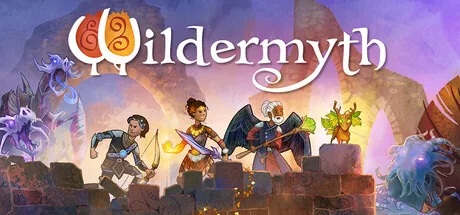
Wildermyth
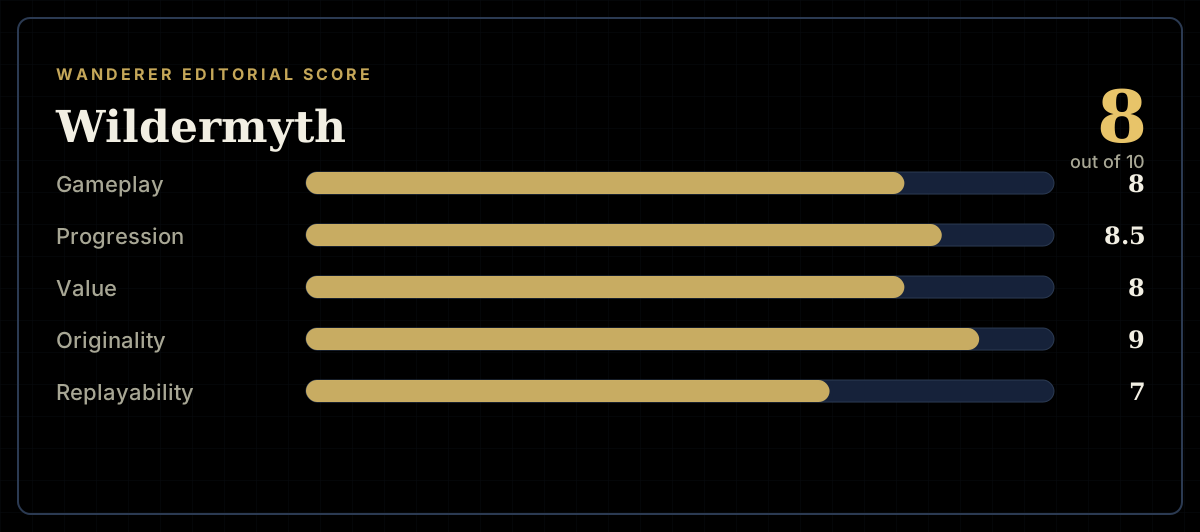
8 / 10
- Developer
- Worldwalker Games
- Publisher
- Worldwalker Games LLC
- Released
- 15 June 2021
- Platforms
- Windows
- Genre
- Tactical RPG
- Monetisation
- Premium, one-off purchase — optional paid DLC content packs available separately
- Players
- Single-player
The short version
Wildermyth's premise is unusually specific for a tactical RPG: the same small cast of heroes ages across an entire procedurally generated saga, from their first amateur fight with a pitchfork through romances, rivalries, injuries and eventually old age, with tactical combat and narrative choices permanently reshaping who they become. Players who click with it describe genuinely moving, personal stories that emerge from systems rather than scripted writing.
The honest complaint, present in a small but consistent share of its reviews, is that the procedural storytelling's seams show with enough exposure — event templates and phrasing repeat across playthroughs in ways that undercut the illusion the first campaign or two builds so effectively. That's a real cost for a game whose entire pitch rests on its stories feeling personal rather than generated.
Biggest strengths
- A genuinely inventive structure — the same characters age, form relationships and carry scars across an entire campaign, with tactical outcomes feeding directly into their personal arcs
- Turn-based combat is tactically satisfying in its own right, not just a delivery mechanism for the story layer
- Character customisation through emergent traits and injuries gives every campaign a distinct cast, even across replays
Biggest weaknesses
- Procedural event writing repeats noticeably across multiple playthroughs, undercutting the illusion of personal storytelling the first campaign builds so effectively
- A meaningful minority of reviewers describe the writing itself as shallower than the game's reputation suggests, once the novelty of the system wears off
- The opening hours are intentionally slow-paced, and several reviewers admit an initial refund or bounce-off before returning to appreciate it later
Who it's for: Tactical RPG fans who want their squad to feel like an evolving cast of characters rather than a set of stat blocks, and who are drawn to emergent, systems-driven storytelling over hand-authored narrative.
Our recommendation: A genuinely excellent buy for a handful of campaigns' worth of play. Go in expecting the procedural writing to be at its best in your first one or two runs, and treat later repetition as the natural cost of a system this ambitious rather than a sign the game has failed.
8 / 10
Most tactical RPGs treat their squad as a set of stat blocks with names attached. Wildermyth's entire premise is the opposite bet: the same small cast of heroes carries through an entire procedurally generated saga, from an amateur's first fight with a pitchfork through years of battles, romances, rivalries and injuries, aging into old age by the campaign's end. It's an unusually specific, ambitious pitch for the genre, and for most of its audience, it pays off.
A cast that actually accumulates a history
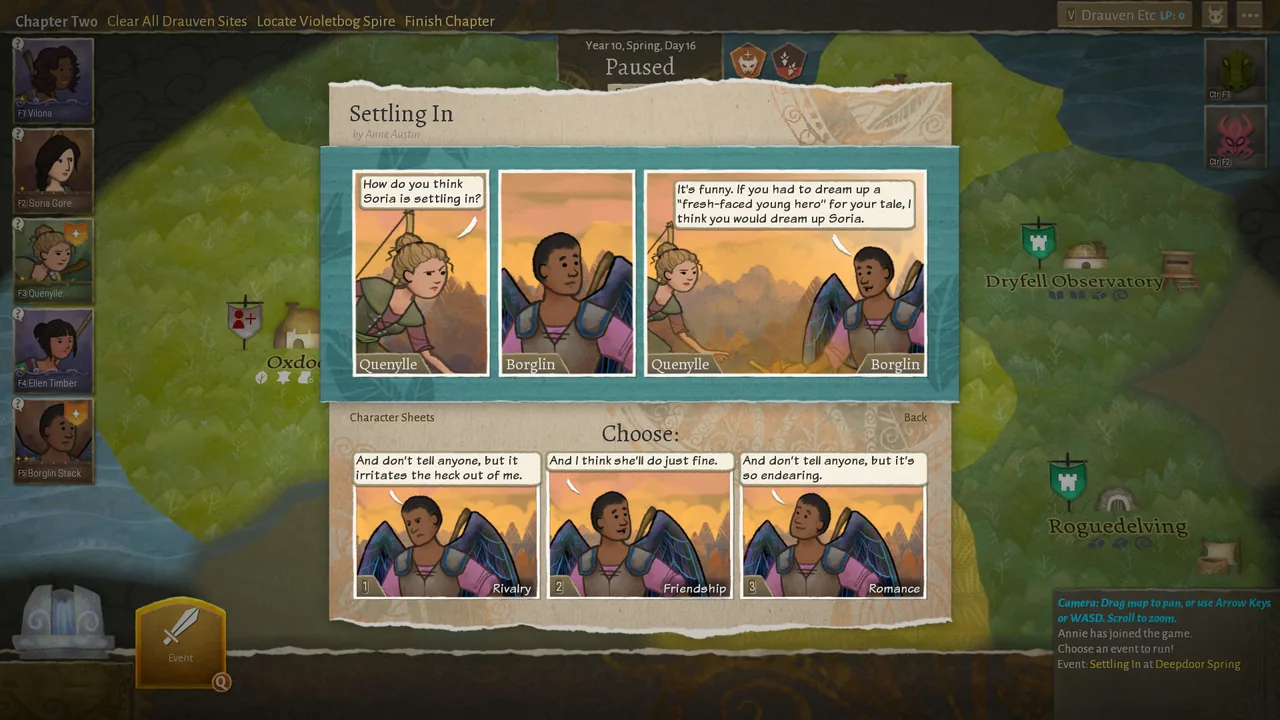
The structural hook is genuine: tactical combat outcomes and narrative choices feed directly back into who your characters become. A hero who loses an arm in battle carries a prosthetic and a changed fighting style for the rest of the campaign. Two companions who bond over a shared crisis might develop a romance that shapes future story beats. None of it is set dressing — it's a real system, and reviewers consistently describe the personal, specific stories that emerge from it as genuinely moving in a way scripted RPG writing rarely manages, precisely because the moments feel like they belong to your particular playthrough rather than a fixed narrative everyone experiences identically.
Combat that holds its own
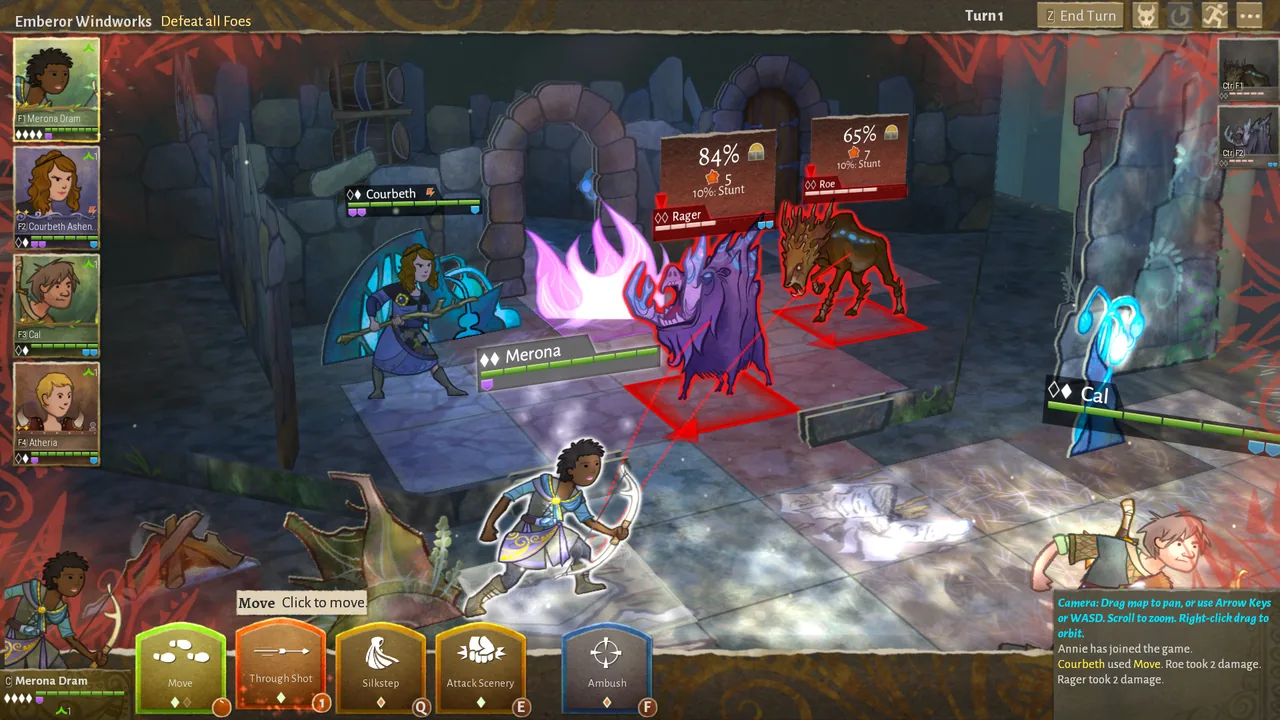
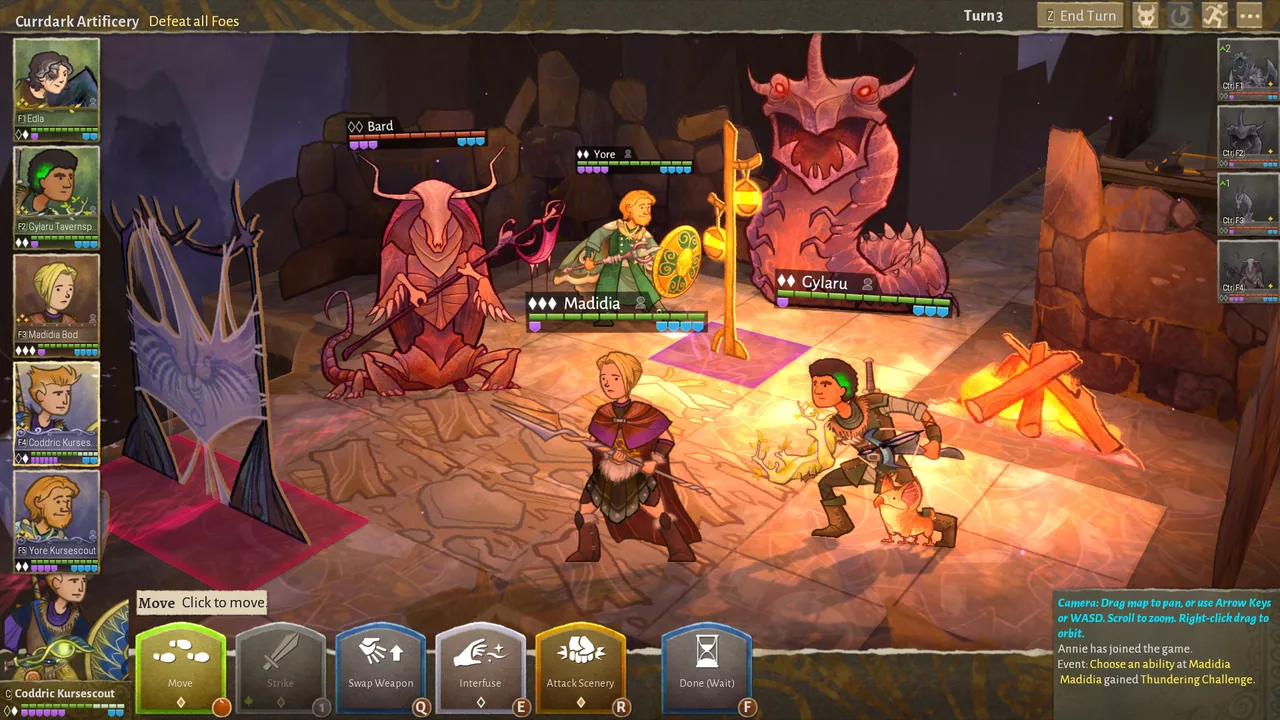
Underneath the storytelling, Wildermyth's turn-based tactical combat is satisfying in its own right rather than existing purely to justify the narrative layer. Positioning, environmental interaction and character specialisation give fights real texture, and the emergent traits and injuries your characters accumulate over a campaign give even mechanically similar classes distinct identities by the time a saga wraps up.
Where the seams start to show
The honest complaint, present in a small but consistent slice of the reviews, is about what happens once the novelty of the procedural writing wears off. A handful of reviewers, several explicit that they wanted to love the game, describe noticing the same event templates and phrasing recurring across multiple campaigns — the specific magic of feeling like your story is uniquely yours starts to fray once you've seen the machinery behind a few too many similar beats. That's a real, structural cost of procedural storytelling generally, and it's worth knowing that Wildermyth's first campaign or two are very likely its strongest, with diminishing returns as the templates become familiar.
A slow start that rewards patience
A related, smaller thread notes that Wildermyth's opening hours are intentionally paced slowly, and more than one reviewer admits to an initial bounce-off or refund before returning later and finding the game click. That's worth flagging for anyone judging their first session too quickly — several of the game's most enthusiastic reviews explicitly describe a rocky start giving way to real investment once a saga's stakes accumulate.
Final verdict
Wildermyth remains one of the most genuinely inventive tactical RPGs of its era, and its aging, evolving cast of characters is a real structural achievement rather than a marketing angle. It settles at 8 rather than higher because the procedural storytelling's seams are real and well-documented once you've played enough campaigns to notice them, and because the genre's usual promise of near-endless replayability doesn't quite hold here the way it does in more purely mechanical tactics games. For a handful of campaigns' worth of genuinely personal, systems-driven storytelling, it's an easy recommendation.
Price and review data checked 5 August 2026.
If you enjoy watching a cast of characters grow and change over time but want that progression to continue quietly in the background, Wanderer offers a persistent take on that same idea.
Pros and cons
Pros
- A genuinely inventive structure — the same characters age, form relationships and carry scars across an entire campaign, with tactical outcomes feeding directly into their personal arcs
- Turn-based combat is tactically satisfying in its own right, not just a delivery mechanism for the story layer
- Character customisation through emergent traits and injuries gives every campaign a distinct cast, even across replays
- Strong value for the price, with a large number of reviewers describing dozens of hours across multiple campaigns
Cons
- Procedural event writing repeats noticeably across multiple playthroughs, undercutting the illusion of personal storytelling the first campaign builds so effectively
- A meaningful minority of reviewers describe the writing itself as shallower than the game's reputation suggests, once the novelty of the system wears off
- The opening hours are intentionally slow-paced, and several reviewers admit an initial refund or bounce-off before returning to appreciate it later
- Best experienced in a handful of campaigns rather than endless replays, which caps its long-term replayability compared to more mechanically-driven tactics games
Screenshots
-
WildermythImage: Worldwalker Games LLC via Steam -
WildermythImage: Worldwalker Games LLC via Steam -
WildermythImage: Worldwalker Games LLC via Steam -
How the review scores each part of the gameWanderer Editorial -
The short versionWanderer Editorial