Game review
The Severed Gods
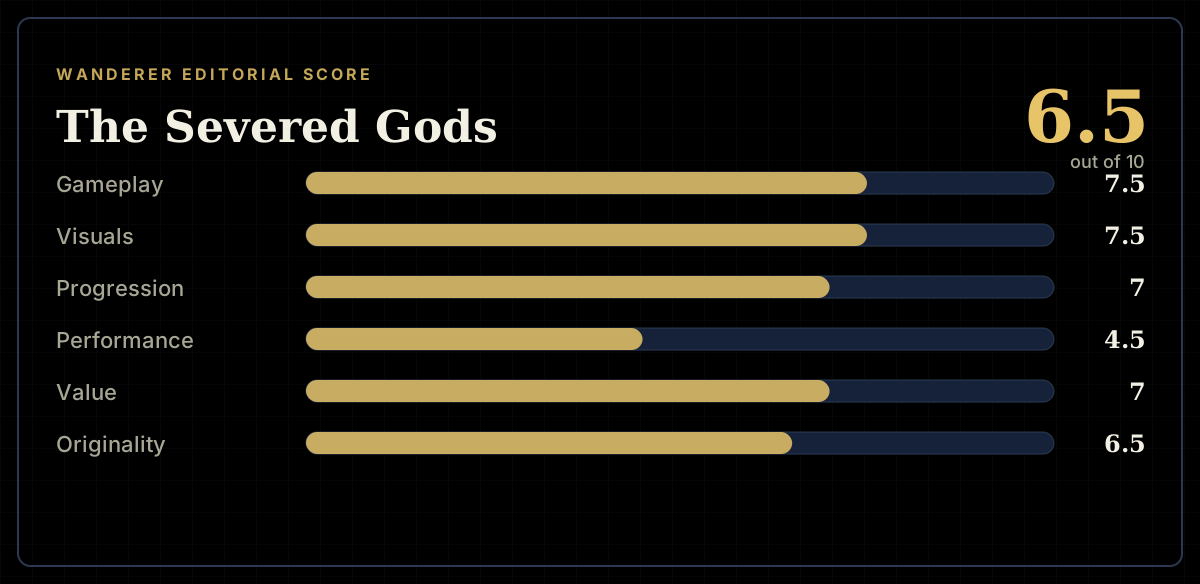
6.5 / 10
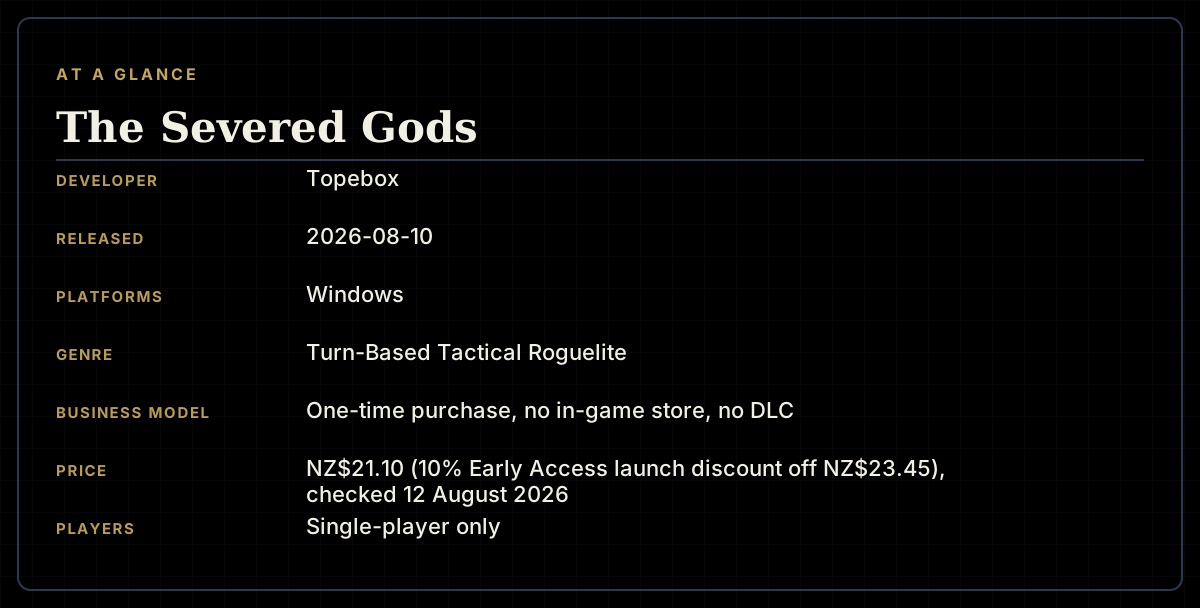
- Developer
- Topebox
- Publisher
- Topebox
- Released
- 10 August 2026
- Platforms
- Windows
- Genre
- Turn-Based Tactical Roguelite
- Monetisation
- One-time purchase, no in-game store, no DLC
- Players
- Single-player only
The short version
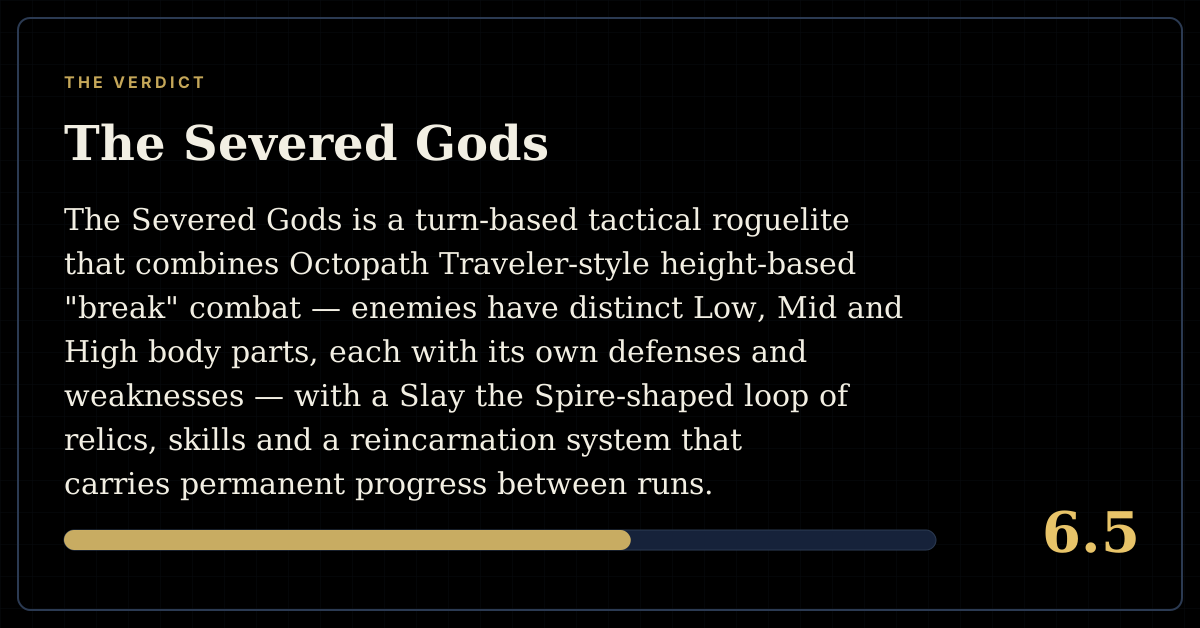
The Severed Gods is a turn-based tactical roguelite that combines Octopath Traveler-style height-based "break" combat — enemies have distinct Low, Mid and High body parts, each with its own defenses and weaknesses — with a Slay the Spire-shaped loop of relics, skills and a reincarnation system that carries permanent progress between runs. It entered Early Access 10 August 2026, and two days later its reception is genuinely split between admiration for the combat concept and frustration with how buggy that concept currently is: 73.5% positive among English reviews, a shade lower across the full multi-language sample.
What sets this launch apart from a typical rough Early Access debut is the pace and honesty of the response. The developer has shipped multiple patches within 48 hours of release, publicly posted a detailed Year One roadmap, and replied individually to nearly every negative review in this review's sample — including, on the second day, temporarily disabling mouse controls entirely to stop a freezing bug rather than let it sit unaddressed.
Biggest strengths
- The height-based combat system is this review's most consistently praised element — breaking an enemy's Low, Mid or High defenses to disable specific attacks and set up follow-ups is repeatedly singled out as genuinely creative, distinct from the games it's compared to rather than a copy of either
- Widely and specifically praised pixel art and 2.5D presentation, with reviewers comparing it favourably to Octopath Traveler unprompted
- The Karma system — choosing Virtue or Sin through recurring moral choices, each with distinct mechanical rewards and consequences — draws real, specific praise rather than being dismissed as a cosmetic layer
Biggest weaknesses
- Freezing and stuck-state bugs are the dominant complaint in this review's negative sample, severe enough in several cases that reviewers could not complete a single combat encounter
- The developer's response to one recurring freeze was to temporarily disable mouse controls entirely on day two — an effective but blunt fix that currently limits input options for players who prefer a mouse
- The hero roster is small at Early Access launch — three playable characters — which several reviewers note undercuts the "Unique Heroes" framing on the store page for now
Who it's for: Turn-based RPG and roguelite fans specifically drawn to the Octopath-style break-combat concept, who are comfortable buying into Early Access with real, current bugs in exchange for watching a promising system get built out. Less suited to anyone who wants a stable, complete game on day one.
Our recommendation: The combat idea is good enough, and the developer response fast enough, that this is worth wishlisting even if you wait a few patches before buying. If freezing bugs and rough edges are a dealbreaker for you personally, the pace of fixes so far — several patches within 48 hours — suggests waiting two or three weeks will meaningfully change this review's technical complaints.
6.5 / 10
Introduction
Two comparisons show up so often in The Severed Gods' review corpus that they function almost as a shorthand genre label: Octopath Traveler for the combat and presentation, Slay the Spire for the run structure and meta-progression. That's an unusually precise consensus for a two-day-old Early Access release, and it's accurate as far as it goes — Topebox's turn-based roguelite borrows Octopath's signature "break" system, where enemies have Low, Mid and High body parts each with their own defenses, and layers it under a Slay the Spire-shaped loop of relics, skills and permanent reincarnation bonuses that carry between runs. It entered Early Access on 10 August 2026 for NZ$21.10, and in its first 48 hours has accumulated a review sample split fairly evenly between players excited about where the combat system is heading and players who ran into real, current bugs before they got the chance to find out.
Height as a weapon
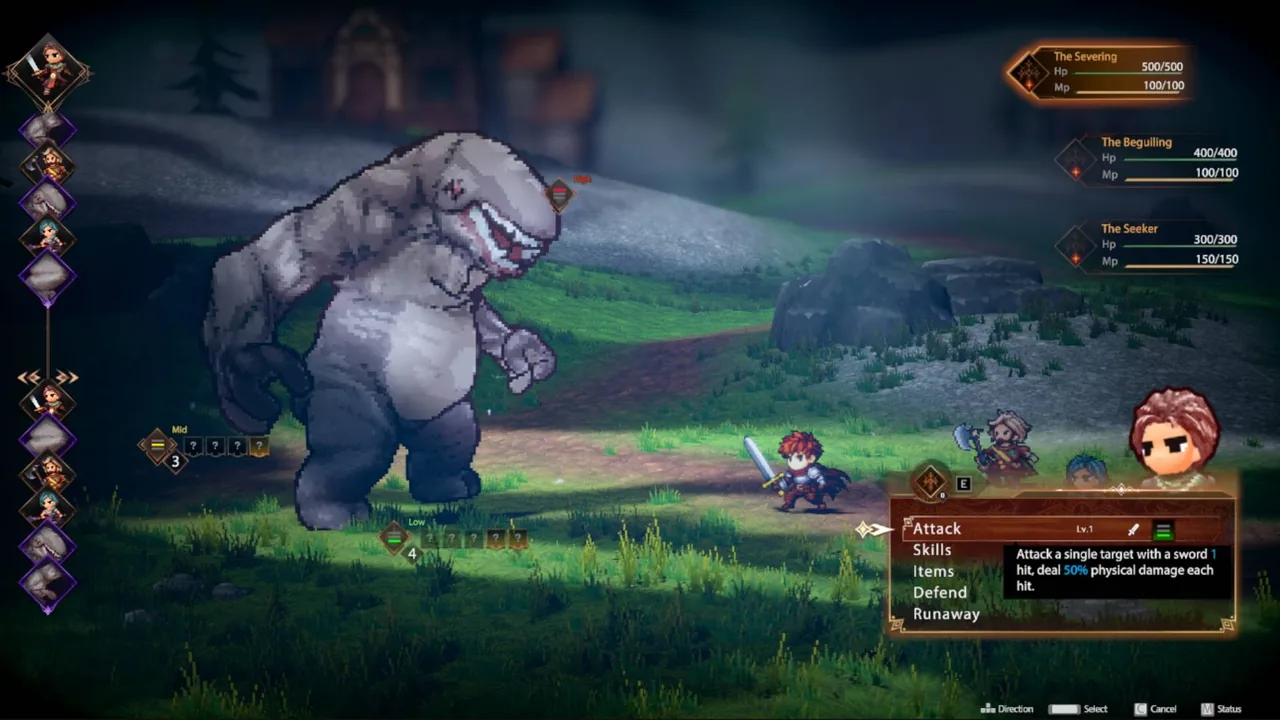
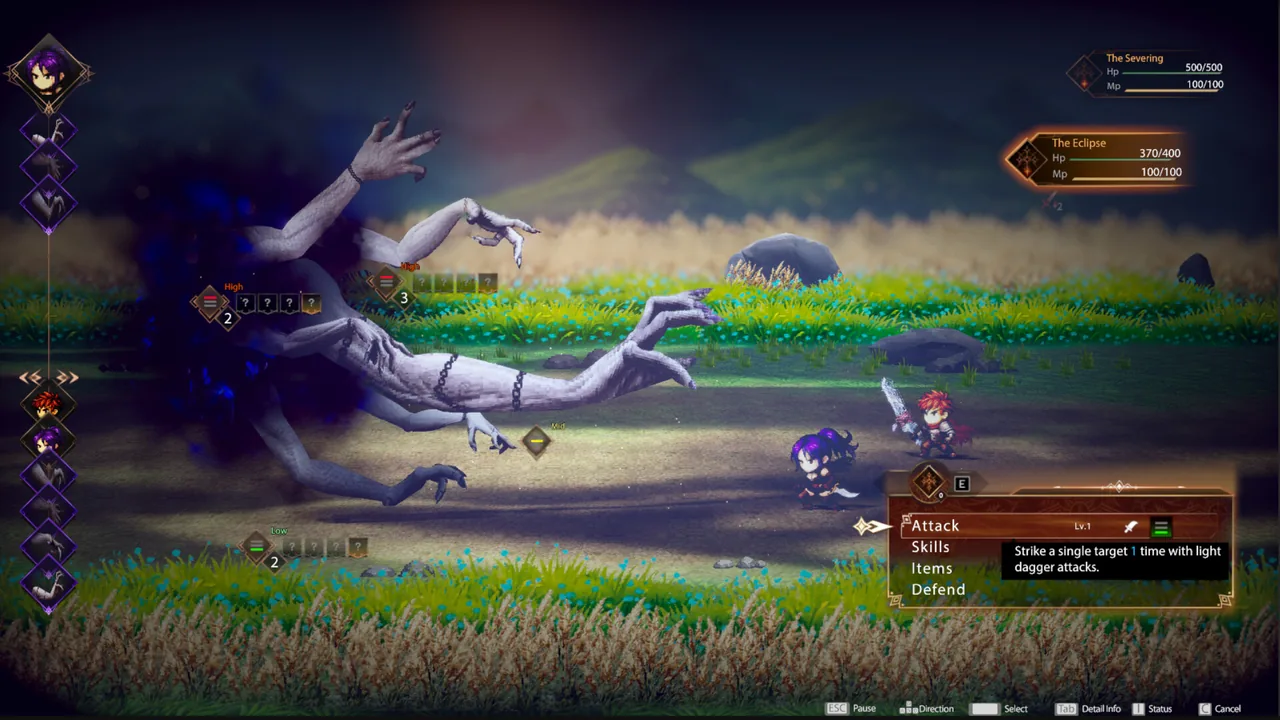
The mechanical hook is worth explaining in detail, because it's the part of the game reviewers keep returning to unprompted. Every enemy in The Severed Gods presents Low, Mid and High targets, each with independent defenses and its own specific weakness. Breaking a target down knocks that part of the enemy out, opening a window for a stronger follow-up attack; sever it entirely — an option the game's title makes literal — and that enemy permanently loses whatever ability was tied to that body part, from a Titan's stomping legs to a caster's raised arms. One reviewer summarised the appeal succinctly: "The combat system is DEEP. With the same kind of break system from Octopath it requires a good amount of strategy to be efficient in combat." Another reviewer, more measured, still credits it as "a creative gameplay mechanic" even while noting it can be "annoying to fight against certain enemies at times" — and that friction shows up as a real, specific balance complaint elsewhere in the sample: at least one player reports a boss encounter that becomes close to unwinnable if their current team simply lacks a tool that can reach the exposed body part in question. That's a legitimate Early Access balance problem rather than a bug, and worth watching as the roster (currently three heroes) expands.
Layered on top of that combat system is a Karma mechanic that draws consistently specific praise rather than the polite shrug story-choice systems often get. Recurring moral decisions — take supplies from a dying soldier, or escort them to safety; embrace dark power, or resist it — accrue toward Virtue or Sin, each unlocking different rewards and consequences rather than simply flavouring the same outcome differently. "I was also very excited and surprised by the Karma system, especially the good and evil choices that affect the game," wrote one reviewer, and the sentiment repeats across several others independent of whether they recommend the game overall. Combined with a reincarnation system that banks relics, unlocked heroes and skill progress between runs, the meta-progression shape is closer to a genre-savvy remix than a copy of either of its obvious influences — several reviewers make exactly that point, describing it as feeling distinct even while acknowledging the lineage.
The bugs, dated precisely
Set against that, the dominant complaint in this review's negative sample is unambiguous: freezing and stuck-state bugs, severe enough in multiple cases to end a play session entirely. "My first battle, the game didn't freeze but nothing would happen... To have that happen 3 times within 15 minutes of me playing the game is insane," wrote one reviewer who ultimately requested a refund. Another reported the game's UI vanishing mid-combat and only reappearing after several restarts. These aren't vague performance grumbles — they're specific, reproducible-sounding failures, and the playtimes attached to the negative reviews reporting them are uniformly short, mostly under an hour, which is exactly what you'd expect from a bug severe enough to prevent meaningful play rather than a design complaint from someone who stuck around.
What makes this worth reporting carefully rather than simply totting up as a black mark is how precisely it's dated and how directly it's being addressed. The developer's own patch notes from 11 and 12 August list specific fixes matching what reviewers describe almost line for line: "Fixed a bug where the game would get stuck when a hero died against Behemoth and was revived by Karma," "Fixed an issue where the Battle UI would disappear after triggering Karma," "Fixed an issue causing the game to get stuck when interacting with certain events on the map." On 12 August — two days after launch — the team went further, temporarily disabling mouse controls entirely: "We understand that temporarily disabling mouse support may be inconvenient for players who prefer using a mouse. This is a temporary measure while our development team investigates and works on these issues." That's a blunt fix, and it's a real, current inconvenience for anyone who prefers a mouse over a controller, but it's also an unusually direct way for a small team to say "we know, and we're not waiting" rather than letting a freezing bug sit for weeks.
A developer answering in public, one review at a time
The clearest evidence of that responsiveness sits inside the review corpus itself: of the nine English negative reviews read for this piece, the developer replied individually to eight of them, specific to the issue each reviewer raised rather than a copy-pasted line. One reply to a bug report about buggy mouse hovers and UI issues reads in part, "We're glad to hear that you enjoyed some aspects of the game, and we sincerely appreciate you taking the time to share the issues you encountered. We'll investigate the issue..." That pattern, combined with a detailed public Year One Roadmap posted the day after launch — which lays out planned additions including a Class and Subclass system, new special villages, character-specific storylines and a "true ending" not yet in the current build, and sets expectations plainly ("we currently expect The Severed Gods to remain in Early Access for approximately 1 to 2 years") — is about as strong a version of the brief's "check whether the developer has already answered the complaint" test as this library has seen from a brand-new release. It doesn't retroactively fix the bugs a buyer might hit today, but it's a genuinely good sign for where the game is headed.
A verified AI disclosure
One reviewer wrote, in passing, that "the company state that they're using AI in making this game," adding that it didn't change their own positive experience. That's worth verifying rather than taking on faith, and it checks out precisely: Steam's AI Generated Content Disclosure section on The Severed Gods' store page states, in the developer's own words, "AI-assisted content was used during development phase." No further detail is given about which content specifically, and this review won't speculate beyond what's disclosed — but it's a confirmed fact rather than a rumour, and it's the kind of thing worth knowing plainly rather than reading about secondhand in a review's comment section.
A small roster, and a small team's launch
At Early Access launch, The Severed Gods ships three playable heroes — a swordsman, a scholar and a thief-type character, each carrying a distinct Hero Mark that shapes how they fight and interact with the world outside combat. Several reviewers flag this directly as thin against the store page's "Unique Heroes, Distinct Hero Marks" framing, which reads more like a pitch for the finished game than a description of what's playable today — a fair complaint, and one the developer's own roadmap implicitly concedes by listing additional heroes and a full Class and Subclass system among its planned Early Access milestones rather than treating the current three as complete. It's worth reading that gap the way the roadmap itself frames it: not a shipped promise broken, but an Early Access foundation with clearly stated, specific plans for what gets built on top of it.
That framing matters because Topebox reads, from every visible signal, as a small independent team — the "small indie team" line appears in their own patch notes, unprompted — shipping into a genre with some very well-resourced neighbours. Judged against that scale, the response so far looks less like standard Early Access damage control and more like a team genuinely building in public: daily changelogs specific enough to name the exact Karma-and-Behemoth interaction that was freezing games, a roadmap that gives a real, if long, EA timeline rather than a vague "when it's ready," and reviewer replies that engage with the actual complaint rather than a template thank-you. None of that erases the bugs a buyer might hit this week, but it's a meaningfully better starting position than most Early Access launches this library has covered.
Final Verdict
The Severed Gods is easy to recommend and hard to score cleanly at the same time, which is close to the definition of a promising but genuinely rough Early Access launch. The height-based combat system is the real thing — inventive, specific, and praised in almost identical terms by reviewers who otherwise disagree about everything else — and the Karma-driven reincarnation loop gives it a meta-progression shape that feels purpose-built rather than borrowed wholesale from either of its obvious influences. Against that, the freezing bugs reported in this review's negative sample are real, current, and severe enough to have ended sessions outright for several buyers in just the first two days. The mitigating factor, and it's a substantial one, is a developer moving and communicating faster than almost any other Early Access debut in this library's experience: multiple patches within 48 hours, a detailed public roadmap, and direct replies to nearly every complaint in this review's sample. Buy now if you're comfortable being an early tester for a system with real promise. Wait a few weeks if stability matters more to you than being first — on this launch's evidence so far, that wait is unlikely to be long.
Pros and cons
Pros
- The height-based combat system is this review's most consistently praised element — breaking an enemy's Low, Mid or High defenses to disable specific attacks and set up follow-ups is repeatedly singled out as genuinely creative, distinct from the games it's compared to rather than a copy of either
- Widely and specifically praised pixel art and 2.5D presentation, with reviewers comparing it favourably to Octopath Traveler unprompted
- The Karma system — choosing Virtue or Sin through recurring moral choices, each with distinct mechanical rewards and consequences — draws real, specific praise rather than being dismissed as a cosmetic layer
- Exceptionally fast and transparent developer response for a two-day-old release: multiple patches already shipped, a public Year One roadmap posted the day after launch, and individual replies to almost every negative review in this review's sample
- A verified AI Generated Content Disclosure states plainly that "AI-assisted content was used during development phase" — the developer's own wording, not a player allegation
Cons
- Freezing and stuck-state bugs are the dominant complaint in this review's negative sample, severe enough in several cases that reviewers could not complete a single combat encounter
- The developer's response to one recurring freeze was to temporarily disable mouse controls entirely on day two — an effective but blunt fix that currently limits input options for players who prefer a mouse
- The hero roster is small at Early Access launch — three playable characters — which several reviewers note undercuts the "Unique Heroes" framing on the store page for now
- At least one reviewer reports a specific height-locked encounter that becomes essentially unwinnable if the player's team lacks the right tools against that boss's exposed body part, a balance issue distinct from the bug reports
- As with any Early Access release, current price, balance and content will change substantially before 1.0, which the developer's own FAQ estimates at one to two years away
Screenshots
-
The Severed GodsImage: Topebox via Steam -
The Severed GodsImage: Topebox via Steam -
The Severed GodsImage: Topebox via Steam -
How the review scores each part of the gameWanderer Editorial -
The essentials at a glanceWanderer Editorial -
The short versionWanderer Editorial