
Game review
Nodebuster
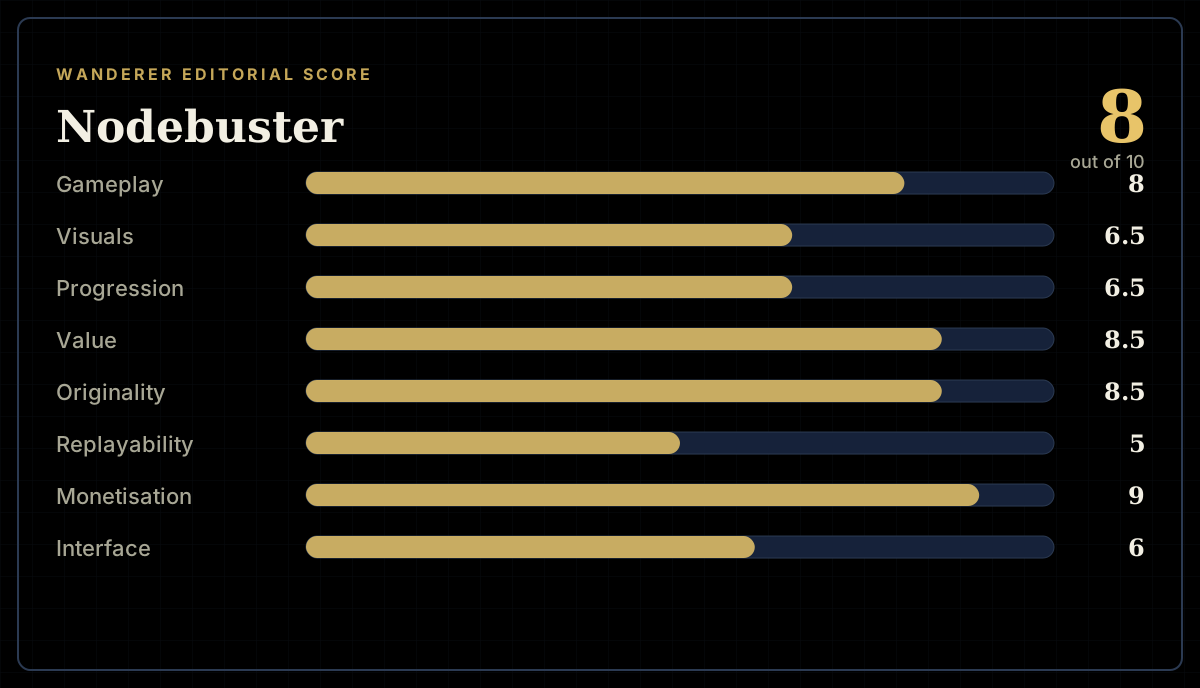
8 / 10
- Developer
- Goblobin
- Publisher
- Goblobin
- Released
- 13 August 2024
- Platforms
- Windows
- Genre
- Incremental
- Monetisation
- One-time purchase, no in-app purchases, no ads
- Players
- Single-player
The short version
Nodebuster takes the incremental genre's usual sales pitch — infinite numbers, no finish line — and throws it out. You harvest nodes, spend the proceeds on a skill tree, and defend a reticule through waves of invaders in short "breach" sessions, and after three to four hours you deploy a finishing move and the game is simply over. That discipline, more than any single mechanic, is why it has become one of the most talked-about small releases in the genre and spawned a wave of imitators chasing the same formula.
It isn't a flawless four hours. The difficulty curve buckles once health upgrades come online, turning the back half into a formality, and several of the tree's upgrades give no visible feedback when they land. Neither problem lasts long enough to sour the experience, but they're the difference between a very good incremental and an exceptional one.
Biggest strengths
- The node-harvesting loop and breach-combat sessions require genuine active input early on, rather than leaning on idle ticks from the start
- A hard, designed ending — deploying the finishing "godvirus" once the lab's resource threshold is met — instead of an endless number that never resolves
- A single flat price with no in-app currency, energy timers, ads or battle pass anywhere in the design
Biggest weaknesses
- Difficulty collapses in the second half once health and armour upgrades are unlocked, turning the closing waves into a formality the rest of the game didn't train you to expect
- Several upgrades produce no visible change in the breach sessions, so it's often unclear whether a purchase actually did anything
- Only three real attack types carry the entire combat layer, which is a thin toolkit even across a short runtime
Who it's for: Incremental and idle-game players who are tired of open-ended treadmills and want a premium, purchasable experience with a real beginning, middle and end — plus anyone curious what the games press has started calling a "Nodebusterlike."
Our recommendation: Buy it. At under five New Zealand dollars for a tight three-to-four-hour loop with no monetisation strings attached, it's an easy purchase even if the back half runs out of challenge before it runs out of content.
8 / 10
Most incremental games are built to never finish. Nodebuster is built to end, on purpose, after about three to four hours, and that single decision explains most of why Goblobin's tiny Steam release has become one of the best-reviewed games in its genre — Overwhelmingly Positive across more than ten thousand user reviews, a reception few incrementals of any size manage. It also explains why the games press has started using "Nodebusterlike" as shorthand for a specific kind of premium, purpose-built, deliberately short incremental that a handful of other developers have since tried to copy.
Harvesting nodes, spending the proceeds
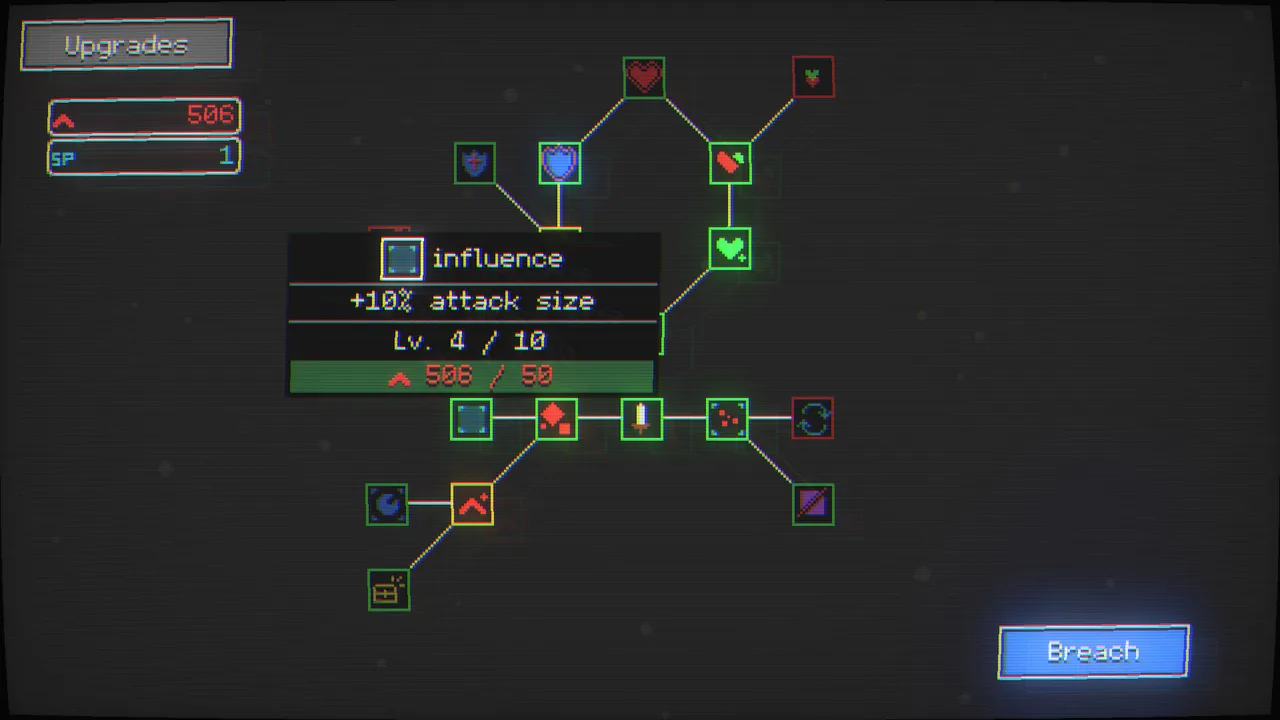
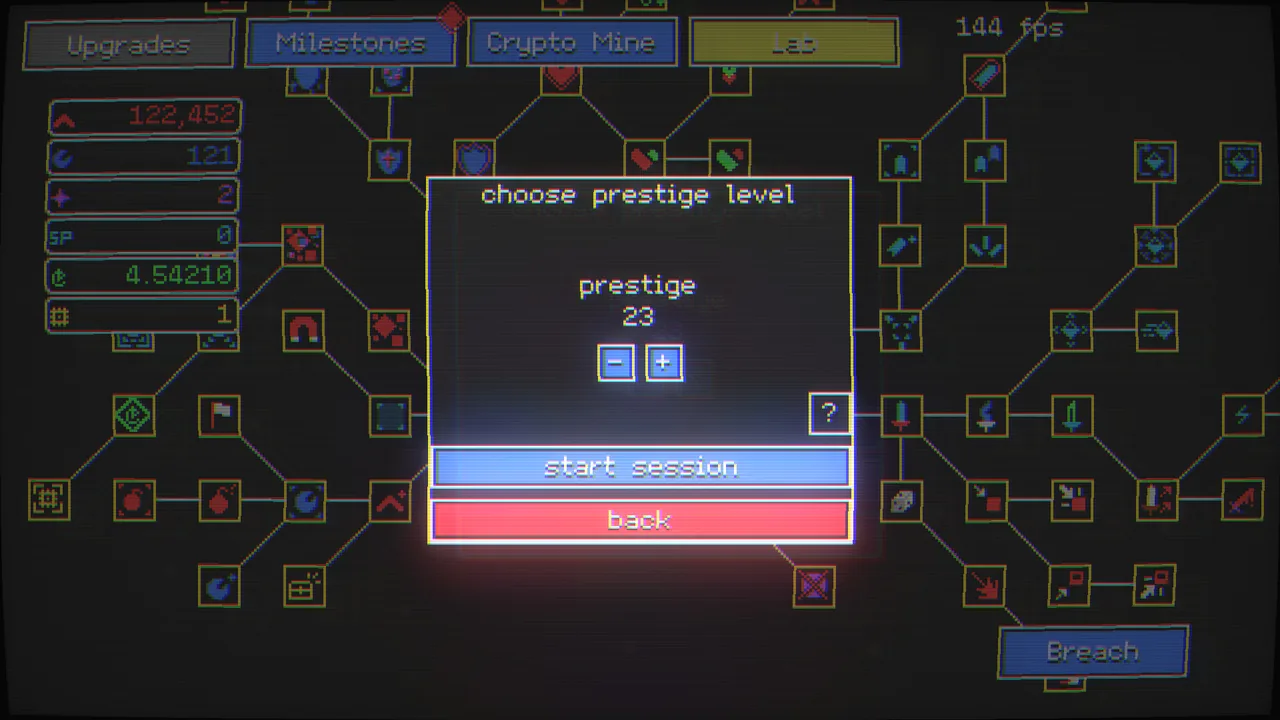
The core loop will feel immediately familiar to anyone who has touched an idle or clicker game in the last decade: extract resources from nodes, spend the "bits" and "nodes" you generate on a branching skill tree, unlock new systems as your numbers grow. Where Nodebuster earns its keep is in how quickly and cleanly that loop escalates. New enemy colours introduce new pressure, a crypto mine and a lab add fresh production chains partway through, and the tree itself never collapses into "buy whichever node is cheapest" the way weaker entries in the genre do. Every currency has somewhere specific to go, and the game is stingy enough with unlocks early on that spending decisions actually matter.
Breach sessions: active by design, idle by necessity
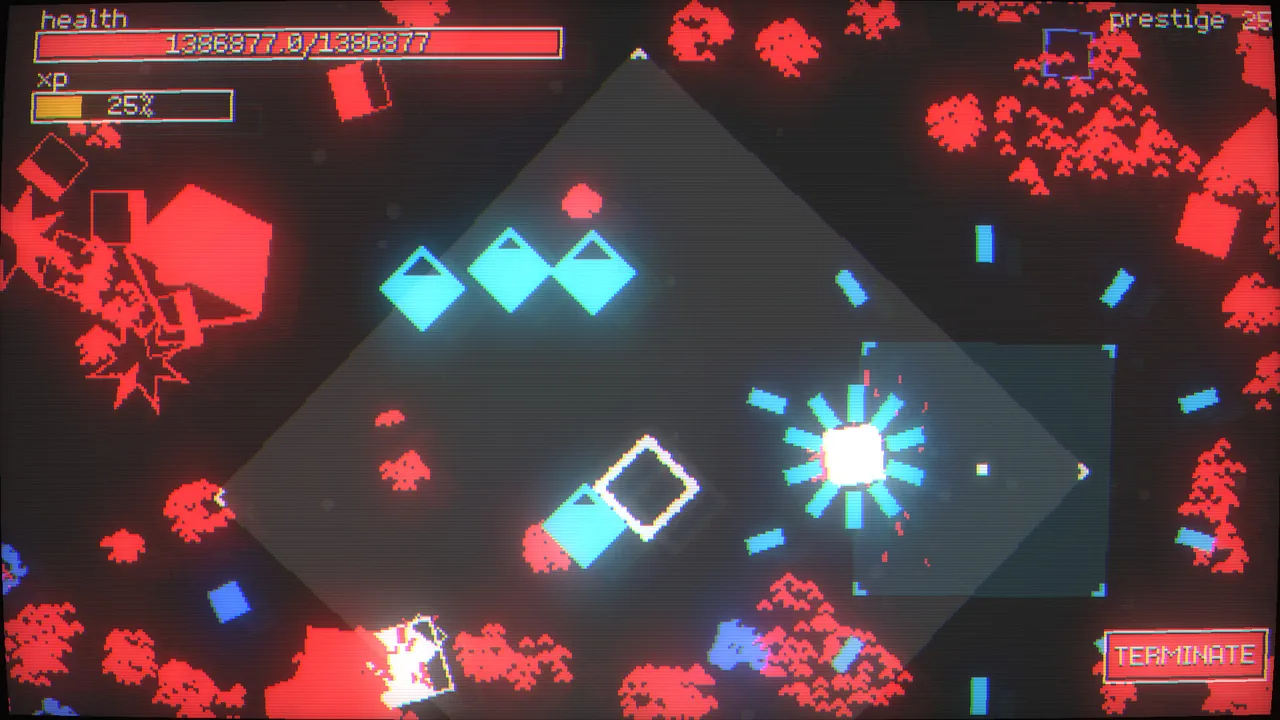
The other half of the loop is combat. Periodically you're dropped into a "breach session," where you control a reticule and have to survive twenty waves of invading enemies while a corrupting virus drains your health faster with each wave. Early breaches genuinely need your attention — dodging incoming fire and positioning the reticule is the difference between clearing a wave and resetting it. As the skill tree fills out with damage, drone and chain-lightning upgrades, that same session gradually eases toward something you can let run with less input, which is a sensible response to a genre where "idle" and "active" are usually treated as two separate modes rather than points on a single curve.
The problem is that the curve doesn't level off, it falls off a cliff. Health and armour upgrades are the genuine bottleneck for most of the early game, and the moment you clear that bottleneck, the remaining waves stop posing any real threat. Reviewers who've finished the full run describe the closing third as a speed-run through content that was clearly tuned for a slower, more careful player — not broken, exactly, but a pacing decision that undercuts the tension the first half worked hard to build. Boss kills granting "cores" and bumping your prestige level are meant to keep the escalation interesting, and they do raise what enemies you're facing, but by then the tools in your kit are already enough to steamroll most of what's thrown at you.
There's a second, smaller issue sitting next to that one: the tree doesn't always tell you what your money bought. Several upgrades, particularly ones touching armour and enemy damage reduction, land with no clear visual or numerical confirmation, which makes an already generous back half feel even less like a place where decisions matter. It's a legibility problem rather than a balance problem, but on a genre built entirely around the satisfaction of watching a purchase pay off, it's a real one.
A quieter aesthetic than the genre usually bothers with
Nodebuster doesn't dress its numbers up in the exaggerated fantasy trappings that Cookie Clicker and Clicker Heroes made standard for the genre. The presentation is minimalist and geometric — abstract shapes, a cool sci-fi palette, restrained feedback that never gets in the way of reading the screen. It won't win the game any praise for spectacle, and it isn't trying to. What it does well is stay out of its own way, which matters more in a game this short than flashier art would.
Value and monetisation
There's nothing to untangle here, and that's worth saying plainly given how much of the genre lives on energy timers and premium currencies. Nodebuster is a single purchase — a little over four New Zealand dollars at the time of writing — with no in-app currency, no ads, and no attempt to sell you back into a game you already own. For a run most players finish in three to four hours, that's an easy value proposition, and it's the strongest possible contrast with the free-to-play incrementals that dominate mobile storefronts, where the same loop is usually built around friction designed to be paid away.
The Nodebusterlike phenomenon
What sets Nodebuster apart from most small incrementals isn't any one system, it's the fact that its shape — a cheap, finite, premium incremental with a harvesting loop feeding an active-then-idle combat layer and a genuine ending — has become something other developers are explicitly building toward. Games like Coreward and a handful of similarly structured releases have followed its template closely enough that "Nodebusterlike" has stuck as a description in incremental communities. That's a rare kind of influence for a game this small to have, and it's the clearest evidence that Goblobin found something the rest of the genre had been circling without landing on: players want incrementals that respect their time enough to actually stop.
Verdict
Nodebuster is very good rather than perfect, and its flaws are specific enough to name: the difficulty curve gives out well before the credits roll, several upgrades don't communicate what they're doing, and a three-attack combat kit is thin even across a short runtime. None of that changes the fact that this is a genre-defining release for exactly the reason its user reviews suggest — it commits to an ending, prices itself honestly, and gets in and out before any of its ideas wear thin. Incremental fans burned out on treadmills that never resolve should treat this as close to essential; players chasing spectacle or genuine long-term depth should look elsewhere.
Anyone who likes watching numbers and characters grow stronger over a much longer timeline, with progress that keeps ticking along even when they're away from the keyboard, might also enjoy Wanderer — a different kind of commitment to the same underlying itch.
Pros and cons
Pros
- The node-harvesting loop and breach-combat sessions require genuine active input early on, rather than leaning on idle ticks from the start
- A hard, designed ending — deploying the finishing "godvirus" once the lab's resource threshold is met — instead of an endless number that never resolves
- A single flat price with no in-app currency, energy timers, ads or battle pass anywhere in the design
- A minimalist sci-fi presentation that trades the exaggerated fantasy tropes of Cookie Clicker and Clicker Heroes for something calmer and more legible
- Successful enough to kick off a small wave of similarly structured premium incrementals that borrow its shape
Cons
- Difficulty collapses in the second half once health and armour upgrades are unlocked, turning the closing waves into a formality the rest of the game didn't train you to expect
- Several upgrades produce no visible change in the breach sessions, so it's often unclear whether a purchase actually did anything
- Only three real attack types carry the entire combat layer, which is a thin toolkit even across a short runtime
- Windows-only, English-only, and with no controller support listed on Steam
- Once finished, there's little pulling you back beyond mopping up the last of the 13 achievements
Screenshots
-
NodebusterImage: Goblobin via Steam -
NodebusterImage: Goblobin via Steam -
NodebusterImage: Goblobin via Steam -
How the review scores each part of the gameWanderer Editorial -
The short versionWanderer Editorial