
Game review
To The Core
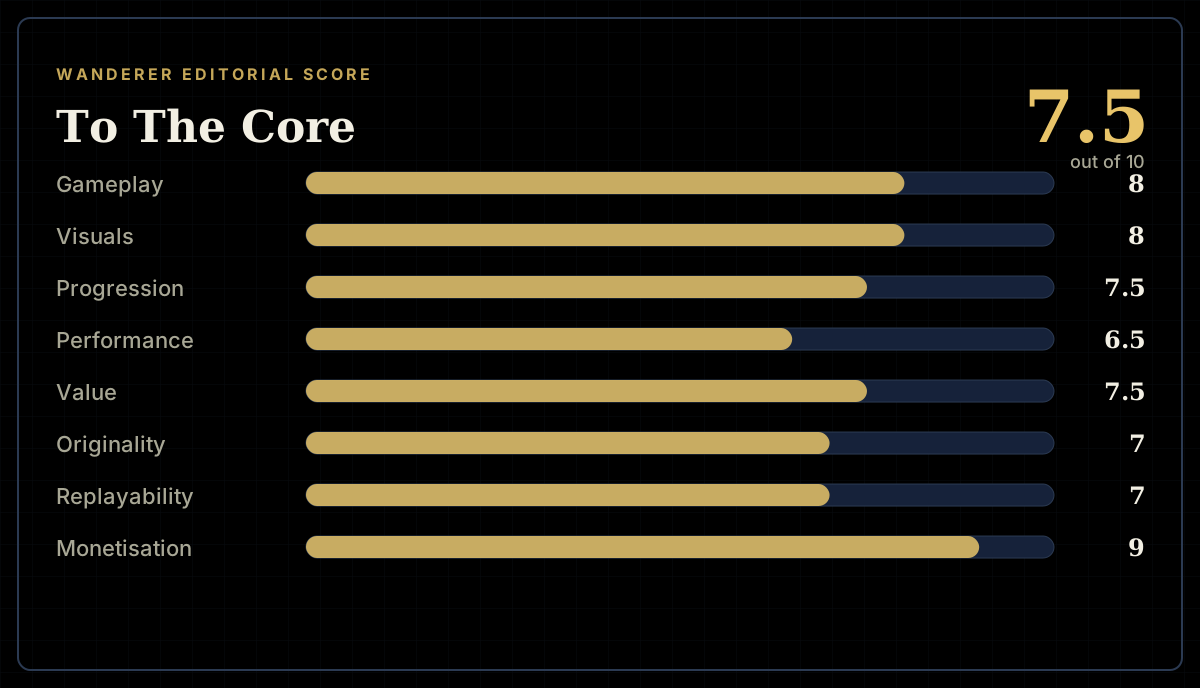
7.5 / 10
- Developer
- SomethingExtra
- Released
- 10 August 2023
- Platforms
- Windows
- Genre
- Incremental
- Monetisation
- One-time purchase, no in-app purchases, no ads
- Players
- Single-player
The short version
To The Core takes the oldest incremental idea in the book — dig, upgrade, dig deeper — and gives it a genuine destination: work outward across a solar system of increasingly hostile planets toward a sun that ends in a supernova and a black hole. The mastery system, which quietly rewards sticking with one resource instead of chasing whichever number just got bigger, is the game's best piece of design, and the whole thing is sold once, with no storefront trying to sell it back to you a second time.
What holds it back from the top tier is friction the mid-game never warns you about: a final achievement that's become notorious for demanding hours of unattended idling, and the absence of cloud saves in a game clearly built to be replayed.
Biggest strengths
- The mastery system rewards patience with a specific resource instead of just chasing the biggest number on screen
- The solar-system structure gives an incremental genre that's usually directionless a real endpoint to work toward
- Fuel and durability management add a genuine risk decision to every drilling run instead of pure numbers-go-up
Biggest weaknesses
- No cloud saves, so a lost install or a new PC means starting the entire run over
- The last of the game's 19 achievements is widely regarded as requiring hours of unattended idling or an auto-clicker, a grind spike the rest of the game never signals is coming
- Windows-only, with no Mac or Linux build and no controller support
Who it's for: Incremental fans who want a finite, purchasable experience rather than another free-to-play treadmill, and anyone who likes the specific fantasy of getting strong enough to casually devour a planet you were terrified of an hour earlier.
Our recommendation: Buy it outright if you like incrementals with a real ending. It's a single ten-to-twenty-hour purchase rather than a live service, so there's no ongoing pressure to weigh — just decide whether you want the full loop once, or several times across a few resets.
7.5 / 10
Most incrementals ask you to imagine an ending. To The Core actually builds one. Instead of an open-ended number that keeps climbing until you get bored, SomethingExtra's drilling game hands you a solar system with a shape: easy planets near the start, harder ones further out, and a sun at the centre of it all that eventually goes supernova and collapses into a black hole you have to dig through to see the credits. That destination changes how the whole loop feels. You're not grinding forever — you're working toward something specific, and the game is honest about how far away it is.
Digging with a destination
The core loop is familiar to anyone who has played an idle or clicker game in the last decade: pick a target, drill into it, spend the resources you pull out on upgrades that let you drill faster, deeper and into tougher material. What To The Core adds is geography. Planets aren't a flat list of unlock gates, they're a solar system you travel between, each one built from different block types with their own resistance and reward profile, and each one meaningfully harder than the last. The sun at the centre is the game's actual finish line: breaking its core triggers a supernova, and the black hole that follows is a genuinely different, denser challenge, with blocks orbiting a central point instead of sitting in a static grid.
Framing the grind as travel rather than an endless ladder is a small change with a real effect. Cookie Clicker and its many descendants are built to never really end; To The Core is built to be finished, replayed, and finished again. Several players report doing exactly that — clearing the full run, walking away for six months to a year, then coming back for another pass. That's a different relationship with an incremental than most of the genre asks for, and it's the game's most distinctive achievement.
The mastery system is the best idea here
Buried inside the upgrade economy is a quiet piece of design that elevates the whole game: mining a specific resource repeatedly builds mastery with it, and mastery translates into a permanent buff — mine a hundred units of iron, for instance, and iron starts dropping roughly five percent more often from then on. That's a meaningfully different incentive from the genre standard, where the correct play is almost always "grab whatever is currently worth the most." Mastery rewards consistency. It gives you a reason to keep working a planet you've technically outgrown, and it means two players who've put the same hours in can end up with noticeably different resource profiles depending on what they leaned into.
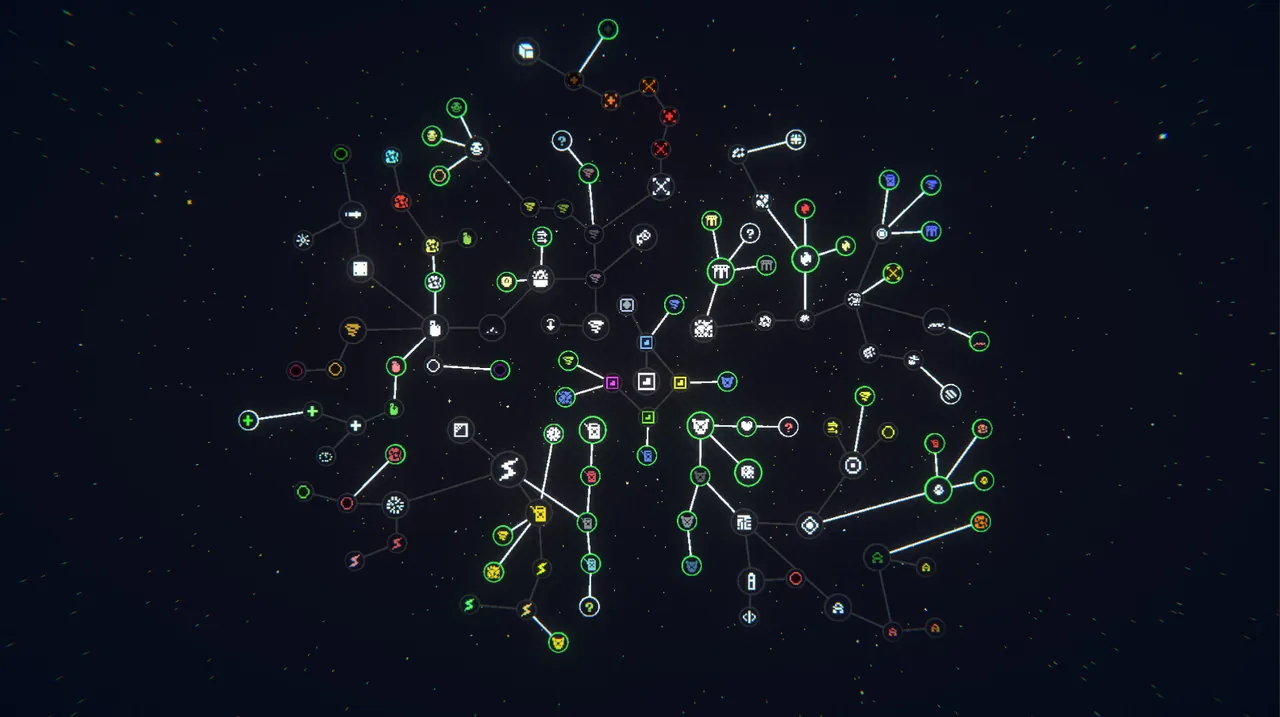
It also feeds the skill tree in a way that keeps upgrade decisions from being purely arithmetic. Durability, fuel capacity and drill damage all draw from the same pool of resources mastery is quietly making more efficient, so the tree stops being "buy whatever's cheapest" and starts asking what kind of drill you're actually building.
Fuel is the risk, not just the resource
Every planet run has to be paid for with fuel, and running out mid-drill wastes the trip — you don't get to bank partial progress on a resource you didn't have the tank to finish extracting. That single constraint does a lot of quiet work. It turns planet selection into an actual decision rather than "go to whichever one has the biggest number," because a planet you can't safely reach the depth of is a planet where you're burning fuel for nothing. Durability plays a similar role on the other side of the ledger: push a drill past what it can survive and you're paying for repairs instead of banking profit. Neither system is complicated, but together they mean a completed successful run feels like it was actually planned rather than simply waited out.
Presentation that earns its escalation
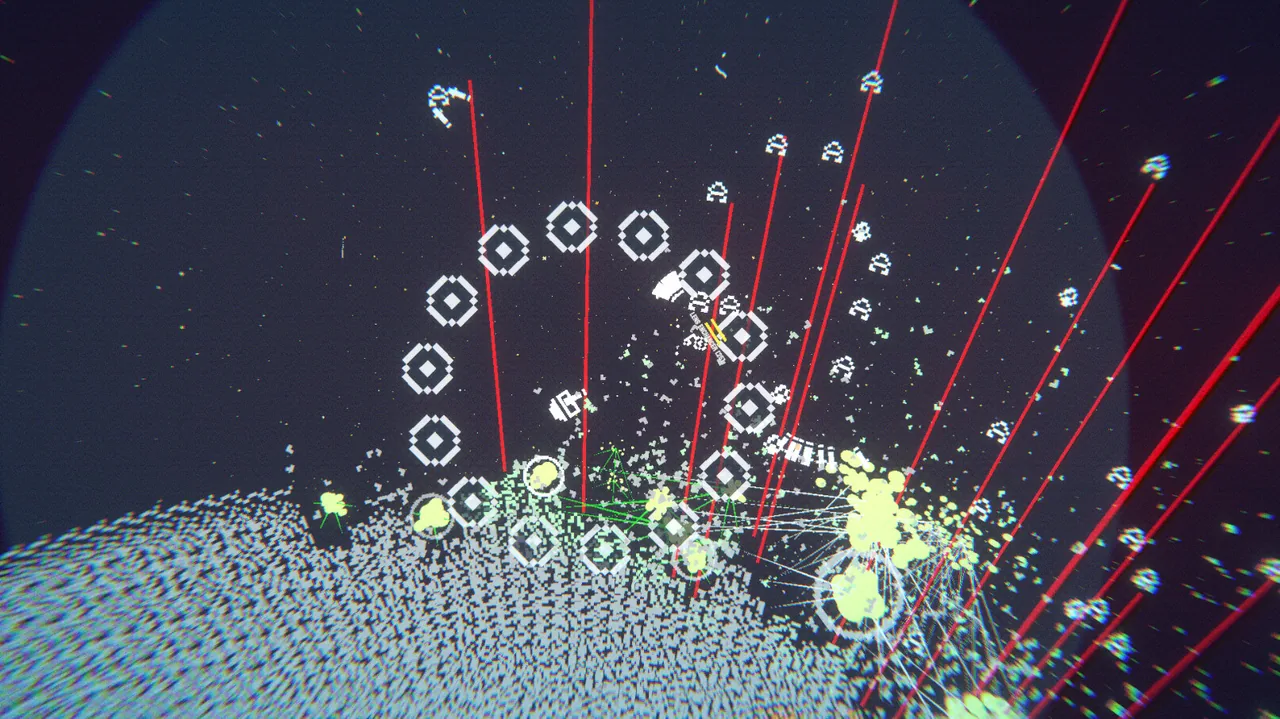
To The Core doesn't try to be a technical showcase, and it doesn't need to be — the visual design scales convincingly with the fiction. Early planets are modest, blocky and low-stakes; by the time you're deep enough to be pulling in rarer materials, the particle effects and lighting have grown with you, and the supernova/black hole finale is widely singled out as the moment the presentation pays off everything that came before it. The soundtrack gets specific praise too, which is worth noting for a game in a genre where music is so often an afterthought loop nobody mentions.
The one recurring technical complaint worth flagging is performance around the black hole stage, where the orbiting block field has been reported to introduce noticeable slowdown. It isn't described as universal, but it's consistent enough across feedback to be a real caveat rather than a one-off.
Where the friction actually is
To The Core's problems aren't in its core loop, they're in decisions around it. The absence of cloud saves is the biggest one: this is a game explicitly built around replaying a finished run, and losing that save to a reinstalled OS or a new machine is a real, avoidable cost for a game clearly designed with return visits in mind. The second is the last of its 19 Steam achievements, which has built enough of a reputation that guides now treat "let it idle for hours, possibly with an auto-clicker" as the accepted solution rather than a workaround. A grind spike that severe, arriving only after the rest of the game has trained you to expect proportional pacing, reads less like intended difficulty and more like a tuning pass that never happened.
Platform support is narrow, too — Windows only, no Mac or Linux build, no controller support, and only English in the text. None of that is unusual for a small indie incremental, but it does mean the audience who can comfortably pick this up is smaller than the reception numbers might suggest.
Value and monetisation
There's nothing to untangle here, which is itself worth saying plainly: one purchase, no in-app currency, no energy system, no ads, no battle pass. At roughly twelve New Zealand dollars for a run that most players finish somewhere between eight and twenty hours, depending on how thoroughly they chase achievements, the maths is straightforward rather than generous. Some players who cleared it quickly feel the price sits a little high for the length; others who replay it every six to twelve months clearly feel they got more than their money's worth. Both readings are fair, and either way, nothing in the design is trying to nudge you toward spending twice.
Verdict
To The Core succeeds at something a lot of incrementals don't even attempt: it gives its escalating numbers somewhere to actually go. The solar-system structure, the mastery system that rewards sticking with a resource instead of chasing the largest one, and fuel management that turns planet selection into a real decision all add up to a drilling loop with more personality than the genre usually bothers with. It's held out of the top bracket by problems that sit around the edges of that loop rather than inside it — no cloud saves for a game built to be replayed, a final achievement that's become a known grind trap, and a platform footprint limited to Windows with no controller option. If you want an incremental with an actual ending and don't mind reaching it more than once, this is a genre highlight worth its modest asking price. If you're chasing every achievement in one sitting, budget the extra hours the last one is going to cost you.
Players who like watching a character grow stronger against a world that keeps advancing whether or not they're at the keyboard might also enjoy Wanderer — progression that continues in the background rather than resetting to a fresh solar system each time.
Pros and cons
Pros
- The mastery system rewards patience with a specific resource instead of just chasing the biggest number on screen
- The solar-system structure gives an incremental genre that's usually directionless a real endpoint to work toward
- Fuel and durability management add a genuine risk decision to every drilling run instead of pure numbers-go-up
- A single flat price with no in-app purchases, energy timers or ads sitting behind the progression
- Visual spectacle scales with the planets, and the culminating supernova sequence earns its place as a finale
Cons
- No cloud saves, so a lost install or a new PC means starting the entire run over
- The last of the game's 19 achievements is widely regarded as requiring hours of unattended idling or an auto-clicker, a grind spike the rest of the game never signals is coming
- Windows-only, with no Mac or Linux build and no controller support
- A handful of players clear the full campaign in under ten hours, which makes the asking price feel steep until a sale
- Only English is supported, which will turn away a chunk of Steam's international incremental audience
Screenshots
-
To The CoreImage: SomethingExtra via Steam -

To The CoreImage: SomethingExtra via Steam -
To The CoreImage: SomethingExtra via Steam -
How the review scores each part of the gameWanderer Editorial -
The short versionWanderer Editorial