
Game review
Diggin
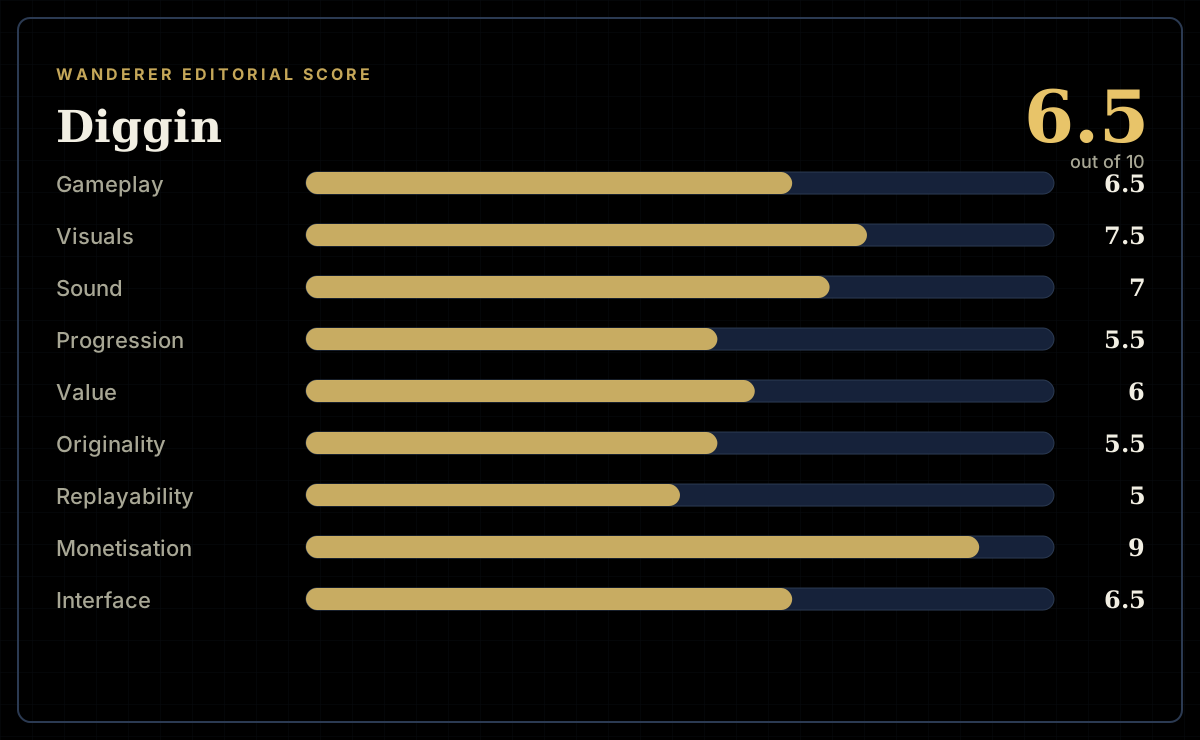
6.5 / 10
- Developer
- Longshot Studio
- Publisher
- Longshot Studio, Gamersky
- Released
- 16 July 2026
- Platforms
- Windows
- Genre
- Incremental mining adventure
- Monetisation
- One-time purchase, no in-app purchases, no ads, no subscription
- Players
- Single-player only
The short version
Diggin casts you as Doug, a young mole drilling into a meteor crater his grandfather discovered, and it does something a lot of digging incrementals skip entirely: it gives the burrowing an actual reason. That story hook and a genuinely tactile presentation carry the opening hour or two well. The skill tree underneath it is where the cracks show — long stretches with nothing that feels impactful, broken up by a handful of hidden nodes that spike your power all at once, and a back half that increasingly plays itself.
Biggest strengths
- Doug's search for his grandfather and the vanished star-nosed mole tribe gives the dig-and-upgrade loop a reason to keep going, which most games in this micro-genre don't bother with
- The core loop — drop down, burn fuel, cash in materials, upgrade, drop down again — is genuinely well-tuned for a single evening session rather than a long-haul commitment
- Pixel art and digging feedback are widely praised as tactile and satisfying, and the game runs cleanly with no reported crashes or lag spikes
Biggest weaknesses
- The skill tree spikes rather than climbs — long plateaus where nothing feels impactful are broken only by a handful of hidden nodes that suddenly double your power, and several upgrades don't do much until you've upgraded them again
- The grind sets in early for some players, and the last third of a run increasingly becomes watching a drop play out rather than actively steering it
- Limited in-air movement makes dodging hazards and grabbing fossils or chests mid-fall feel closer to luck than skill, a specific complaint that comes up repeatedly
Who it's for: Players who like short, low-commitment incrementals they can finish in an evening, and anyone drawn to the digging-and-upgrading micro-genre who wants a bit of story dressing on top of the usual number-go-up loop.
Our recommendation: Worth a look if you're already a fan of digging incrementals and want something you can finish in a handful of sittings, ideally picked up on a sale rather than at full price. Players who've already burned out on this specific genre this year, or who want a loop with legs beyond a single completionist run, should temper expectations.
6.5 / 10
Most digging incrementals don't bother explaining why you're digging. You drill, you upgrade the drill, you drill further, and the fiction is whatever you bring to it yourself. Diggin at least tries: you're Doug, a young mole whose grandfather Digby stumbled onto a meteor crater hiding the last known trace of an ancient, star-nosed mole tribe that vanished without explanation. It's a light touch — nobody's mistaking this for a narrative-driven RPG — but it's enough to make the drilling feel like it's going somewhere, which is more than most of its neighbours manage.
That neighbourhood got crowded fast this year. Diggin arrived on Steam on 16 July 2026, about six weeks after ludokai's similarly pitched You Know The Drill, and the two games share enough DNA — drill down, spend what you find on drill upgrades, drill further — that shoppers comparing them have been doing so openly in Diggin's own review section. Diggin isn't trying to hide what genre it's in. The question is whether its version of the loop, and the story wrapped around it, earns its place next to the rest of the field.
Doug, the crater, and a loop built for one evening
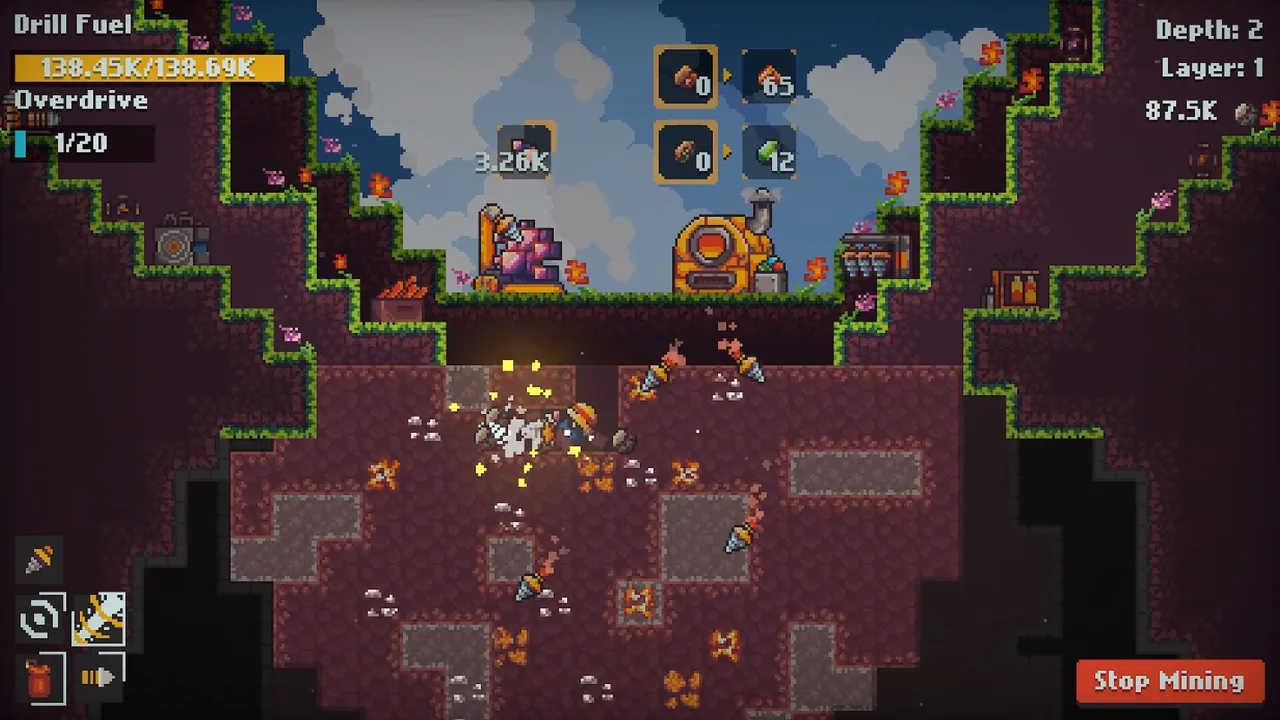
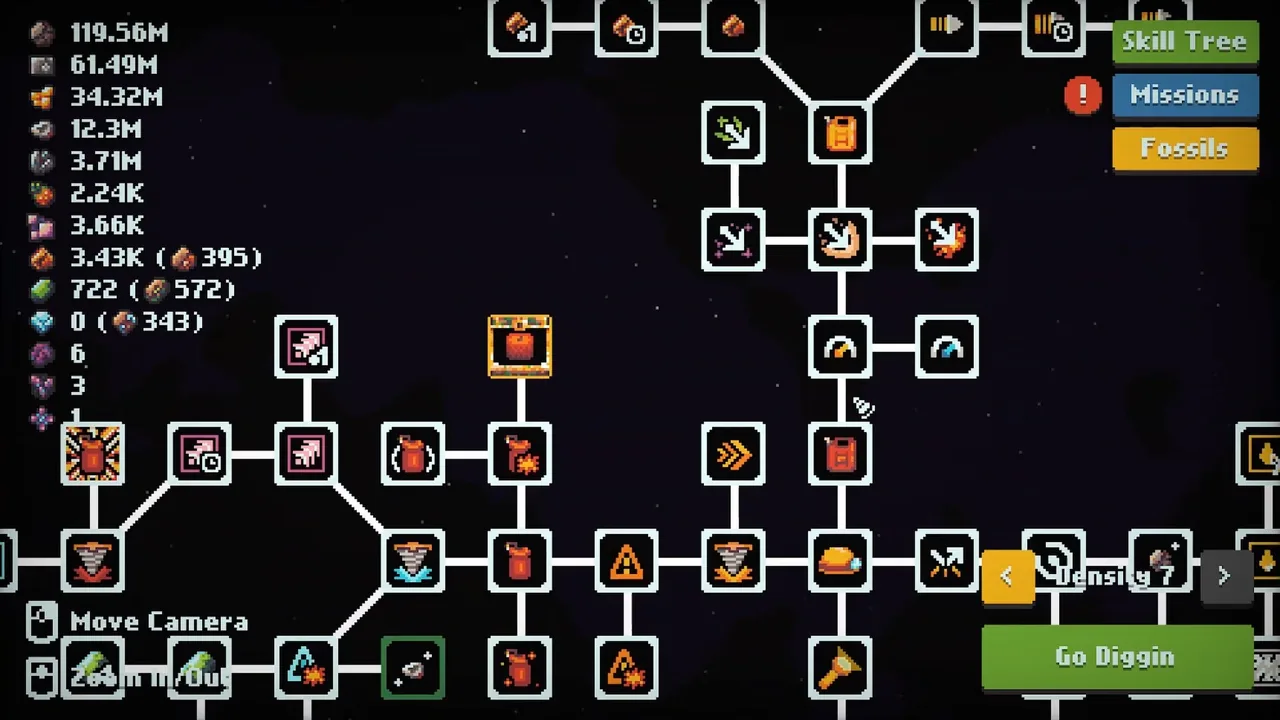
The moment-to-moment structure is simple by design. You send Doug down into the crater, burning fuel as you drill through layers of rock, ore and the occasional buried relic, and when the fuel runs out you're pulled back to the surface to spend what you found. Materials feed a skill tree — described in the game's own marketing as "GIANT," and it is genuinely sprawling for a game this size — that upgrades the drill itself, unlocks new mining gear and gradually lets Doug push further and faster on the next descent.
It's a loop that plenty of players describe finishing in one sitting or two, and for the length it's aiming at, that pacing mostly works. One recurring theme across player reactions is that Diggin is best treated as a short, complete experience rather than a long-term idle habit — dig, upgrade, repeat, credits roll in an evening or two, on to the next game. Reviewers who came in expecting exactly that describe it as a satisfying, low-commitment couple of hours; more than one compares the drilling itself to a tactile fidget toy, the kind of feedback loop that's pleasant independent of whatever numbers are climbing behind it.
Where the pacing breaks down
The trouble starts once the skill tree stops feeling like steady forward motion and starts feeling like waiting for the next spike. A consistent complaint across Diggin's negative and mixed reviews is that power doesn't climb smoothly — it plateaus for long stretches, then jumps hard the moment you stumble onto one specific node that was quietly doing all the work the whole time. Several players describe individual upgrades that barely register until they're upgraded a second or third time, which undercuts the moment-to-moment payoff a game built entirely around "spend materials, feel stronger" really needs to land consistently.
That unevenness compounds in the back third of a run. Players who push toward full completion describe the late game increasingly playing itself — drop down, let the now-considerable power level carry the run, watch it resolve, repeat — which is a strange place for a game this short to end up, since the entire pitch is a tight, hands-on loop rather than an idle-clicker's "let it run in the background" philosophy. A specific achievement built around excavating 300,000 blocks draws particular criticism for taking a roughly two-and-a-half-hour game and stretching its tail considerably further for no reason beyond padding a completion time.
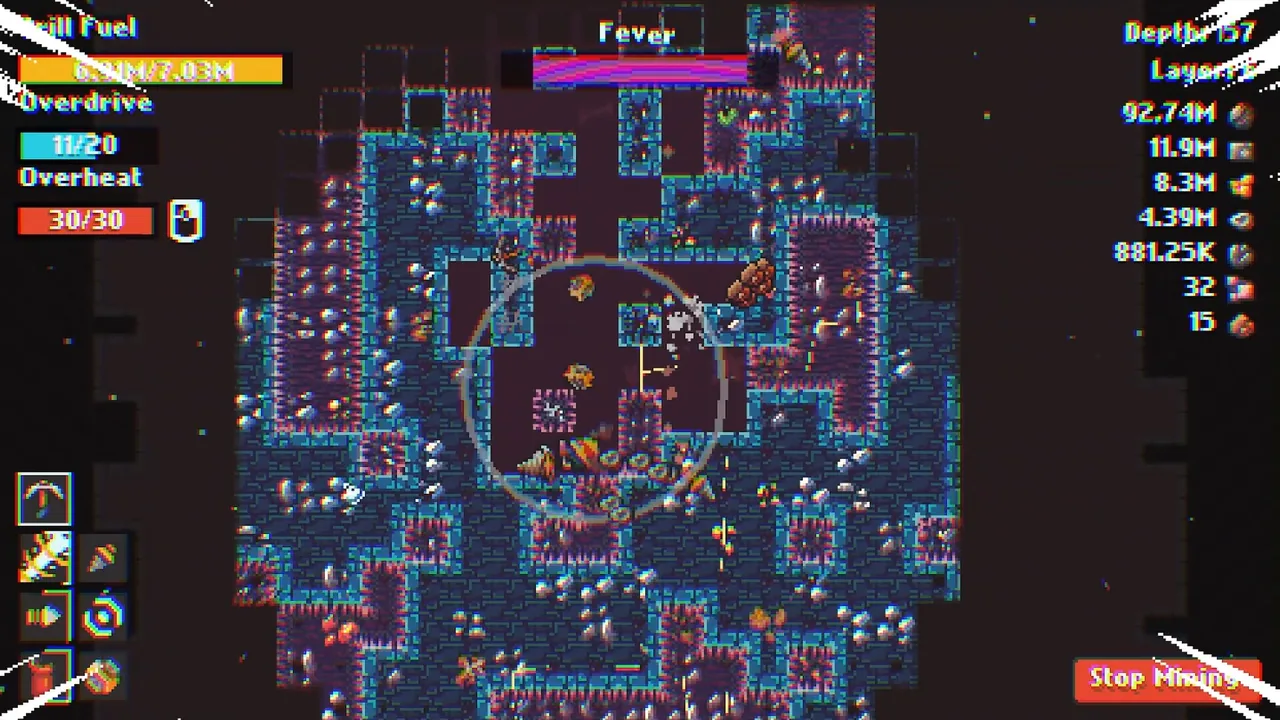
Two more specific frustrations show up often enough to be worth flagging rather than dismissing as one-off complaints. In-air movement is limited enough that dodging hazards or grabbing a fossil or chest mid-fall feels more like a lucky pass than a deliberate one, and several players single this out as the moment the drilling stops feeling skillful and starts feeling like waiting to see what happens. Separately, once a run's effects and pickups start stacking late in the game, screen clarity suffers — one detailed review describes losing track of Doug entirely behind a bright, unexplained overlay for a large share of a run, with no obvious option to dial it back.
Presentation carries a lot of the appeal
None of that undoes what Diggin gets right visually. Its pixel art and the physical feel of drilling through rock are consistently the most-praised elements across player feedback — reviewers reach for words like "tactile" and "satisfying" specifically for the act of hitting a wall of rock and watching it give way, which is exactly the sensation a game like this lives or dies on. Sound design earns similar praise, and technically the game holds up: reports of crashes or performance issues are rare, which matters for a small studio's first major release. Full controller support, alongside comfort options like adjustable camera shake and a mouse-only control scheme, is a level of accessibility polish that punches above what you'd expect from a team this size.
It's also worth noting that Longshot Studio has been responsive since launch. Multiple players describe balance complaints raised shortly after release being addressed in follow-up patches, and at least one reviewer who initially had reservations updated their review to reflect a meaningfully improved experience post-patch. For a studio's first big commercial release, that's a genuinely good sign for how the game — and whatever comes next from Longshot — will hold up over time.
Value, and a genre that got crowded fast
Diggin sits at NZ$11.25 on Steam with no in-app purchases, no advertising and no energy system gating progress behind a timer or a store — what you pay is the whole transaction, and the developer's post-launch patching shows a willingness to keep improving what you already own rather than monetising further. On the monetisation question specifically, there's very little to criticise.
The harder question is whether four to six hours, with not much more required for full completion, justifies that price against a genre that's suddenly full of close alternatives. You Know The Drill launched weeks earlier with a nearly identical pitch and has settled into a stronger reception among the players who've tried both. That's not a knock on Diggin's right to exist alongside it — both are legitimate, differently flavoured takes on the same core idea, and Diggin's story hook is a real point of difference — but it does mean shoppers on the fence have a genuinely comparable option to weigh it against, and a meaningful slice of Diggin's own reviewers explicitly say they wish they'd waited for a discount before finding that out for themselves.
Final verdict
Diggin does something worth crediting: it gives a genre that usually runs on pure number-go-up compulsion an actual reason to keep drilling, wrapped in presentation that's tactile enough to justify the comparisons to more expensive digging games. Where it comes up short is the part that was always going to matter most for an incremental — the climb itself is spiky rather than steady, the last third of a run asks less of you than the first, and a handful of specific frustrations around movement, clarity and achievement pacing chip away at what's otherwise a well-presented couple of hours.
If you're already sold on the digging-incremental format and want a short, story-flavoured evening's worth of it, Diggin delivers that honestly, and its clean, purchase-once monetisation model makes it an easy game to feel fine about owning. Go in expecting a tight few hours rather than a long-term habit, and consider waiting for a discount if the asking price gives you pause — plenty of the game's own fans wish they had.
Price and monetisation checked 1 August 2026.
Players who'd rather their progression kept building indefinitely instead of wrapping up after a single evening might also want to look at Wanderer.
Pros and cons
Pros
- Doug's search for his grandfather and the vanished star-nosed mole tribe gives the dig-and-upgrade loop a reason to keep going, which most games in this micro-genre don't bother with
- The core loop — drop down, burn fuel, cash in materials, upgrade, drop down again — is genuinely well-tuned for a single evening session rather than a long-haul commitment
- Pixel art and digging feedback are widely praised as tactile and satisfying, and the game runs cleanly with no reported crashes or lag spikes
- Full controller support alongside comfort options like Camera Comfort and a mouse-only mode show real accessibility care from a small team
- A flat one-time purchase with no in-app purchases, ads or energy-refill store, and the developer has already patched balance complaints raised after launch
Cons
- The skill tree spikes rather than climbs — long plateaus where nothing feels impactful are broken only by a handful of hidden nodes that suddenly double your power, and several upgrades don't do much until you've upgraded them again
- The grind sets in early for some players, and the last third of a run increasingly becomes watching a drop play out rather than actively steering it
- Limited in-air movement makes dodging hazards and grabbing fossils or chests mid-fall feel closer to luck than skill, a specific complaint that comes up repeatedly
- Late-game screen clarity suffers once particles, pickups and effects stack up, to the point that some players can't tell what's obscuring their view or how to turn it down
- At four to six hours to finish, and not much longer to fully complete, the NZ$11.25 asking price is a real sticking point for a chunk of its own Steam reviewers
Screenshots
-
DigginImage: Longshot Studio via Steam -
DigginImage: Longshot Studio via Steam -
DigginImage: Longshot Studio via Steam -
How the review scores each part of the gameWanderer Editorial -
The short versionWanderer Editorial