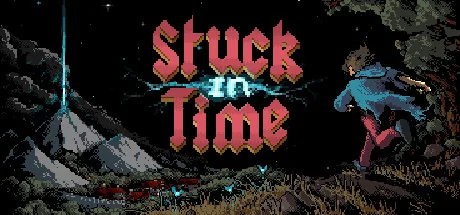
Game review
Stuck In Time
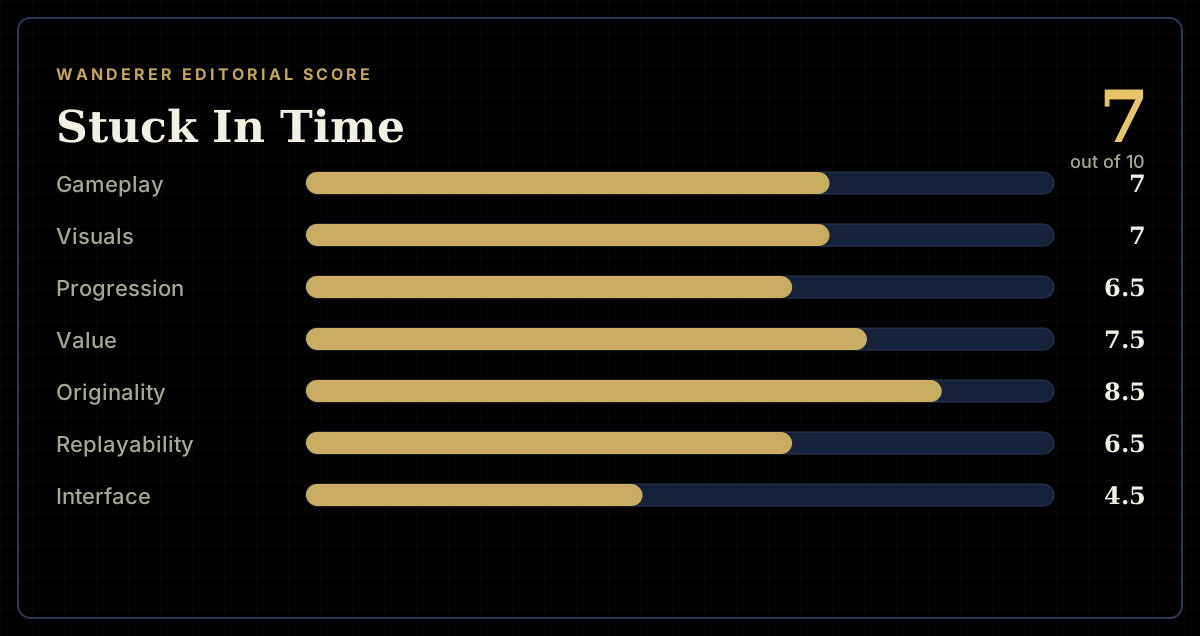
7 / 10
- Developer
- Housemade Inc.
- Publisher
- Housemade Inc.
- Released
- 9 December 2021
- Platforms
- Windows
- Genre
- Idle Adventure RPG
- Monetisation
- One-time purchase, no in-app purchases, no ads, no subscription, no DLC
- Players
- Single-player only
The short version
Stuck In Time asks you to plan a route through a dark, half-lit world one step at a time, set it running, and watch the same loop replay over and over as every action you repeat gets fractionally cheaper — until the loop is long enough, and your character skilled enough, to push the boundary out further. It's an unusual marriage of time-loop storytelling and idle-incremental design, and the marriage works: the reset that would normally erase an idle game's progress here only clears the resource you spend, never the experience you've banked, which is why the concept still earns five-star write-ups from players logging hundreds of hours nearly five years after launch.
What hasn't changed in that time is the one thing almost every negative review complains about, from release week to last month: there's no way to preview what a rebuilt loop will actually do, and no way to fix a mistake mid-run, so testing a single small change means sitting through the entire loop again. That's a real, unaddressed structural flaw sitting inside a genuinely original design — and the game's own achievement numbers confirm it's costing the game most of its audience well before the interesting part even opens up.
Biggest strengths
- The familiarity system quietly solves loop-based design's usual problem: everything you spend resets every run, but the one number that's supposed to keep climbing never does, which is why players are still calling this "unironically one of my all-time favourite games" close to five years after release
- At least two distinct endings exist, discovered through separate epilogue-specific achievements, so the resolution some long-time players say sat badly with them isn't the only way the story can close
- The pixel art and dark-fantasy atmosphere draw consistent praise even from reviewers who otherwise recommend against buying the game
Biggest weaknesses
- There is still no way to preview a loop's outcome before running it and no way to correct a mistake mid-run — testing one small tweak means replaying the entire loop from the start, a complaint that reads almost identically in reviews from December 2021 and July 2026
- Public achievement data shows even the single most commonly earned achievement in the game's entire list sits below a quarter of all owners, and the achievement matching the store page's own "escape the loop" pitch sits at roughly one in six
- Steam Deck legibility is a recurring complaint — small text and cramped menus on a "Verified" listing, with at least one reviewer noting the lack of dedicated controller support
Who it's for: Idle-genre veterans who enjoy optimisation puzzles and don't mind fighting an unfriendly interface for the first several hours, and fans of moody pixel-art dark fantasy who want a structurally different game underneath the familiar aesthetic.
Our recommendation: Worth the asking price if the "build a program, then watch it get cheaper every time it runs" idea genuinely appeals to you — go in expecting the first few hours to feel like manual labour before the loop-building idea has room to breathe, and expect the interface to never really stop fighting you.
7 / 10
Every negative review of Stuck In Time from launch week in December 2021 describes almost exactly the same frustration as the ones still turning up in July 2026: you tweak one step of a loop, and the only way to find out if it worked is to sit through the entire thing again from the beginning. That's a genuinely damning throughline for a game that has sat at Very Positive for four and a half years — and it's also, strangely, not the whole story, because that same stretch of reviews is full of players logging three hundred, five hundred, even upward of two thousand hours, and calling it one of the best things the idle genre has produced. Both things are true at once, and working out how is the actual point of revisiting a game this old.
The idea that makes the reset survivable
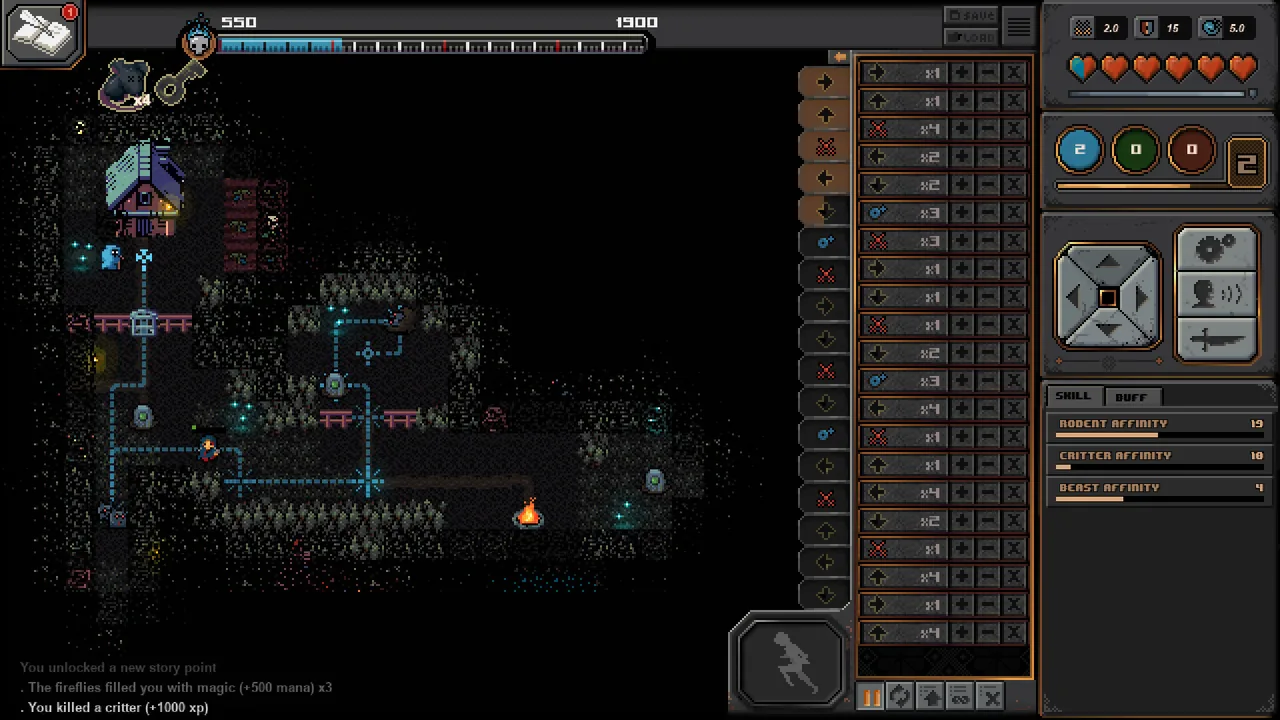
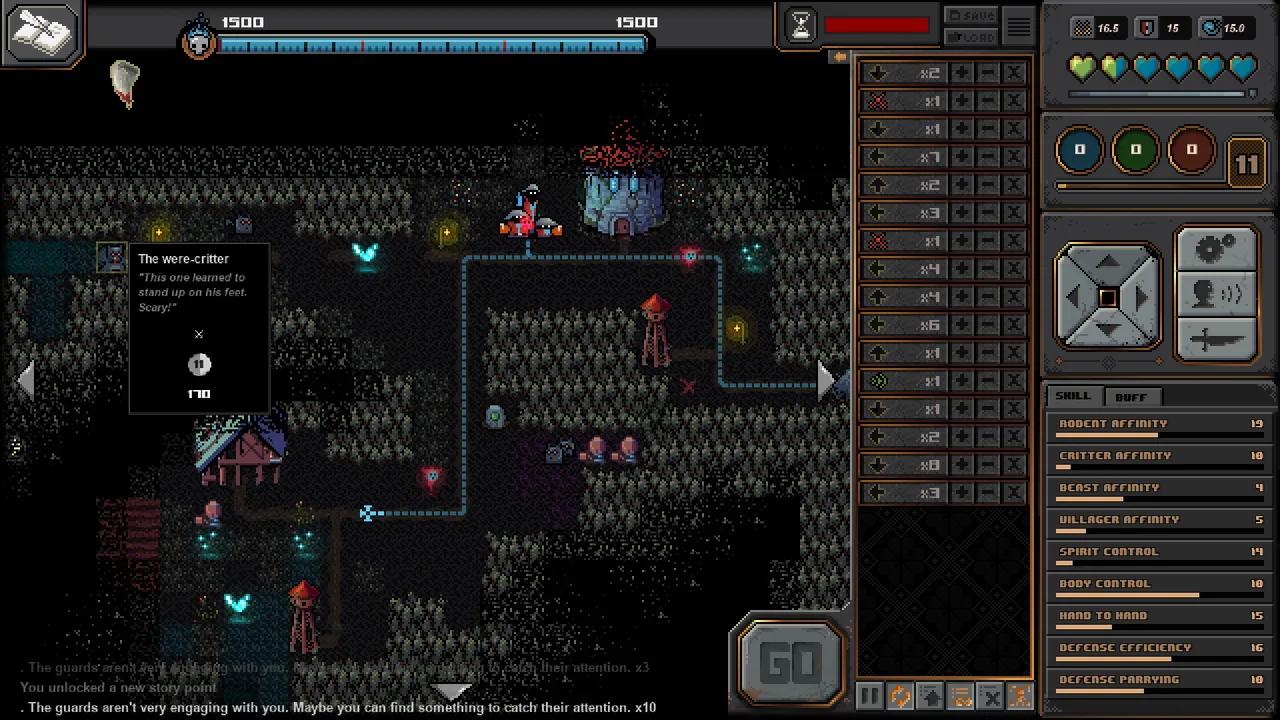
Stuck In Time's core loop asks you to plan, one tile at a time, exactly what your character does: which direction to walk, which gate to force open, which stranger to talk to or fight, which fireflies of stray mana to sweep up along the way. You queue that plan, hit go, and watch it play out in real time — often for real minutes, sometimes longer — until your character runs out of mana and the loop resets. On paper that's a punishing structure for anything calling itself an idle game: idle design lives on the promise that progress compounds while you're not looking, and a hard reset every few minutes should be the enemy of that promise.
What actually happens is more interesting. Every action you repeat builds "familiarity" for that specific tile or task, and familiarity is the one thing the reset doesn't touch — walking past the same fence for the fortieth time costs less mana than the first, permanently, even though the mana pool itself starts over every loop. The loop isn't erasing your progress at all; it's clearing the short-term resource while banking the long-term one, which is precisely the trick idle games use to make offline time feel valuable. Stuck In Time just runs that trick through active planning instead of a background timer, and asks you to be the one designing the schedule that gets cheaper to execute every time it runs. It's a genuinely clever resolution to the tension the pitch implies, and it's the reason the game's most devoted reviewers — the ones with hundreds of hours on record, several posting as recently as this year — describe replaying it every twelve months just to feel that curve again.
A program you can't watch running
The trouble is that building and rebuilding that schedule is where the game asks the most of you, and it's also where it gives back the least. There is no way to preview what a modified loop will actually produce before you commit to running it. There is no way to pause and correct a single misplaced step mid-run. If a loop you've spent twenty minutes assembling turns out to be one tile short of where you wanted it to reach, your only recourse is to edit the plan and run the whole thing again from zero, watching every already-solved segment replay before you learn whether the new part worked. Reviewers were describing this exact frustration in the first week after release, and reviewers are still describing it in reviews posted this year — one from launch weekend and one from the final days of July 2026 read close enough to being interchangeable that you could swap their dates and nobody would notice.
That's the throughline worth taking seriously here, more than any single bug report: over four and a half years and, by all appearances, a genuinely maintained game — crash reports and corrupted-save complaints, which dominate the negative reviews from the first year, become rare by comparison in the years that follow, suggesting real patches landed on the technical side — the one complaint that never seems to have been addressed is the workflow of actually building a loop. For a game whose entire identity rests on the satisfaction of optimising a schedule, shipping without a way to check your work without running the whole program is a strange gap to leave open for half a decade.
The Loop Hero shadow, and why it doesn't hold up on inspection
No conversation about Stuck In Time avoids Loop Hero for long, and the game invited that comparison on itself. It shipped in December 2021 as Loop Odyssey, wearing a palette and menu language close enough to Loop Hero's that the listing was pulled from Steam on a DMCA claim the following March. The developer put the renaming to a community vote and announced the result on 5 April 2022; Stuck In Time won. A trace of the old identity is still sitting in plain sight: the support contact listed on the current store page is a @loopodyssey.com address. A meaningful slice of the game's one-star reviews, in every year of its life, lead with some version of "this stole its look from a better game" and stop there, often logged at under an hour of playtime.
Set that against the reviews written by people who actually pushed past the opening hours, and the picture is close to the opposite: those players consistently describe two systems that share almost nothing beyond a dark fantasy palette, and several go out of their way to say the resemblance put them off buying it for months before they eventually tried it and found something with its own identity underneath. That's worth knowing going in — the surface-level accusation is understandable and the visual overlap is real, but it says very little about whether the mechanics underneath are worth your time, and the reviewers with the most hours invested are also the ones least interested in relitigating it.
What the achievement numbers say about who actually gets anywhere
It's easy to read "a game full of tedious re-running" as one vocal minority's impatience, so it's worth checking against Stuck In Time's own global achievement statistics. The single most commonly earned achievement in the entire 28-achievement list — whatever early milestone it marks — sits at 23.9% of all owners. Below that, most of the list clusters in the high single digits to low teens, and an achievement named to match the store page's own promise to "escape the loop" sits at 16.3%. Read plainly, that means something close to five in six people who own Stuck In Time have never seen its story through to any ending, and fewer than a quarter have cleared even its most commonly reached checkpoint. That's not proof the game is bad — plenty of good games have low completion rates — but it does corroborate, with harder numbers than any single review can offer, that the opening stretch is turning away most of the people who buy it, exactly where the negative reviews say the friction lives.
There's a wrinkle worth flagging carefully without spoiling anything: a pair of rarer epilogue- specific achievements, each claimed by under 5% of owners, confirm the story doesn't resolve only one way. That matters because the game's resolution has drawn its own separate, recurring complaint across the years, distinct from the interface gripes — several reviewers with a hundred or more hours invested, who otherwise loved almost everything about the systems, say the specific requirement the main story places on you to finish it left a bad taste, with at least one reviewer noting they've logged well over two thousand hours and still refuse to see it through for exactly that reason. Knowing branching resolutions exist, without knowing what separates them, is the right amount of information for a buyer to have before starting.
Presentation, price and what's actually being sold
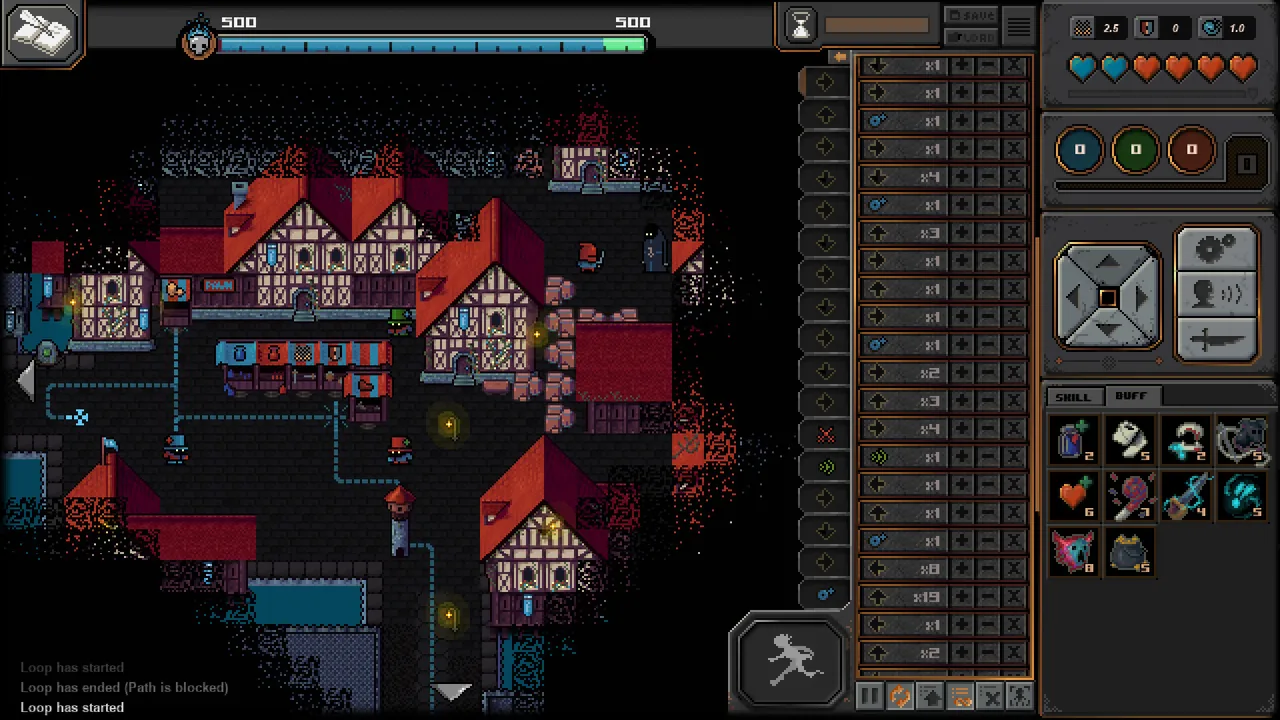
None of the above is a knock on how Stuck In Time looks or sounds. The pixel art and its atmosphere of half-revealed, fog-shrouded dark fantasy draw consistent, specific praise across the entire review history, frequently from reviewers who are otherwise recommending against the purchase — a rare split that says the presentation is doing real work independent of the mechanical frustrations sitting on top of it. The one recurring asterisk is legibility on Steam Deck, where small text and tight menus show up often enough in complaints to be a genuine concern for anyone hoping to play this one away from a desktop monitor, alongside at least one note that dedicated controller support isn't really there.
On price, there's nothing to complain about: NZ$10.29, once, with no DLC, no advertising and no premium currency competing for attention four and a half years into the game's life. For a genre where free-to-play gem shops are the norm, a flat one-time purchase that has never grown a storefront of its own is worth crediting on its own terms, and it means the value question really comes down to how much of that hundred-plus-hour ceiling you personally reach — which, per the achievement data, is a real open question for most buyers rather than a given.
Final verdict
Stuck In Time earns its Very Positive rating honestly rather than by accident: the core insight, that a time loop can reset its resource without resetting the player's actual progress, is a genuinely original piece of design, and it's rewarded four and a half years of devoted, high-hour players who keep coming back to it. What keeps the score from climbing higher is that the game never solved the most basic workflow problem sitting inside that design — you still can't preview a loop or fix it mid-run, five years after players first complained about exactly that — and its own achievement numbers show the resulting friction is costing it most of its audience long before the concept has room to prove itself. That combination is a fair description of a 7.0: genuinely worth playing for the audience it's built for, and a real, patient miss for almost everyone else.
Players who want to see where this idea sits next to its most obvious influence should look at Loop Hero, the game Stuck In Time is constantly, not always fairly, compared against, or Idle Loops, a free browser incremental built on a strikingly similar "plan a run, then run it" structure. Anyone who prefers a shorter, tighter take on the same mana-budget-and-permanent-progress idea should try Increlution instead. And players who like the idea of a loop that keeps compounding without asking them to rebuild and rewatch the same program by hand might also enjoy Wanderer, where offline progress advances automatically rather than needing to be replayed from the start every time.
Pros and cons
Pros
- The familiarity system quietly solves loop-based design's usual problem: everything you spend resets every run, but the one number that's supposed to keep climbing never does, which is why players are still calling this "unironically one of my all-time favourite games" close to five years after release
- At least two distinct endings exist, discovered through separate epilogue-specific achievements, so the resolution some long-time players say sat badly with them isn't the only way the story can close
- The pixel art and dark-fantasy atmosphere draw consistent praise even from reviewers who otherwise recommend against buying the game
- A single NZ$10.29 purchase with no DLC, no ads, and no premium currency anywhere in sight — the entire transaction, four and a half years on
- Multi-hundred-hour positive reviews recur in every year of the game's life, including several from mid-2026, which points to a format that keeps earning devoted long-term players rather than living off launch-week enthusiasm alone
Cons
- There is still no way to preview a loop's outcome before running it and no way to correct a mistake mid-run — testing one small tweak means replaying the entire loop from the start, a complaint that reads almost identically in reviews from December 2021 and July 2026
- Public achievement data shows even the single most commonly earned achievement in the game's entire list sits below a quarter of all owners, and the achievement matching the store page's own "escape the loop" pitch sits at roughly one in six
- Steam Deck legibility is a recurring complaint — small text and cramped menus on a "Verified" listing, with at least one reviewer noting the lack of dedicated controller support
- The game shipped as Loop Odyssey and was renamed four months later after a DMCA takedown, and the controversy still colours a share of one-star reviews from players who bounced off before the tutorial ended
- Pacing in the opening hours is slow enough that a large share of negative reviews describe refunding, or quitting, before the loop-building concept had room to click
Screenshots
-
Stuck In TimeImage: Housemade Inc. via Steam -
Stuck In TimeImage: Housemade Inc. via Steam -
Stuck In TimeImage: Housemade Inc. via Steam -
How the review scores each part of the gameWanderer Editorial -
The short versionWanderer Editorial