
Game review
Magic Research 2
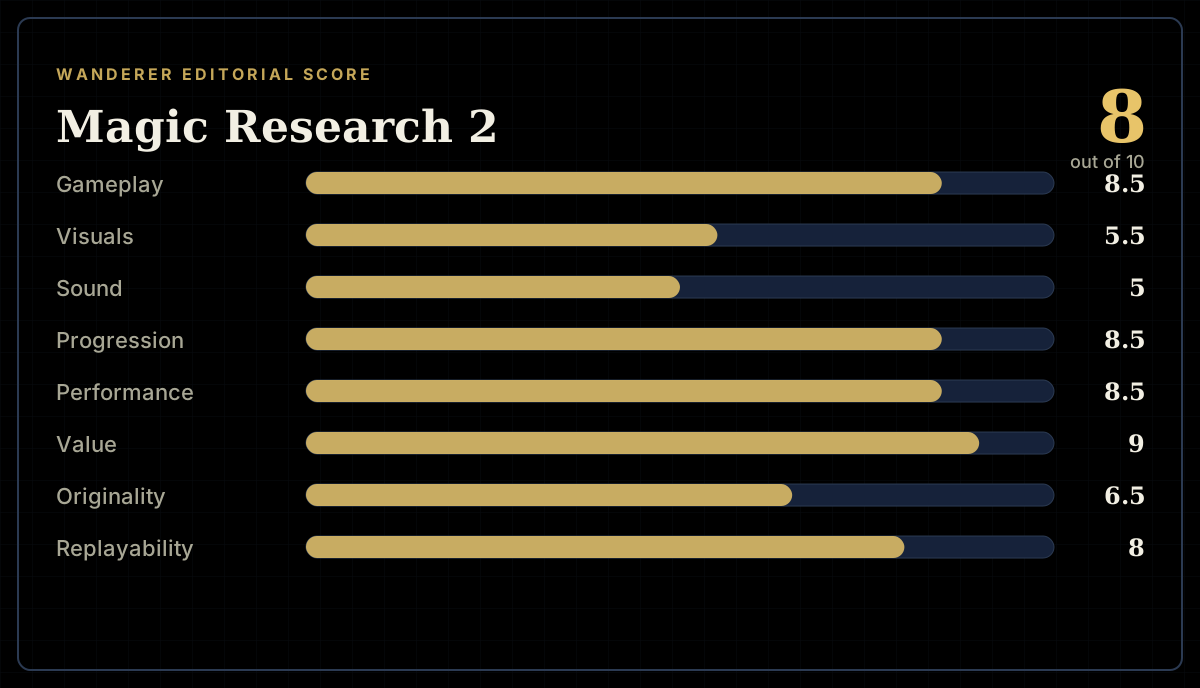
8 / 10
- Developer
- Maticolotto
- Publisher
- Maticolotto
- Released
- 21 May 2024
- Platforms
- Windows, Android, iOS
- Genre
- Incremental RPG
- Monetisation
- One-time purchase, no ads, no in-app purchases, no DLC; a free demo is available on Steam and on both mobile storefronts
- Players
- Single-player
The short version
Magic Research 2 doesn't reinvent what made the first game work — it just builds a lot more of it. The single researcher grinding through six schools becomes a whole staff of Wizards you can delegate spells and transmuting to, the spell list more than doubles, and retirement runs now chase upwards of 120 hidden Storylines and forty-plus bosses instead of eighty and a handful. It is, mechanically, a genuinely bigger and better-tuned version of a design this site already rated well.
What keeps it from a clean upgrade is friction the original didn't have to deal with. A meaningful share of players single out how much manual reconfiguring every retirement demands now that there's a crew of Wizards and familiars to reassign each time, and the new familiar system — the sequel's headline addition — lands as underwhelming for a noticeable minority who expected it to matter more in both farming and combat. The presentation is exactly as bare as before, which was a defensible choice the first time and reads as a missed opportunity to invest a little of the sequel's larger budget into it the second.
Biggest strengths
- Delegating spells and transmuting to a crew of controllable Wizards replaces the original's single-researcher bottleneck with a genuine staffing puzzle
- Over 120 Storylines and more than 40 bosses give retirement runs a far bigger pool of hidden content to chase than the first game's eighty
- The spell list more than doubles to upwards of 120 distinct spells, and the transmutation system adds over 250 craftable items with real build variety
Biggest weaknesses
- Reassigning Wizards, familiars and spell priorities after every retirement is a recurring complaint, and the sequel hasn't automated its own reset ritual
- Familiars are the game's headline new system, but a vocal share of players find them weaker at farming and less impactful in combat than the marketing implies
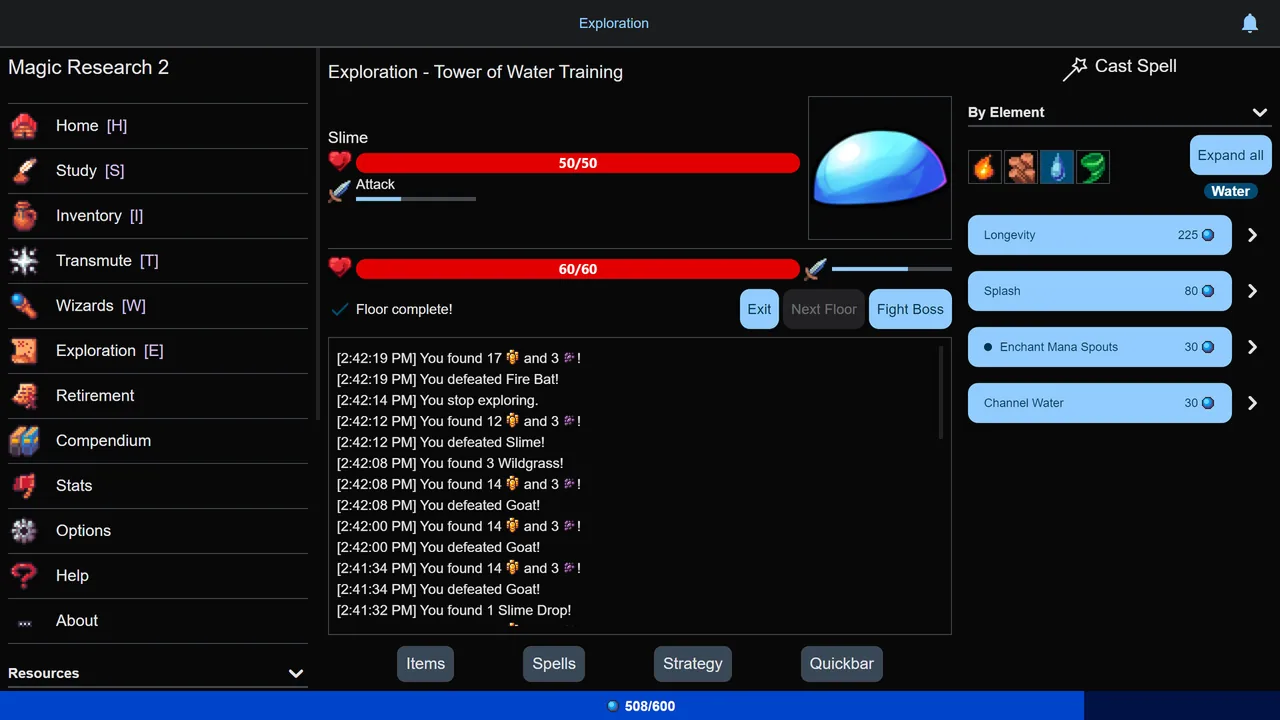
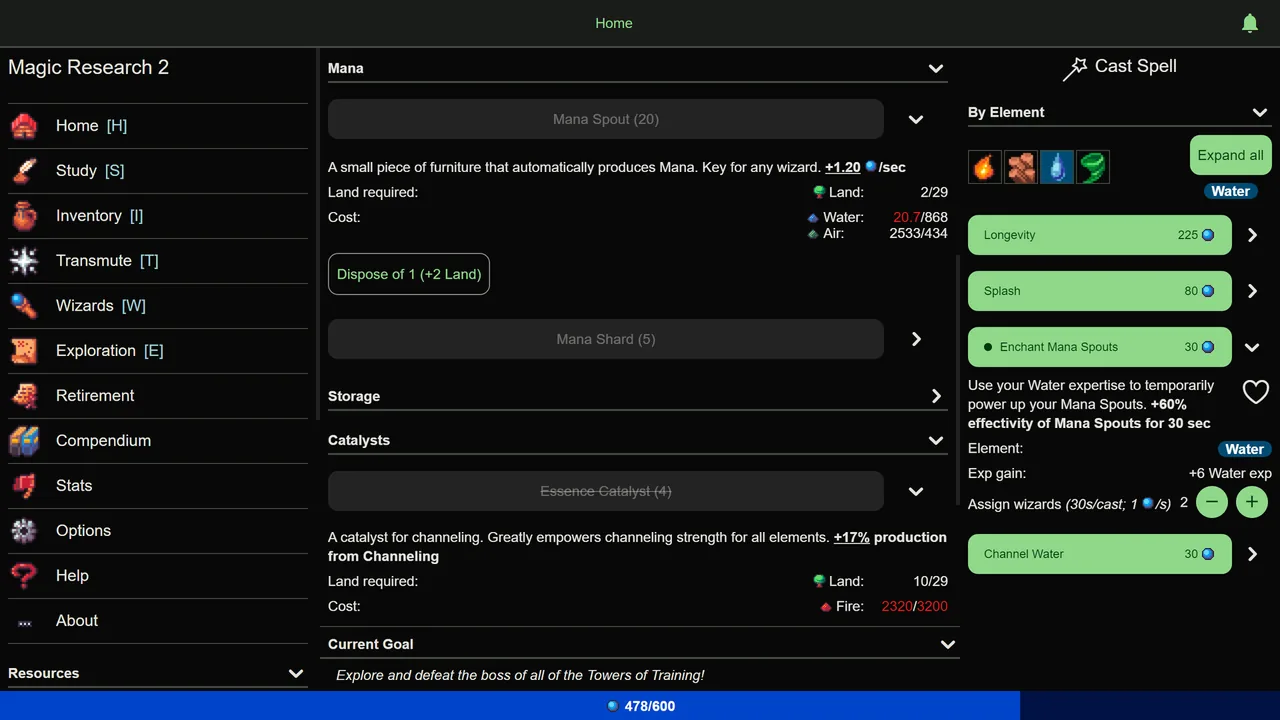
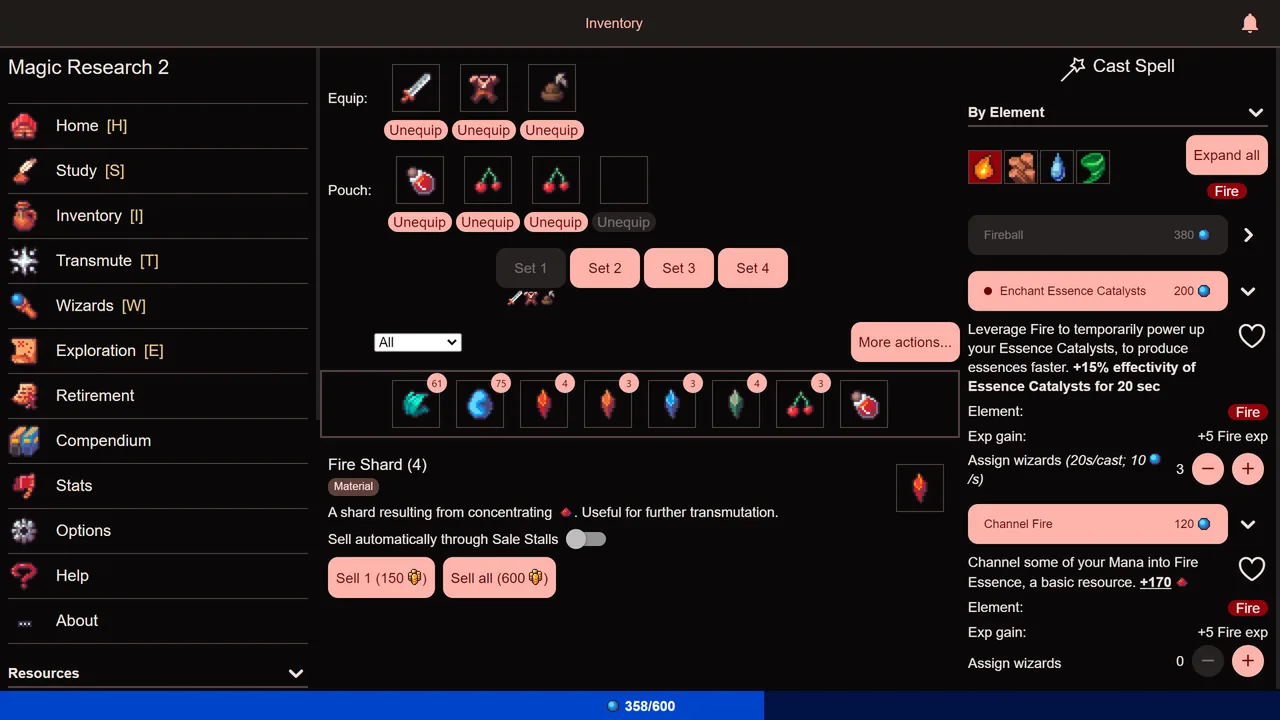
- Presentation is unchanged from the original — text, icons and static panels, with no meaningful art direction or animation invested in the sequel
Who it's for: Anyone who liked the systems in the first Magic Research and wanted more of them, plus newcomers who want the more content-rich, better-supported entry point into the series.
Our recommendation: The free demo is the only real way to judge whether the wizard-crew automation and familiar system land for you before spending NZ$8.99 — Steam hosts it, and both mobile stores carry a matching trial. If you already own and enjoyed the original, this is a straightforward recommendation; if you've never played either, start here rather than with the first game.
8 / 10
Is Magic Research 2 worth playing in 2026?
Yes. Magic Research 2 is the stronger entry point for newcomers and an easy recommendation for fans of text-heavy incremental RPGs. Its deep Wizard automation and generous one-time price earn an 8 out of 10, though repetitive retirement setup and bare presentation remain meaningful drawbacks.
The first Magic Research proved a solo developer could build a research tree deep enough to justify a game with almost nothing to look at. Magic Research 2 doesn't argue with that premise — it just assumes the answer was yes and spends a much bigger budget of design time on making the underlying systems do more. The result is one of the rare sequels in this genre that genuinely earns the word "more" rather than using it as a euphemism for the same content re-skinned: more spells, more bosses, more hidden Storylines, and a wholly new layer of delegation that changes how the mid-game actually plays. It also inherits the original's one real vulnerability — a total absence of visual or audio investment — and adds a couple of its own, in a familiar system that splits its fanbase and a retirement ritual that's grown more fiddly as the systems around it have grown more numerous.
The headline change: you're not researching alone anymore
In the first game, progress was gated by a single headmaster clicking through a spell list. Magic Research 2's biggest structural change is that you now recruit and direct a small team of Wizards, each of whom can be assigned to cast specific spells or transmute specific items on your behalf, running in parallel to whatever you're doing yourself. It sounds like a minor quality-of-life addition described that plainly, but in practice it reframes the mid-game entirely: instead of one queue of actions you personally advance, you're managing a small staff with its own specialisations, deciding which Wizard covers resource generation while another chews through a slower transmutation project, and reacting when a bottleneck in one Wizard's queue is quietly stalling three other systems that depend on it.
It's the single clearest sign that Maticolotto learned from what worked in the original rather than just repeating it. Automation in the first Magic Research was mostly a set of toggles; automation in the sequel is a staffing decision with real trade-offs, and it's the mechanic most frequently singled out by players who'd already put dozens of hours into the first game and came in expecting more of the same. It isn't a system every player will love managing — reviewers who found the original's spell-list micromanagement tedious will find a whole extra layer of it here — but for the audience this genre is built for, delegating a crew rather than clicking every action yourself is a genuine step up in design ambition.
Familiars: the addition that didn't land for everyone
The sequel's other marquee system is familiars — companions you recruit that can farm resources passively and fight alongside you in combat, each with a distinct role, from tanking damage to healing to raw offence. On paper it's a natural extension of the Wizard-crew idea into combat, and for a meaningful share of players it works exactly as intended, unlocking builds that weren't possible in the original. For another vocal share, familiars are the one part of Magic Research 2 that reads as undercooked: only one familiar can actually fight at a time, several of the roster feel weak until specific late-game accessories or abilities come online, and a recurring comparison in player discussion is that familiars farm resources more slowly than the equivalent systems in the first game, not faster. None of that makes familiars bad — the strongest builds clearly lean on them once their accessories and synergies click into place — but it's a system that asks for patience and experimentation before it pays off, in a game that otherwise front-loads its rewards fairly generously.
Combat trades total manual control for something gentler
Where the first Magic Research made a point of demanding your full, undivided attention for every boss fight, the sequel describes its own combat as "semi-automated," and that framing is accurate. Fights still ask for preparation — the right gear transmuted, the right Wizards and familiars assigned, spells picked for a specific encounter rather than whatever's been carrying you — but the actual execution leans harder on systems you've already set up than on real-time input you have to supply in the moment. Some longtime fans of the original miss the harder edge that came with fully manual bosses; others see it as the sequel finally smoothing over the one place the first game's idle rhythm broke down completely. Either way, it's a deliberate tonal shift, not an oversight, and it's worth knowing about before buying if the first game's punishing, hands-on boss fights were part of what you liked about it.
Retirement scales up, and so does the chore of resetting
Retirement returns essentially unchanged in principle — a run stalls, you reset back to the beginning, and what you unlocked, discovered and achieved carries forward as a permanent boost to the next attempt — but the scope around it has grown considerably. Where the original scattered roughly eighty hidden Storylines through its systems, the sequel packs in more than 120, alongside over forty distinct bosses to challenge across dozens of areas. For anyone who enjoyed hunting the first game's secrets, this is simply more of the best part of that design, and it's the single biggest reason multiple long-time players describe Magic Research 2 as the definitive version of the formula rather than a lateral sequel.
The cost of that extra scope shows up at the exact moment retirement should feel like a reward: the reset itself. With a crew of Wizards, a familiar roster and a much longer spell list all needing to be reassigned and reconfigured every time you retire, a recurring theme in player feedback is that the ritual of restarting has gotten noticeably more fiddly than clicking through a single researcher's queue used to be. It's not a broken system — nobody describes it as game-breaking — but it's real, repeated friction sitting inside a mechanic the first game handled with less overhead, and it's the clearest place where "more systems" has a genuine downside rather than being pure upside.
Presentation and value haven't moved much, and that's a mixed result
Visually and sonically, Magic Research 2 is the same proposition as the original: menus, spell lists and text boxes, with essentially no art direction or sound design competing for your attention. That was a defensible allocation of a solo developer's time on a first release; on a sequel with a clearly larger scope and, presumably, a larger budget behind it, it reads a little more like an opportunity not taken rather than a principled minimalist choice. It doesn't hurt the game's actual systems, which remain the entire point, but it means the presentation categories here score no higher than they did for the original.
Value, on the other hand, is comfortably ahead. At NZ$8.99 with no ads, no microtransactions and no DLC, Magic Research 2 costs slightly more than its predecessor but delivers noticeably more designed content for it — the developer's own estimate is over 60 hours, and player accounts chasing full completion routinely describe runs well beyond that figure. The free demo, again mirrored on both the Steam and mobile listings, means nobody has to take any of that on faith. Steam Cloud support is present on both games' storefront listings, which doesn't erase the save-corruption complaints that shadowed the first Magic Research's Steam reviews, but a comparable pattern hasn't surfaced in the sequel's own review history yet — worth watching rather than treating as settled either way.
Should you start here, or with the original?
The store page's own claim that no prior playthrough is required checks out: the story and systems are self-contained, and the sequel doesn't lean on knowledge of the first game's plot or mechanics to make sense. Given that, and given that Magic Research 2 is mechanically the more complete, better-supported version of the same core idea, a newcomer to the series has little reason to start with the original Magic Research instead — this is the better entry point, not just the newer one. Existing fans of the first game don't lose anything by owning both; the two are different enough in their Wizard-crew automation and familiar systems that they don't feel redundant sitting next to each other in a library.
Verdict
Eight out of ten. Magic Research 2 takes a genre-standout research tree and makes the case that it was never a one-off — the Wizard-crew delegation system is a real structural improvement, the Storyline and boss count more than justify a second and third retirement, and the price stays fair for a game with no monetisation beyond the upfront cost. It loses ground for reasons that sit specifically with the sequel rather than the underlying idea: familiars that don't land for every player, a retirement ritual that's gained real overhead as the systems around it multiplied, and a presentation budget that still hasn't moved past text and icons on a release with clearly more scope behind it than the original had.
Anyone who wants the deepest, most content-rich version of this specific incremental-RPG formula should buy this over the first game without hesitation. Anyone who found the original's bare-menus approach a dealbreaker will find nothing here that changes that calculus. Wanderer's own readers, who are used to progression systems that keep running while they're away from the keyboard, will recognise a lot of familiar instincts in how Magic Research 2 balances Wizards working in the background against fights that still demand your attention when it matters.
Pricing and monetisation checked 30 July 2026.
Pros and cons
Pros
- Delegating spells and transmuting to a crew of controllable Wizards replaces the original's single-researcher bottleneck with a genuine staffing puzzle
- Over 120 Storylines and more than 40 bosses give retirement runs a far bigger pool of hidden content to chase than the first game's eighty
- The spell list more than doubles to upwards of 120 distinct spells, and the transmutation system adds over 250 craftable items with real build variety
- A free demo on Steam and on both mobile stores again lets you judge the text-only interface before paying anything
- No prior experience with the first Magic Research is required, and the story and systems are built to stand on their own
Cons
- Reassigning Wizards, familiars and spell priorities after every retirement is a recurring complaint, and the sequel hasn't automated its own reset ritual
- Familiars are the game's headline new system, but a vocal share of players find them weaker at farming and less impactful in combat than the marketing implies
- Presentation is unchanged from the original — text, icons and static panels, with no meaningful art direction or animation invested in the sequel
- Certain areas expect every available upgrade cleared before progress opens up, which several longtime fans read as more linear than the first game's freer exploration
- English is the only supported language, and there is still no cross-save between the Steam release and the separately purchased mobile versions
Screenshots
-
Magic Research 2Image: Maticolotto via Steam -
Magic Research 2Image: Maticolotto via Steam -
Magic Research 2Image: Maticolotto via Steam -
How the review scores each part of the gameWanderer Editorial -
The short versionWanderer Editorial