Game review
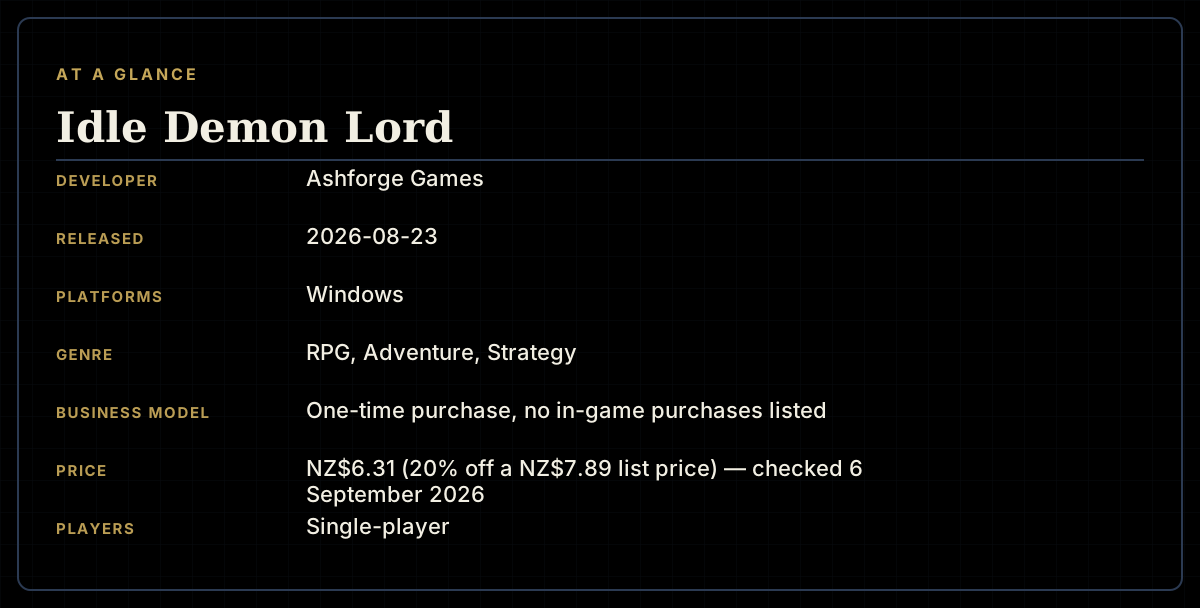
Idle Demon Lord
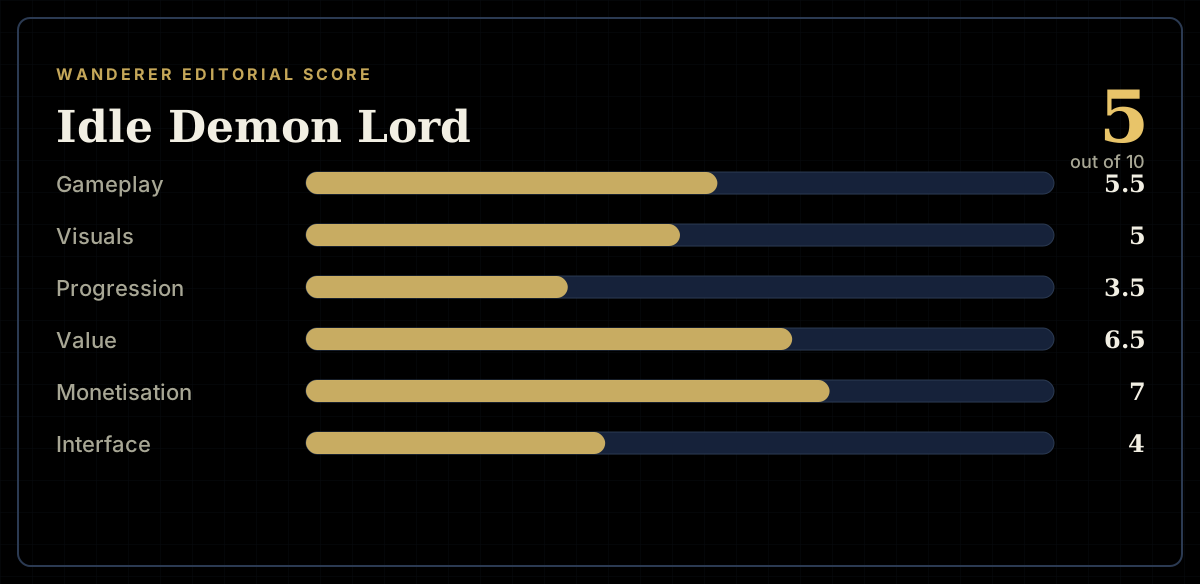
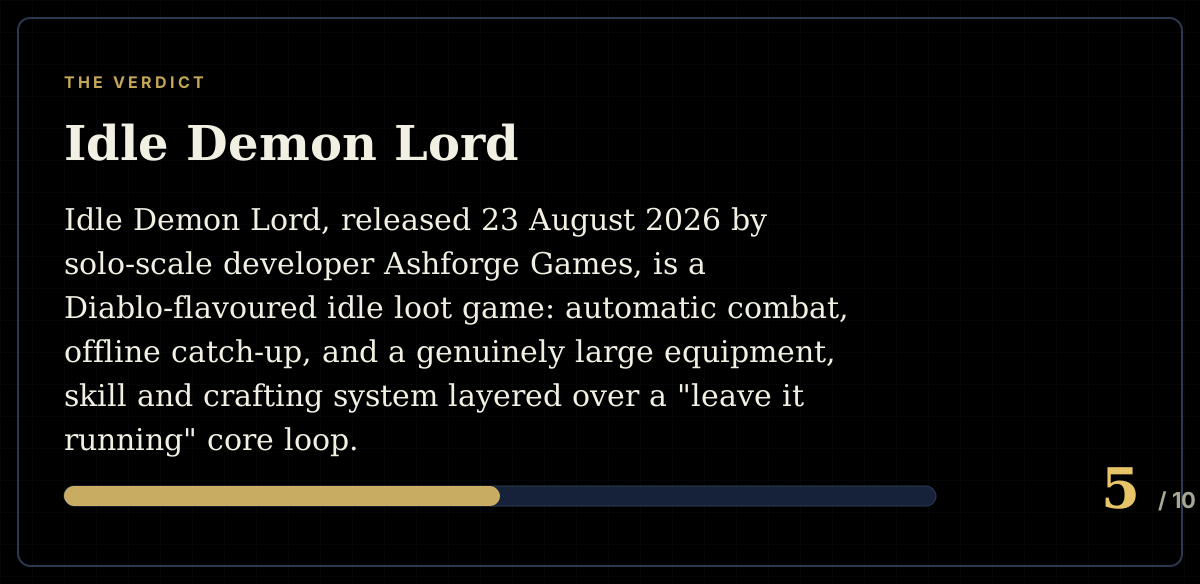
5 / 10
- Developer
- Ashforge Games
- Publisher
- Ashforge Games
- Released
- 23 August 2026
- Platforms
- Windows
- Genre
- RPG, Adventure, Strategy
- Monetisation
- One-time purchase, no in-game purchases listed
- Players
- Single-player
The short version
Idle Demon Lord, released 23 August 2026 by solo-scale developer Ashforge Games, is a Diablo-flavoured idle loot game: automatic combat, offline catch-up, and a genuinely large equipment, skill and crafting system layered over a "leave it running" core loop. It sits Mixed with English-speaking players, 58.1% positive across 43 reviews as of this check, and the negative half is unusually specific and consistent rather than scattered. A quoted in-game tooltip confirms that levelling stopped granting skill points after patch v1.3.7, several reviewers independently describe becoming effectively invincible within two to three hours as power scaling outpaces the content meant to challenge it, and multiple reviewers describe the rebirth system resetting characters to level one while leaving them unable to re-equip gear they already own. Set against that, the core hands-off loot loop and its unusually deep equipment system draw real, repeated praise, and the price is low enough that several critical reviewers still call it worth trying.
Biggest strengths
- The core loop — fully automatic combat, offline progress while away, and jumping back in to re-equip and re-plan — is repeatedly and specifically praised by reviewers as an ideal background game to leave running during downtime
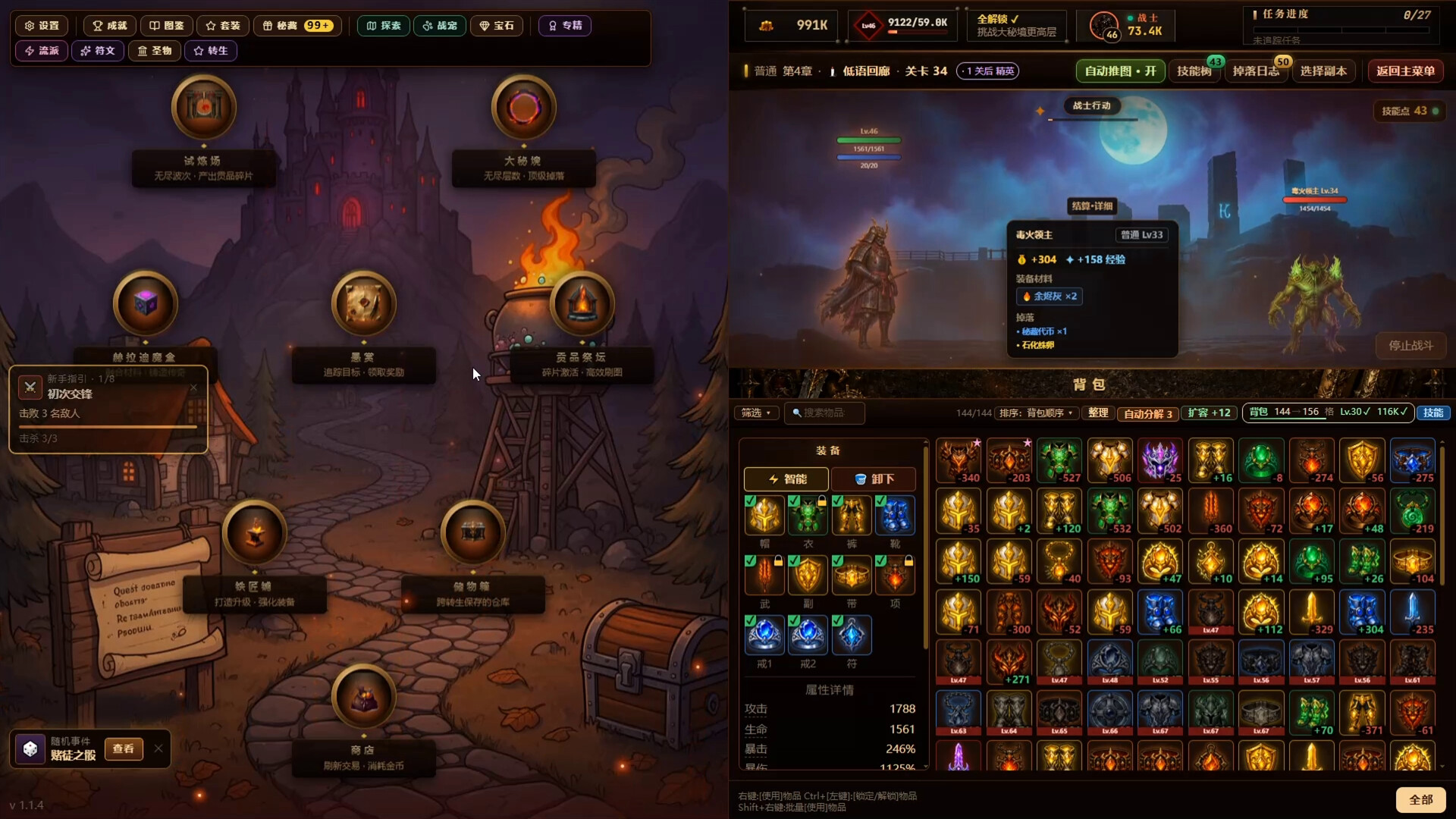
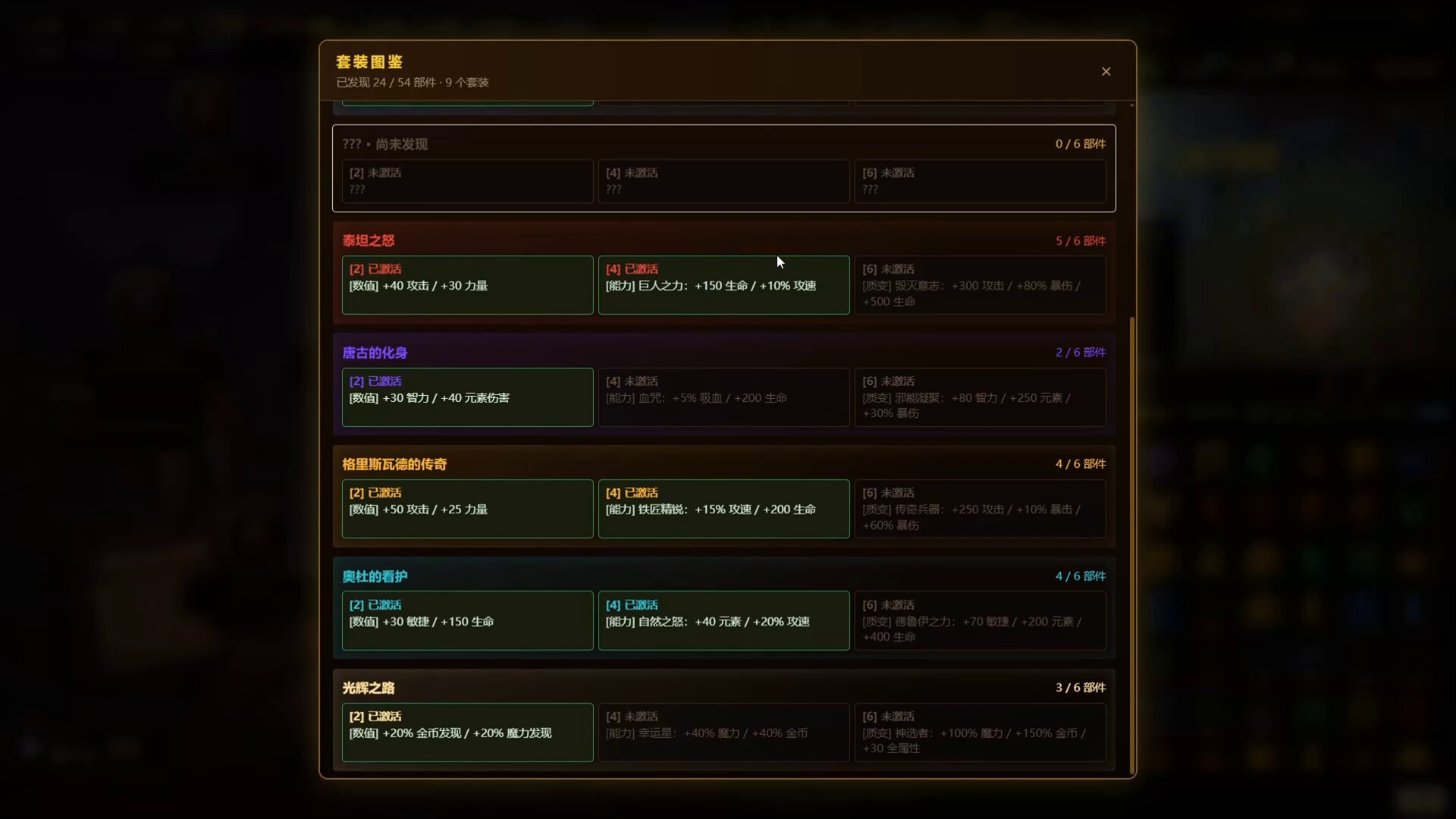
- The equipment system is unusually deep for the price: ten gear slots across six rarity tiers, each combination with its own dedicated artwork rather than reused icons, plus set items and three parallel crafting lines for runes, gems and relics
- Several reviewers who list real complaints still explicitly recommend the game on the strength of its low price and the genuine hours of idle entertainment it already delivers
Biggest weaknesses
- A reviewer quotes the game's own in-tooltip text confirming that character levelling stopped granting skill points after patch v1.3.7, redirecting that resource through smaller rebirth and rift-milestone drips instead — a documented, self-acknowledged break to a core progression system, not a rumor or a one-off complaint
- Multiple independent reviewers describe player power scaling so far ahead of enemy difficulty that most content becomes trivial — one-shotting enemies and hitting damage numbers many digits long — within two to three hours, after which several say there is nothing left to do but repeat the same builds for no meaningful gain
- Several reviewers describe the rebirth/ascension system as actively punishing: it clears accumulated gold and inventory and drops the character back to level one, but does not let them re-equip gear they already owned, forcing a confusing re-gearing process from scratch
Who it's for: Idle-game players who want a genuinely deep loot and equipment system to tinker with in the background, and who can tolerate an unpolished, early-launch feel and a currently broken progression mechanic.
Our recommendation: Worth its low price for the core loot-idle loop if you can accept the game as it currently ships; wait for a patch before buying if a working skill-point system and stable long-term progression matter more to you than a cheap way to watch numbers go up.
5 / 10
Introduction
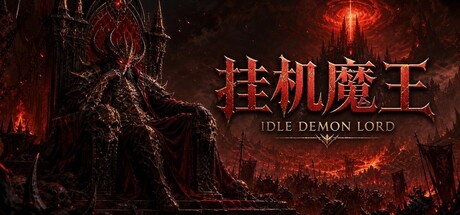
Idle Demon Lord, released 23 August 2026 by Ashforge Games, wants to be the idle genre's answer to a Diablo-style loot grind: automatic combat that keeps running while you're away, ten equipment slots across six rarity tiers, skill trees layered with an overflow "Mastery" system, and three separate crafting lines for runes, gems and relics. Barely two weeks old at the time of this review, it sits Mixed with English-speaking players — 58.1% positive across 43 reviews — and reading through that small but young sample turns up something more useful than a simple split verdict: the negative half is unusually specific and consistent, converging on the same handful of concrete, documented problems rather than scattering across unrelated complaints. Global achievement-completion figures sit at or near zero across the board, which fits a game this new rather than signalling anything on its own, but it does mean this review leans more heavily than usual on the review text itself, since there isn't yet a mature, multi-year sample to draw on.
A genuinely deep loot loop, built to run in the background
The praise in the positive sample is consistent and specific rather than generic enthusiasm. Reviewers repeatedly describe leaving the game running in the background during downtime or work, checking in periodically to reassign gear, spend skill points and tweak builds, then letting offline combat catch up when they return — precisely the hands-off use case the idle genre exists to serve. What draws particular praise is that the systems underneath that loop are unusually substantial for the price: the equipment system spans ten slots and six rarity tiers with, per the store page's own description, distinct artwork for individual gear combinations rather than repeated icons, alongside a dedicated set-item panel and three parallel crafting lines for runes, gems and relics that can be combined fairly freely. Several reviewers explicitly contrast this with thinner idle games, and more than one who goes on to list real complaints still recommends the game specifically because the core loop and its price already deliver enough value to be worth trying.
A skill-point system broken by its own patch
Set against that goodwill is a specific, documented problem rather than a subjective complaint. One reviewer quotes the game's own in-tooltip explanation directly: since patch v1.3.7, levelling up no longer grants skill points at all. Instead, skill points now come only from a flat bonus on starting a new run, a larger flat bonus per rebirth, and periodic milestone rewards every hundred rift tiers. That's the game explaining its own current state, not a player's guess at a bug — a core resource that used to scale with the moment-to-moment act of playing has been rerouted entirely into fixed, infrequent grants, and the reviewer who found it calls the change something that should have been clearly communicated rather than left to be discovered by digging into a tooltip. For a genre whose whole appeal rests on visible, continuous progress, quietly cutting off one of its main progress numbers is a serious design misstep however the underlying balance reasons for it.
Numbers that outrun the content built to challenge them
The most consistent complaint across the negative sample concerns pacing: several independent reviewers describe player power scaling so far ahead of the game's difficulty curve that most content becomes trivial within two to three hours, with damage numbers reviewers describe as many digits long and enemies dying in a single hit regardless of tier. Once that happens, more than one reviewer says there's little left to actually do beyond repeating the same handful of viable builds for diminishing returns — a direct contradiction of an idle game's central promise, which is that numbers should keep meaningfully climbing for a long time, not flatten out almost immediately. Compounding this, several reviewers separately describe the rebirth and ascension systems — meant to be the game's answer to exactly this problem, giving players a reason to reset and climb again — as actively punishing rather than rewarding: resetting a character to level one while clearing accumulated gold and inventory, but without letting the player re-equip gear they already own, forcing an awkward re-gearing process each time rather than the smooth power-reset loop the genre is built around.
Thin onboarding and a cluttered interface
Even reviewers who like the game repeatedly flag the same secondary issues: a tutorial that leaves new players to click through every panel individually to work out what it does, and an interface several describe as visually busy or overloaded, particularly once the equipment, crafting and rift-tier preview screens are all in play at once. None of this is described as fatal on its own, but it sits on top of the deeper progression problems above in a way that makes an already rough launch feel rougher, especially for players trying to evaluate the game in its first hour rather than after already committing to it.
Localization gaps, and a sign the developer is patching
One English-language reviewer reports that, despite selecting English at setup, a meaningful portion of the interface remained in Chinese — specific enough to make parts of the game hard to follow for a non-Chinese-reading player. That reviewer later posted an update on the same review thanking the developer for resolving the issue, a small but concrete, dated data point suggesting active post-launch support rather than a game abandoned at release. It's worth weighing against the skill-point regression above: this is a developer making changes after launch, just not consistently in the direction players want.
An unverified but recurring theory: how much of this was AI-made?
One pattern shows up often enough, independently, and across both the positive and negative samples that it's worth reporting on its own terms. Multiple reviewers speculate that the game's art, interface and possibly its underlying code were produced with substantial AI assistance, describing a generic, stock-asset feel to the visuals and UI. One detailed technical review goes further, claiming to have found the client shipping with what looks like an unmodified default application icon and an asset folder structure the reviewer describes as unusually exposed — observations that reviewer treats as evidence of a rushed, possibly AI-driven build process. This review has not inspected the game's client files and cannot independently confirm any of those specific technical claims. What can be reported factually is the pattern itself: it recurs across reviewers who otherwise disagree about whether to recommend the game, including one reviewer who says they still recommend it despite believing this, describing a fellow-developer sympathy for a small, apparently AI-assisted solo project. Readers should treat the underlying claim as reviewer speculation, not as something this review has verified.
Final Verdict
Idle Demon Lord gets the hardest part of an idle loot game right: a hands-off combat loop with enough genuine depth in its gear, crafting and skill systems to reward the time spent checking in on it, at a price low enough that several critical reviewers still call it worth trying. What holds it back from a stronger score is that it launched — and two weeks later, still ships — with a documented break to its own skill-point progression, a difficulty curve several reviewers say collapses within a few hours, and a rebirth system that punishes rather than rewards starting over. Worth a look for idle-genre players drawn specifically to its equipment depth and comfortable buying an early, still-settling release; worth waiting on for anyone who wants a stable, properly paced long-term grind from day one.
Pros and cons
Pros
- The core loop — fully automatic combat, offline progress while away, and jumping back in to re-equip and re-plan — is repeatedly and specifically praised by reviewers as an ideal background game to leave running during downtime
- The equipment system is unusually deep for the price: ten gear slots across six rarity tiers, each combination with its own dedicated artwork rather than reused icons, plus set items and three parallel crafting lines for runes, gems and relics
- Several reviewers who list real complaints still explicitly recommend the game on the strength of its low price and the genuine hours of idle entertainment it already delivers
- One reviewer reports that an incomplete English localization at launch was subsequently fixed, a specific, dated signal that the developer was actively patching post-release issues
Cons
- A reviewer quotes the game's own in-tooltip text confirming that character levelling stopped granting skill points after patch v1.3.7, redirecting that resource through smaller rebirth and rift-milestone drips instead — a documented, self-acknowledged break to a core progression system, not a rumor or a one-off complaint
- Multiple independent reviewers describe player power scaling so far ahead of enemy difficulty that most content becomes trivial — one-shotting enemies and hitting damage numbers many digits long — within two to three hours, after which several say there is nothing left to do but repeat the same builds for no meaningful gain
- Several reviewers describe the rebirth/ascension system as actively punishing: it clears accumulated gold and inventory and drops the character back to level one, but does not let them re-equip gear they already owned, forcing a confusing re-gearing process from scratch
- Even satisfied reviewers repeatedly flag a thin tutorial and a busy, visually overloaded interface that requires manually clicking through every panel to understand what it does
- Multiple reviewers, independently and across both critical and positive reviews, speculate that the game's art, UI and possibly its code were produced with heavy AI assistance, citing a generic, sample-asset feel and, in one detailed report, an apparently unmodified default application icon; this review cannot independently verify those technical claims and reports them only as a specific, recurring pattern in the reviewer discussion
Screenshots
-
Idle Demon LordImage: Ashforge Games via Steam -

Idle Demon LordImage: Ashforge Games via Steam -
Idle Demon LordImage: Ashforge Games via Steam -
How the review scores each part of the gameWanderer Editorial -
The essentials at a glanceWanderer Editorial -
The short versionWanderer Editorial