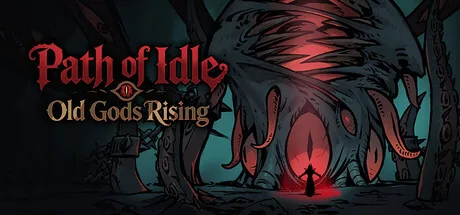
Game review
Path of Idle: Old Gods Rising
7.5 / 10
- Developer
- Small Mill
- Publisher
- Small Mill
- Released
- 12 August 2026
- Platforms
- Windows, Mac
- Genre
- Idle RPG
- Monetisation
- One-time purchase. An optional NZ$3.19 Supporter Pack is available as separate paid DLC; no in-game microtransactions are listed on the store page.
- Players
- Single-player only
The short version
Path of Idle: Old Gods Rising is a Lovecraftian idle RPG about growing a cult on a sealed island, turning exiled criminals into Godsworn champions, and sending them off to auto-battle their way toward waking an Old God -- released 12 August 2026 after a lengthy free demo that itself drew praise ("over 200 hours into the demo... worth every penny"). It launched to Very Positive, 84.8% of 79 English-language reviews, an unusually strong opening for a first-week idle title.
The available negative reviews and several qualified positive ones converge on one real problem: the game buries you in attributes, gear stats and build options with too little in-game explanation of what actually scales what, and there is no auto-equip to fall back on while you work it out.
Biggest strengths
- A genuinely deep gear, class and build system that reviewers who stuck with it -- some for hundreds of demo hours before the paid launch -- describe as one of the best idle RPGs in years
- Six classes with distinct skill systems and real build variety, rather than one power curve reskinned six ways
- Five separate progression modes (Expedition, Exploration, Divine Tower, Alternate Dimension, Finality) that stagger difficulty instead of dumping everything on the player at once
Biggest weaknesses
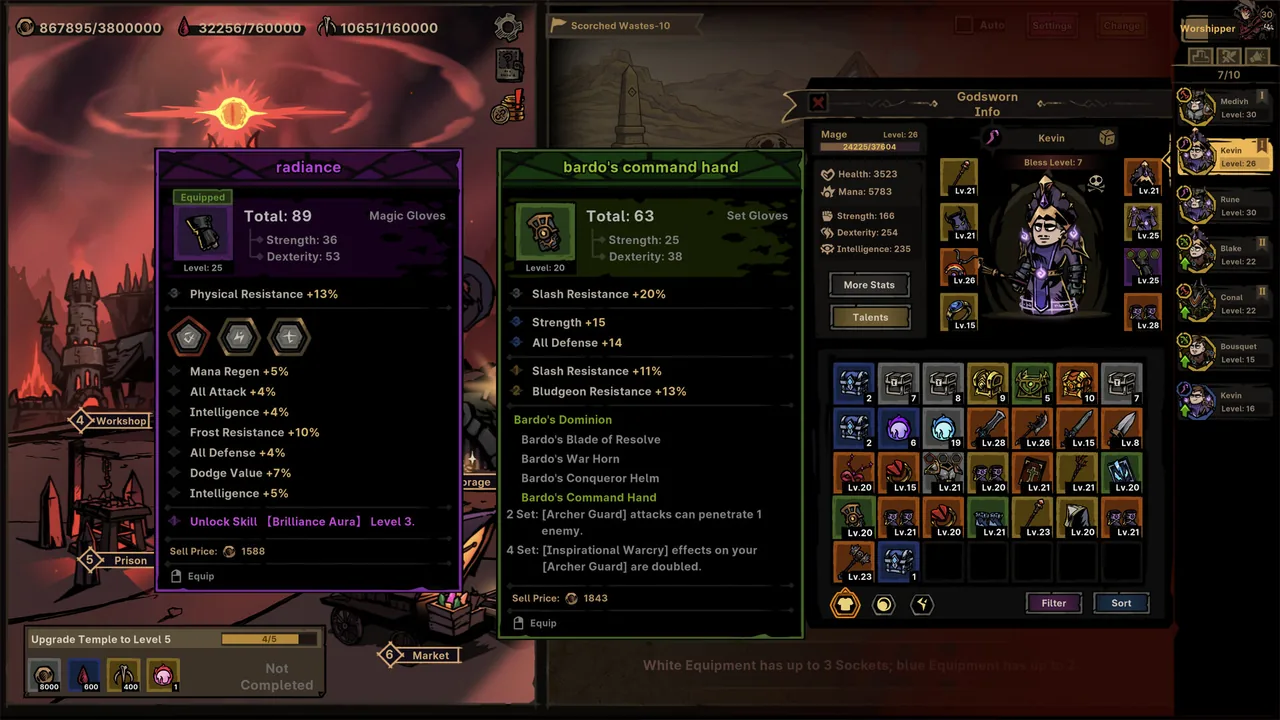
- Attribute and stat systems pile up fast with too little explanation of what scales what, which several reviewers -- including happy ones -- single out as the game's weakest point
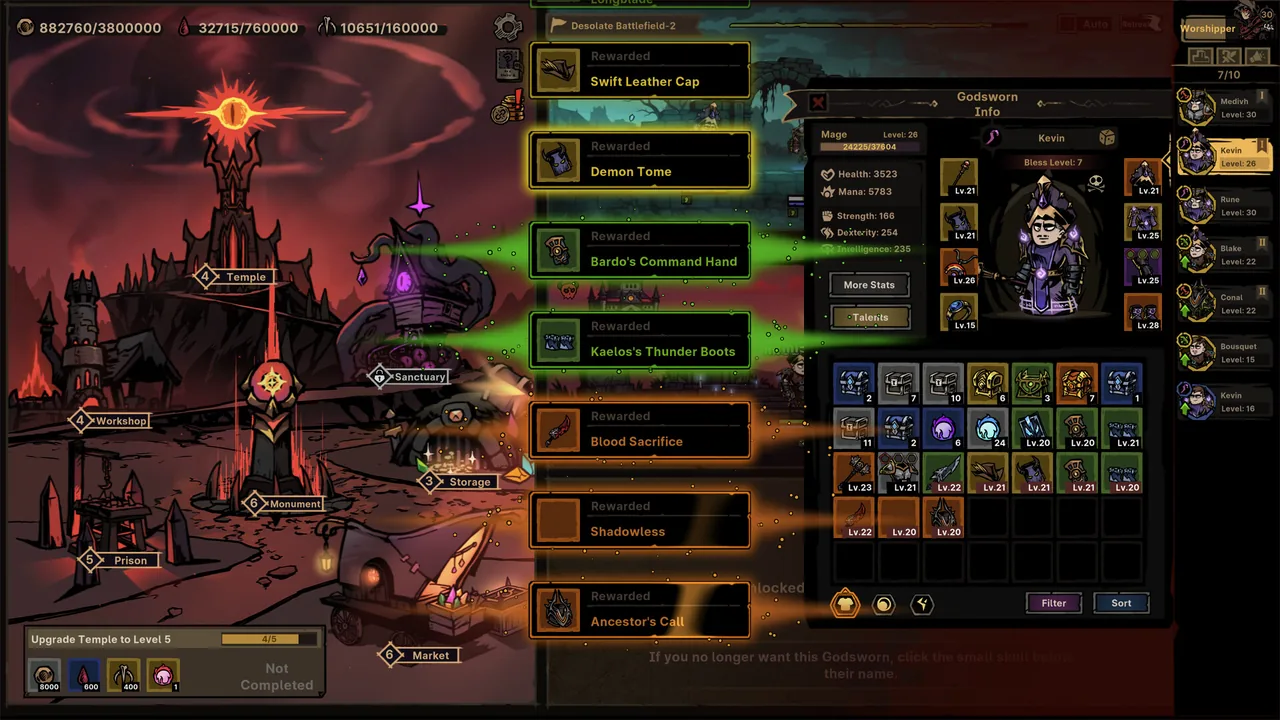
- No auto-equip for best-available gear, a basic quality-of-life feature its closest competitors have, which turns routine loot management into manual, repetitive comparison work
- Reviewers who min-max report the customisation options becoming tedious busywork by the time a second party unlocks, rather than staying interesting
Who it's for: Fans of stat-heavy incremental RPGs -- Melvor Idle, Legion Saga, Lootun and similar auto-battling gear-and-progression games -- who enjoy digging through a spreadsheet's worth of attributes to find the optimal build. Not for anyone who wants an idle game that explains itself as it goes, or one that can be enjoyed purely by glancing at a phone-sized second screen.
Our recommendation: Worth buying at its NZ$14.17 launch price if the genre appeals, especially given how well the free demo held up over hundreds of hours for its most dedicated players. Go in expecting to consult a wiki or spend real time working out what your stats do -- the systems are deep rather than well taught, and that gap is the review's one consistent, credible complaint.
7.5 / 10
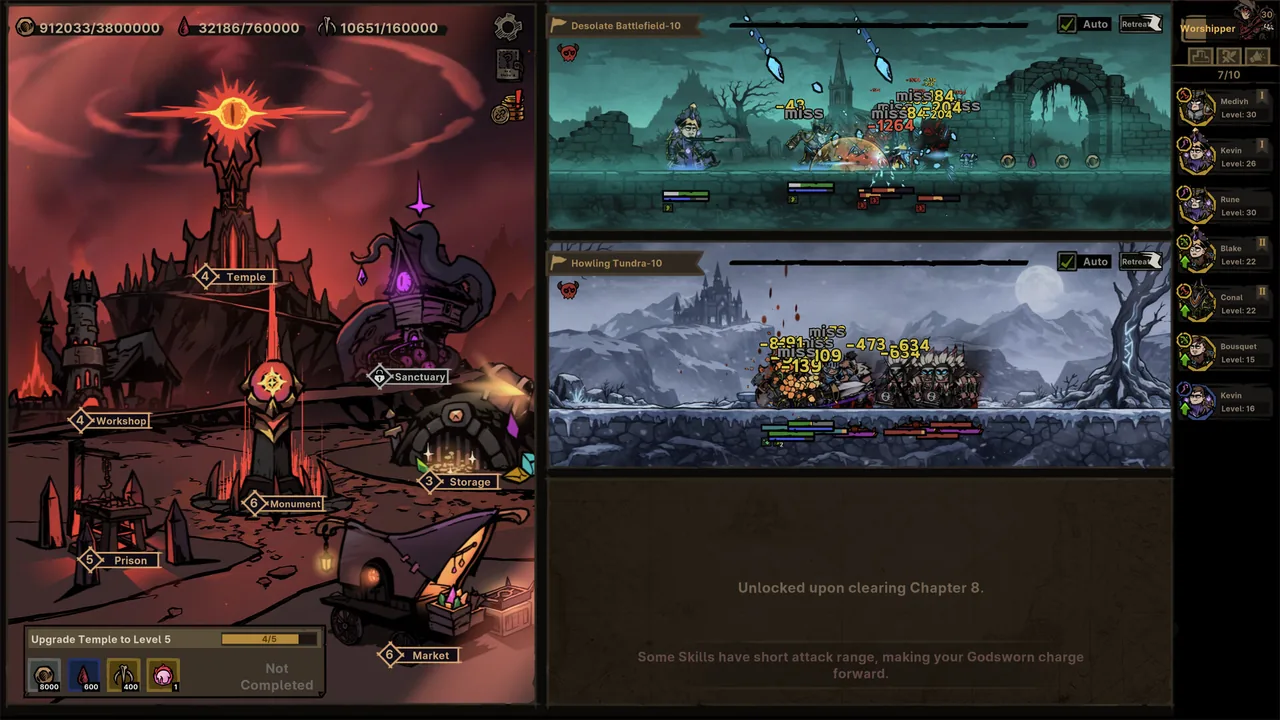
Path of Idle: Old Gods Rising asks you to serve a sealed Old God from a cult's back office. You build a town on the sealed grounds of Blackreef Isle, pick out exiled criminals with hidden potential, and awaken them with the Old God's blood into Godsworn champions -- who then go do the actual fighting, largely without you, while you manage gear, buildings and a steadily expanding pile of numbers. It launched into full release on 12 August 2026 from solo-to-small developer Small Mill, priced at NZ$15.75 (NZ$14.17 with a launch discount, checked 13 August 2026), after a free demo that had already built a genuinely devoted following. One reviewer claims over 200 hours in that demo alone before buying the finished game on release day. That's an unusual amount of trust for a first-week idle title to walk in with, and on the evidence so far it's mostly earned.
An idle RPG built for people who read patch notes
The pitch is straightforward Lovecraftian dark fantasy dressed over a familiar idle-RPG skeleton: auto-battle, loot, gear up, repeat, with the twist that your roster is made of corrupted prisoners rather than generic heroes and the endgame is literally the awakening of a sleeping god. Six classes each carry an "exclusive and one-of-a-kind skill system," per the store page, and five separate adventure modes -- Expedition, Exploration, Divine Tower, Alternate Dimension and Finality -- stage the difficulty curve rather than throwing every system at the player from hour one. Reviewers who have put real time in back that structure up: "lots of customization and builds for every class," reads one 510-minute review; another, comparing it to the well-regarded incremental Lootun, calls it a game that "require[s] some thought" rather than pure number-watching, while flagging "a couple of nasty difficulty spikes that require some grinding." That's the shape of the praise across almost every substantial review here -- not "relaxing," which is the word idle games usually reach for, but "deep," "engaging" and "addicting," used by people who clearly mean it as the highest compliment the genre has.
The framing helps. A lot of idle RPGs bolt fantasy window-dressing onto a spreadsheet and call it a setting; Old Gods Rising at least gives its systems a reason to exist. Turning exiled criminals into Godsworn, sending them to "grow stronger through slaughter and trials," building toward stepping into the Void to fight Outer Gods -- it's a small, coherent story that a genre built around watching numbers climb rarely bothers with. Gear is described as inheriting mechanics "from multiple dark fantasy games," which in practice appears to mean rarity tiers, Runewords and build-defining itemisation pulled straight from the action-RPG tradition rather than invented from scratch -- familiar territory, competently assembled, rather than anything genre-defining on its own.
The system is deep. The tutorial isn't.
The clearest problem, and it shows up inside otherwise glowing reviews as often as in outright negative ones, is that the game hands you an enormous attribute and customisation system with too little explanation of how any of it actually works. "There are so many attributes and so many stats but little to no helpful information on what scales on what," reads one negative review, going on to ask a genuinely basic mechanical question -- whether a dual-wielding archer's bow and dagger scale off the same stat -- that the game apparently never answers. Another reviewer, more positive overall, still lists "stat comparing" and clearer descriptions among the improvements the game badly needs. A third, with over six hours logged, is blunter: "There is no storyline at all... There are some systems, but they don't seem very interesting." That last one reads as an outlier against the general tenor of the reviews, but it's a useful reminder that a game this dependent on its player doing homework will lose some players before the depth pays off.
The single most concrete, most repeated complaint is the smallest one: there's no auto-equip for best-available gear. In a genre where routine loot comparison is already the main manual chore, skipping that one quality-of-life feature turns busywork the game is supposed to automate back into busywork the player has to do by hand. One 372-minute reviewer put the broader pattern well: what starts "semi streamlined" while managing one party becomes, by the time a second party unlocks, "about 9000 customization options" layered on with little guidance -- and for a player who doesn't enjoy min-maxing for its own sake, that's where the fun runs out rather than deepens.
A day old, and it shows
It's worth being honest about how early this read is. The review sits exactly one day after launch, built on 79 total reviews and a global achievement curve that falls off a cliff almost immediately: 84.7% of players have hit the very first hero-level milestone, but that's already down to 43.9% for the first field-count achievement, 29.7% for the first chapter clear, and under 2% for a level-100 hero. None of that is unusual for a fresh idle RPG's launch-week snapshot -- most buyers are still in the opening hours, which is exactly where the demo's fans say the game is strongest -- but it does mean this review, like the community score underneath it, is describing an opening impression rather than a settled verdict on the mid-to-late game. The extended free demo is real evidence the core loop holds up over dozens or hundreds of hours for the right player; whether the newly-added endgame modes hold up the same way is not yet something the review corpus can answer.
The developer has also flagged that seasonal content -- "unique new content with independent save files" -- will be added gradually after launch rather than shipping complete on day one, which is a reasonable way to run a live incremental but is also, for now, a promise rather than delivered content.
7.5 out of 10. Path of Idle: Old Gods Rising is a genuinely deep, confidently themed idle RPG that earned an unusual amount of pre-launch goodwill through its free demo, and the first wave of paid reviews backs that goodwill up. The system depth that fans love is the same depth that trips up newcomers, though: expect to spend real time deciphering stats the game won't explain for you, and don't expect the basic convenience of auto-equipping your best gear. Worth its launch price for anyone who already likes this genre's spreadsheet-adjacent pleasures; everyone else should read a few of those demo-era reviews first and go in with patience for the learning curve. Idle-RPG regulars managing gear and stat sheets in something like Wanderer will recognise the itch this one is scratching immediately.
Pros and cons
Pros
- A genuinely deep gear, class and build system that reviewers who stuck with it -- some for hundreds of demo hours before the paid launch -- describe as one of the best idle RPGs in years
- Six classes with distinct skill systems and real build variety, rather than one power curve reskinned six ways
- Five separate progression modes (Expedition, Exploration, Divine Tower, Alternate Dimension, Finality) that stagger difficulty instead of dumping everything on the player at once
- Confident dark fantasy presentation and a Lovecraftian framing -- corrupting exiled prisoners into Godsworn champions to awaken a sealed Old God -- that gives an idle game an actual hook
- Launched already carrying substantial goodwill from a long, well-received free demo, rather than asking buyers to take a first-week product on faith
Cons
- Attribute and stat systems pile up fast with too little explanation of what scales what, which several reviewers -- including happy ones -- single out as the game's weakest point
- No auto-equip for best-available gear, a basic quality-of-life feature its closest competitors have, which turns routine loot management into manual, repetitive comparison work
- Reviewers who min-max report the customisation options becoming tedious busywork by the time a second party unlocks, rather than staying interesting
- Genuinely early days for a paid launch: achievement data shows a steep drop-off past the first hour or two of progress, so most of what buyers are praising is still the opening stretch
Screenshots
-
Path of Idle: Old Gods RisingImage: Small Mill via Steam -
Path of Idle: Old Gods RisingImage: Small Mill via Steam -
Path of Idle: Old Gods RisingImage: Small Mill via Steam -
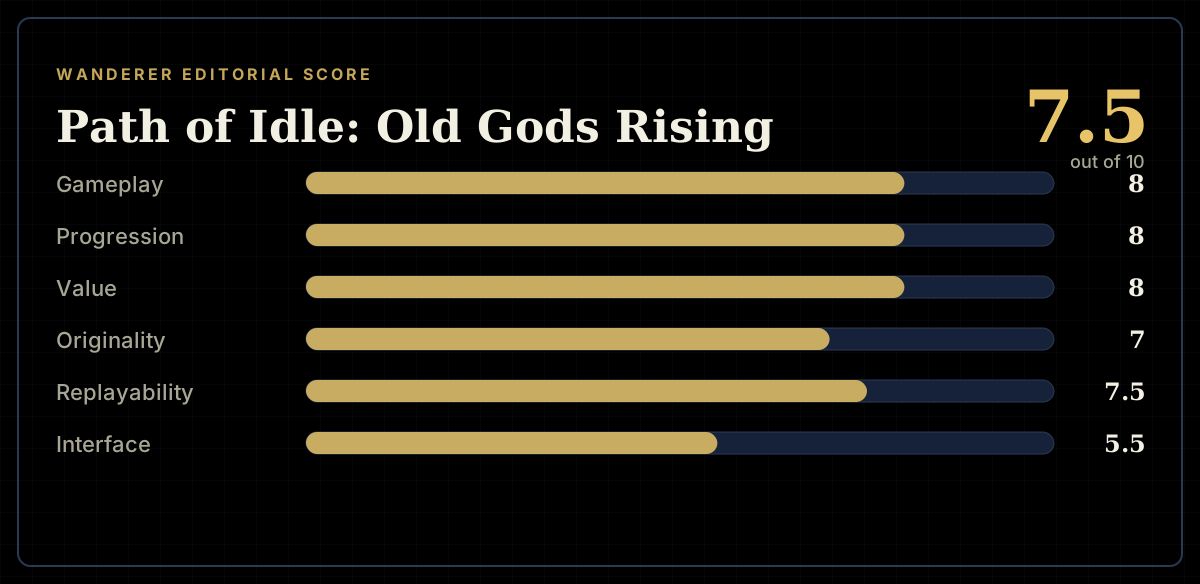
How the review scores each part of the gameWanderer Editorial -
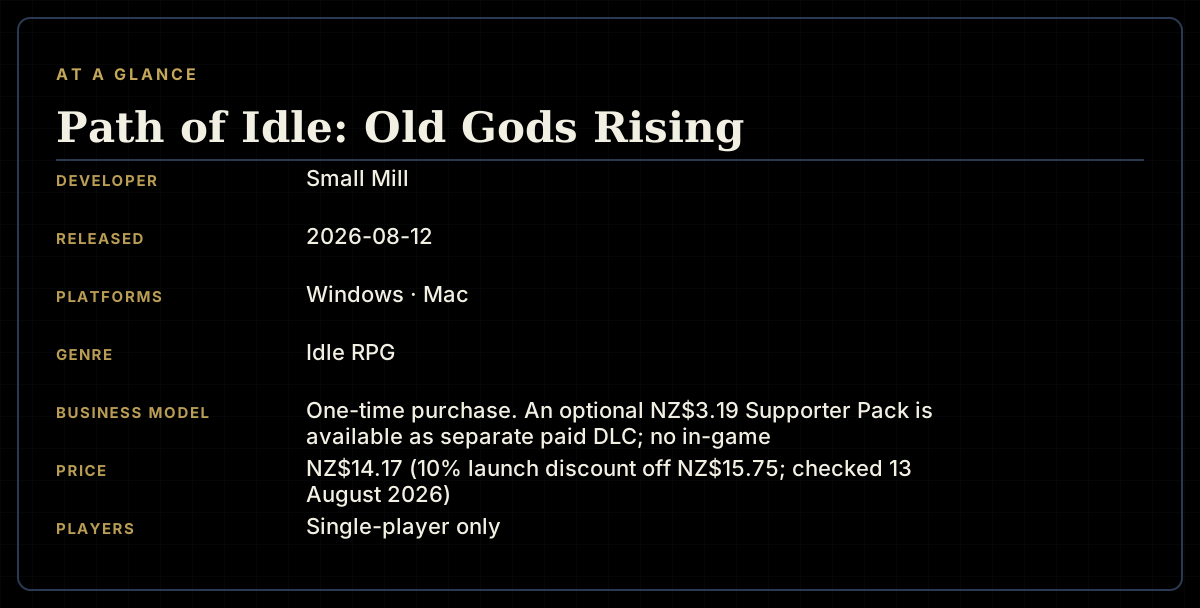
The essentialsWanderer Editorial -
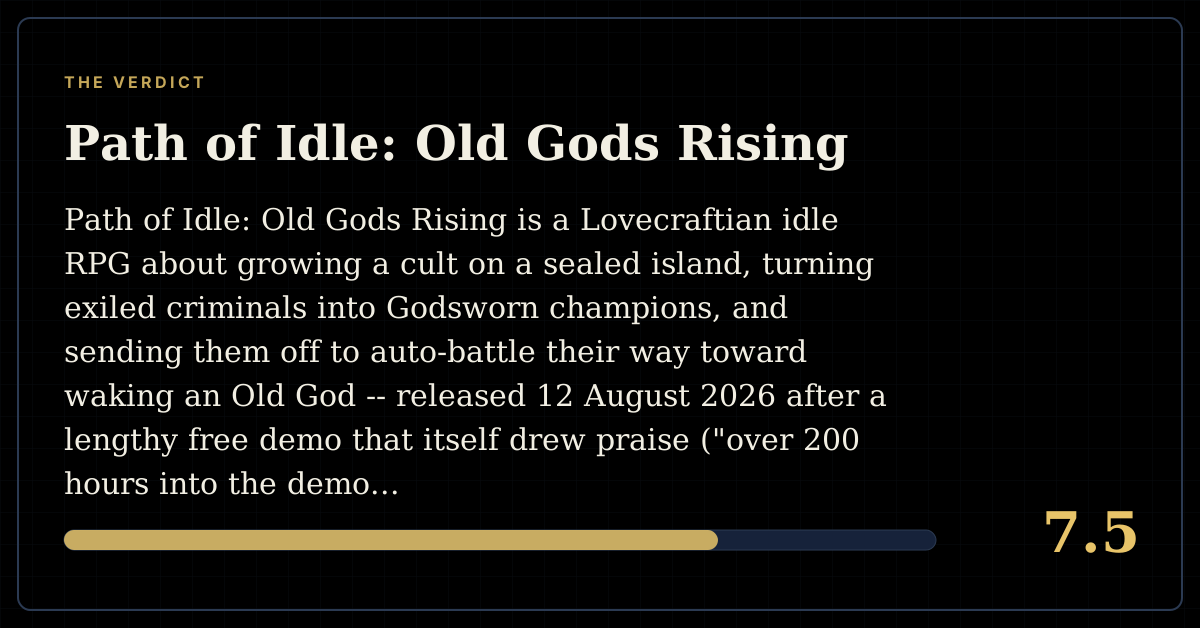
The short versionWanderer Editorial