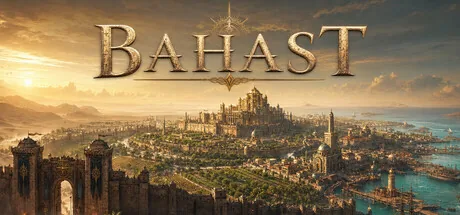
Game review
Bahast
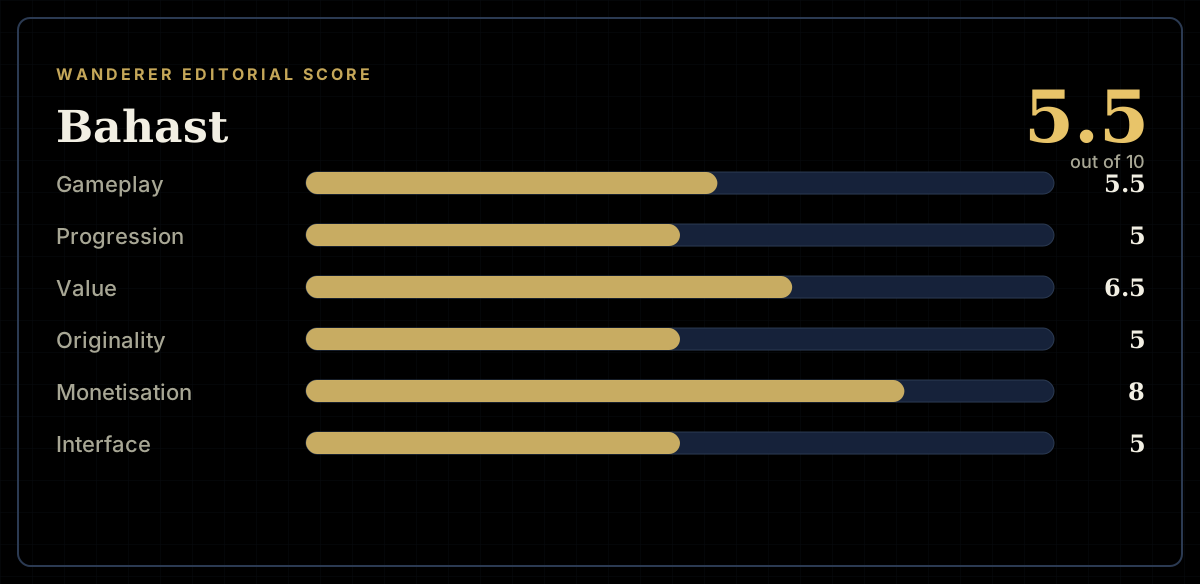
5.5 / 10
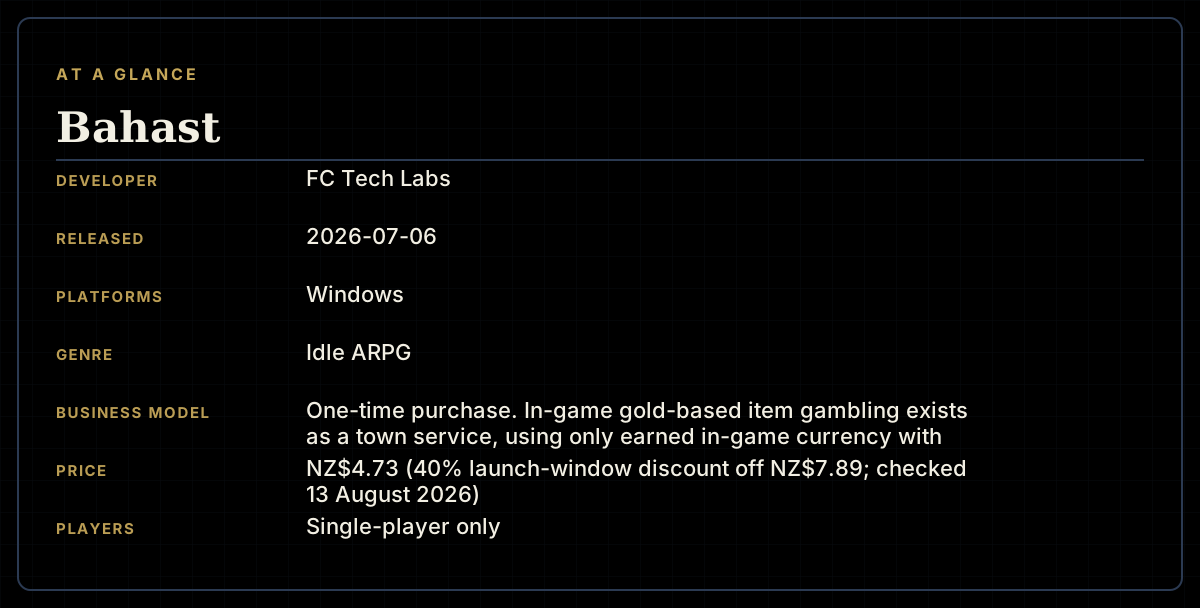
- Developer
- FC Tech Labs
- Publisher
- FC Tech Labs
- Released
- 6 July 2026
- Platforms
- Windows
- Genre
- Idle ARPG
- Monetisation
- One-time purchase. In-game gold-based item gambling exists as a town service, using only earned in-game currency with no real-money or cash-out component, per the store page's content descriptors. No microtransactions listed.
- Players
- Single-player only
The short version
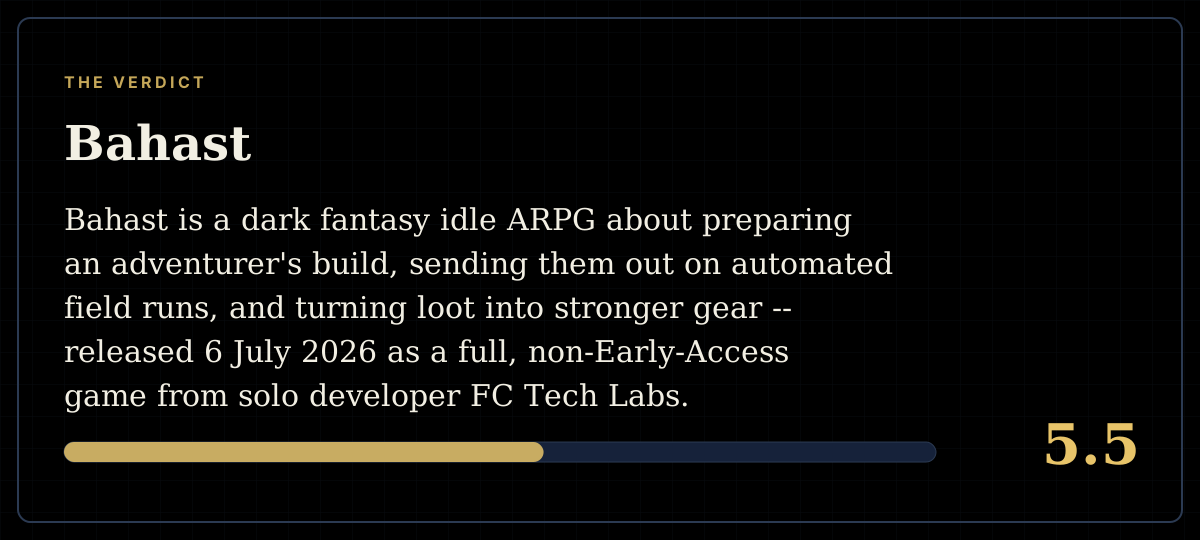
Bahast is a dark fantasy idle ARPG about preparing an adventurer's build, sending them out on automated field runs, and turning loot into stronger gear -- released 6 July 2026 as a full, non-Early-Access game from solo developer FC Tech Labs. It sits at a thin Mixed, 56% of 16 reviews, built on specific complaints: bland, generic passive-tree bonuses, awkward English translation, a limited skill tree, and endgame content ("writs") that can reportedly soft-lock a character who reaches it under-geared.
The more consequential story around Bahast isn't in its Steam reviews at all. Its store page carries an AI-content disclosure in which the developer argues that, as a solo developer, using generative AI was "nearly impossible" to avoid if the game was to ship "in a meaningful time frame" -- a framing that drew sharp, public pushback from other independent developers, including one who countered "I'm literally unemployed and I still make all of my assets by hand," coverage that reached outlets well outside the game's own review section.
Biggest strengths
- A clear, workable idle-ARPG loop -- prepare a build, send it on an automated run, return stronger -- with a Path of Exile-flavoured passive grid and Diablo-adjacent loot rarities that genre fans will recognise instantly
- Cheap even before its launch-window discount, and the AI-assisted art is described by at least one critical reviewer as "decent" and thematically consistent despite disliking other aspects
- A real class and crafting system with Reagents, sigils and town services layered around the core loot loop rather than a single flat progression bar
Biggest weaknesses
- Passive tree bonuses are described as generic and interchangeable -- damage, life, mana, accuracy, defenses -- without the build-defining choices the Path of Exile comparison invites
- English translation is reportedly awkward enough to undercut a system that depends on precise wording, a real problem for a build-crafting game rather than a cosmetic one
- Endgame "writs" content scales with character level and can reportedly soft-lock a player who reaches it without strong enough gear, and the global achievement data shows a steep drop-off consistent with very few players getting that far
Who it's for: Idle ARPG fans curious about a cheap, Path of Exile-flavoured take on the genre who don't mind rough English localisation and a still-thin endgame. Anyone weighing the ethics of AI use in small-studio game development specifically should read the developer's own disclosure and the response to it before buying, regardless of how the mechanics land for them personally.
Our recommendation: A cheap, functional but currently thin idle ARPG that hasn't convinced a majority of even its small reviewer base -- worth a look on sale for genre completionists, but the passives, translation and endgame content all need real work before it's a confident recommendation. The AI-disclosure controversy is a separate, legitimate factor some buyers will weigh heavily regardless of how the game itself plays.
5.5 / 10
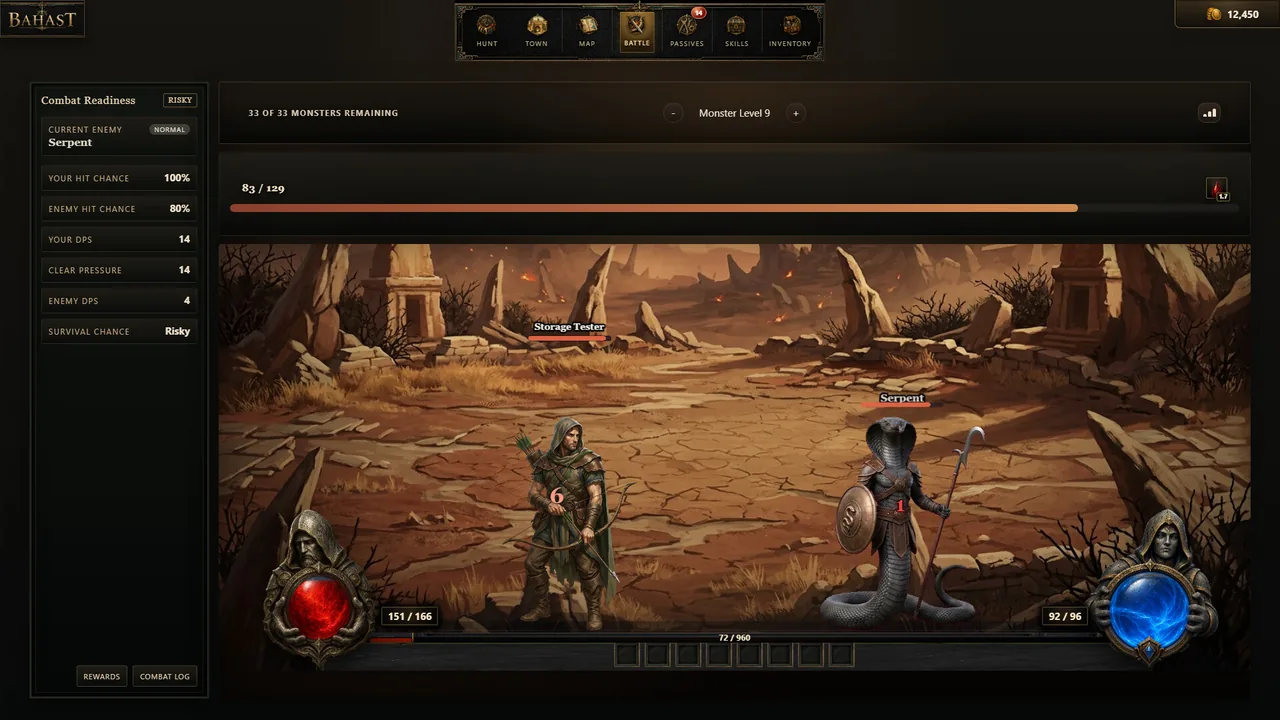
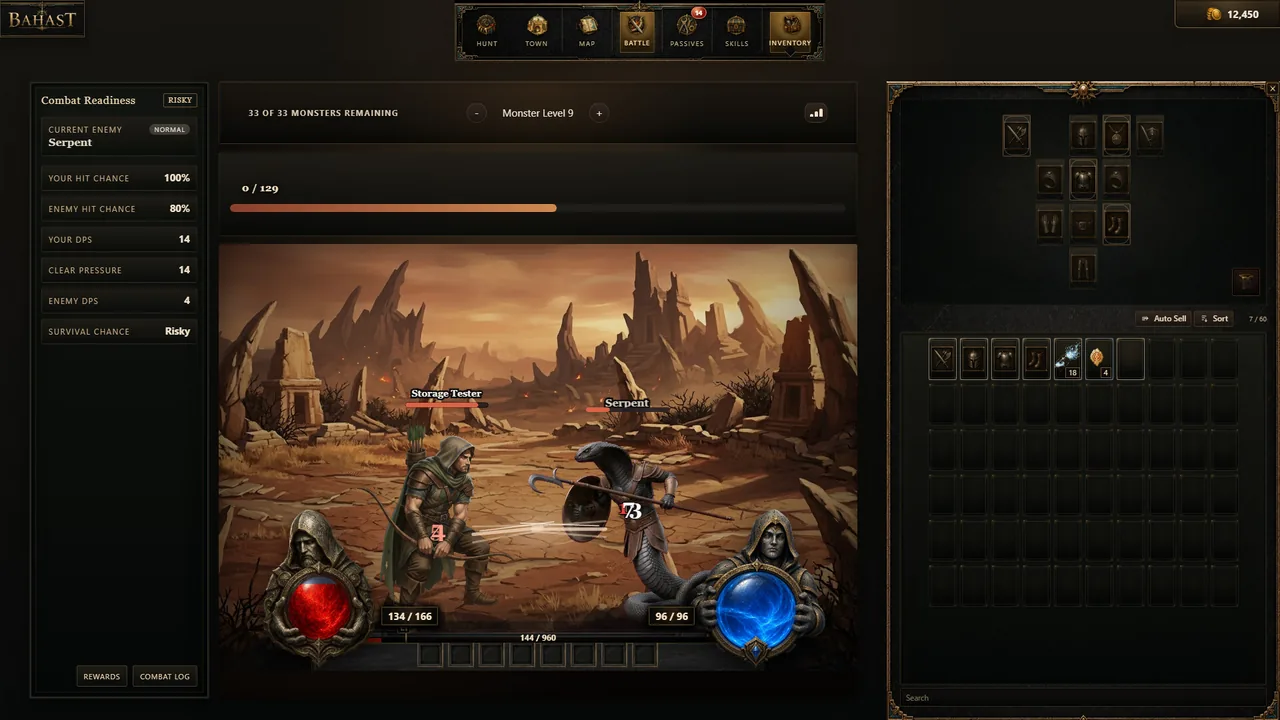
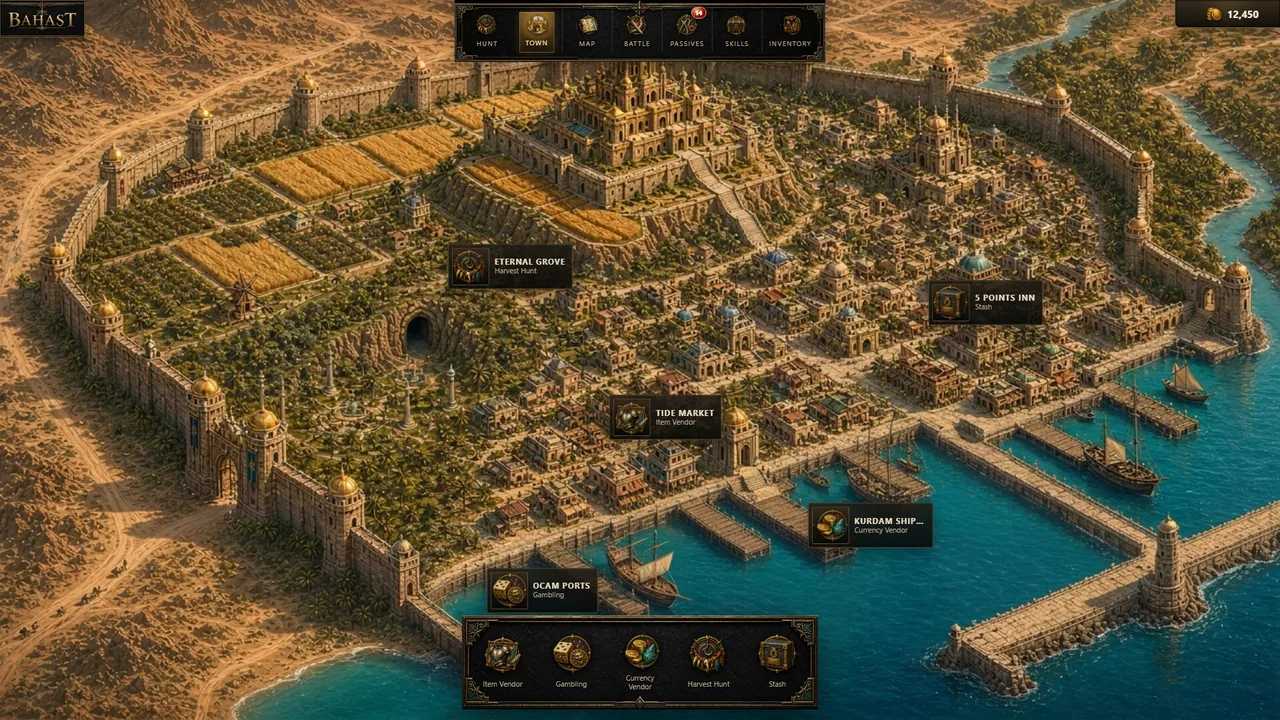
Bahast's pitch is familiar to anyone who's spent time in the loot-treadmill corner of the ARPG genre, just running on idle rails: pick a class, build it out through gear, a passive tree, skills and crafting, then send your adventurer into an automated field run and see what comes back. "Combat resolves automatically, but the decisions are yours," reads the store page, and the loop of prepare, run, return stronger is a real, functional structure -- Diablo-flavoured item rarities, a Path of Exile-shaped passive grid, sigils and Reagents to refine equipment, town services including gold-based item gambling that explicitly uses only earned in-game currency rather than real money. FC Tech Labs, a solo developer, released it as a full, non-Early-Access game on 6 July 2026 for NZ$7.89, now discounted to NZ$4.73 (checked 13 August 2026) -- a 40% cut within roughly five weeks of launch, itself a small but real signal about how the opening reception has gone.
A workable loop, thinly reviewed and thinly received
Bahast's Steam review base is small -- 16 total, split to a bare Mixed at 56% positive -- and the handful of English-language accounts available are specific rather than vague, which makes them worth reading closely despite the small sample. The clearest complaint concerns the passive tree, the system most directly inviting comparison to Path of Exile's famous build-defining grid: "the passives are bland -- increased damage, life, mana, attributes, accuracy, defenses, block and crit chance," reads one review from a player who reached character level 22. The same reviewer flags a related, more structural problem: "English translations are a bit too awkward to not break immersion. Games with interesting interactions... need precisely-worded descriptions." For a genre whose whole appeal is reading exactly what a passive or item modifier does and building around it, imprecise localisation isn't a cosmetic flaw -- it directly undermines the system it's describing.
The second detailed review is more measured but still lands on a similar verdict: "Can't recommend in current state, somewhat lacking in features and content, pick up on sale if at all." It flags a limited skill tree with "little build variety" and a more concrete mechanical worry -- that endgame content, called "writs," scales directly with character level, so a player who reaches it without sufficiently strong gear risks being "soft-locked out of the content entirely." That complaint lines up with what the global achievement data shows: several late-game boss-defeat achievements sit at 0.1% or 0.0% completion, a steeper cliff than most idle RPGs in this lane show at a comparable point after launch, consistent with very few players making meaningful progress past the mid-game. None of this reads as a broken game -- the reviewer who raised the soft-lock concern still rates it "5/10, Meh for an auto-battler idle" rather than a flat pan -- but it's a specific, credible account of a game whose systems don't yet reward reaching the content they're built around.
A controversy that started on the store page, not in the reviews
What makes Bahast worth covering beyond its modest Steam numbers is a separate, better-documented story: its AI-content disclosure, and the reaction to it from other independent developers. Steam requires games using generative AI tools to disclose that use, and Bahast's disclosure goes further than a bare notice, offering a justification: "This game uses AI in various places. As a solo developer it was nearly impossible to put out this game in a meaningful time frame or act on feedback without leveraging AI as a tool" -- text confirmed directly on the store page. Reporting on the ensuing discussion (GamesRadar+, among others) describes the disclosure sparking pointed public pushback once it was flagged by developer and animator Aura Triolo, whose response -- "'If you pay me maybe I'll use LESS AI' is a new desperate plea I haven't seen before" -- was widely shared. Fellow solo developer Mtgames offered a sharper counterpoint still, reported as saying "I'm literally unemployed and I still make all of my assets by hand... Because it's FUN," directly rejecting the necessity argument the disclosure makes.
This review can't adjudicate that argument -- reasonable people, including working developers, disagree sharply about whether AI tooling is a legitimate cost-saving necessity for a solo studio or something else -- but it's worth surfacing plainly rather than folding quietly into the game's Steam score, because it's clearly a live factor for at least part of Bahast's potential audience. Notably, one of the game's own critical Steam reviewers, otherwise unimpressed by the passive tree and translation, still calls the AI-generated art itself "decent" and says it "follows its themes pretty well and is easy on the eyes" -- suggesting the objection landing in the wider press conversation is less about the visual output and more about the labour and necessity argument the developer made to justify it.
5.5 out of 10. Bahast is a functional, cheap idle ARPG whose core loop -- gear up, run, loot, repeat -- works, but whose specific systems (a bland passive tree, rough translation, thin endgame content with a real soft-lock risk) haven't yet convinced even a majority of its own small review base. Its more significant story right now sits outside Steam's review section entirely, in a genuine, press-covered debate about its developer's stated justification for using generative AI -- a factor separate from, but worth weighing alongside, the mechanical shortcomings the game's actual players are reporting.
Pros and cons
Pros
- A clear, workable idle-ARPG loop -- prepare a build, send it on an automated run, return stronger -- with a Path of Exile-flavoured passive grid and Diablo-adjacent loot rarities that genre fans will recognise instantly
- Cheap even before its launch-window discount, and the AI-assisted art is described by at least one critical reviewer as "decent" and thematically consistent despite disliking other aspects
- A real class and crafting system with Reagents, sigils and town services layered around the core loot loop rather than a single flat progression bar
- No real-money gambling or microtransactions -- the in-game gold-based item gambling explicitly uses only earned currency, per the store page's own content descriptors
Cons
- Passive tree bonuses are described as generic and interchangeable -- damage, life, mana, accuracy, defenses -- without the build-defining choices the Path of Exile comparison invites
- English translation is reportedly awkward enough to undercut a system that depends on precise wording, a real problem for a build-crafting game rather than a cosmetic one
- Endgame "writs" content scales with character level and can reportedly soft-lock a player who reaches it without strong enough gear, and the global achievement data shows a steep drop-off consistent with very few players getting that far
- The developer's own AI-content disclosure argues generative AI was a financial necessity for a solo developer to ship on schedule, a framing that drew public, named criticism from other independent developers and coverage in the games press
- A limited skill tree and an auto-battler with only a basic "auto next" option, with no way to skip or avoid specific boss encounters
Screenshots
-
BahastImage: FC Tech Labs via Steam -
BahastImage: FC Tech Labs via Steam -
BahastImage: FC Tech Labs via Steam -
How the review scores each part of the gameWanderer Editorial -
The essentialsWanderer Editorial -
The short versionWanderer Editorial