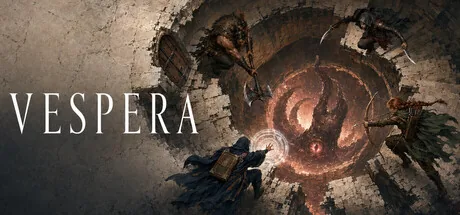
Game review
Vespera
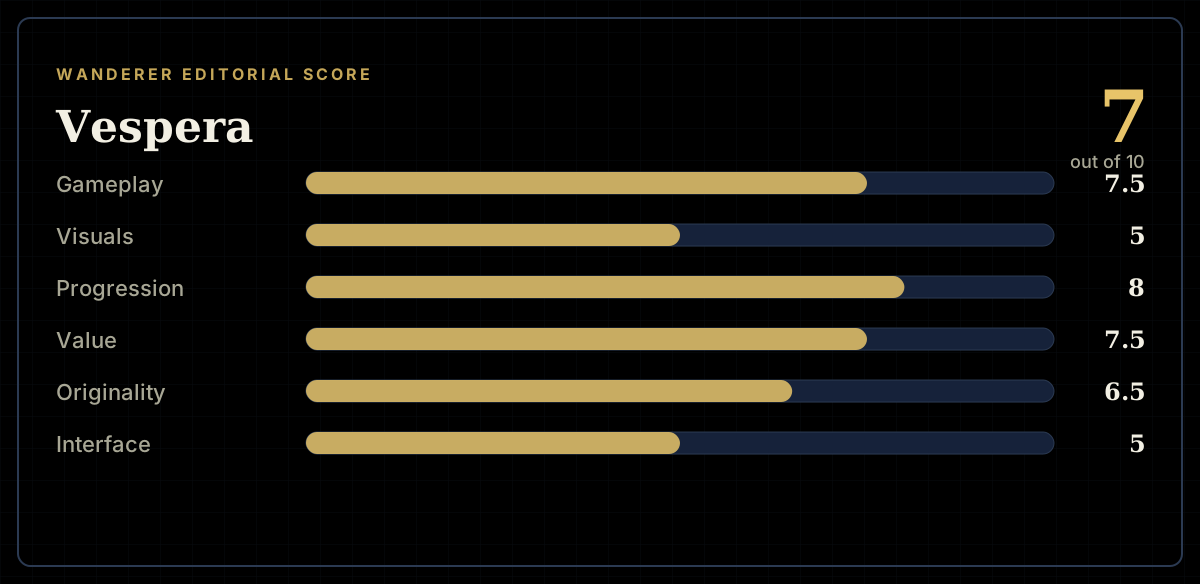
7 / 10
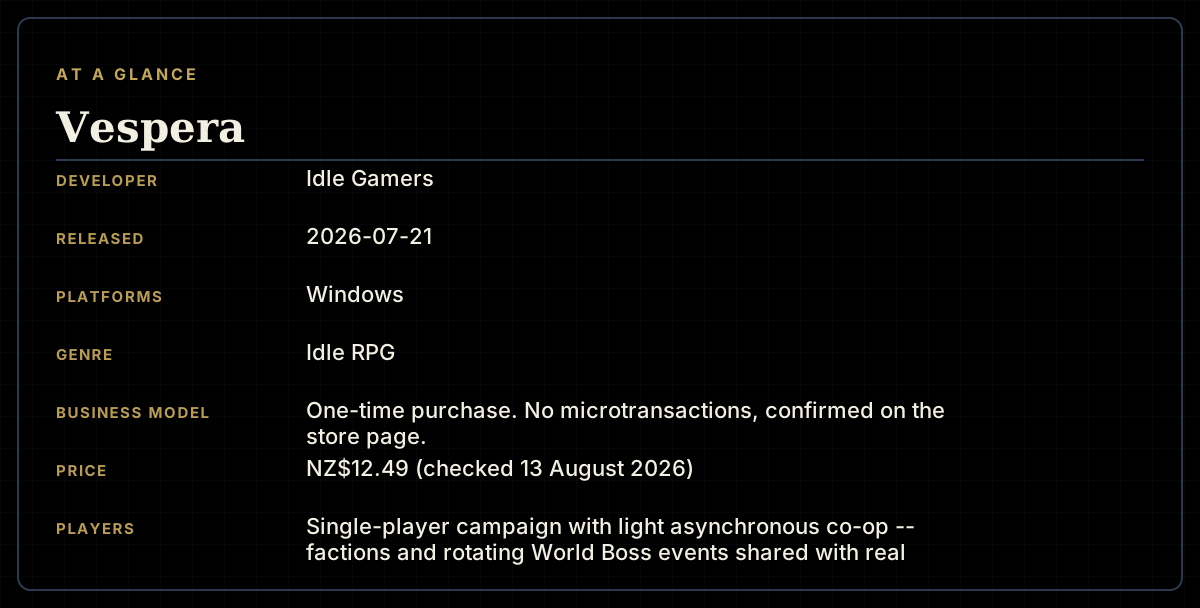
- Developer
- Idle Gamers
- Publisher
- Idle Gamers
- Released
- 21 July 2026
- Platforms
- Windows
- Genre
- Idle RPG
- Monetisation
- One-time purchase. No microtransactions, confirmed on the store page.
- Players
- Single-player campaign with light asynchronous co-op -- factions and rotating World Boss events shared with real players.
The short version
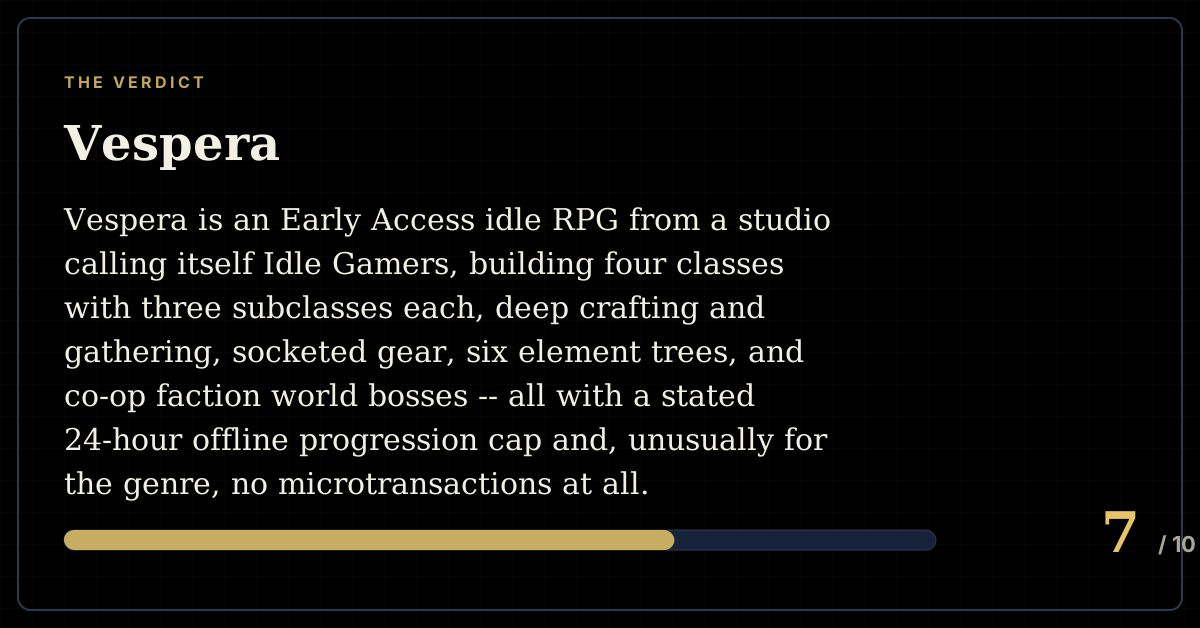
Vespera is an Early Access idle RPG from a studio calling itself Idle Gamers, building four classes with three subclasses each, deep crafting and gathering, socketed gear, six element trees, and co-op faction world bosses -- all with a stated 24-hour offline progression cap and, unusually for the genre, no microtransactions at all. It has been in Early Access since 21 July 2026 and sits at Very Positive, 83.5% of 254 English reviews, an unusually large sample for a three-week-old EA idle title and one built substantially on players with hundreds of hours logged.
Set against that enthusiasm is a genuinely loud, specific minority complaint: the game's AI-generated art and UI, disclosed on the store page, reads to a real slice of reviewers as incoherent and cheap -- "the UI looks like any Claude web app," reads one -- and several long-session players report daily balance patches that broke builds they'd already invested in, alongside a developer community-management style some found combative.
Biggest strengths
- Real combat and build depth for the genre -- four classes with three subclasses each, socketed gems, six element trees, Skill Engravings and Soulbound gear -- that multiple long-session reviewers rank above genre staples like Melvor Idle for depth and variety
- No microtransactions on a paid Early Access idle game, confirmed on the store page, in a genre where free-to-play monetisation is often the biggest source of reader complaint
- Genuinely active developers, repeatedly praised by name across reviews for daily patches, quick bug fixes and visible presence in the game's Discord
Biggest weaknesses
- Disclosed AI-generated art and UI draws sustained, specific criticism rather than a passing mention -- reviewers describe inconsistent scrolling, tiny unreadable text and a UI that "looks like any Claude web app," and several call the game's whole presentation "AI slop"
- Daily balance patches during Early Access have reportedly broken previously viable builds and nerfed skill trees players had already invested significant hours into, a real cost specifically for an idle RPG's slow-building playstyle
- Multiple long-session reviewers (10,000+ minutes, meaning 165+ hours) describe endgame gear and talent progression as shallow or "mediocre" once the early systems stop feeling new
Who it's for: Fans of Melvor Idle, Idle Champions or similar skilling-and-combat idle RPGs who want something with real combat depth, class/subclass builds and light MMO co-op rather than pure skill-clicking, and who don't mind visible AI-generated art if the systems underneath are strong. Not for anyone who finds AI-generated visuals a dealbreaker on principle, or anyone who wants a finished, balance-stable Early Access experience rather than one still being reworked daily.
Our recommendation: A genuinely strong pick for idle-RPG regulars at NZ$12.49, with no microtransactions to worry about and real system depth behind the AI-art criticism -- but go in expecting Early Access instability specifically in the form of balance patches that can invalidate a build you've already sunk hours into, and decide up front whether disclosed AI-generated art and UI is something you can look past.
7 / 10
A studio calling itself Idle Gamers, making a game with the explicit pitch "by idle players for idle players," is either a warning sign or a promise, and Vespera's review base -- 254 reviews and climbing three weeks after its 21 July 2026 Early Access launch -- has largely decided it's the latter. Four classes, twelve subclasses, socketed gear, six element trees, crafting, gathering, a mercenary system, an endless Tower-climb mode and co-op faction world bosses, all for a flat NZ$12.49 (checked 13 August 2026) with no microtransactions of any kind. It sits at Very Positive, 83.5% across a review base unusually large for a three-week-old Early Access idle title -- and, more tellingly, unusually deep in logged playtime, with reviewers reporting hundreds of hours rather than the quick first impressions a launch-week snapshot normally has to rely on.
A genre veteran's idle RPG, according to genre veterans
What separates Vespera's positive reviews from typical "fun so far" launch praise is how many of them are explicitly comparative, written by players who've clearly played a lot of this specific genre and are measuring Vespera against it directly. "I thought Visseron Idle, Eldara, and Fractured Realms were the best of the best of idle RPGs, and then I found Vespera," reads one, crediting it with taking "all the great stuff" from those games and still feeling distinct. Another, with over 180 hours logged, calls it "hands down the best 'Melvor Idle' style game I ever played," specifically because it avoids "the same copy paste formula we keep seeing" by running multiple progression systems concurrently -- combat and gathering happening at once, a passive resource-generating Magic Academy running in the background alongside active play. A third, similarly experienced, draws the comparison even more sharply: "It isn't really like Melvor Idle or RuneScape... There's a much bigger emphasis on combat and progression. There are multiple classes and subclasses, quests, co-op world raids, and a satisfying sense of character growth that keeps you coming back."
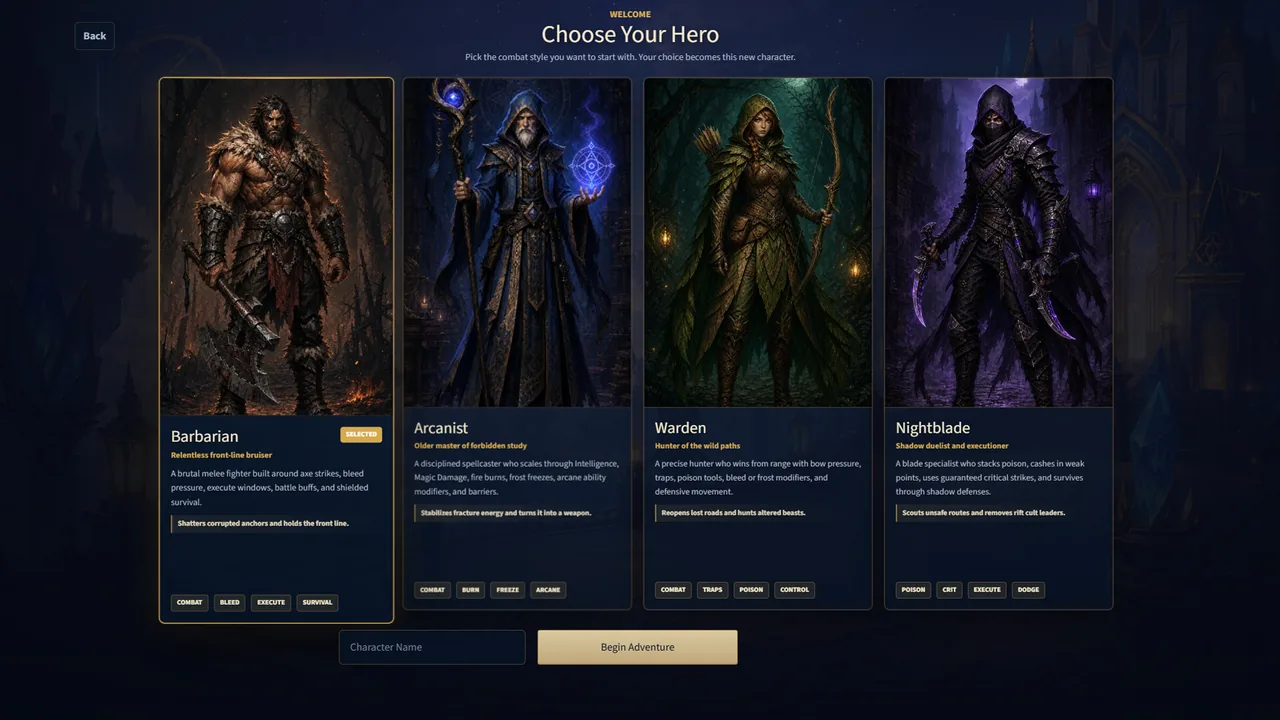
That combat emphasis is the real differentiator from most of this genre's crowded field: four base classes (Barbarian, Arcanist, Warden, Nightblade) each branch into three subclasses with distinct talent trees, socketed gems and six separate element trees add real build-crafting depth, and gear comes with Skill Engravings and Soulbound strengthening rather than a flat power number to chase. Layered on top is genuine co-op, unusual for the genre -- joining a faction, contributing to a War Chest, and fighting rotating World Boss events alongside real players, all asynchronous enough that it doesn't demand scheduled play. One reviewer specifically calls out enjoying "the co-op experience of the whole server fighting and working together to take down the world bosses," a hook idle games built around solitary skill-grinding rarely offer at all.
The developers themselves come up constantly and specifically, by name in spirit if not literally, across the positive reviews -- "devs are highly active," "quick to solve some issues," "listen to the community" -- in a genre where a small team's responsiveness genuinely determines whether early bugs and balance gaps get fixed or calcify. And in a category this readership pays particularly close attention to, Vespera earns real credit simply by having no microtransactions on a paid release: reviewers aren't managing a currency shop or fending off a battle pass while also managing their build, an increasingly rare thing to be able to say about a live-updating idle game in 2026.
AI slop, or AI-assisted -- a genuine, unresolved split
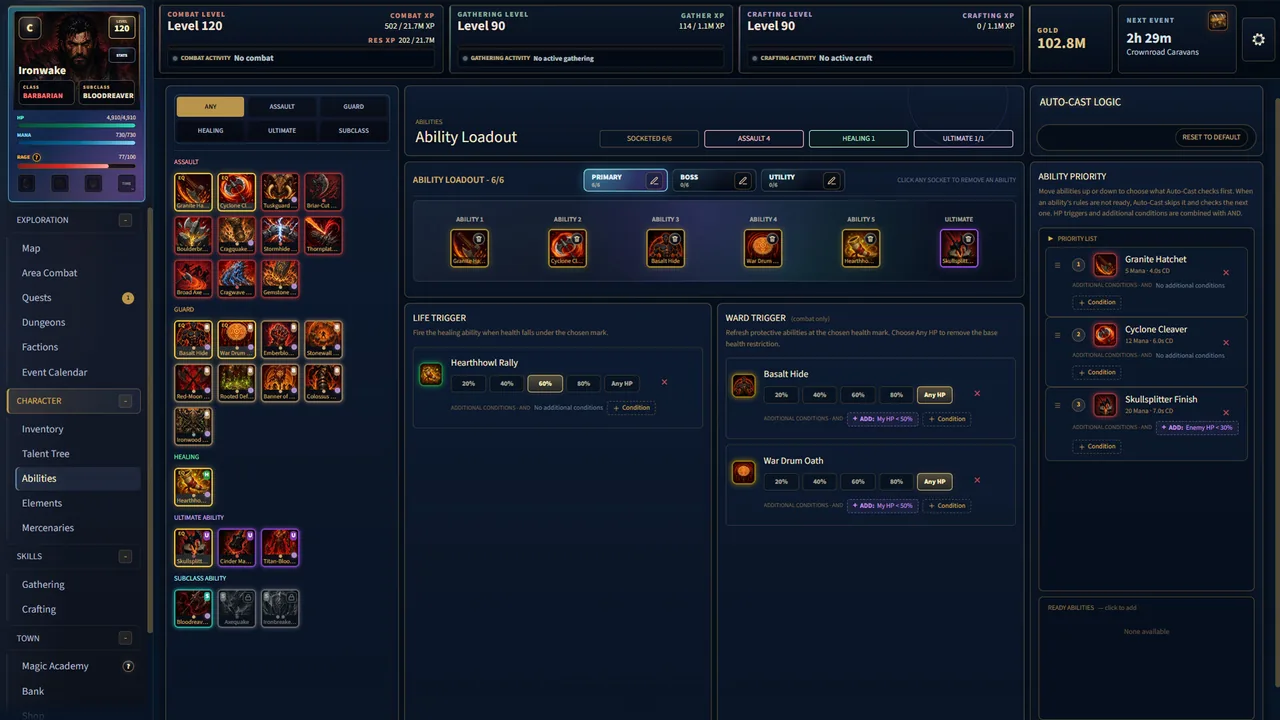
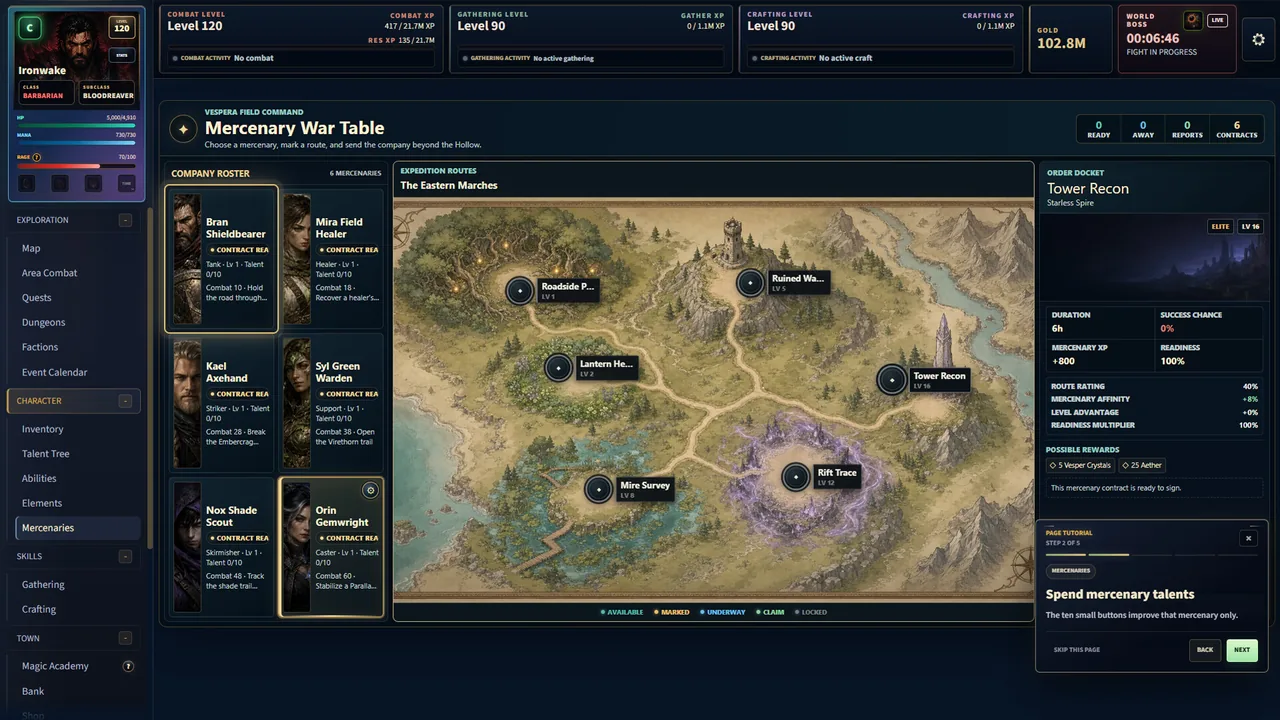
Set against that enthusiasm is a specific, recurring complaint that shows up far more often and far more pointedly than a typical "not for me" review: the game's disclosed AI-generated art and UI. Vespera's store page states plainly, "This game has AI generated images (including the community items) and other AI made components. If you are sensitive about AI generated content please do not purchase this game" -- an unusually direct warning, and reviewers are taking it up on the offer to weigh in. "It's obviously AI slop on many levels way beyond the visuals," reads one review with over 50 hours logged, going on to describe "baffling decision after baffling decision" beyond just the art. Another is blunter still: "This is AI slop galore, the UI looks like any Claude web app. The scrolling and floating UI elements are inconsistent as hell." A third calls the disclosure misleading in scope: "'Some images' disclosure on the page means 'every single visual.' The UI has all iconic problems of AI generation, including unreadable text... and incompatible colours."
It would be easy to read this as a familiar internet argument playing out in a review section, but it's worth taking seriously as a functional complaint rather than purely an ideological one: multiple reviewers, including several who otherwise recommend the game, separately report specific usability problems -- text too small even with UI scaling turned up, menus requiring the cursor to sit outside a scroll container to actually scroll, and navigation requiring "multiple clicks through multiple menus just to gather or craft something." One 190-hour reviewer put it plainly: "Games good but the UI is awful." That's a genuinely different, more concrete complaint than aesthetic objection to the art style, and it recurs often enough across otherwise-positive accounts that it reads as a real, current weakness rather than noise from players who'd have disliked the game regardless. To its credit, at least one positive reviewer frames the trade-off explicitly and fairly: "Sure there's AI art, but the game behind it is so well thought out and genuinely fun that it straight up overshadows it" -- which is roughly the split running through the whole review base, just resolved in opposite directions depending on the player.
Early Access growing pains, and a rougher edge on community management
The second recurring theme, distinct from the art debate, is instability from active development itself -- the normal risk of buying into a three-week-old Early Access game, but with real, specific costs reported by invested players. "Don't love the huge changes and nerfs to the skill trees today," reads one review from a player with over 250 hours logged, adding that before the patch "I might have recommended it." Another, more pointed: "New talents are a big miss, broke previous builds and gave weaker harder-to-build ones in return." A reviewer with over 200 hours summarised the pattern as a backhanded compliment: "Pros: Devs are highly active. Cons: Devs are highly active... it feels like they're doing so without a cohesive idea of what they want their game to be." For a genre built around slow, patient investment in a build, balance changes that invalidate hours of prior progress land harder than they would in a faster-paced game -- a real, structural tension between rapid EA iteration and the genre it's iterating on.
A smaller but sharper thread concerns the developers' handling of criticism specifically. One reviewer describes "way too many snarky comments and defensive responses whenever people criticize their designs," and a separate, detailed review reports being "banned from the discord shortly after changing my review" -- a serious, specific allegation this review cannot independently verify beyond the review text itself, but one credible enough, and consistent enough with the broader pattern other reviewers describe, to flag rather than omit. Buyers who value a developer's public temperament as much as the game itself should weigh this alongside the otherwise strong responsiveness other reviewers credit the same team with.
A last, more mechanical complaint: several longer-session reviewers report the endgame build variety thinning out faster than the early game promises. "There is almost no customization to your build, as long as you pick something, you will make it," reads one 165-hour review; another, at 74 hours, concludes "the gear simply doesn't feel good or impactful... the ability, talent, and element trees are just mediocre." That's a meaningfully different complaint from the AI-art debate -- a genuine design critique from players who put in the time specifically to find out, and one worth weighing against the equally detailed praise from other equally experienced players who reached the opposite conclusion.
7.0 out of 10. Vespera is a genuinely ambitious, unusually deep idle RPG that a large and often deeply invested review base ranks among the best in its genre this year -- real class and build variety, honest no-microtransaction monetisation, and light co-op that most of its competitors don't attempt. Set against that is a real, ongoing controversy over its disclosed AI-generated art and UI that goes beyond taste into concrete usability complaints, and Early Access balance churn that has cost some long-term players builds they'd already committed to. Both things are true at once, and three weeks into Early Access, neither has resolved. At NZ$12.49 with no microtransactions, it's a fair bet for idle-RPG regulars willing to accept both the AI-art debate and the instability that comes with actively developed Early Access -- and worth watching as the promised 3-to-5-month Early Access period plays out, ideally with fewer build-breaking patches along the way. Anyone managing their own idle RPG's skilling systems, this reviewer included on Wanderer's side of that fence, will recognise exactly which trade-offs Vespera is making and why.
Pros and cons
Pros
- Real combat and build depth for the genre -- four classes with three subclasses each, socketed gems, six element trees, Skill Engravings and Soulbound gear -- that multiple long-session reviewers rank above genre staples like Melvor Idle for depth and variety
- No microtransactions on a paid Early Access idle game, confirmed on the store page, in a genre where free-to-play monetisation is often the biggest source of reader complaint
- Genuinely active developers, repeatedly praised by name across reviews for daily patches, quick bug fixes and visible presence in the game's Discord
- Light asynchronous co-op through factions and rotating World Boss events gives an otherwise solitary idle loop a real shared-world hook without demanding synchronous play
- A deep achievement and progression tail -- 100 Steam achievements running from 97.6% down past 0.1% -- that supports the many reviewers reporting hundreds of hours already invested
Cons
- Disclosed AI-generated art and UI draws sustained, specific criticism rather than a passing mention -- reviewers describe inconsistent scrolling, tiny unreadable text and a UI that "looks like any Claude web app," and several call the game's whole presentation "AI slop"
- Daily balance patches during Early Access have reportedly broken previously viable builds and nerfed skill trees players had already invested significant hours into, a real cost specifically for an idle RPG's slow-building playstyle
- Multiple long-session reviewers (10,000+ minutes, meaning 165+ hours) describe endgame gear and talent progression as shallow or "mediocre" once the early systems stop feeling new
- A pattern of reviewers describing the developers as combative or dismissive toward criticism in Discord, including one report of being banned from the community server after editing a review
- Confirmed offline progression is capped at 24 hours rather than unlimited, a real ceiling worth knowing for players specifically shopping this genre for away-from-keyboard progress
Screenshots
-
VesperaImage: Idle Gamers via Steam -
VesperaImage: Idle Gamers via Steam -
VesperaImage: Idle Gamers via Steam -
How the review scores each part of the gameWanderer Editorial -
The essentialsWanderer Editorial -
The short versionWanderer Editorial