Game review
IdleOn - The Incremental MMO
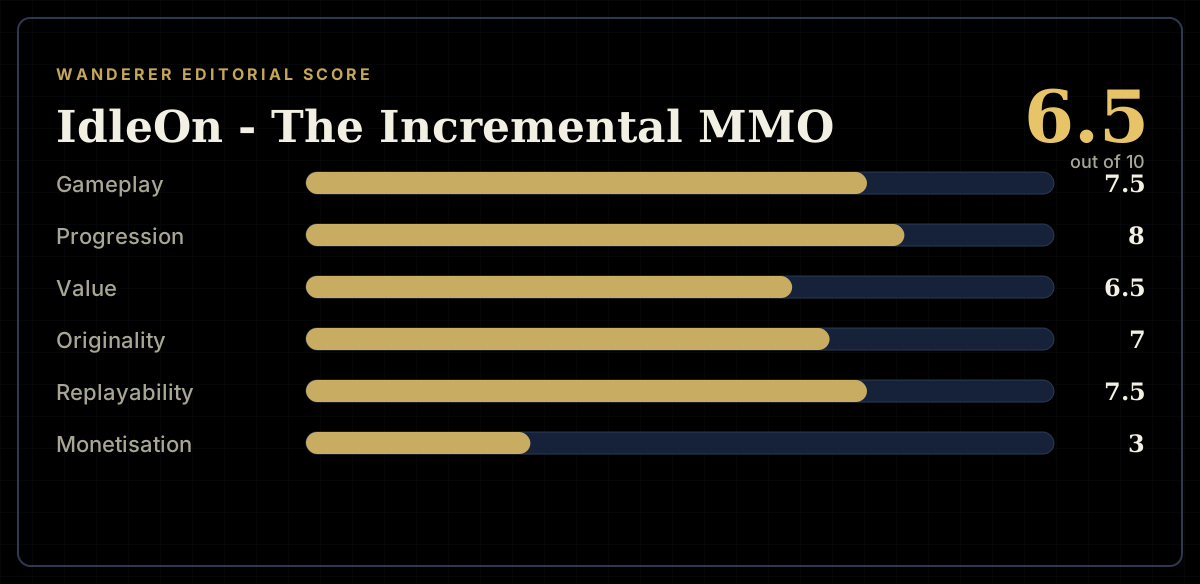
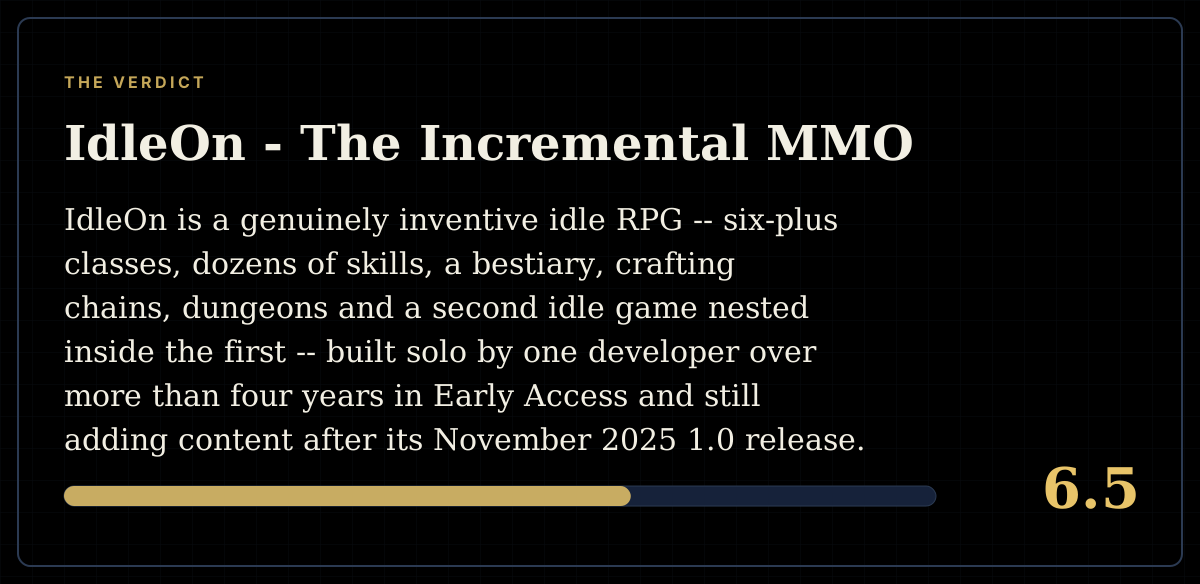
6.5 / 10
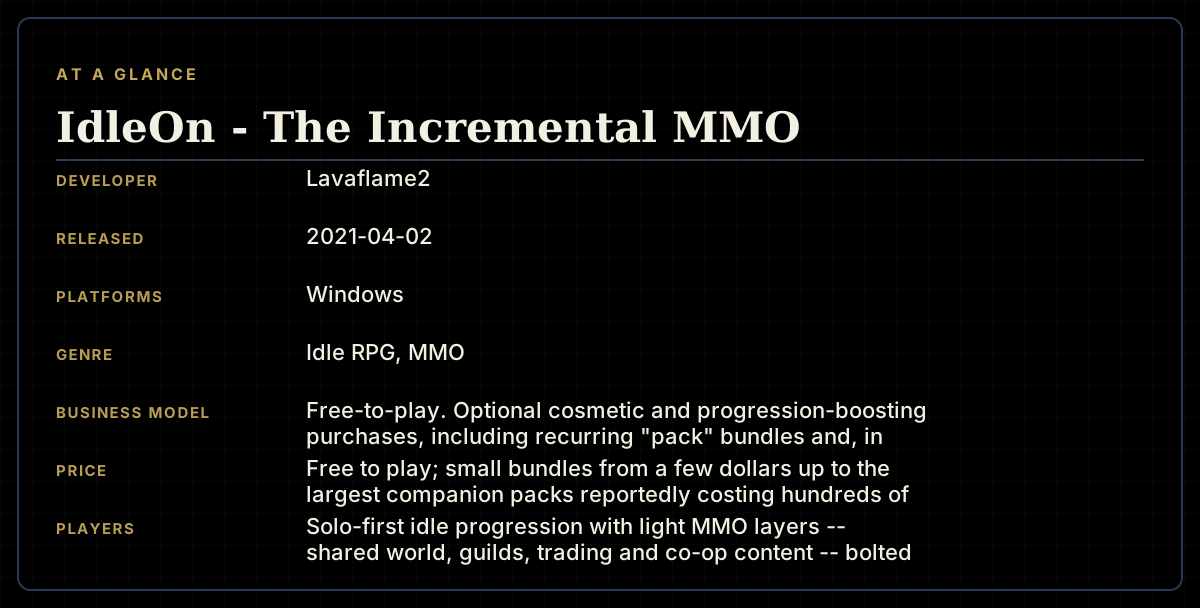
- Developer
- Lavaflame2
- Publisher
- Lavaflame2
- Released
- 2 April 2021
- Platforms
- Windows
- Genre
- Idle RPG, MMO
- Monetisation
- Free-to-play. Optional cosmetic and progression-boosting purchases, including recurring "pack" bundles and, in later updates, gacha-style companion pulls that community reporting places well into the hundreds of dollars for a guaranteed top result.
- Players
- Solo-first idle progression with light MMO layers -- shared world, guilds, trading and co-op content -- bolted on top
The short version
IdleOn is a genuinely inventive idle RPG -- six-plus classes, dozens of skills, a bestiary, crafting chains, dungeons and a second idle game nested inside the first -- built solo by one developer over more than four years in Early Access and still adding content after its November 2025 1.0 release. It sits at "Mostly Positive" on Steam, roughly 77% of 29,000-plus reviews, a number that undersells how loved it once was and overstates how comfortable that love still is.
The negative reviews, disproportionately from players with thousands of logged hours, describe a consistent arc: a generous, community-built free game that has spent its last two years introducing gambling-shaped companion pulls, twice-daily pack prompts and pay-gated progression walls around World 6 and 7, while its official Discord and subreddit moderation is repeatedly accused of deleting criticism. The game underneath that argument is still there, and still good.
Biggest strengths
- Enormous, genuinely inventive systems depth for a solo-developed idle game -- multiple classes, a nested "idle game within the idle game," crafting, a bestiary and hundreds of achievements
- The first 100-plus hours are frequently described, even by critical reviewers, as some of the most generous free content in the genre
- Still actively developed more than five years after its 2021 Early Access debut, including new content after its November 2025 full release
Biggest weaknesses
- A sustained, specific pattern of complaints from its most invested players -- many with thousands of hours -- describing escalating pay-to-win pressure, gambling-shaped companion pulls reported to cost hundreds of dollars, and packs pushed multiple times a day
- Progression walls around World 6 and 7 are widely described as difficult to clear at a reasonable pace without paying
- Reports of the developer's own community spaces moderating away criticism, which is a reputational problem distinct from the game's mechanics but repeatedly raised alongside them
Who it's for: Players who want a deep, systems-heavy idle RPG to run in a background window for months or years, and who can set a hard personal line on spending before World 5 or 6 tempts them past it. Not for anyone who wants a short, clean, premium idle experience free of live-service pressure.
Our recommendation: Worth installing -- it costs nothing and the first hundred-plus hours are as generous as free-to-play idle games get. Go in with your wallet closed by default, expect the monetisation pressure to increase sharply from World 5 onward, and treat any purchase as a deliberate choice rather than something the game nudges you into at 11pm on your third idle check of the day.
6.5 / 10
IdleOn entered Steam Early Access on 2 April 2021 as a free browser-adjacent idle RPG from a single developer, Lavaflame2, and stayed in Early Access for four and a half years — a run long enough that the game exited to a full 1.0 release on 6 November 2025 with a player base that had, by then, logged collectively staggering amounts of time in it. Reviewing IdleOn in August 2026 means reviewing two overlapping things: a genuinely inventive, systems-dense idle RPG that earned its reputation honestly in its early years, and a live-service monetisation arc that a large and vocal slice of its most loyal players say has curdled in the last two.
What it actually is
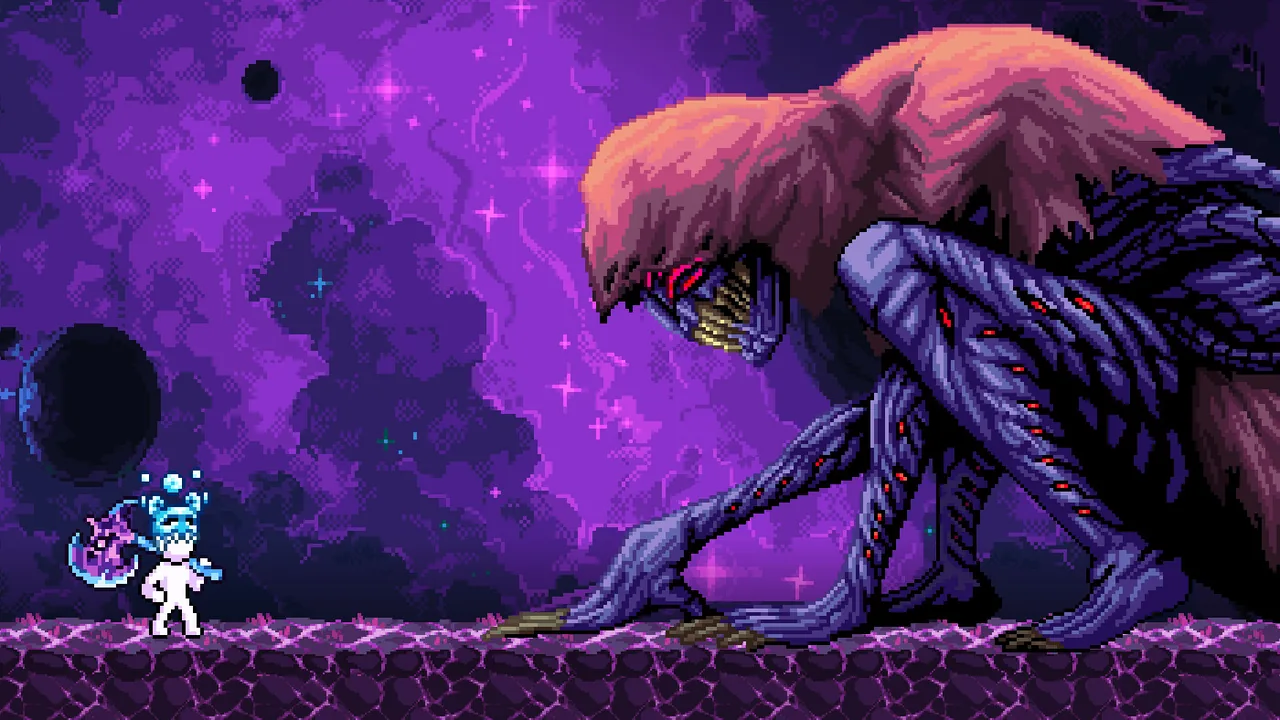
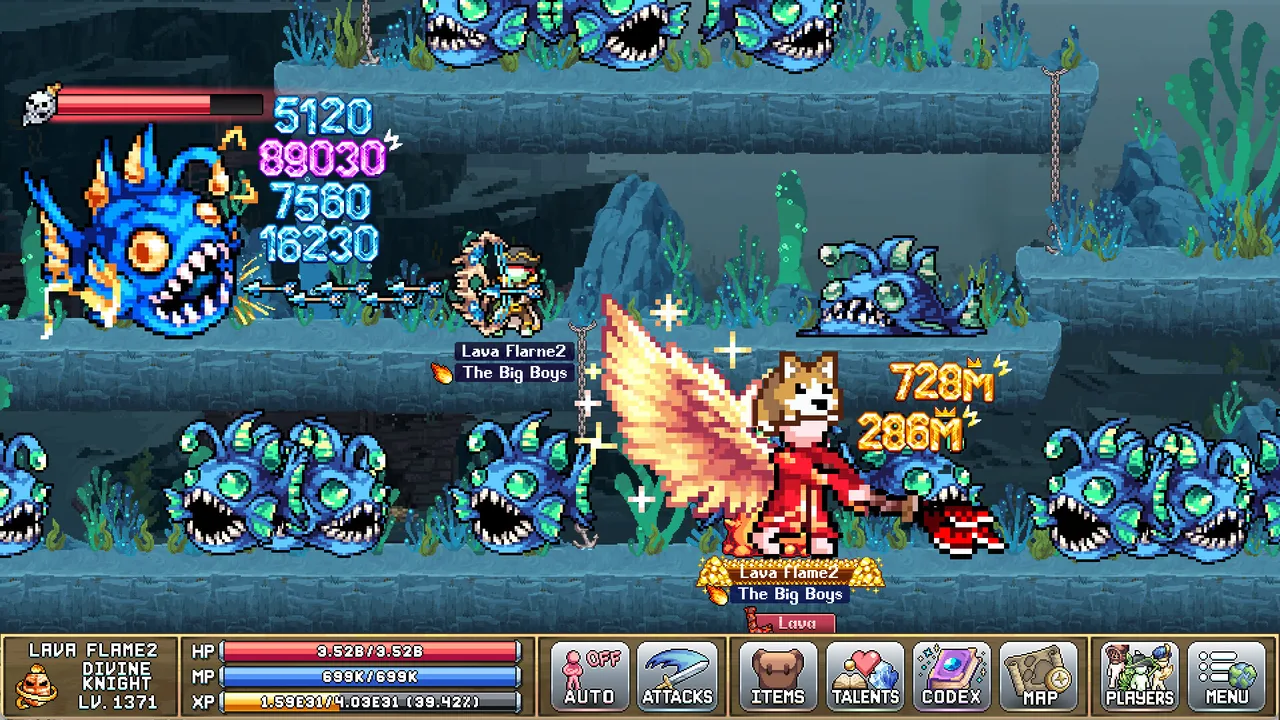
Strip away the discourse and IdleOn is one of the most content-dense idle games on Steam. You run a small roster of characters, each assigned a class — Warrior, Archer, Mage and their many sub-classes among them — and each idling toward XP, loot and materials in a shared 2D pixel world while you're logged in, offline, or simply not looking at the screen. On top of that skeleton sits an unusually large pile of systems: a bestiary to fill, a full crafting and smithing chain, cooking, alchemy, a construction minigame, dungeons, a "Sailing" sub-loop, and — the detail most reviewers single out as the game's cleverest idea — a second, fully-fledged incremental game nested inside the first one, complete with its own currencies and prestige layer. Reviewers who like the genre tend to describe the early-to-mid game in genuinely enthusiastic terms: "there is so much to do it's [expletive] amazing," reads one representative Steam review with over 1,200 hours logged, calling it "top 3 idle games ever." A newer player with 57 hours logged put it more simply: "very fun idle game. has tons of different things to do. and the game keeps farming and doing what you want while it is closed" — which is, after all, the entire premise of the genre, executed about as well as it gets for a solo-developed game.
The achievement list backs up the sheer scale on offer: 276 achievements, an unusually large set even for the genre. But the completion curve tells its own story about how much of that scale most players actually see — the single most-earned achievement in the entire game sits at only 42.6%, the median across all 276 is under 3%, and dozens of achievements near the bottom sit at 0.3–0.5%. For a game this large, that's not surprising on its own; long-tail idle games always have steep drop-off curves. But read alongside the review pattern below, it also fits a game whose middle and late stretches ask progressively more of the people who make it that far.
The community's own verdict on where it went wrong
IdleOn's overall Steam standing — Mostly Positive, roughly 77% of 29,489 total reviews as of mid-August 2026 — looks, on the surface, like a solidly well-regarded free game with the usual scattering of complaints. Reading the negative sample in any depth tells a much more specific story. Overwhelmingly, the negative reviews are not from players who bounced off the game early; they are from players with extraordinary playtime — 3,950 hours, 5,692 hours, 7,619 hours, one at over 15,000 hours — who say the game they fell in love with has spent roughly its last two years introducing monetisation mechanics they consider predatory. "Developer harnessed a community of people who have gambling addictions and promised them a gambling free game," reads one heavily-upvoted review from a 3,950-hour player. "Then he slowly started introducing gambling mechanics and cashing out once he had a large community." Another, with over 12,000 hours: "I have put an insane amount of hours and money into this game. Lava's greed is just too much." A third, more measured: "Game was good, has gotten progressively more p2w, developer has gotten extremely greedy."
The specific mechanic most often named is a companion-pull system that functions like a gacha — random-chance pulls for powerful companions, with community reporting (via Steam discussions and independent write-ups covering the update) describing individual chase items running into the hundreds of dollars for players pulling toward a guaranteed top-tier result, and total spend for some dedicated players reportedly running past a thousand dollars over the game's life. A widely-discussed 2026 developer statement reportedly framed a controversial pay-to-win update as beneficial marketing for the game rather than addressing the substance of the backlash, which did not calm the discussion on Steam and Reddit — several reviewers and community posts separately describe critical threads being removed from the game's own Discord and subreddit as quickly as they appear, a moderation pattern distinct from the mechanics themselves but one veteran players raise in the same breath.
None of this is universal. A meaningful share of the positive sample explicitly acknowledges the monetisation and shrugs it off: "it's a singleplayer game so I don't really get the p2w thing, as I PERSONALLY don't feel like I'm missing out on progress by not buying packs," reads one 1,223-hour review, while another with nearly 4,500 hours writes a detailed, largely positive account that still warns newer players plainly: "many quality of life features were locked behind paywalls. To Lava's credit—" and goes on to note the free path is real, just slower. The pattern that emerges across both samples is consistent rather than contradictory: the free-to-play floor is genuinely generous and the early-to-mid game genuinely earns its reputation, but the pressure to pay rises sharply from around World 5 or 6 onward, and a specific, recent set of updates pushed a meaningful number of the game's most invested fans from tolerating that pressure to actively warning others away from it.
How it has aged since 2021
This is the angle a 2021 launch review couldn't have written, because none of it had happened yet. IdleOn in its Early Access infancy was a scrappy, generous, community-embraced free idler with a single enthusiastic developer visibly building in public. Five years on, it is — by most public estimates of its Steam revenue placing it among the platform's higher-grossing free-to-play titles in early 2024 — a commercially significant live-service game, and it has taken on the pressures that tend to come with that scale: recurring bundle pushes, FOMO-shaped limited offers, and at least one gacha-adjacent system that its own long-term players describe in the same language usually reserved for mobile whale-bait. The November 2025 exit to full 1.0 release did not reset any of that dynamic; it landed in the middle of it. Whether the game is "still updated" is not in question — it is, with meaningful content added post-1.0 — but the direction of those updates is exactly what the recent review sample is unhappy about.
For a Wanderer reader, the honest comparison is useful: Wanderer's own progression and monetisation are built around not putting a purchasable wall directly across a system a player has already invested hundreds of hours into, which is precisely the complaint IdleOn's veterans are making about World 6 and 7. It's a useful cautionary example of how a beloved free idle game's monetisation can drift, gradually and without a single obvious turning point, from optional to load-bearing.
6.5 out of 10. IdleOn earns real credit as one of the most ambitious, systems-rich idle RPGs a solo developer has ever shipped, and its first hundred-plus hours remain a legitimately excellent free experience five years after launch. But a specific, detailed and repeated complaint from its own most dedicated players — thousands of hours deep, describing a shift toward gambling-shaped monetisation and progression walls that reward paying over playing — is too consistent to wave away as the usual free-to-play grumbling. Play it for what the early game still does brilliantly, and go in knowing exactly where the pressure starts.
Pros and cons
Pros
- Enormous, genuinely inventive systems depth for a solo-developed idle game -- multiple classes, a nested "idle game within the idle game," crafting, a bestiary and hundreds of achievements
- The first 100-plus hours are frequently described, even by critical reviewers, as some of the most generous free content in the genre
- Still actively developed more than five years after its 2021 Early Access debut, including new content after its November 2025 full release
- Runs happily in the background and rewards checking in periodically rather than demanding constant attention, at least in its earlier worlds
Cons
- A sustained, specific pattern of complaints from its most invested players -- many with thousands of hours -- describing escalating pay-to-win pressure, gambling-shaped companion pulls reported to cost hundreds of dollars, and packs pushed multiple times a day
- Progression walls around World 6 and 7 are widely described as difficult to clear at a reasonable pace without paying
- Reports of the developer's own community spaces moderating away criticism, which is a reputational problem distinct from the game's mechanics but repeatedly raised alongside them
- A 276-achievement list with a steep drop-off -- even the single most-earned achievement sits around 43%, and the median is under 3% -- consistent with a huge number of players bouncing off the game's scale before they get deep into it
Screenshots
-
IdleOn - The Incremental MMOImage: Lavaflame2 via Steam -
IdleOn - The Incremental MMOImage: Lavaflame2 via Steam -

IdleOn - The Incremental MMOImage: Lavaflame2 via Steam -
How the review scores each part of the gameWanderer Editorial -
The essentialsWanderer Editorial -
The short versionWanderer Editorial