
Game review
Hero Zero - Multiplayer RPG
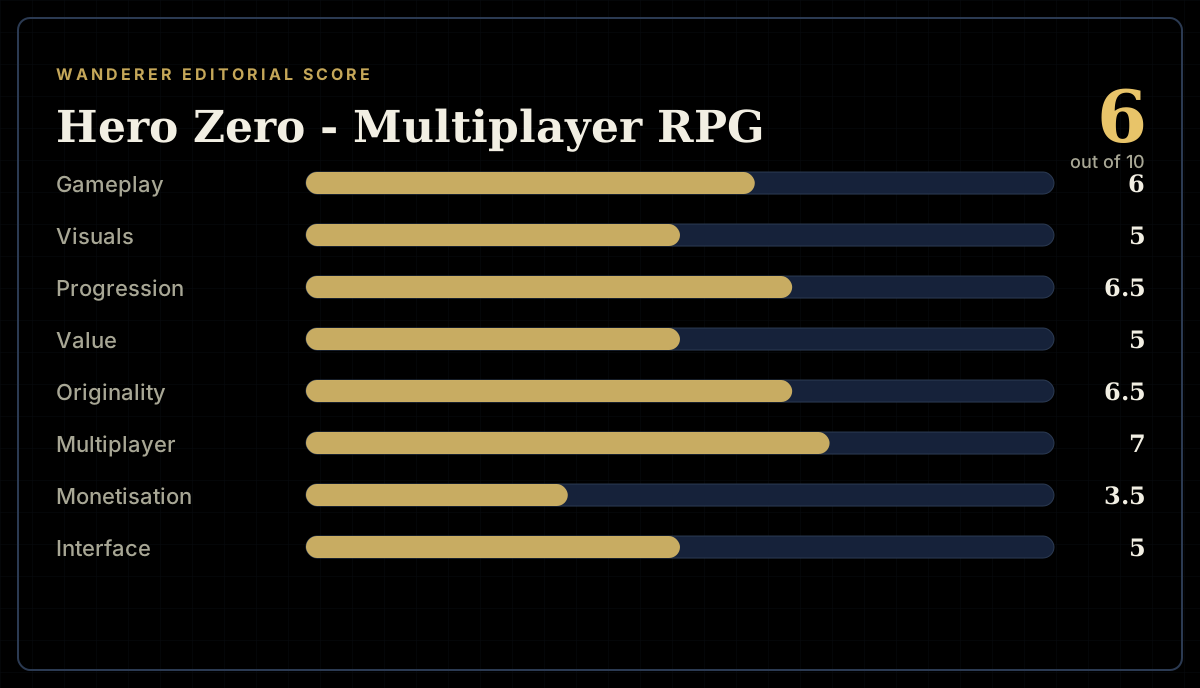
6 / 10
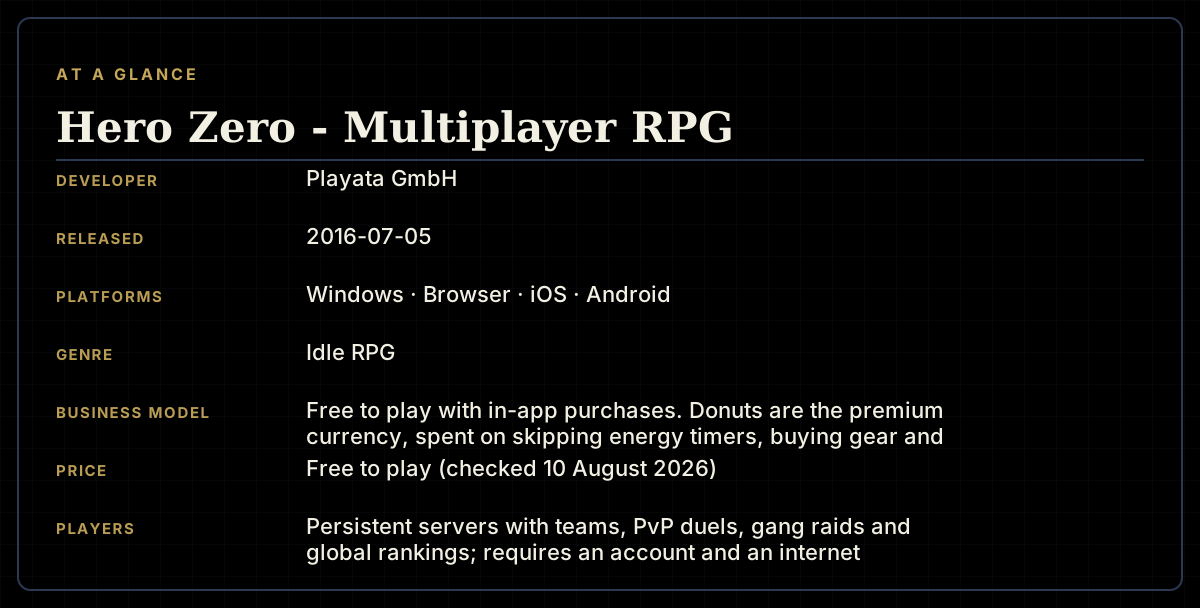
- Developer
- Playata GmbH
- Released
- 5 July 2016
- Platforms
- Windows, Browser, iOS, Android
- Genre
- Idle RPG
- Monetisation
- Free to play with in-app purchases. Donuts are the premium currency, spent on skipping energy timers, buying gear and speeding up hideout upgrades.
- Players
- Persistent servers with teams, PvP duels, gang raids and global rankings; requires an account and an internet connection
The short version
Hero Zero has been running since January 2012, which makes it older than most of the idle RPGs it now gets compared to — this comic-panel superhero RPG was doing the "wait on a timer, watch an automated fight, buy better gear" loop before Shakes and Fidget made it a genre staple. On Steam it sits at a headline 82% positive across all languages, but that figure is carried by a Polish player base more than three times the size of its English one; English-speaking reviewers land it at a much more modest 63%, Mixed.
Both readings are honest. The core loop is simple but genuinely competent, and the game is still being actively developed fourteen years on, with a new server and new seasonal content in 2026 alone. What drags it down for English reviewers is a monetisation layer that includes purchase buttons with no confirmation step, and a policy of deleting accounts after a period of inactivity that multiple long-term, paying players describe losing years of progress to.
Biggest strengths
- The core loop of missions, auto-resolved PvP duels and hideout upgrades works and stays readable even at a glance between other tasks
- Genuinely still being developed — new seasonal events and a freshly launched server landed as recently as June and July 2026
- Teams, raids and global rankings give the idle loop real social structure, and the game supports it across browser, Steam, iOS and Android on one account
Biggest weaknesses
- Accounts are deleted after extended inactivity, and reviewers with hundreds or thousands of hours logged, including some who had spent real money, report losing everything this way
- Several purchase prompts fire without a confirmation step, which players describe as premium currency disappearing by accident
- The energy/timer system that gates nearly every action is the single most common complaint among players who stuck around long enough to hit it
Who it's for: Idle-RPG fans who want a lighter, faster-paced alternative to Shakes and Fidget, and anyone curious where the genre's comic-superhero strain started. Best suited to players who will check in regularly, since the account-deletion policy punishes long breaks.
Our recommendation: Worth trying because it costs nothing, but set a calendar reminder if you plan to stop playing for more than a few weeks, and treat every in-game purchase prompt as one you have to read carefully before tapping.
6 / 10
Hero Zero has outlived the review score it's usually filed under. Its Steam client arrived in July 2016, but the underlying game — a browser and Facebook-era superhero RPG built around the joke of an ordinary loser turning into a costumed hero — launched in January 2012, more than a year before Shakes and Fidget's Steam debut made "timer-gated missions plus an auto-resolved battle" into shorthand for a whole genre. Fourteen years later, Playata GmbH is still shipping seasonal content for it. A new server, cheerfully named the Jumpstart Server, went live at the end of June 2026. A new season arrived at the end of July. That alone puts it ahead of most games this library reviews from any era: it is not a fossil quietly accumulating old reviews, it's a working live-service game that happens to be old.
Whether that's a reason to play it depends heavily on which players you ask, and Hero Zero is an unusually clean example of why that question matters more than a single percentage on a store page.
The loop
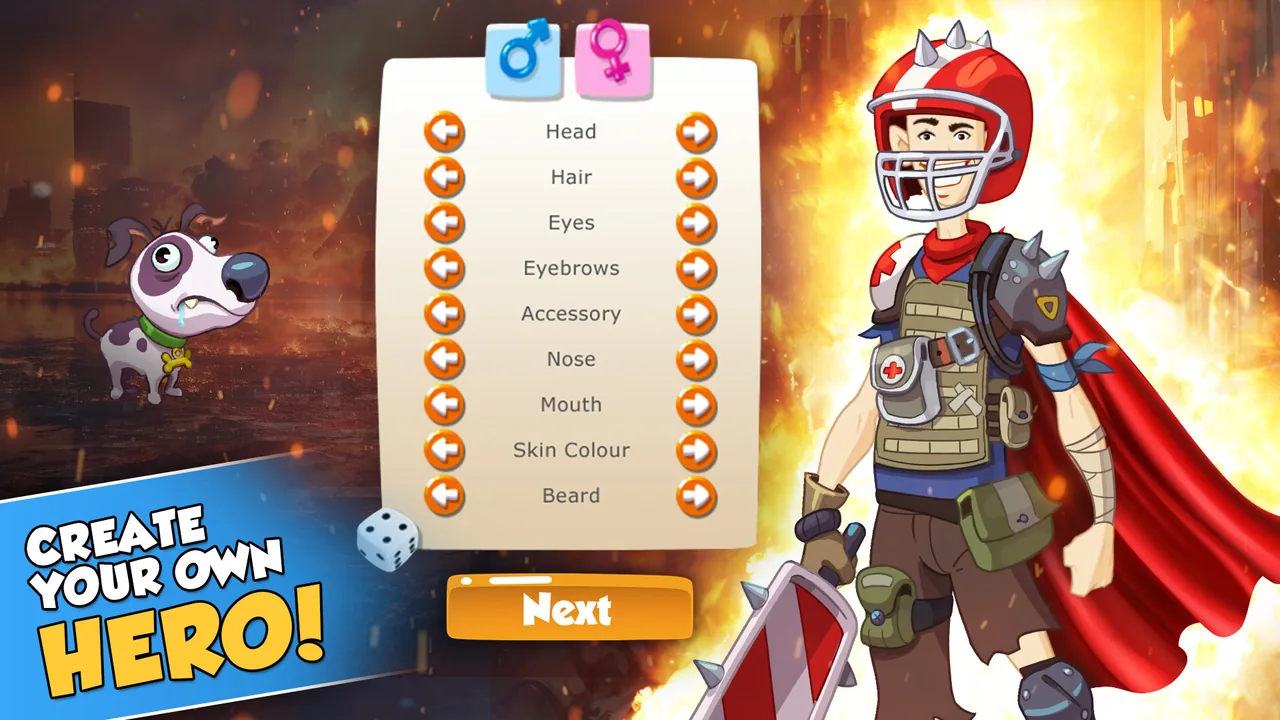
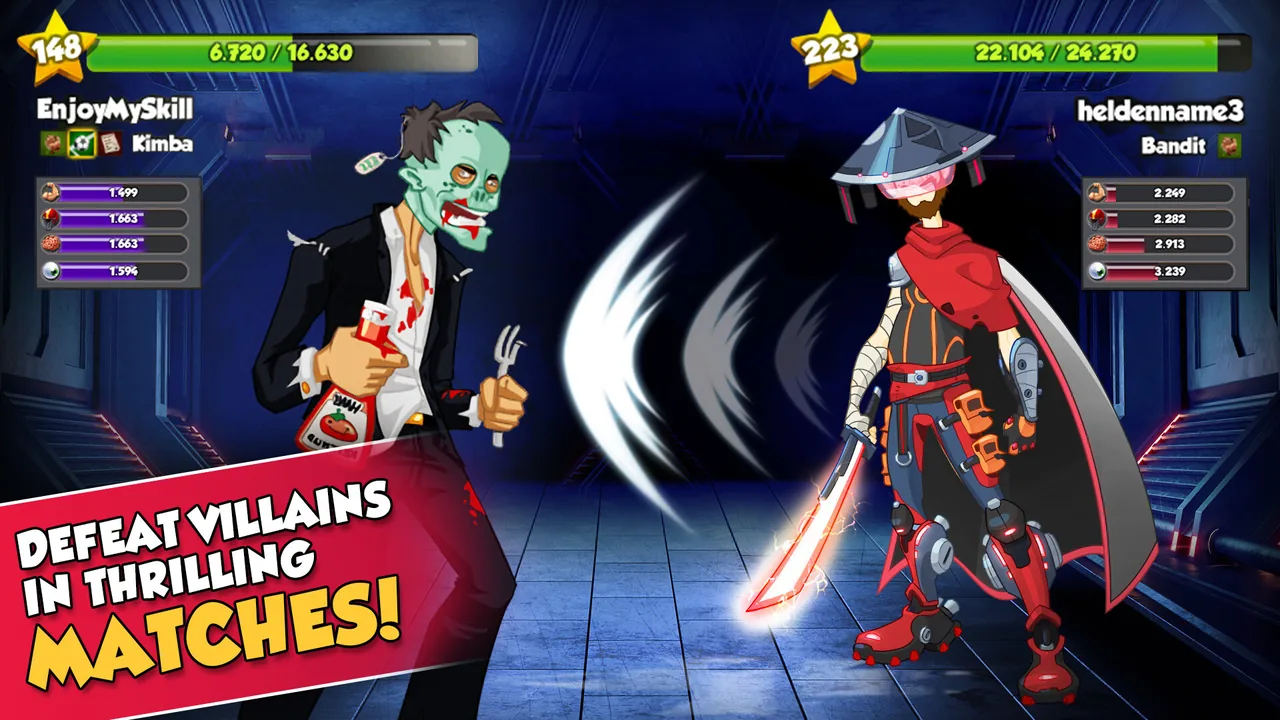
You build a hero in the town of Humphreydale, pick missions from a board, and wait — missions take real minutes, ticking down while you do something else. When they resolve you get experience, gold and equipment, which you spend on gear and skills back at your hideout. PvP duels and gang raids against other players resolve automatically once queued, and results feed a set of global leaderboards. Teams pool bonuses and coordinate raids the way guilds do in most MMOs, just at a much smaller scale of commitment per session.
None of this is complicated, and it isn't trying to be. What it does well is stay legible: the mission board, the shop and the character screen are all one or two taps away from each other, and the humour — self-aware, mildly absurd, closer to a superhero parody comic than a fantasy epic — gives the grind a bit of personality that a lot of its imitators skip. One long-time player with over five thousand hours logged put it plainly in a 2026 review: most of the people criticising the game, they wrote, "dont have more than an hour played." The data backs that shape of complaint, even if not the number: the median playtime among the game's hundred most-helpful negative English reviews is under six hours, while its best-regarded positive reviews routinely come from players past the thousand-hour mark.
Where the score actually comes from
The store page's headline figure — 81.9% positive across 3,819 reviews, comfortably "Very Positive" — undersells how uneven that number is once you split it by language. Polish reviews alone account for 1,564 of the total, more than two in every five reviews the game has ever received, and they run at 91.1% positive. Brazilian Portuguese (477 reviews, 84.7%), Czech (132, 92.4%) and Greek (54, 90.7%) all skew similarly high. English is the second-largest language bucket at 598 reviews, and it sits at 63.2% — Mixed, not Very Positive, and nowhere close to the aggregate badge a Steam shopper sees first.
That gap isn't a recent collapse. The hundred most recent English reviews run 64% positive, essentially identical to the lifetime figure, so this is a stable, long-standing split rather than a live controversy. It's the same pattern this library has now seen on several older live-service games with a strong regional following outside the English-speaking market: the aggregate score measures real, durable enthusiasm somewhere, it just isn't necessarily where most of this review's readers live. If you read Steam reviews before buying, read the English ones for Hero Zero, because the language you'll be playing in is the audience whose opinion tracks yours.
It's also worth noting that the loudest English complaints skew old. Thirty-seven of the hundred most-helpful English negative reviews date to July 2016, the week the Steam client launched, and they carry far more votes on average than anything written since — several are one-line dismissals ("basically a Facebook game," "imagine a horrible iPhone app... then imagine playing that on your PC") posted within minutes of trying it. That's a real reaction to a real mismatch between expectations and format, but it's a decade-old snapshot of Steam users encountering a browser game for the first time, not a verdict on the game as it exists now.
What current players actually complain about
Filter the English negative reviews down to 2023 through 2025 and a much more specific, much more useful pattern appears, and it isn't about the genre at all. It's about two things: energy and accounts.
The energy system gates nearly every action behind a slowly refilling meter, and reviewers who stayed long enough to hit its ceiling consistently describe it as the point where the game stops being fun and starts being a waiting room. "If you don't know what an energy game is," one October 2025 review explains at length, "you have a maximum energy amount, and when you play the game, energy is used for everything you do. When you are out of energy, you have to wait." It's a familiar shape for anyone who's played a mobile idle game, and Hero Zero doesn't do anything unusual with it — the meter exists to make donuts, the premium currency, feel worth spending to refill early.
The sharper complaint is about what happens to an account that goes quiet. Multiple reviewers, several with playtimes in the hundreds or low thousands of hours, describe losing their entire character after a period of inactivity — in some cases despite having spent real money on the account. "I liked the game, I really did, until after not playing for a while, I lost everything," reads a 2025 review from a player with 42 hours logged. Another, at 59 hours: "your account isnt safe because they would close the account for inactivity even if u ever paid something thought the game." A third, with nearly a thousand hours across two separate stints going back to 2015, describes having to keep a written note of their account name and character level just in case they need to prove ownership after a lapse. This isn't a single loud complaint — it's a recurring, independently reported pattern across years, from players who were clearly invested rather than drive-by critics, and it's the single strongest reason to think carefully before putting real time or money into this specific account.
A smaller but related complaint concerns purchase prompts: several reviewers describe donut-spending buttons that fire without any confirmation step, meaning a misplaced tap or a keystroke at the wrong moment can spend premium currency you didn't intend to spend. Neither of these issues is something a review corpus can audit with certainty — this is what players report experiencing, not something independently verified — but the consistency and the dates on the reports make them worth taking seriously rather than dismissing as a handful of unlucky accounts.
Progression, and where it flattens
For players who keep the energy meter topped up and log in regularly, the progression curve holds up reasonably well for a long time — the game's biggest fans are the ones with multi-thousand-hour playtimes, which isn't something a shallow game usually produces. But more than one long-serving player describes a plateau: one 2024 review, from an account with nearly 1,400 hours logged over several years, sums their late-game experience up as getting "kinda mid after level 250," citing diminishing returns on gear upgrades and PvP raids from higher-level players eating into resources faster than they can be replaced without spending. That's a familiar shape for the genre — Shakes and Fidget's endgame runs into similar complaints about spending being the only reliable way to keep pace — but it's worth knowing going in that the free path gets noticeably harder to make progress on the further you go.
Presentation and interface
Visually, Hero Zero looks its age. The comic-panel superhero art has charm but hasn't been meaningfully redrawn since the browser era, and the interface is a dense stack of menus that favours information density over modern polish. Some of the Steam-specific launch complaints — a non-resizable window, no fullscreen option — appear to have faded from the review corpus after 2019, and nothing in the recent sample repeats them, so that particular friction looks to have been addressed or simply stopped bothering people, though it's worth checking the current build yourself if a cramped window would be a dealbreaker.
Value and the verdict
Hero Zero costs nothing to try, doesn't gate its core loop behind a paywall, and offers a genuinely distinctive tone within a genre that's mostly generic fantasy skins over the same mechanics. It also has, unusually for a game this old, an active development team still shipping content in 2026 rather than coasting on autopilot. That's real and it counts for something.
Set against that: a monetisation layer that includes at least one design pattern — unconfirmed purchase prompts — that shouldn't exist in any live-service game, and an account-inactivity policy that has cost invested, paying players their progress with some regularity. Combined with dated visuals and an interface that hasn't moved with the times, those are the reasons the English-speaking audience rates this closer to Mixed than to the Very Positive badge Steam shows by default.
Hero Zero earns a 6.0. It's a legitimately original entry in the genre it helped establish, and one that's still worth a look if the timer-gated loop appeals and you're prepared to check in consistently. Just don't disappear on it for a month and expect your hero to still be there — plenty of players who did found out the hard way that Hero Zero doesn't wait for anyone. Readers who want the same "progress you don't have to babysit" idea without a deletion clock hanging over it might prefer Shakes and Fidget for the genre's other long-runner, or Wanderer itself, where offline progress is a feature rather than something you can lose.
Pros and cons
Pros
- The core loop of missions, auto-resolved PvP duels and hideout upgrades works and stays readable even at a glance between other tasks
- Genuinely still being developed — new seasonal events and a freshly launched server landed as recently as June and July 2026
- Teams, raids and global rankings give the idle loop real social structure, and the game supports it across browser, Steam, iOS and Android on one account
- Predates most of the genre it now gets filed under, and its self-aware superhero satire still reads better than the generic fantasy skins most competitors use
Cons
- Accounts are deleted after extended inactivity, and reviewers with hundreds or thousands of hours logged, including some who had spent real money, report losing everything this way
- Several purchase prompts fire without a confirmation step, which players describe as premium currency disappearing by accident
- The energy/timer system that gates nearly every action is the single most common complaint among players who stuck around long enough to hit it
- Visuals and interface look every one of their fourteen years, with dense, dated menus and a cartoon art style that hasn't been meaningfully modernised
Screenshots
-
Hero Zero - Multiplayer RPGImage: Playata GmbH via Steam -
Hero Zero - Multiplayer RPGImage: Playata GmbH via Steam -

Hero Zero - Multiplayer RPGImage: Playata GmbH via Steam -
How the review scores each part of the gameWanderer Editorial -
The essentialsWanderer Editorial -
The short versionWanderer Editorial