Game review
Idle Clans
7 / 10
- Developer
- Isam Games
- Publisher
- Isam Games
- Released
- 7 April 2023
- Platforms
- Windows, macOS
- Genre
- MMO Idle RPG
- Monetisation
- Free-to-play with a cosmetic shop and supporter perks; community reports describe some skills as gated behind paid unlocks and cosmetic pricing as high relative to what's offered
- Players
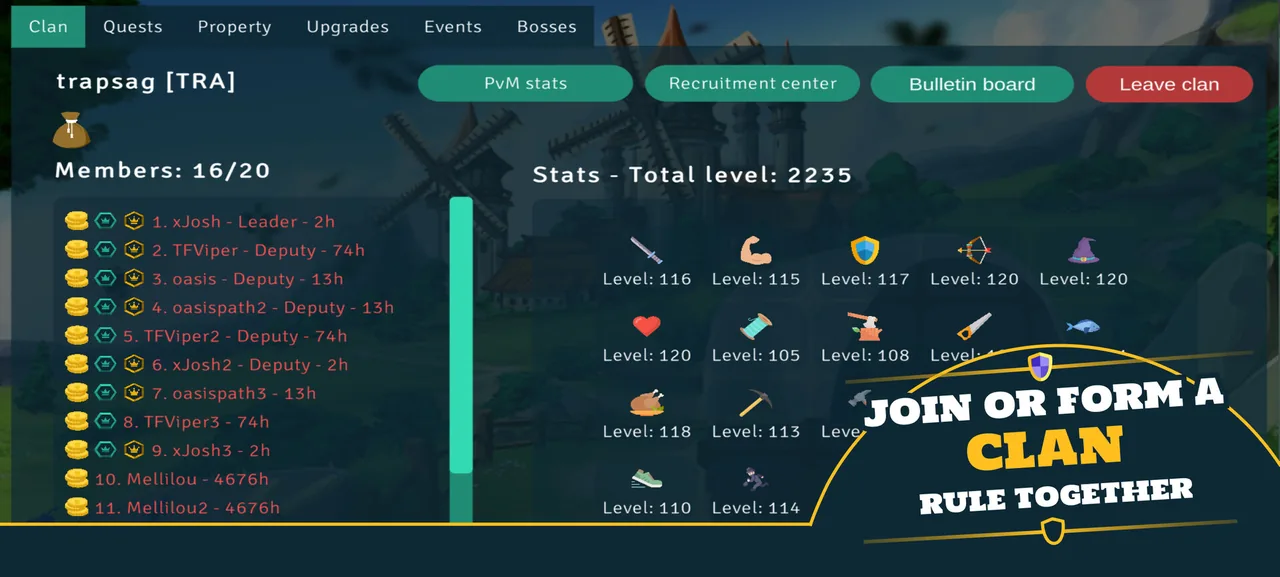
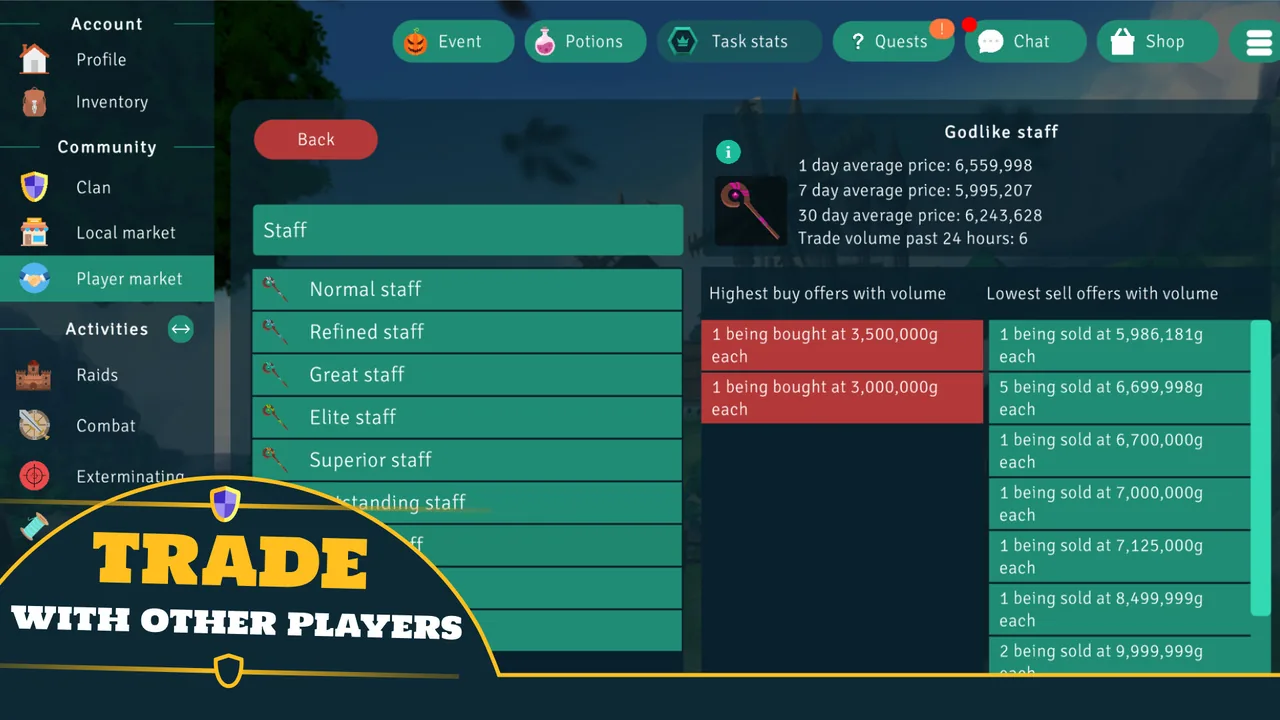
- A genuine MMO layer sits on top of the idle-skilling core: a player-driven economy, trading, clans, PvE content and cross-platform play, distinguishing it from most single-player idle RPGs in its genre
The short version
Idle Clans takes the RuneScape-and-Melvor-Idle school of skill-training progression and adds the one thing neither of those games' idle-focused entries really offers: a genuine multiplayer economy, with clans, trading and PvE content layered on top of the familiar skill-grinding core. That's a real point of difference, and Isam Games has kept the game actively updated — new skills, seasonal events, account system overhauls — well into its third year of Early Access. The trade-offs are the ones that show up whenever a genre built around uncomplicated, low-friction progression gets a free-to-play monetisation layer bolted on: some skills are reportedly locked behind paid unlocks, cosmetic pricing draws real criticism, and a recurring complaint holds that only being able to run one activity at a time asks for more constant attention than the word "idle" implies.
Biggest strengths
- The multiplayer economy — trading, a player-driven market, clans, cross-platform play — is a genuine structural advantage over most idle RPGs in the genre, which are almost universally single-player
- Content updates have continued steadily well into a third year of Early Access, including a new skill (Invocation) and an account-system overhaul in 2026
- The core skill-training loop is directly and openly descended from RuneScape's design, which is exactly what draws its target audience in the first place
Biggest weaknesses
- Community sources describe some skills as locked behind paid unlocks rather than earnable purely through play, a real monetisation concern for a genre whose appeal rests on accessible, low-friction progression
- Cosmetic shop pricing draws specific criticism as high relative to what it actually offers
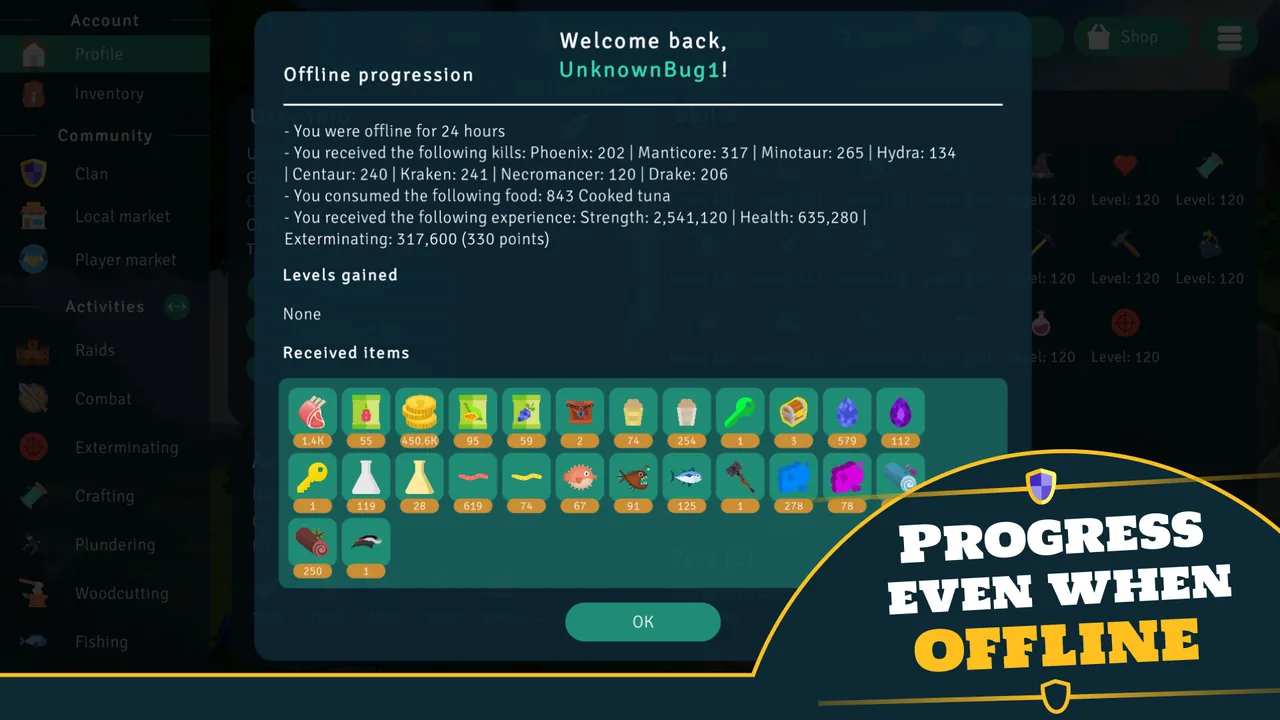
- A recurring complaint holds that the game only allows one activity at a time and demands more constant check-in and time management than the "idle" framing suggests it should
Who it's for: RuneScape and Melvor Idle fans who specifically want the social and economic layer a solo idle RPG can't offer — trading, clans, a shared world — and are willing to accept a free-to-play monetisation model in exchange.
Our recommendation: Worth trying since it costs nothing, but go in with realistic expectations about both the "idle" framing and the free-to-play systems layered underneath it; this is closer to a live-service MMO with idle mechanics than a pure hands-off idler.
7 / 10
RuneScape's skill-training loop has spawned a whole small genre of idle RPGs built around the same basic pleasure: pick an activity, watch a skill level climb, spend the proceeds on gear or unlocks. Melvor Idle is the best-known single-player expression of that lineage. Idle Clans takes the same foundation and adds the one thing a solo idler structurally can't offer — a real multiplayer world, with a player-driven economy, trading, clans and shared PvE content sitting on top of the familiar skill-grinding core. Nearly three and a half years into Early Access, that distinction is still the clearest reason to choose Idle Clans over its single-player cousins.
What the multiplayer layer actually adds
The core skilling loop will be instantly familiar to anyone who's played RuneScape, Melvor Idle, or any of their genre-mates: train combat and gathering skills, refine resources, craft equipment, repeat. Idle Clans builds a genuine economy around that loop rather than leaving it purely personal — a player-driven market for trading, clan structures for grouping with other players, and cooperative PvE content that a solo idle RPG has no mechanism to offer at all. For players specifically drawn to RuneScape's social dimension as much as its skill trees, that's a real and distinctive pitch, and it's the single clearest thing separating Idle Clans from the rest of its genre.
The developer's ongoing commitment backs up the pitch. Isam Games has publicly set expectations for a two-to-three-year Early Access period rather than pretending the game is closer to finished than it is, and the update cadence through 2026 supports that framing: a new Invocation skill and broader content expansion in March, an account management and authentication overhaul in April, combat loadout and clan vault improvements in June, plus recurring seasonal bonus-experience events. This reads as a live-service game genuinely being built out over time rather than one coasting on its initial pitch.
Where the free-to-play model creates friction
The trouble spots are the ones this genre runs into whenever a monetisation layer gets built on top of a design whose whole appeal is supposed to be low-friction accessibility. Community sources describe some skills as locked behind paid unlocks rather than earnable purely through play — a real point of tension for a genre whose core promise is usually "everything is available to everyone, just at different speeds." Cosmetic shop pricing draws specific criticism as disproportionate to what it actually delivers, a common complaint in free-to-play live-service games but a notable one here given how closely the base game otherwise mirrors free, ad-free single-player idlers like Melvor.
A second recurring complaint cuts more directly at the game's genre identity: players report being limited to a single active task at a time, with the resulting need for frequent check-ins described as "painful and annoying" rather than the low-touch experience the word "idle" usually promises. It's a specific, structural design choice rather than a bug, and it's worth knowing before going in with expectations shaped by more purely hands-off entries in the genre.
There's also a fair, direct criticism worth repeating honestly: some players describe Idle Clans as closely replicating RuneScape and Melvor Idle's systems without contributing much distinct content beyond the multiplayer economy itself. Whether that reads as a fair critique or simply an accurate description of "genre-faithful by design" probably depends on how much a given player specifically wants the social layer versus wanting genuine mechanical novelty — but it's a recurring enough observation to flag rather than gloss over.
A note on this review's sourcing
Steam's own review-text API returned no accessible review text for Idle Clans at the time of writing, despite an aggregate total of over 1,600 ratings sitting at a Mostly Positive score — a gap this review encountered on several free-to-play titles today and is worth being transparent about rather than papering over. The community complaints and praise described above are drawn from public discussion elsewhere rather than quoted Steam reviews directly, and should be weighed with that in mind: real, sourced signal, but not the same kind of large first-party sample this publication typically relies on.
Where this leaves a buyer
Idle Clans costs nothing to try, which lowers the stakes on a purchase decision considerably — there's no real reason not to install it and see whether the social and economic layer clicks. Players coming specifically for RuneScape's community dimension, rather than just its skill trees, are the ones most likely to find something here that Melvor Idle and its single-player peers genuinely can't offer. Anyone expecting a purely hands-off, ad-free experience closer to those single-player idlers should go in aware that Idle Clans' free-to-play systems and single-task limitation ask more of a player's ongoing attention and wallet than the genre's purest examples do.
Pros and cons
Pros
- The multiplayer economy — trading, a player-driven market, clans, cross-platform play — is a genuine structural advantage over most idle RPGs in the genre, which are almost universally single-player
- Content updates have continued steadily well into a third year of Early Access, including a new skill (Invocation) and an account-system overhaul in 2026
- The core skill-training loop is directly and openly descended from RuneScape's design, which is exactly what draws its target audience in the first place
- Free to install with no mandatory spend gating the core experience
Cons
- Community sources describe some skills as locked behind paid unlocks rather than earnable purely through play, a real monetisation concern for a genre whose appeal rests on accessible, low-friction progression
- Cosmetic shop pricing draws specific criticism as high relative to what it actually offers
- A recurring complaint holds that the game only allows one activity at a time and demands more constant check-in and time management than the "idle" framing suggests it should
- Some players describe the game as closely replicating RuneScape and Melvor Idle's systems without adding enough distinct content of its own beyond the multiplayer layer
- Community sources report intermittent connection issues, with the game sometimes failing to establish a connection despite a working internet connection
Screenshots
-
Idle ClansImage: Isam Games via Steam -
Idle ClansImage: Isam Games via Steam -
Idle ClansImage: Isam Games via Steam -
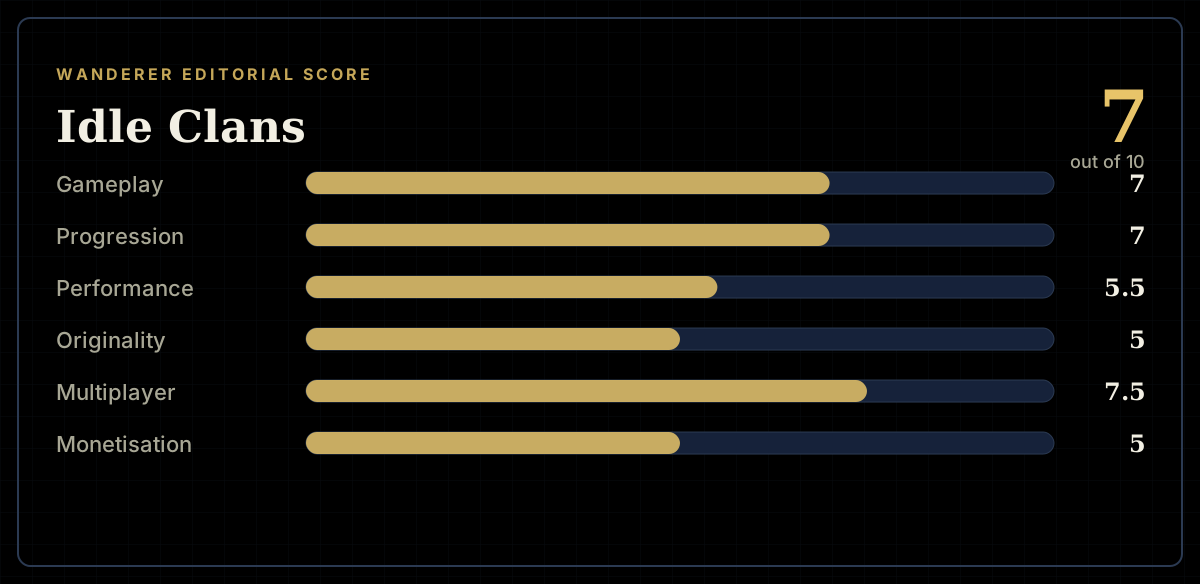
How the review scores each part of the gameWanderer Editorial -
The short versionWanderer Editorial