
Game review
Milky Way Idle
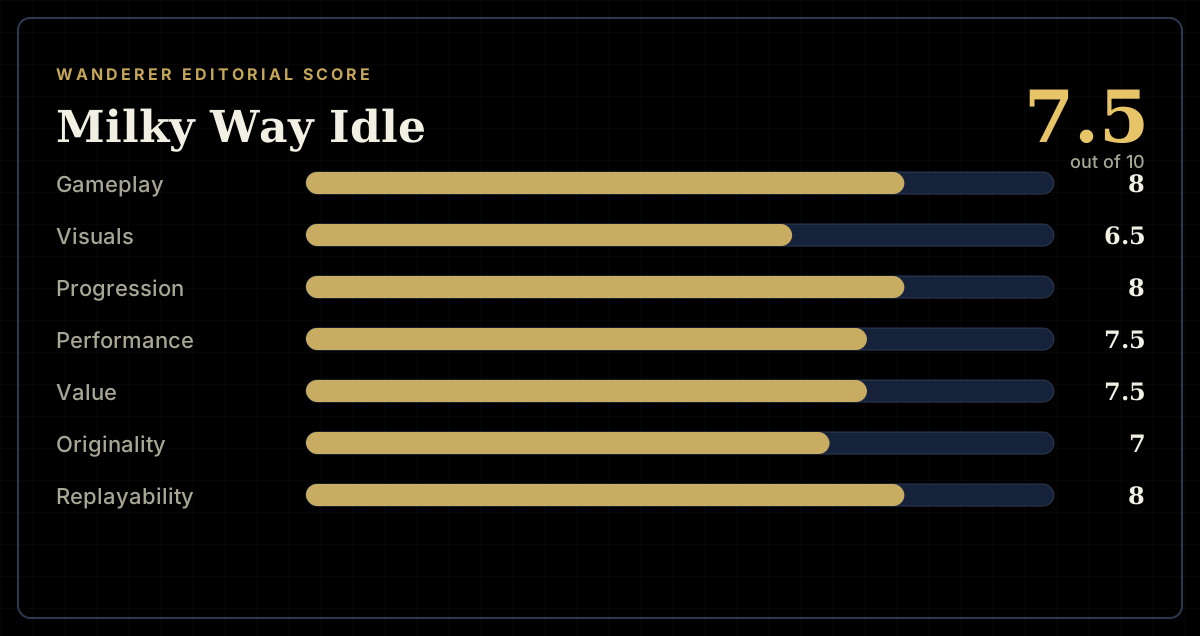
7.5 / 10
- Developer
- cheze
- Publisher
- cheze
- Released
- 6 March 2025
- Platforms
- Windows, Browser
- Genre
- Multiplayer Idle RPG
- Monetisation
- Free to play. Premium currency (Cowbells) buys cosmetics plus convenience — extra action queue slots, longer offline progress, more market listings and task slots. Cowbells are also tradeable for in-game gold.
- Players
- Massively multiplayer — shared marketplace, guilds, party dungeons, leaderboards
The short version
Milky Way Idle takes the RuneScape skilling formula and does the thing most idle RPGs are too cautious to try: puts a real, player-run economy underneath it. Seventeen skills feed a marketplace where what you gather and what you craft actually matters to other people, and guilds turn what could have been a solitary spreadsheet into something worth logging in for.
It's rough where solo-developed games are usually rough — the interface is function over form, and the free-to-play convenience purchases sit close enough to the genre's core loop that a wallet genuinely buys you more queued time. Neither is close to a dealbreaker.
Biggest strengths
- Seventeen skills across gathering, crafting and combat feed a marketplace with real supply and demand, not a fake internal shop
- Guilds run their own weekly trials, buildings and shrine buffs — genuinely deep for a system layered on top of an idle game
- Ironcow mode gives self-sufficiency players a real solo-economy challenge rather than just turning off a menu
Biggest weaknesses
- The interface reads as a spreadsheet with icons rather than a designed game screen
- Convenience purchases (extra action queue slots, longer offline progress, more market listings) sit close enough to the core loop that spending money visibly speeds up how much of the game you can run at once
- Still Early Access, and a widely discussed moderation dispute in the game's Chinese-speaking community has left the all-language Steam rating far below the English-language one
Who it's for: RuneScape skillers who want the multiplayer economy without the combat grind attached, and anyone who likes an idle game where other players' choices actually move prices around.
Our recommendation: Free, no real cost to trying it, and the marketplace alone makes it worth an evening to see whether a live economy changes how you feel about the genre. Join a guild early — it's where the game's best systems live.
7.5 / 10
Somewhere between "RuneScape" and "spreadsheet" sits Milky Way Idle, a solo-developed browser and Windows game about cows in space who train seventeen skills, fight monsters on a timer, and sell each other cheese. Say the theming out loud and it sounds like a joke. Play it for an hour and the joke stops being the point — this is a serious skilling game wearing a silly coat of paint, and the two things don't get in each other's way nearly as often as you'd expect.
Seventeen skills, one economy
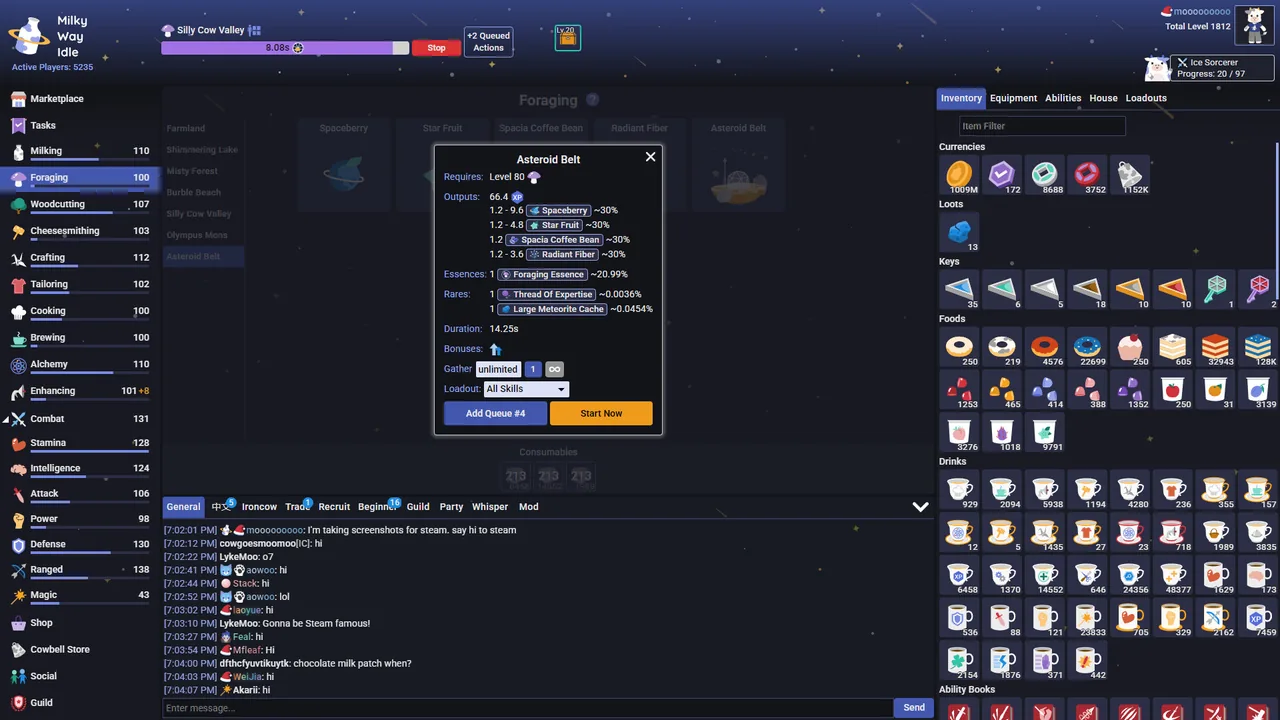
Ten non-combat skills — Milking, Foraging, Woodcutting, Cheesesmithing, Crafting, Tailoring, Cooking, Brewing, Alchemy and Enhancing — sit alongside a combat system built from Attack, Melee, Defense, Ranged, Magic, Intelligence and Stamina. None of that is unusual for the genre on its own. What makes it work is the marketplace sitting underneath all of it: a real player-to-player auction system with a 2% transaction tax on most goods, scaled bid increments that keep price discovery sane at both ends of the economy, and enough traffic that what you choose to gather actually has a price that moves.
That single design choice changes the shape of every other system. Woodcutting isn't just a bar filling up — it's a bet on what the market wants this week. Crafting isn't converting junk into slightly-better junk in a vacuum; it's deciding whether it's worth your time compared to just buying the finished item from someone who specialises in it. Idle games rarely commit to a real economy because a real economy is genuinely harder to balance than a fake one. Milky Way Idle commits, and it's the best thing about the game.
Guilds are where it gets ambitious
The guild system goes further than almost anything comparable in the genre. Weekly Guild Trials hand out randomised skilling and combat challenges that run alongside your normal queued actions using a snapshot of your loadout, so joining a trial doesn't cost you your regular progress. Clearing tiers earns Guild Points and Guild Tokens, which fund 23 upgradable Guild Buildings and five Shrines offering permanent personal buffs — buffs that stay with your character but are capped by, and inactive without, your current guild's shrine levels.
It's a lot of interlocking systems for something bolted onto an idle game, and it's clearly where a solo developer chose to spend their ambition. A guild worth its name turns Milky Way Idle from a solitary numbers-go-up game into something with a reason to log in on a schedule, which is the harder trick idle games usually don't attempt.
Ironcow, and the honest version of hardcore mode
Players who want a real challenge can commit to Ironcow status — a self-imposed restriction that cuts off marketplace access almost entirely, leaving you to gather and craft everything your character needs on its own. Guilds can commit permanently to Standard or Ironcow recruitment too, which means the choice isn't just personal, it can define an entire community's play style. It's a well-executed version of the "ironman" idea RuneScape players will recognise immediately, and unlike some genre imitators, it isn't a marketing label — it meaningfully changes how the economy-driven half of the game plays.
Where the money question gets honest
Milky Way Idle is free, and nothing that matters to actually experiencing the game is locked away. The Cowbell Store sells cosmetics — avatar backgrounds, borders, chat icons, equipment- themed outfits — which is the least controversial kind of monetisation there is. But Cowbells also buy extra action queue slots, additional offline progress hours beyond the default ten, and more marketplace listing slots, and those are not cosmetic. They're the exact resources this genre is built from: how much you can queue, how long you can be away, how much you can sell at once.
None of it is pay-to-win in the combat sense — nobody is buying stronger gear directly — but it is pay-for-throughput, and throughput is what an idle game actually sells you as fun. Cowbells are tradeable for in-game gold too, which means a wealthy free player can eventually buy the same convenience a paying one gets immediately. That's a fairer arrangement than a straight paywall, and it's worth knowing about going in rather than discovering three weeks later when a competitor's queue is visibly longer than yours.
The rough edges
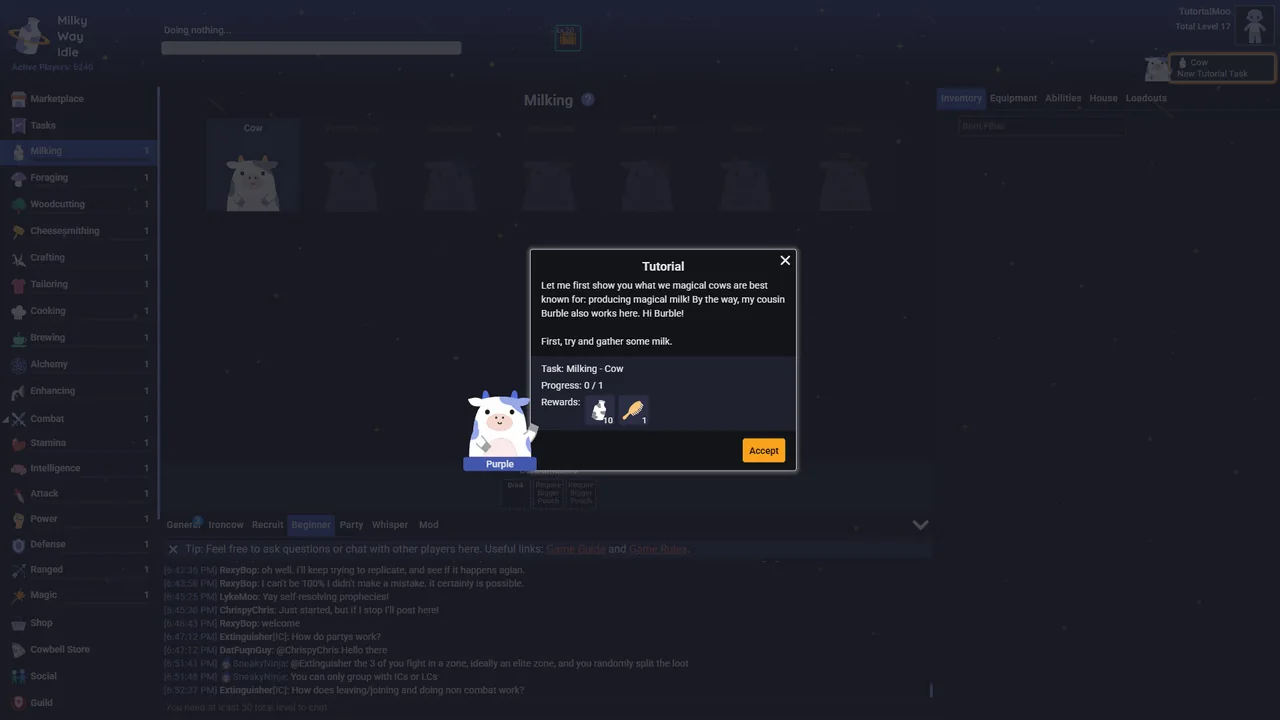
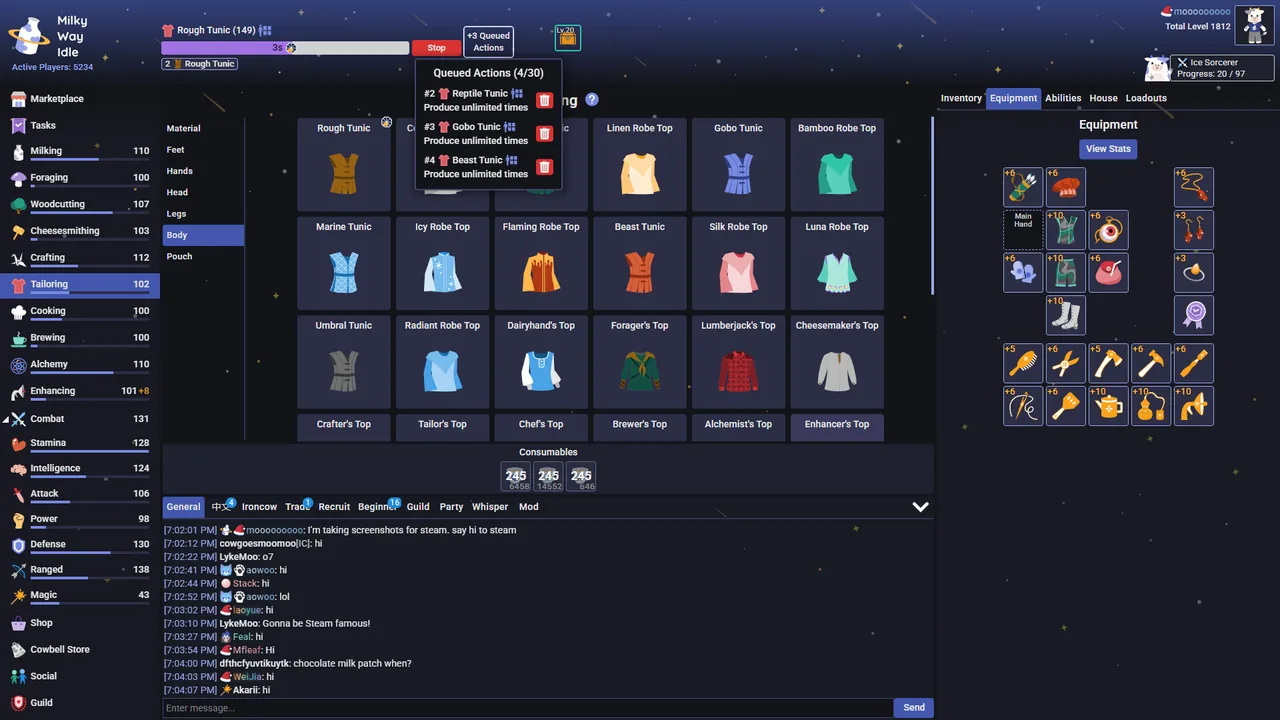
The interface is the game's clearest weakness. This reads like a tool built by someone who understands the systems intimately and designed the screens around getting information onto them rather than around a new player's first ten minutes. It's learnable, and the numbers-first crowd this game is aimed at will likely never mind, but it's not going to win anyone over on looks.
The Steam review picture needs context too. English-language reviews sit at 71% positive — a healthy Early Access number — but the all-language total drops to 47%. That gap traces back to a widely discussed moderation dispute in the game's Chinese-speaking community, involving chat bans and accusations of overreach that spilled into a wave of negative reviews. It's a real governance and communication problem worth knowing about before you join, but it isn't a verdict on the systems this review is actually scoring — the skilling, the economy and the guilds underneath the drama are sound.
Final verdict
Milky Way Idle is one of the more interesting things happening in the idle-RPG space precisely because it refuses to fake its economy. Seventeen skills that feed a marketplace people genuinely use, guild systems with real depth, and an honest hardcore mode add up to a game that rewards the kind of player who actually thinks about supply and demand rather than just clicking the biggest number.
It doesn't score higher because the convenience monetisation sits closer to the core loop than it should for a genre built on trust around offline time, and because the interface asks a lot of patience before its systems start paying that patience back. Try the free version, find a guild in your first week, and judge it on the marketplace rather than the menus.
Price and monetisation checked 29 July 2026.
If a shared, persistent world with its own economy sounds appealing but you'd rather it happen on one continuous road than across seventeen separate skill screens, Wanderer is built around the same basic promise.
Pros and cons
Pros
- Seventeen skills across gathering, crafting and combat feed a marketplace with real supply and demand, not a fake internal shop
- Guilds run their own weekly trials, buildings and shrine buffs — genuinely deep for a system layered on top of an idle game
- Ironcow mode gives self-sufficiency players a real solo-economy challenge rather than just turning off a menu
- Chat auto-translation and seven added languages make the shared economy usable across a genuinely international player base
- Free version is the whole game — nothing meaningful is locked behind a wall
Cons
- The interface reads as a spreadsheet with icons rather than a designed game screen
- Convenience purchases (extra action queue slots, longer offline progress, more market listings) sit close enough to the core loop that spending money visibly speeds up how much of the game you can run at once
- Still Early Access, and a widely discussed moderation dispute in the game's Chinese-speaking community has left the all-language Steam rating far below the English-language one
- No controller support and no mobile app — browser or Windows only
Screenshots
-
Milky Way IdleImage: cheze via Steam -
Milky Way IdleImage: cheze via Steam -
Milky Way IdleImage: cheze via Steam -
How the review scores each part of the gameWanderer Editorial -
The short versionWanderer Editorial