
Game review
Shakes and Fidget
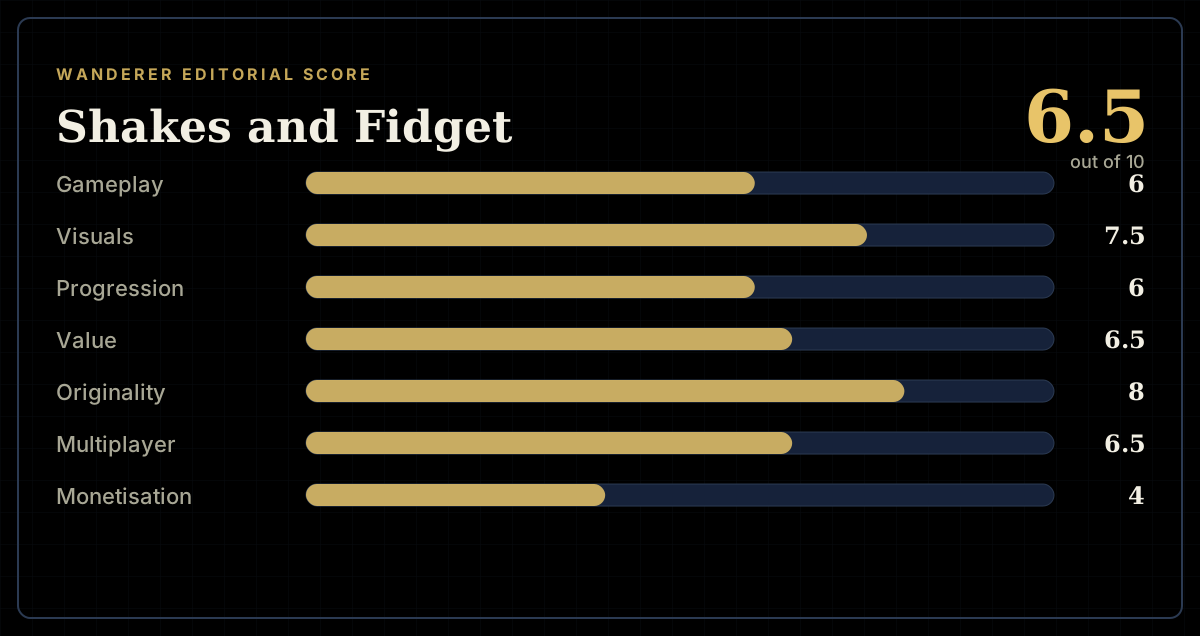
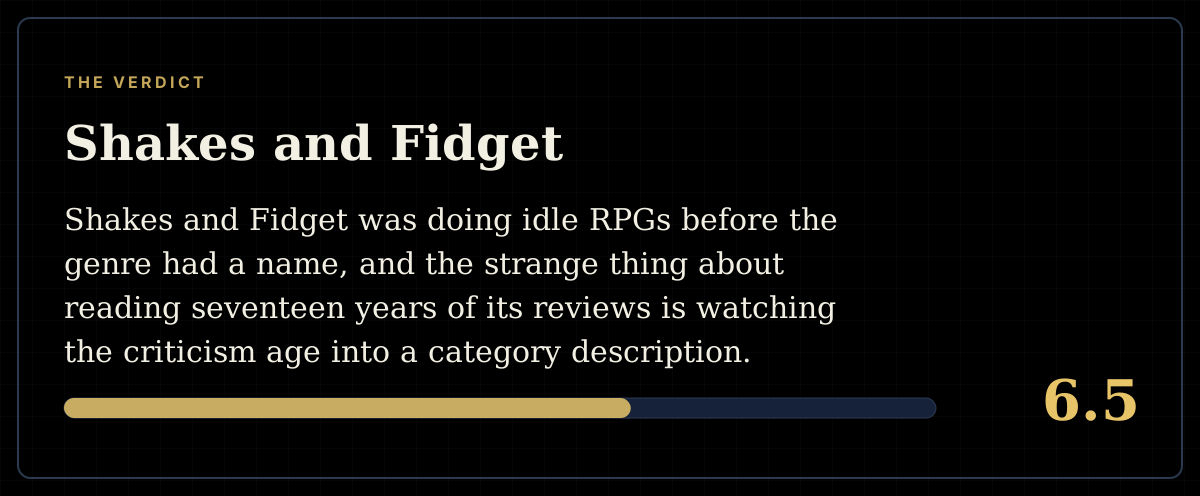
6.5 / 10
- Developer
- Playa Games GmbH
- Publisher
- Playa Games GmbH
- Released
- 24 February 2016
- Platforms
- Windows, macOS, Browser, iOS, Android
- Genre
- Idle RPG
- Monetisation
- Free to play with in-app purchases. Mushrooms are the premium currency, used to skip quest timers, extend the daily quest allowance and reroll gear.
- Players
- Persistent servers with guilds, arena PvP, world bosses and a Hall of Fame ladder; always online
The short version
Shakes and Fidget was doing idle RPGs before the genre had a name, and the strange thing about reading seventeen years of its reviews is watching the criticism age into a category description. "You accept a quest, wait for a timer, an RNG battle happens" is the top complaint from its 2016 Steam launch. It is also, more or less, the design document for every idle RPG that followed.
What holds up is the comic art and the writing, which are genuinely funny and still better drawn than most of the genre. What doesn't is the economy. Money buys time here — skipped timers, more daily quests, more rerolls — and the game manufactures reasons for that to feel urgent by opening a brand-new world every few weeks, each one a fresh leaderboard race where everyone starts level one and the fastest climb is the funded one.
Biggest strengths
- Comic-book art and genuinely funny fantasy satire that still stand out seventeen years later
- Remarkably well maintained for its age, with roughly monthly updates through 2026 adding world bosses, the Hellevator and an arena rework
- Guilds give the idle loop a social spine that most incremental games never manage
Biggest weaknesses
- Money buys progression speed directly, and the endless new-world launches exist to make that speed feel urgent
- The moment-to-moment game is thin — pick a quest, wait, watch an automated battle resolve
- English-language sentiment is markedly weaker than the headline score, and reviewers have repeatedly alleged premium currency was offered in exchange for positive reviews
Who it's for: Idle-RPG players curious about where the genre came from, and anyone who wants a low-attention fantasy game with real personality to check in on twice a day. Best enjoyed on an established server where the ladder has settled and nobody is racing.
Our recommendation: Worth a look because it's free and the writing earns a smile, but go in knowing what the loop is. Join an old world rather than a newly launched one — the new-world rush is exactly where the spending pressure is engineered to bite.
6.5 / 10
In April 2026, Shakes and Fidget opened a new world called EU27 and advertised it as "Back to the Roots" — a server where only the original three classes exist, warrior, mage and scout, the way things were when the game launched in 2009. Three months later it opened EU29. That's five new worlds in seven months, on a browser game old enough to drive.
Longevity like that deserves examining rather than dismissing, because plenty of better-designed games from 2009 are gone. And for anyone who plays idle RPGs, this one has an unusual claim: it was doing the format before the format had a name. Reading its Steam reviews in order is like watching a genre get invented and then get criticised for existing.
The loop, and why 2016 hated it
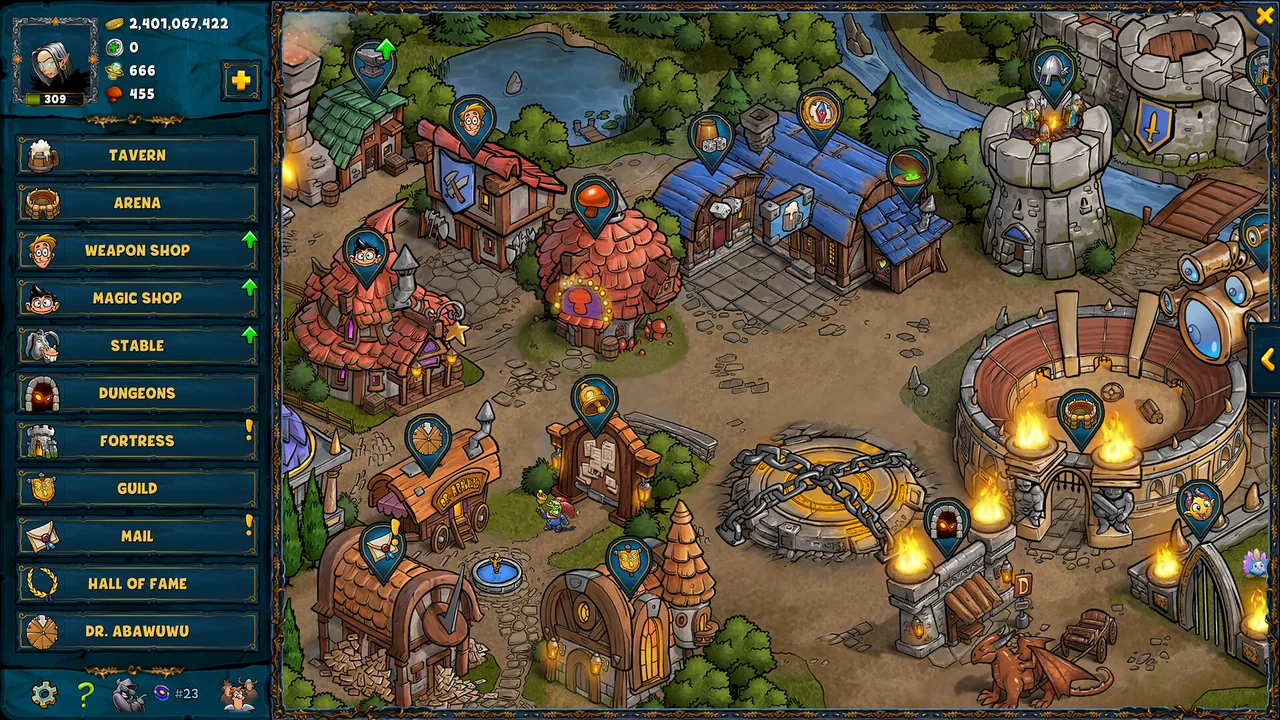
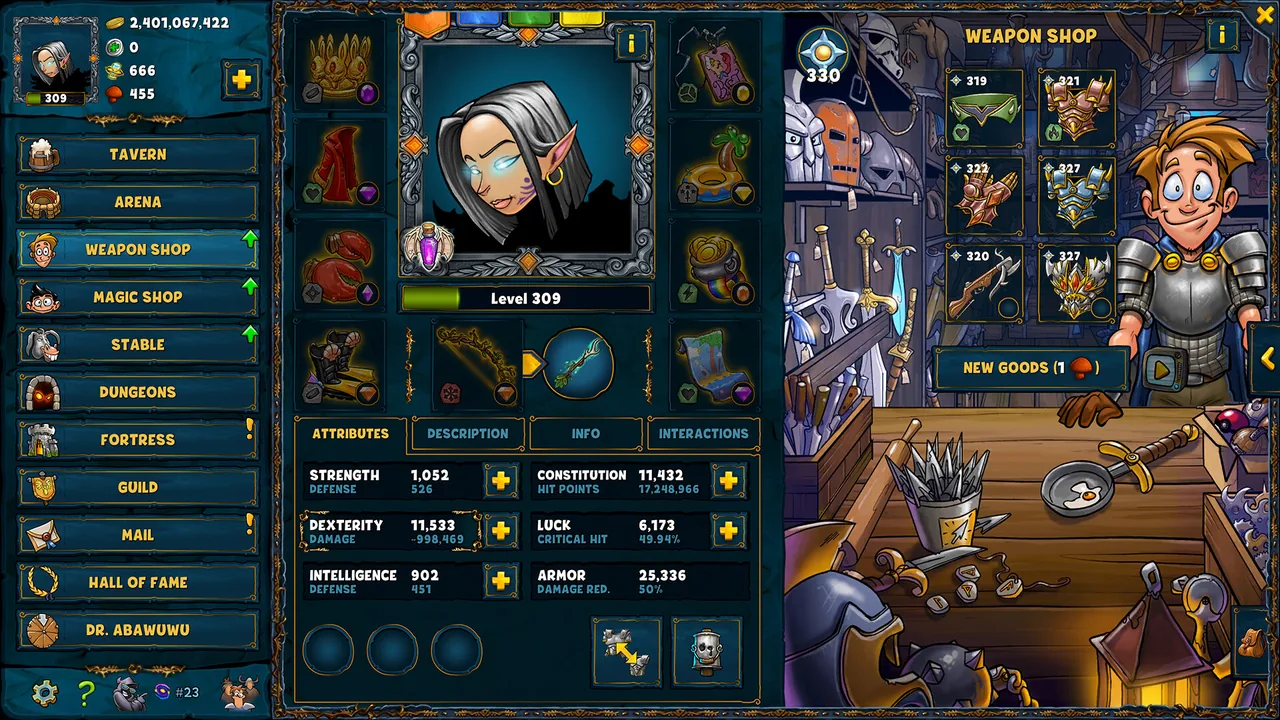
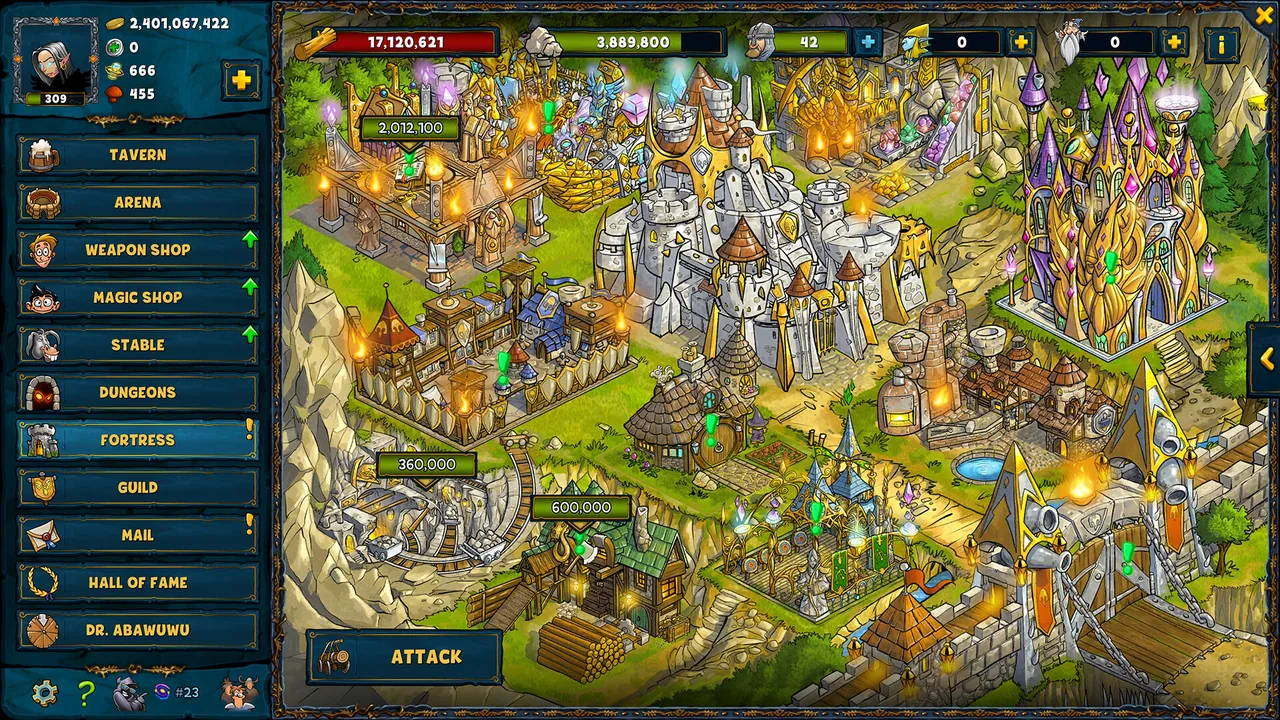
Here's the game. You make a comic-book hero, you pick a quest from a board, and the quest takes time — real time, counted down while you do something else. Then a battle resolves automatically, you get gold and experience, you buy better gear from a shop that restocks, and you climb a Hall of Fame ladder against real players on your server. There are guilds, an arena, dungeons, a fortress to build, pets to collect, and by now a long tail of systems with names like the Hellevator and the Library of Meticulousness.
When the Steam client arrived in 2016, the most-upvoted negative reviews were incredulous. "You accept a quest, wait for a defined amount of time — as in, you just wait, there is nothing to do — some RNG battle happens, a jingle sounds," reads one. Another christened it "the Loading Screen Simulation genre." A third, more thoughtfully, praised the art and then concluded there simply wasn't enough to do.
Ten years later those reviews read very differently, because that loop is now a genre with millions of players. Melvor Idle, Legends of Idleon and Idle Champions of the Forgotten Realms are all built on the same bargain — the game continues without you, and your job is deciding what it does rather than executing it. What Shakes and Fidget was doing in 2009 wasn't a failure to be a real RPG. It was an early, commercially successful version of a design most of this library's readers now specifically seek out.
That matters for reading its score. A large share of its negative reviews are category objections filed by people who bounced in under an hour — the median playtime across the hundred most-helpful English negatives is 15 hours, and a striking number sit below one. "I couldn't figure out what the fun part was supposed to be," writes a reviewer from August 2026, half an hour in. That's a fair personal reaction and a poor guide for anyone who already likes idle games.
The other negative reviews, which are the ones that count
Filter for people who stayed, and the complaint changes completely. It stops being "there's no game" and becomes "the game is a spending contest."
A reviewer with 8,596 hours logged — years of play, no longer spending — describes the machine plainly: new servers open regularly, streamers and their followers race for the top of the fresh leaderboard, and that race takes a lot of money. Another, at 1,486 hours in May 2026, needs four words: "pay to win hell." A 2017 reviewer did the arithmetic on buying enough mushrooms to run the maximum number of daily quests and decided against it. These are not people who misunderstood the genre. They mastered it and then objected to the till.
Both groups vote negative, and blending them produces a meaningless number. Separated, they say something coherent: the loop is fine if you like the loop, and the economy is the actual problem.
What money buys, precisely
Mushrooms are the premium currency, and what they purchase is time. They skip quest timers, extend how many quests you can run in a day, and reroll gear and shop stock. Nothing sold makes your character stronger than a free player's character can ever be — this is not a shop full of exclusive legendary swords.
But "pay to progress" and "pay to win" collapse into each other the moment progress is competitive, and here it is. The Hall of Fame is a ranked ladder against real people on your server. The arena is PvP. Guild standing depends on member level. When two players start on the same day and one can run several times as many quests per day as the other, the ladder isn't measuring play, it's measuring budget — and the game publishes the result as a leaderboard.
The new-world treadmill is what turns that from a background fact into a business model. Every fresh server resets everyone to level one, which is genuinely the most fun this game offers and also the only moment when spending decisively changes your position. Five of those launched between January and July 2026, each promoted for weeks in advance, each handing out 25 mushrooms just for linking a character to your account before launch. It's an elegant piece of design, and the elegance is entirely in the monetisation rather than the game.
I'd score it more harshly than the average free-to-play RPG for that reason. It's less nakedly extractive than Raid: Shadow Legends — there are no gacha pulls for characters, and the core loop is never actually blocked — but it's structured so the thing you most want to do, race a fresh world, is the thing money most affects.
About that 92%
The headline figure is 92.1% positive across 36,833 reviews, which would be excellent. Two things complicate it.
First, the language split. In English the game sits at 84.1% of 6,430 reviews, eight points below its all-language score, and the 100 most recent English reviews are only 75% positive despite a healthy 86-hour median playtime. This is a German studio with a large European following, and the enthusiasm is unevenly distributed. English-speaking readers should calibrate to the lower number.
Second, and more awkwardly: reviewers have alleged for years that the game offered mushrooms in exchange for positive Steam reviews. "Don't be fooled by positive reviews, they offer free premium currency for it," reads one from 2022 with nearly 200 helpful votes; a 2017 review with 151 votes says the same thing. I can't verify that this happened, or that anything like it happens now — Valve's rules prohibit rewarding reviews, and the claim comes from players rather than any documentation. It's worth reporting because it recurs across six years from unconnected accounts, and because it bears directly on how much weight to put on the percentage. Treat the number as soft either way.
Still being made, which is rarer than it sounds
Whatever else is true, this game is not abandonware collecting revenue. The changelogs run 29.5 in March 2026, 29.7 at the end of that month, 30.000 in April, 30.500 in May, 30.700 in June, 30.800 in July — adding world-boss reworks based on player surveys, Hellevator changes, expedition and black market adjustments, eighteen new achievements, and an arena manager rework that went to a public beta server for feedback first. Producer's notes get published. That's a working live team, not a skeleton crew.
The art has aged well too. The comic style was distinctive in 2009 and remains one of the genre's better-looking games — reviewers who dislike everything else still stop to praise the loading screens. The humour is broad fantasy satire, more affectionate than sharp, and it lands often enough to give the numbers some personality. Compared with the aggressively plain presentation of most incremental games, that's not nothing.
One caution worth flagging: there are occasional reports of players losing access to long-running accounts after login or platform changes, including one this June describing years of mobile progress becoming unreachable. It's a small number of reports, not a pattern I'd call systemic, but on a game where progress is measured in years, know which credentials your account is actually tied to.
The verdict
Shakes and Fidget gets a 6.5 — a game with real historical importance and real charm, held back by an economy pointed straight at its most compelling moment.
Take it as a curiosity and it's a good afternoon: free, funny, nicely drawn, and a working museum piece showing where every idle RPG you play now came from. Take it as a long-term home and the maths gets less friendly, because the ladders that give it structure are the ladders money climbs fastest. The seventeen-year update record is genuinely impressive and the writing still earns its jokes, but the modern genre it helped create has since produced games that respect a player's time and wallet considerably more — Melvor Idle chief among them.
If you're going to try it, and it costs nothing to try, pick an established world rather than the next shiny launch. The old servers are where the game is a relaxed fantasy sitcom you check twice a day. The new ones are where it's a race, and races here are won by the people who bought better shoes.
That trade — progress you don't have to sit and watch, without a meter deciding how much of it you get — is roughly what Wanderer is built around, if the loop appeals but the leaderboard economics don't.
Pros and cons
Pros
- Comic-book art and genuinely funny fantasy satire that still stand out seventeen years later
- Remarkably well maintained for its age, with roughly monthly updates through 2026 adding world bosses, the Hellevator and an arena rework
- Guilds give the idle loop a social spine that most incremental games never manage
- Costs nothing to play and never blocks the core loop behind a paywall
- Runs anywhere — browser, Steam, phone — on one shared account and server
Cons
- Money buys progression speed directly, and the endless new-world launches exist to make that speed feel urgent
- The moment-to-moment game is thin — pick a quest, wait, watch an automated battle resolve
- English-language sentiment is markedly weaker than the headline score, and reviewers have repeatedly alleged premium currency was offered in exchange for positive reviews
- Competitive standing on a fresh server is effectively a spending contest between funded players
- Occasional reports of accounts and years of progress becoming inaccessible after login changes
Screenshots
-
Shakes and FidgetImage: Playa Games GmbH via Steam -
Shakes and FidgetImage: Playa Games GmbH via Steam -
Shakes and FidgetImage: Playa Games GmbH via Steam -
How the review scores each part of the gameWanderer Editorial -
The short versionWanderer Editorial