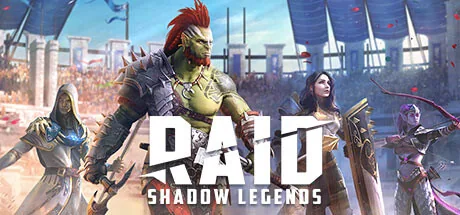
Game review
Raid: Shadow Legends
6.5 / 10
- Developer
- Plarium Global Ltd
- Publisher
- Plarium Global Ltd (a Modern Times Group AB studio since February 2025)
- Released
- 4 July 2018
- Platforms
- iOS, Android, Windows
- Genre
- Turn-Based Collection RPG
- Monetisation
- Free to play with a shard-based champion gacha, an energy stamina cap on Campaign and Dungeon farming, direct IAP bundles, recurring "Raid Cards" subscriptions and a rotating pass/event-shop layer
- Players
- Clan-based Clan Boss and Hydra Clash raids, asynchronous Classic and Tag Team Arena ladders, and real-time Live Arena PvP
The short version
Strip away seven years of sponsorship jokes and Raid: Shadow Legends is a turn-based collection RPG whose gear system is genuinely one of the deeper item-optimisation loops on mobile — six equipment slots, dozens of set bonuses and a substat roll system that rewards real theorycrafting. The problem was never that it's a bad game underneath the memes. It's that the energy bar, the shard economy and the sheer number of overlapping currencies are built to make that good game take as long as possible to actually play.
Biggest strengths
- The six-slot gear system's substat rolls and dozens of set bonuses give team-building a real optimisation puzzle rather than just a bigger-number contest
- Champion rank-up consumes any matching-rarity champion or filler "Chicken" item as fodder instead of locking upgrades behind duplicates of the exact hero, a real point of difference from rivals that hoard specific-hero shards
- Plarium publishes its base shard odds directly (16% Epic from Ancient and Void Shards, 1% Legendary from the same, 12% from Sacred Shards), so the worst-case math is calculable rather than hidden behind community guesswork
Biggest weaknesses
- The energy cap on Campaign and Dungeon stages is the game's real progression wall, and it sits underneath almost every source of gear, XP and shards a free player needs
- Steam's own userbase currently rates the PC build "Mixed" at roughly 61% positive across 2,695 reviews, a noticeably rougher split than the mobile storefronts show
- The interface carries seven years of bolted-on currencies, banners and event panels, and it reads cluttered even to players who already know the genre
Who it's for: Players who like number-crunching gear optimisation and turn-based team-building more than they like fast sessions, and who can treat Raid as a fifteen-minutes-a-day check-in rather than something to binge. A poor fit for anyone chasing competitive PvP without a multi-year spending history, or anyone who wants a mobile RPG's interface to feel modern.
Our recommendation: Worth trying free for the campaign, the early Dungeons and the gear system itself, all of which a patient non-paying player can genuinely engage with. Stay realistic about the ceiling — the top of Live Arena and the deepest Doom Tower floors are not built for free accounts, and the game will ask you to spend long before it forces you to.
6.5 / 10
The joke isn't the review
Raid: Shadow Legends has the most parodied sponsorship history in mobile gaming — the wall of YouTube pre-rolls, the Ronda Rousey trailers, the running gag that every gaming channel on the internet has been paid to read the same script. That reputation tells you nothing about whether the game underneath is any good, and treating it as the whole story is lazy. Millions of people are still logging into Raid seven years after launch, Plarium's own storefront listing puts the roster past 800 champions, and a game does not survive that long, in a genre that eats its own tail every eighteen months, purely on ad spend. Somewhere under the memes is a system that keeps people opening the app. The question worth answering is what that system actually is, and what it costs to engage with honestly.
The gear is the game
Raid's real design centre isn't the champions, it's the six-slot artifact system attached to them: Weapon, Helmet, Shield, Gauntlets, Chestplate and Boots, each carrying a main stat and up to four substats that roll and reroll as a piece levels toward its cap. Some slots have a fixed main stat, others let you chase Crit Rate, Crit Damage, Accuracy or Resistance on a flexible piece, and every artifact belongs to one of several dozen set types — Life, Offense, Speed, Critical Damage and more specialised sets like Cruel, Stalwart Defense or Frost — that only pay off when you land the full bonus across two, four or six pieces at once. That's a genuinely deep optimisation space, closer to an ARPG's itemisation than most turn-based gacha RPGs bother with, and it's where the vast majority of a long-term player's resources actually go. Silver, XP brews, gear-enhancement scrolls and glyphs all funnel into gear rather than champions, which means the interesting decisions in Raid happen in the equipment screen far more than in the summon screen.
The champion side of progression has one detail worth flagging on its own: rank-up, the system that pushes a champion from one to six stars, consumes any champion of matching rarity as fodder — or a filler item called a Chicken — rather than requiring duplicates of that exact hero. Compare that to something like Idle Heroes, where a hero's entire ceiling is gated behind pulling that specific hero over and over for star-fusion material, or Legend of Mushroom's shard gacha with no visible pity counter at all. Raid decouples "which champions did I pull" from "which champions can I actually rank up," which is a meaningfully friendlier design than most of its competitors run, even if the gear grind sitting next to it is not.
Turn-based combat with real stakes on Speed
Combat runs on a straightforward turn-based structure with one genuinely load-bearing wrinkle: Speed is a live stat that determines how often a champion acts, not just where they sit in initiative order. A high-Speed team can effectively double-turn a slower boss before it moves once, and Speed-set gear becomes as fought-over as raw damage stats because it changes the shape of a fight rather than just its length. Skills carry cooldowns, buffs and debuffs stack in ways that matter against the harder Clan Boss and Doom Tower encounters, and building a team that can survive a one-shot mechanic by stripping buffs or applying the right shield at the right moment is a real skill floor, not dressing on top of an auto-battle button. It won't surprise anyone who's played AFK Journey's formation system or a turn-based JRPG, but it's executed with enough consistency across Raid's 800-plus roster that team-building rarely collapses into "whoever has the highest power score wins."
Where it falls short of AFK Journey specifically is presentation. Raid's animations are genuinely strong in isolated moments — skill effects and champion models still look sharp for a 2018 engine — but the UI wrapped around them hasn't had the kind of ground-up rework AFK Journey's storybook art direction represents. Seven years of added currencies, banners, event panels and notification badges sit stacked on the same core screens, and it shows.
The energy wall, precisely located
Every Campaign and Dungeon stage costs Energy, a capped resource that regenerates slowly and is the single hardest limiter on how much a free player can actually do in a day. Once the daily Energy allowance for pushing Campaign progress, farming Dungeon gear and clearing Faction Wars is spent, a free account is left with the activities that don't cost Energy — Clan Boss, Arena, Hydra Clash, daily login rewards — and then waiting. That's the real shape of Raid's progression wall: it isn't a paywall in front of a specific piece of content, it's a daily time-box on the activities that generate gear and XP, one that a subscription or an energy-refill purchase directly removes. The daily loop that survives underneath it — log in, clear what Energy allows, run the free-standing modes, check the Clan Boss timer — is real and completable without spending, but it's a slower, thinner version of the game than a paying account experiences, and Raid doesn't pretend otherwise.
What money actually buys
Plarium's own App Store listing shows direct IAP bundles running from under a dollar to roughly US$169.99, plus "Raid Cards" subscription tiers between roughly US$9.99 and US$49.99 (checked 1 August 2026). What that spending buys is, specifically: Energy refills that remove the daily time-box described above, premium currency that converts into shards or gear-enhancement material, and subscription passes that add a steady daily drip of resources on top of whatever free progress you're already making. None of that is a direct combat-stat purchase — you cannot buy a finished, ascended, perfectly-rolled artifact outright — but every one of those purchases compresses the time between "I have a good champion" and "I have a good champion with the gear to use it," and in a genre where gear is the actual bottleneck, that time compression is the product.
Whether that counts as pay-to-win depends on what you're measuring against. In the PvE ladder — Campaign, Dungeons, Faction Wars, the lower floors of Doom Tower — a patient free account can genuinely clear the content; it simply takes months where a spending account takes weeks. In Live Arena's top brackets and the deepest Doom Tower floors, the picture is worse: those brackets are dominated by accounts with years of accumulated spending, and there is no catch-up mechanic that lets a new free account contest them regardless of skill. TheGamer's description of Raid as "the epitome of pay to win" overstates the PvE half of that picture and understates how narrow the actually-closed-off content is. The honest version is: free progression is real but slow, and competitive PvP is not on the table without paying, which is a real advantage sold, on a specific and identifiable slice of the game, rather than the whole thing.
Plarium does at least publish its base shard odds rather than leaving them to community datamining — Ancient and Void Shards carry a 16% chance of an Epic champion and a 1% chance of Legendary; Sacred Shards jump that Legendary chance to 12%. Those are real, calculable numbers you can plan a shard-hoarding strategy around, which puts Raid ahead of gacha games that disclose nothing at all.
Seven years, one foundation
The Steam release in January 2024 — six years after Raid's original mobile launch — is a useful snapshot of how much has accumulated. A new player today doesn't start on a stripped-down 2018 experience; they start with all eight of Raid's current modes already unlocked and waiting, which is generous in one sense and overwhelming in another. Ownership has also moved during that run: Plarium was founded in Israel in 2009, spent 2017 through late 2024 as part of Australian gambling giant Aristocrat Leisure, and became a Modern Times Group studio when MTG's acquisition closed in February 2025 for an upfront US$620 million plus earn-outs. None of that changes what's on screen today, but it's worth knowing that the company behind Raid's next content roadmap is now a Swedish games group rather than a slot-machine manufacturer.
Player sentiment reflects a genuinely split audience rather than a uniformly hostile one. Google Play shows Raid sitting at roughly 4.6 stars across more than two million ratings and past 50 million installs — numbers that don't happen by accident. Steam tells a rougher story: the PC build currently sits at a "Mixed" rating, with roughly 61% of 2,695 reviews positive. That gap is worth taking seriously rather than picking whichever number flatters the game more — PC players tend to be more experienced with the genre's alternatives and less tolerant of a mobile-shaped interface stretched across a desktop monitor, and Raid's UI genuinely hasn't been rebuilt for that audience the way its content has been rebuilt for seven years of updates.
The verdict
Raid: Shadow Legends earns its long tail honestly: a genuinely deep gear-optimisation system, a Speed-driven combat layer that rewards real planning, and an endgame with more breadth than most of the genre bothers to build. It does not earn a higher score than that, because the systems wrapped around that core — the Energy cap, the stacked currencies, the cluttered seven-year-old interface and a competitive ceiling that is not reachable without sustained spending — are designed to slow the good game down, not showcase it. Players who enjoy long-horizon optimisation puzzles and don't need every session to feel fast will find something real here. Anyone hoping the meme reputation was covering up either a hidden masterpiece or an outright scam will find neither — just a solidly built collection RPG asking, politely but constantly, for your time or your money.
Readers who'd rather their progression kept moving without an Energy bar dictating the pace, even while they're away from the game, might find that balance more comfortable in Wanderer. For more on how this genre's economies compare, see Wanderer Editorial's reviews of Idle Heroes and its decade-old star-fusion system, AFK Journey and its leaderboard-driven monetisation, and Endless Frontier, another long-running mobile RPG now showing its age.
Pros and cons
Pros
- The six-slot gear system's substat rolls and dozens of set bonuses give team-building a real optimisation puzzle rather than just a bigger-number contest
- Champion rank-up consumes any matching-rarity champion or filler "Chicken" item as fodder instead of locking upgrades behind duplicates of the exact hero, a real point of difference from rivals that hoard specific-hero shards
- Plarium publishes its base shard odds directly (16% Epic from Ancient and Void Shards, 1% Legendary from the same, 12% from Sacred Shards), so the worst-case math is calculable rather than hidden behind community guesswork
- Clan Boss, Hydra Clash, Faction Wars and the rotating Doom Tower give the endgame genuine breadth beyond the campaign, unlike gacha RPGs that run dry on PvE content within a month
- Turn-based combat built around a Speed stat that directly controls turn frequency makes speed-tuning a real tactical layer, not just a stat to maximise blindly
Cons
- The energy cap on Campaign and Dungeon stages is the game's real progression wall, and it sits underneath almost every source of gear, XP and shards a free player needs
- Steam's own userbase currently rates the PC build "Mixed" at roughly 61% positive across 2,695 reviews, a noticeably rougher split than the mobile storefronts show
- The interface carries seven years of bolted-on currencies, banners and event panels, and it reads cluttered even to players who already know the genre
- Reaching a farmed, six-star, fully-ascended Legendary gear set for a single champion is realistically a months-long project for anyone not spending, and Raid never disguises that
- Live Arena's top brackets and the deepest Doom Tower floors are effectively closed to accounts without years of accumulated spending behind them
Screenshots
-
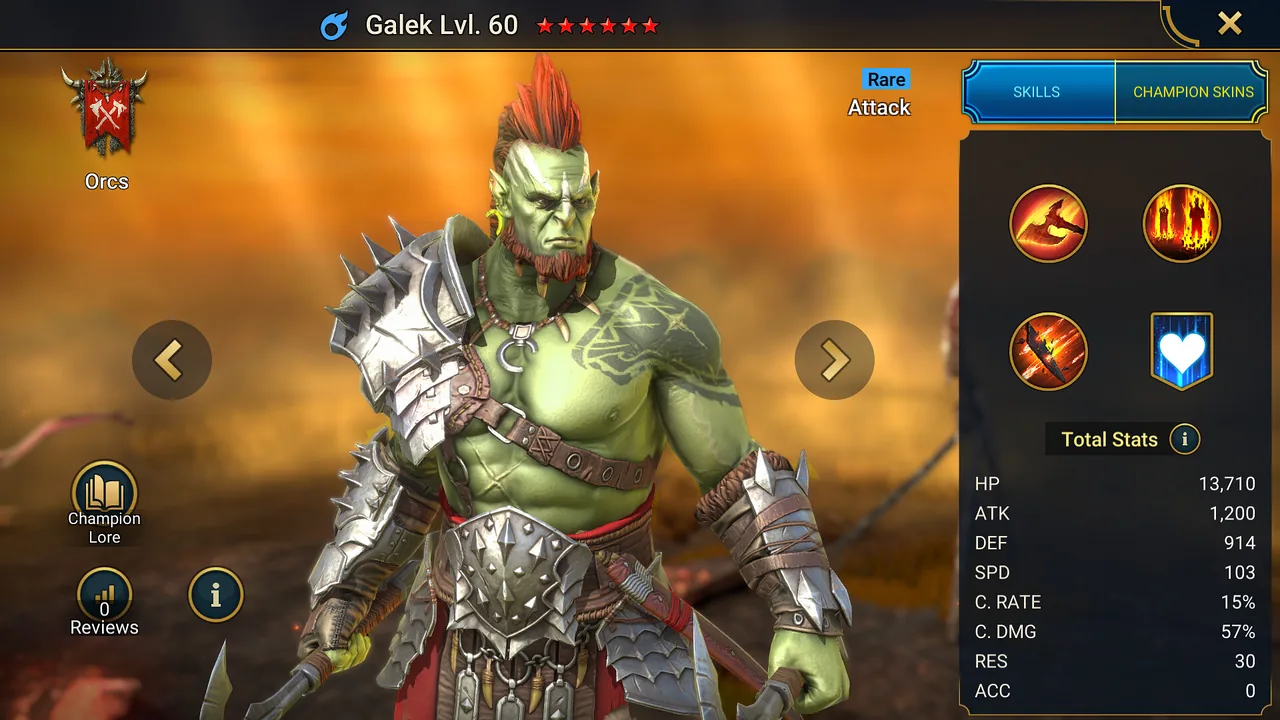
RAID: Shadow LegendsImage: Plarium Global Ltd via Steam -
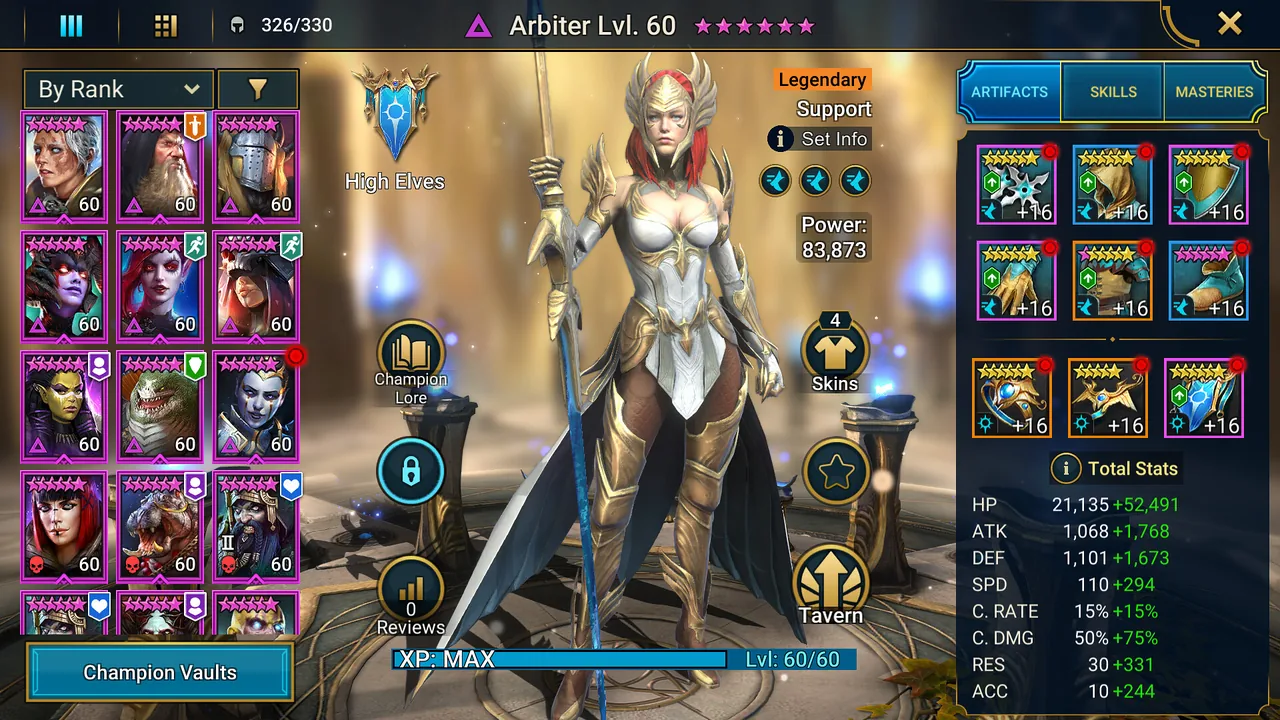
RAID: Shadow LegendsImage: Plarium Global Ltd via Steam -
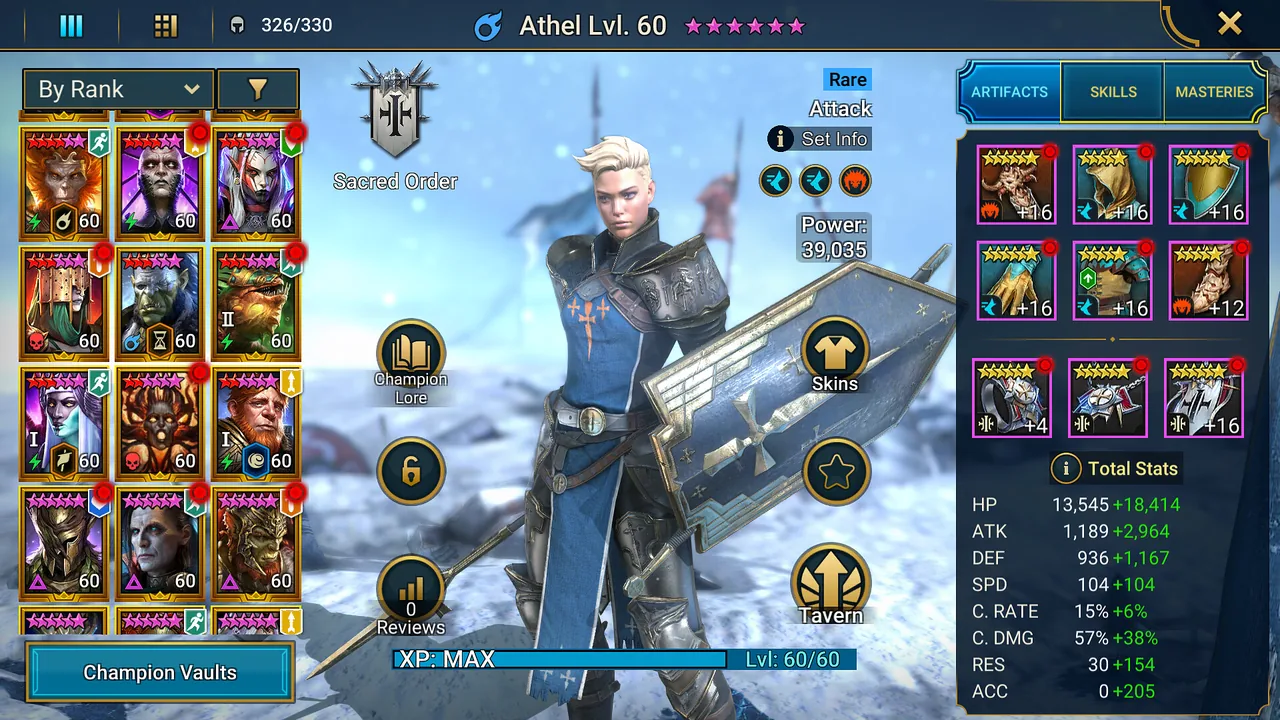
RAID: Shadow LegendsImage: Plarium Global Ltd via Steam -
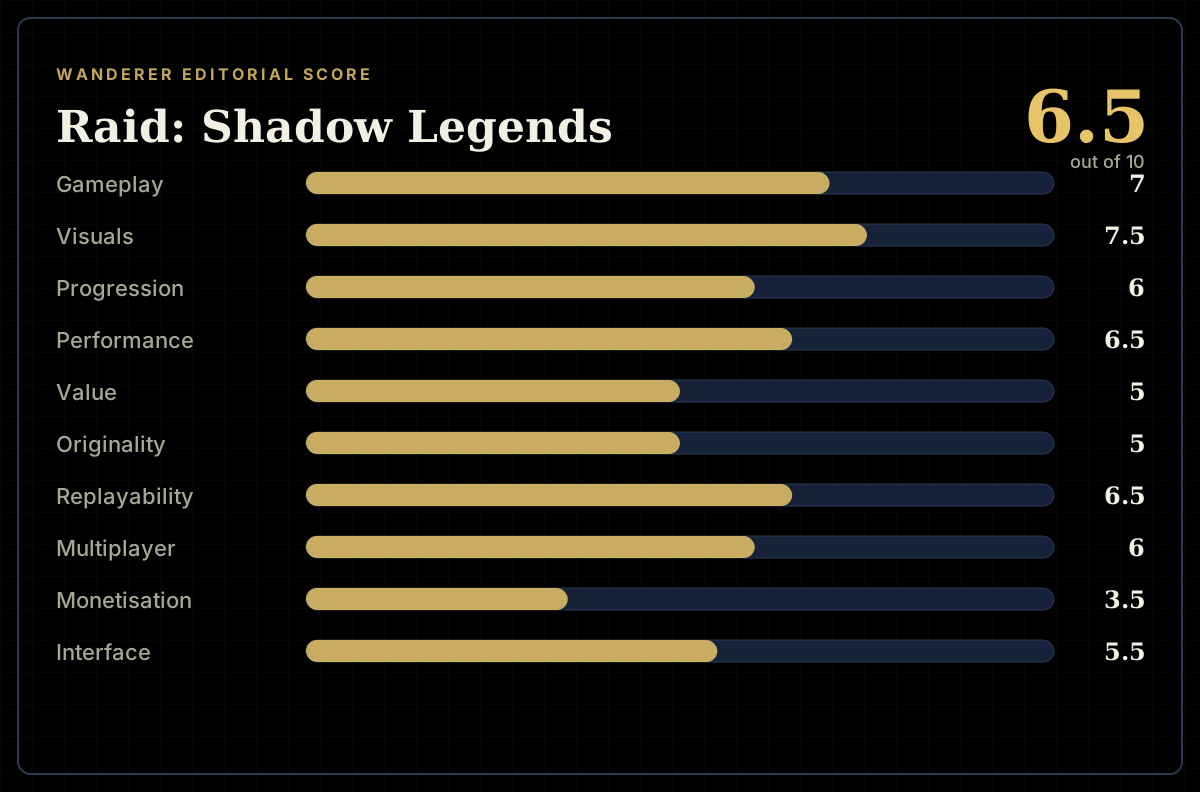
How the review scores each part of the gameWanderer Editorial -
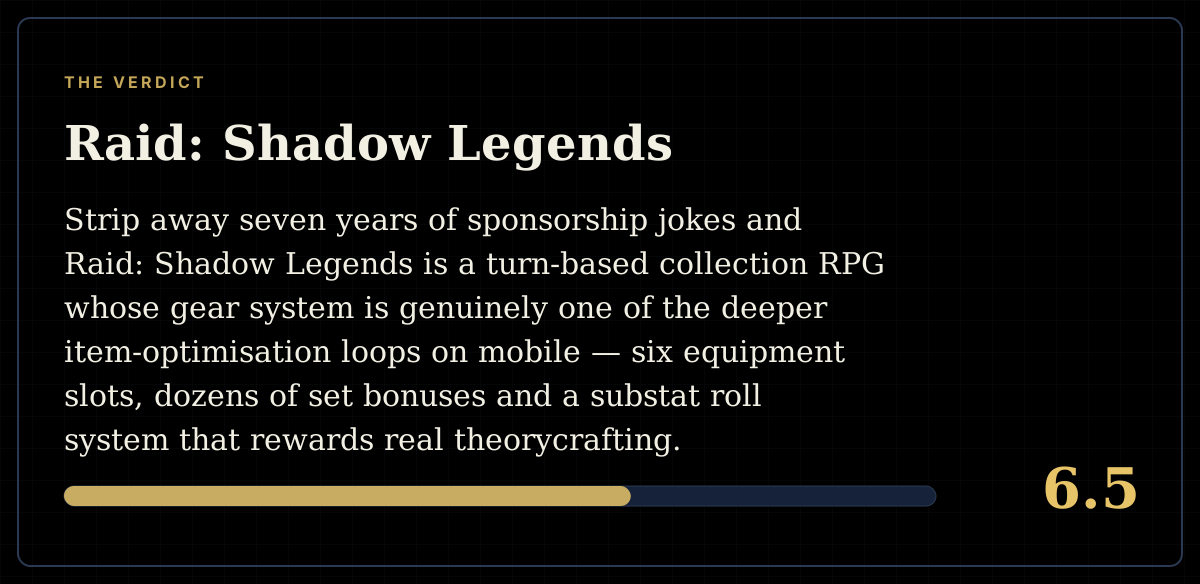
The short versionWanderer Editorial