Game review
Endless Frontier
6 / 10
- Developer
- ekkorr (Seoul, South Korea)
- Publisher
- ekkorr
- Released
- 21 February 2018
- Platforms
- iOS, Android
- Genre
- Idle RPG
- Monetisation
- Free to play with gacha-style hero and pet summons, one-off IAP bundles rather than running subscriptions, rewarded video ads, and an optional NFT card feature tied to a third-party crypto wallet
- Players
- Four-day Battle Arena league seasons, a daily 24-hour Hiking Race ranking, 200-vs-200 Guild War battles and cooperative Guild Raid world bosses
The short version
Endless Frontier is a competent, unusually durable mobile idle RPG — a twelve-unit auto-battle roster, thousands of stages, and a genuinely layered guild and arena game sitting on top of an idle loop that markets itself as running forever, even offline. Its player base, still rating it 153,000 times over on Google Play at a 4.3 average, backs up the claim that the core loop holds up.
What keeps it from scoring higher is everything ekkorr has bolted onto that loop since 2018: a hard twelve-unit ceiling veterans keep asking to raise, a Battle Arena with one dominant unit and no reliable counter, an NFT card feature nobody who plays idle RPGs asked for, and a client that hasn't shipped an update since December 2025 while the studio's actual development energy has gone into its own sequel.
Biggest strengths
- A twelve-unit auto-battle roster spans four races and a level/enhance/evolve/transcend chain deep enough to give an eight-year veteran account something to chase across 9,000 stages
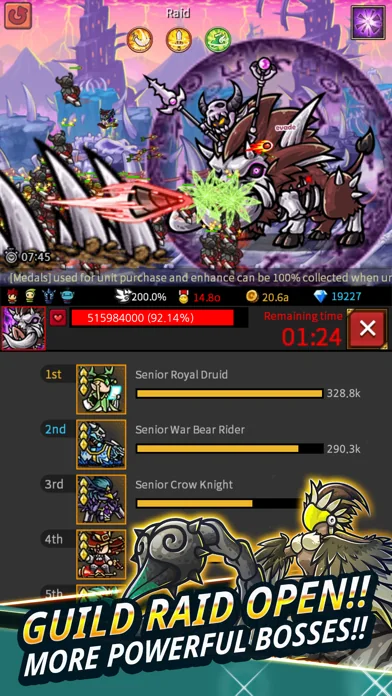
- Guild War's 200-vs-200 battles and cooperative Guild Raid world bosses give the social layer real stakes instead of a chat window sitting next to a shared health bar
- No stacked subscriptions sit behind the shop, and App Store reviewers spanning six to eight years of continuous play consistently describe reasonable free progress
Biggest weaknesses
- A permanent twelve-unit team cap is the single change veteran reviewers ask ekkorr for most often and the one they are least likely to get
- A single dominant PvP unit with no reliable counter, called out repeatedly in App Store reviews, undermines the Battle Arena's claim to be a skill-based ladder
- Hall of Heroes NFT card slots tied to a third-party Weracle Wallet integration have drawn some of the sharpest negative reviews the game has received in years
Who it's for: Idle RPG players who want a genuinely active social layer — arena seasons, guild wars, cooperative raids — rather than a leaderboard next to a chat box, and who can tolerate a decade-old interface and an unresolved PvP balance problem in exchange for it.
Our recommendation: Worth a free download for the guild and arena systems alone, which do more than most rivals in this genre manage. Go in expecting a roster cap that won't move, a dominant PvP unit nobody's fixed, and a game that currently looks more like maintenance mode than active development.
6 / 10
Most mobile idle RPGs from 2018 are either dead, sold off to a new studio, or so aggressively re-skinned into a live-service treadmill that the original game is unrecognisable. Endless Frontier has done neither. Ekkorr's Seoul-based studio has kept the same game live under the same name for eight years, and going by the review counts on both storefronts, a genuinely large audience is still playing it. That alone makes it worth a closer look — the question isn't whether Endless Frontier has survived, it's what survival has actually cost the game, and what a player downloading it today is walking into.
Twelve units, four races, and how much you're actually deciding
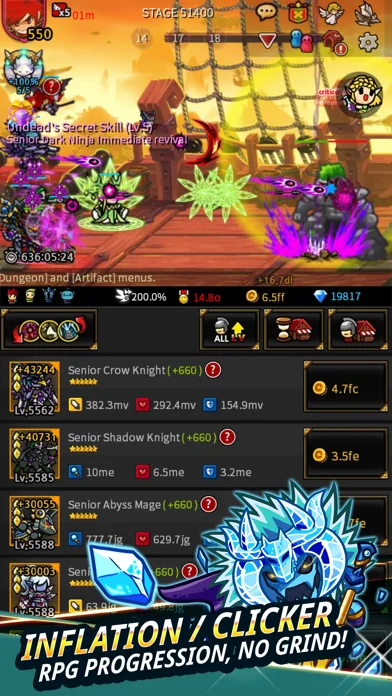
The pitch is straightforward: recruit from more than a hundred heroes split across Human, Elf, Undead and Orc factions, slot up to twelve of them into a formation, and let auto-combat carry them through a stage chain the storefront listing puts at 9,000 battles deep. Ekkorr's own description leans hard on the "no tutorial required" framing, and the loop backs that up — tapping through early stages, watching auto-combat resolve fights, and clicking the occasional bonus chest that rewards players who don't leave the app fully alone.
Where a player's actual decisions live is in team construction rather than combat itself. Which twelve heroes occupy the formation, how gold gets spent on levelling versus enhancement, and which artifacts chase a matching-name set bonus — that's the game happening. Combat resolves itself once a formation is locked in, which is standard for the genre and not a knock on its own. What's more specific to Endless Frontier is how firmly that twelve-slot cap holds the whole system in place. It isn't a soft limit that expands with progression the way roster sizes do in a lot of modern hero collectors — it's a fixed number the game has shipped with since 2018, and the single change App Store reviewers with years of playtime ask for most consistently. A deep bench of a hundred-plus heroes stops meaning much when only twelve can ever be on the field at once, and the game hasn't moved on that number in eight years of updates.
Enhance, Evolve, Transcend, Revive — the reset stack
Endless Frontier runs its progression on a chain the storefront names outright: level, enhance, evolve, transcend. Each stage applies to individual heroes and pushes their ceiling further out, the familiar shape of gear-and-hero incrementalism this genre runs on. Sitting alongside it is a separate Revival System — resetting current stage progress in exchange for a permanent strength increase, then climbing the stage chain again from a stronger starting point. That's a standard rebirth-style reset, distinct from the per-hero transcend chain, and together the two give the game two different axes of long-term progression rather than one.
What's harder to assess honestly is how steep either curve gets in the late game, because neither ekkorr's materials nor the sampled player feedback spell out specific multipliers or thresholds. The feedback does establish a genre-typical shape: progress that feels generous for a long opening stretch, and a grind that tightens once artifact-set completion and dungeon-gated crafting materials become the bottleneck rather than raw stage clears. Different dungeons open on different days of the week, pacing material farming across a session-by-session schedule instead of letting one long session solve it — a mild version of the "log in on a timetable" pressure the genre runs on, applied here to crafting materials rather than an energy meter.
Arena, Guild War, and a social layer that actually does something
This is where Endless Frontier earns real credit, and where it separates itself from a lot of the idle RPG shelf. Guild content in this genre is frequently cosmetic — a chat window next to a shared boss health bar, which is roughly what Legend of Mushroom's alliances amount to. Endless Frontier runs four distinct systems instead of one: a four-day Battle Arena league with results recorded on a persistent Hall of Honor, a daily 24-hour Hiking Race that ranks players purely on how far they've climbed the stage chain that day, 200-vs-200 Guild War battles between whole guild rosters, and cooperative Guild Raid content against a shared world boss. That's a genuinely layered social game, not a leaderboard with a name on it.
It comes with the same trade-off Tap Titans 2's tournament calendar makes: a scheduled event rewards players who can be present during its window, a real advantage over anyone who can only check in once a day, independent of how well either side has built their account otherwise. Endless Frontier's Battle Arena runs into a sharper problem than scheduling, though — App Store reviews repeatedly name a single unit, the Crow Knight, as dominant enough in Arena matchups that there's no reliable counter to field against it. A ranked PvP system is only as credible as its balance, and a known, unaddressed dominant pick undercuts the Arena's claim to reward team-building skill more than a scheduling quirk ever could.
Offline hikes and what "even if your battery dies" really means
Idle RPGs live or die on their away-from-keyboard promise, and Endless Frontier's marketing makes an unusually strong version of it: heroes keep clearing stages while the app is closed, explicitly pitched as continuing "even if you're out of battery." That's a bolder claim than Idle Heroes, which caps offline auto-battle rewards at eight hours before the clock has to be reset by opening the app. Neither ekkorr's materials nor the sampled player reviews mention an equivalent cap for Endless Frontier, and none of the sampled complaints raise an offline ceiling as a frustration — the kind of thing players in this genre reliably complain about when it exists. That's not proof no soft limit exists anywhere in the system, but the absence of that complaint pattern, on the evidence available, makes uncapped offline hiking look like a genuine point of difference rather than a marketing exaggeration.
What money buys, and the NFT wrinkle nobody asked for
Endless Frontier's monetisation is comparatively restrained by the genre's own low bar. There's no subscription ladder running in parallel the way Idle Heroes stacks weekly, monthly and quarterly passes — Endless Frontier's shop is built from one-off bundles, priced from NZ$1.99 up to NZ$19.99 as of 1 August 2026, covering gem packs, pet packages, and boosting bundles for specific content like the Spirit Highlands. Google Play's storefront disclosure flags randomised-item purchases, confirming a gacha layer sits behind at least some of those bundles, and rewarded video ads are an opt-in earn-more mechanism rather than a forced interruption. App Store reviewers with years of accumulated playtime describe the free economy as workable — free gem income and earnable summon currency show up often enough that "you don't have to pay to progress reasonably" reads as a genuine, repeated sentiment rather than an outlier.
The complication is a feature the storefront listings don't mention at all: a Hall of Heroes system tied to NFT cards held in a third-party Weracle Wallet, offering slot activations and buffs scaled to card rarity. It's a genuinely unusual thing to find bolted onto a 2018-era idle RPG, and the player reaction is exactly what you'd expect from an idle RPG audience meeting a blockchain feature they didn't sign up for — some of the sharpest "would not recommend" reviews the game has received cite the NFT integration specifically, independent of price or grind complaints. It doesn't appear to gate core progression the way a subscription or energy system would, but its existence is a real mark against a monetisation model that's otherwise more honest than most of its peers.
Eight years in, and the update log says it's slowing down
Both storefront listings show the same date for Endless Frontier's most recent client update: December 2025, with the iOS changelog reading only "stability improvements." As of this review, that puts the base game at roughly eight months without meaningful content added — a long gap for a live idle RPG that depends on rotating dungeons and seasonal pet content to keep its endgame moving. That gap isn't accidental. Ekkorr released a full spin-off, Endless Frontier 2, a tower-defense idle RPG built around a fortress-siege structure, in April 2026 — recent, actively promoted, and clearly where the studio's current development attention is going. The original Endless Frontier hasn't been abandoned; the servers are up, the events cycle continues, and a 4.3-star average across 153,000 Google Play ratings shows the existing player base is still satisfied with what's there. But "still running" and "actively developed" have quietly become two different claims about this game, and a new player downloading it today is getting the former, not the latter.
Verdict
Endless Frontier earns its longevity honestly. The core auto-battle loop is competent, the guild and arena systems do more real social work than most of the genre bothers with, and the offline promise holds up better under scrutiny than its own marketing copy might suggest. Free players get a fair shot at the majority of the game, and the monetisation model — no subscriptions, disclosed gacha odds, optional ads — is more honest than plenty of its 2018-era contemporaries.
What keeps it at a 6 rather than higher is a list of specific, addressable problems ekkorr hasn't addressed: a twelve-unit cap that's felt more restrictive every year power creep has continued around it, an Arena with a known balance problem and no fix, an NFT feature that alienates exactly the audience most likely to try this game, and a content pipeline that's visibly slowed while the studio builds something new. None of that erases eight years of a working idle loop. It does mean a player downloading Endless Frontier today should treat it as a stable, mature game rather than a growing one — and budget their expectations for updates accordingly.
Pricing and monetisation checked 1 August 2026.
Players who'd rather their progression stayed on a single account without a roster cap or a wallet integration attached to it might also want to look at Wanderer, where every hero you recruit stays usable for as long as you keep playing.
Pros and cons
Pros
- A twelve-unit auto-battle roster spans four races and a level/enhance/evolve/transcend chain deep enough to give an eight-year veteran account something to chase across 9,000 stages
- Guild War's 200-vs-200 battles and cooperative Guild Raid world bosses give the social layer real stakes instead of a chat window sitting next to a shared health bar
- No stacked subscriptions sit behind the shop, and App Store reviewers spanning six to eight years of continuous play consistently describe reasonable free progress
- Offline hiking is marketed with no stated time cap, a real point of difference from rivals like Idle Heroes that stop paying out after eight hours
- A 4.3-star average across 153,000 Google Play ratings after eight years says the core loop still works for a large existing audience
Cons
- A permanent twelve-unit team cap is the single change veteran reviewers ask ekkorr for most often and the one they are least likely to get
- A single dominant PvP unit with no reliable counter, called out repeatedly in App Store reviews, undermines the Battle Arena's claim to be a skill-based ladder
- Hall of Heroes NFT card slots tied to a third-party Weracle Wallet integration have drawn some of the sharpest negative reviews the game has received in years
- Neither storefront listing has shipped a client update since December 2025, while ekkorr's visible development attention has moved to its April 2026 spin-off, Endless Frontier 2
- A decade of stacked systems — Spirit Highlands, Outland Battle, Airship, Hero Couple, Medal Buff, Secret Skill — front-loads more unlabelled menus onto a new account than the "no tutorial required" pitch admits
Screenshots
-
Endless Frontier - RPGImage: ekkorr via the App Store -
Endless Frontier - RPGImage: ekkorr via the App Store -
Endless Frontier - RPGImage: ekkorr via the App Store -
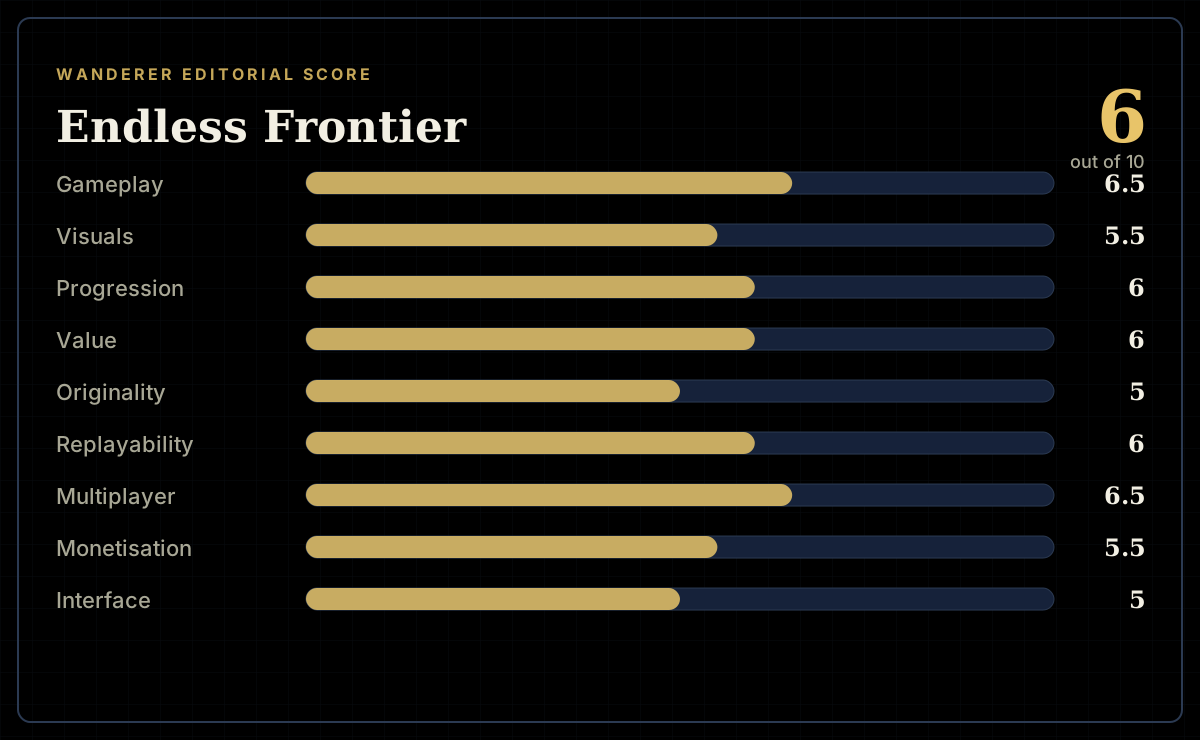
How the review scores each part of the gameWanderer Editorial -
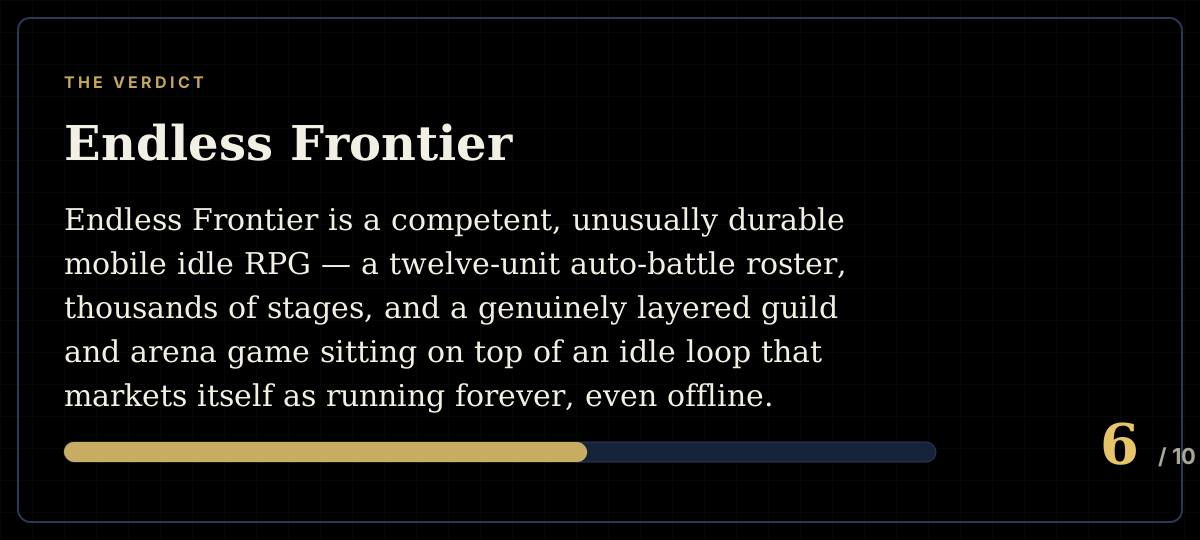
The short versionWanderer Editorial