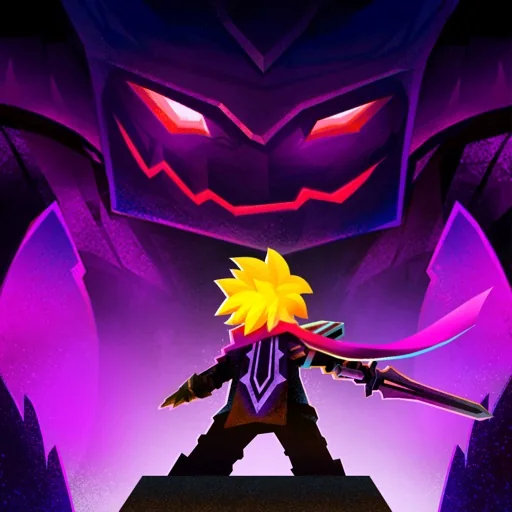
Game review
Tap Titans 2
7 / 10
- Developer
- Game Hive Corp.
- Publisher
- Game Hive Corp.
- Released
- 13 December 2016
- Platforms
- Android, iOS
- Genre
- Idle RPG
- Monetisation
- Free-to-play with a premium diamond currency, a paid Season Pass, and rewarded ads
- Players
- Asynchronous clans, cooperative clan raids and scheduled competitive tournaments
The short version
Tap Titans 2 pairs a thin tap-to-fight combat loop with a genuinely deep prestige stack — relics, artifacts, a sprawling skill tree — and then wraps the whole thing in a clan and tournament layer that asks players to show up on a schedule, not just check in when convenient. That structure gives long-term progression real stakes, but it also makes the free-to-play economy matter more than it does in most idle games, and the ladder of diamond bundles and a paid Season Pass is priced accordingly.
Biggest strengths
- The relic, artifact and skill-tree stack gives every prestige reset a concrete next purchase instead of a flat "start over" button
- Clan raids turn the otherwise solitary tap-and-wait loop into a shared damage-race with a weekly cadence worth returning for
- Ten years of live updates have kept the stage curve, events and card system moving rather than leaving the game to stagnate on its 2016 systems
Biggest weaknesses
- The Season Pass and a diamond ladder that tops out at $99.99 sit directly upstream of tournament rankings, so spending buys a real head start in the game's one head-to-head system
- Winning a scheduled tournament window means being active and tapping during that window, converting a genre built around "leave it running" into an appointment
- Card-based raid mechanics, monument enchanting and gemstone reworks keep layering onto the artifact tree faster than the game explains any of them in-app
Who it's for: Players who already like tap-idle RPGs and want a genre entry with actual social stakes attached to their numbers — and who won't mind an unpaid seat in a game where paying players set the pace of competitive events.
Our recommendation: Worth installing free for the artifact-and-relic progression alone. Treat the tournament calendar as optional until the free relic and diamond income makes clear whether keeping up is realistic without spending.
7 / 10
Most idle RPGs are built to be ignored. You open them, glance at a number, close them, and the number is bigger next time you look. Tap Titans 2 does that too, but it also runs a parallel system that punishes ignoring it: clans that expect participation, and tournaments that reward players who are actually watching the clock. That's an unusual bet for the genre. Idle games sell themselves on respecting your time; Tap Titans 2 spends a good part of its endgame asking for some of it back on a schedule, and whether that trade is worth making is the real question this review has to answer.
The tap, the auto-attack, and the wall behind it
The moment-to-moment loop is exactly what the name promises. Sword Master and a roster of recruitable heroes advance through stage after stage of Titans, tapping the screen deals direct damage, heroes contribute automatic damage-per-second, and stages fall in a scaling curve that Game Hive's own marketing pegs at "over 150,000 levels" across a long chain of hand-drawn realms. Read that figure for what it actually is: not 150,000 distinct pieces of content, but 150,000 steps on the same exponential curve, gated by the same handful of stats compounding against each other. That's not a criticism unique to Tap Titans 2 — it's the entire idle genre's arithmetic — but it's worth naming before anything else, because the game's marketing leans on that number harder than most.
Active tapping matters early, when hero damage-per-second hasn't caught up to what a thumb can contribute directly. It matters progressively less as heroes level, skills unlock, and the run's own automation outpaces manual input. By the time a save file has any real relic count behind it, tapping is a boredom-relief habit rather than a meaningful lever, and most of a session's actual output comes from decisions made in menus between runs rather than fingers on the Titan. That's a familiar ceiling for the tap-idle-hybrid subgenre, and Tap Titans 2 doesn't clear it so much as manage it competently.
Relics, artifacts, and a skill tree with actual shape
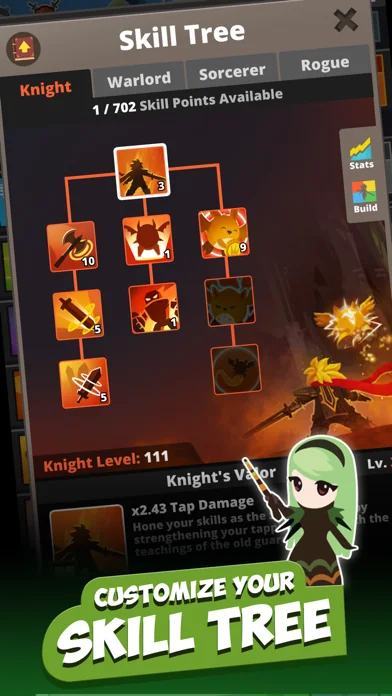
Where the game earns its keep is what happens when a run ends. Prestiging resets stage progress in exchange for Relics, spent on a branching Artifact collection that supplies permanent multipliers, unique effects and — critically — an enchantment layer that lets an already-owned artifact keep improving rather than sitting inert once purchased. Layered alongside that is a per-hero skill tree, letting Sword Master specialise toward burst damage, sustained output or utility depending on which stages are giving the most trouble. Stack those two systems together and the result is a prestige loop with real texture: every reset produces a specific next purchase, not just a bigger version of the last one.
The cost of that depth is the same one most decade-old live-service idle games pay. Raid cards, monument enchanting, gemstone reworks and clan-specific currencies have all arrived in updates long after the core artifact tree was designed, and the in-game tutorial hasn't kept pace with explaining how the newer systems interact with the older ones. A player returning after a break, or starting fresh in 2026, is looking at a UI with a decade of accumulated icons and none of them labelled for a newcomer. That's a genuine onboarding cost sitting on top of a genuinely well-built progression stack.
Clans and tournaments: the game's real spine
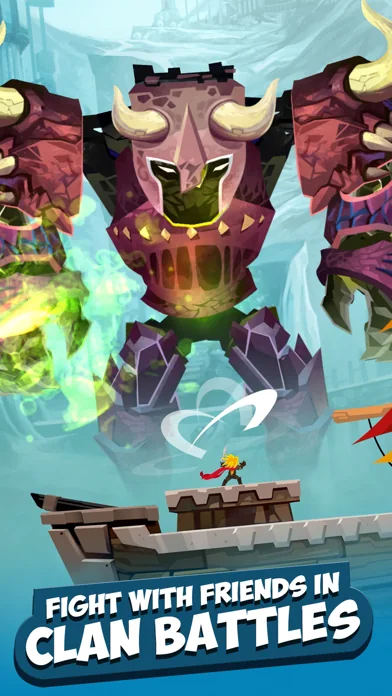
This is where Tap Titans 2 distinguishes itself from the rest of the tap-idle shelf, and it's worth being precise about what the clan and tournament layer actually does. Clans give players a shared space — chat, clan quests, and cooperative clan raids where members contribute damage to a shared boss target on a recurring cycle, with individual rewards scaled to contribution. That system works the way good asynchronous multiplayer should: contribute when convenient, benefit from what everyone else contributed too, no requirement to be online at the same moment as anyone else.
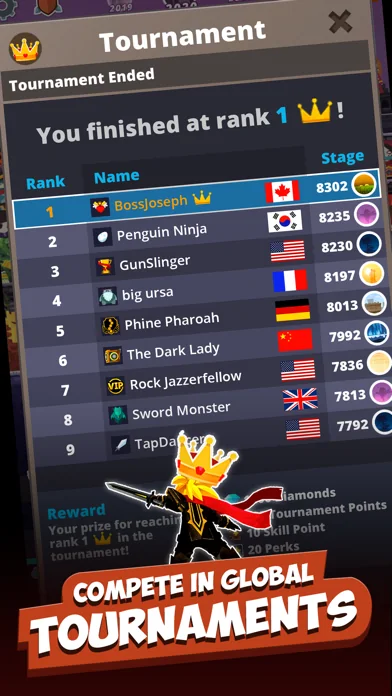
Tournaments are the harder case. They run on a fixed schedule, rank participants against each other over a defined window, and hand out rewards — often diamonds, the premium currency — weighted toward the top of the leaderboard. That's a genuinely different proposition from the rest of the game. Everywhere else, Tap Titans 2 respects the idle contract: leave it running, come back later, lose nothing for being away. Tournaments don't extend that courtesy. A player who can be actively engaged during the event window has a structural advantage over one who can only check in once a day, independent of how well either has built their account the rest of the time. For players who enjoy that kind of appointment-based competition, it's a legitimately compelling reason to keep the game installed longer than a single prestige cycle would justify. For players who picked an idle game specifically because they didn't want another scheduled commitment, it's the one part of Tap Titans 2 that stops behaving like one.
The honest read is that the clan and tournament layer deepens the game for exactly the audience that wants deepening — social, competitive, willing to plan around an event window — and converts it into an obligation for everyone else. It doesn't ruin the idle progression sitting underneath it; that keeps ticking over regardless of whether a single tournament is ever entered. But it does mean the game's most distinctive system is also its most demanding one, and the marketing doesn't lead with that trade-off.
What the diamond ladder actually buys
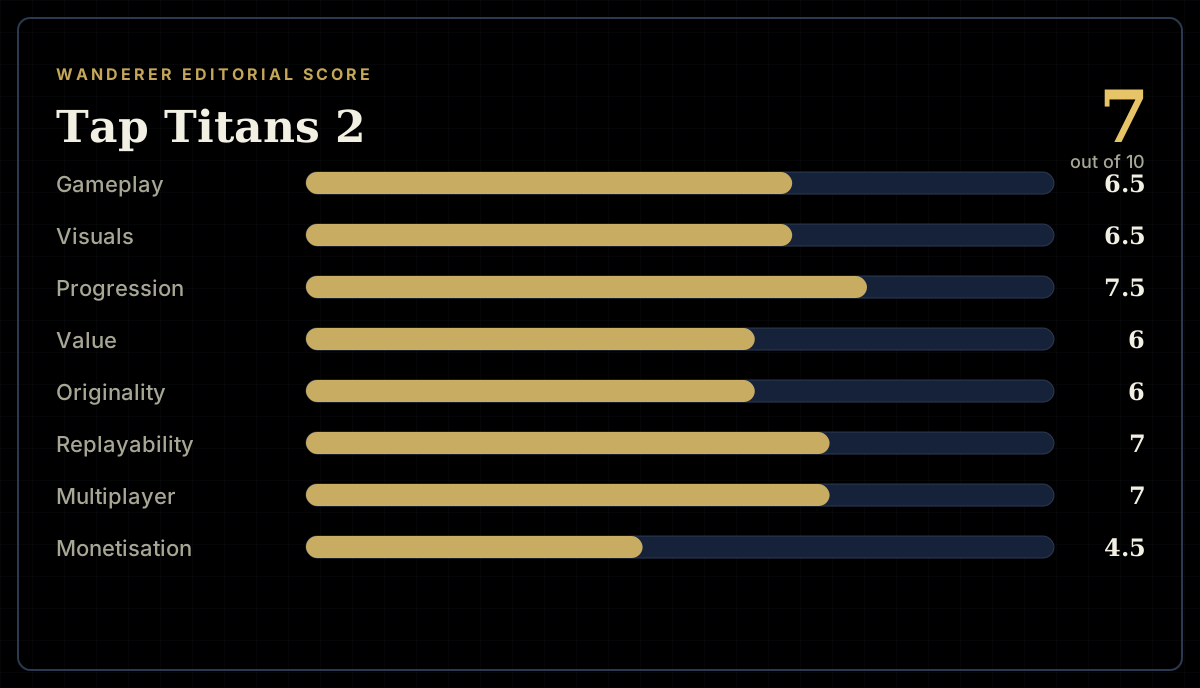
As of 30 July 2026, Tap Titans 2 is free to download on both iOS and Android, with a premium diamond currency sold in ten separate bundles ranging from $1.99 for 180 Diamonds up through $4.99, $9.99, $24.99 and $49.99 tiers to a $99.99 bundle for 14,000 Diamonds — a pricing ladder that tops out well above what most idle games ask for their largest single purchase. Sitting alongside the diamond bundles is a $9.99 Season Pass, following the now-standard mobile pattern of a paid track running parallel to a limited free one. Rewarded video ads are also present, opt-in, and typically convert into bonus diamonds or resource boosts rather than being forced between actions.
None of this locks core content behind a wall — the stage curve, the artifact tree and clan membership are all available to a player who never spends a cent, funded by free relic and diamond drops from clan quests and daily events. What it does buy is speed, and speed is exactly what matters in a tournament with a fixed end time. Diamonds convert into time-savers — instant completions, resource top-ups, roster expansions — that shrink the gap between "logged in for the whole window" and "logged in for five minutes," which is precisely the gap tournament rankings are measuring. That's the fair way to describe this model: not pay-to-win against the Titans, which scale the same for everyone, but pay-for-tempo against other players, in the one system built around a ticking clock. Whether that's acceptable depends entirely on how seriously a given player takes the leaderboard — ignore tournaments and the free economy is perfectly playable; chase them seriously and the diamond ladder stops being optional.
Presentation and the long tail
Ten hand-drawn realms, a legible cartoon art style, and a decade of incremental visual polish give Tap Titans 2 a more finished look than its 2016 origin might suggest, even if none of it pushes toward anything visually ambitious. The soundtrack and combat audio do their job without asking to be noticed, which is the correct call for a game meant to run in a pocket for long stretches. Ten million-plus installs and continuous content updates through 2026 — the most recent patch adding raid card reworks and a new enchanting system in July — say more about the game's staying power than any single session could. A decade of live support for a free mobile game is not nothing, and it shows in how much of the original 2016 skeleton is still recognisable under everything that's been added since.
Verdict
Tap Titans 2 succeeds at what it sets out to be: a tap-idle RPG with a prestige system deep enough to reward long-term optimisation, wrapped in a clan and tournament structure that gives that optimisation somewhere social to point. The artifact-and-relic loop alone would earn a solid score on genre terms. What holds it at a good rather than excellent rating is the gap between the game's two halves — a patient, respectful idle economy everywhere except the one system, tournaments, that asks players to be present on a schedule and prices a real advantage into doing so. Free players get a complete, playable game. Players chasing tournament rankings get a second job with a $99.99 top rung.
Anyone who already enjoys tap-idle RPGs and wants one with genuine social stakes attached to the numbers should install it without hesitation. Players who picked the idle genre specifically to avoid appointments should keep clan membership, skip the tournament calendar, and let the artifact tree do the rest of the work on its own schedule.
Players who'd rather their progression kept moving without a leaderboard timer attached to it may also want to look at Wanderer — its offline gains run at the same rate whether or not anyone's watching the clock.
Pros and cons
Pros
- The relic, artifact and skill-tree stack gives every prestige reset a concrete next purchase instead of a flat "start over" button
- Clan raids turn the otherwise solitary tap-and-wait loop into a shared damage-race with a weekly cadence worth returning for
- Ten years of live updates have kept the stage curve, events and card system moving rather than leaving the game to stagnate on its 2016 systems
- Free relic and diamond income from clan quests and daily events keeps unpaid progression moving instead of stalling outright
- 15 additional languages beyond English make the interface accessible well outside its core English-speaking audience
Cons
- The Season Pass and a diamond ladder that tops out at $99.99 sit directly upstream of tournament rankings, so spending buys a real head start in the game's one head-to-head system
- Winning a scheduled tournament window means being active and tapping during that window, converting a genre built around "leave it running" into an appointment
- Card-based raid mechanics, monument enchanting and gemstone reworks keep layering onto the artifact tree faster than the game explains any of them in-app
- Manual tapping stops mattering the moment auto-progression and passive multipliers take over a run, the same ceiling most tap-idle hybrids hit early
- A UI built up over a decade of added systems front-loads a lot of unlabelled icons and currencies onto new players before any of them are explained
Screenshots
-
Tap Titans 2 - Hero LegendsImage: Game Hive Corporation via the App Store -
Tap Titans 2 - Hero LegendsImage: Game Hive Corporation via the App Store -
Tap Titans 2 - Hero LegendsImage: Game Hive Corporation via the App Store -
How the review scores each part of the gameWanderer Editorial -
The short versionWanderer Editorial