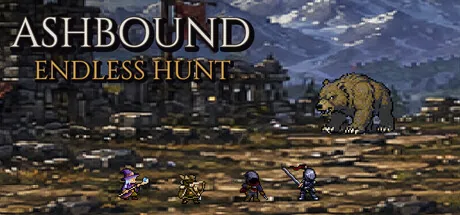
Game review
Ashbound Endless Hunt
6 / 10
- Developer
- Elloria
- Publisher
- Elloria Forge
- Released
- 23 July 2026
- Platforms
- Windows
- Genre
- Incremental Action RPG
- Monetisation
- Free to play, no in-game store, no in-app purchases, no advertisements
- Players
- Single-player only
The short version
Ashbound Endless Hunt is a free-to-play incremental action RPG in which a party fights escalating waves of monsters, climbing through 100 weapon tiers, relic sets and a prestige system that carries permanent strength between resets. Its small review sample sits at Mixed, and reading it in full turns up a specific, recurring argument rather than scattered complaints: several reviewers say the game leans so heavily on active clicking that its "idle" framing doesn't hold up, with passive damage scaling so weakly it barely factors into a serious run.
That's a real, fair criticism, and it sits alongside genuine, specific praise for the equipment and prestige systems underneath it — one detailed review, written in Chinese, spends several paragraphs enthusiastically describing the 100-tier weapon ladder and relic-set build variety before circling back to the same core complaint from a different angle: the loop rewards mechanical repetition more than it rewards planning.
Biggest strengths
- Completely free with no monetisation of any kind — multiple reviewers specifically note the absence of a shop as a point in the game's favour, and the store listing carries no in-app purchase category at all
- The equipment progression is genuinely well liked in detail: 100 weapon tiers, relic sets and a party system that lets allies contribute real damage rather than just support numbers
- The prestige system carries permanent strength forward rather than resetting to zero, which reviewers who understood it describe as rewarding rather than punishing
Biggest weaknesses
- The most consistent, specific complaint across this review's sample is that the game plays more like an active clicker than a true idle game — passive damage output is described as scaling so weakly it becomes close to irrelevant once a run is underway
- At least one reviewer reports a specific, reproducible math bug: bulk-purchasing ten or more levels of an upgrade sometimes applies fewer levels or charges more gold than the interface displays
- No Chinese localisation exists despite a detailed, enthusiastic Chinese-language review — a gap that reviewer explicitly flags as limiting how many players can access the game's systems
Who it's for: Incremental and action-RPG fans who don't mind an idle game that asks for real, ongoing clicking rather than true passive progress, and who want a genuinely monetisation-free alternative to the genre's usual freemium pressure. Less suited to anyone specifically shopping for a background-running, walk-away idle game.
Our recommendation: Worth trying since it costs nothing and carries zero purchase risk, but go in knowing the "idle" label undersells how much active clicking the game expects — treat it as a free incremental action game you actively play in short bursts, not one you leave running in the background.
6 / 10
Introduction
Ashbound Endless Hunt promises an incremental action RPG in the idle mould: a party of fighters descending endlessly into escalating waves, gear climbing through a hundred weapon tiers, a prestige system rewarding repeated resets with permanent power. It's free, from small developer Elloria under publisher Elloria Forge, and its review sample — twelve reviews at time of writing, spanning English, Russian and Simplified Chinese — sits at Mixed. Reading every one of them in full surfaces something more specific and more useful than a simple thumbs-up/thumbs-down split: a genuine, recurring disagreement about whether the game actually earns the word "idle" in its own framing.
A well-liked equipment ladder
Where this review's sample agrees, it agrees with real specificity. The most detailed review in the entire set — written in Chinese by a reviewer with over fourteen hours logged — spends several paragraphs enthusiastically walking through the weapon-forging system: a hundred-tier ladder where every weapon carries different stats, combined with relic sets and a followers system that lets players build meaningfully different setups rather than following one obvious path. "The prestige system also understands what players want," that review continues (translated sense, not verbatim) — "restarting doesn't mean going back to zero, you carry permanent strengthening back with you to push deeper floors, and that kind of 'stronger every time you restart' climb is more engaging than pure idle." Other reviewers echo the same appreciation in shorter form: one specifically praised the party system for letting allies "actually carry instead of just click damage," calling out that this is usually the reverse of what incremental games offer.
The achievement data backs up that there's a real climb worth taking seriously here. Rather than collapsing to near-zero at the endgame the way several shorter incrementals this library has covered recently do, completion for the highest weapon tiers — 60 through 100 — holds in a band around 16 to 18 percent globally. That's a shallower drop-off than many peers, suggesting a meaningful share of the people who commit to Ashbound Endless Hunt actually see it through to its top tiers rather than bouncing early.
The "is this actually idle" argument
Set against that praise, the sample's clearest and most repeated criticism goes directly at the game's genre identity. "I think there's potential, but it's more of a clicker than an idle game. A lot of your bonuses come from active clicking," wrote one reviewer, updating an earlier, harsher review after a bug-fix patch improved things without resolving this specific complaint. A more recent review states it even more bluntly: "Too reliant on active clicking, with the passive damage scaling so poorly as to be almost completely irrelevant. (when I really tried to push it I think it got close to being worth about 1 click/second.)" A third, blunter still: "Another idle game where the dev doesnt understand what makes an idle game fun." Even the long, largely positive Chinese-language review lands on a version of the same point by its end, noting the endless-grind loop can "easily turn into mechanical clicking" if played deeply enough, and wishing the passive side carried more weight.
This is worth taking as a real design critique rather than a matter of taste alone, because it's specific and consistent across independent reviewers who otherwise disagree about the game's overall quality. One reviewer's balanced framing captures it fairly: "you are forced into upgrading both paths of idle and clicking where clicking seems rly strong at the start of the game and in the end and then somewhere in the middle for a few hours the heroes are overpowering clicking" — describing an uneven balance between the two systems rather than either one being simply absent. For a game marketed under the incremental/idle umbrella, that unevenness is a legitimate reason some players will walk away disappointed even while acknowledging the systems underneath are well constructed.
Bugs, and a fast fix for one of them
Launch-week technical complaints are present but limited in scope. Multiple reviewers reported resolution and fullscreen problems — the game window starting incorrectly, or UI elements overlapping the play area until display settings were changed through a workaround (starting the game via keyboard input before switching to windowed mode, several reviewers note). The developer's own patch history shows a "Resolution Stability Update" landing 26 July, three days after launch, addressing this directly. A separate, more specific complaint persists in at least one detailed review: bulk-purchasing ten or more levels of an upgrade sometimes applies fewer levels than the interface promised, or charges more gold than displayed — a math discrepancy distinct from the display bug and, as far as this review's research found, not confirmed as fixed.
Final Verdict
Ashbound Endless Hunt is a genuinely well-constructed incremental action RPG wearing a label that oversells how passive it actually is. The equipment and prestige systems underneath are detailed and well liked by the reviewers who engaged with them closely, the achievement data suggests real staying power for committed players, and — as free-to-play games go — the complete absence of any monetisation is worth real credit on its own. But the recurring, specific complaint that active clicking dominates where passive progress should carry more weight is a fair one, made independently by reviewers across three languages, and it's the single biggest reason to adjust expectations before downloading. Play this as a free incremental action game you sit down with in short, active bursts, not as a background-running idle game, and the disappointment several of this sample's negative reviewers describe is unlikely to be yours.
Pros and cons
Pros
- Completely free with no monetisation of any kind — multiple reviewers specifically note the absence of a shop as a point in the game's favour, and the store listing carries no in-app purchase category at all
- The equipment progression is genuinely well liked in detail: 100 weapon tiers, relic sets and a party system that lets allies contribute real damage rather than just support numbers
- The prestige system carries permanent strength forward rather than resetting to zero, which reviewers who understood it describe as rewarding rather than punishing
- Achievement completion holds up reasonably well into the late game — around 16 to 18 percent of players reach the highest weapon tiers, a shallower drop-off than many incrementals this library has covered, suggesting the climb stays engaging for a real share of its audience
- A resolution and stability bug reported at launch was patched within three days
Cons
- The most consistent, specific complaint across this review's sample is that the game plays more like an active clicker than a true idle game — passive damage output is described as scaling so weakly it becomes close to irrelevant once a run is underway
- At least one reviewer reports a specific, reproducible math bug: bulk-purchasing ten or more levels of an upgrade sometimes applies fewer levels or charges more gold than the interface displays
- No Chinese localisation exists despite a detailed, enthusiastic Chinese-language review — a gap that reviewer explicitly flags as limiting how many players can access the game's systems
- A UI layout bug at launch put game elements behind interface buttons before players changed display settings via a specific, non-obvious workaround
- The core loop offers limited narrative or systemic surprise once its mechanics are understood, with one reviewer specifically wanting more story rather than pure numerical progression
Screenshots
-
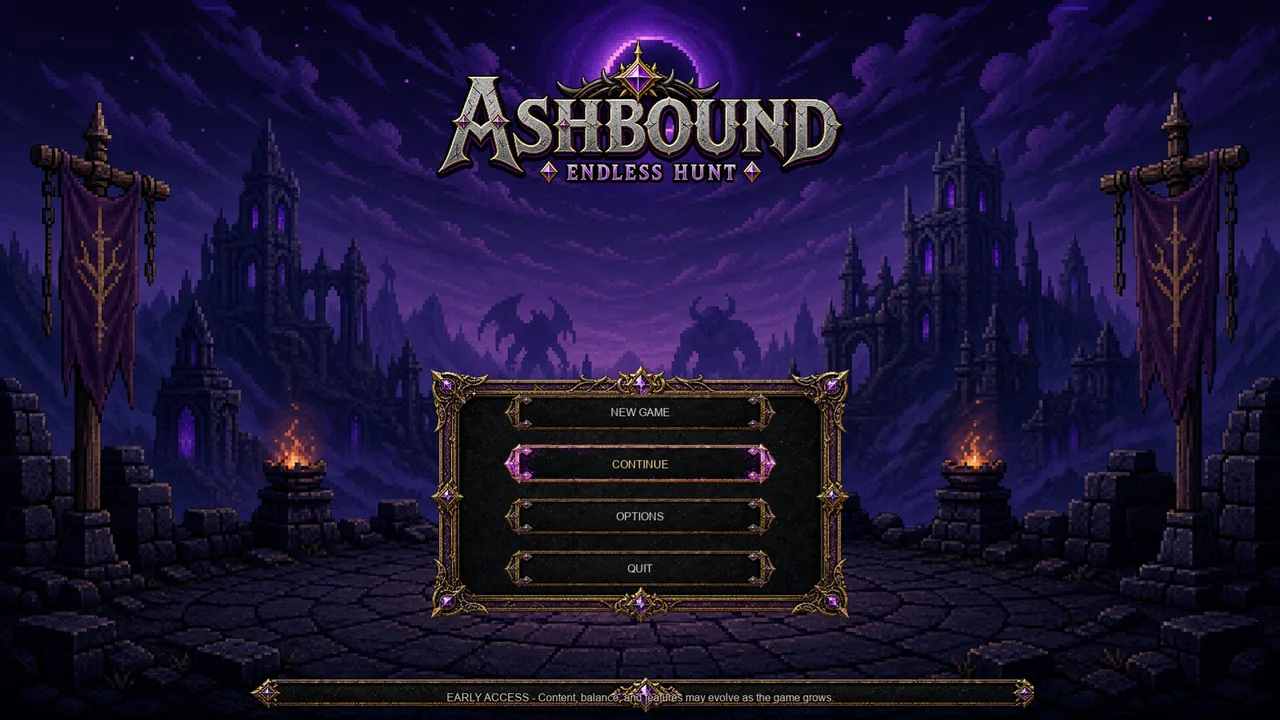
Ashbound Endless HuntImage: Elloria Forge via Steam -
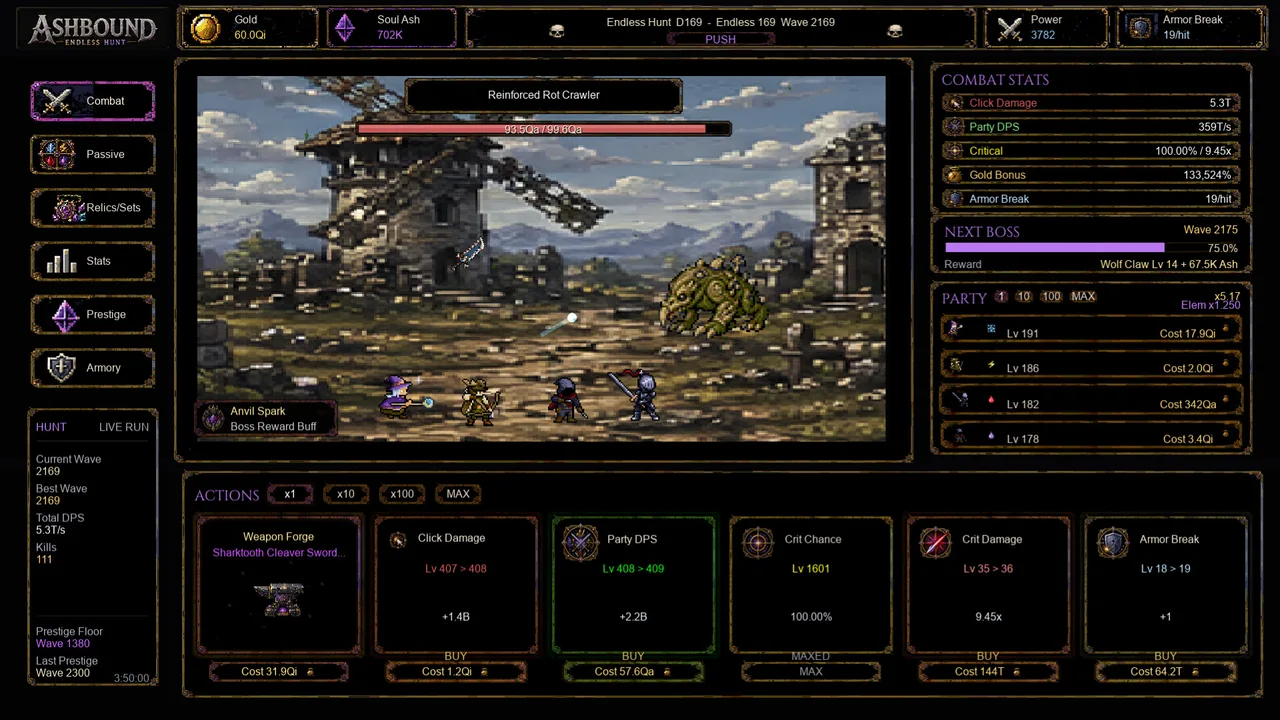
Ashbound Endless HuntImage: Elloria Forge via Steam -
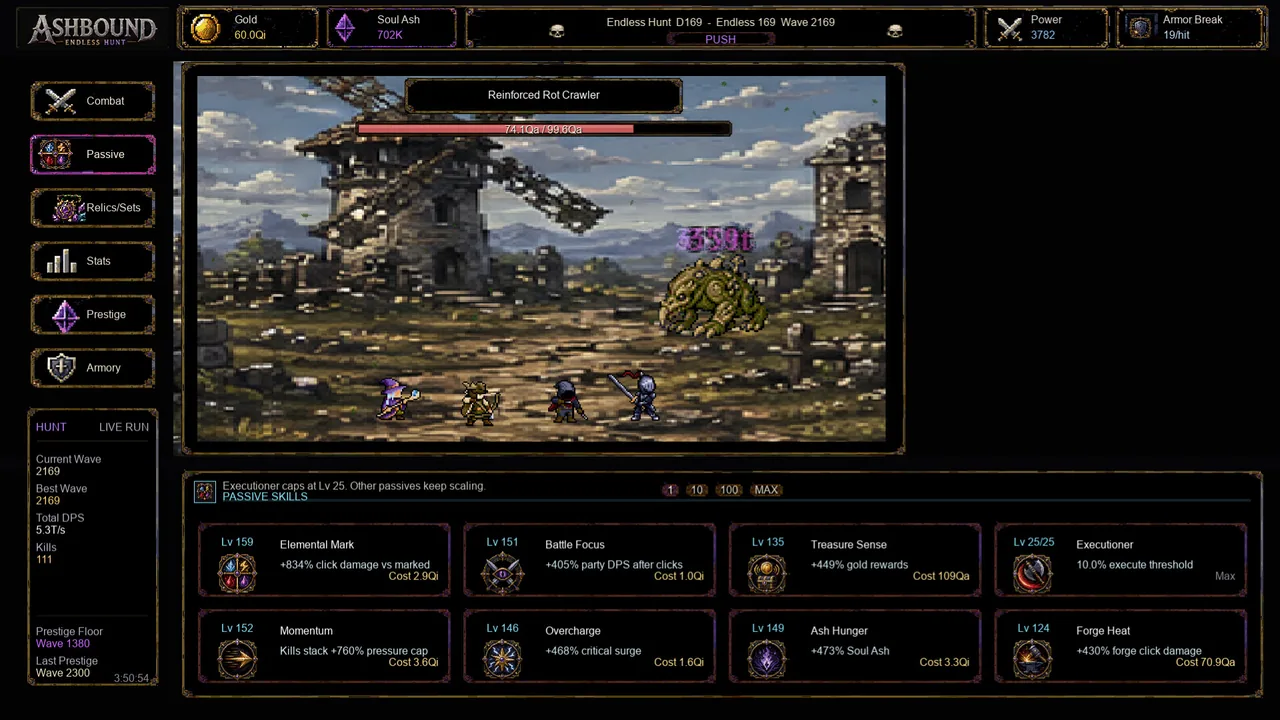
Ashbound Endless HuntImage: Elloria Forge via Steam -
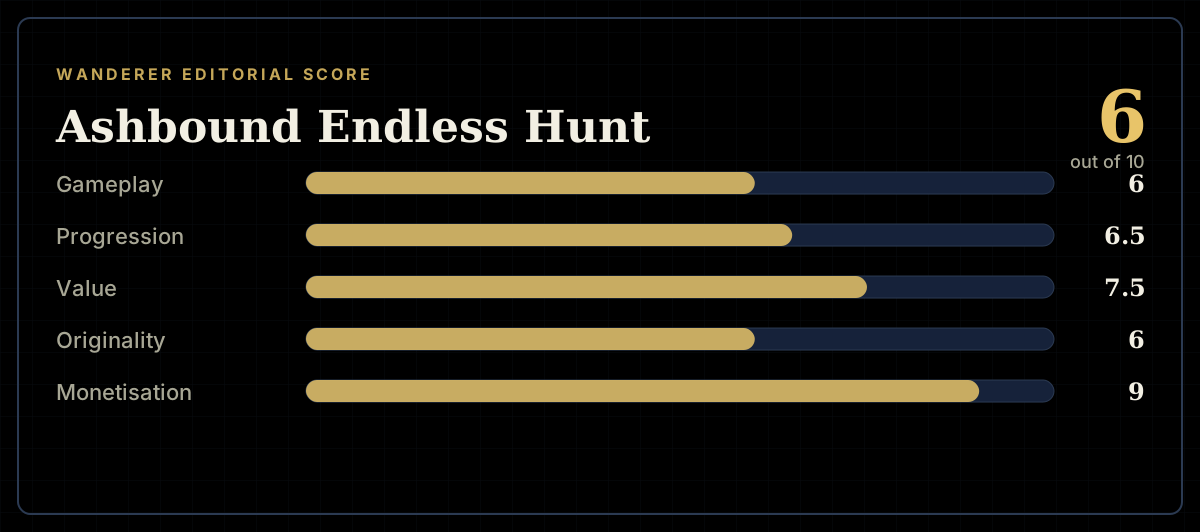
How the review scores each part of the gameWanderer Editorial -
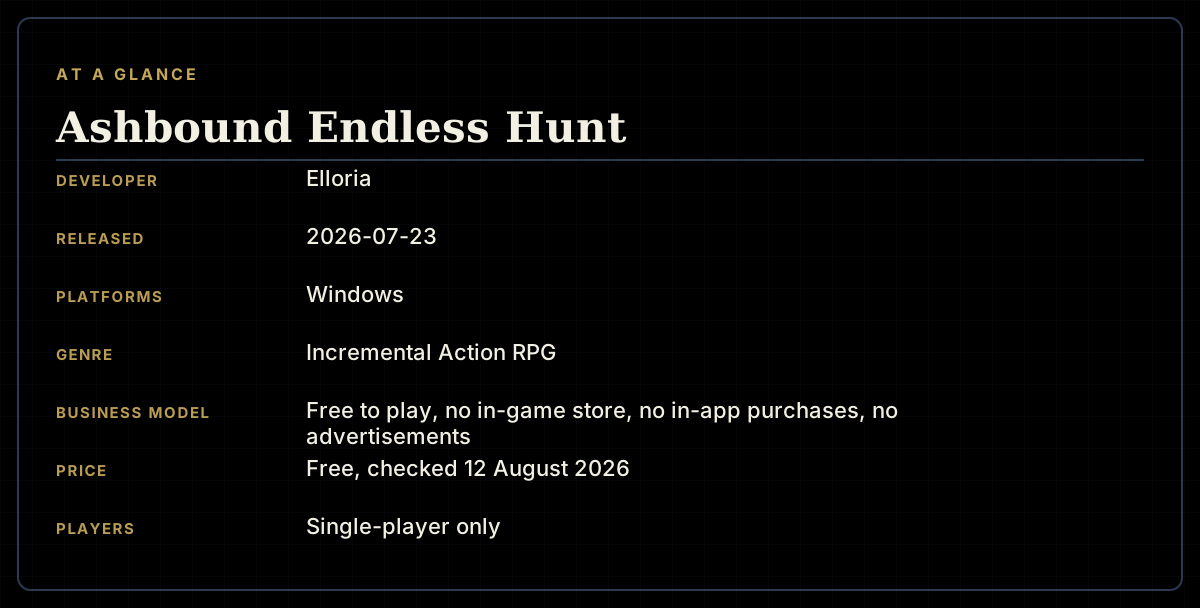
The essentials at a glanceWanderer Editorial -
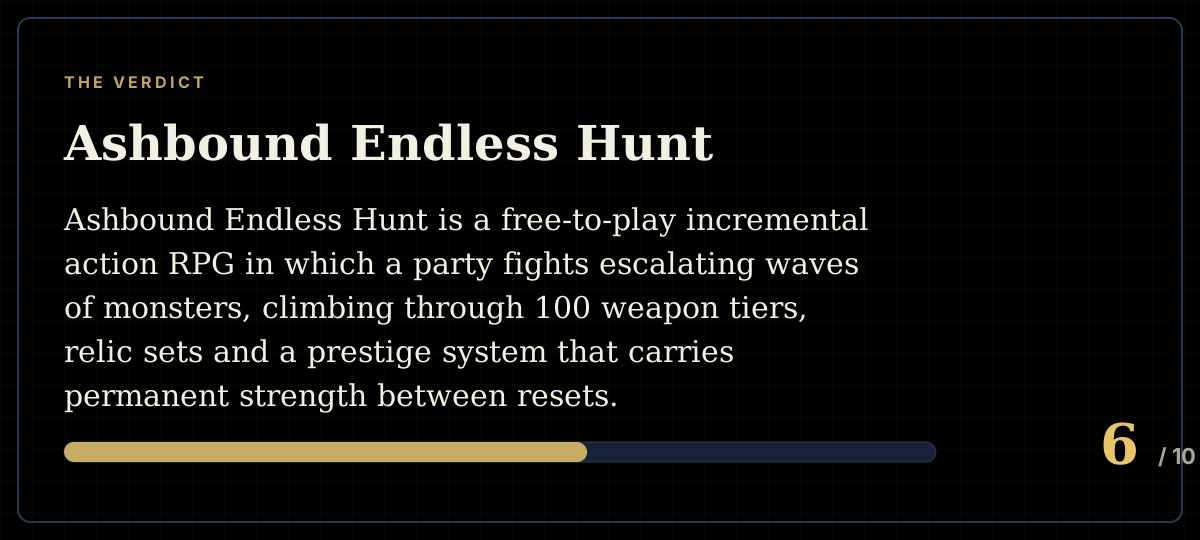
The short versionWanderer Editorial