Game review
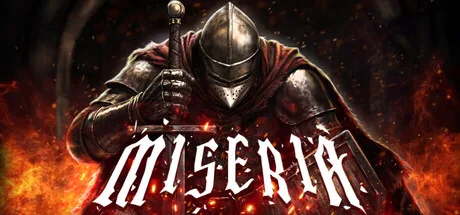
Miseria
6 / 10
- Developer
- Somnambulist Games
- Publisher
- Somnambulist Games
- Released
- 7 August 2026
- Platforms
- Windows
- Genre
- Idle Incremental RPG
- Monetisation
- One-time purchase, no in-game store, no DLC
- Players
- Single-player only
The short version
Miseria is a solo-developed dark fantasy idle incremental in which a party of damned souls auto-battles its way down an endless pit, earning gold and gear along the way and periodically resetting through a "Reborn" prestige system to push further on the next descent. It released 7 August 2026 for NZ$11.24, and inside its first week has already settled into a Mixed reception — 63 positive against 46 negative among English reviews, roughly 58%.
The reason isn't a broken game. It's a short one, and the review corpus is unusually blunt and consistent about it: negative and positive reviewers alike report finishing everything the game has to offer, including its final-boss achievement, in two to five hours. The global achievement data backs this up almost exactly — 58.7% of everyone who owns Miseria has already reached its deepest floor. For a lot of buyers, that math simply doesn't clear the bar at this price, even when they liked what they played.
Biggest strengths
- The dark, Diablo-inspired art direction and atmosphere draw consistent, specific praise from both positive and negative reviewers alike — a rare point of near-total agreement in a genuinely divided review corpus
- The core auto-battle-and-upgrade loop is competently built and satisfying in the moment, with reviewers describing a good early pace and a real sense of growing power
- Achievements are straightforward and unlocked through normal play rather than artificial grind walls, which several reviewers cite as a small mercy given how little else there is
Biggest weaknesses
- The single largest and most consistent complaint, appearing in well over half of all negative reviews, is that the entire game can be completed in two to five hours — several reviewers reached 100% achievements before their two-hour Steam refund window closed
- There is no meaningful build variety: equipment and character options are fixed and purchased in a set order rather than chosen between, which multiple reviewers specifically contrast with the genre's usual promise of build experimentation
- The Reborn prestige system is reported as unbalanced and undertuned — some reviewers reach the game's true end after only two or three resets, undermining the "endless descent" premise the store page promises
Who it's for: Idle and incremental fans who want a short, atmospheric, Diablo-flavoured evening rather than a long-term project, and who check a game's expected length before buying. Less suited to anyone expecting the deep prestige loop and hundreds of hours of scaling that the genre's bigger names deliver.
Our recommendation: Worth considering at a discount, or if a two-to-four-hour dark fantasy idle session genuinely appeals to you at full price — just go in knowing that's roughly what you're buying. The developer has already announced a free post-launch Challenge Mode aimed directly at the length and build-variety complaints, which is worth waiting for if the base game's scope gives you pause.
6 / 10
Introduction
Miseria wastes no time on subtlety. A party of damned souls, cursed for reasons the game slowly doles out through short narrative beats, descends a pit that gets darker and more dangerous with every floor, fighting automatically while the player manages equipment, stat points and a periodic "Reborn" reset that trades all current progress for permanent bonuses on the next run. It's a one-person project from Somnambulist Games, released 7 August 2026 after a public demo that ran through the Steam Medieval Fest earlier this year, and five days after launch it's already settled into a genuinely Mixed reception — 63 positive against 46 negative among English reviews, a split close enough to 50/50 that reading only one side of it would produce a badly wrong picture of the game.
What the game actually is
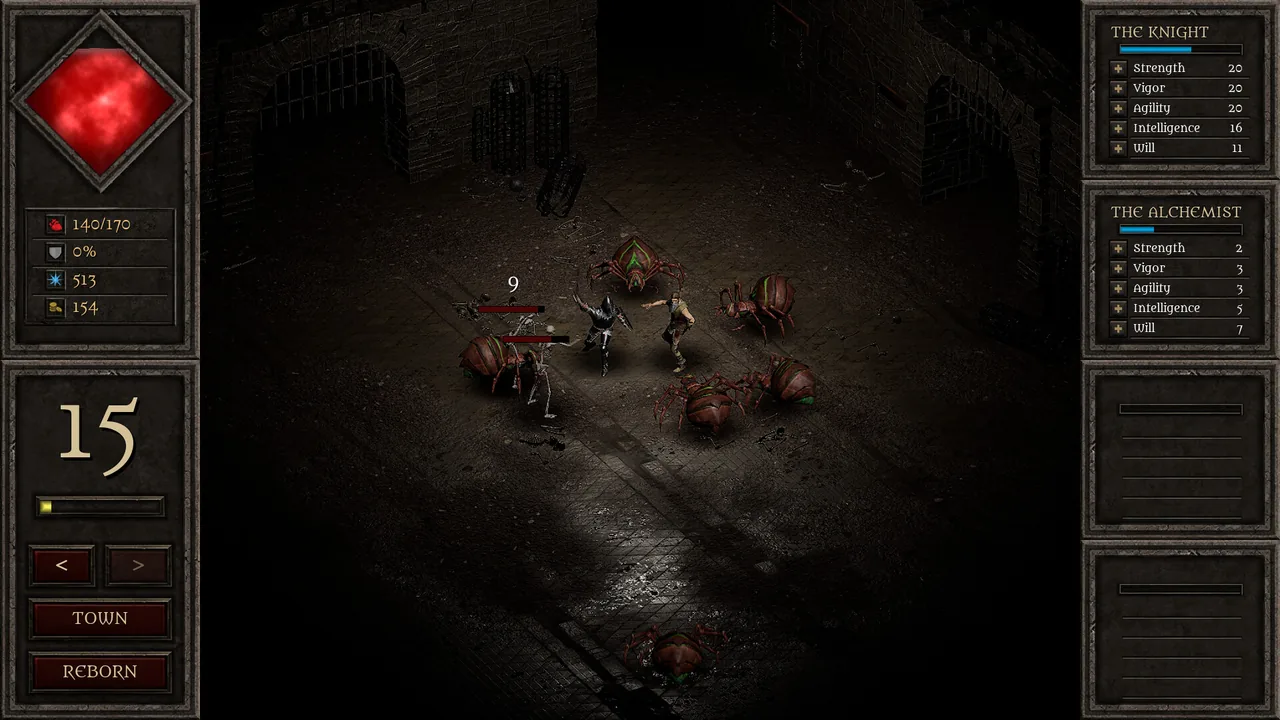
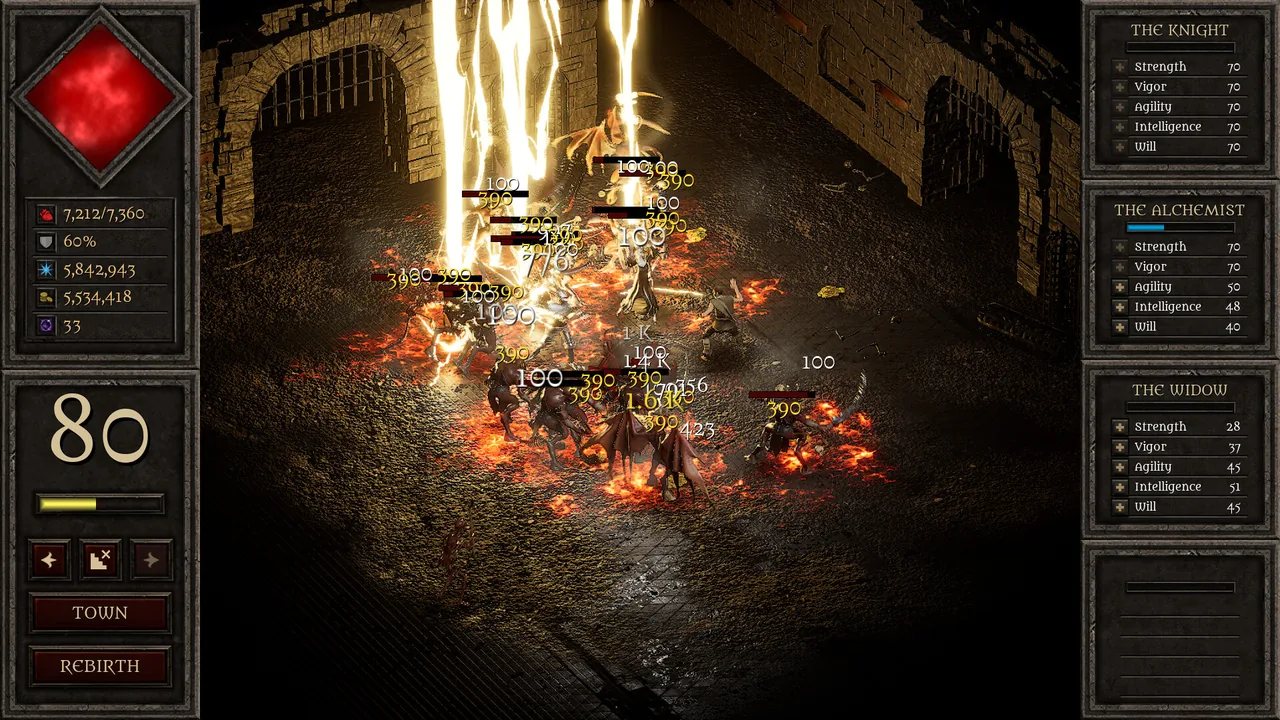
Strip away the framing and Miseria is a dungeon-descent auto-battler with incremental-game bones: characters fight on their own, gold and drops fund equipment upgrades at a blacksmith, stats climb through direct point allocation, and the whole loop periodically resets through prestige to unlock permanent multipliers for the next attempt. Party members attack automatically as they advance through the pit, generating mana passively through combat that charges up their abilities rather than requiring the player to time or trigger anything directly — the player's job is preparation and resource allocation between floors rather than moment-to-moment control, which puts Miseria closer to a management layer sitting on top of a fight than a game about fighting itself. That's a deliberate genre choice rather than a missing feature, and reviewers who understood it going in generally describe the loop as satisfying within its own terms: choosing what to upgrade, watching a previously threatening floor become trivial, and pushing one level further before the next Reborn reset.
The presentation leans hard into a Diablo-adjacent dark fantasy look — muted colour palettes, grim character portraits, ominous ambient music — and it's the one element of the game that draws essentially unanimous praise. Reviewers on both sides of the recommend/don't-recommend line single it out: "The dark fantasy aesthetic and tone, paired with its 'beware what you wish for' narrative, are executed well," wrote one reviewer who still ultimately didn't recommend the game, and a positive reviewer independently called it "gritty/old school" with "a strong Diablo-like atmosphere." When a corpus this divided agrees on something, it's worth taking seriously, and here it means the moment-to-moment experience of playing Miseria is not in dispute — only how much of it there is.
Story and tone
Miseria frames its entire loop around a "beware what you wish for" premise — a party of souls, damned for reasons the game reveals gradually, descending toward whatever waits at the bottom of an abyss in pursuit of the things they wanted most. It's delivered through short narrative beats between floors rather than sustained dialogue or cutscenes, closer to flavour text than a driving plot, and most reviewers treat it exactly that way: pleasant atmosphere rather than a reason to keep playing on its own. A handful of reviewers who saw the game through to its actual ending describe it as landing harder than they expected for something this brief — one called the full experience "surprisingly introspective... a shocking message that hits deep, if you 100% that is," a reaction distinct enough from the general "cheap and cheerful" framing that it's worth flagging as a real payoff for players who do finish, even though it doesn't change the underlying length argument.
The length problem, and the numbers behind it
That's the actual argument running through this review's negative sample, and it's remarkably consistent in how reviewers phrase it. "You can blitz the game in under 2 hours and the only thing keeping you past the 2 hour refund window is an achievement to reach floor 666," reads the single most-upvoted negative review, with 72 votes. Others echo it almost exactly: "4x the content needed," "beat it in 4.3 hours, but there was probably 15 minutes of choices and action on my part," and "I 100%'d it in 3 hours." Across the 44 English negative reviews read for this piece, 27 — well over half — center their complaint on some combination of length, price and value, whether or not they use the word "cash grab" (four reviewers do).
This isn't a case of a vocal minority exaggerating a launch bug. Steam's own achievement data confirms it independently of any review sample: Miseria ships only 12 achievements, structured as sequential depth gates from floor 10 through floor 90, then a final pair for defeating the last two bosses. Ninety-five percent of everyone who owns the game has reached floor 10 — an expected result for any tutorial-adjacent milestone — but the number that matters is the other end: 58.7% of the entire player base has reached floor 666, and 54.2% has beaten the final boss. Over half of everyone who bought Miseria has finished it. That's an extraordinarily high completion rate for any game with an ending, idle or otherwise, and it's the objective evidence behind what the review corpus keeps saying in prose: there simply isn't very much game here, and most people who try it find that out for themselves within a handful of hours.
Notably, this isn't purely a negative-reviewer phenomenon either. Positive reviews report almost identical playtimes — a median of 4.8 hours against 3.8 for the negative sample, both clustered in the same narrow band. Reviewers who liked Miseria enough to recommend it mostly aren't disagreeing about how long it lasts; they're disagreeing about whether that length is acceptable at the asking price. "Short and solid incremental for an afternoon of fun," wrote one recommender. "Fun little game... but way too short," wrote a different one who still gave it a thumbs down. The dividing line runs through expectations, not experience.
Prestige without much to prestige into
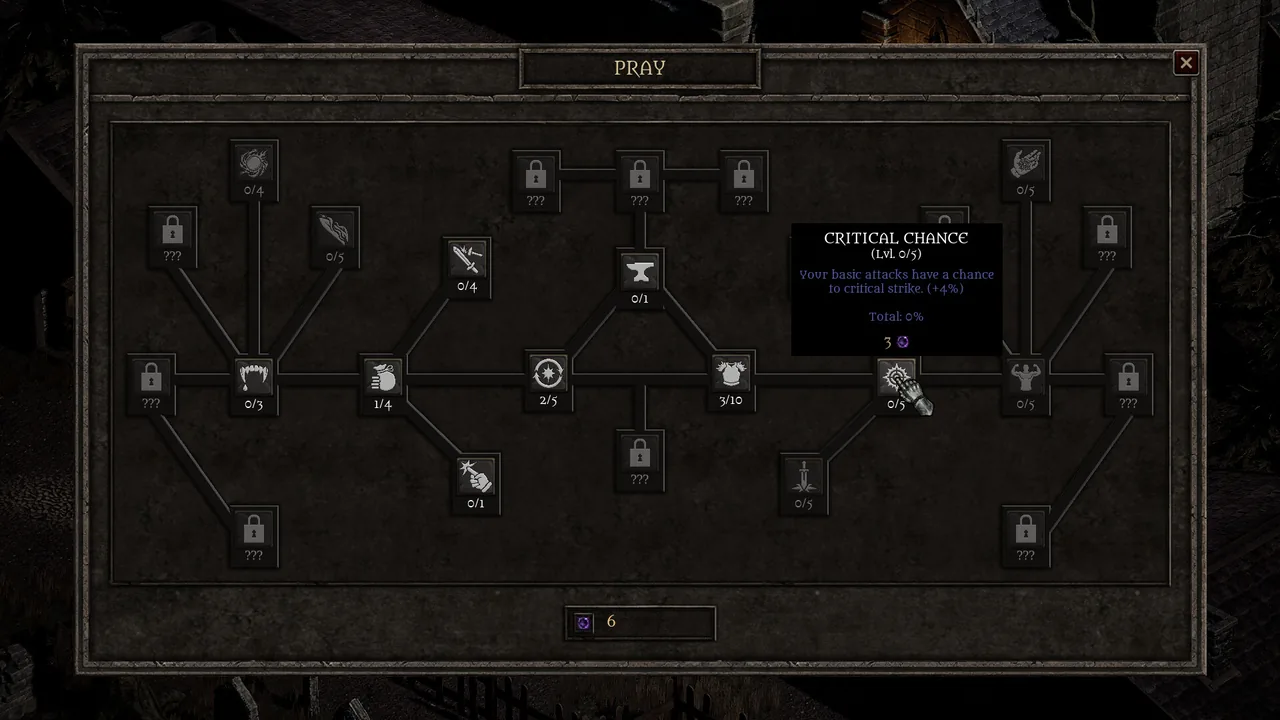
The genre convention Miseria borrows most visibly — a reset-for-permanent-bonuses "Reborn" system — draws its own specific criticism, separate from the pure length complaint. Several reviewers describe needing only two or three resets to reach the practical end of the game's content, which undercuts the sense of escalating, ever-deepening progression that a prestige system is supposed to deliver. One reviewer laid out the mechanical annoyance this creates in detail: after a reset, reapplying stat bonuses requires manually clicking through roughly sixteen stat buttons up to seventy times each, and two dozen equipment buttons around fifty times each, with no bulk-purchase or "buy max" option available at launch to speed the process up. A handful of positive reviewers note a workaround — holding the mouse button down triggers repeated purchases — but its absence from any in-game prompt or tutorial means most players who hit this friction experienced it as a real design gap rather than a shortcut waiting to be discovered.
The consequence, repeated by reviewers on both sides, is that there's no meaningful build variety to chase across those resets. Equipment and stat allocation follow a fixed, effectively linear order rather than presenting real choices, so replaying after a Reborn feels like repeating the same sequence faster rather than experimenting with a new approach. For a genre where players often stay engaged specifically by hunting for different viable builds, that's a real gap, and it compounds the length complaint rather than standing apart from it — there's neither much game, nor much reason to play through it more than once or twice.
Rough edges, and a developer already responding
A smaller but real cluster of complaints concerns stability: a minority of reviewers report crashes within the first fifteen to twenty-five minutes, occasional freezes, and CPU usage described as unreasonably high for a game with no complex simulation running. These aren't the dominant complaint in the sample, but they're specific and recent enough — all dated to launch week — to be worth flagging rather than dismissing as isolated hardware issues.
What's notable, and genuinely works in the game's favour, is how quickly the response has come. A progression-related bug involving the floor-advance button was hotfixed the same day as launch. More significantly, on 11 August — four days after release, and after reading exactly the kind of feedback detailed above — the developer posted directly about the mixed reception: "I know the game has had a mixed reception, and I'm sorry to those of you who gave Miseria a chance and ended up disappointed." The post announced a free Challenge Mode, unlocked after finishing the story, introducing roguelike elements, permadeath and randomised passive-tree choices on each run — a direct answer to both the length complaint and the build-variety one, though it's an announcement rather than a shipped feature at the time of writing. It's not a fix that exists yet, so it shouldn't be weighed as one, but a solo developer publicly naming the exact two complaints their review corpus is making, four days after launch, is a meaningfully better signal than silence.
A different kind of idle game
It's worth stating plainly what makes Miseria unusual next to most of the idle and incremental library: this genre typically sells itself on the opposite promise, dozens or hundreds of hours of scaling numbers, prestige layers stacked on prestige layers, content designed to outlast a player's patience rather than the reverse. Miseria inverts that relationship almost completely — a fixed, authored experience with a real ending, wrapped in incremental-game mechanics rather than built around incremental-game pacing. That's not an invalid idea; a short, atmospheric, self-contained incremental with a beginning, middle and end is a legitimate thing to want. But it means Miseria is competing on value against genre neighbours that routinely offer ten or twenty times the playtime for a similar or lower price, and a five-day-old Mixed rating suggests the market is currently pricing that gap more harshly than the game's actual craftsmanship deserves.
Final Verdict
Miseria is a well-made, well-dressed idle dungeon crawler that simply doesn't have enough game attached to its NZ$11.24 asking price for most of the people who've bought it so far — and the achievement data backing that up, rather than just review sentiment, is what makes the complaint hard to argue with. The art direction, atmosphere and core moment-to-moment loop are genuinely good, which is exactly why so many disappointed reviewers frame their criticism as "I wanted more of this" rather than "this doesn't work." Buy it for a short, atmospheric evening and that's roughly what you'll get. Buy it expecting the long, ever-deepening prestige climb the genre's best examples offer, and the math will likely disappoint you within the two-hour refund window, same as it did for a sizeable share of this review's negative sample. The announced Challenge Mode is worth watching for — if it delivers the build variety and length the base game is missing, this verdict has real room to improve.
Pros and cons
Pros
- The dark, Diablo-inspired art direction and atmosphere draw consistent, specific praise from both positive and negative reviewers alike — a rare point of near-total agreement in a genuinely divided review corpus
- The core auto-battle-and-upgrade loop is competently built and satisfying in the moment, with reviewers describing a good early pace and a real sense of growing power
- Achievements are straightforward and unlocked through normal play rather than artificial grind walls, which several reviewers cite as a small mercy given how little else there is
- No monetisation friction whatsoever — one upfront price, no DLC, no store, no energy system
- The developer responded to the mixed launch within days, shipping a hotfix and publicly announcing a free Challenge Mode with roguelike, permadeath and randomised-build elements aimed squarely at the loudest complaints
Cons
- The single largest and most consistent complaint, appearing in well over half of all negative reviews, is that the entire game can be completed in two to five hours — several reviewers reached 100% achievements before their two-hour Steam refund window closed
- There is no meaningful build variety: equipment and character options are fixed and purchased in a set order rather than chosen between, which multiple reviewers specifically contrast with the genre's usual promise of build experimentation
- The Reborn prestige system is reported as unbalanced and undertuned — some reviewers reach the game's true end after only two or three resets, undermining the "endless descent" premise the store page promises
- Re-applying stat and equipment bonuses after a prestige reset requires dozens of individual manual clicks per character, with no bulk-apply option at launch, which several reviewers single out as needless friction
- A minority of reviewers report crashes, freezes and unusually high CPU usage even on capable hardware, in a game with no complex simulation to justify it
Screenshots
-
MiseriaImage: Somnambulist Games via Steam -
MiseriaImage: Somnambulist Games via Steam -
MiseriaImage: Somnambulist Games via Steam -
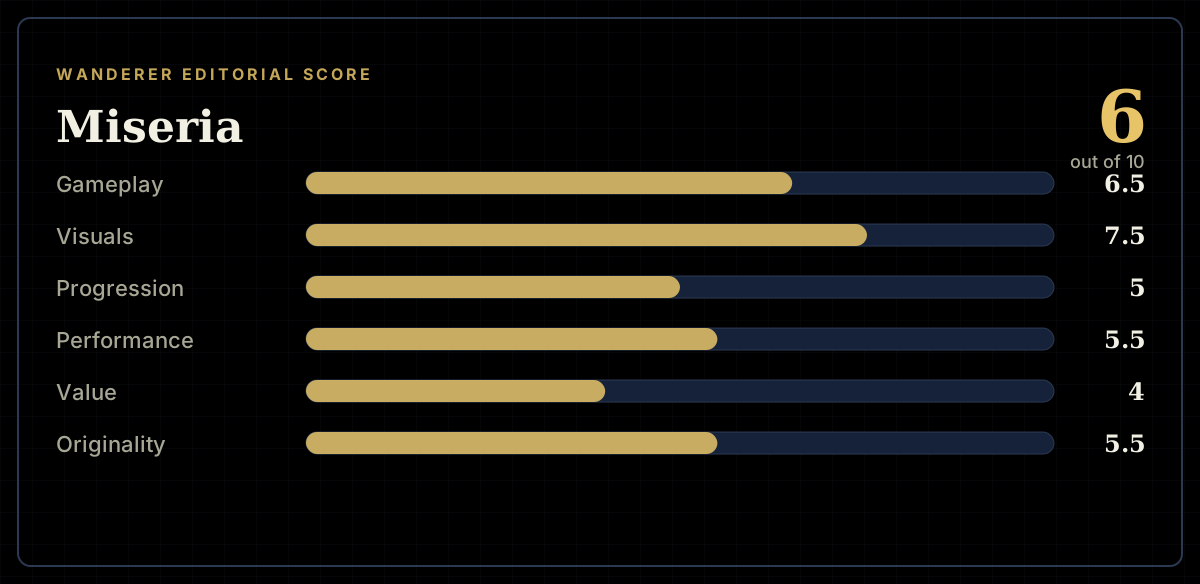
How the review scores each part of the gameWanderer Editorial -
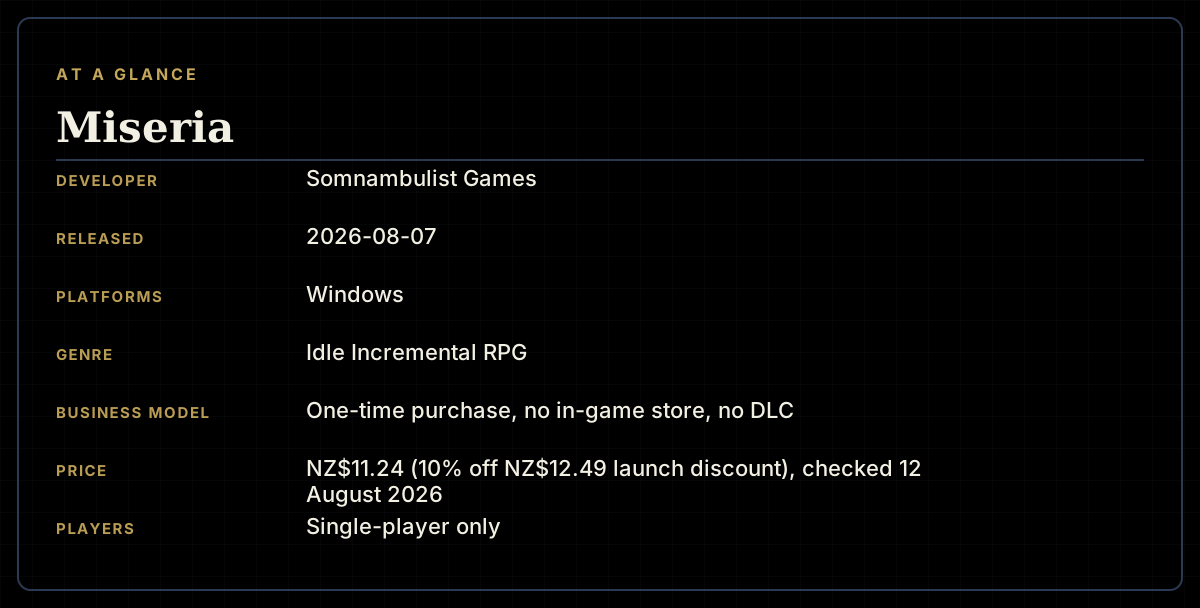
The essentials at a glanceWanderer Editorial -
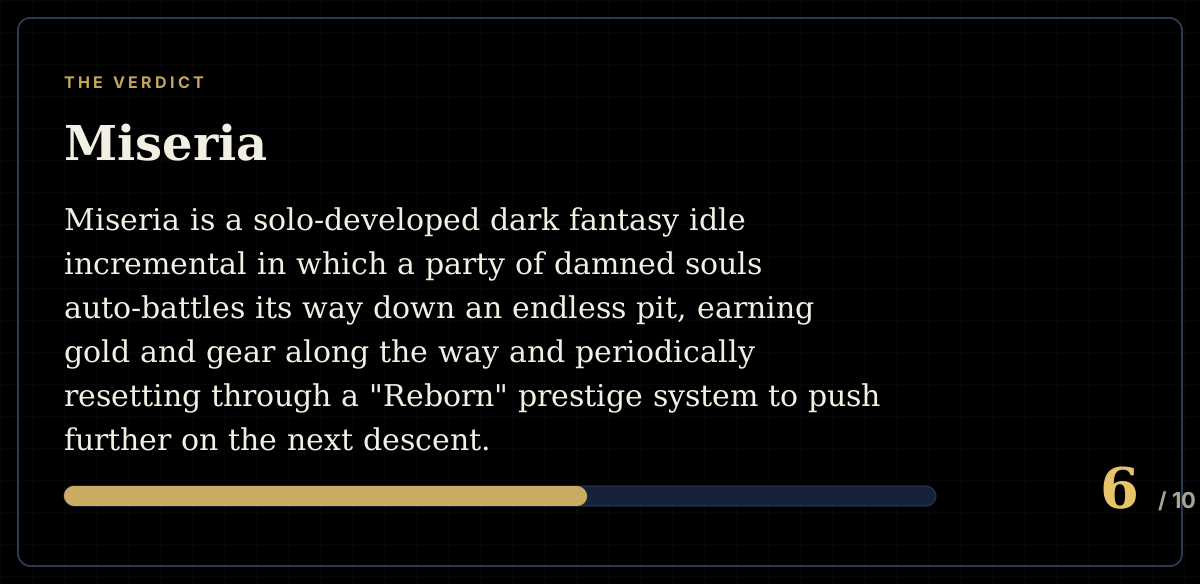
The short versionWanderer Editorial