
Game review
Magic Archery
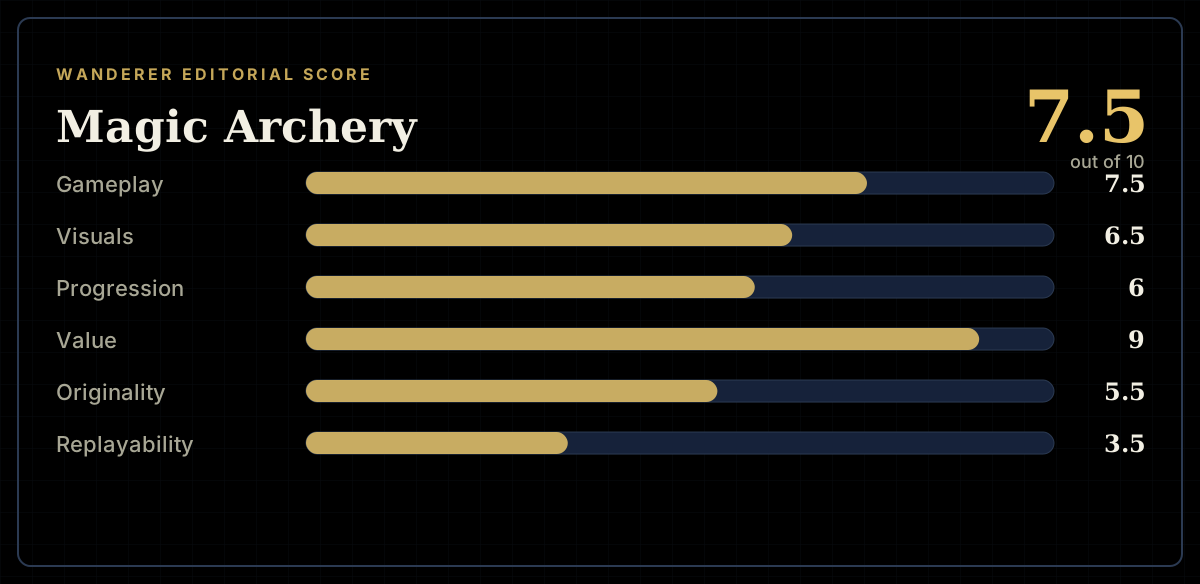
7.5 / 10
- Developer
- Barribob
- Publisher
- Barribob
- Released
- 4 October 2024
- Platforms
- Windows
- Genre
- Incremental, Idler, RPG
- Monetisation
- Free to play. No in-app purchases, no ads, no premium currency — stated directly on the store page and consistent with the achievement list and save data
- Players
- Single-player only
The short version
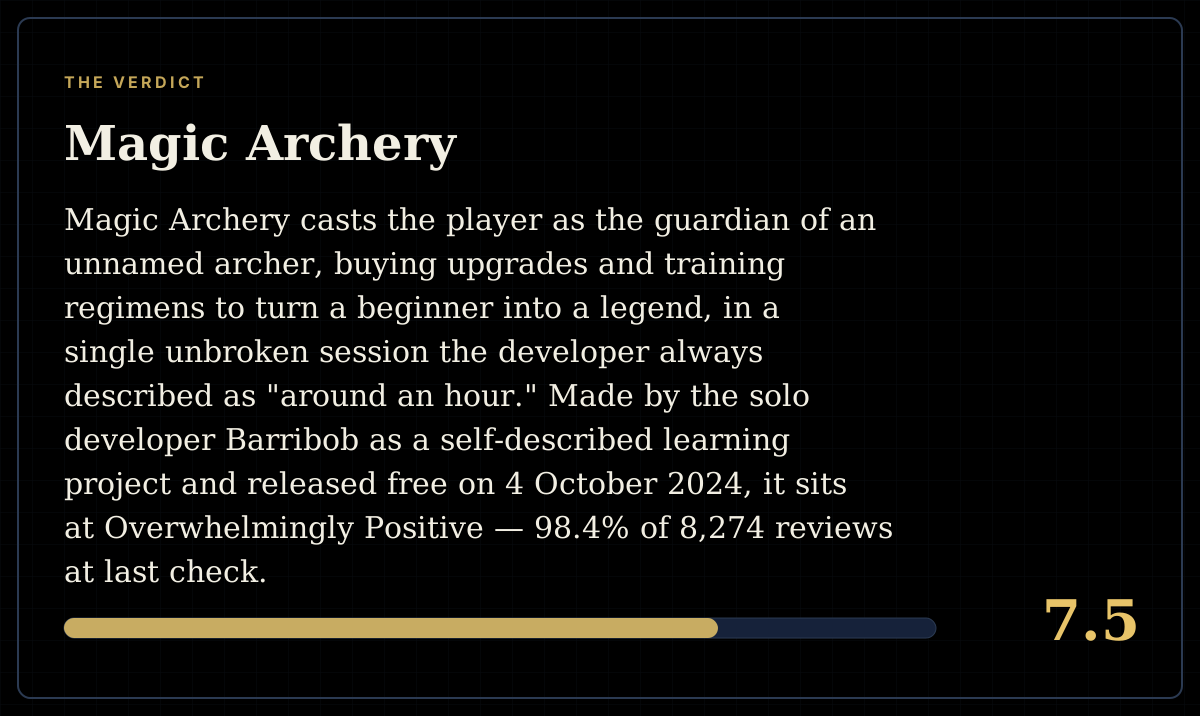
Magic Archery casts the player as the guardian of an unnamed archer, buying upgrades and training regimens to turn a beginner into a legend, in a single unbroken session the developer always described as "around an hour." Made by the solo developer Barribob as a self-described learning project and released free on 4 October 2024, it sits at Overwhelmingly Positive — 98.4% of 8,274 reviews at last check. Its own negative column argues almost entirely about the thing its own store page promised: a genuinely short, linear incremental game with a scripted finish rather than an infinite grind.
Biggest strengths
- Costs nothing and asks for nothing afterward — no in-app purchases, no ads, no account, confirmed by the store page and uncontradicted by any credible review in its negative sample
- The upgrade-and-training loop keeps something new unlocking every few minutes rather than forcing long idle waits, which several reviewers single out as unusually well-paced for the genre
- Steam's own achievement data shows 91.6% of players who install it reach the ending — an exceptionally healthy completion rate that confirms the loop holds attention for its full runtime
Biggest weaknesses
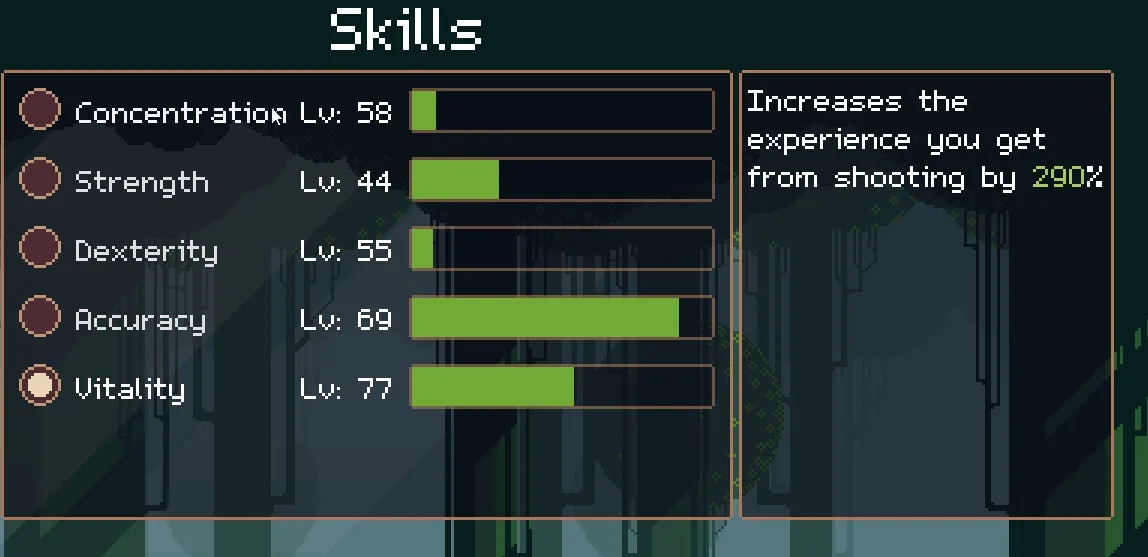
- Once the skill tree opens up fully, nearly every stat can be maxed at once, so the choices that felt meaningful early on stop mattering well before the credits
- There is no rebirth, prestige or new-game-plus loop of any kind — when it ends, it is completely finished, which a large share of its own fans say they wish were not true
- A meaningful share of its negative reviews are written by players who beat the entire game in under 70 minutes and simply wanted more of it, which is a real limitation even though it was clearly disclosed in advance
Who it's for: Incremental-game fans who want a tight, well-made hour rather than another open-ended number-go-up commitment, and anyone curious what a "definite ending" does to the genre's usual promises.
Our recommendation: A polished, honestly-scoped free incremental game that delivers exactly what its own announcement post promised — worth an hour of anyone's time, and worth knowing going in that an hour really is all there is.
7.5 / 10
Introduction
Magic Archery hands the player a nameless apprentice and a target range, and asks them to turn one into the greatest archer alive by spending the next hour clicking upgrades. Made solo by the developer Barribob and released free on Steam on 4 October 2024, it was never pitched as anything bigger than that: the pre-release announcement described it plainly as "a short incremental game (around an hour)," made explicitly to learn how Steam releases work before attempting something larger. Judged against that stated goal rather than against the genre's usual open-ended promises, it is a genuinely well-made hour, and its audience agrees almost unanimously — Overwhelmingly Positive at 98.4% across 8,274 reviews at last check, a score this review's full read of its 98 English-language negative reviews does surprisingly little to undermine.
A tight loop, honestly signposted
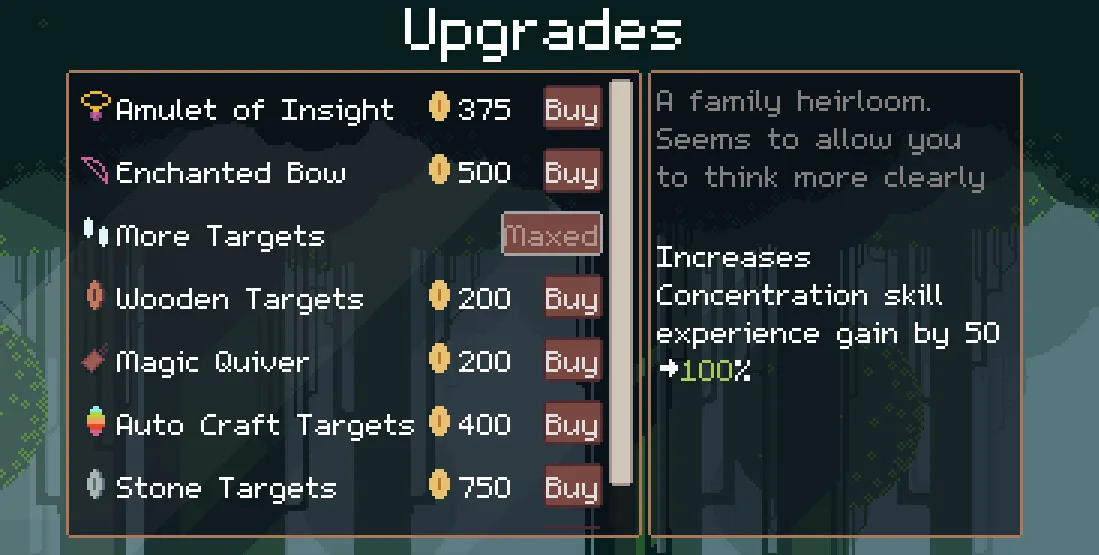
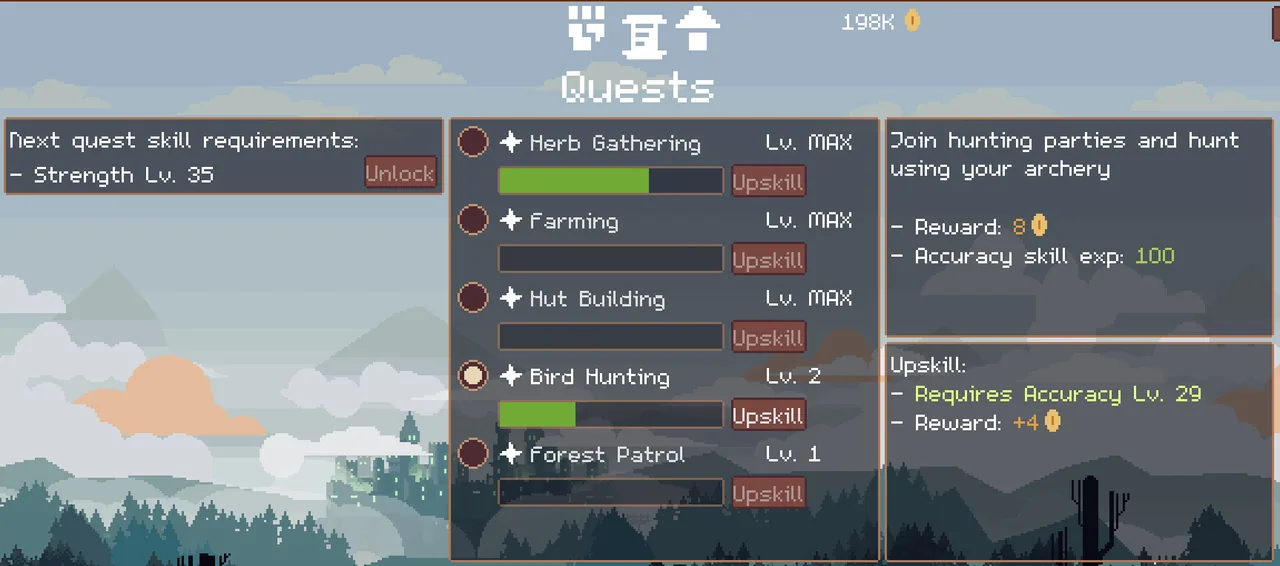
The moment-to-moment game is simple and stays simple on purpose. Fire arrows at targets to earn gold, spend gold on stat upgrades and training regimens, unlock new equipment and locations, and repeat until the meter tips over into the next tier. There's a skill tree with a handful of branching stat investments, a small quest structure that hands out gold and reputation for milestones, and a light narrative frame about training under a mentor that never overstays its welcome. None of it is complicated, and several of the most-upvoted positive reviews credit exactly that: one reviewer with 63 minutes on record called it a game that "dodges" the usual incremental-game problem of novelty wearing off, precisely because it never runs long enough for that to happen. Another, at 70 minutes, singled out how little actual idling the game asks for — rarely more than 10 to 30 seconds between meaningful clicks — and called that the way the genre ought to be built more often.
Steam's own achievement data backs up how well that loop holds attention across its intended length. Six of the game's seven achievements sit between 91.6% and 99.3% of all players who ever launched it, meaning the overwhelming majority who start Magic Archery actually see it through to its ending — an unusually clean completion curve for any game, let alone a free one with nothing to lose by quitting early. Only the eighth achievement, an optional post-game challenge for pushing numbers well past what the story requires, falls to 52.6%, which reads less like players losing interest and more like most people simply not bothering with a completionist extra once the main arc is done.
Where the choices stop mattering
The clearest, most consistently repeated criticism in the negative sample is about the back half of the skill tree rather than the loop itself: because gold accumulates faster than it can be spent by the final stretch, nearly every stat can be maxed out simultaneously, and the branching choices that felt consequential in the opening minutes collapse into "buy everything, in any order." One reviewer put it plainly — the entire tree "can be maxed out, removing any meaningful choices from it" — and it's a fair complaint about pacing rather than a fabricated one; the review corpus is consistent on this point across playthroughs of very different lengths. Progression here earns real credit for keeping something visibly new unlocking every few minutes, but loses ground for letting the actual decision-making thin out well before the credits roll.
Why "too short" cuts both directions
Read the negative sample in full and one thing stands out: this isn't a corpus arguing the game is broken, boring in the conventional sense, or badly made. Of the 98 English-language negative reviews, 47 explicitly mention its length — "short," a specific number of minutes, or the word "demo" used as a synonym for what they feel they got instead of a full game. The median playtime among those critical reviewers is 65.5 minutes: almost exactly the runtime the developer announced before launch, which means these are overwhelmingly players who finished the game and are objecting to what happened when they did, not people who bounced off early. That's a credible, corroborated complaint rather than a drive-by one.
What makes it worth reading carefully rather than simply subtracting points for is that the exact same fact — the length — is also the single most common thing praised in the positive sample. The top-voted positive review at 232 votes calls it "absolutely wonderful" specifically because it's short; another at 141 votes says the price is "right" for exactly what's on offer; a third argues a definite ending is "dodging" the genre's biggest flaw rather than falling short of it. Set alongside the developer's own pre-launch post stating the runtime outright, the honest reading is that this isn't a game that failed to deliver — it's a game whose scope some of its own audience simply wishes had been bigger, which is a different and much less damning problem. It costs nothing, after all, and refunding an hour of free time is not really a transaction anyone can make.
One structural gap is worth flagging on its own terms rather than folding into the length debate: despite carrying the community-voted "Idler" tag (245 votes, the second most-applied tag on the store page behind "Incremental" at 299), Magic Archery does not progress while closed. One reviewer noted this directly, and it's a fair thing for genre-savvy shoppers to know going in — this is an active, hands-on incremental game you sit and finish in one sitting, not a background game that keeps ticking over while you do something else.
Presentation and scope
The pixel art — backgrounds credited on the store page to artist Eder Muniz, with original work layered on top for characters, UI and effects — does a reasonable job of dressing up what is fundamentally a numbers-and-menus game, and the small forest and town locations give the short runtime a sense of place rather than feeling like a bare spreadsheet. It won't win points for ambition; a small number of reviewers call the presentation thin or the UI feedback unclear when opening menus, and those complaints are fair specifically because the loop is otherwise so tightly built that any rough interface edge stands out more than it would in a longer, busier game. For a project the developer describes as a learning exercise, though, it's a genuinely presentable result, not a placeholder.
Final Verdict
Magic Archery is exactly what its own pre-release announcement said it would be: a free, carefully paced, deliberately short incremental game with a real ending, built by a solo developer using it to learn how Steam releases work before attempting something bigger. Judged on its own terms it succeeds almost completely — the loop stays interesting for its whole runtime, the completion data confirms nearly everyone who starts it finishes it, and it never asks for a cent. What holds it back from a higher score is that its own most-repeated criticism is real even if it was disclosed upfront: the back half of its skill tree stops requiring real decisions, and there is nothing here for players who wanted this loop to keep going once the credits hit. That developer, Barribob, has since built directly on these ideas in the paid, longer Tower Wizard — worth knowing if an hour with Magic Archery leaves you wanting the fuller version. As a free stepping stone in its own right, though, it's an easy recommendation for anyone who likes the genre and has sixty spare minutes to confirm it.
Pros and cons
Pros
- Costs nothing and asks for nothing afterward — no in-app purchases, no ads, no account, confirmed by the store page and uncontradicted by any credible review in its negative sample
- The upgrade-and-training loop keeps something new unlocking every few minutes rather than forcing long idle waits, which several reviewers single out as unusually well-paced for the genre
- Steam's own achievement data shows 91.6% of players who install it reach the ending — an exceptionally healthy completion rate that confirms the loop holds attention for its full runtime
- The developer stated the roughly one-hour length publicly before release, so players who read the store page know exactly what they are getting
Cons
- Once the skill tree opens up fully, nearly every stat can be maxed at once, so the choices that felt meaningful early on stop mattering well before the credits
- There is no rebirth, prestige or new-game-plus loop of any kind — when it ends, it is completely finished, which a large share of its own fans say they wish were not true
- A meaningful share of its negative reviews are written by players who beat the entire game in under 70 minutes and simply wanted more of it, which is a real limitation even though it was clearly disclosed in advance
- There is no offline or background progression at all, an unusual omission for a game tagged Idler that some reviewers flag as a mismatch with genre expectations
Screenshots
-
Magic ArcheryImage: Barribob via Steam -
Magic ArcheryImage: Barribob via Steam -
Magic ArcheryImage: Barribob via Steam -
How the review scores each part of the gameWanderer Editorial -

The essentials at a glanceWanderer Editorial -
The short versionWanderer Editorial