Game review
Almost a Hero
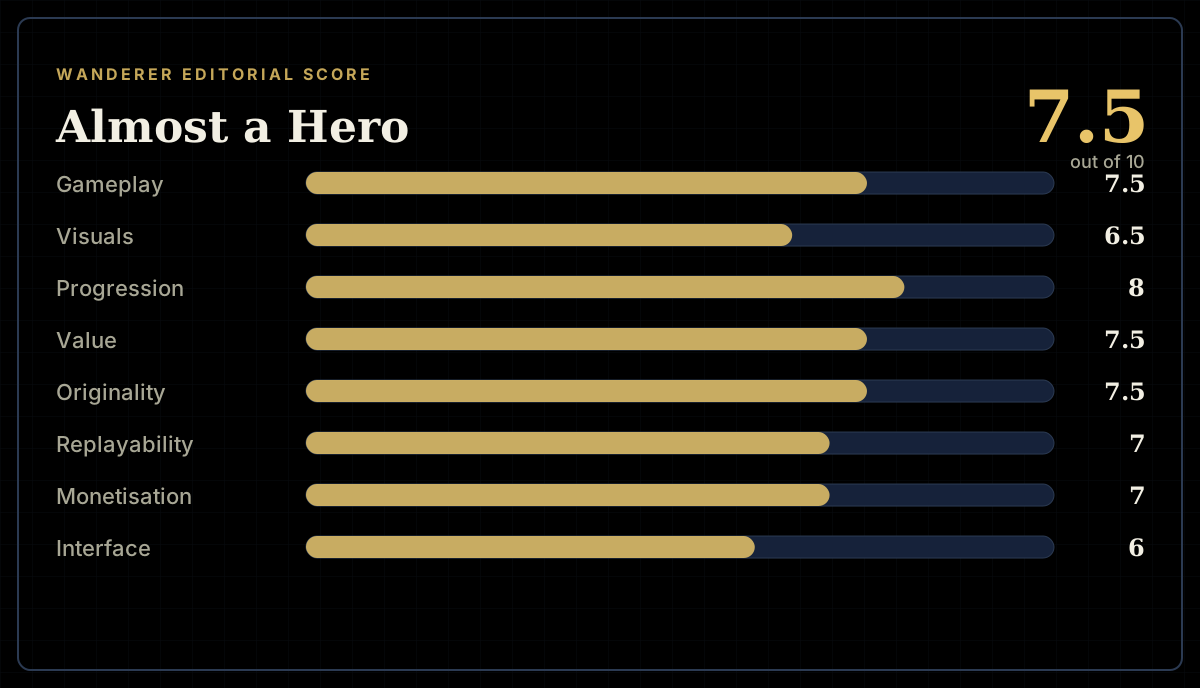
7.5 / 10
- Developer
- Bee Square
- Publisher
- Deca Games (Deca Live Operations GmbH), a subsidiary of Embracer Group
- Released
- 15 March 2017
- Platforms
- iOS, Android
- Genre
- Idle RPG
- Monetisation
- Free-to-play with a gem premium currency, one-off gem/pack purchases, and optional rewarded video ads that grant temporary or one-time bonuses
- Players
- Single-player; no guilds, trading or PvP
The short version
Almost a Hero built its identity around a party of nine spectacularly useless heroes rather than another cast of chosen ones, and the writing still lands stages deep into a run most idle RPGs would have made you forget you were playing a comedy at all. Underneath the jokes sits a trinket-and-artifact system with genuine build variety, and a rewarded-ad economy that is one of the more honestly-labelled examples of the genre: watch nothing and you still finish runs, watch consistently and you finish them meaningfully faster.
Biggest strengths
- The nine-hero "world's biggest failures" premise generates jokes in item descriptions, hero bios and event text well past the point most idle-RPG comedy runs dry
- Trinkets unlocking at stage 380 add three independent bonus slots per item and a forging system at stage 1000, giving late-game players a real crafting puzzle instead of another flat stat stick
- The Total Artifact Level system ties artifact rerolls to a shared unique-bonus pool, so build variety keeps expanding rather than converging on one "correct" loadout
Biggest weaknesses
- The interface stacks gems, scraps, mythstones, artifact fragments and event tokens on top of each other with little in-game explanation of what any of them are actually for
- Ring-focused strategy dominates the first few hundred stages so hard that the nine-hero cast the marketing sells barely matters until well into the game
- Visual presentation hasn't meaningfully evolved since 2017 and looks dated next to newer mobile idlers with animated 3D heroes
Who it's for: Idle RPG players who want a game they can genuinely ignore for hours, mobile players tired of ad economies that hide what they're actually selling, and anyone who wants their incremental game's writing to still be funny past the first prestige.
Our recommendation: Free to install and easy to recommend on that basis. The comedy and the trinket/artifact systems earn their keep for weeks, not just an opening session, and nothing about the ad model punishes a player who declines every video. Just don't expect it on Steam — it isn't there, and Bee Square's mobile-only choice has apparently never changed under Deca's ownership.
7.5 / 10
A party of failures carries a genre built on grinding faces
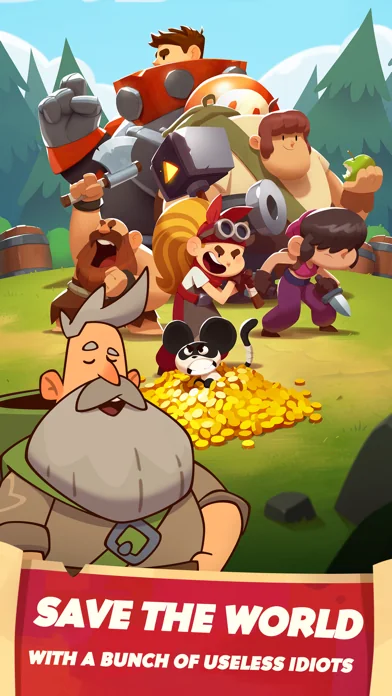
Most idle RPGs sell you a fantasy of power. Almost a Hero sells you the opposite: nine heroes so comprehensively bad at their jobs that the game's entire pitch is watching them fail upward. There's a knight who's afraid of blood, a wizard who can't remember his own spells, and a rogue whose stealth consists of standing very still and hoping nobody looks. It's a small joke, but Bee Square built the whole game around it, and it's the reason Almost a Hero is still worth talking about nine years after it launched on iOS and Android in March 2017, in a genre where most contemporaries from that year are long dead or forgotten.
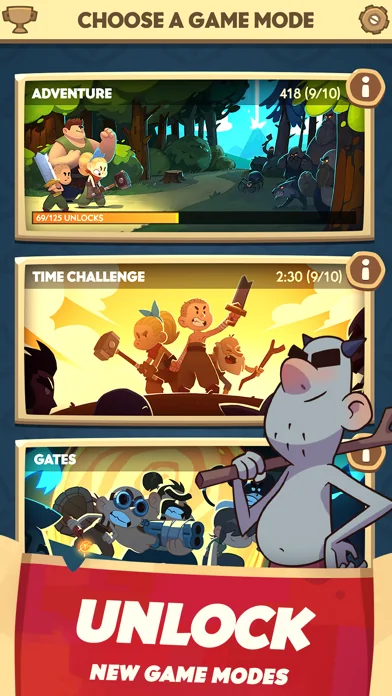
The mechanical skeleton underneath the jokes is standard idle-RPG stuff: tap or auto-attack through a horizontal gauntlet of stages, hit a wall, prestige for a currency that buys permanent multipliers, repeat with slightly better numbers. None of that is remarkable on its own. What keeps Almost a Hero worth returning to past the first few sessions is how much of the writing survives the repetition, and how much genuine decision-making the trinket and artifact systems add once the stage curve stops being about raw numbers and starts being about build choices.
The comedy is doing real structural work, not just opening-hour dressing
A lot of idle games front-load their personality. The first ten minutes are charming, the tutorial has a joke or two, and then the game settles into the numbers and never looks back. Almost a Hero doesn't do that as aggressively. Item flavour text, hero unlock bios, seasonal event framing and boss introductions keep the "world's biggest losers" conceit alive well past the point where most comedic idlers have run out of jokes and started repeating themselves. The writing earned the game a Best Mobile Game nod from Reddit's incremental-games community back in 2017, and it's the throughline that's kept a fairly conventional tap-and-wait loop distinct from the dozens of similarly-structured competitors that followed it.
It isn't inexhaustible. The core gag — inept heroes, competent-sounding narration — is a single joke told from a lot of angles, and by the point trinket forging and Total Artifact Level bonuses take over as the actual engine of progression, somewhere past stage 1000, the comedy has mostly finished its job of getting you attached to a cast you'd otherwise have no reason to care about. That's a fair trade. Plenty of idle RPGs never bother building a reason to care about their heroes at all.
Trinkets and artifacts are where the actual game lives
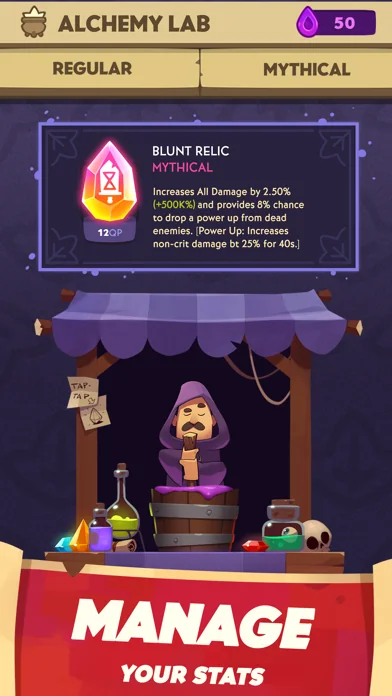
Once a run gets past its opening stages, Almost a Hero stops being about which button to tap and starts being about two interlocking systems. Trinkets unlock around stage 380 and can carry up to three independent bonuses — one each from Basic, Secondary and Special categories — meaning a single trinket can combine a flat damage boost with a conditional triggered ability on a cooldown. Trinket boxes drop from Adventure Mode, Gates of Gog and Season Challenges, or can be bought for gems, and by stage 1000 a forging system lets you disenchant unwanted trinkets and rebuild custom ones from salvaged effects. That's a real crafting loop, not a slot machine dressed up as one.
Artifacts run alongside it on a separate axis. Regular artifacts do the early heavy lifting; Mythical artifacts unlock at stage 585 and hit noticeably harder. The interesting part is Total Artifact Level, a shared meta-stat that determines which Unique Bonuses are even available to roll — every player starts with the same pool, and it expands as TAL climbs, with rerolled bonuses going back into a shared pool for future pulls. It's a subtler system than it sounds: it means two players at the same stage can have meaningfully different builds depending on what they've rerolled toward, which is the kind of differentiation idle RPGs usually fake with cosmetic hero skins instead of actually earning through their core loop.
The one criticism that sticks is pacing of information. Between gems, scraps, mythstones and artifact fragments, the game hands you four or five currencies before it's explained what any of them unlock, and the general community guides that have sprung up to explain "ignore your heroes and focus the Lightning Ring until stage 300" exist precisely because the in-game tutorial doesn't say so. A trinket and artifact system this deep deserves an interface that explains itself instead of outsourcing that job to a wiki.
The rewarded-ad economy is the most honest thing about it
This is the part of Almost a Hero worth dwelling on, because it's rarer than it should be. The game runs on a "dragon with a present" that appears periodically; tap it, watch a 15-to-30-second video, and collect a currency bundle. The bundle is real — often enough gold to skip past a difficulty wall that would otherwise cost a genuine time investment to grind through, or enough gems to open a trinket box early. Critically, the dragon doesn't demand anything. It sits there until you tap it or ignore it, and progression through Adventure Mode, Prestige and the core stage gauntlet never locks behind a mandatory ad view.
What that means in practice: a player who declines every single ad still reaches every story milestone, still prestiges, still unlocks trinkets and artifacts on the normal schedule. They are simply slower — the ad-watching player is skipping ahead on gold and gems that the non-watcher earns anyway, just over a longer stretch of stages. That's a genuinely different proposition from energy-gated mobile idlers where declining ads means hitting a wall you can't move past without either watching or paying. Almost a Hero's ads are a convenience purchase priced in your attention instead of your wallet, and they're optional in the way that word actually means, not the way free-to-play marketing usually means it.
Set this next to Idle Heroes, which runs almost the opposite monetisation model: no rewarded-ad economy at all, but a star-fusion gacha system that consumes your own roster as material and locks its competitive ladders behind a decade of other players' spending. Almost a Hero's approach is friendlier to a brand-new, unpaid player specifically because its currency is attention rather than fodder or luck — you can always choose to give more of the former, but Idle Heroes never lets you buy your way out of needing the latter. It's a useful reminder that "ad-driven" and "predatory" aren't synonyms, and that a gacha economy with zero ads can still pressure players harder than one built entirely around them.
The one recurring complaint in player feedback is interface friction rather than the economy itself: a close button on ad-watch prompts that reviewers describe as noticeably smaller than the "watch ad" button beside it, occasionally leading to an accidental tap into a purchase screen instead of dismissing the offer. That's a legitimate dark-pattern criticism and Deca hasn't fixed it as of the current build, even as the underlying reward structure stays fair. In-app purchases themselves run from roughly $1.99 up to a $19.99 Epic Pack, with additional limited-time offers gated to specific stages — priced like most mid-tier mobile idlers, not aggressively above the genre norm.
Idle progression is the real thing, not marketing
Some games marketed as "idle" are actually active-tapping games wearing the label for App Store searchability. Almost a Hero isn't one of them. Its own store description states it plainly: "your team fights, dies, revives, and fights again even when you are away" — and that's an accurate description of how the game behaves. Progress continues while the app is closed, artifacts can level up automatically once upgraded, and returning after a long absence means collecting accumulated rewards rather than restarting a session that quietly paused the moment you tapped away. For a genre where "idle" gets stretched to cover everything from true offline simulation to glorified stamina-bar clickers, Almost a Hero sits comfortably on the honest end of that spectrum.
No Steam version, and that's worth knowing before you go looking
Anyone coming to this expecting a PC release should stop looking now — there isn't one. Bee Square built Almost a Hero mobile-first in 2017 and it has stayed mobile-only through Deca Games' takeover as live-service operator, a company whose whole business is reviving and running older free-to-play titles under Embracer Group. Deca has kept other acquisitions on their original platforms rather than porting them, and Almost a Hero fits that pattern: no Steam listing, no announced PC version, nothing on any storefront but the Apple App Store and Google Play. If you want this specific brand of idle-RPG comedy on a desktop, Tap Titans 2 and Legends of Idleon are both available well outside mobile, and Idleon in particular scratches a similar "there's more depth here than the art style suggests" itch. Almost a Hero's absence from PC isn't a missed port so much as a business decision nobody at Deca appears to have revisited.
Still getting updates, nine years on
The current build sits at version 5.9.4, with an update as recent as 21 July 2026 — "game optimization and some bugs are fixed," according to the App Store changelog, which is modest but confirms the game is still being actively maintained rather than left to run on autopilot. That matters more than it sounds: a huge number of 2017-era mobile idlers are abandoned husks by now, still technically downloadable but with dead events, stale leaderboards and support inboxes nobody answers. Almost a Hero isn't in that state. Whatever else changed when Deca took over operation from Bee Square, the live-service cadence didn't stop.
Verdict
Almost a Hero earns its 7.5 on the strength of two things doing more work than the genre usually asks of them: writing that keeps a fairly ordinary tap-and-wait loop distinctive well past the point most comedic idlers run dry, and a trinket-and-artifact system with enough genuine build variety to reward the players who stick around for it. The rewarded-ad model is the pleasant surprise — optional in a way that actually holds up under scrutiny, and a useful contrast to idle RPGs that dress up mandatory grinds as choices. What keeps it from climbing higher is presentation that hasn't moved much since 2017 and an interface that throws four overlapping currencies at players without ever quite explaining what to do with them. Anyone who wants an idle RPG that respects both their time and their thumb, and doesn't mind that thumb never touching a PC version, should have this installed already.
Players who like watching numbers climb while they're not looking at the screen may also enjoy Wanderer, which runs its own progression while you're away from the keyboard entirely.
Pros and cons
Pros
- The nine-hero "world's biggest failures" premise generates jokes in item descriptions, hero bios and event text well past the point most idle-RPG comedy runs dry
- Trinkets unlocking at stage 380 add three independent bonus slots per item and a forging system at stage 1000, giving late-game players a real crafting puzzle instead of another flat stat stick
- The Total Artifact Level system ties artifact rerolls to a shared unique-bonus pool, so build variety keeps expanding rather than converging on one "correct" loadout
- Rewarded ads grant a genuinely optional gold or gem bump rather than gating core systems, and the game explicitly frames them as a dragon you can simply ignore
- Nine years of continuous updates under two different studios is rare for a 2017 mobile idler and means the stage curve and events haven't gone stale
Cons
- The interface stacks gems, scraps, mythstones, artifact fragments and event tokens on top of each other with little in-game explanation of what any of them are actually for
- Ring-focused strategy dominates the first few hundred stages so hard that the nine-hero cast the marketing sells barely matters until well into the game
- Visual presentation hasn't meaningfully evolved since 2017 and looks dated next to newer mobile idlers with animated 3D heroes
- Player reviews describe the ad-close button as small and easy to miss-tap into an unwanted purchase screen, a fixable annoyance Deca hasn't addressed
- No Steam release exists despite the genre's strong PC incremental-game audience, leaving desktop players stuck emulating an Android build to play at a keyboard
Screenshots
-
Almost a Hero - Idle AdventureImage: Deca Games EOOD via the App Store -
Almost a Hero - Idle AdventureImage: Deca Games EOOD via the App Store -
Almost a Hero - Idle AdventureImage: Deca Games EOOD via the App Store -
How the review scores each part of the gameWanderer Editorial -
The short versionWanderer Editorial