Game review
Idle Heroes
6 / 10
- Developer
- DHGAMES (Chengdu Droidhang Network Technology Co., Ltd.)
- Publisher
- DHGAMES (Chengdu Droidhang Network Technology Co., Ltd.)
- Released
- 9 November 2016
- Platforms
- iOS, Android
- Genre
- Idle Gacha RPG
- Monetisation
- Free to play with gacha hero summons, a star-fusion progression system that consumes duplicate and lower-tier heroes as material, stacked weekly/monthly/quarterly subscriptions and direct one-off IAP packs
- Players
- Worldwide Arena ladder, Guild Wars, and cooperative guild boss content
The short version
Idle Heroes has been running since 2016 by building its entire progression system around consuming heroes rather than collecting them — duplicates and lower-star pulls become fusion material for pushing a handful of heroes toward a ten-star ceiling, which makes hero fodder, not gold, the game's real currency. That idea is genuinely clever and it's why the game has outlasted most of its 2016 contemporaries.
It's also why the economy is so unforgiving. A decade of power creep means a 2026 free player isn't just behind veterans, they're behind a fusion cost curve that gets steeper every year, and the game's competitive ladders are effectively closed to anyone who didn't start spending years ago.
Biggest strengths
- The star-fusion system is disclosed clearly enough in-game that you can calculate the exact fodder cost of a target upgrade before committing anything
- Hero synergy across factions gives team-building real strategic weight rather than just fielding whoever has the highest raw power number
- Most PVE content, including the campaign and story dungeons, can be cleared by a patient free player without ever opening the shop
Biggest weaknesses
- The star-up fusion system needs hundreds of duplicate and lower-tier heroes to push a single hero from mid-tier toward its ceiling, which turns most of your roster into disposable material rather than heroes worth keeping
- Arena and Guild War leaderboards compound a decade of investment, so a 2026 free player has no realistic path to the top regardless of skill or patience
- Weekly, monthly and quarterly subscriptions run concurrently with one-off packs, creating a background spending pressure that never really switches off
Who it's for: Patient idle-RPG players who enjoy long-horizon optimisation puzzles and don't mind measuring progress in months rather than days. A poor fit for anyone who wants competitive PvP or a game that respects a first week's investment.
Our recommendation: Worth a free download if you go in for the campaign and PvE systems, which a patient free player can genuinely clear. Stay well clear of the Arena and Guild War ladders unless you're prepared to spend like it's still 2017, because the players at the top have a decade's head start you cannot fusion your way past.
6 / 10
Most gacha RPGs sell you the idea that pulling a new hero is the point. Idle Heroes, ten years into its run, has always been more honest about what it's actually asking for: pull heroes so you can feed most of them to the ones you keep. The star-fusion system at the centre of its progression isn't a side mechanic bolted onto a summon banner, it's the game's real economy, and understanding it explains almost everything else about why Idle Heroes has lasted this long and why it's such a difficult game to recommend without heavy qualification.
Fodder is the currency, not gold
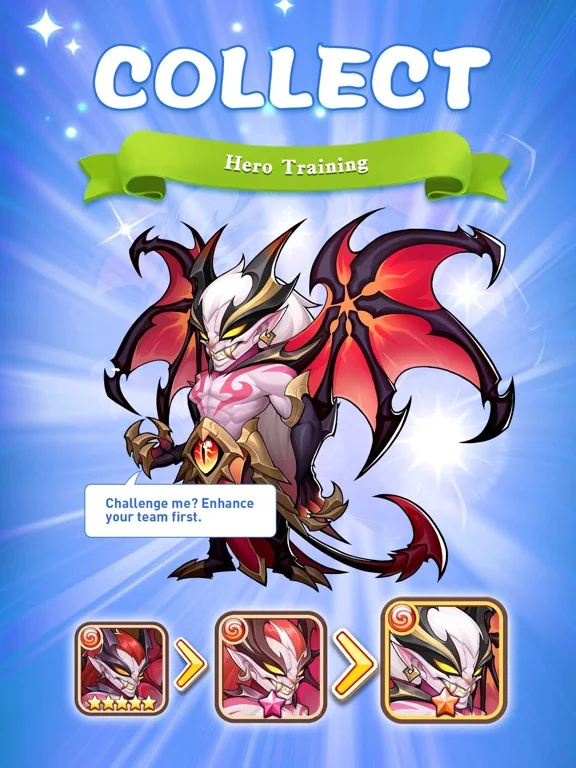
Idle Heroes heroes carry a star rating that climbs from one to ten, and climbing it isn't a matter of spending gold or waiting out a timer. It's fusion. To push a hero up a star tier, you feed it other heroes as material — specific combinations of duplicates of that same hero and, at higher tiers, other heroes entirely, consumed permanently in the process. Pushing a single hero from five stars toward ten doesn't cost dozens of fusion materials. Community documentation of the system, consistent across independently maintained wikis and guides, puts the requirement for a top-tier push in the hundreds of lower-star duplicate heroes, several tiers of which themselves had to be built from earlier fusions.
That reframes the entire gacha layer sitting above it. A summon banner in most hero collectors sells you a chance at a new roster slot. Here, a huge proportion of what you pull isn't destined for your roster at all — it's raw material for the handful of heroes you've decided are worth investing in. The game is honest about the mechanics of this: the summon circle discloses the odds structure and includes an energy-based guarantee that eventually forces a high-rarity result after enough pulls, rather than leaving you entirely to chance the way some of its competitors do. What it doesn't soften is the scale of the ask. A free player can absolutely build a functional ten-star hero. It takes months of accumulated pulls and campaign farming to get there, and every other hero that isn't going toward that goal is, functionally, spending fodder rather than roster building.
Compare that to how AFK Journey handles the same problem. AFK Journey shares equipment and levelling progress across its entire roster, so trying an off-meta hero doesn't cost you anything you can't get back by swapping again. Idle Heroes does the opposite by design: your heroes are the resource, and once one is fused away it's gone. It's a harder, more consequential economy, and it's also a more interesting one — every summon result is a real decision about what you're willing to sacrifice, not just a number added to a collection screen.
What a free player can actually earn
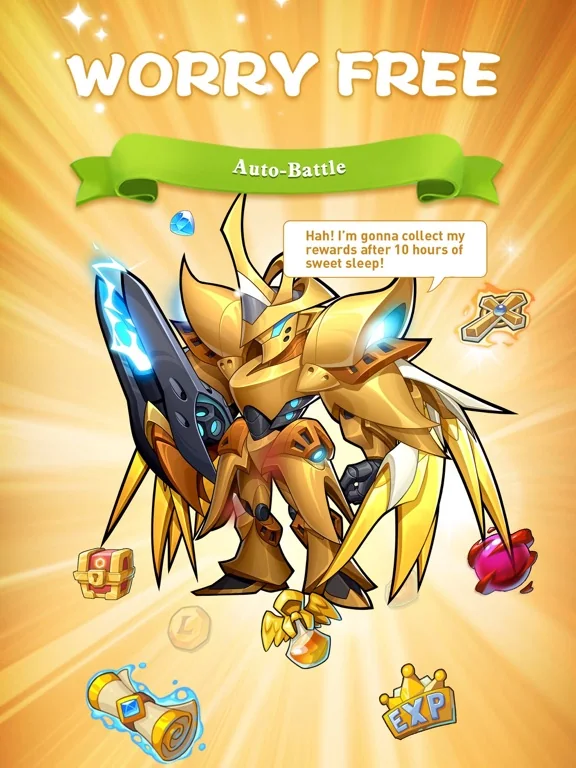
The campaign, story dungeons, and most PvE content genuinely can be cleared without spending real money, and that matters more than it sounds like it should for a game this monetisation-heavy. Idle Heroes doesn't gate its core content behind a paywall the way some hero collectors quietly do — the majority of what there is to do doesn't measure you against another player at all, so a patient free account can progress through it at its own pace indefinitely. The offline system backing all of this runs auto-battles against your current campaign stage while you're away, converting time into experience, gold, and a chance at equipment or hero shards.
That system caps out at eight hours. Beyond that window, no further offline rewards accrue until you open the app and collect what's waiting, which resets the clock. It's a reasonable design for a game built around multiple daily check-ins rather than true idle-forever framing — Idle Heroes was never trying to be a game you leave running for a week, and the cap is honest about that rather than pretending otherwise. Where the idle framing gets less honest is in how much of the actual retention design sits outside the auto-battle loop entirely: daily login rewards, rotating events, and time-limited currencies all pull you back to the app on a schedule that has very little to do with how your heroes are actually performing while you're gone. The offline system respects your time in the narrow sense of not wasting it. It doesn't reduce how often the game wants your attention.
Arena, Guild Wars, and the wall a decade built
This is where the fusion economy stops being a clever single-player puzzle and starts being a competitive problem. Idle Heroes runs a worldwide Arena ladder and Guild War events that pit player rosters directly against each other, and both are exactly as pay-to-win as a decade of compounding fusion investment implies. This isn't the vague, unsupported version of that label — here's what it actually means: the advantage for sale is roster depth built through years of summon spending, it directly determines Arena and Guild War outcomes because those modes are head-to-head power comparisons, and it does bypass meaningful progression for anyone trying to catch up, because there's no mechanism that lets a 2026 account fuse its way to a 2017 veteran's accumulated star levels in any reasonable timeframe. Equivalent rewards cannot reasonably be earned by a free player starting today; the ladder measures total historical investment more than current skill or spend rate.
The honest caveat is that most of the game doesn't require winning that fight. If you treat Arena and Guild War as spectator systems rather than goals, Idle Heroes doesn't actively punish you for opting out of them the way Idle Champions' champion-pack store punishes anyone who wants the newest hero without paying for it directly. Guild boss content, at least, delivers something Legend of Mushroom's alliances never manage — a shared objective with a mechanical reason to coordinate, rather than a chat window next to a health bar. But the moment you want to know how you actually stack up against another player, the answer is decided by a decade of prior spending that no amount of current-day play or purchase can retroactively close.
The subscriptions never really stop
Beyond the fusion economy, Idle Heroes runs a fairly conventional but relentless mobile monetisation stack: weekly, monthly and quarterly subscriptions running concurrently, one-off packs ranging from a few dollars to close to two hundred, and the usual VIP-tier structure that unlocks convenience perks the more you've cumulatively spent. None of this is unusual for the genre in isolation. What's notable is the overlap — a subscribed player can be paying into three separate recurring purchases at once, each with its own small daily payout, which is a more effective way to keep someone's card on file than any single large purchase prompt would be. It's the same design principle Legend of Mushroom runs with its stacked battle passes, just aged into a subscription model instead of a seasonal one.
None of it is deceptive about what it buys. Subscriptions and packs are priced and labelled clearly, and nothing here disguises a loot box as a mystery purchase. The pressure is cumulative rather than predatory in any single transaction, which is a meaningfully different problem than a game that hides its odds or sells outcomes it never delivers. It's still a lot of separate places asking for money in a game you can, in theory, play for free.
Ten years of interface
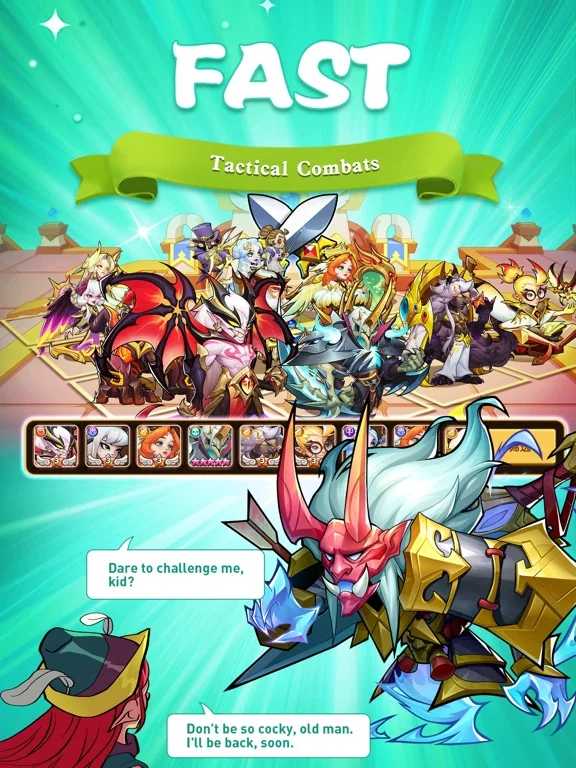
Idle Heroes looks and feels like what it is: a 2016 mobile RPG that has never stopped adding systems. Combat itself reads clearly — hero portraits, skill triggers and damage numbers are all legible even in a six-versus-six fight — but the surrounding menu structure has accumulated a decade's worth of event tabs, currencies and side-modes that a new account has to somehow parse on day one. Nothing about the interface is broken, exactly. It's dense in the specific way a game gets when nobody has gone back to retire the systems that mattered in 2018, and the onboarding does little to distinguish what's worth a new player's attention from what's a decade-old vestigial feature still technically live. Veterans navigate it fine, because they built that mental model one update at a time. Nobody starting today gets that advantage.
Final verdict
Idle Heroes deserves real credit for the idea at its centre — a fusion economy that makes every summon result a genuine decision about sacrifice rather than just collection, running continuously enough to still be adding content a decade after launch. That's not nothing in a genre where most titles are lucky to see two good years. Free players who stick to PvE content get a real, completable game out of it, and the offline system does what it promises without pretending to be more generous than it is.
It settles at a 6 because the systems that make Idle Heroes distinctive are the same ones that make it hostile to anyone arriving now. A decade of power creep has turned the fusion economy from a clever single-player puzzle into a competitive wall that no current spending pattern, free or paid, can climb over. Layer stacked subscriptions and a genuinely dense decade-old interface on top, and what's left is a game that rewards its oldest players generously and asks everyone else to be very patient about how much of it they'll ever actually own.
Pricing and monetisation checked 1 August 2026.
Players who'd rather their progression stayed on one clear, un-fusable path might also want to look at Wanderer, where nothing you've earned is ever converted into material for something else.
Pros and cons
Pros
- The star-fusion system is disclosed clearly enough in-game that you can calculate the exact fodder cost of a target upgrade before committing anything
- Hero synergy across factions gives team-building real strategic weight rather than just fielding whoever has the highest raw power number
- Most PVE content, including the campaign and story dungeons, can be cleared by a patient free player without ever opening the shop
- Guild boss content is genuinely cooperative rather than the shared-chat-window dressing some rival hero collectors settle for
- A decade of continuous content updates, including new heroes and modes as recently as late 2025, is rare for a 2016-era mobile gacha and says something about a loyal long-term base
Cons
- The star-up fusion system needs hundreds of duplicate and lower-tier heroes to push a single hero from mid-tier toward its ceiling, which turns most of your roster into disposable material rather than heroes worth keeping
- Arena and Guild War leaderboards compound a decade of investment, so a 2026 free player has no realistic path to the top regardless of skill or patience
- Weekly, monthly and quarterly subscriptions run concurrently with one-off packs, creating a background spending pressure that never really switches off
- Ten years of overlapping systems, currencies and event tabs make the interface intimidating for anyone starting fresh today, with little onboarding effort spent on trimming the older ones
- The gap between what a 2016 veteran's roster can do and what a new account starts with has grown wide enough that competitive parity stopped being a realistic goal years ago
Screenshots
-
Idle Heroes - Idle GamesImage: DHGames Limited via the App Store -
Idle Heroes - Idle GamesImage: DHGames Limited via the App Store -
Idle Heroes - Idle GamesImage: DHGames Limited via the App Store -
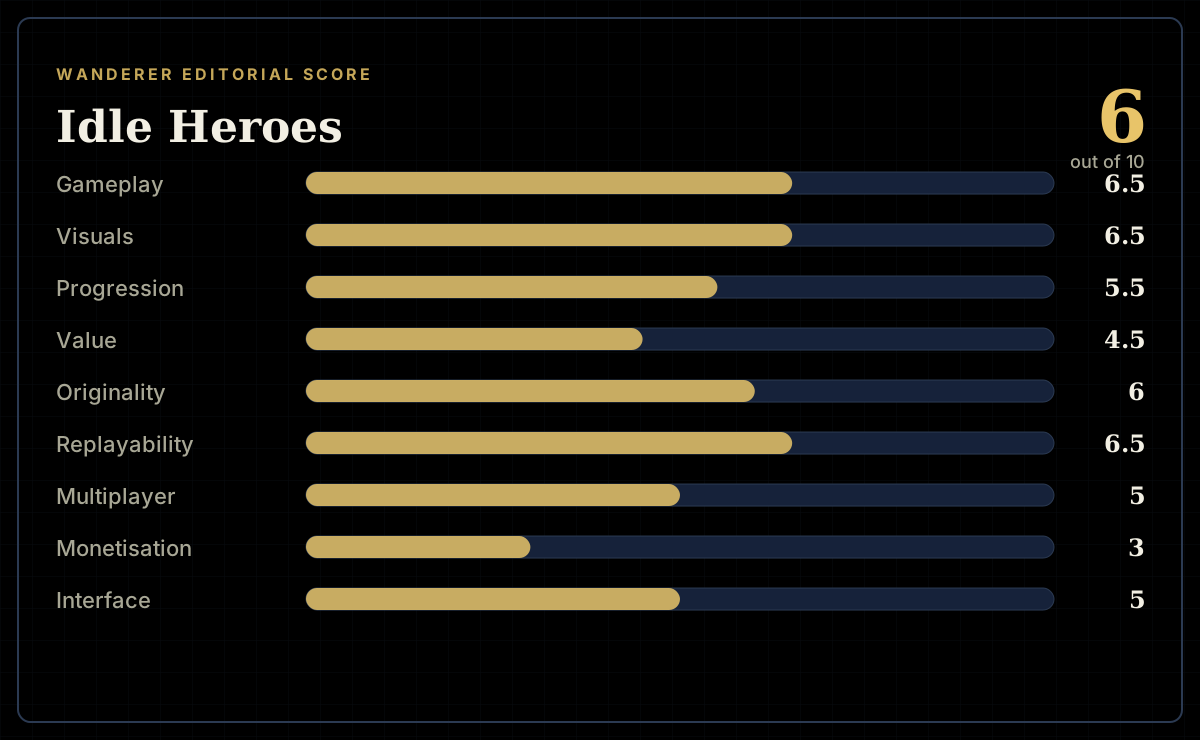
How the review scores each part of the gameWanderer Editorial -
The short versionWanderer Editorial