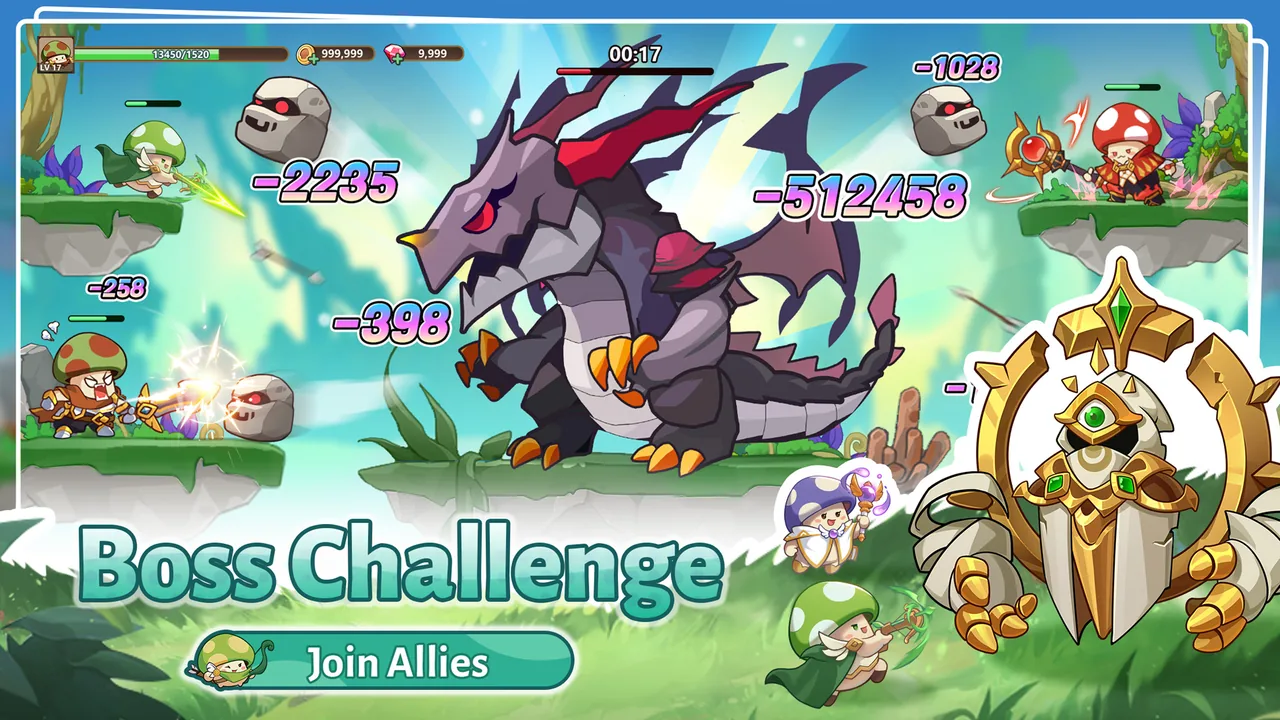
Game review
Legend of Mushroom
6 / 10
- Developer
- Joy Net Games
- Publisher
- Joy Net Games
- Released
- 7 March 2024
- Platforms
- iOS, Android
- Genre
- Idle RPG
- Monetisation
- Free to play with gacha summons, multiple concurrent battle passes and direct IAP
- Players
- Alliances and asynchronous PvP leaderboards, no real-time play
The short version
Legend of Mushroom nails the first two weeks. A tight idle gear loop, generous new-player rewards and a steady drip of new systems make it one of the more approachable gacha idle RPGs on either app store. What follows that opening stretch is a lot less generous: a gacha layer with no visible pity, PvP leaderboards that reward whoever paid first, and guild features that never give you a reason to actually talk to your guildmates.
Biggest strengths
- A new progression system unlocks roughly once a day for the first fortnight, keeping the early game from ever feeling stale
- Auto-battle and offline catch-up mean nothing is lost by putting the phone down, without making active play pointless
- The chibi mushroom art direction is bright, legible and holds together even when four UI panels are open at once
Biggest weaknesses
- The shard-based pet and skill gacha shows no pity counter, so duplicate pulls can pile up with no guaranteed payoff in sight
- PvP leaderboards have no catch-up mechanic, so whoever spends hardest in the first days locks in exclusive gear that late starters can never retroactively earn
- Alliances amount to a chat window and a shared boss health bar; there is little reason to coordinate with anyone in them
Who it's for: Idle RPG fans who enjoy gear-collection loops and don't mind a game that asks for money early and often.
Our recommendation: Worth a free download for the opening two weeks. Think hard before spending once the battle passes start stacking up.
6 / 10
Introduction
Legend of Mushroom opens with a joke that the rest of the game never quite lives up to: an evil dragon has turned an entire kingdom into mushrooms, and you play the one determined to fight its way back to human form. It's a throwaway premise for what is, underneath the chibi fungus mascot, a fairly hard-nosed idle gear-collection RPG in the mould of the shard-and-gacha games that dominate top-grossing charts in Japan and South Korea. Since launching in March 2024 it has passed 30 million downloads and become one of Joy Net Games' flagship titles, regularly running crossover events with licensed anime and game properties to keep its player base engaged.
What makes it worth talking about isn't the mushroom framing. It's how deliberately the opening weeks are paced against everything that comes after. For the first ten to fourteen days, Legend of Mushroom is one of the more generous, well-signposted idle RPGs available on mobile. Once that window closes, the game's actual business model comes into view, and it's considerably less player-friendly than the tutorial suggested.
The core loop
Combat plays out automatically. Your mushroom hero and a growing roster of allies walk through waves of enemies, and equipment drops out of magical lamps that appear after most fights. Every drop is a small decision: equip it if it beats your current gear, or sell it for the experience points that level everything else up. That's the entire moment-to-moment loop, and it works. There's a reason genre veterans describe this style of game as an RPG-themed slot machine — the lamps open, something drops, you make a snap judgement, and the wave resets. It's mindless in the way idle games are supposed to be mindless, and the game leans into that with a permanently available auto-battle toggle and offline progress that keeps ticking over gear and experience while you're not looking.
The strength of the loop is that it never demands attention it hasn't earned. Long sessions are rewarded, but so are five-minute check-ins between other things, which is exactly the shape mobile idle players expect. The weakness only shows up once you've played long enough to notice how shallow the actual decision-making is: equip-or-sell rarely has a wrong answer once you understand stat priorities, and there's no combat positioning, ability sequencing or team-building depth underneath the numbers going up.
Eleven systems in fourteen days
Where Legend of Mushroom earns its reputation as a well-built onboarding funnel is in how it staggers its progression systems. Rather than dumping every mechanic on a new player at once, it unlocks roughly one new vertical a day for the first two weeks: mounts with their own competitive leaderboard, artifact weapons, a semi-random relic system, gacha-based skills and companion "pals," lamp and hero levelling, guilds, a mining-flavoured tech tree, a prayer-statue garden, and eventually a soul system layered on top of all of it. Most of these run on daily key-based mini-games that refresh on a timer, which is a neat trick for keeping a player logging in every day without yet feeling like a chore.
It's a genuinely well-designed onboarding curve, and it's also where the game's monetisation strategy is doing its quietest work. Each new system arrives with its own currency, its own early offer and its own reason to believe that a small purchase right now will pay off for weeks to come. By the time a player has unlocked all eleven verticals, they're juggling enough overlapping currencies and timers that stepping back to ask whether any individual purchase was worth it becomes genuinely difficult. That's not an accident — it's the same design language you'll recognise from AFK Journey and other gacha-idle hybrids, just executed with unusual polish in the first fortnight specifically.
Gacha, battle passes and what money actually buys
Legend of Mushroom runs two separate gacha systems. Pets and skills are pulled through a shard-based system: duplicate pulls accumulate as shards toward eventually unlocking or upgrading a specific pet or skill, with no visible pity counter or drop-rate disclosure to tell you how far away that unlock actually is. The other system, covering some equipment and hero-related pulls, uses direct draws with a stated pull cap that guarantees a top-tier result eventually. The difference matters: a capped system tells you exactly what your money is buying and when it will pay off, while the shard system asks you to trust that the drip of duplicates is heading somewhere useful. It's the shard system that dominates the early and mid game, and it's the one the design gives you the least information about.
Layered on top of the gacha are the battle passes — plural, deliberately. Core and event passes run concurrently at multiple price points, typically free, around $4.99 and around $9.99, and by the second week it isn't unusual to have three or four active at once, each with its own reward track and expiry timer. None of them are individually expensive, and none require spending to progress through the main story content. What they add up to is a background hum of "you're leaving value on the table" that follows every session, which is a more effective long-term monetisation strategy than any single aggressive prompt would be. A permanent ad-removal purchase around $9.99 also throws in extra daily keys and a handful of guaranteed pulls, which is honest value for players who are going to spend something anyway.
None of this crosses into pay-to-win in the sense of buying outcomes unavailable to free players — everything on offer can, in theory, be earned through play. What it does do is heavily reward paying early. The PvP and mount leaderboards hand out exclusive, permanently powerful items to whoever climbs highest in the first days after each system unlocks, with no catch-up mechanic for anyone who starts later or spends less up front. Free players can absolutely progress. They just can't retroactively win a leaderboard that closed months ago, and the players who spent hardest in week one are still benefiting from that head start today.
Guilds, PvP and the social layer that isn't
Alliance systems exist, and they're some of the weakest design in the game. Beyond a shared chat window and a communal boss health bar to chip away at, there's little reason to coordinate with anyone in your guild — no meaningful cooperative content, no strategy that benefits from talking to another player rather than ignoring them. Gear inspection lets you compare your stats against other players, which produces a low-grade status competition but nothing resembling teamwork.
Compare that to the leaderboard-driven PvP, which is genuinely competitive but structured as what industry analysts call a "sharkfin" curve: a spike of exclusive rewards for early, heavy spenders, tapering into diminishing returns for everyone who arrives after. It's an effective way to extract revenue from a small number of dedicated spenders. It's a much less effective way to build a social game people stick with for its community, and Legend of Mushroom never really tries to be one.
Presentation and interface
The mushroom-and-friends art style does a lot of work the mechanics don't. Character silhouettes stay readable at a glance, damage numbers and status effects are colour-coded sensibly, and the game manages to layer four or five overlapping UI panels — health bars, currency counters, event banners, battle pass trackers — without turning into visual noise. It's a genuinely well-produced mobile interface, built for one-handed thumb play in short bursts, which matters more for an idle game than almost anything else on this list.
Long-term appeal
Retention beyond the opening weeks leans on the usual idle-RPG toolkit: a daily comeback mini-game that punishes missed logins, time-gated currencies that reset every 24 hours, and competitive leaderboards that reward consistency. Joy Net Games also keeps the game current through licensed crossover events — an Overlord collaboration ran through mid-2026, following an earlier Palworld tie-in — which is a reliable way to pull lapsed players back for a limited-time story and reward track. Player sentiment on both storefronts reflects the split described above: praise for the lack of an energy system and the convenience of full auto-play, alongside recurring complaints about pay-to-win pressure and how aggressively later systems chase a purchase. Both things are true at once, which is unusual for a mobile idle RPG and is exactly why the game is worth discussing rather than dismissing.
Final verdict
Legend of Mushroom is a well-made idle RPG wrapped around a monetisation strategy that gets noticeably less generous the longer you play it. The opening fortnight is genuinely one of the better-paced onboarding experiences in the genre, and the core gear-collection loop is satisfying enough to justify a free download on that basis alone. But the shard gacha's lack of transparency, the stacked battle passes, and PvP systems that permanently reward early spenders over everyone else keep this from being a game worth recommending without heavy caveats. Free-to-play players who treat it as a two-week idle diversion will have a good time. Anyone tempted to spend past that point should go in with clear eyes about what, exactly, they're buying, and when.
Players who'd rather their progression kept moving without a battle pass chasing every system they unlock might prefer something like AFK Journey, which runs a similar idle-gacha formula with a gentler monetisation curve. Those who want persistent progression that keeps going while they're away, without any of the gacha layer at all, may also enjoy Wanderer.
Pros and cons
Pros
- A new progression system unlocks roughly once a day for the first fortnight, keeping the early game from ever feeling stale
- Auto-battle and offline catch-up mean nothing is lost by putting the phone down, without making active play pointless
- The chibi mushroom art direction is bright, legible and holds together even when four UI panels are open at once
- New-player rewards front-load enough gear, pets and summon currency to make the first few sessions feel generous rather than stingy
Cons
- The shard-based pet and skill gacha shows no pity counter, so duplicate pulls can pile up with no guaranteed payoff in sight
- PvP leaderboards have no catch-up mechanic, so whoever spends hardest in the first days locks in exclusive gear that late starters can never retroactively earn
- Alliances amount to a chat window and a shared boss health bar; there is little reason to coordinate with anyone in them
- By the second week it is common to have three or four battle passes running at once, each pitched separately
Screenshots
-
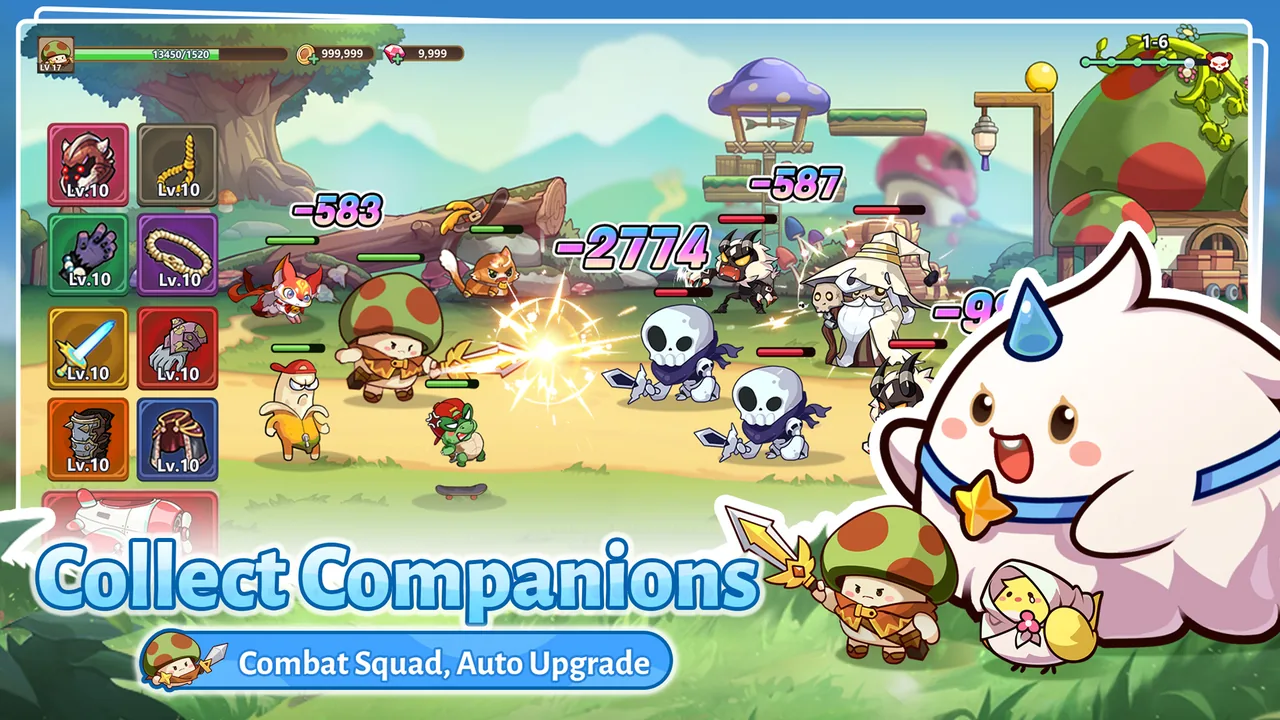
The core idle combat loop, with the equipped companion roster down the left edgeImage: Joy Net Games via Google Play -
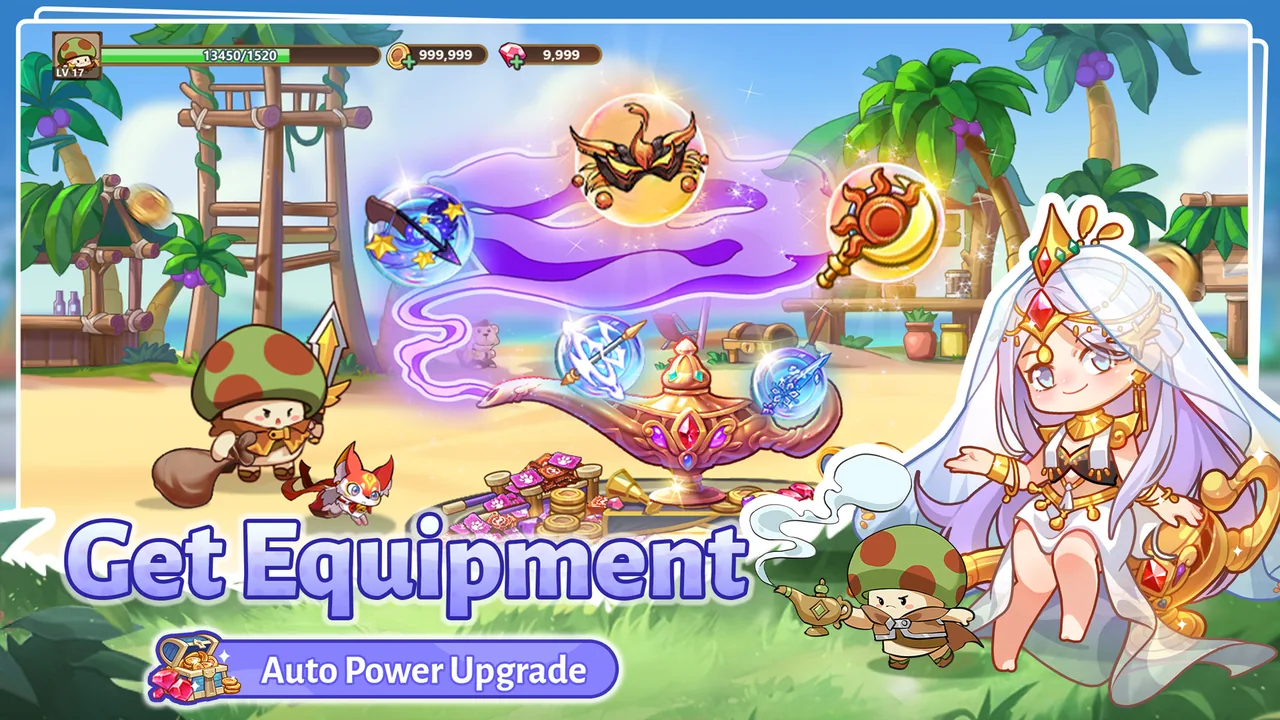
Gear drops out of magic lamps after most fightsImage: Joy Net Games via Google Play -
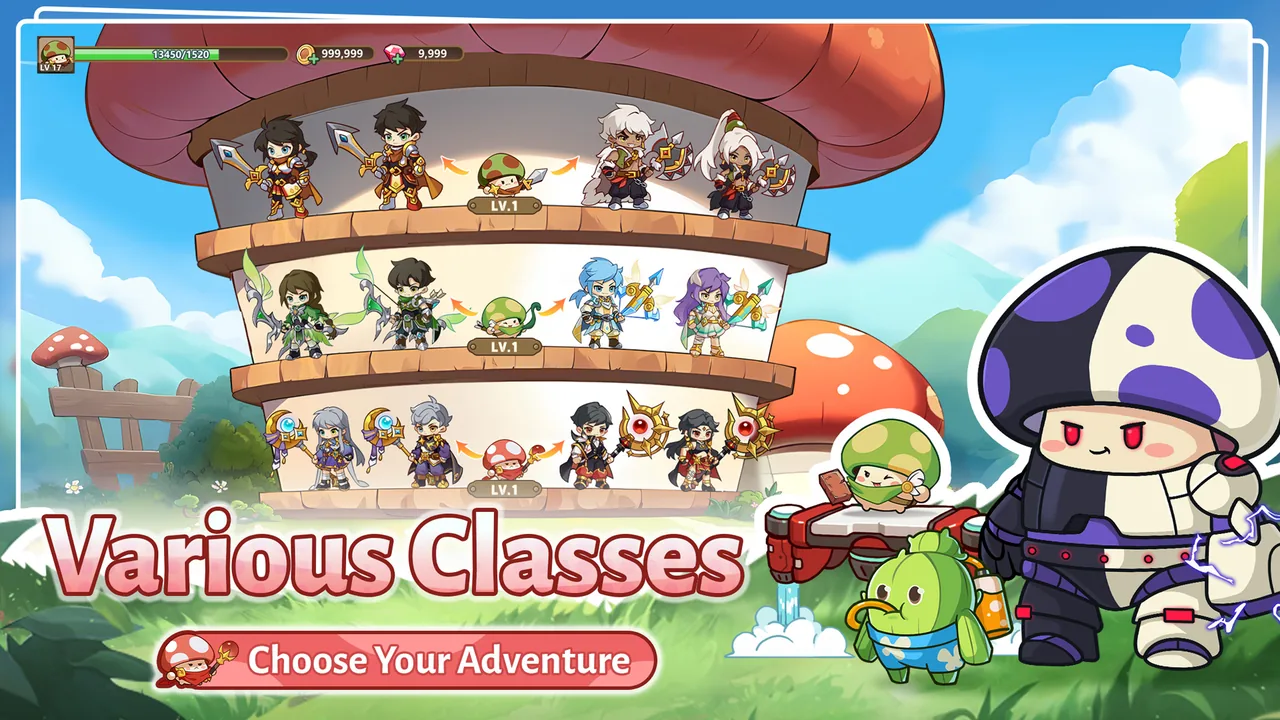
One of the eleven progression systems that unlock over the first two weeksImage: Joy Net Games via Google Play -
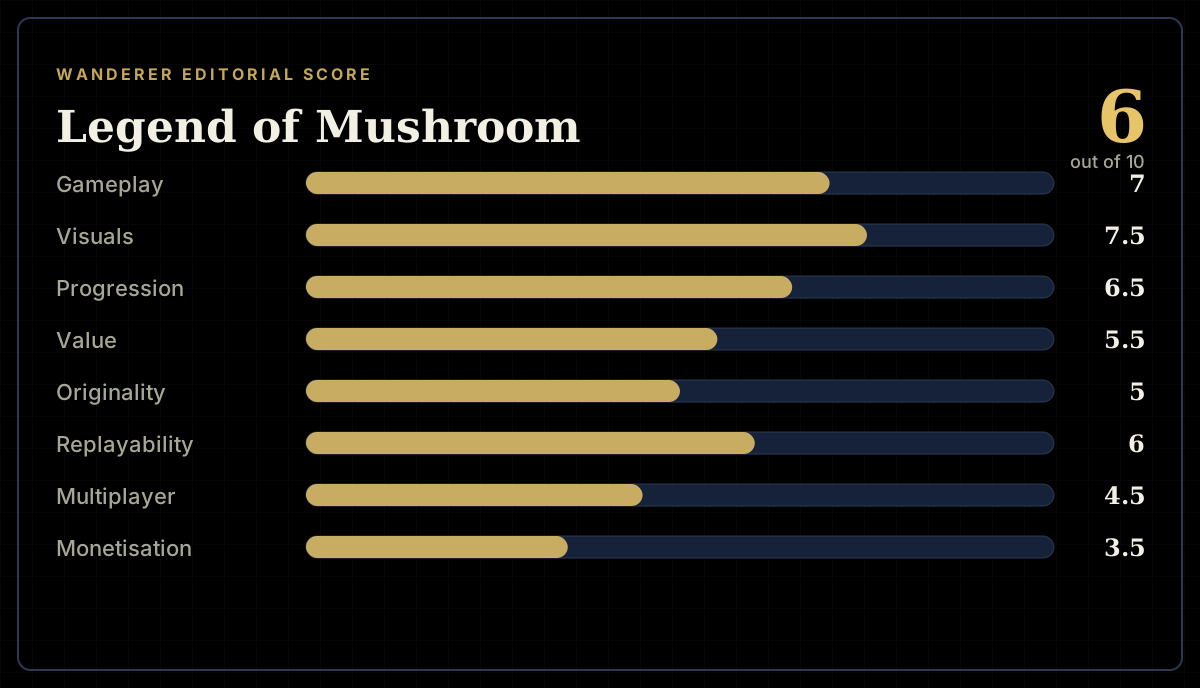
How the review scores each part of the gameWanderer Editorial -
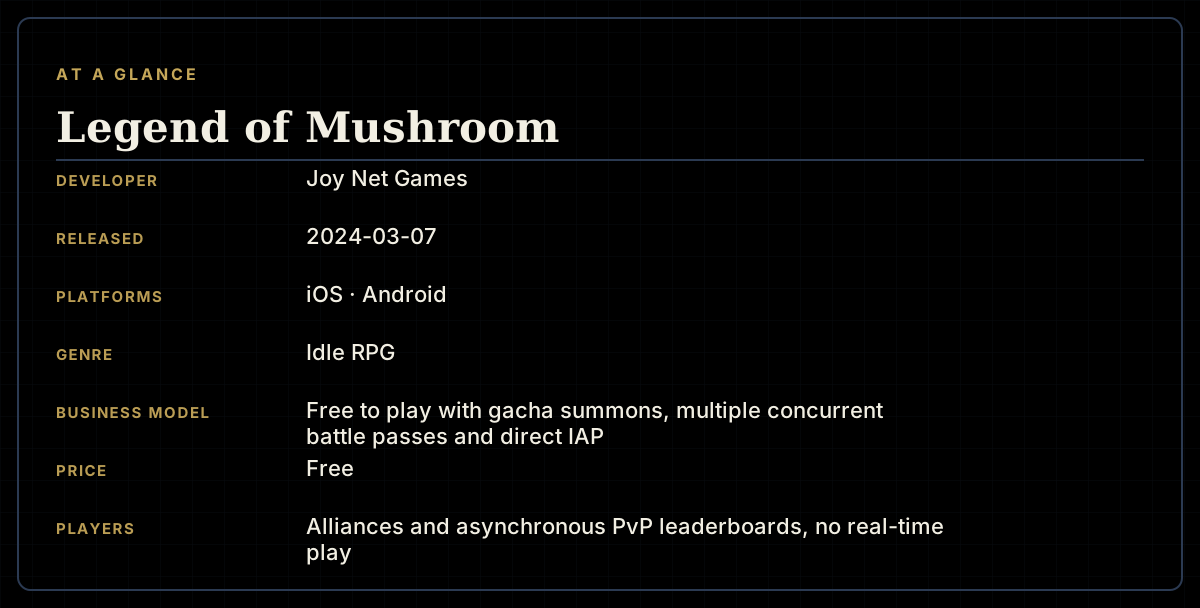
The game at a glanceWanderer Editorial -
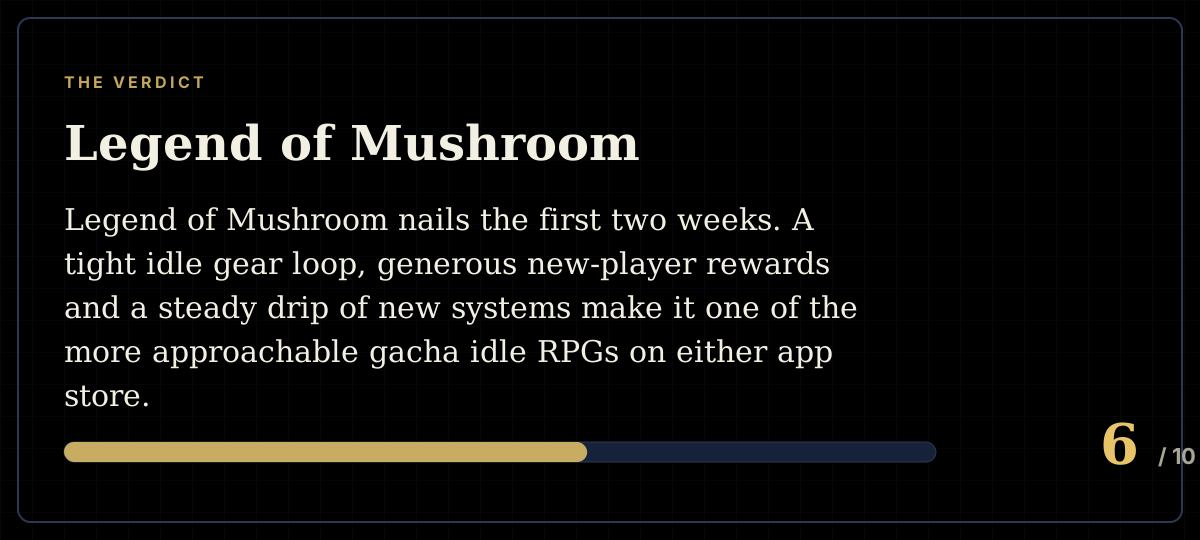
The short versionWanderer Editorial