
Game review
AFK Arena
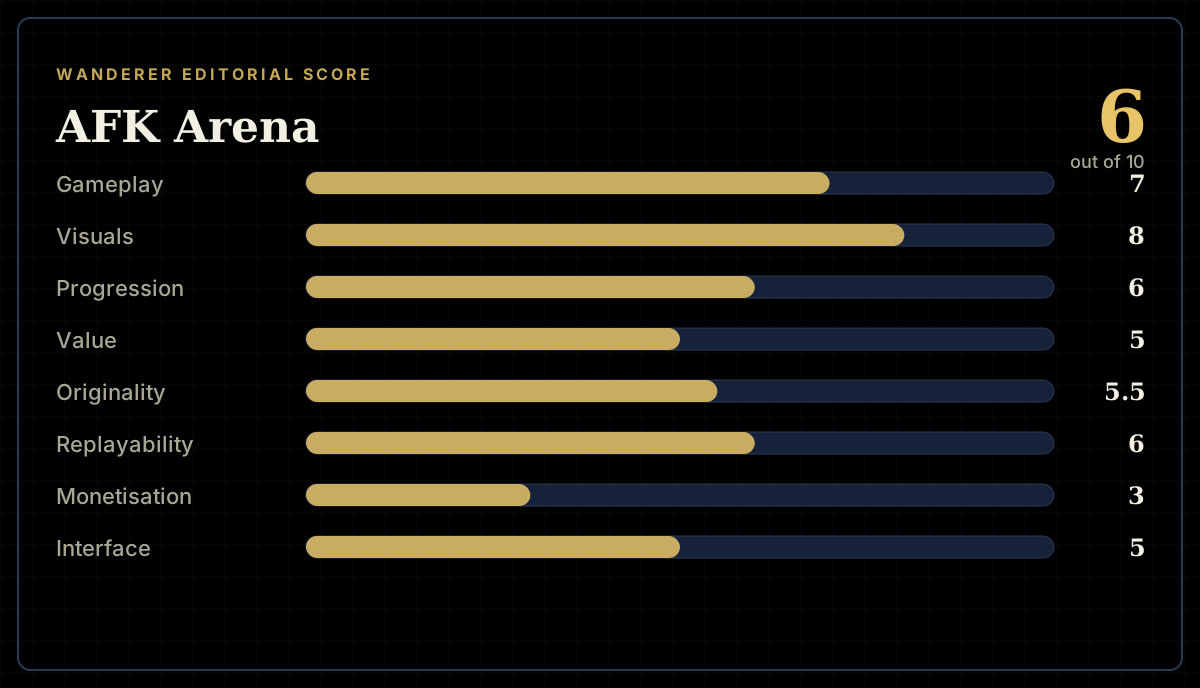
6 / 10
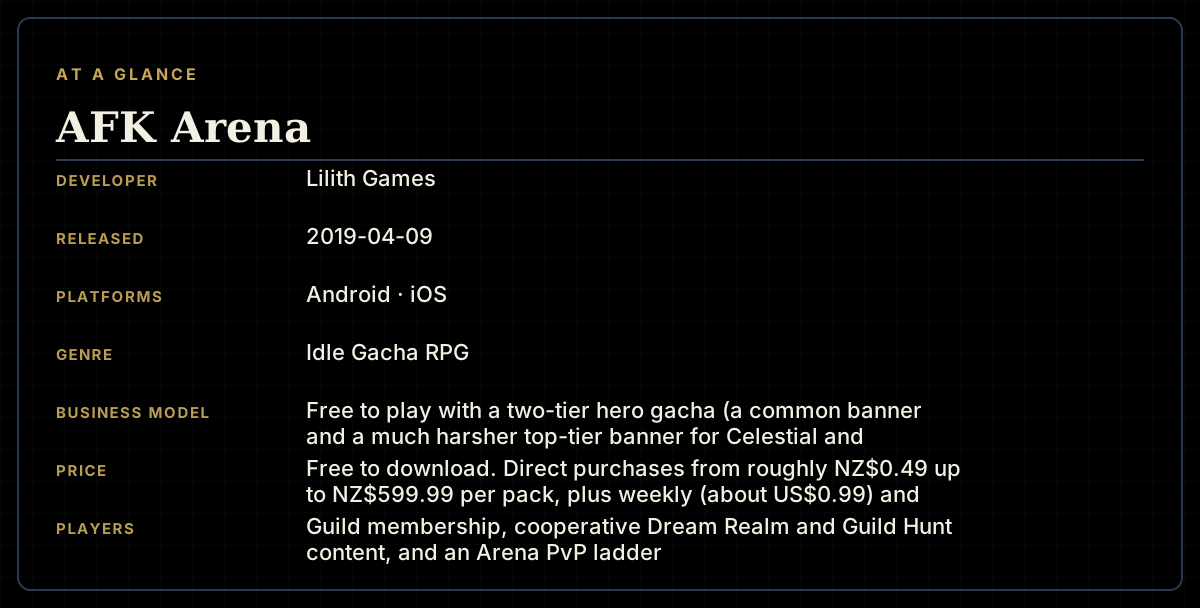
- Developer
- Lilith Games
- Publisher
- Lilith Games
- Released
- 9 April 2019
- Platforms
- Android, iOS
- Genre
- Idle Gacha RPG
- Monetisation
- Free to play with a two-tier hero gacha (a common banner and a much harsher top-tier banner for Celestial and Hypogean heroes), duplicate-locked hero ascension, a pay-to-skip idle-reward system, stacked weekly and monthly subscriptions, and direct IAP bundles reaching well into three figures
- Players
- Guild membership, cooperative Dream Realm and Guild Hunt content, and an Arena PvP ladder
The short version
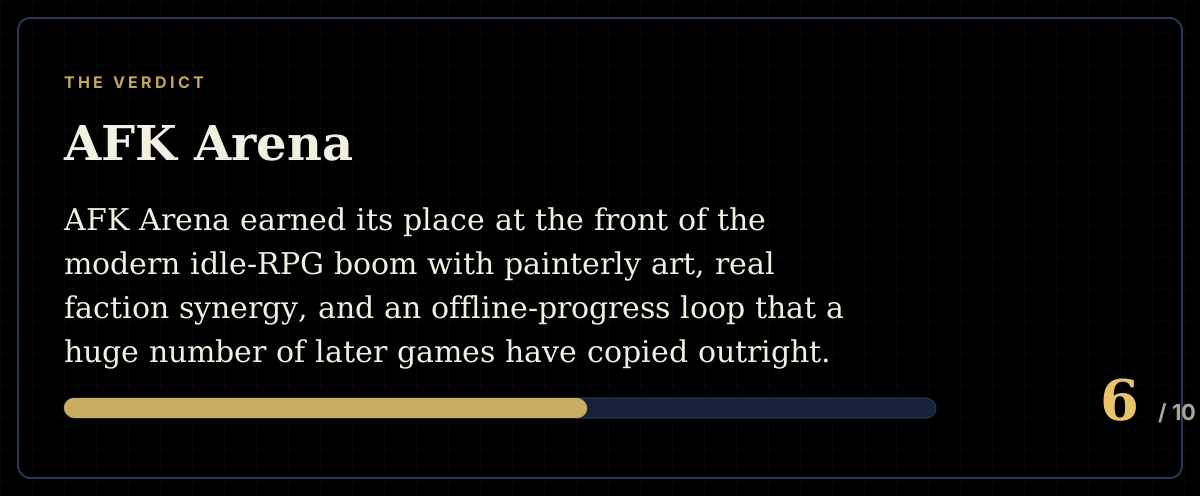
AFK Arena earned its place at the front of the modern idle-RPG boom with painterly art, real faction synergy, and an offline-progress loop that a huge number of later games have copied outright. Seven years on, the 2026 "Companions" relaunch proves Lilith hasn't abandoned it — new heroes, a merged Classic Server, and a still-weekly patch cadence say this is a live game, not a maintenance mode.
What hasn't changed is how the game asks you to pay. Top-tier heroes sit behind a summon pool with roughly a 2% hit rate, ascending the ones you do pull needs multiple copies of that exact hero rather than generic fodder, and the idle rewards that define the genre are cut off at twelve hours unless you buy the rest with diamonds. It is a well-supported, good-looking game built on a genuinely hard economy.
Biggest strengths
- The Arcane Labyrinth's permadeath roguelite dungeon, reset every 48 hours, is a genuinely distinctive mode most idle gacha games never attempt
- Faction identity across Lightbearers, Wilders, Maulers, Graveborn, Celestials, and Hypogeans gives team-building real weight rather than just a bigger power number
- The idle reward system is honest about its 12-hour cap rather than pretending to be a true forever-idle game
Biggest weaknesses
- The Stargazing Room's roughly 2% hero drop rate for Celestial and Hypogean heroes has no comparably strong guarantee to the Noble Tavern's 30-pull pity timer
- Ascending a hero toward its ceiling requires 4 to 8 copies of that specific hero, which locks you into whichever pulls you already got rather than letting you convert unwanted duplicates into progress elsewhere
- Direct purchase packs run as high as roughly NZ$599.99, well above the ceiling this review has recorded on comparable hero collectors
Who it's for: Idle-RPG and gacha players who enjoy faction-based team-building and don't mind a seven-year-old interface, provided they're happy staying inside the free PvE content and skipping the Arena ladder entirely.
Our recommendation: Free to try and still a legitimate entry point into the genre it helped define, as long as expectations are set at the door — the campaign, Dream Realm, and the Arcane Labyrinth's roguelite dungeon crawl are genuinely worth a free player's time, but competitive PvP and top-tier hero collecting both assume real spending.
6 / 10
Most of the idle-RPG boom on mobile can trace its family tree back to one game deciding that "away from keyboard" should be a selling point rather than an apology. AFK Arena did that first, in April 2019, and it is still receiving patches as this is written — including a 2026 relaunch that folds its original "Classic Server" into a rebuilt live build called AFK Arena: Companions. That's the story worth telling about a seven-year-old gacha game: not whether it was good once, but whether Lilith is still bothering, and what it still costs to actually play it well.
Still being patched, not just kept on life support
The App Store build sitting live this week is version 1.198.01, last updated 15 July 2026; the Google Play listing shows an update on 27 July 2026. Both carry release notes describing new heroes, new gear tiers, and rotating event content rather than bug-fix filler, and that cadence has held steady across the year. The headline change is the Companions relaunch itself: Classic Server accounts can link and transfer their full hero roster into the new build, which now promotes a "Get All Heroes" campaign-unlock event, a login stream advertised at over 1,000 summons, an expanded beast-taming system, and a hero-borrowing "Mercenary" feature that lets a weaker account use a stronger teammate's hero to clear a tough Campaign, King's Tower, or Faction Tower stage. None of that is a new game bolted to the old brand for marketing purposes — it's the same bundle ID, the same trackable App Store listing that's carried a 4.6-star rating across 5,209 New Zealand reviews and a 4.4 average across roughly 3.7 million Google Play ratings globally, just rebuilt in place. For a game whose 2019-era contemporaries have mostly gone quiet or shut down, that's a genuinely meaningful signal, and it's the fairest starting point for judging everything else here.
The loop that launched a genre
AFK Arena's combat is formation-based and largely automatic: you assemble a team from six distinct factions — Lightbearers, Wilders, Maulers, Graveborn, Celestials, and Hypogeans — weigh positioning and counters against the enemy's likely lineup, then watch the fight play out with occasional manually-triggered Ultimates. It's the same skeleton AFK Journey later refined with a more tactile grid and terrain system, and comparing the two makes clear how much of AFK Journey's polish is really AFK Arena's foundational idea, executed a second time with five more years of design lessons behind it.
The idle system underneath that combat is the part of AFK Arena's legacy that's hardest to overstate. Progress accrues automatically while the app is closed — gold, hero experience, and a chance at gear and shards — and it's honest about where that stops: rewards cap out at 12 hours, after which nothing further accumulates until you open the app and collect. That's a longer window than some of its imitators offer, and it respects the "AFK" in the name without pretending the game runs forever unattended. Where AFK Arena adds a wrinkle its followers mostly skip is Fast Rewards: your first daily instant-collect of a fresh 120 minutes of AFK time is free, and a second and third same-day use cost 50 and then 80 diamonds. It's a small, transparent mechanic on its own terms, and also a very literal example of buying time with money, which is worth naming plainly rather than dancing around.
The Arcane Labyrinth is the strongest argument that this game still has original ideas left in it. It's a three-floor, permadeath roguelite dungeon crawl sitting inside an idle gacha RPG — your heroes' health and energy carry over battle to battle, you collect Rare, Epic, and Legendary relics that boost or twist your run and vanish when it resets every 48 hours, and losing means starting over rather than just retrying the same fight with slightly better gear. Very few games in this genre attempt anything like it, and it's the one system here that feels like design rather than retention engineering.
Where the gacha stops being generous
AFK Arena runs two distinct summon pools, and the gap between them is the clearest way to talk about what this game actually charges for. The Noble Tavern's Common Hero Scroll pulls sit at roughly a 52% chance of a Common hero, 43% Rare, and just under 5% Elite, backed by a pity timer that guarantees an Elite within 30 pulls on that specific banner track. That's a documented, calculable floor, and it's fair by the standards of the genre.
The Stargazing Room, which is where Celestial and Hypogean heroes — the factions that matter most for late-game team-building — actually come from, drops a hero at roughly 2%. There is no comparably strong published guarantee attached to that rate the way there is for the Noble Tavern, which means the banner gating your best heroes is meaningfully harsher than the one gating your average ones. Getting a top-tier hero once isn't the end of the ask, either: pushing that hero up its ascension tiers takes four copies of that same specific hero to approach Legendary+ or Mythic, and eight to fully ascend it to its ceiling. That's a sharper design than Idle Heroes' star-fusion system, which at least lets you feed duplicates and lower-tier heroes into a target as fungible material. AFK Arena locks you to whichever specific hero you're trying to build — pulling four other Celestials doesn't help you ascend the one you actually want.
Layered on top of both banners: weekly (roughly US$0.99) and monthly (roughly US$2.99) subscriptions that run concurrently and each grant small permanent-feeling perks — extra bounty quest attempts, +10% AFK gold, extra mercenary and tower uses, +10% guild coin and labyrinth token drops — plus direct purchase packs. On the New Zealand Google Play storefront, checked 2 August 2026, those packs range from about NZ$0.49 up to NZ$599.99. That ceiling is genuinely higher than the top packs this review has recorded on Raid: Shadow Legends or Idle Heroes, and it sits alongside recurring, well-documented community reports of limited-time "awesome offer" bundles in the US$50–100 range aimed squarely at players chasing competitive relevance rather than casual progress.
PvP is where free stops working
Everything above is survivable, even comfortable, if you stay inside PvE. The Campaign, Dream Realm, and Arcane Labyrinth can all be meaningfully progressed by a patient free account, and the hero-borrowing Mercenary system genuinely helps here — it lets you clear a wall using a teammate's investment rather than forcing you to have built that exact hero yourself. Guild content follows the same pattern: cooperative Dream Realm runs and Guild Hunts give a shared objective with a real mechanical reason to coordinate, not just a chat window bolted onto a leaderboard.
The Arena ladder is where seven years of accumulated spending shows up directly. A roster built from years of Stargazing Room pulls and duplicate-locked ascensions is not something a 2026 account can realistically match through free play or a single purchase, and the game doesn't pretend otherwise — there's no mechanism that lets a new account fuse, buy, or grind its way to parity with an account that's been pulling top-tier heroes since 2019. If competitive standing matters to you, AFK Arena is pay-to-win in the specific, meaningful sense: the advantage for sale is roster depth, it decides PvP outcomes directly, and there's no realistic free path to closing that gap. If it doesn't matter to you, the game mostly leaves you alone about it.
Seven years of interface
Ranhorn, the Arcane Labyrinth, King's Tower, Faction Towers, Dream Realm, guild systems, the Companions merge's new event layer on top of all of it — none of it is broken, but all of it is still there, simultaneously, for anyone opening the app today. A returning Classic Server player or a brand-new account both have to build a mental map of systems that accumulated one update at a time across seven years, with limited effort spent trimming what's no longer worth a new player's attention. It reads exactly like what it is: a genre-founding game that's never had the chance to simplify because it's never stopped shipping content on top of what came before.
What the numbers say
The storefront picture is healthy and current: 4.6 out of 5 across 5,209 New Zealand App Store ratings and 4.4 out of 5 across roughly 3.7 million Google Play ratings globally, both reflecting the live 2026 build rather than a launch-week snapshot. Metacritic's own user score sits lower, at 6.1, though on a sample of just 14 reviews — far too small next to either storefront to treat as the more reliable signal. Community discussion around the game consistently raises the same two points this review lands on independently: PvE content is fair for free players, and the Arena ladder plus premium bundle pricing have gotten harder to defend as the game has aged. That consistency across independent sources is a stronger signal than any single review, including this one.
Final verdict
AFK Arena deserves genuine credit for still being a living game in 2026 — a near-weekly patch schedule, a relaunch that reunites its oldest players rather than abandoning them, and the Arcane Labyrinth's roguelite dungeon are all evidence of a developer still investing in a seven-year-old title rather than milking it quietly. The faction-based team-building and the honestly-capped idle loop hold up, too; they're the reason this genre exists in its current form at all.
It settles at a 6 because the systems gating its best content haven't softened with age. A 2% top-tier summon rate, hero ascension locked to duplicates of that exact hero, and direct purchases reaching NZ$599.99 add up to one of the harder economies this review has covered in the genre, and the Arena ladder is closed to anyone without years of prior spending behind them. That puts it half a point below AFK Journey — the newer game shares equipment and levelling across your whole roster instead of locking progress to specific duplicates, and it ships a clearer, better-documented pity system on its main banner. AFK Arena is still worth a free download for the campaign, the Labyrinth, and the faction strategy underneath it all. Just go in knowing which parts of it were built to be free.
Pricing and monetisation checked 2 August 2026.
Players who'd rather every hour offline counted the same way, with no diamond-priced shortcut sitting next to it, might also want a look at Wanderer.
Pros and cons
Pros
- The Arcane Labyrinth's permadeath roguelite dungeon, reset every 48 hours, is a genuinely distinctive mode most idle gacha games never attempt
- Faction identity across Lightbearers, Wilders, Maulers, Graveborn, Celestials, and Hypogeans gives team-building real weight rather than just a bigger power number
- The idle reward system is honest about its 12-hour cap rather than pretending to be a true forever-idle game
- A near-weekly patch cadence and a 2026 relaunch that reunites Classic Server accounts show real, current investment from Lilith rather than a game coasting on legacy revenue
- Hero-borrowing lets a free account clear a tough Campaign, King's Tower, or Faction Tower push using a stronger ally's roster rather than needing that hero personally
Cons
- The Stargazing Room's roughly 2% hero drop rate for Celestial and Hypogean heroes has no comparably strong guarantee to the Noble Tavern's 30-pull pity timer
- Ascending a hero toward its ceiling requires 4 to 8 copies of that specific hero, which locks you into whichever pulls you already got rather than letting you convert unwanted duplicates into progress elsewhere
- Direct purchase packs run as high as roughly NZ$599.99, well above the ceiling this review has recorded on comparable hero collectors
- Weekly and monthly subscriptions run concurrently with those packs, each nudging AFK gold, mercenary uses, and tower drops up by small, permanent-feeling amounts
- Seven years of bolted-on modes, currencies, and event tabs make the interface dense for anyone returning after a long break or starting fresh into the Companions merge
Screenshots
-
How the review scores each part of the gameWanderer Editorial -
The game at a glanceWanderer Editorial -
The short versionWanderer Editorial