Game review
Auto Brawl Chess
5 / 10
- Developer
- Panoramik Games LTD
- Publisher
- Panoramik Games LTD
- Released
- 7 April 2023
- Platforms
- Windows, Android, iOS
- Genre
- Auto Battler / Idle RPG
- Monetisation
- Free to play, with gacha-style hero pulls, direct stat-boost purchases and frequent video ads
- Players
- Online PvP, cross-platform with the mobile release
The short version
Auto Brawl Chess sets a hero-collecting CCG on top of an Auto Chess battle board, wraps it in idle-RPG framing, and lets it run on autopilot when you don't feel like driving. Its own Steam review corpus is unusually consistent about where the line falls: the core placement-and-watch battles are frequently called solid, even "surprisingly good," and the multiplayer connection holds up better than reviewers expect from a game in this bracket. Almost every complaint sits on the other side of that line — a gacha-locked deck you can't hand-pick, direct pay-to-win stat purchases, and an ad cadence multiple reviewers call intrusive to the point of un-playable. Three years after launch, review volume is thin and Steam's own concurrent-player count for the PC build is a handful, though this is a cross-platform mobile game first and the Steam client is plainly the smaller of its two audiences.
Biggest strengths
- The core loop — auto-battling on a chess-style board with an idle-friendly auto-battle toggle — draws real praise, with one early reviewer surprised into "sunk an hour into it with ease"
- Multiplayer connectivity is singled out as working "PERFECT" even by a reviewer wary of the pay-to-win angle going in
- Achievement data shows a gentle opening: 71.4% of tracked players have won a match at full HP, a genuinely easy first milestone compared to most PvP games
Biggest weaknesses
- Heroes are pulled via gacha into a deck rather than picked and built by the player — one reviewer sums it up as "every found minion gets stuck in your deck," a structural complaint repeated across the negative column
- Direct stat-boosting purchases push the game past the usual free-to-play cosmetics line; several reviewers describe matchmaking against players who have "earned or bought all the highest" gear with no separation by spend
- Ad interruptions are a recurring, specific complaint, including one reviewer who reports a second pop-up ad appearing while trying to close the first
Who it's for: Auto-battler fans who don't mind a gacha hero roster and are prepared to either spend or accept a hard ceiling on competitive rank.
Our recommendation: Try it free for the battle loop; go in expecting the deck and the ads to be the parts that wear on you.
5 / 10
The pitch
Auto Brawl Chess borrows its board from the Auto Chess genre TFT popularised — units placed on a grid, battles resolved automatically once the round starts — and layers a CCG hero-collection system and idle-RPG framing on top. Panoramik Games LTD, a small, self-published Turkish studio, shipped it free-to-play on Steam on 7 April 2023, alongside an existing mobile release, and positions it as reachable both for players who want to actively theorycraft a build and for those who'd rather queue a match and let the auto-battle option run it. That dual pitch — active strategy game and idle time-filler — is also where its review corpus splits.
Battles and the core loop
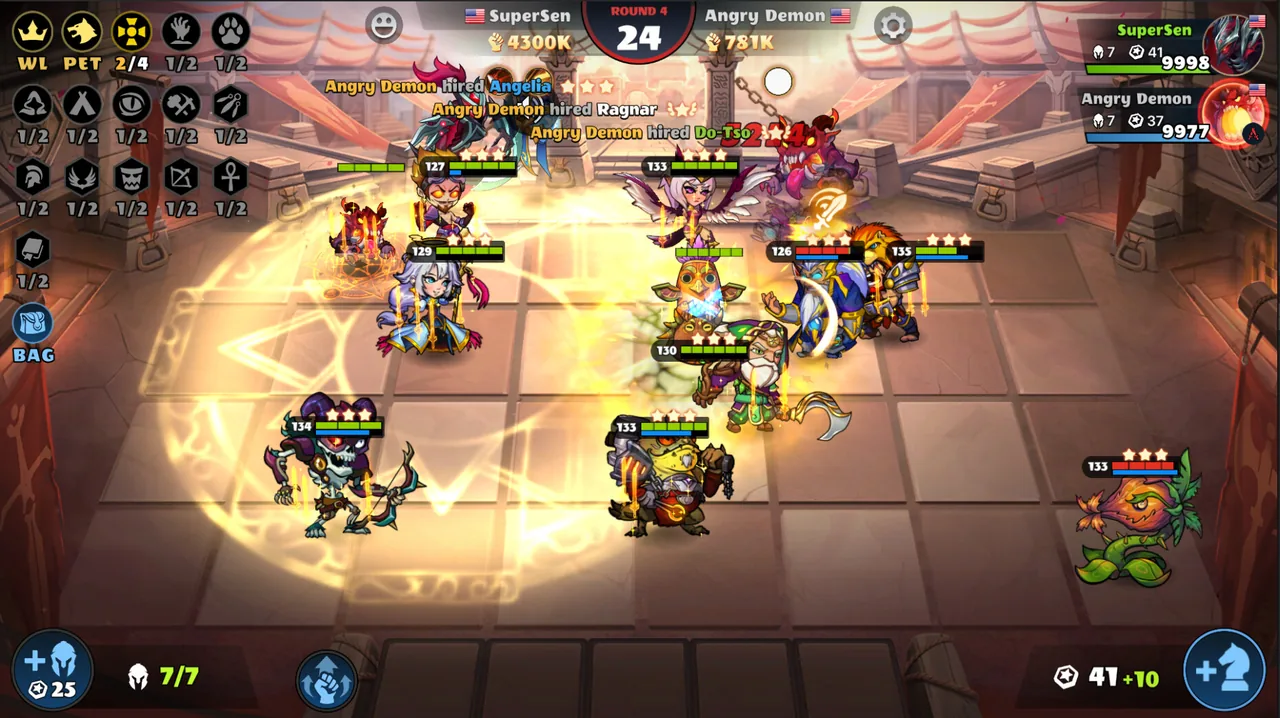
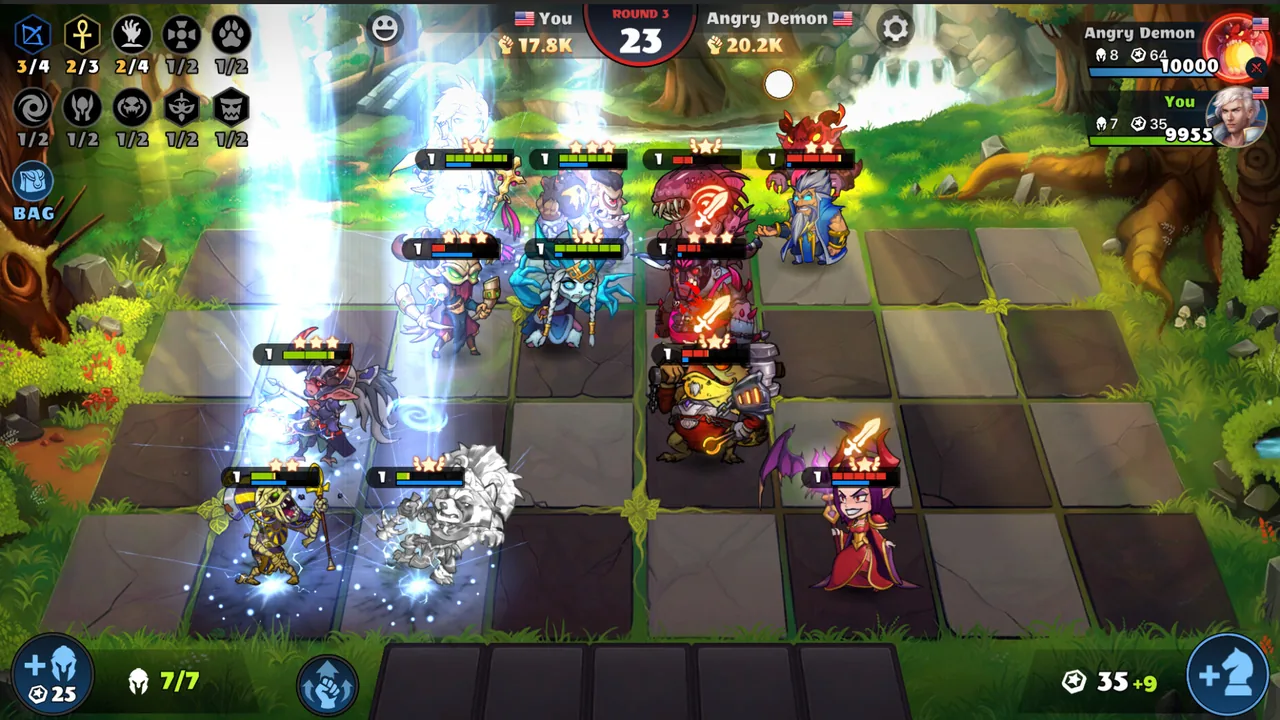
Where Auto Brawl Chess earns its most consistent praise is the moment-to-moment fighting. One reviewer who "booted this up thinking it would be another low effort type release" instead reports being "surprised by how good it was," adding "sunk an hour into it with ease" and calling the game loop "very nice." Another compares it favourably to Might & Magic: Chess Royale, a similar title whose servers have since shut down, and says flatly "I loved it." The auto-battle function — letting the game resolve fights unattended — gets a specifically practical nod from one player as useful "when you need to eat or smoke," which is exactly the idle-adjacent use case the game markets itself on. It's not universal: one Russian-language review calls the mechanics "однообразна" (repetitive) and says there's little strategic depth despite the animation quality, and a couple of others describe the genre itself as oversaturated by 2026. But relative to the rest of the review corpus, the battle system draws the least disagreement.
The heroes: gacha, not deckbuilding
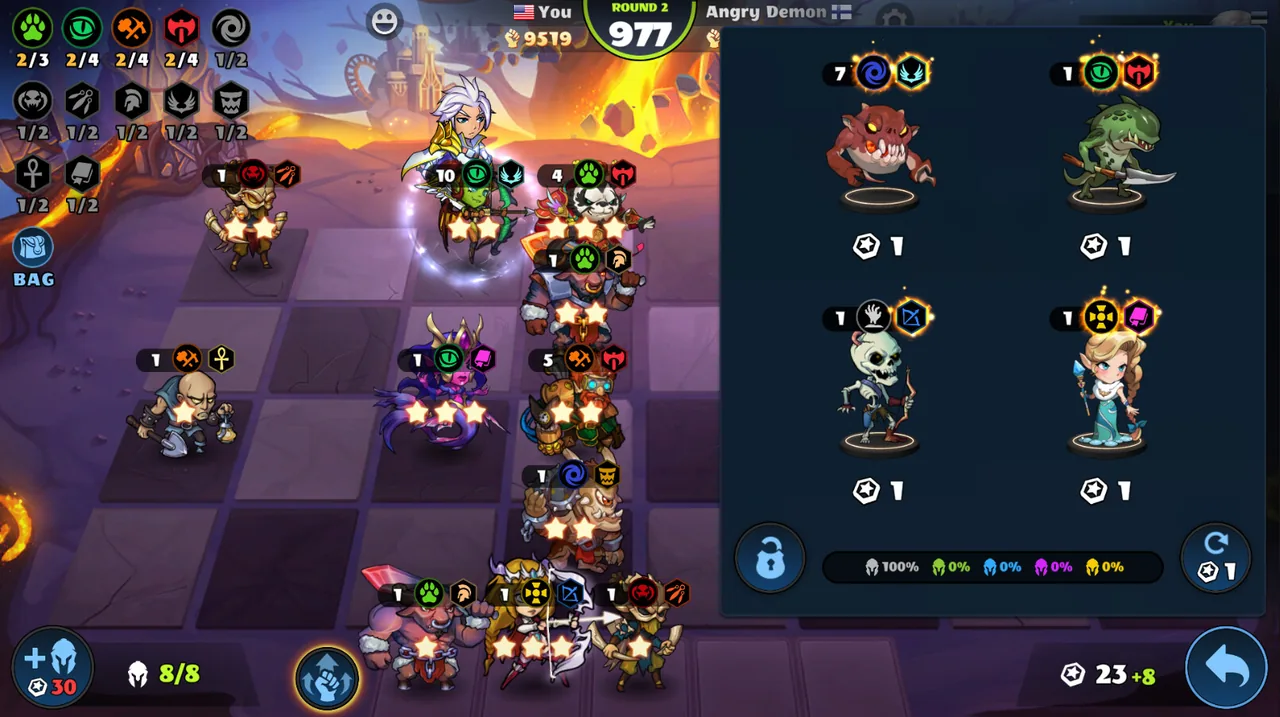
The most structurally significant complaint isn't about balance, it's about how you build your roster at all. Auto Brawl Chess doesn't let you select which heroes go into your active set the way a conventional CCG does — heroes are pulled and then automatically populate your deck. One reviewer lays out the mechanic bluntly: "imagine you are going to play a ccg and you expect to be able to select what cards you put in the deck? Nope[,] every found minion gets stuck in your deck." Another draws the direct lineage comparison, calling the game "basically... an asset flip of Mighty Party," arguing the newer game's version of this same system is actually a downgrade — "your heroes a deck instead of selected 8 you want to play with." For a genre that usually rewards deliberate composition-building, locking that choice behind a gacha pull is the single complaint that shows up across the most reviews, positive and negative alike.
Pay-to-win, by design
Several reviewers are careful to separate garden-variety free-to-play monetisation (cosmetics, time savers) from what they say Auto Brawl Chess actually does, which is sell power directly. "The game allows you to pay money to give your units stat boosts and expects you to pay to keep up," one writes, describing a curve where matches "starts out easy" against players who "don't know how to build," then escalates into "the pay to win players" once free accounts fall behind. A more detailed review describes matchmaking with no separation by spend at all: players are "thrown against those same people who have earned or bought all the highest [gear]" regardless of how long they've played. One reviewer with over a million battle-rating points still ranked outside the top 10,000 calls the economics of catching up simply implausible for anyone starting fresh in 2026, three years after launch. On top of the stat purchases, ad frequency draws its own specific complaints — one reviewer describes a pop-up ad appearing while attempting to dismiss a previous one, and another calls the ad volume alone reason enough to uninstall.
Multiplayer holds up, balance doesn't
Connection quality is a genuine bright spot: even the reviewer most cautious about the pay-to-win angle opens by noting multiplayer "works PERFECT," which is not a given for a small studio's live-service title three years post-launch. What multiplayer doesn't deliver, according to several reviewers, is fair matches. Complaints about faction and hero balance recur independently — "super unbalanced," "terribly unbalanced," and "imbalance of heroes" appear across separate reviews without prompting from each other — and one names timed live events as a specific unfairness, since they "only [reward] people who've either played a long time or spent money," locking newer or free players out of event rewards entirely rather than just making them harder to earn.
Where the numbers land
Steam's own aggregate score sits at "Mixed" — 26 positive against 22 negative across 48 English reviews accumulated since the April 2023 launch, a small sample for a three-year-old release, which on its own says something about how much attention the Steam build gets relative to its mobile counterpart. Achievement data tells a consistent story with the reviews: 71.4% of tracked players have won a match at full HP (an easy, early goal), 43.4% have killed all Warlords, and then the numbers drop hard — only 24.1% have reached a regional top-100 rank, and the majority of the remaining mid-and-late-game achievements (maxing out a hero race's synergy line, finishing a big event, cracking a global top-100) cluster in the 10-15% range. That's a steeper drop-off than a typical progression curve, and it lines up with reviewer accounts of a wall between the easy early hours and the harder-to-catch-up mid-game. Steam's live concurrent-player count for the PC build was a single-digit number at the time of writing — worth knowing if matchmaking speed matters to you, though it's not the full picture: this is a cross-platform title also published on mobile, listed with its own "Cross-Platform Multiplayer" category, and the reviews themselves reference an Android app the Steam version doesn't currently let you link to. The Steam build reads as the smaller of the game's two populations, not evidence the game itself is inactive.
Value
There's no purchase price to weigh here — it's free, with full audio localisation in French, Italian, German, Spanish, Russian, Korean and Japanese beyond English text support, which is unusually thorough for a release this size. The actual cost model is the one reviewers keep flagging: progress and competitive rank are gated behind either grinding against a three-year head start or buying stat power directly. Judge the "free" label by that, not by the absence of a box price.
Verdict
Auto Brawl Chess gets the part that's hardest to fake — a battle system enough reviewers call genuinely fun, running on multiplayer infrastructure that holds up — and then undercuts it with a gacha-locked deck, direct pay-to-win purchases and an ad cadence its own players call intrusive. Three years in, the achievement curve shows a real wall past the opening hours, and more than one reviewer traces the whole design back to an earlier game rather than crediting it as original. Worth a free look for the core loop; go in with your expectations set on the deck and the monetisation being the parts that eventually push you out.
Pros and cons
Pros
- The core loop — auto-battling on a chess-style board with an idle-friendly auto-battle toggle — draws real praise, with one early reviewer surprised into "sunk an hour into it with ease"
- Multiplayer connectivity is singled out as working "PERFECT" even by a reviewer wary of the pay-to-win angle going in
- Achievement data shows a gentle opening: 71.4% of tracked players have won a match at full HP, a genuinely easy first milestone compared to most PvP games
- Full audio support in seven languages beyond English, plus text support in more, for a niche free-to-play release
Cons
- Heroes are pulled via gacha into a deck rather than picked and built by the player — one reviewer sums it up as "every found minion gets stuck in your deck," a structural complaint repeated across the negative column
- Direct stat-boosting purchases push the game past the usual free-to-play cosmetics line; several reviewers describe matchmaking against players who have "earned or bought all the highest" gear with no separation by spend
- Ad interruptions are a recurring, specific complaint, including one reviewer who reports a second pop-up ad appearing while trying to close the first
- Multiple reviewers call it a reskin of an earlier game, naming Mighty Party and Might & Magic: Chess Royale by name; achievement completion falls off a cliff past the opening tier, with most mid-tier goals sitting around 10–15%
Screenshots
-
Auto Brawl ChessImage: Panoramik Games LTD via Steam -
Auto Brawl ChessImage: Panoramik Games LTD via Steam -
Auto Brawl ChessImage: Panoramik Games LTD via Steam -
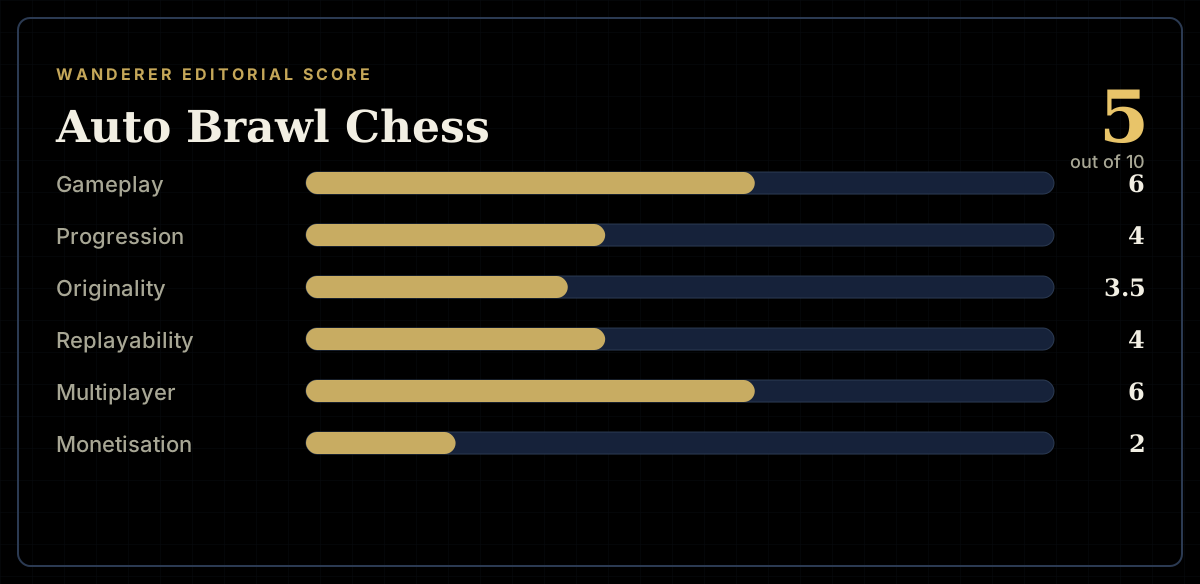
How the review scores each part of the gameWanderer Editorial -
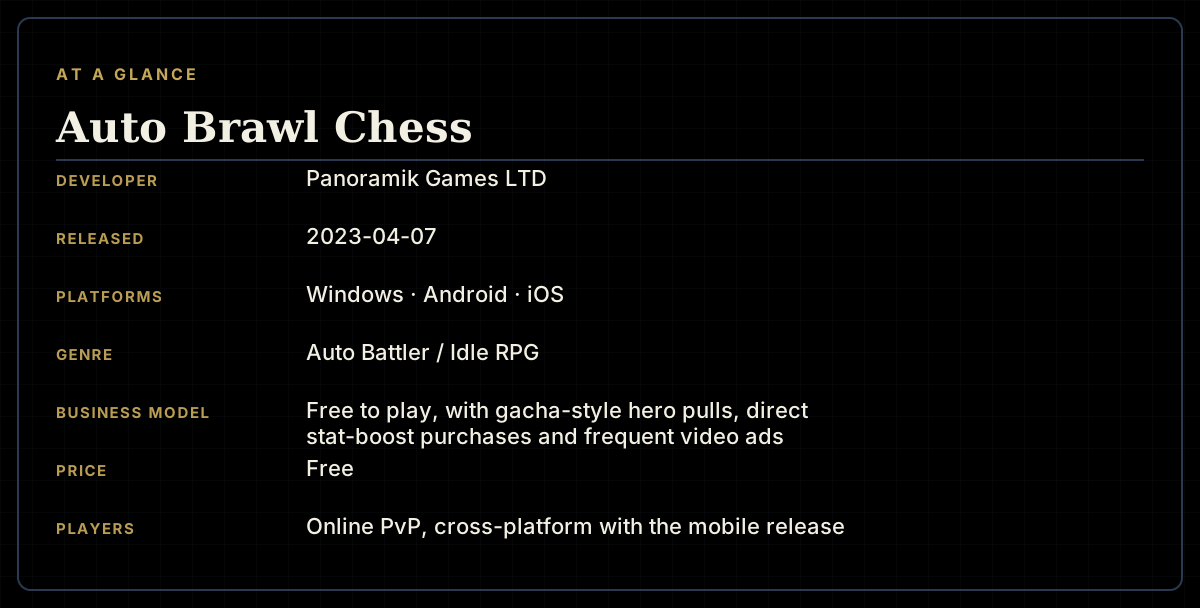
The game at a glanceWanderer Editorial -
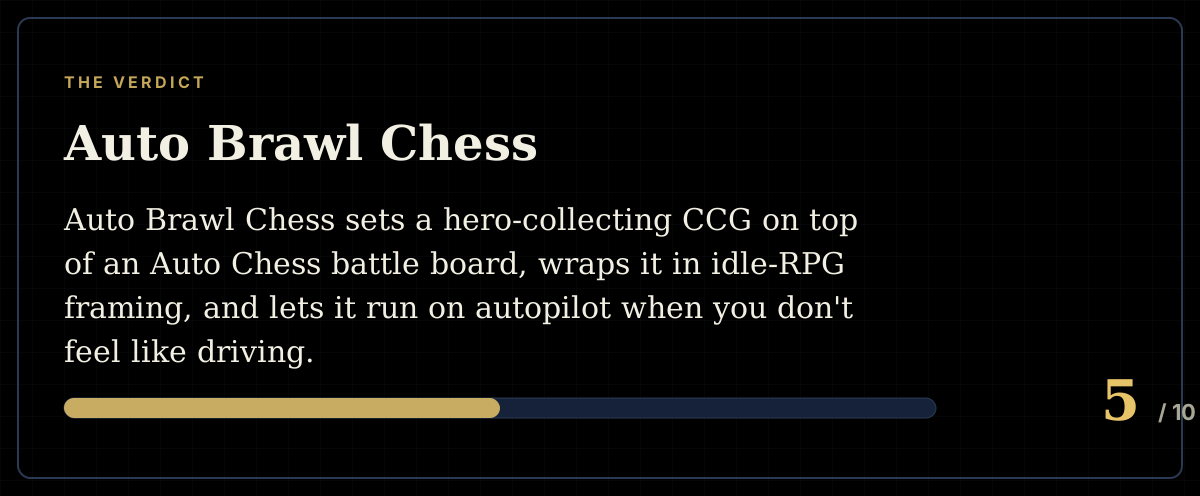
The short versionWanderer Editorial