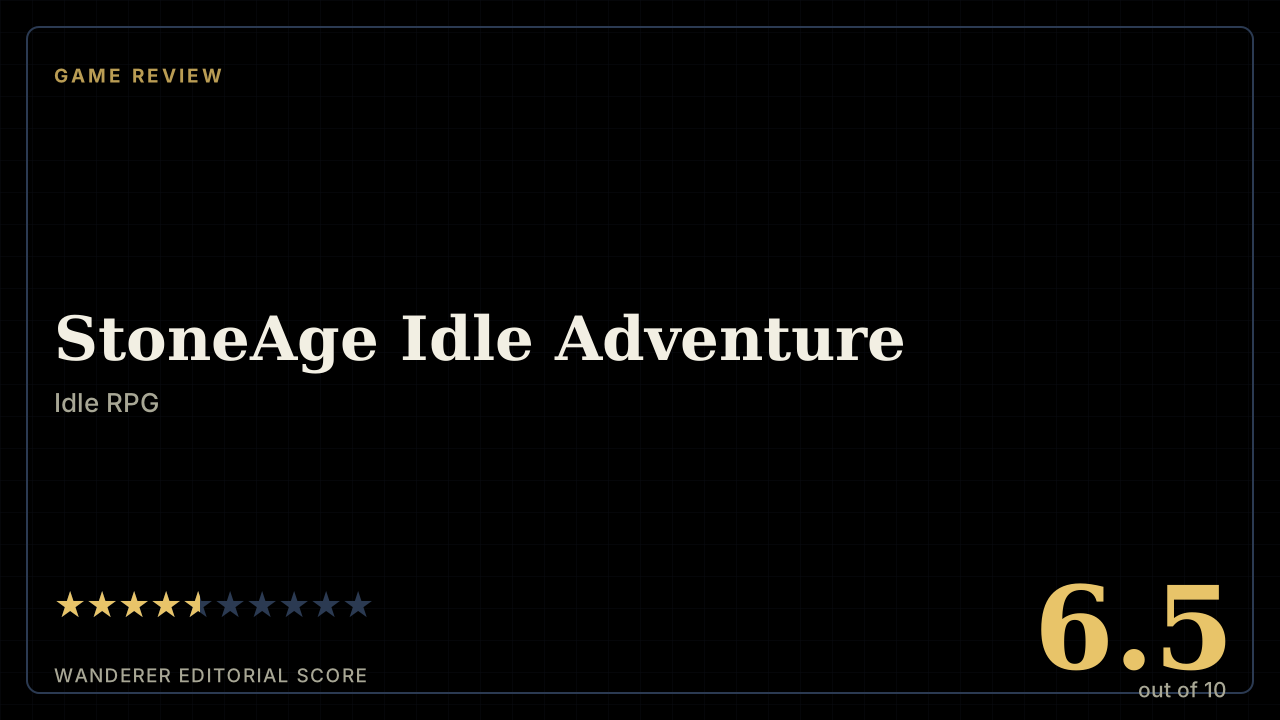
Game review
StoneAge Idle Adventure
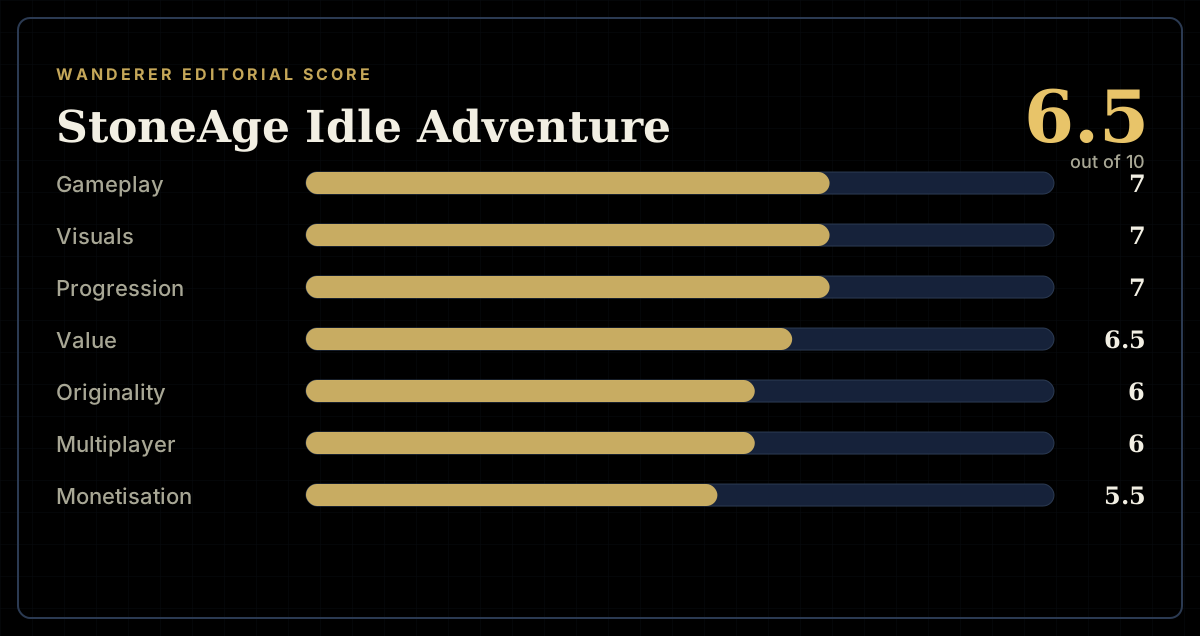
6.5 / 10
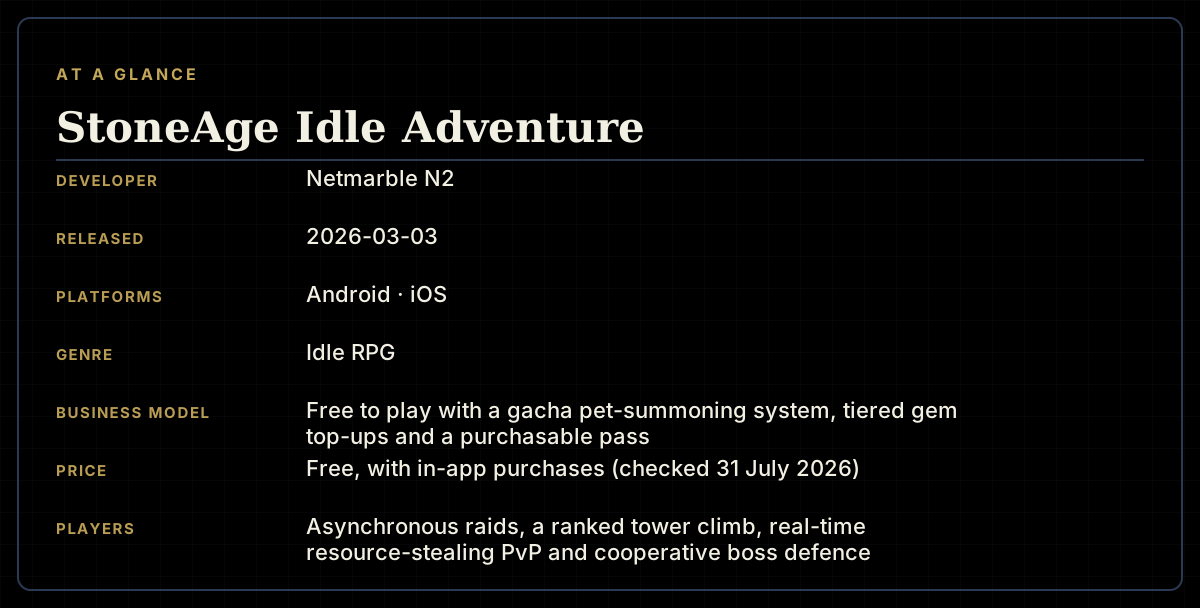
- Developer
- Netmarble N2
- Publisher
- Netmarble Corporation
- Released
- 3 March 2026
- Platforms
- Android, iOS
- Genre
- Idle RPG
- Monetisation
- Free to play with a gacha pet-summoning system, tiered gem top-ups and a purchasable pass
- Players
- Asynchronous raids, a ranked tower climb, real-time resource-stealing PvP and cooperative boss defence
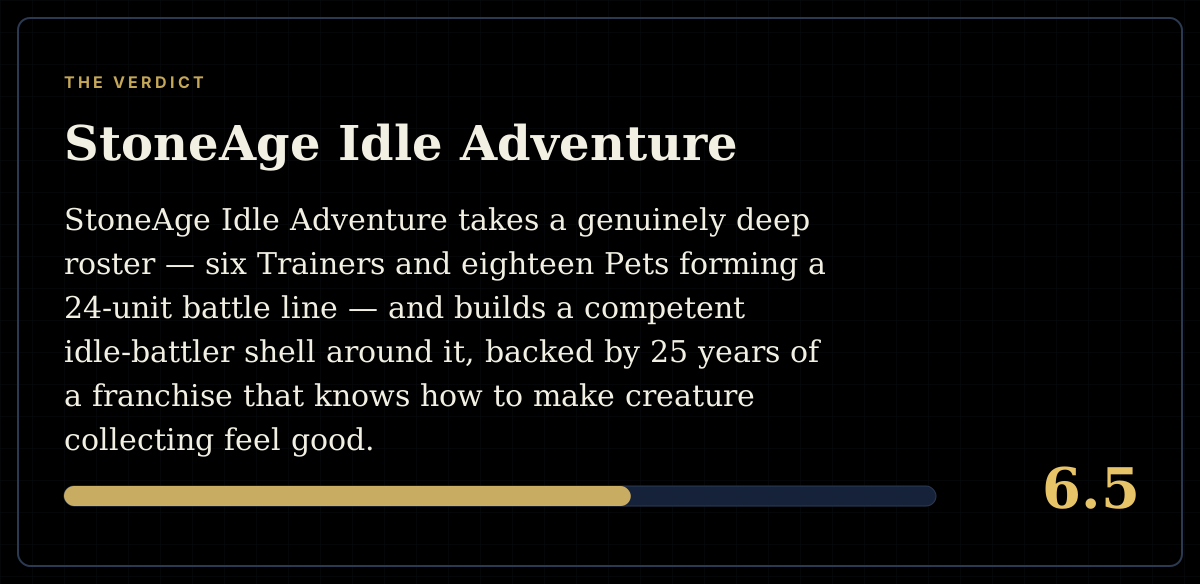
The short version
StoneAge Idle Adventure takes a genuinely deep roster — six Trainers and eighteen Pets forming a 24-unit battle line — and builds a competent idle-battler shell around it, backed by 25 years of a franchise that knows how to make creature collecting feel good. The progression loop is generous early and the presentation is a clear step up from the original games.
What holds it back from real distinction is how ordinary the mobile gacha economy underneath it is, and how directly that economy leaks into Aquafarm, the mode built specifically around taking resources from other players in real time.
Biggest strengths
- Six Trainers plus eighteen Pets in a single formation gives teambuilding real room to specialise, rather than the six-or-so active slots most mobile collectors offer
- Legacy pets like Mogaros, Veldor and Yangidon return with their original identities intact under redesigned art, which matters to a franchise built on 200 million players' worth of attachment to specific creatures
- Launch-week generosity (10,000 free Pet Draw Tickets, 10,000 Blue Gems, a guaranteed SS-grade pet through daily login) gives new accounts a real foothold before any spending decision
Biggest weaknesses
- Aquafarm's real-time resource stealing draws directly on the same Blue Gems that accelerate Pet Draws and Trainer upgrades, so the players best equipped to raid you are, structurally, the ones who paid to get there fastest
- The gacha layer underneath the dinosaur theming is standard rate-up-ticket, top-up-tier mobile monetisation with nothing distinctive about its odds or its pity structure
- Sky Tower's ranked ladder rewards the same roster depth that gems buy, which narrows how much a free account can climb regardless of skill
Who it's for: Fans of the original StoneAge games and players who like idle collectors with a bigger, more tactical roster than most of the genre offers — less recommended to anyone who wants their PvP decided by skill rather than gem balance.
Our recommendation: Worth a look for free, especially for anyone with StoneAge nostalgia, but keep your expectations for Aquafarm and Sky Tower calibrated to what a free account can actually compete with.
6.5 / 10
Dinosaur-taming games rarely get to claim a quarter-century of history, but StoneAge does — the original 1999 release and its many follow-ups reportedly drew more than 200 million players before Netmarble ever touched the idle genre with it. StoneAge Idle Adventure is Netmarble N2's attempt to fold that legacy into the current mobile idle-RPG template: build a roster, let battles mostly play themselves, log in daily for the next incremental step. What sets it apart from the dozens of other games doing exactly that is the size of the roster it asks you to build and the real-time PvP mode sitting at the edge of an otherwise gentle idle loop.
A battle line bigger than the genre usually allows
Most mobile idle collectors cap you at four to six active units and call the rest "reserves." StoneAge Idle Adventure instead builds around six Trainers backed by eighteen Pets, all twenty-four of them present on the field at once. That scale changes what teambuilding actually means here — instead of picking your six best units and rotating gear between them, you're managing overlapping roles across a much larger formation, deciding which Pets support which Trainers and which of your eighteen slots are worth investing scarce upgrade materials into versus benching. It's a genuinely more involved puzzle than the genre's usual six-hero roster, and it's the strongest argument for playing this over a more generic idle battler.
The returning cast does real work, too. Mogaros, Veldor and Yangidon aren't just names recycled for marketing — they come back with the traits and identities longtime StoneAge players will recognise, just redrawn in a cleaner, more stylised art style than the games these creatures originated in. Pteravis arriving as a mounted pet on day two of login is a nice touch that plays directly to the franchise's signature idea: your pets aren't just battle units, they're supposed to feel like companions you ride and grow alongside, not disposable gacha pulls.
Idle progression that respects the format, mostly
The core loop is what you'd expect from the genre and does it competently: stages clear themselves in the background, resources and experience accumulate while you're away, and the active decisions you make — team composition, which Trainer to level next, when to push a harder stage — determine how fast that passive accumulation compounds. Advent Battle raises the ceiling with large-scale raid encounters that ask you to actually think about your full 24-unit formation rather than your top few carries, and Mecha Pet Hunt turns the idle downtime into a genuine cooperative set-piece, defending against invasions alongside other players rather than watching your own numbers in isolation. Both modes give the idle shell moments that feel like events rather than more of the same background grinding.
Sky Tower and Aquafarm: where the free ride ends
Sky Tower is a ranked climb, and like most ranked ladders in this genre, it rewards the roster depth that upgrade materials and gacha pulls buy far more than it rewards clever team construction. That's a familiar and mostly forgivable trade-off — climbing a leaderboard against players who've spent more time or money than you is close to the definition of "ranked mode" in free-to-play mobile games.
Aquafarm is the mode that deserves closer scrutiny, because it isn't a leaderboard — it's real-time resource stealing between players. Rather than competing for position on a chart, you're directly raiding what another account has accumulated, and being raided in turn. That structure means the gap between accounts isn't abstract or cosmetic; it's the literal difference between defending your resources successfully and losing them to whoever built a stronger roster faster. Because the same Blue Gems that fund Pet Draws and Trainer upgrades are the currency that top-up packs sell directly, spending money translates into raiding capability in a way that a purely asynchronous leaderboard mode doesn't allow. This doesn't mean Aquafarm is unplayable for free accounts — the launch-week allocation of tickets and gems gives new players a real base roster before any spending decision, and nothing about the mode is exclusively paywalled — but a mode built around directly taking resources from weaker accounts is always going to reward whoever can out-invest their neighbours fastest, and in this game that means whoever spent the most.
The economy underneath the dinosaurs
Strip away the theming and StoneAge Idle Adventure's monetisation is standard mobile gacha architecture. Blue Gems are the premium currency, obtained through top-up packs that scale from under a dollar to $64.99 for a single large bundle. Pet Draw Tickets are the summon currency, with rate-up variants improving your odds at SS-grade pets on featured banners — a system that functions exactly like every other gacha pull mechanic in the genre, without any particular transparency advantage over its competitors. A Basic Pass sits at $7.99, alongside a scattering of small event and starter packages priced from $0.29 up. None of this is unusually aggressive by mobile-gacha standards, and the free-to-play path through the early game is genuinely generous — but "generous compared to the worst of the genre" is a low bar, and nothing here meaningfully departs from the top-up-tier, rate-up-ticket formula that defines the category. Players chasing a specific SS-grade pet, or trying to stay competitive in Aquafarm and Sky Tower once the launch allocation of free currency runs out, will find themselves looking at the same spending pressure that defines every other gacha idle game on the App Store.
Presentation and feel
The redesigned art holds up well against the franchise's history — cleaner silhouettes, brighter colour work, and enough visual distinction between Pets that a large roster doesn't collapse into sameness on screen. The interface handles the 24-unit formation better than it has any right to, keeping team management legible even with that many units to track, though menus around Pet management and gacha banners still carry the slightly cluttered, notification-badge-heavy layout that mobile gacha games default to.
Reception
The commercial numbers back up a strong launch: a number-one debut on Korea's Apple App Store within eight hours, a number-one spot on Korea's Google Play popularity ranking within two days, and a number-two grossing position in Korea shortly after. Storefront ratings have held up since — 4.7 out of 5 across 545 App Store ratings and a similarly strong average on Android — which suggests the core audience is getting what it came for, even if that audience skews toward existing StoneAge fans rather than idle-genre newcomers being won over cold.
Final verdict
StoneAge Idle Adventure does right by its source material more often than not — the roster depth, the returning cast and the willingness to build actual set-piece modes around an idle shell are all real credits. It settles in the middle of the scale because its most distinctive competitive mode is also its most monetised one: Aquafarm asks you to defend what you've built against other players in real time, and the tools for winning that fight are for sale. That's not a disqualifying flaw — the early game is playable and rewarding for free, and nobody is forced into Aquafarm — but it's the reason this doesn't climb higher than a solid, recommendable idle collector with a rough edge where its PvP meets its shop.
Players who want their progression to keep moving without a rival account's spending affecting it directly might find Wanderer a gentler alternative — nothing here gets raided while you're offline.
Pros and cons
Pros
- Six Trainers plus eighteen Pets in a single formation gives teambuilding real room to specialise, rather than the six-or-so active slots most mobile collectors offer
- Legacy pets like Mogaros, Veldor and Yangidon return with their original identities intact under redesigned art, which matters to a franchise built on 200 million players' worth of attachment to specific creatures
- Launch-week generosity (10,000 free Pet Draw Tickets, 10,000 Blue Gems, a guaranteed SS-grade pet through daily login) gives new accounts a real foothold before any spending decision
- Advent Battle and Mecha Pet Hunt give the idle loop actual set-piece moments instead of only ever watching numbers climb
- Strong opening reception — a number-one app-store debut in Korea within hours and a sustained 4-star-plus average across both storefronts
Cons
- Aquafarm's real-time resource stealing draws directly on the same Blue Gems that accelerate Pet Draws and Trainer upgrades, so the players best equipped to raid you are, structurally, the ones who paid to get there fastest
- The gacha layer underneath the dinosaur theming is standard rate-up-ticket, top-up-tier mobile monetisation with nothing distinctive about its odds or its pity structure
- Sky Tower's ranked ladder rewards the same roster depth that gems buy, which narrows how much a free account can climb regardless of skill
- Individual top-up tiers run as high as $64.99 for a single gem bundle, which is whale-tier pricing sitting a long way from the game's free-friendly early hours
Screenshots
-
How the review scores each part of the gameWanderer Editorial -
The game at a glanceWanderer Editorial -
The short versionWanderer Editorial