Game review
Bit Heroes
6.5 / 10
- Developer
- Juppiomenz
- Publisher
- Kongregate
- Released
- 29 September 2016
- Platforms
- Browser, Windows, iOS, Android
- Genre
- Idle Dungeon-Crawler RPG
- Monetisation
- Free to play across browser, mobile and Steam. Progress is gated by four separate regenerating resources (dungeon energy, PvP tickets, raid badges/shards and trial tokens), each refilling on its own timer and each raisable through guild perks or direct purchase. A premium currency buys pets, cosmetic and stat-bearing accessories, and time-limited event packages layered on top of the energy systems.
- Players
- Guilds of up to 25 (plus 5 bonus) members with shared chat and a guild shop, Guild vs. Guild events, a PvP arena ladder, and cooperative Raids and Expeditions run with guildmates; cross-platform accounts carry progress between browser, iOS, Android and Steam
The short version
Bit Heroes has run for a decade on a genuinely well-built dungeon-crawling core: capture monsters as familiars, chase gear rarity tiers, and build a three-slot team around a stat triangle that actually rewards planning. What decides most of a session, though, isn't combat — it's which of four separate stamina meters you have left, because dungeons, PvP, raids and trials each draw from their own currency on their own clock.
That structure paces the game responsibly for the first stretch and turns openly commercial once guild-level energy caps stop being enough. Free players can and do reach late-game content, by the community's own account, but they get there slower and with a shop constantly visible in the corner of every screen that matters.
Biggest strengths
- Familiar-taming turns ordinary dungeon fights into an ongoing roster decision, not just a loot pinata
- The tank, DPS and bait stat triangle gives team-building genuine tactical stakes rather than a single obvious best build
- Guild energy-cap perks make guilds a mechanically meaningful choice, not just a chat room bolted onto the side
Biggest weaknesses
- Four separate stamina currencies, each on its own regeneration clock, mean a session frequently ends because a meter is empty rather than because the player chose to stop
- The gear-enchant and pet systems lean on very low drop rates that a meaningful share of Steam reviewers describe as designed to push spending rather than reward play
- A decade of accumulated events, currencies and shop tabs has left the interface dense and unwelcoming for anyone starting fresh in 2026
Who it's for: Players who liked the idea of a monster-collecting RPG with real gear depth but want it playable in five-minute bursts between other things, and who don't mind checking back in several times a day rather than leaving the game running unattended.
Our recommendation: Worth installing for free, especially if a guild is available to join early — the energy-cap perks make guild membership close to mandatory for a comfortable pace. Go in expecting a game that wants your attention on a schedule, not one you can walk away from for a week and return to unpunished.
6.5 / 10
Ask most people what kind of game Bit Heroes is and the honest answer is "whichever kind the currency you've run out of decides for you." It's been online since 29 September 2016, developed by the small Reno studio Juppiomenz and sold to Kongregate in 2019 for continued development under Kongregate's Ultrabit studio, and it's still being updated in 2026 — mobile and Steam storefronts now list it as "Bit Heroes Quest," the same game under a search-friendlier name. What hasn't changed in a decade is the core tension underneath it: a genuinely well-built pixel dungeon crawler with real gear and team depth, wrapped in four separate stamina meters that decide how much of that depth you actually get to touch on any given day.
Energy, tickets, badges: the economy that shapes every session
Dungeons cost energy. PvP arena fights cost tickets. Raids draw on badges or shards depending on the mode. Trials and Gauntlet runs draw on their own token pool. Each of these refills on its own independent timer, each has its own cap, and none of them are interchangeable — burning through your dungeon energy does nothing for your PvP tickets, so a player who wants to touch every system in one sitting is managing four separate countdowns rather than one.
That's not automatically predatory design. Plenty of well-regarded idle and incremental games use stamina systems to pace a session rather than let one determined player clear a week's content in an afternoon, and Bit Heroes' version does genuinely space content out that way for a new player. Where it tips from pacing into funnel is the guild layer sitting on top: guild perks raise the caps on these currencies, which means the difference between a comfortable daily allowance and a frustratingly short one is largely decided by which guild you happened to join, and the shop sells direct refills and cap increases for players who don't want to wait on either the timer or the guild. Community accounts on Steam and Reddit consistently note that reaching endgame content as a free player is possible — it isn't a hard paywall — but it takes noticeably longer, and the shop's growing focus on pets and stat-bearing accessories rather than pure cosmetics makes the gap between a patient free account and a spending one wider than it used to be. That's a meaningfully different problem from a hard wall: nothing here bypasses meaningful progression outright, but it does buy back the exact resource, time, that the whole system is built around rationing.
Idle Heroes' star-fusion economy has the opposite shape — one grinding currency that gets steeper every year rather than four separate short-timer meters — but it lands on a similar conclusion: the systems that keep a decade-old free-to-play game interesting are often the same ones quietly deciding how much a non-paying player gets to do.
How idle is "idle"?
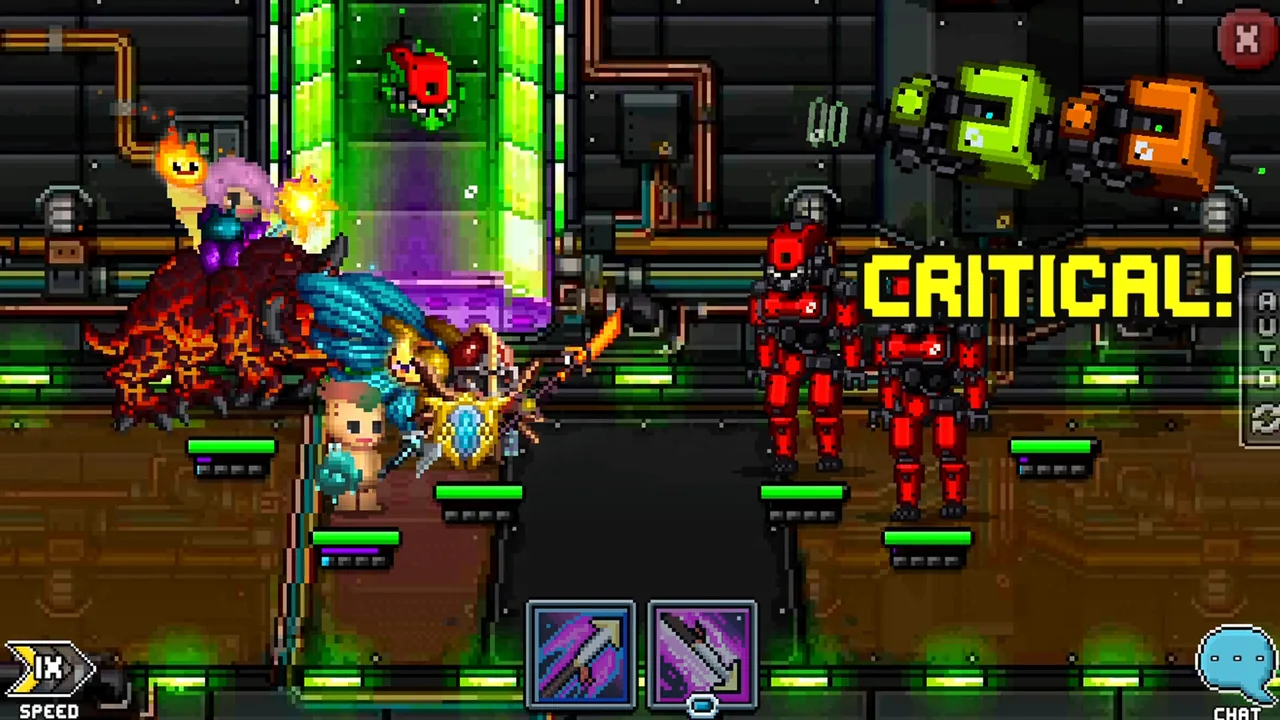
Bit Heroes gets filed as an idle game often enough that it's worth being precise about what that actually means here, because the label oversells the hands-off part. Combat has an Auto mode that selects skills on weighted chances without input, and it's genuinely useful for grinding through dungeon floors without babysitting every turn. What it doesn't do is remove the player from the loop entirely: launching a dungeon run, managing which of four currencies to spend it from, navigating between zones, checking crafting and enchanting queues, and re-entering combat once a run ends are all manual actions that happen constantly during active play. There's no meaningful away-from-keyboard progression in the way Wanderer's own offline systems or Legends of Idleon's multi-character AFK queues generate rewards while the game is closed. Close Bit Heroes and its timers keep counting, but nothing is actually happening — you come back to full-ish resource meters, not to a pile of loot that accrued while you were gone.
That makes Bit Heroes closer to an actively-played RPG with an auto-battle convenience feature than a genuine idle game, and it's worth knowing that going in if the pitch that drew you was "leave it running." What it actually asks for is several short check-ins a day, each one spent choosing which of your currencies to burn, rather than one long session or none at all.
Familiars, gear and the loop that's actually good
The part of Bit Heroes that earns its decade of staying power is the systems sitting underneath the currency scaffolding. Every monster fought has a chance to be recruited as a familiar rather than just farmed for drops, and familiars slot into Tank, Damager or Healer roles alongside a stat triangle — Power, Stamina and Agility spread differently across DPS, Tank and Bait-style builds — that gives team composition genuine weight rather than a single obvious best answer. Gear stacks rarity tiers on top of that, with crafting, enchanting and salvaging forming a real economy of its own: strip gear you don't need for materials, feed those materials into upgrading gear you do.
The catch is the same one that shows up in almost every long-running free-to-play RPG's crafting system: the odds on the good outcomes are low enough that a consistent share of player feedback describes the enchanting and pet-hatching systems as tuned for spending rather than patience. That's not a claim that free progress is impossible — it plainly isn't, going by how many players report reaching endgame without paying — but the RNG doesn't respect a free player's time the way a tighter, more generous drop table would. It respects it eventually.
Guilds, raids and the PvP arena
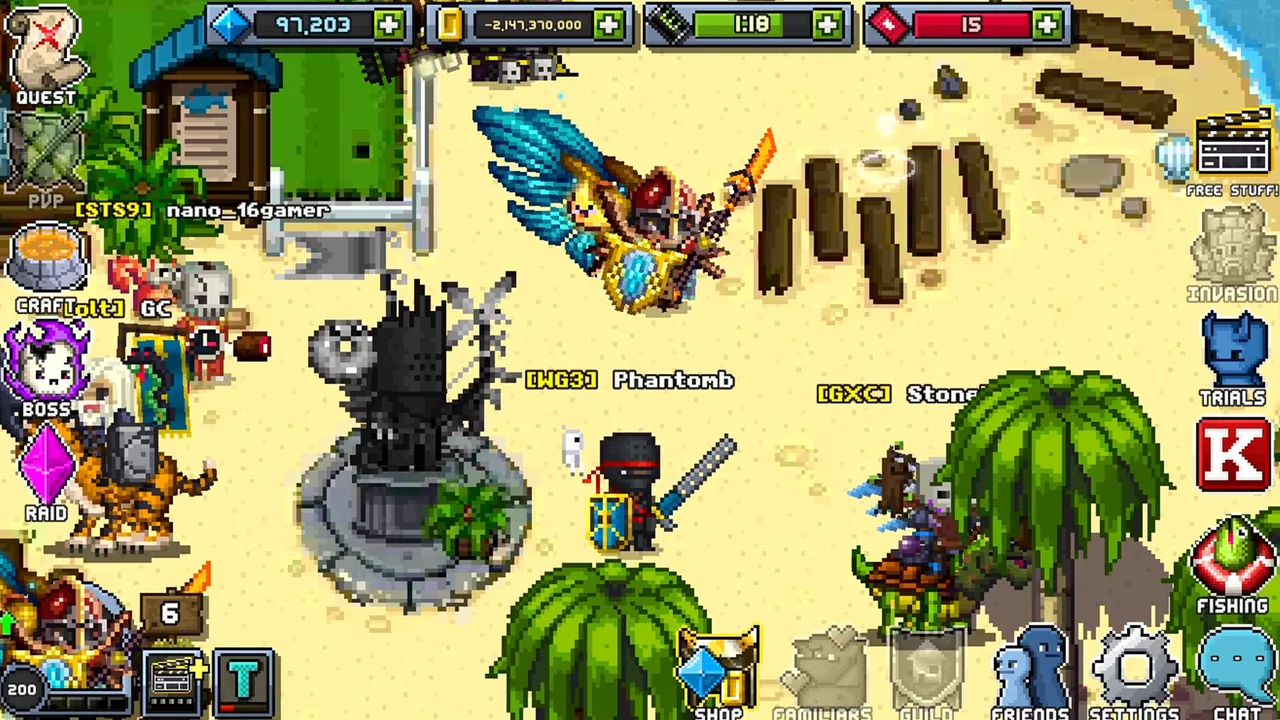
The social layer is more substantial than a chat window bolted onto a leaderboard. Guilds run their own shop with pet, accessory and consumable unlocks tied to guild level, Guild vs. Guild events pit whole guilds against each other for shared rewards, and Raids and Expeditions are built around party composition rather than solo grinding. Because guild perks directly raise the energy caps that gate everything else, joining an active guild early is close to a mechanical requirement rather than a purely social nice-to-have — which is a smart piece of design in that it gives newcomers a real reason to engage with other players, even if it also means a player without guild access is playing a strictly worse version of the same game.
The PvP arena ladder runs on its own ticket currency and functions as a genuine competitive mode rather than set dressing, though — as with most gear-driven PvP — accumulated investment in enchants and rare pets matters more than raw skill the longer the ladder runs. It's a smaller-scale version of the same problem Realm of the Mad God's cash shop creates around its Elixirs: an advantage that money can accelerate, sitting next to a mode that's still technically earnable without it.
Where free play hits the wall
The wall in Bit Heroes isn't a single locked door — it's a gradually widening gap. Early dungeon tiers, familiar collection and basic gear upgrades all come at a reasonable pace for a free account. The strain shows up later, at the point where meaningful gear upgrades start requiring the rarest enchant materials and the strongest familiars come from low-odds pet systems, right as the energy caps that gate how many attempts you get per day stop scaling with the difficulty in front of you. That's the point where a guild's cap-raising perks and the shop's direct refills start doing real work, and where the gap between a patient free player and a paying one becomes visible rather than theoretical. It's a softer wall than a hard paywall — nothing in the game outright blocks a determined free player — but "softer" doesn't mean "gentle," and the climb gets noticeably steeper exactly where a decade of accumulated content has had the most time to pile up.
A decade of pixel art that still lands
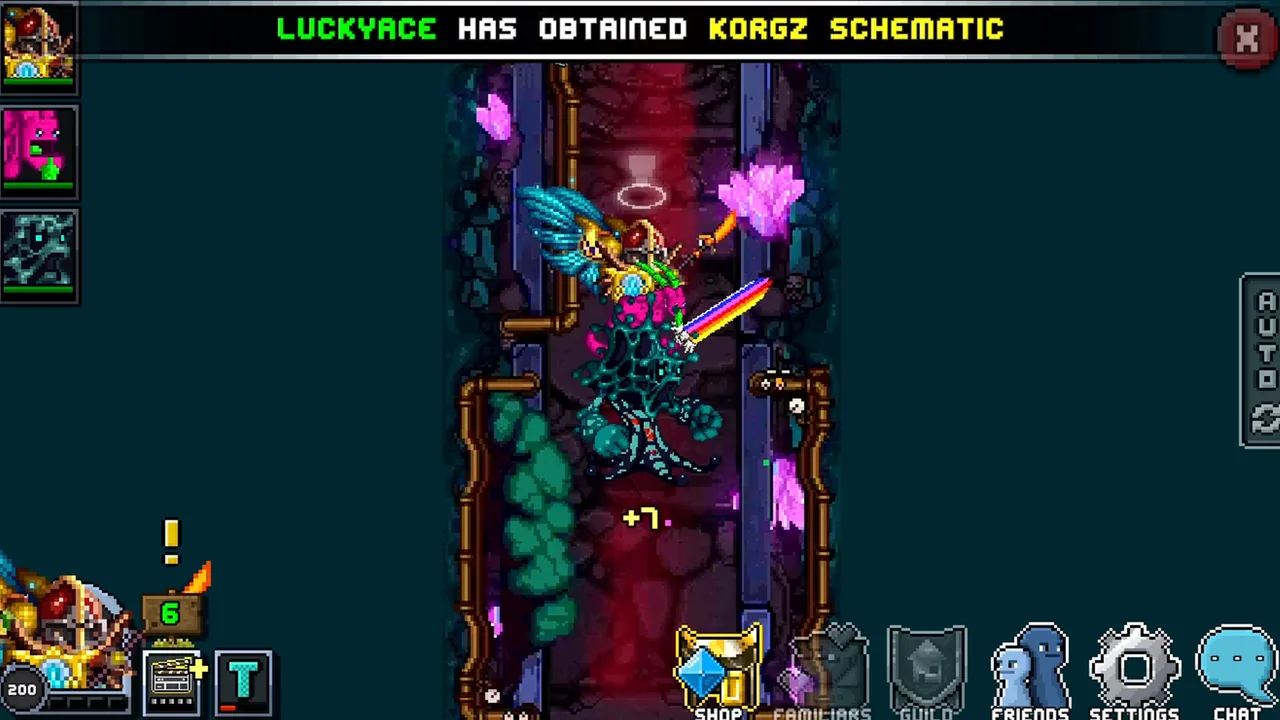
Visually, Bit Heroes has aged better than its interface has. The chunky, high-contrast pixel art reads clearly at the small sizes a mobile screen forces on it, and the monster and familiar designs carry enough personality that recruiting one still feels like an event rather than a stat swap. It's a style built for legibility first, which matters more in a game this dense with numbers and icons than raw fidelity would.
Ten years of accumulated menus
What hasn't aged well is everything built around that art. A decade of live events, seasonal currencies, and new systems layered on top of old ones has left the interface crowded in the way long-running free-to-play games reliably end up: nothing here is broken, but a new account in 2026 is handed the same wall of tabs, currencies and event banners that took a decade of returning players to make sense of gradually. Event churn compounds it — limited-time modes rotate in and out often enough that a returning player logging back in after a break is more likely to find an unfamiliar shop layout than a welcome-back bonus that actually catches them up.
Final verdict
Bit Heroes deserves credit for what's still genuinely good after ten years: familiar-taming and gear crafting that reward real planning, a PvP and raid structure that gives guilds a mechanical reason to matter, and a developer that's kept shipping updates long after most 2016-era browser games quietly went dark. None of that is an accident, and it's why the game still sits at Very Positive on Steam with a player base large enough to keep three-figure daily reviews coming in a decade later.
It settles at 6.5 because the systems that make Bit Heroes distinctive are inseparable from the ones that make it a chore to love unconditionally. Four separate stamina currencies structure every session more than the combat does, the RNG on the game's best gear and pets is tuned for patience measured in months rather than days, and a decade of accumulated menus makes the game harder to start today than it needed to be. Free players get a real game here, not a demo — they just get it on a schedule the shop is always quietly offering to shorten.
Anyone who wants the monster-collecting and gear-building loop without the multi-currency stamina management might find Wanderer more relaxing: progress there runs on one continuous world rather than four separately-timed resource pools.
Pricing and monetisation checked 1 August 2026.
Pros and cons
Pros
- Familiar-taming turns ordinary dungeon fights into an ongoing roster decision, not just a loot pinata
- The tank, DPS and bait stat triangle gives team-building genuine tactical stakes rather than a single obvious best build
- Guild energy-cap perks make guilds a mechanically meaningful choice, not just a chat room bolted onto the side
- Kongregate's community reporting shows free players consistently reaching late-game content, just on a longer timeline than paying ones
- A decade of continuous updates and an active June 2026 patch confirm the game is still developed, not coasting on a legacy playerbase
Cons
- Four separate stamina currencies, each on its own regeneration clock, mean a session frequently ends because a meter is empty rather than because the player chose to stop
- The gear-enchant and pet systems lean on very low drop rates that a meaningful share of Steam reviewers describe as designed to push spending rather than reward play
- A decade of accumulated events, currencies and shop tabs has left the interface dense and unwelcoming for anyone starting fresh in 2026
- Auto mode handles combat skill selection but still requires the player to launch dungeons, manage energy and navigate menus manually, which undercuts any claim to true idle play
- Recent shop pushes toward pets and accessories with real stat value blur the line between convenience and pay-to-win more than the game's earlier cosmetic-first shop did
Screenshots
-
Bit Heroes QuestImage: Kongregate via Steam -
Bit Heroes QuestImage: Kongregate via Steam -
Bit Heroes QuestImage: Kongregate via Steam -
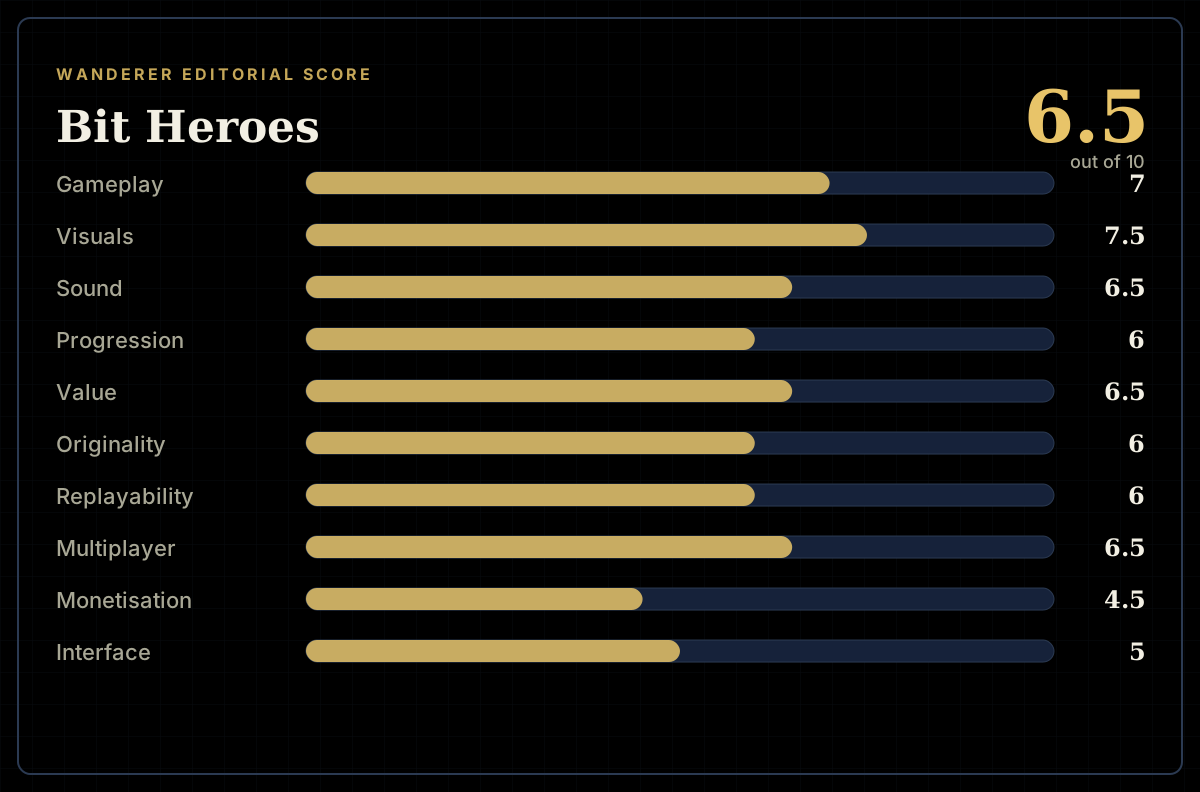
How the review scores each part of the gameWanderer Editorial -
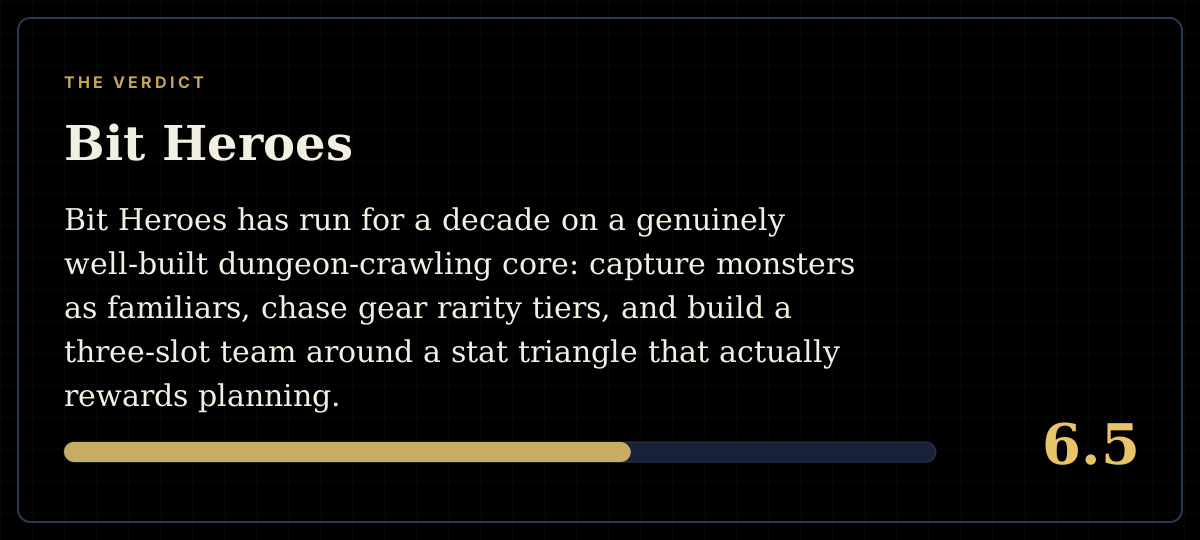
The short versionWanderer Editorial