Game review
Realm of the Mad God
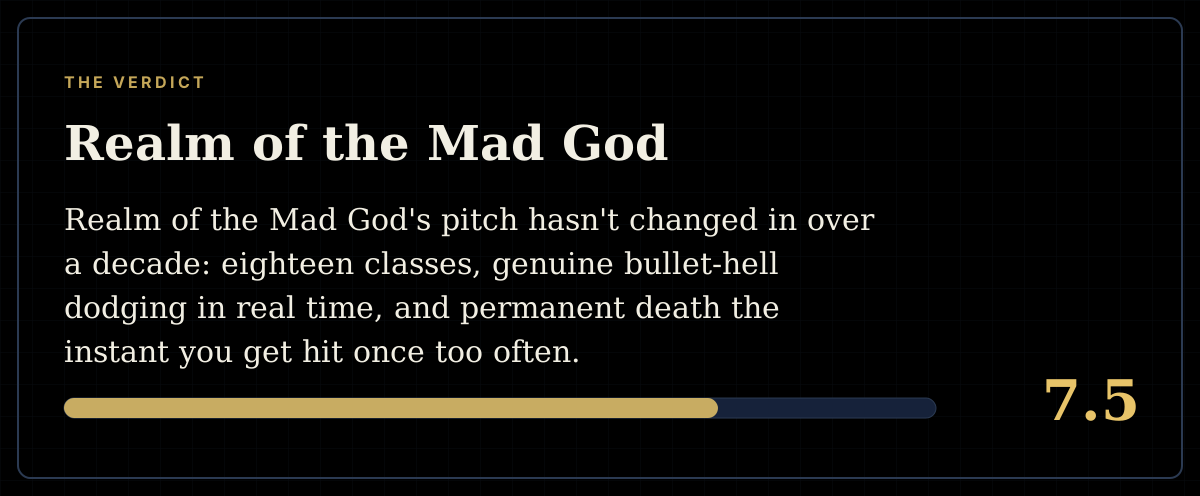
7.5 / 10
- Developer
- Wild Shadow Studios, Deca Live Operations GmbH
- Publisher
- Deca Live Operations GmbH
- Released
- 20 February 2012
- Platforms
- Windows, macOS, Browser
- Genre
- Bullet Hell MMORPG
- Monetisation
- Free to play with a real-money shop, including Elixirs and other consumables that aren't obtainable any other way
- Players
- Massively multiplayer, real-time co-op, guild formation
The short version
Realm of the Mad God's pitch hasn't changed in over a decade: eighteen classes, genuine bullet-hell dodging in real time, and permanent death the instant you get hit once too often. That combination of accessible pixel-art charm and genuinely brutal stakes is still rare enough in the MMO space that the game's longevity makes complete sense.
What hasn't aged as well is the monetisation around it — Elixirs and other consumables you can only get with real money sit closer to pay-to-win than the genre's better free-to-play citizens allow, even if the core game underneath remains free and fully playable without spending a cent.
Biggest strengths
- Genuine real-time bullet-hell dodging layered onto MMO combat is still a rare, distinctive combination in this genre
- Permadeath gives every decision real weight in a way most MMOs deliberately avoid
- Eighteen character classes offer real build variety, from Knight to Wizard to Rogue
Biggest weaknesses
- Elixirs and certain other consumables are real-money-only, which pushes the monetisation closer to pay-to-win than the genre's more disciplined free-to-play games
- The deliberately retro pixel art reads as genuinely dated to a meaningful slice of players, not just charmingly old-school
- The vault's item-preservation limits are a frequent source of frustration when a death takes more than players expected to lose
Who it's for: MMO players who want real stakes attached to their characters, and bullet-hell fans who've never seen the genre applied to persistent online multiplayer at this scale.
Our recommendation: Free, and worth trying purely for how different permadeath makes an MMO feel.
7.5 / 10
Most MMOs go out of their way to protect you from losing what you've built. Realm of the Mad God has spent over fourteen years doing the opposite: die once, and that character — its gear, its levels, everything — is gone for good. That single, uncompromising design choice, wrapped around genuine real-time bullet-hell combat, is still distinctive enough in 2026 that the game's longevity makes immediate sense the first time an enemy's bullet pattern actually forces you to move.
Bullet-hell stakes, MMO scale
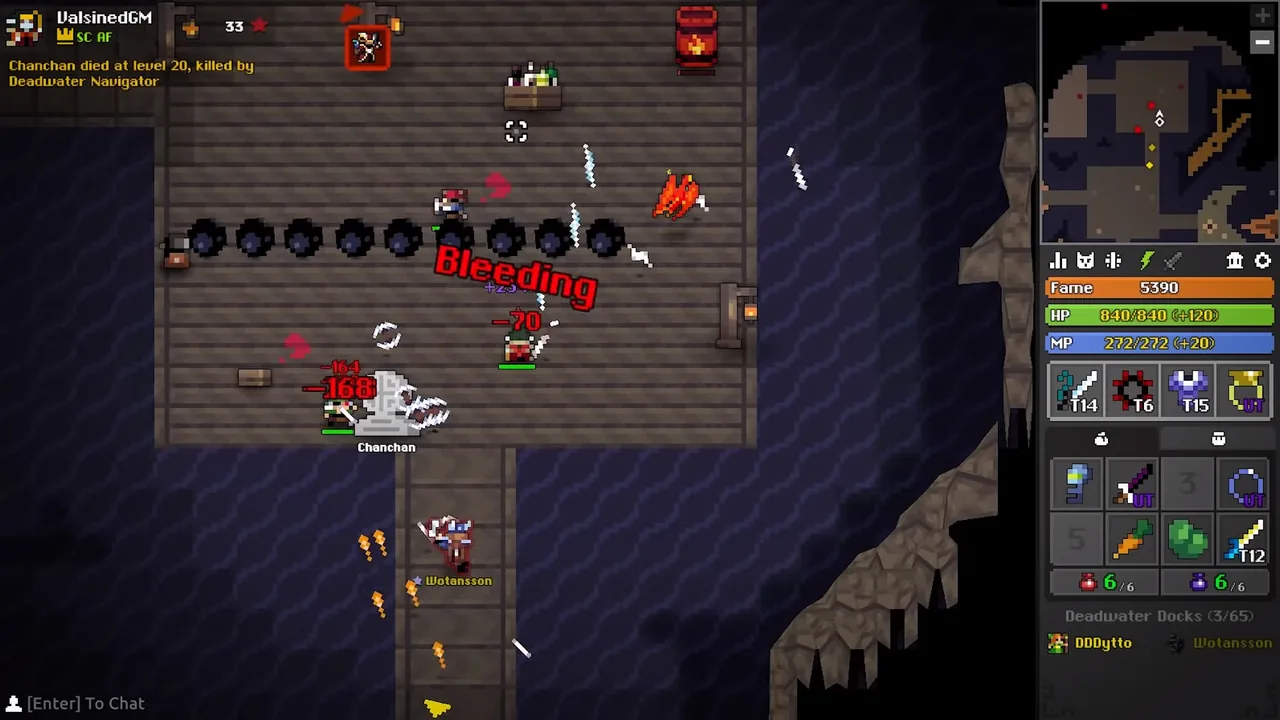
Combat here isn't the tab-target, cooldown-rotation MMO standard. Enemies fire genuine bullet-hell patterns, and dodging them is a real-time, moment-to-moment skill rather than a stat check — closer to a top-down shooter than a traditional RPG fight, just happening inside a persistent world shared with everyone else playing. Eighteen classes, from Knight to Wizard to Rogue, give that combat real variety, and because a mistake can end a character permanently, every one of those classes carries genuine weight in how you choose to play it.
The permadeath system is the game's whole identity, and it's handled with more nuance than a blunt "lose everything" rule — a vault lets you preserve a handful of prized items across deaths, so building toward something durable is possible without making death consequence-free. That balance, hard stakes with a small mercy built in, is a big part of why this system has survived over a decade of players rather than driving them all away.
What hasn't aged gracefully
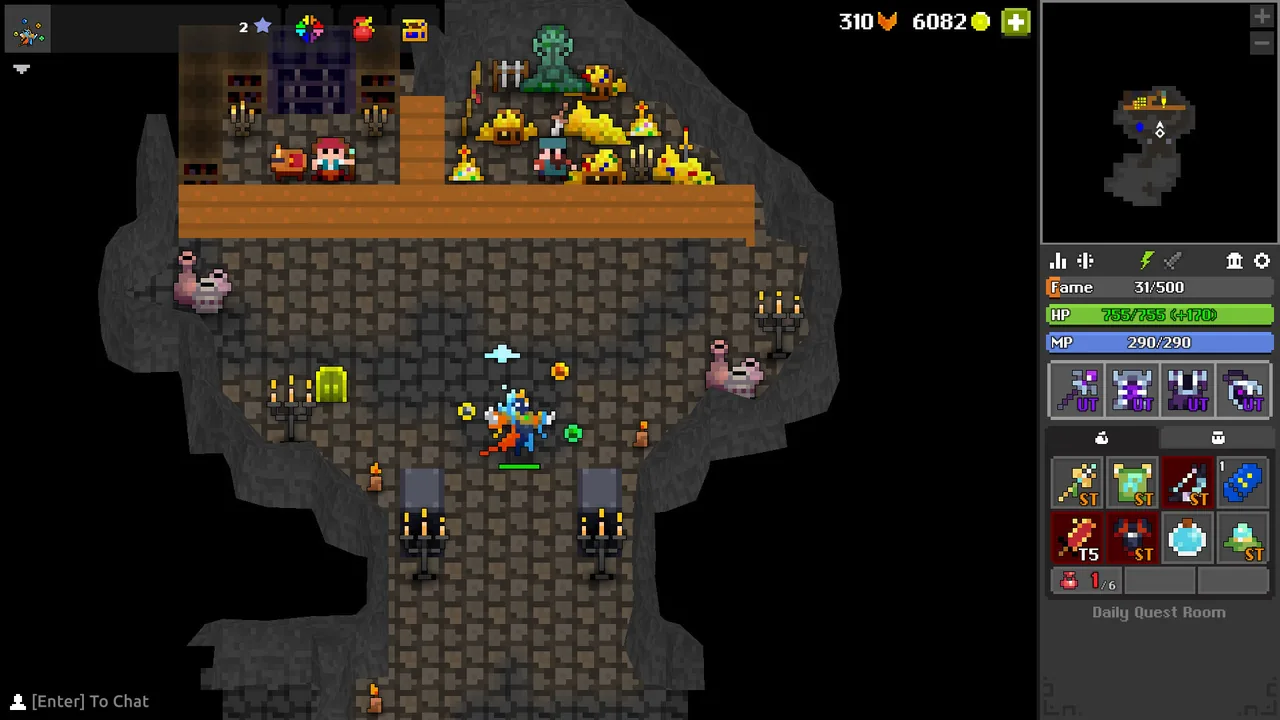
The pixel art is a genuine point of contention rather than a settled matter of taste — some players read it as charming, deliberate retro styling that fits the game's tone; others find it straightforwardly dated in a way that undercuts a genuinely modern combat system underneath. Both readings are fair, and it's worth knowing which side of that line you're likely to land on before committing real time.
The bigger issue is the shop. Elixirs and certain other consumables exist only behind real money, which is a meaningfully different proposition than selling cosmetics or convenience — it's paying for genuine gameplay advantages that free players simply cannot access any other way. Basic quality-of-life features like extra storage slots sit behind payment too, which is a tougher ask from a game this old than it might be from a newer release still finding its economic footing.
Fourteen years and counting
None of that has stopped the game from lasting. Metacritic sits at 82, Steam reviews land Very Positive across tens of thousands of ratings, and Deca's ongoing seasonal, community-driven updates have kept the game genuinely alive rather than coasting on nostalgia. For a free MMO built around permanently losing your progress, that's a real achievement — the design could easily have driven players away decades ago, and instead it's become the game's defining, and apparently sustaining, hook.
Final verdict
Realm of the Mad God remains one of the more distinctive free MMOs available, purely because it commits so completely to a premise most of the genre is built to avoid: real, permanent consequences for dying. Bullet-hell combat gives that premise genuine mechanical teeth, and eighteen classes give it real variety.
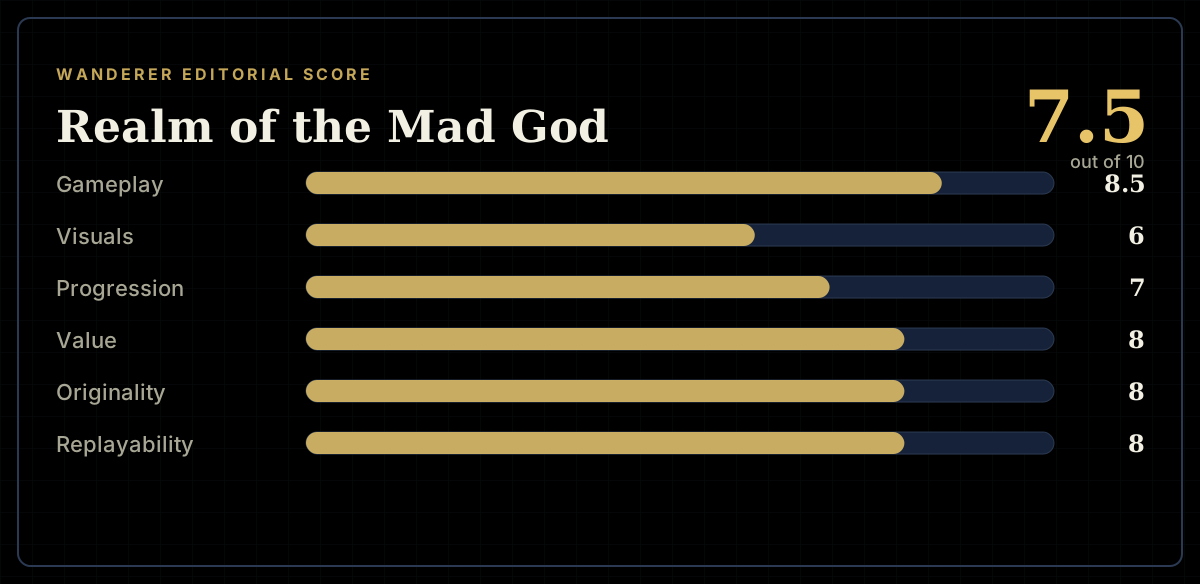
Seven and a half reflects a genuinely excellent core game held back by monetisation that pushes further into pay-to-win territory than the genre's better-behaved free-to-play citizens, and visuals that will split opinion rather than universally charm. Try it free — the permadeath tension alone is worth experiencing at least once.
Checked 30 July 2026.
If permanent stakes sound appealing but losing everything on one mistake doesn't, Wanderer keeps your character's progress safe no matter what finds you out there.
Pros and cons
Pros
- Genuine real-time bullet-hell dodging layered onto MMO combat is still a rare, distinctive combination in this genre
- Permadeath gives every decision real weight in a way most MMOs deliberately avoid
- Eighteen character classes offer real build variety, from Knight to Wizard to Rogue
- A vault system lets you preserve a handful of prized items across character deaths, giving permadeath long-term stakes without erasing everything you've earned
- Free and fully playable without spending, with over a decade of community-driven seasonal content to show for its longevity
- Genuine cross-generational appeal — Metacritic 82 and Very Positive Steam reception attest to a game that's held up mechanically even as its graphics haven't visually aged
Cons
- Elixirs and certain other consumables are real-money-only, which pushes the monetisation closer to pay-to-win than the genre's more disciplined free-to-play games
- The deliberately retro pixel art reads as genuinely dated to a meaningful slice of players, not just charmingly old-school
- The vault's item-preservation limits are a frequent source of frustration when a death takes more than players expected to lose
- Basic quality-of-life features like extra storage and shop access sit behind payment more than they arguably should for a free game this old
Screenshots
-
Realm of the Mad God ExaltImage: Deca Live Operations GmbH via Steam -

Realm of the Mad God ExaltImage: Deca Live Operations GmbH via Steam -
Realm of the Mad God ExaltImage: Deca Live Operations GmbH via Steam -
How the review scores each part of the gameWanderer Editorial -
The short versionWanderer Editorial