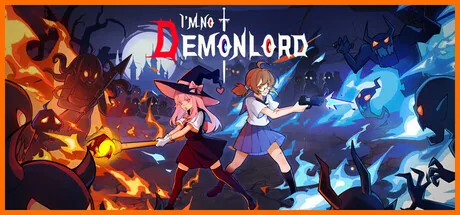
Game review
I'm No Demonlord
7 / 10
- Developer
- NiaoWu Studio
- Publisher
- Edigger
- Released
- 5 August 2026
- Platforms
- Windows, macOS, Linux
- Genre
- Roguelike Bullet Hell Shooter
- Monetisation
- One-time purchase, no in-game store, no IAP, no DLC listed
- Players
- Local and online co-op for up to two players via Remote Play Together; the campaign is fully playable solo
The short version
I'm No Demonlord casts you as an adventurer possessed by an escaped demon king and sends you through branching, run-based levels shooting waves of enemies while an on-screen talent pool, a shop economy and a class-change system reshape your build every session. It plays like a Vampire Survivors-style auto-attack roguelite crossed with an auto-chess synergy layer — move to dodge bullet patterns while your weapons fire themselves, then spend resources between fights on talents, gear and a "tag" system that pushes your build toward a theme. Steam lists it under Action, Adventure, Indie and RPG, but its own short description calls it a "Roguelike shooter bullet hell game," and that second description is the more accurate one: what RPG structure exists here is a class-change ladder and a moral-choice frame, not exploration, dialogue or quests.
It launched two days before this review with a small, entirely Simplified Chinese review corpus that is uniformly positive but includes at least one long, detailed critique arguing the build variety converges into a handful of familiar reward types once you've played enough roguelites to compare it to Brotato and Arknights' own roguelike mode. That tension — a genuinely large content pool that a veteran of the genre says plays smaller than it looks — is the thing to watch as more players get through it.
Biggest strengths
- A genuinely large talent and synergy system — the store page's own claim of "over 1000 construction mechanics" is backed up by a 32-achievement list charting weapon levels, skill levels, stat thresholds and full character/weapon unlock milestones
- A class-change ("job change") progression ladder sits on top of the usual roguelite talent-and-shop loop, giving runs a second axis of growth beyond raw stat stacking
- Accessibility options rarely seen in a bullet-hell game — Playable without Timed Input, Keyboard Only, Mouse Only and Touch Only modes, plus adjustable difficulty and save-anytime support
Biggest weaknesses
- The RPG tag oversells what's here — there's no exploration, dialogue or quest structure, only a class-change system and a moral-choice framing layered onto an auto-attack bullet-hell roguelite
- The most detailed player review on file argues that despite the huge item count, run decisions converge on similar reward categories, and that a large pool without enough ways to hunt for specific pieces makes precise build-crafting harder rather than richer
- Every review currently on Steam is in Simplified Chinese; there is no English-language consensus yet to weigh the developer's own claims against
Who it's for: Roguelite and survivors-like fans who enjoy deep talent trees and synergy hunting, especially newcomers to the genre; players hoping for a traditional role-playing game should look elsewhere despite the RPG tag.
Our recommendation: A reasonable buy at its launch price if the Vampire Survivors-meets-auto-chess pitch appeals, with two real caveats — no English-language review consensus exists yet, and its own most detailed player review flags the build variety as more repetitive at a veteran level than the marketing suggests.
7 / 10
A legendary archmage sacrifices himself to seal away a supervillain. The kingdom prospers. Then the king starts arresting commoners for no stated reason, the disappeared are never seen again, the seal weakens, and the demon king breaks free — straight into the body of your player character. That's the setup I'm No Demonlord opens on, and it immediately hands you the question its title is built around: accept the identity that just took over your body, or fight it? Save "kinds" or destroy "outsiders"? The pitch is a moral-choice framing bolted onto a combat system that, mechanically, has nothing to do with role-playing at all.
What it actually is, versus what it's tagged as
Steam files I'm No Demonlord under Action, Adventure, Indie and RPG. Its own short description never uses the word "RPG" once — it calls itself, in full, a "Roguelike shooter bullet hell game," and that's the accurate label. Combat is auto-attacking: your weapons fire on their own, and the entire skill expression is movement — dashing and weaving through enemy bullet patterns while your build does the damage for you. That's the Vampire Survivors template, not a role-playing game's. There's no exploration to speak of, no dialogue trees, no traditional quest log. The player review corpus, unprompted, reaches for the same comparisons: Brotato, Soul Knight, and specifically Arknights' own roguelike mode, none of which anyone files under RPG either.
What earns the tag, if anything does, is the progression sitting on top of the shooting. Runs build a character through a talent pool, a "tag" (bond) system that functions like an auto-chess synergy board — certain tags boost the odds of drawing more of the same theme, plus grant small passive effects — and a class-change ladder that one detailed player review lists outright as "角色,武器,天赋,能力(技能),转职,二转,武器进阶": characters, weapons, talents, abilities, a first job change, a second job change, weapon advancement. A class-change system and account- level unlocks for characters and weapons are the closest things here to RPG-style character building. They're real, and they're deeper than most games in this genre bother with. They are also not, on their own, enough to call the whole package a role-playing game — they're a progression layer wrapped around an action-roguelite core, and readers going in expecting Diablo-adjacent RPG structure should recalibrate that expectation before buying.
A large build system, and a large-pool problem
The store page's own pitch is "over 1000 construction mechanics, endless combinations," sold explicitly against "pure numerical growth experiences" — the promise is that builds interact with each other rather than just adding bigger numbers. The 32-achievement Steam list backs the scale of that claim up: separate milestones exist for unlocking every weapon, unlocking every character, reaching skill level 6, reaching weapon level 6, hitting specific stat thresholds (1,000 max HP, 100 damage reduction, 10 stacks of move speed), and clearing runs at custom difficulty tiers up to 70. That's a genuinely wide net of things to chase.
The most useful thing available about how that plays in practice is a long, detailed Steam review — voted positive overall, from a player with under an hour logged at time of writing but clearly experienced with the genre — that lays out both sides plainly. Its praise: the talent selection and shop-purchase loop combine into a real "collect, upgrade, collect" flow, the route system lets you choose between "challenge" nodes and "treasure" nodes the way Arknights' roguelike mode does, and a full run lands in a comfortable 30–40 minutes with mid-run saving. Its complaint, which is the sharper and more specific point: Arknights' path choices reward you along genuinely different axes, while this game's route nodes tend to converge on the same handful of reward categories — stats, gear, resources — which flattens the decision-making once you've internalised the pattern. The same review adds that the item pool is large enough to dilute the odds of drawing the two or three pieces a specific build actually needs, and that boss kills pay out mostly in generic currency rather than the unique drops that games like Brotato or Soul Knight use to make a boss fight feel like an event rather than a bigger version of a normal room. None of that reads as review-bombing or hostility — the same author still recommends the game to genre newcomers — but it's a specific, well-argued account of where the content-volume pitch runs thinner than it looks, and it's worth taking seriously precisely because it comes from someone rating the game positively rather than someone venting.
Difficulty, endgame, and alternate wins
Beyond the standard six-chapter campaign — achievement completion runs 78.3% for chapter one down to a steep 1.8% for chapter six, a normal shape for a roguelite's story mode rather than a red flag on its own — the game layers on a "custom difficulty" endless mode that several reviewers describe using the term "erosion," climbing far past what the pre-launch demo offered. Achievements exist for clearing custom difficulty 20, 50 and 70, plus a daily challenge mode and at least one hidden boss. Several Steam reviews also mention alternate win conditions beyond simply beating the final boss — accumulating enough wealth or enough "merit" can end a run its own way — which is a nice fit for a game whose whole premise is a choice between two moral paths, even if the review corpus doesn't yet say how well-tuned those alternate paths are relative to the standard fight-to-the-end route.
Co-op, accessibility, and the technical footprint
Co-op is capped at two players, local or via Steam's Remote Play Together, and it's a real design choice rather than an omission worth ignoring — more than one Steam reviewer explicitly asks for a higher player count, which suggests the appetite for it exists even if the current build doesn't support it. On accessibility, the game does more than most bullet-hell titles bother with: camera comfort options, custom volume controls, adjustable difficulty, save-anytime, and — notably for a genre built around reflex dodging — Keyboard Only, Mouse Only, Touch Only and "Playable without Timed Input" modes, alongside full controller support including DualShock and DualSense. Bullet hell as a genre has a reputation for punishing reflexes as a design pillar; a version of that genre that explicitly offers a way to play without timed input is a genuinely unusual and welcome inclusion.
Minimum system requirements are modest for the visual noise a bullet-hell game typically throws on screen — an Intel Core i3-3240 or AMD FX-4300, a GeForce GTX 560 Ti or Radeon HD 7750, and 1GB of storage — and Steam reviewers who followed the game since its January 2026 demo specifically praise the optimisation, reporting no stutter even with a screen full of effects. The one oddity in the spec sheet is a 16GB RAM minimum sitting well above what the rest of that list implies; it's worth flagging as unusual rather than concerning on its own. The store page also carries an AI Generated Content Disclosure, quoted here in full: "Some icons were generated by AI." That's a narrow, specific claim — limited to icon art rather than gameplay text or systems — and it's disclosed up front rather than surfaced later.
Price, monetisation, and what's still unverified
At NZ$12.82 during its 10% launch discount off NZ$14.25, I'm No Demonlord is a one-time purchase with no in-game store, no IAP and no DLC listed. One Steam reviewer who followed the game from a prior mobile beta specifically notes missing the ability to "watch ads for rewards" on this PC release — a small detail, but a telling one: it suggests the mobile version this grew out of may have carried lighter monetisation than a straight premium purchase, and that this Steam release is a clean, ad-free conversion of it. Whatever that earlier version looked like, what's on Steam now is about as uncomplicated as monetisation gets: pay once, everything is available in the game you bought.
What isn't yet knowable: how the roughly-claimed "over 1000" mechanics figure holds up against more scrutiny than a two-day-old, entirely Simplified Chinese review corpus of 27 people has had time to apply, and whether the pool-dilution complaint in that one detailed review turns out to be a minority view or the shape of the wider conversation once an English-speaking audience catches up. Both are exactly the kind of thing that becomes clear over the following weeks rather than the first two days.
Final verdict
I'm No Demonlord earns a 7 for a build system that's demonstrably larger and more interconnected than most of its genre, a class-change ladder that gives it a real second axis of progression, and an accessibility list that bullet-hell games rarely match. It doesn't score higher because its own most detailed early review — a positive one — makes a specific, credible case that the build variety plays more repetitive at a veteran level than "over 1000 mechanics" implies, and because there's currently no way to check that claim against a broader audience: every review on the game right now is written in Simplified Chinese, two days after launch. Buy it if the Vampire Survivors- with-a-talent-tree pitch appeals and you're fine being an early adopter; treat the RPG tag as marketing rather than a genre promise, and treat the "endless combinations" claim as genuinely large rather than infinite until a wider audience has spent more time inside it.
Price and store data checked 7 August 2026, two days after launch.
Pros and cons
Pros
- A genuinely large talent and synergy system — the store page's own claim of "over 1000 construction mechanics" is backed up by a 32-achievement list charting weapon levels, skill levels, stat thresholds and full character/weapon unlock milestones
- A class-change ("job change") progression ladder sits on top of the usual roguelite talent-and-shop loop, giving runs a second axis of growth beyond raw stat stacking
- Accessibility options rarely seen in a bullet-hell game — Playable without Timed Input, Keyboard Only, Mouse Only and Touch Only modes, plus adjustable difficulty and save-anytime support
- Modest system requirements and reports of smooth performance even with dense on-screen bullet effects, making it approachable on older hardware
- Local and online two-player co-op via Remote Play Together, for a genre that's usually solo-only
Cons
- The RPG tag oversells what's here — there's no exploration, dialogue or quest structure, only a class-change system and a moral-choice framing layered onto an auto-attack bullet-hell roguelite
- The most detailed player review on file argues that despite the huge item count, run decisions converge on similar reward categories, and that a large pool without enough ways to hunt for specific pieces makes precise build-crafting harder rather than richer
- Every review currently on Steam is in Simplified Chinese; there is no English-language consensus yet to weigh the developer's own claims against
- Co-op tops out at two players, which several of the developer's own community reviewers on Steam explicitly asked to see raised
- Boss rewards are described by that same detailed review as generic currency and resources, without the unique drops that comparable roguelites use to make boss fights feel special
Screenshots
-
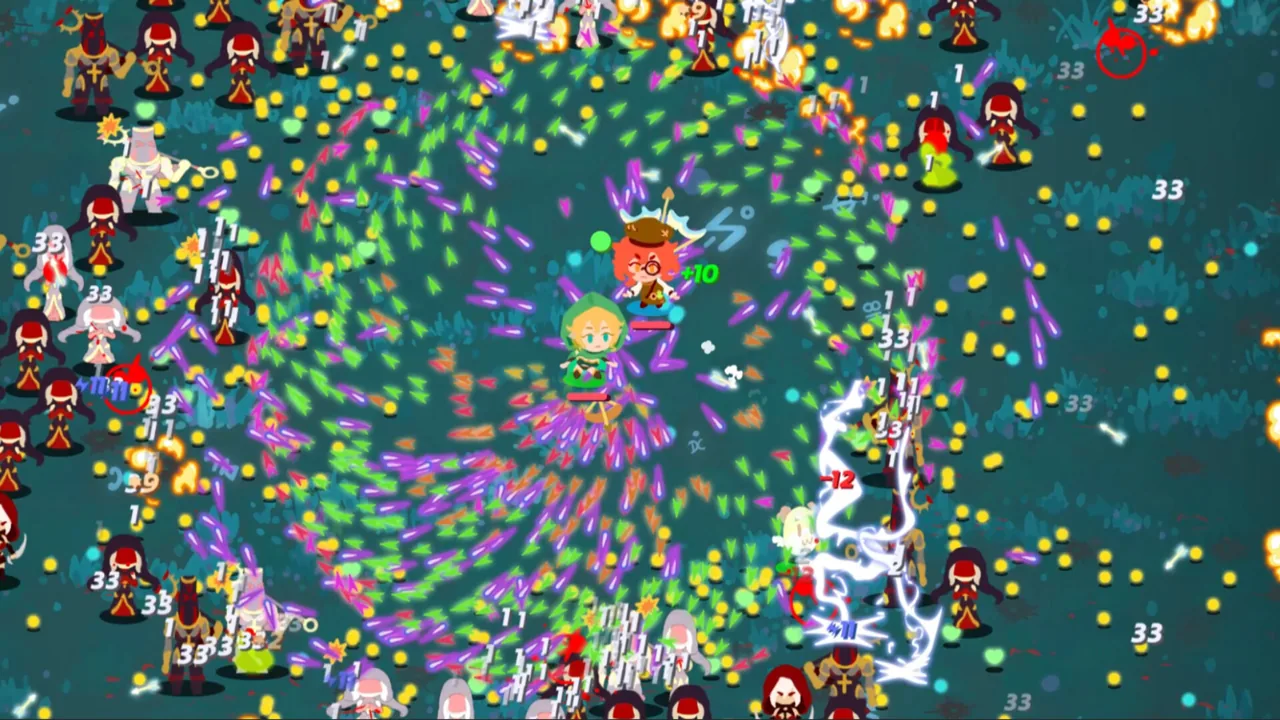
I'm No DemonlordImage: Edigger via Steam -
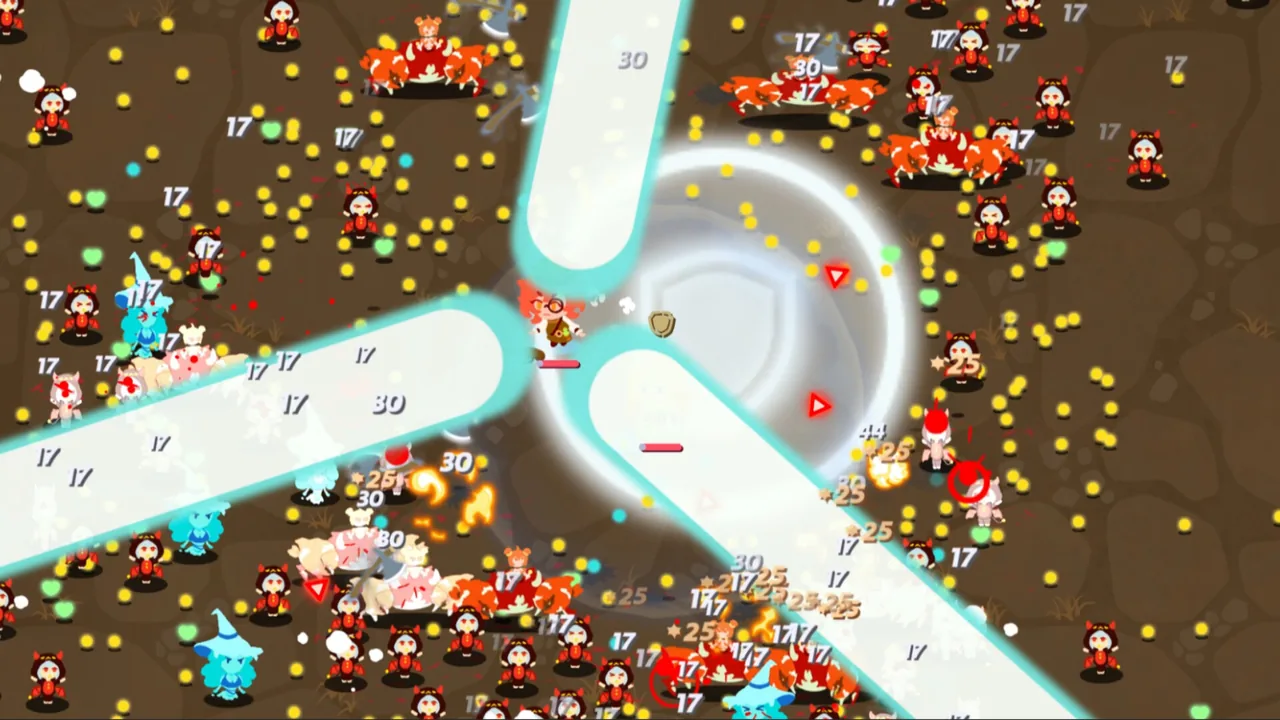
I'm No DemonlordImage: Edigger via Steam -
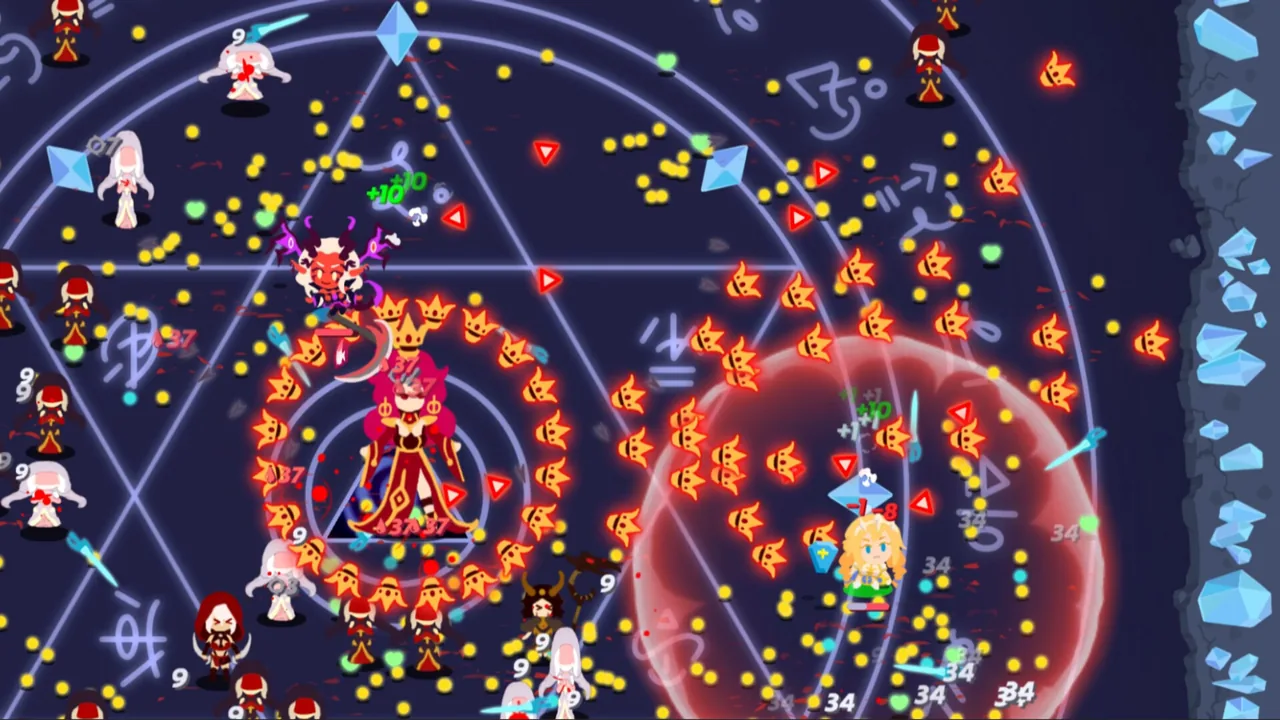
I'm No DemonlordImage: Edigger via Steam -
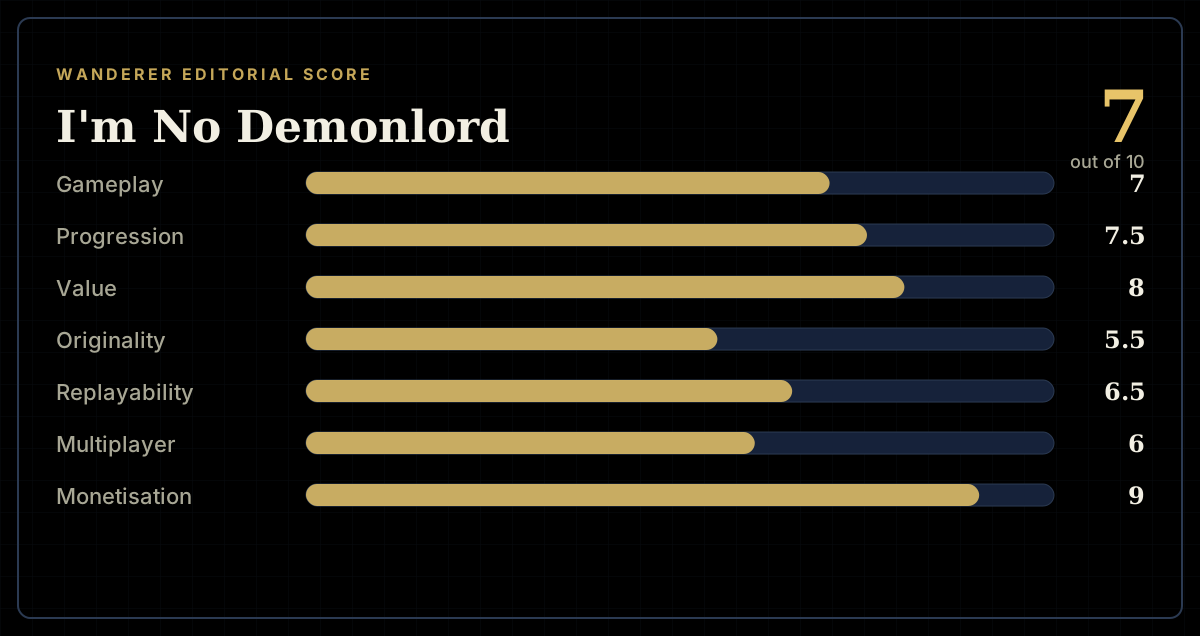
How the review scores each part of the gameWanderer Editorial -
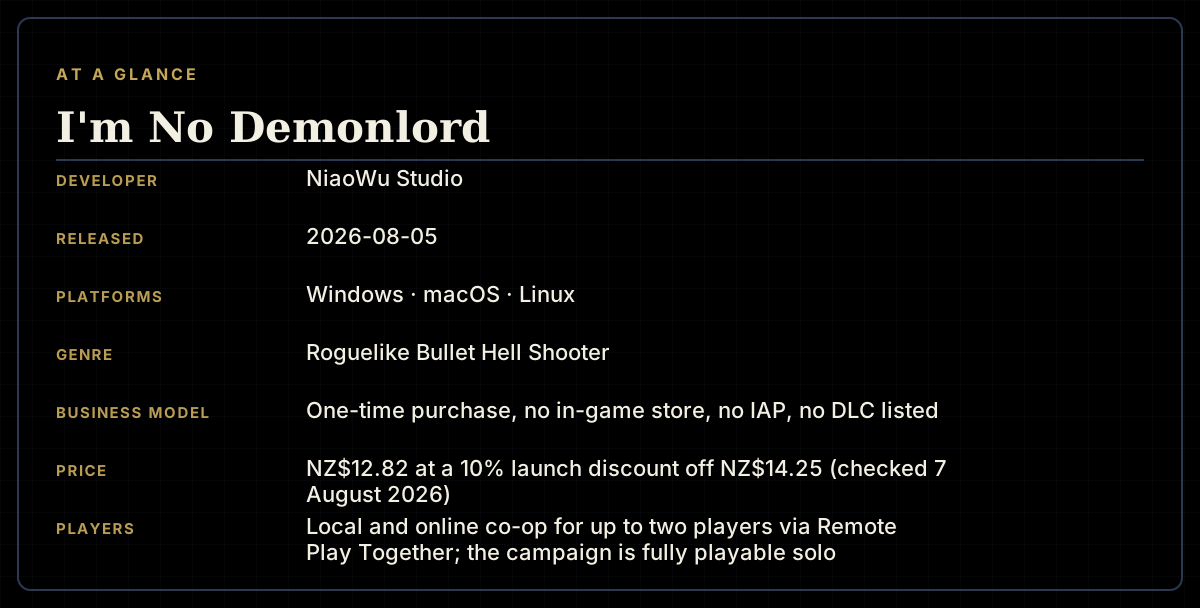
The game at a glanceWanderer Editorial -
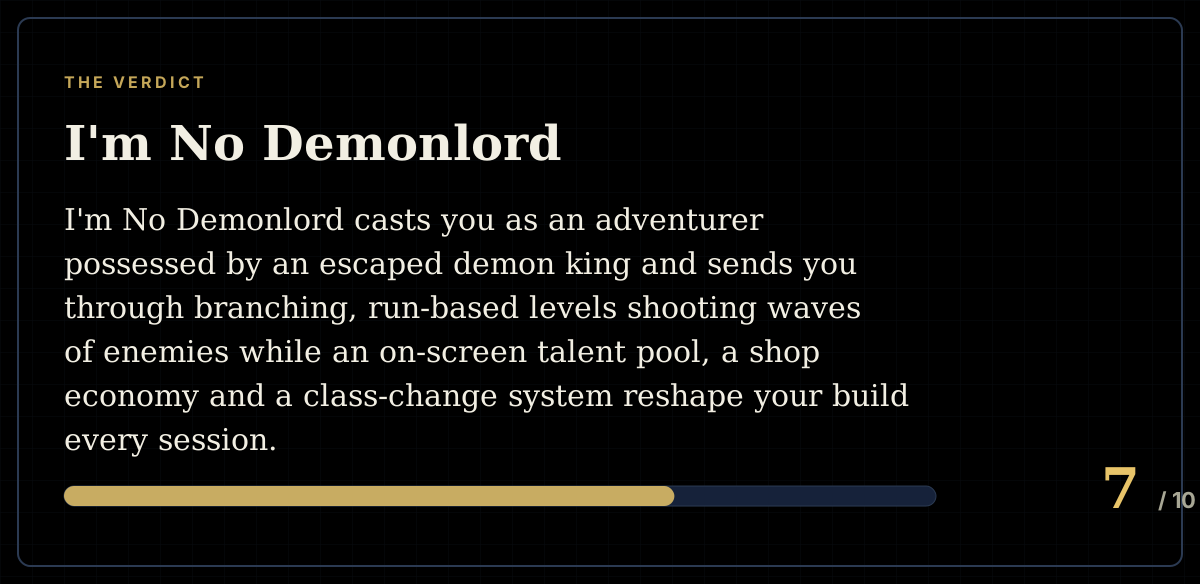
The short versionWanderer Editorial