
Game review
MapleStory M
5.5 / 10
- Developer
- NEXON
- Publisher
- NEXON
- Released
- 24 July 2018
- Platforms
- Windows, iOS, Android
- Genre
- Idle MMORPG
- Monetisation
- Free to install with in-app purchases, and a Steam listing that carries the "chance based in-game purchases" disclosure. The premium currency is Crystals. Auto-battle time — the resource the whole game runs on — is granted at two hours a day free, banks up to a 360-minute ceiling, and can be extended with Crystals beyond that. The rest of the shop runs on time-limited, often heavily bundled offers rather than permanent unlocks. Requires a separate NEXON account and the storefront declares kernel-level anti-cheat. Checked 3 August 2026.
- Players
- Persistent MMO world with full crossplay between the Steam client and the iOS/Android clients on the same account and characters. Guilds, party boss raids designed to be run solo or co-op, and seasonal events. The Steam release is region-limited rather than worldwide, and several players have reported being unable to connect existing global-region accounts to it.
The short version
MapleStory M is an idle game that most of its Steam audience arrived expecting to be an MMO, and the collision produced one of the year's harsher review pages. Judged as what it actually is — a background-running, auto-battling, crossplay MapleStory you check in on between other things — the core loop works and the boss content behind it is real. What sinks the score is the shape of the monetisation: the game meters the auto-battle time its entire design depends on, sells more of it for premium currency, and wraps the rest of the shop in expiring offers rather than things you own. A rough PC launch and a region-limited release did the rest.
Biggest strengths
- Full crossplay means one account and one set of characters across phone and PC, which is exactly what a game built on background progression should have shipped years ago
- Auto-battle is designed rather than bolted on — overnight grinding, daily chores and farming are automated, leaving the bosses as the part you actually play
- Considerably fewer overlapping systems than the modern PC MapleStory, which makes it far more approachable for a returning player who never wants to see a Star Force table again
Biggest weaknesses
- The auto-battle allowance — two free hours a day, banking to a six-hour ceiling — turns the game's core system into a metered resource, and Crystals are the way past the meter
- Almost nothing in the cash shop is a permanent purchase; the recurring complaint across the negative reviews is expiring buffs, expiring cosmetics and limited-time bundles that reset the decision every few days
- The PC build is a mobile client in a window — awkward default keybinds, a browser-based login step, and a launch week of crashes and freezes on server select
Who it's for: Players who want a big, familiar MMO ticking over in the background while they do something else, MapleStory veterans curious about crossplay, and mobile RPG players who value playing the same account on a real keyboard. A bad fit for anyone hoping the Steam icon means the original PC MapleStory, and for anyone who bounces off timed offers.
Our recommendation: Free to try and genuinely worth an evening if the idea of an MMO that plays itself appeals to you — but install it knowing the two-hour daily auto-battle allowance is the actual product, and decide before you start whether topping that up with Crystals is a habit you want. Existing mobile players have the strongest case to install it; newcomers should treat the PC client as a second screen for a phone game, because that is what it is.
5.5 / 10
Every idle game has to answer the same question: what stops you? Melvor Idle answers with skill levels. An incremental answers with a prestige wall. MapleStory M answers with a clock. You get two hours of auto-battle a day, free, and the game banks unspent time up to a six-hour ceiling. Past that, Crystals — the premium currency — buy more.
That single design decision explains almost everything about this game, including why its Steam page went Mostly Negative within a week of launch. MapleStory M is not a bad MMO pretending to be good. It's an idle game that a Steam audience walked into expecting an MMO, sold on a business model built around metering the exact thing the game is for.
What actually launched in March
Nothing about this game is new. MapleStory M soft-launched on mobile in May 2018 across five countries, went global on 24 July 2018 in roughly 140 countries, and has been running ever since. What happened on 18 March 2026 was a PC client on Steam, with a demo the month before, the Kain job added, and events to mark the occasion. The account, characters and world are shared with the phone version — this is crossplay, not a port of a snapshot.
That distinction matters because a large share of the negative reviews are, in substance, reviews of a misunderstanding. "It's a mobile port" appears again and again, phrased as an accusation. It is a mobile port. It says so in the title. The confusion is understandable — Steam's storefront gives a 2026 release date to an eight-year-old game, and the word MapleStory carries a lot of expectation for anyone who played the PC original in 2007 — but a fair reading has to separate "this game isn't what I wanted" from "this game is broken," and both are present on that review page in roughly equal measure.
Where the port criticism does land is on the client itself. The default keybinds are a mobile UI mapped onto a keyboard rather than designed for one. Logging in routes through a browser and a separate NEXON account. Launch week brought crashes on server select and connection freezes, and as late as June players were still posting about a white screen after the Nexon logo. The Steam listing declares kernel-level anti-cheat, which is a real consideration for some players, though several reviewers report the client running fine on Linux through Proton — something the current PC MapleStory client won't do.
Auto-battle is the game, and it's metered
Strip the branding away and MapleStory M's loop is a well-built idle RPG. Your character farms monsters on its own. Daily chores automate. Overnight grinding for mesos and experience happens without you. The parts you play manually are the bosses, which are structured as genuine party content with mechanics rather than auto-resolved damage checks. Players with hundreds of hours describe exactly this rhythm — set it running, come back for the fights that matter — and for an audience that likes progression continuing while they're at work, that's a legitimate pitch. It's the same pitch Legends of Idleon makes, with a bigger world and a much larger art budget behind it.
The metering is where it turns. Two free hours a day, accumulating to a six-hour maximum, means a player who logs in daily has a hard ceiling on how much of the game they can consume, and a player who skips a few days loses the overflow entirely. Both halves of that are deliberate. The daily allowance creates a habit; the cap punishes saving it up; Crystals resolve both.
Compare it to how a well-designed idle game handles the same problem. Offline progression in most of the genre is either uncapped or capped generously, and the monetisation sits on top — cosmetics, convenience, a permanent multiplier. MapleStory M inverts that. The resource being sold isn't power or vanity, it's the game running at all. When a reviewer with a thousand hours says they're happy with it and a reviewer with two hours calls it slop, they're both describing the same system from opposite ends of a spending curve.
The on-ramp is generous, then it isn't
Nexon knows its audience arrives lapsed, and the front half of the game is built accordingly. The store page leads on content aimed at beginning and returning users — Tera Burning-style accelerated levelling, auto-battle available early rather than as an unlock — and the class roster keeps the original's five archetypes with jobs that still play distinctly rather than reskinning one kit five times. A new character moves fast, sees a lot of Maple World quickly, and spends very little of that period being asked for money. It's a good first evening.
The curve hardens at the point where levelling stops being the progression and equipment enhancement starts. That's the same structural transition the PC game makes, and it's where the daily allowance becomes the binding constraint rather than a convenience: enhancement wants materials, materials want farming hours, and farming hours are the metered resource. Nothing about that is hidden or sudden. It is, though, the moment the game stops being an idle RPG you dip into and starts being a schedule — and a player who liked it because it ran itself is exactly the player least likely to want a schedule.
Nothing you buy is yours
The complaint that recurs hardest across the negative reviews isn't the price of any individual item. It's that the shop deals almost entirely in things that expire. Timed buffs, timed cosmetics, limited-window bundles, offers that appear on a countdown. One reviewer put the pattern plainly: nothing you get is permanent. Another described the pressure as constant enough that it, rather than the gameplay, was the thing that made them stop.
This is a familiar mobile monetisation grammar, and it survives the transition to PC badly. On a phone, a screen full of expiring offers reads as normal. On Steam, next to a library of games that were bought once and stay bought, it reads as hostile — and the audience Steam delivered is precisely the audience least acclimatised to it. Nexon's storefront disclosure of "chance based in-game purchases" adds a randomised layer on top of the timed one.
To be fair about the reach of the paid layer: this is not a game where the shop is confined to cosmetics, and reviewers describe purchases touching character power directly rather than just convenience. It's also not a game with a competitive PvP mode where that power translates into beating other players, which meaningfully limits the damage. What it produces instead is a progression gap between paying and non-paying accounts on a shared server — visible in guild boss runs, invisible in a leaderboard. Whether that counts as pay-to-win is a semantic argument. That it shapes how fast the same content opens up for two players standing next to each other is not.
The part the review page undersells
There's a real game here, and the more considered positive reviews are more useful than the score suggests. MapleStory M is markedly less bloated than the modern PC MapleStory, which has accumulated so many overlapping enhancement systems that returning players need a spreadsheet. It keeps the art, the music and the class identities that made the series work. Crossplay is genuinely well executed — the same character on a phone at lunch and a PC in the evening is exactly what a game about background progression should offer, and the fact that it took until 2026 to reach Steam is the criticism, not the feature.
The boss design deserves specific credit. In a game where farming is automated, the encounters are where the design has to prove it's still a game, and they hold up: party mechanics, real coordination, guild-scale targets. Automating the chores and keeping the fights manual is the right call, and plenty of much-loved idle games never make it.
Verdict
The gap between what MapleStory M is and what its Steam audience expected is wide enough that the 37% rating tells you more about the storefront than the game. But the design decision underneath survives the fairest possible reading and still doesn't come out well: a game whose whole appeal is progressing without you, which then rations the progressing and sells the rest.
There's a version of this game with an uncapped auto-battle, a cosmetics-and-convenience shop and permanent purchases that would score two points higher on the same content, the same art and the same bosses. Nexon has run the current version profitably for eight years and 75 million registered mobile accounts, so it isn't an accident.
Install it if you have a phone account already, or if the idea of a big pixel-art MMO ticking away in a background window genuinely appeals and you're clear-eyed about the meter. Skip it if you came looking for the MapleStory you remember, if you're outside the regions the Steam release actually serves, or if a shop full of countdown timers is the kind of thing that follows you around after you close the game. At 5.5 this is a competent idle MMO carrying a monetisation model that its new audience was never going to accept quietly.
Players who like the idea of progress continuing while they're away — without a daily allowance metering how much of it they're allowed — may also enjoy Wanderer.
Pros and cons
Pros
- Full crossplay means one account and one set of characters across phone and PC, which is exactly what a game built on background progression should have shipped years ago
- Auto-battle is designed rather than bolted on — overnight grinding, daily chores and farming are automated, leaving the bosses as the part you actually play
- Considerably fewer overlapping systems than the modern PC MapleStory, which makes it far more approachable for a returning player who never wants to see a Star Force table again
- Boss raids are structured as real party content with proper mechanics, not auto-resolved numbers
- Players report the Steam client running on Linux through Proton, which the PC MapleStory client does not
Cons
- The auto-battle allowance — two free hours a day, banking to a six-hour ceiling — turns the game's core system into a metered resource, and Crystals are the way past the meter
- Almost nothing in the cash shop is a permanent purchase; the recurring complaint across the negative reviews is expiring buffs, expiring cosmetics and limited-time bundles that reset the decision every few days
- The PC build is a mobile client in a window — awkward default keybinds, a browser-based login step, and a launch week of crashes and freezes on server select
- The Steam release is region-limited, and players have reported downloading it only to find their existing account's region unsupported
- Reception has not recovered from launch: recent reviews sit lower than the lifetime rating, which is the opposite of the pattern a fixed launch usually produces
Screenshots
-

MapleStory MImage: NEXON via Steam -
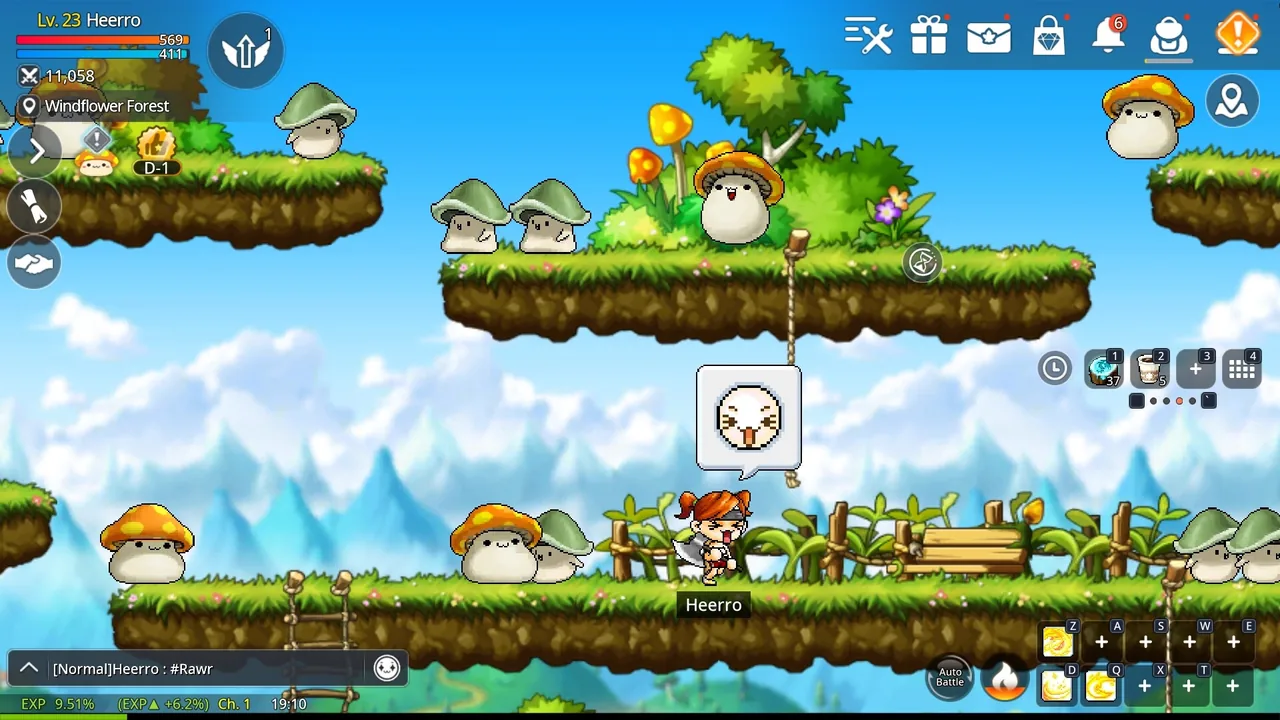
MapleStory MImage: NEXON via Steam -
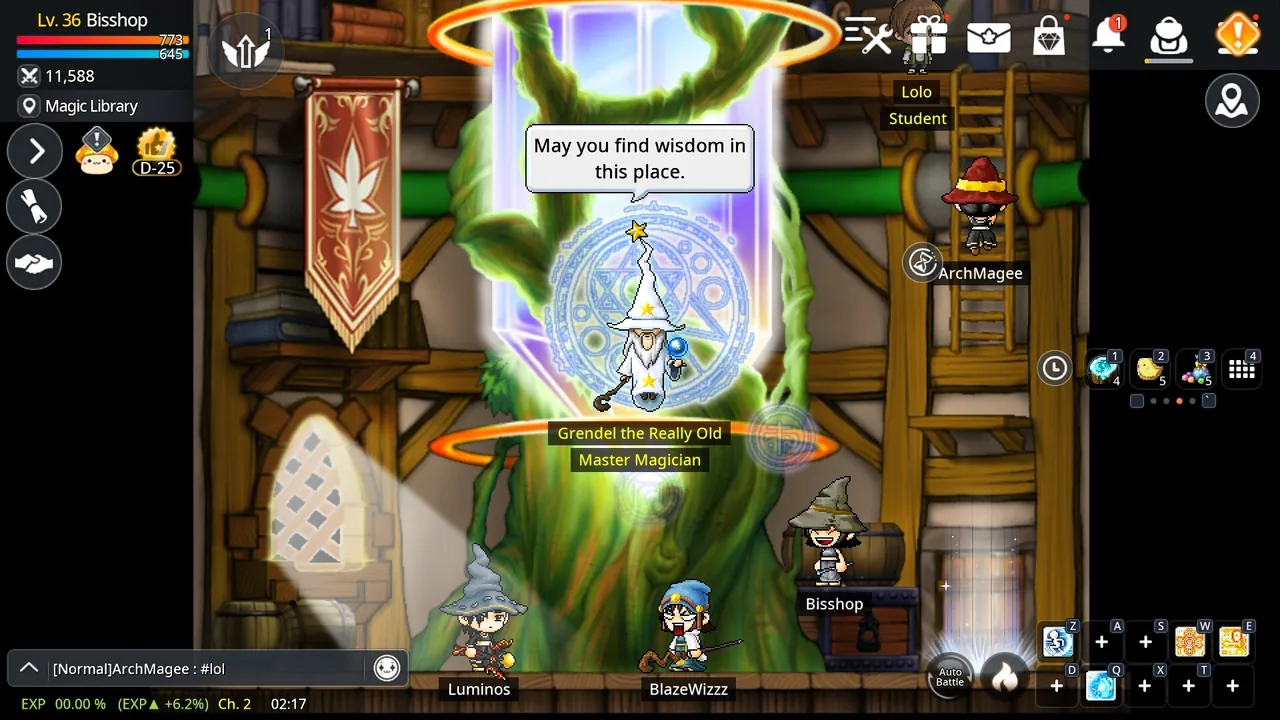
MapleStory MImage: NEXON via Steam -
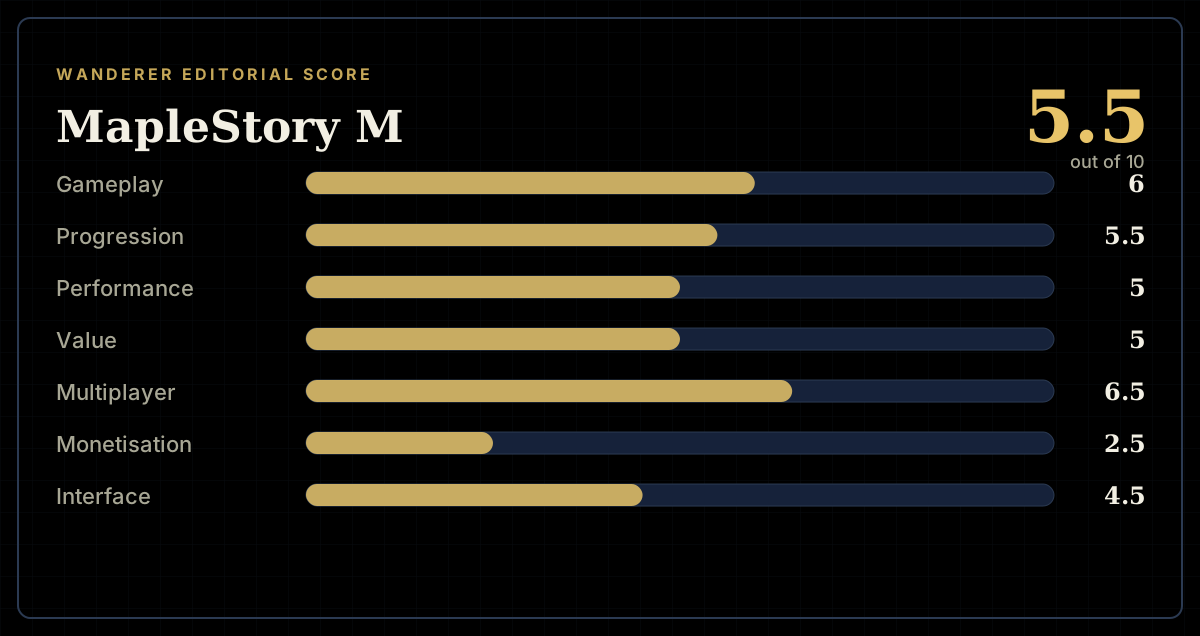
How the review scores each part of the gameWanderer Editorial -
The short versionWanderer Editorial