Game review
Digimon UP
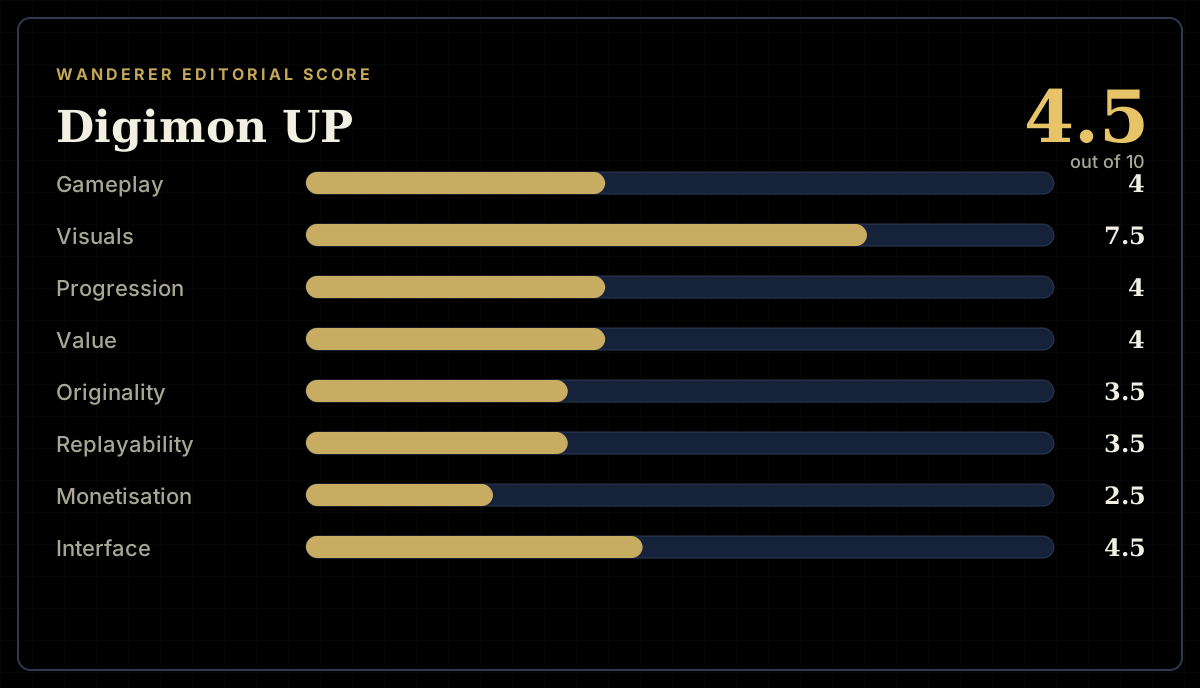
4.5 / 10
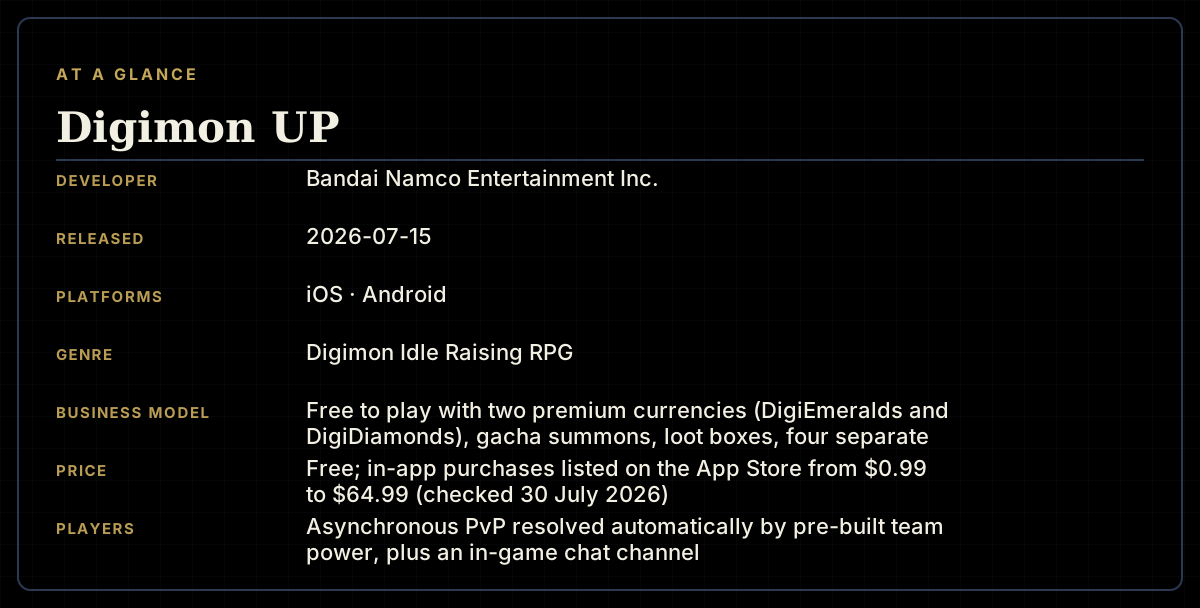
- Developer
- Bandai Namco Entertainment Inc.
- Publisher
- Bandai Namco Entertainment Inc.
- Released
- 15 July 2026
- Platforms
- iOS, Android
- Genre
- Digimon Idle Raising RPG
- Monetisation
- Free to play with two premium currencies (DigiEmeralds and DigiDiamonds), gacha summons, loot boxes, four separate battle passes and ad-gated speed-ups on training, gear upgrades and dungeon retries; a roughly $9 one-time purchase removes ads only.
- Players
- Asynchronous PvP resolved automatically by pre-built team power, plus an in-game chat channel
The short version
Digimon UP was pitched as the raising-sim comeback the franchise's mobile fans have wanted for years, and what shipped is a competent but generic idle RPG that happens to be wearing Digimon skins. The pixel-art partners are genuinely well made, and Mega evolution arrives fast enough to feel rewarding in the opening days — but almost every system that follows exists to sell you something, from four overlapping battle passes to ads gating routine progress.
It is free to finish reading a match without paying, technically, the way most gacha games are. Whether that's a meaningful kind of "free" is the part worth thinking about before installing it.
Biggest strengths
- Pixel-sprite work for the Digimon partners is genuinely strong, with fluid Digivolution animations that land the DS-era nostalgia the franchise is selling
- New partners reach Mega Digivolution within a few days of casual play, so the game's central promise pays off quickly rather than being locked behind weeks of grinding
- All content is nominally reachable without spending, and the encyclopedia-style Digimon entries reward players who care about the wider roster rather than just their one partner
Biggest weaknesses
- Four separate battle passes running at once, each priced around 1,000 DigiDiamonds, is at least two more than the content on offer can justify
- Training cooldowns, gear-upgrade timers and dungeon retries are all gated behind watching ads or spending currency, so nearly every wait in the game doubles as a sales pitch
- Combat and PvP are almost entirely automated; the outcome is decided by team stats before a single card is played, leaving little room for skill or tactical decision-making
Who it's for: Digimon nostalgia hunters who mainly want to watch familiar creatures Digivolve and are prepared to tune out constant purchase prompts; a hard pass for anyone hoping for the Tamagotchi- style virtual-pet game the franchise's history suggests it should have been.
Our recommendation: Playable for free and undeniably pretty, but the monetisation is aggressive enough, and the battle system passive enough, that it's hard to recommend spending real money on it. Install it for the nostalgia and the character roster; keep your wallet closed until you've seen the stage-80 wall for yourself.
4.5 / 10
Digimon has spent almost thirty years selling a very specific fantasy: raise a partner from an egg, feed it, train it, watch it Digivolve into something bigger, and feel like the choices you made along the way shaped what it became. That's the Tamagotchi DNA the whole franchise grew out of, and it's exactly the kind of loop mobile phones are built for. Digimon UP, announced at Digimon Con 2026 and launched worldwide on 15 July after passing a million pre-registrations, gets the nostalgia half of that pitch right. It gets the raising-sim half almost entirely wrong, and replaces it with the same automated idle-RPG chassis a dozen other licensed mobile games already run on.
Raising a partner, on rails
The setup is straightforward: pick a starting partner, feed and train it to raise its stats, and watch it Digivolve up through the franchise's familiar evolutionary stages toward Mega. Reports from early players and guide sites put a fresh partner at Mega within three or four days of casual attention, which is fast by gacha-RPG standards and does deliver on the game's core promise quickly rather than stretching it out for weeks. The problem is what "training" actually involves day to day: feeding stat items, clearing auto-battle stages, and checking back in on a Digi Farm that needs daily planting and feeding to keep its buffs active. There's a genuinely clever pressure valve built into that loop — leave a partner unattended too long and it visibly suffers for the neglect, which is the one moment the game gestures at the virtual-pet stakes it's named after. It's a good idea surrounded by systems that don't build on it. Beyond that single touch, "raising" mostly means tapping through menus to spend resources the game hands you on a schedule, not making decisions that meaningfully shape the Digimon you end up with.
Combat that mostly happens without you
Battles, both PvE stages and PvP, are almost entirely automated. Cards and skill decks exist and can be assembled — Tamers can run up to five Skill Cards and five Support Digimon at once — but once a fight starts, those choices execute themselves. Outcomes are decided by team power built up in advance rather than anything resembling real-time decision-making, and PvP resolves the same way: compare team strength, declare a result. That's not an unusual structure for the idle-RPG genre, and players who enjoy that genre specifically for its hands-off pacing won't mind. What stings is that Digimon UP was marketed around partner-raising and personal investment in a single creature, and then delivers combat that makes the strength of that creature almost the only variable that matters, with little room for the card-based strategy the interface implies is there.
Presentation is the strongest argument for installing it
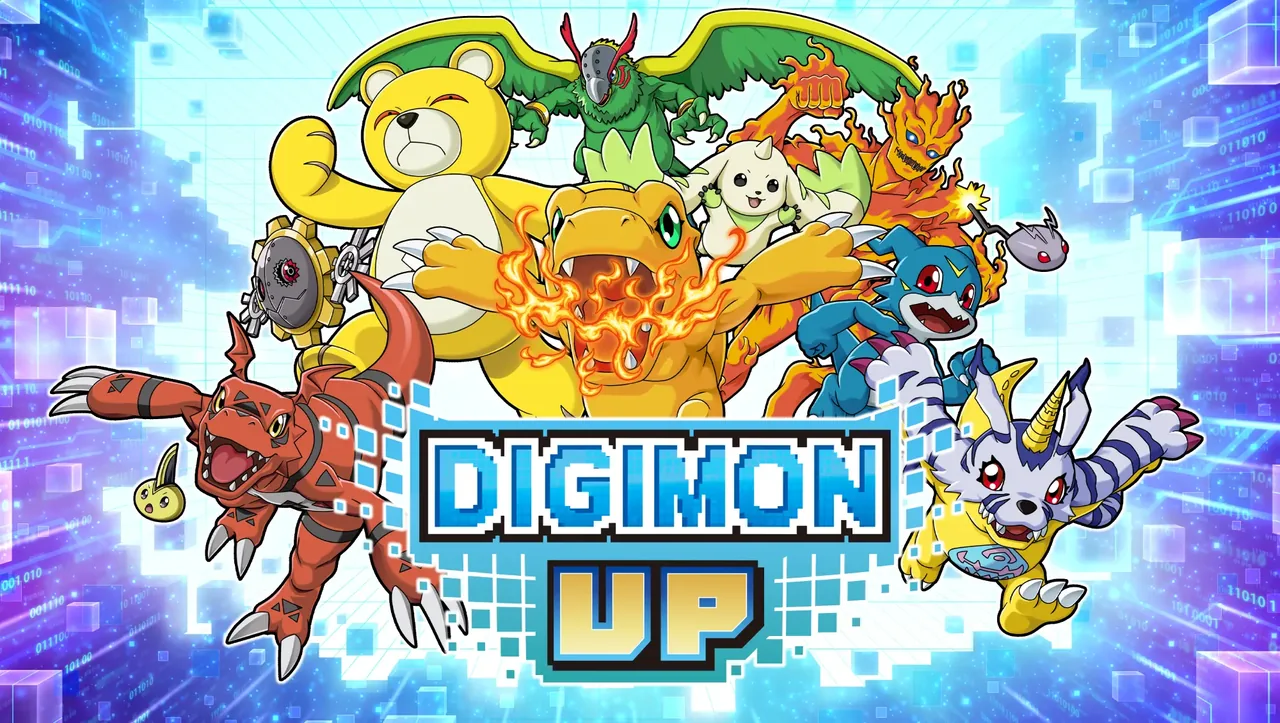
Whatever else is true about the systems underneath, the art team did the license justice. Digimon sprites are detailed, well animated, and lean hard into the DS-era pixel aesthetic that longtime fans associate with the franchise's best handheld games, and Digivolution sequences land the visual weight the moment deserves. The roster runs to nearly 300 Digimon, including plenty of deep-cut choices alongside the obvious mainstays, and the in-game encyclopedia entries give collectors a real reason to chase creatures they'll never actively use. If Digimon UP were being judged purely as a piece of fan service, it would be doing very well. It's the systems wrapped around that presentation that pull the overall experience down.
Monetisation: the part that actually matters here
This is where the review has to get specific, because "free to play with paid items and loot boxes" undersells how many separate purchase paths Digimon UP actually runs. There are two premium currencies: DigiEmeralds, which can be earned through play or bought, and DigiDiamonds, which are real-money only and feed the game's four separate battle passes — one each tied to gear, skill-card summons and support-card summons, priced at roughly 1,000 DigiDiamonds apiece. Running four overlapping passes at once, each with its own premium track, is a genuinely unusual amount of subscription-style pressure for a single mobile game to stack on top of an already-present gacha system.
The gacha itself uses Summon Tickets, earnable through missions or purchasable with premium currency, across General, Buddy and SP Support banners. Community guides describe a pity system that guarantees a top-tier "Deluxe" pull somewhere in the range of 150 to 200 summons depending on the source, which is a wide enough spread that it's worth treating as an estimate rather than a confirmed number — neither the official site nor Bandai Namco appear to have published exact odds or a formal pity count at the time of writing, which is worth knowing on its own: many regions legally require gacha rate disclosure, and a specific, sourced figure for Digimon UP's featured-pull rate isn't something this review can confirm. What is confirmed is the App Store's own IAP price ladder, which runs from $0.99 up to $64.99 per purchase, and that even the largest bundle only buys a handful of ten-pulls rather than a guaranteed featured unit.
Beyond the gacha, ads are woven into ordinary progress rather than kept optional in any meaningful sense. Training cooldowns, gear-upgrade timers and dungeon re-attempts can all be sped up by watching an ad, typically capped around five uses a day per system, which means a genuinely free player is expected to sit through ads regularly just to keep pace with the game's own clock. A roughly $9 one-time purchase removes ads, but that only buys back the interruptions — it does nothing about the currencies, passes or gacha pulls sitting behind it, so it reads less like a fix and more like paying to stop being asked.
What players are actually saying
The split in reception here is unusually wide, and both halves are worth reporting because they tell different, true things. On the App Store, Digimon UP sits at 4.4 out of 5 across roughly 6,100 ratings — a strong number, and a believable one given how much goodwill the license and the art carry into a player's first few sessions. Independent critical coverage tells a much rougher story: Game8's review scored the game 34 out of 100, arguing it's "an idle RPG first and a Digimon game second," and a Pocket Gamer hands-on piece expressed open disappointment that a franchise built on virtual-pet raising shipped a generic automated idle game instead. Player reports circulating on Google Play and in community guides describe a specific late-game problem: a resource wall around stage 80-90, where the materials needed to keep levelling drop sharply compared to the steady early-game supply, turning a smooth first week into a much harder grind right around where the free progression naturally slows and the paid options start looking more attractive. That timing is exactly the pattern monetisation critics look for in a free-to-play game, and it's consistent enough across independent reports to treat as a real pattern rather than a handful of unlucky accounts.
Final verdict
Digimon UP does one thing genuinely well: it looks and feels like a loving pixel-art tribute to the Digimon franchise, with a roster deep enough and Digivolution fast enough to hook nostalgic players in the opening days. Everything built around that presentation is a fairly ordinary automated idle RPG, and the business model wrapped around the whole thing is unusually aggressive even by mobile gacha standards — four battle passes, two premium currencies, ad-gated waits on nearly every system, and a pity structure whose exact terms Bandai Namco hasn't clearly published. None of that makes the game unplayable for free, and the App Store's own user score suggests plenty of players are enjoying it on exactly those terms. But a review has to weigh what's actually being asked of a player against what's actually being delivered, and on that math, Digimon UP earns a 4.5. It's watchable nostalgia wrapped around a shallow, heavily monetised idle loop — worth installing for the art and the roster, worth being cautious around for everything else.
Players who'd rather their monster-collecting and progression stay free of battle passes and ad timers might find Wanderer's own persistent RPG world a friendlier place to sink that same itch for watching numbers climb.
Pros and cons
Pros
- Pixel-sprite work for the Digimon partners is genuinely strong, with fluid Digivolution animations that land the DS-era nostalgia the franchise is selling
- New partners reach Mega Digivolution within a few days of casual play, so the game's central promise pays off quickly rather than being locked behind weeks of grinding
- All content is nominally reachable without spending, and the encyclopedia-style Digimon entries reward players who care about the wider roster rather than just their one partner
- Nearly 300 Digimon populate the roster, giving collectors a genuine reason to keep summoning even once a single team is built
Cons
- Four separate battle passes running at once, each priced around 1,000 DigiDiamonds, is at least two more than the content on offer can justify
- Training cooldowns, gear-upgrade timers and dungeon retries are all gated behind watching ads or spending currency, so nearly every wait in the game doubles as a sales pitch
- Combat and PvP are almost entirely automated; the outcome is decided by team stats before a single card is played, leaving little room for skill or tactical decision-making
- Community reports describe a hard progression wall around stage 80-90, where the resources needed to keep levelling drop sharply compared to the steady supply earlier in the game
- The game is an idle RPG with Digimon reskins layered on top, not the virtual-pet raising experience the franchise's history and this launch's own marketing pointed toward
Screenshots
-
How the review scores each part of the gameWanderer Editorial -
The game at a glanceWanderer Editorial -
The short versionWanderer Editorial