Game review
Summoners War: Sky Arena
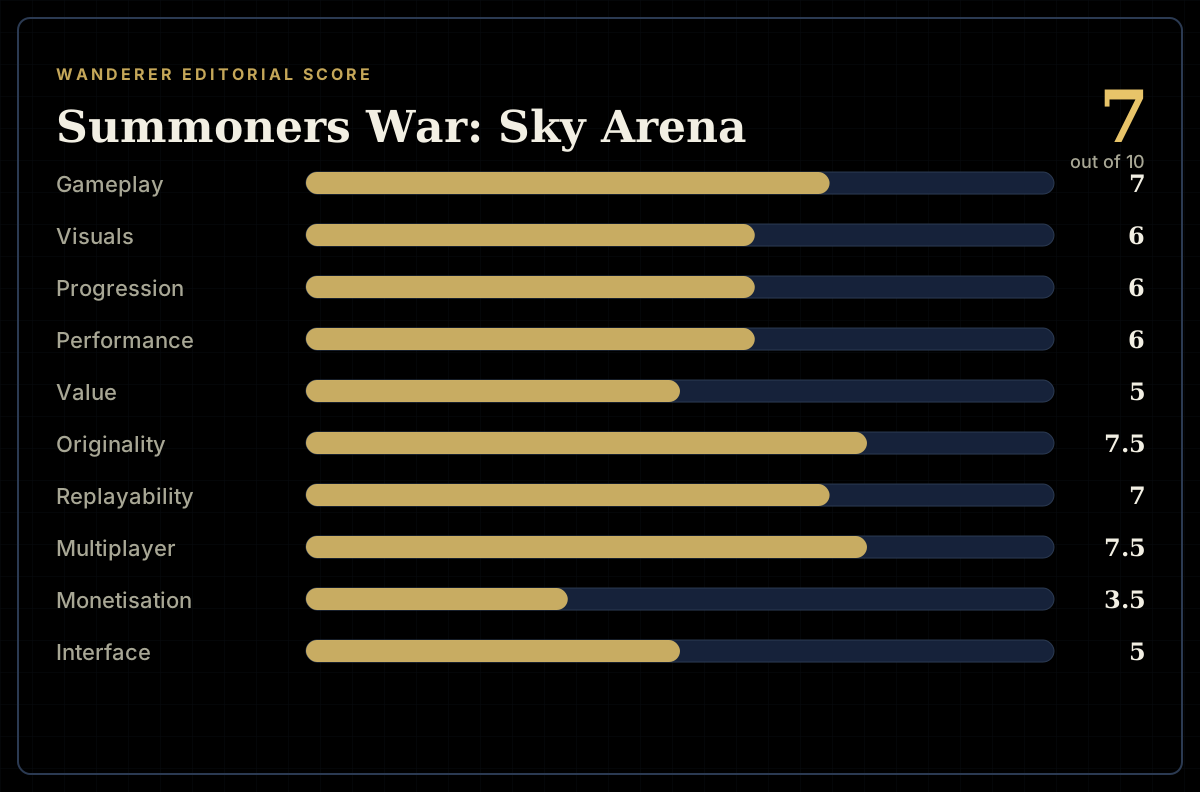
7 / 10
- Developer
- Com2uS Corp.
- Publisher
- Com2uS Corp.
- Released
- 2 June 2014
- Platforms
- iOS, Android, Windows
- Genre
- Turn-Based Collection RPG
- Monetisation
- Free to play with a Crystal-based premium currency that buys Mystical and Legendary summon scrolls, Energy and Mana refills, and direct rune or currency bundles, softened by a Summon Mileage system that guarantees a 5-star monster after enough pulls
- Players
- A worldwide Arena PvP ladder and Guild Wars/Siege battles that feed into the annual Summoners War World Arena Championship (SWC), plus cooperative Guild and World raids
The short version
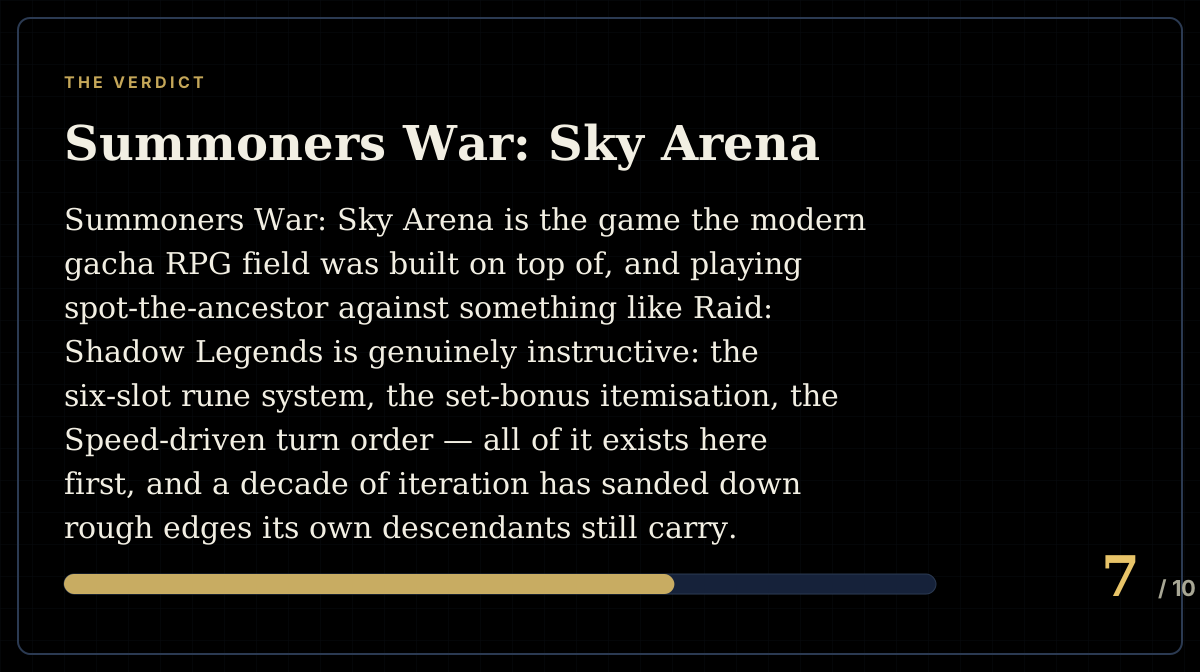
Summoners War: Sky Arena is the game the modern gacha RPG field was built on top of, and playing spot-the-ancestor against something like Raid: Shadow Legends is genuinely instructive: the six-slot rune system, the set-bonus itemisation, the Speed-driven turn order — all of it exists here first, and a decade of iteration has sanded down rough edges its own descendants still carry. What it hasn't solved, because nobody in this genre has, is that the rune farm sitting underneath all of it is one of the least forgiving grinds on mobile, and the interface still looks and feels like a 2014 game wearing twelve years of add-ons.
Biggest strengths
- The six-slot rune system's sets and substats are the direct ancestor of Raid's gear, and years of quality-of-life passes like Rune Reappraisal have smoothed edges its own descendant still carries
- The annual Summoners War World Arena Championship gives competitive PvP real structure and stakes that almost no other mobile gacha RPG can claim
- Speed is a live stat that governs turn frequency rather than just initiative order, which makes turn-manipulation a genuine tactical layer instead of a number to passively stack
Biggest weaknesses
- Rift Dungeon and Rift Raid rune drops are the game's defining grind, and landing a specific 6-star piece with the right main stat and a workable substat spread is realistically a months-long project even with daily play
- The interface still reads as a 2014 game under twelve years of stacked currencies, event banners and login systems, and the redesign never quite catches up with what keeps getting added on top
- A first-time player in 2026 arrives at a decade of overlapping systems — Guild content, Arena, Raids, the Dimensional Hole, Rift of Worlds, seasonal collaborations — with very little in-fiction guidance on what to prioritise first
Who it's for: Players who enjoy long-horizon itemisation puzzles, want a mobile game with a genuine competitive scene attached to it, and don't mind that the payoff for a well-built team takes months rather than weeks. A poor fit for anyone who wants a modern interface out of the box or who bounces off double-RNG loot systems on principle.
Our recommendation: Worth starting for free — the campaign, early Dimensional Hole content and the rune system itself are all genuinely engaging without spending, and the Summon Mileage pity system means no pull is ever completely wasted. Go in accepting that the top of Arena and Guild Siege belongs to accounts with years of accumulated rune farming behind them, spending or not.
7 / 10
The original, not the imitation
Every gacha RPG built around six equipment slots, set bonuses and a rune-adjacent itemisation grind owes something to Summoners War: Sky Arena, and reviewing it now, after already covering Raid: Shadow Legends, runs the comparison backwards from how most players will encounter it. Raid launched in 2018 wearing a marketing budget nobody in mobile gaming had seen before. Summoners War launched in 2014 with almost none, built the systems that game would later borrow, and is still running its own annual esports championship a decade later. That's not nostalgia talking — Com2uS's own storefront listings still put the game past 300 million lifetime accounts and 50 million-plus installs on Google Play alone, numbers a genre this crowded doesn't hand out to games that stopped mattering. The question worth asking in 2026 isn't whether Summoners War invented the formula. It's whether the original still holds up now that half the App Store is running variations on it.
The rune system, and what its descendants changed
Six rune slots per monster, each rune carrying a main stat, up to four substats and membership in one of dozens of set types — Fatal, Rage, Blade, Swift, Focus, Guard, Will, Despair, Vampire, Destroy and more — that only pay off in full at two- or four-piece bonuses. If that sounds identical to Raid's Weapon/Helmet/Shield/Gauntlets/Chestplate/Boots artifact system, that's because it is, almost slot-for-slot. What's different is what a decade of iteration did to the rough parts. Rune substats used to be locked in on drop with no way to fix a bad roll short of scrapping the piece; Com2uS eventually added Rune Reappraisal, letting a player pay to reroll every substat on a rune at once rather than nudging one stat at a time through Grindstones. Runes still upgrade from +0 to +15 using Mana, and the failure risk at the higher thresholds is still real, but Com2uS softened the penalty for a failed upgrade well before Raid's design team had to solve the same problem for their own artifacts. None of that makes the loop gentle. It makes it a system that's had twelve years to fix its worst decisions, which is a genuinely different thing from a system built well the first time — and it's worth knowing which one you're playing when a newer game's gear screen feels oddly familiar.
The monster side avoids the genre's cruellest trap. Rank-up and skill-up material comes from feeding a monster copies of matching grade and element, not from re-pulling the exact hero you're trying to upgrade — closer to Raid's fodder system than to Idle Heroes' star-fusion loop, where a hero's entire ceiling is gated behind pulling that specific hero repeatedly. It's a real point in Summoners War's favour that the genre didn't uniformly adopt.
Speed-driven combat, and whether team-building is a real decision
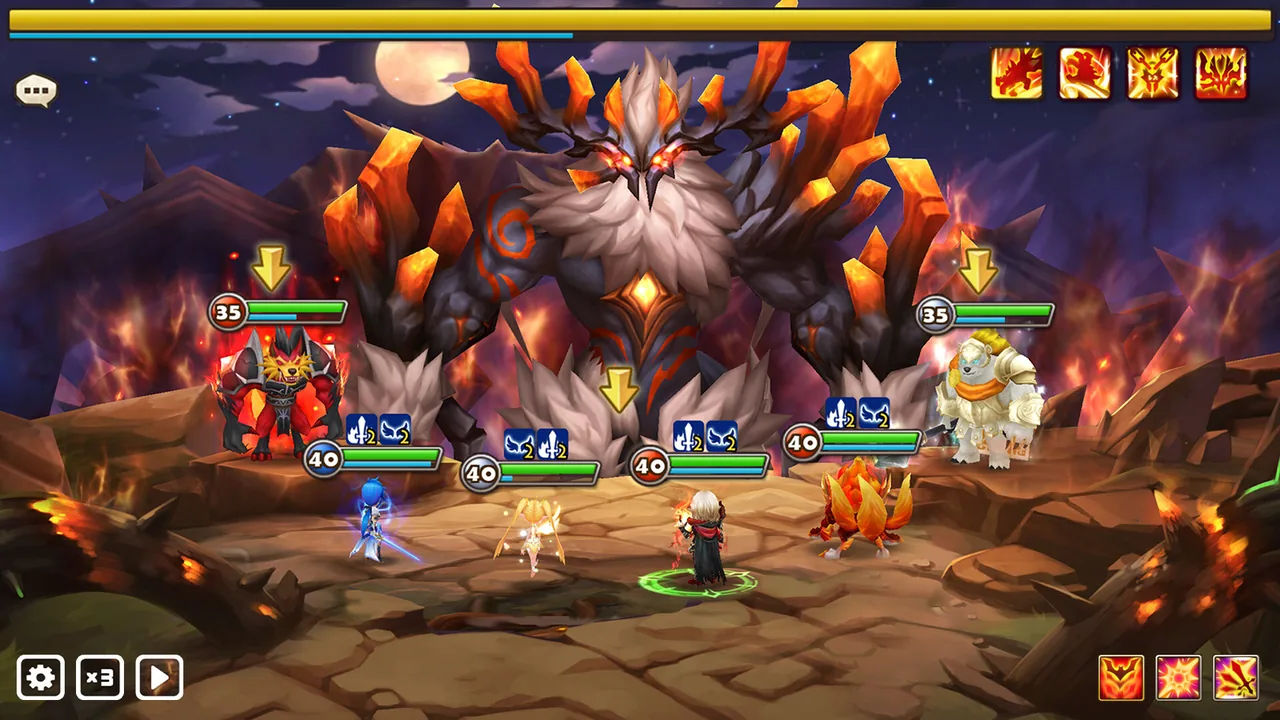
Combat is turn-based with Speed as the load-bearing stat: it's not initiative order, it's turn frequency, and a fast enough team can act two or three times before a slow boss moves once. Building around that — stacking Swift-set runes, timing a Speed-lead buff, stripping an enemy's turn with a stun before it goes off — is a genuine tactical layer, not dressing on an auto-battle button, and it's the part of the game every one of its imitators copied wholesale because it works. Where team-building gets less interesting is at the high end, where a small number of proven speed-tuning benchmarks for each piece of endgame content circulate constantly among the playerbase, and deviating from them costs real time you don't get back. That's not unique to Summoners War — every PvE-benchmarked gacha RPG converges on a meta the same way — but a twelve-year back catalogue of monsters means the meta here is unusually well-documented and unusually hard to diverge from once you've seen the numbers.
The rune farm, assessed honestly
Rift Dungeons, Rift Raids, Trials of Ascension and Dimensional Hole runs are where runes actually come from, and this is the single most-repeated complaint about the game across a decade of player feedback: the good runes — the right set, the right main stat, a workable substat spread, on a piece worth spending hundreds of thousands of Mana upgrading — do not drop often, and the game gives you no way to target one specifically. You farm the whole distribution and keep what's useful, which means most of what a Rift run produces is filler destined for Grindstones or disenchanting. That's a genre-standard shape of grind, not something unique to Summoners War, but running it for twelve years without fundamentally changing the odds means the community has had a long time to notice exactly how slow the tail end of "get a good rune" really is. It's not disrespectful of a player's time in the way a hard paywall would be — nothing here is blocked behind a purchase you can't otherwise reach — but it is a grind that rewards patience on a scale of months, and the game has never pretended otherwise.
The daily loop, and what free actually gets you
Energy caps Dungeon and Cairos Dungeon runs, the same shape of limiter Raid runs on its Campaign and Dungeon stages, and it's the real daily ceiling on how much rune farming, monster levelling and mana income a free account can generate in a session. What survives outside that cap is substantial by genre standards: Guild content, the Arena ladder, Siege battles and daily login rewards don't touch Energy, so a free player who logs in once or twice a day for a Rift run, a Guild War push and an Arena defence check genuinely completes a full daily loop without spending. It's a slower version of the game than a paying account gets, and the Energy wall is doing exactly the same job here that it does in every other game in this genre — but the amount of Energy-free content available to fill the rest of a session is wider than most of its imitators offer.
What money actually buys
Google Play lists Summoners War's in-app purchases running from roughly $0.99 to $99.99 per item, which buys Crystals — the premium currency behind Mystical and Legendary summon scrolls, Energy and Mana refills, and packaged rune or booster bundles. None of that is a direct rune purchase; you cannot buy a finished, +15, perfectly-rolled rune outright, only the resources and the summon attempts that get you closer faster. Com2uS's own store listing advertises a Summon Mileage system, which banks points on every pull toward a guaranteed 5-star monster regardless of luck — a real pity mechanic, and one the listing states plainly rather than leaving to community datamining. What isn't published anywhere on the storefront is the actual scroll-pull percentage breakdown by monster grade; Com2uS doesn't disclose it the way Plarium discloses Raid's base shard odds, so the honest position is to describe the mechanism rather than repeat an unverifiable community-sourced number. What's verifiable is the shape of the deal: money buys time compression on both the summon side and the rune-farming side, not a purchasable finished result, in a genre where the finished result is the actual bottleneck.
PvP, guilds, and a real esports scene
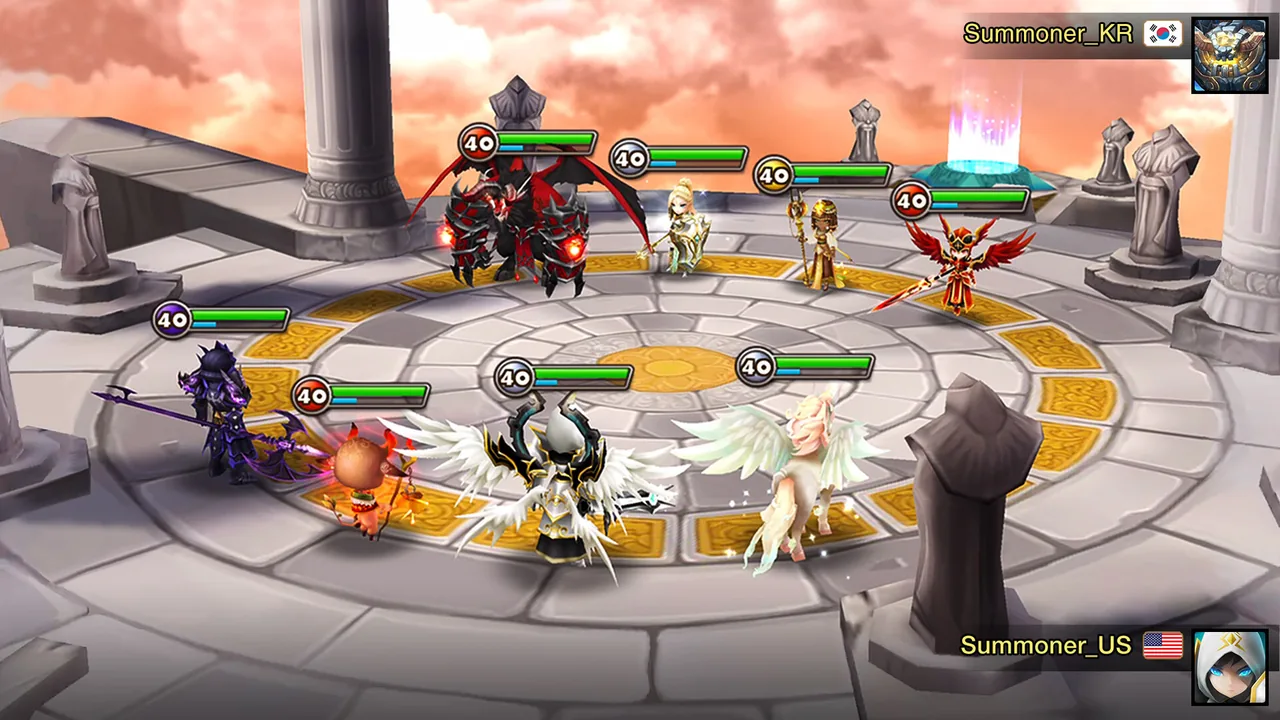
This is where Summoners War genuinely separates itself from almost everything else in mobile gacha. The worldwide Arena ladder and Guild Wars/Siege battles aren't just PvP modes bolted onto a PvE game — they feed a real competitive structure in the Summoners War World Arena Championship, an annual tournament Com2uS has run for years with actual regional qualifiers and a broadcast final. Very few mobile gacha RPGs have a competitive scene worth mentioning at all, let alone one that's survived a decade; most PvP ladders in this genre exist to create spending pressure and nothing else, the pattern AFK Journey runs almost unchanged. Summoners War's PvP still creates that same spending pressure at the top of the ladder — nobody is reaching Arena's higher brackets on a fresh, unspent roster of runes — but the fact that the ladder connects to something as tangible as an actual tournament gives the grind a destination that most of its imitators simply don't offer.
A decade of accretion, and whether 2026 is a fair time to start
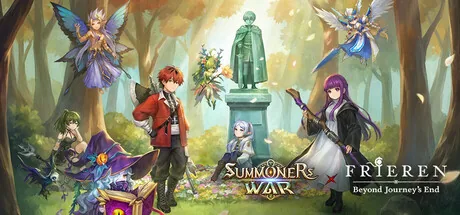
A new account today doesn't start on a stripped-down 2014 game. It starts with Guild content, Arena, Siege, Rift Raids, the Dimensional Hole, Rift of Worlds and whatever seasonal collaboration is currently running — as of this writing, that's a crossover event with the anime Frieren: Beyond Journey's End, evidence the game is still getting genuine collaboration content rather than running on autopilot. That's generous in one sense and a real onboarding problem in another: the tutorial introduces the rune system and basic team-building competently, then largely leaves a new player to work out which of a dozen concurrent systems actually matters this week. The interface hasn't had the kind of ground-up rebuild that would make that sorting easier, either — it still carries the visual bones of a 2014 game under twelve years of added currencies and event panels, and it shows more plainly here than it does in newer competitors built with a decade less legacy to drag along.
Player sentiment splits roughly along platform lines, the same pattern Raid shows. Steam's own review tally for the Windows client sits at Mostly Positive, with roughly 71% of just over 10,600 reviews positive — a noticeably better split than Raid's own Steam numbers, for what that's worth, though PC reviewers for both games raise real optimisation and login complaints that the mobile clients don't carry in the same way. Google Play shows the mobile version at roughly 3.9 stars across 2.3 million ratings, solid but not spectacular for a game this established, and consistent with a playerbase that respects the systems more than it loves the experience of navigating them day to day.
The verdict
Summoners War: Sky Arena earns a rating above Raid: Shadow Legends' 6.5, and it earns it for reasons that don't overlap with what makes Raid work: it's the actual originator of the rune-slot itemisation genre rather than a well-executed follow-on, a decade of iteration has fixed real problems in that system that its own descendants still carry, and the SWC gives its PvP ladder a destination almost nothing else in mobile gacha can claim. It does not score meaningfully higher than that, because the things holding it back are the same things holding the whole genre back — a rune-farming grind that rewards patience on a scale of months, an interface that has never fully escaped its 2014 origins, and a monetisation model that sells time compression rather than outright power but still asks for a lot of it. Players who want the genre's deepest itemisation puzzle and don't mind a UI that shows its age will find something genuinely worth their time here. Anyone hoping a decade of updates erased the double-RNG grind that defines this whole category of game will be disappointed — that part was never going anywhere, in Summoners War or anything that came after it.
Readers who'd rather their progression kept moving without a Rift Dungeon's drop table deciding the pace, even while they're away from the game, might find that balance more comfortable in Wanderer.
Pros and cons
Pros
- The six-slot rune system's sets and substats are the direct ancestor of Raid's gear, and years of quality-of-life passes like Rune Reappraisal have smoothed edges its own descendant still carries
- The annual Summoners War World Arena Championship gives competitive PvP real structure and stakes that almost no other mobile gacha RPG can claim
- Speed is a live stat that governs turn frequency rather than just initiative order, which makes turn-manipulation a genuine tactical layer instead of a number to passively stack
- Champion rank-up and skill-ups consume matching-grade fodder monsters rather than requiring repeated pulls of the exact same hero, unlike rivals that gate a unit's ceiling behind its own shard
- Guild Wars, Siege, Rift Raids and the Dimensional Hole give a twelve-year-old game more concurrent endgame systems running at once than most newer competitors bother building
Cons
- Rift Dungeon and Rift Raid rune drops are the game's defining grind, and landing a specific 6-star piece with the right main stat and a workable substat spread is realistically a months-long project even with daily play
- The interface still reads as a 2014 game under twelve years of stacked currencies, event banners and login systems, and the redesign never quite catches up with what keeps getting added on top
- A first-time player in 2026 arrives at a decade of overlapping systems — Guild content, Arena, Raids, the Dimensional Hole, Rift of Worlds, seasonal collaborations — with very little in-fiction guidance on what to prioritise first
- Steam's own user reviews for the Windows port raise separate optimisation and login complaints on top of whatever the mobile client is already dealing with
- Premium currency packs run close to $100 per purchase, and the deepest rune upgrades assume years of accumulated resources rather than weeks, spending or not
Screenshots
-
Summoners WarImage: Com2uS via Steam -
Summoners WarImage: Com2uS via Steam -
Summoners WarImage: Com2uS via Steam -
How the review scores each part of the gameWanderer Editorial -
The short versionWanderer Editorial