
Game review
Lost Vessel
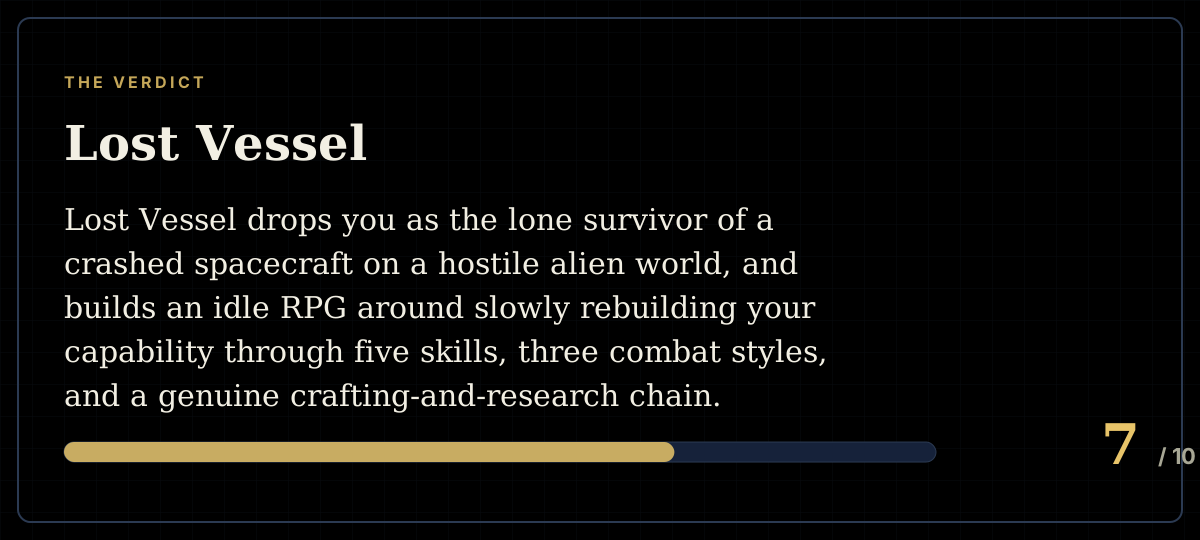
7 / 10
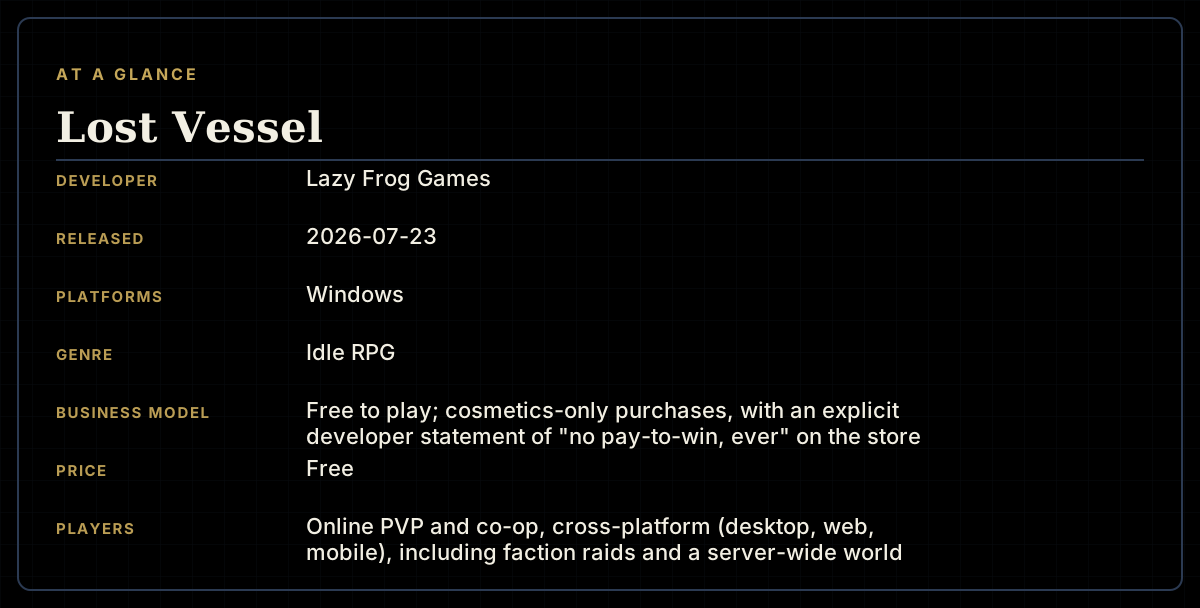
- Developer
- Lazy Frog Games
- Publisher
- Lazy Frog Games
- Released
- 23 July 2026
- Platforms
- Windows
- Genre
- Idle RPG
- Monetisation
- Free to play; cosmetics-only purchases, with an explicit developer statement of "no pay-to-win, ever" on the store page
- Players
- Online PVP and co-op, cross-platform (desktop, web, mobile), including faction raids and a server-wide world boss
The short version
Lost Vessel drops you as the lone survivor of a crashed spacecraft on a hostile alien world, and builds an idle RPG around slowly rebuilding your capability through five skills, three combat styles, and a genuine crafting-and-research chain. What sets it apart from the genre's many similar entries, according to reviewer after reviewer, isn't the premise — it's the developer. Lazy Frog Games' Voidwalker is described repeatedly as active in the game's own chat, shipping updates "sometimes with spamming frequency," and the store page states plainly: "Free to play, no pay-to-win, ever."
Twenty-nine of its first thirty-six reviewers recommend it, several with genuinely enormous playtimes — one logs over 17,000 minutes, close to 290 hours. The praise clusters tightly around the same points: real no-pay-to-win integrity, an unusually social in-game chat that keeps the idle genre's downtime from feeling numbing, and steady, visible development. The criticism is smaller but specific — gear durability draws a detailed complaint from one of the game's most invested players, and a separate, more serious account alleges a launch event measured activity through keystrokes rather than time played, a claim this review reports as one player's unverified account rather than a confirmed fact.
Biggest strengths
- A genuinely no-pay-to-win free-to-play model, repeatedly confirmed by reviewers and stated directly on the store page, with purchases limited to cosmetics only
- An unusually active, visible solo developer who reviewers describe as present in the game's own chat and shipping frequent updates, backed up by a real, multi-month patch and event history since the game's May demo
- A social in-game chat that multiple reviewers single out as the thing keeping the idle genre's inherent downtime from feeling numbing, turning a normally solitary genre into something with a community around it
Biggest weaknesses
- Gear durability draws a detailed, specific complaint from one of the sample's most experienced players (over 100 hours logged): weapons, armour and tools degrade and can be lost entirely between sessions before automated repair unlocks, which they call one of the genre's worst design decisions even while still recommending the game overall
- One detailed negative review alleges a launch event measured "active" playtime via keystrokes rather than time the game was simply open, and describes a dismissive response from the developer when asked about it directly — a serious claim this review cannot independently verify and reports as one player's account, not a confirmed fact
- A mandatory account login is a specific dealbreaker for at least one reviewer, who otherwise gives no other complaint
Who it's for: Idle and incremental RPG fans who want a genuinely free, cosmetics-only game with an active developer and a social in-game community, and who don't mind a slow, patient progression curve.
Our recommendation: A strong, low-risk recommendation for idle RPG fans specifically because the no-pay-to-win claim holds up under scrutiny — just go in with patience for a slow curve and awareness of the durability system and one unresolved community complaint about activity tracking.
7 / 10
Free-to-play idle RPGs make a lot of promises about fairness that don't always survive contact with a live monetisation team. Lost Vessel's store page makes one plainly: "Free to play, no pay-to-win, ever." What makes this review worth writing isn't that the promise exists — it's how consistently the game's first reviewers, several with genuinely enormous playtimes, confirm it holds.
Crash-landed, and rebuilding slowly
The premise is simple: you're the sole survivor of a crashed spacecraft on a hostile alien world, and the game is the long climb back toward repairing your ship and yourself. Five skills plus a dedicated combat skill span melee, ranged and void-magic playstyles, layered onto crafting, research and gear with real durability — a structure reviewers describe as substantial rather than thin. One detailed review lays out the appeal precisely: "It's free to play, and not pay-to-win... the dev is active and regularly updates... it has an in-game chat with active players." That last point comes up constantly and unprompted: "the chat is the best part," reads one review, arguing that having something to read while the idle timers tick is what keeps this kind of game from turning mind-numbing the way the genre often does. A detailed Simplified Chinese review, translated, agrees on the fundamentals while adding useful texture: five skill lines, three combat styles, degrading equipment, meaningful offline progress, and optional faction PVP and world-boss content for anyone who wants it — while noting the overall pace is deliberately slow, more about a daily check-in than a race to the finish.
Several reviewers reference having played the game's earlier web version for hundreds of hours before the Steam release, and Lost Vessel's own patch history backs up the "active developer" claim directly: a demo went live in May, the game ran through Steam Next Fest in June, a full interface rebuild shipped later that month, the Steam release landed 23 July, and a server-wide world-boss event, The Resonance Spire, followed less than a week later. That's a sustained, visible cadence rather than a launch-and-abandon pattern.
The durability complaint, from someone who still recommends it
Not every account is uncomplicated. The most detailed critical point in the sample comes from a reviewer with well over 100 hours logged, who still votes the game recommended overall but is blunt about one specific system: "Durability is one of the worst design decisions of games like these. Yes, your armor, weapons and tools will degrade with every use until they are destroyed and you need to spend a lot of time finding consumables just to stop it... You could go to sleep, only to wake up and find your stuff gone." The same reviewer notes that automated repair and healing exist but sit behind a Tier 3 research unlock, meaning new players face real friction before the system gets more forgiving. That's a specific, actionable piece of feedback rather than a vague complaint, and it's worth taking seriously precisely because it comes from someone clearly invested enough in the game to have played it for well over a hundred hours regardless.
A serious claim this review can't verify
One negative review raises something more pointed, and it deserves to be reported carefully rather than either amplified or ignored. The reviewer describes a launch event that awarded rewards for 5 and 10 hours of "active" playtime, and reports that despite the game being open for roughly 30 hours that week — including time genuinely idling in the background, which is how the store page itself describes the intended experience — the in-game event only credited them with roughly 3 hours of activity. When they asked why, they report the developer explained the event specifically tracked keystrokes rather than time the game was simply open. The reviewer frames this as inconsistent with an idle game's own premise, and goes further to speculate, in their own words, about whether the free-to-play model might exist to gather that kind of activity data for other purposes.
This review has no way to independently confirm the mechanics of that specific event, the developer's exact response, or the speculation that follows it — none of it is corroborated elsewhere in the review sample, and it should be read as one player's account of one interaction, not an established fact about the game. It's included here because it's specific, detailed, and the kind of claim a prospective player would reasonably want to know exists, not because this review can verify it happened as described.
Slow by design, and a genre-fit question worth asking first
Lost Vessel's own achievement data confirms what several reviewers describe as an intentionally unhurried pace: not a single one of the game's 30 achievements has been earned by more than 35% of players, a genuinely flat curve for a free game that's been available for weeks. Most reviewers treat that patience as the point — "progression is rather slow, but for a F2P game with no P2W it's alright," reads one balanced review, which goes on to frame its own lukewarm personal reaction as a matter of taste rather than a flaw, explicitly declining to let that colour the score. A Chinese-language negative review makes a related but distinct point, arguing the game feels less like a pure idle/incremental experience and more like a persistent online game in the mould of certain mobile MMOs — a fair heads-up for anyone specifically shopping for the more hands-off end of the idle genre. A mandatory account login draws one specific complaint as well, worth flagging for anyone who prefers to avoid sign-in requirements even in free games.
Final verdict
Lost Vessel earns its strong reception on the strength of something rarer than good systems design in this genre: a free-to-play promise that actually holds up when reviewers who've put in hundreds of hours go looking for the catch. The durability system's friction is real and specific, and the unverified activity-tracking allegation is worth knowing about even though this review can't confirm it — but neither outweighs a sample dominated by players who've stuck around for remarkably long stretches, consistently crediting an active developer and an unusually social community for keeping them there.
Recommended for idle RPG fans looking for a genuinely fair free game, with the caveat that this is a patient, slow-burn experience rather than a fast, snappy one.
Players who want that same sense of steady, community-backed growth in a persistent world, with a developer actively shaping it over the long term, may also want to look at Wanderer.
Pros and cons
Pros
- A genuinely no-pay-to-win free-to-play model, repeatedly confirmed by reviewers and stated directly on the store page, with purchases limited to cosmetics only
- An unusually active, visible solo developer who reviewers describe as present in the game's own chat and shipping frequent updates, backed up by a real, multi-month patch and event history since the game's May demo
- A social in-game chat that multiple reviewers single out as the thing keeping the idle genre's inherent downtime from feeling numbing, turning a normally solitary genre into something with a community around it
- Real structural depth — five skills plus a combat skill spanning melee, ranged and void-magic playstyles, risk-free PVP, faction raids and a server-wide world boss — that reviewers with thousands of hours logged still describe as engaging
- Cross-platform play across desktop, web and mobile under one account, letting existing web players carry progress straight into the Steam release
Cons
- Gear durability draws a detailed, specific complaint from one of the sample's most experienced players (over 100 hours logged): weapons, armour and tools degrade and can be lost entirely between sessions before automated repair unlocks, which they call one of the genre's worst design decisions even while still recommending the game overall
- One detailed negative review alleges a launch event measured "active" playtime via keystrokes rather than time the game was simply open, and describes a dismissive response from the developer when asked about it directly — a serious claim this review cannot independently verify and reports as one player's account, not a confirmed fact
- A mandatory account login is a specific dealbreaker for at least one reviewer, who otherwise gives no other complaint
- Progression is genuinely slow by design — global achievement data shows no single achievement completed by more than 35% of players — which several reviewers frame as appropriately paced for the genre and at least one frames as simply not rewarding enough for their taste
- A Chinese-language review argues the game feels closer to a persistent online game than a pure idle/incremental experience, a genre-expectation mismatch worth knowing before going in
Screenshots
-
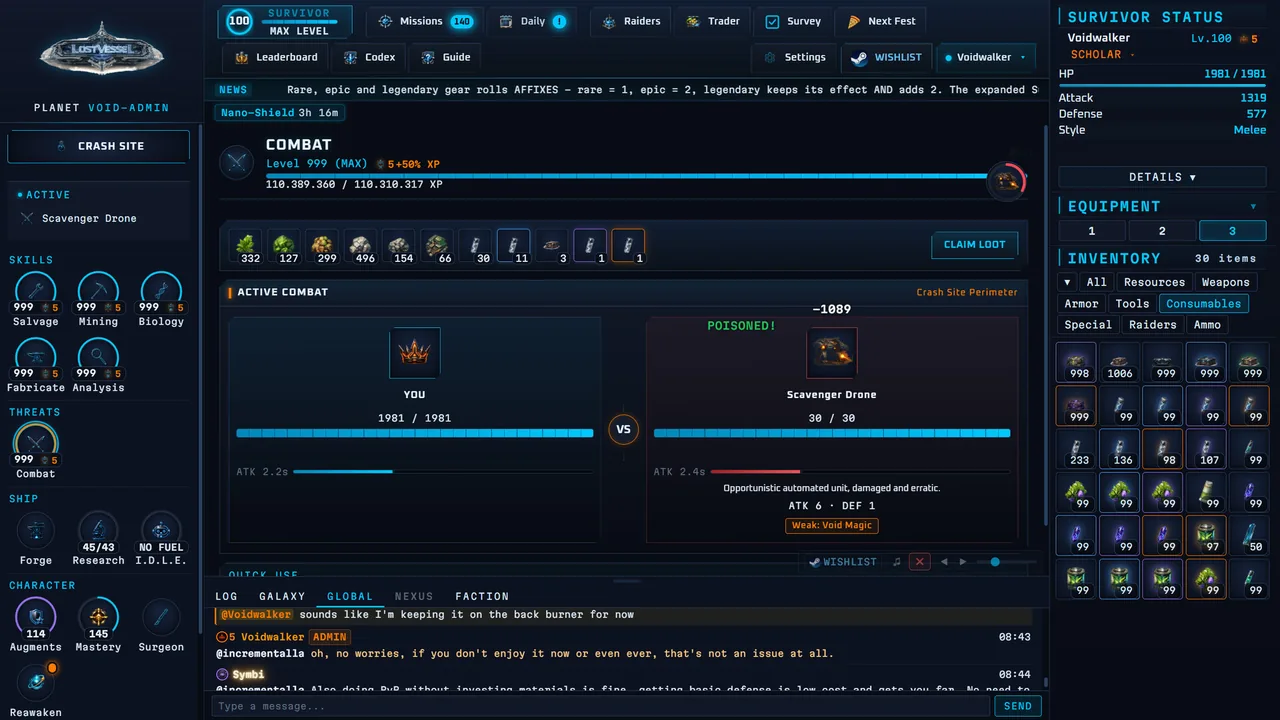
Lost VesselImage: Lazy Frog Games via Steam -
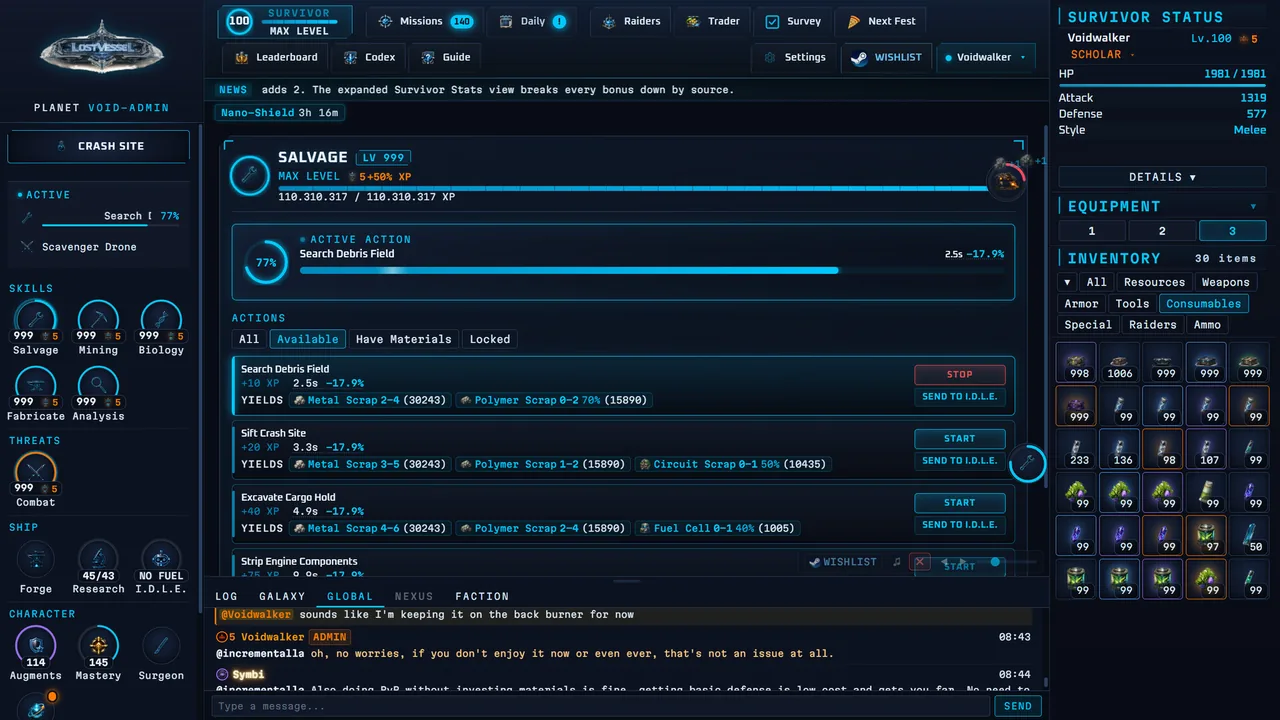
Lost VesselImage: Lazy Frog Games via Steam -
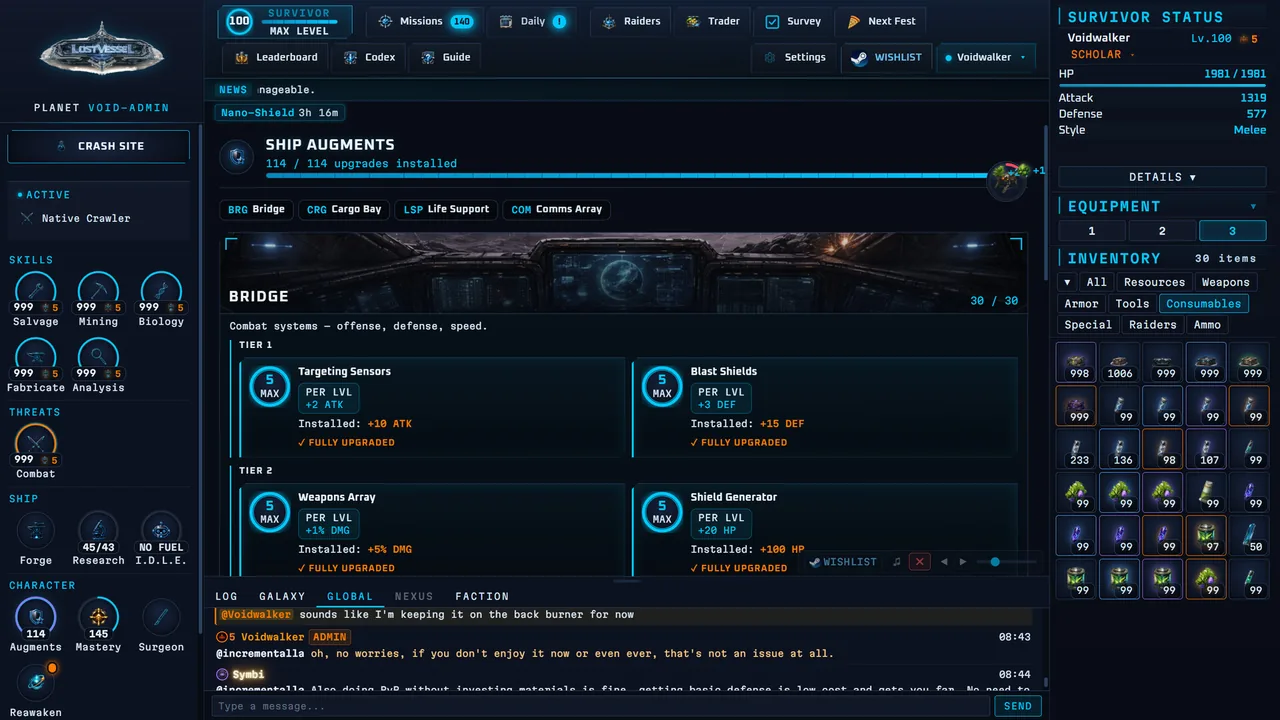
Lost VesselImage: Lazy Frog Games via Steam -
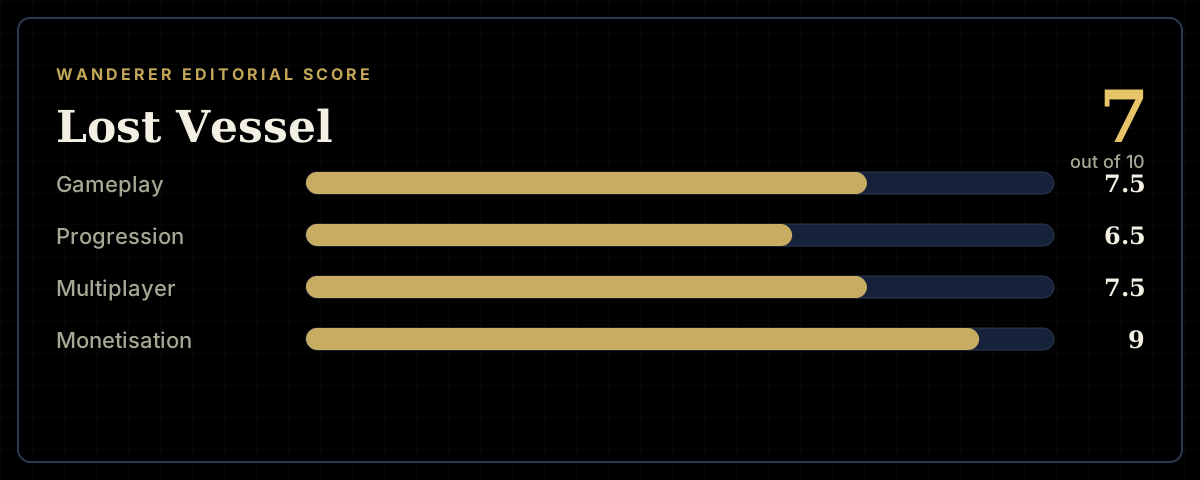
How the review scores each part of the gameWanderer Editorial -
The game at a glanceWanderer Editorial -
The short versionWanderer Editorial