
Game review
Idle Xanxia
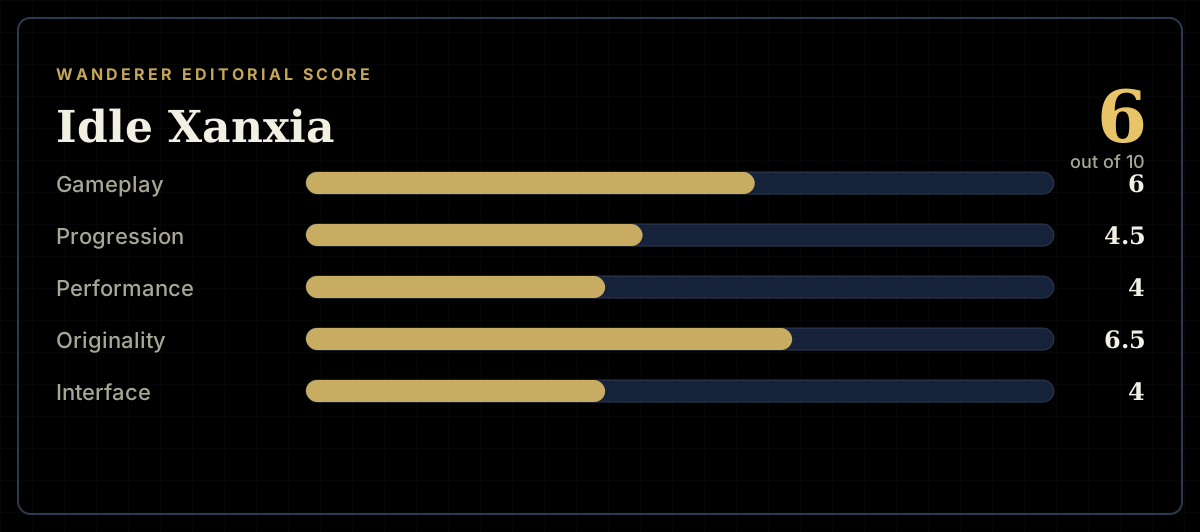
6 / 10
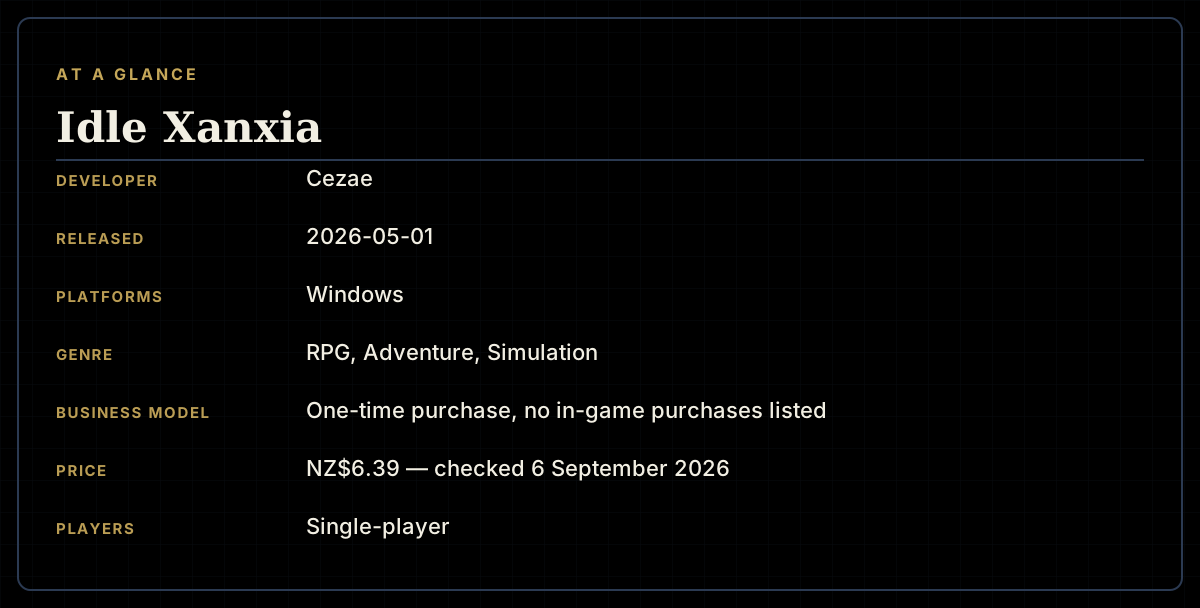
- Developer
- Cezae
- Publisher
- Cezae
- Released
- 1 May 2026
- Platforms
- Windows
- Genre
- RPG, Adventure, Simulation
- Monetisation
- One-time purchase, no in-game purchases listed
- Players
- Single-player
The short version
Idle Xanxia, in Early Access from solo developer Cezae since 1 May 2026, is a cultivation-themed idle RPG built around Dao paths, Aspects and a rebirth loop, aimed squarely at fans of Chinese xianxia fiction and games like Idling to Rule the Gods. It sits Very Positive with English-speaking players, 82.5% across 80 reviews as of this check, and has clearly built a genuinely dedicated core following — several reviewers report play histories in the hundreds or low thousands of hours. Set against that loyalty is a specific, well-documented set of complaints: multiple long-term players independently confirm the game's pacing barely changes across a hundred or more hours of play, one detailed review argues the entire rebirth mechanic is a fundamentally broken binary choice rather than the meaningful decision-making the genre is built around, and separate reviewers report a save-data-loss risk, inconsistent damage scaling between dungeon floors, and an unusually high rate of disk writes. This review has not verified a separate reviewer's suspicion that the game's code, not just its art, may be AI-generated.
Biggest strengths
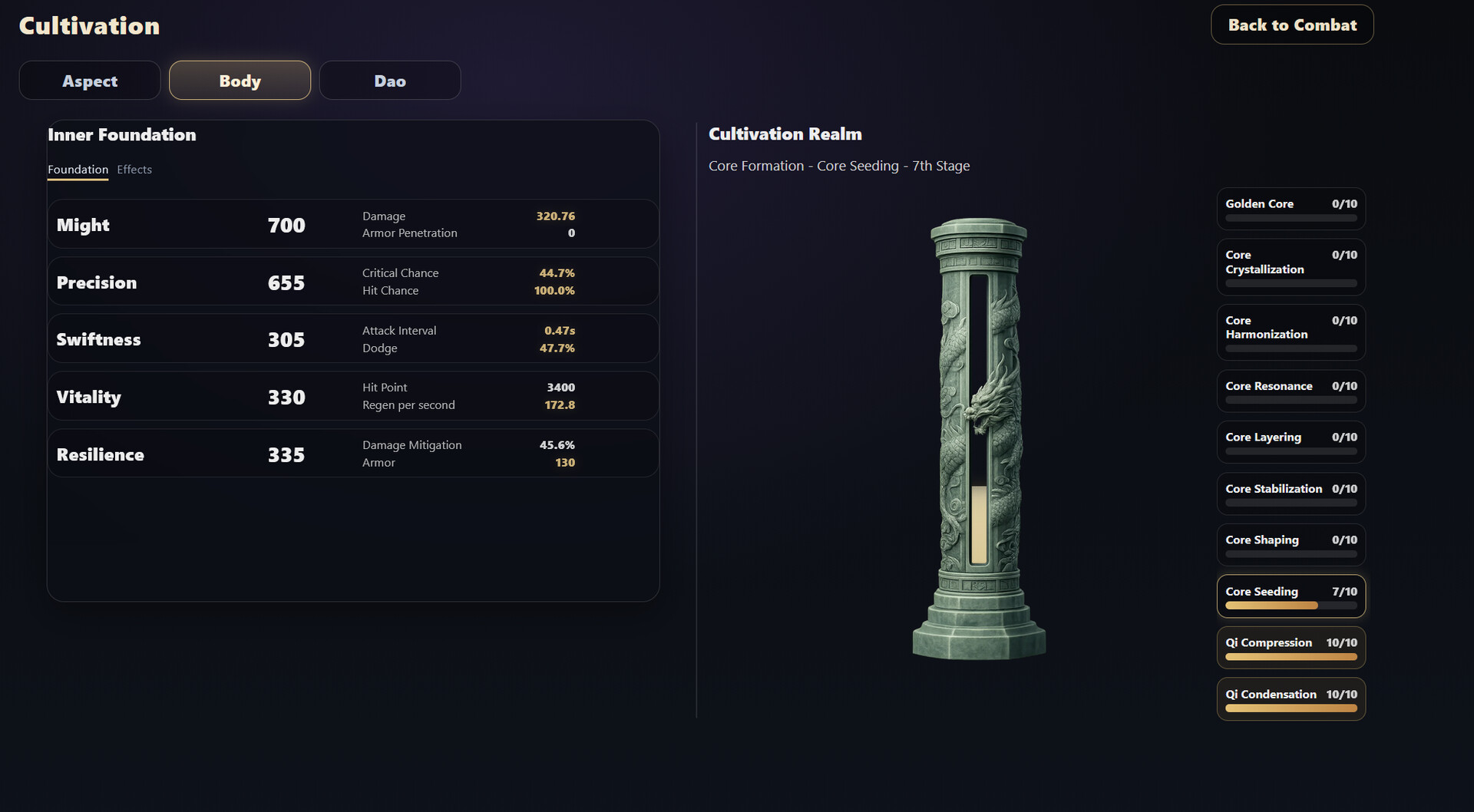
- The Dao path and Aspect systems give genuine build customization that multiple reviewers specifically praise as deeper than most idle games offer, letting players work toward builds that address particular weaknesses rather than following one fixed path
- The developer is repeatedly and specifically praised as highly communicative on Discord, with prompt responses to bug reports and visible, active development
- The game has built a genuinely dedicated niche following — several reviewers report play histories in the hundreds or even low thousands of hours, and multiple say it specifically captures the tone and systems of xianxia fiction better than competing idle cultivation games
Biggest weaknesses
- Multiple long-term reviewers, independently and with substantial playtime behind their reports, describe pacing so slow it barely changes over 100 or more hours — one reviewer with over 250 hours logged states plainly that after 103 hours there had been "literally no change"
- One detailed, extensively reasoned review argues the game's central rebirth mechanic is fundamentally broken by design rather than merely unpolished: rebirth is available only at fixed thresholds with no benefit to progressing further or ability to rebirth early, and the choice at each rebirth is a binary pick between two fixed bonuses rather than a meaningful decision, with no way to correct a bad permanent Dao choice short of restarting entirely
- At least one reviewer reports a catastrophic save-data-loss incident after a power cut, with no way to recover the lost progress, a serious concern for a genre built around long, uninterrupted play sessions
Who it's for: Xianxia and cultivation-genre fans who specifically want a Dao- and Aspect-driven idle RPG and are prepared to invest very large amounts of time for very slow, incremental payoff, in an Early Access build with real rough edges.
Our recommendation: Worth trying cheaply if xianxia-flavoured idle progression specifically appeals to you and you go in expecting glacial pacing even after 100+ hours; skip if you want an idle game whose core rebirth loop rewards meaningful decisions rather than a fixed binary choice.
6 / 10
Introduction
Idle Xanxia, in Early Access from solo developer Cezae since 1 May 2026, plants its flag firmly in xianxia territory — the Chinese cultivation-fiction genre of Dao paths, sects, spiritual ascension and rebirth — and builds an idle RPG around it, positioning itself alongside established genre favourites like Idling to Rule the Gods. Four months into Early Access it sits Very Positive with English-speaking players, 82.5% across 80 reviews, and reading through that sample turns up a striking pattern: this game has built a genuinely devoted core following, with several reviewers reporting play histories in the hundreds or even low thousands of hours, while a specific, detailed, well-reasoned set of complaints sits alongside that devotion rather than contradicting it.
Real depth for genre fans, and a following to match
The praise here is specific rather than generic. Multiple reviewers single out the Dao path and Aspect systems as giving genuinely deeper build customization than they expect from the genre, letting players work toward particular strengths rather than following one predetermined route. Several reviewers explicitly credit the game with capturing the tone of xianxia fiction — a sect that mocks your early efforts, a companion pet with its own personality, a mentor figure guiding early growth — better than other idle cultivation games they've tried. The scale of engagement from its fans is genuinely striking: reviewers report play histories as high as roughly 2,200, 900, 770, 630 and 500 hours, several saying they run this alongside multiple other idle cultivation games simultaneously. The developer is also repeatedly and specifically credited as highly communicative on Discord and prompt with bug fixes, a pattern this session has now seen across almost every actively developed idle RPG reviewed.
Pacing multiple long-term players confirm barely moves
Set directly against that devotion is an equally specific, equally well-supported complaint: several reviewers with very substantial playtime independently report that progress simply doesn't change much over long stretches of play. One reviewer with over 250 hours logged states plainly that after 103 hours, there had been "literally no change." Another, at roughly 66 hours, describes "almost unnoticeable improvements" after the first few resets and no new mechanics introduced afterward. A third reports that past the game's second world, the core loop reduces to time-gated waiting — click start, return an hour later to collect — with nothing else to actively engage with. These aren't complaints from players who bounced off early; they're specific, consistent reports from people who kept playing for many hours before concluding the pacing itself is the problem, which is a meaningfully different signal than ordinary impatience.
A rebirth mechanic one detailed review calls fundamentally broken
The single most substantive complaint in this review's research is a long, carefully reasoned critique of the game's rebirth system — the mechanic idle games typically use to give resets meaning. That reviewer describes rebirth as available only once specific fixed thresholds are met, with essentially no benefit to progressing further beyond that point and no ability to rebirth earlier for a smaller, faster reset. At each rebirth, the only decision is a binary pick between two fixed bonuses — extra stat points per level, or an additional equippable Aspect — with no finer-grained allocation or strategy involved. Compounding this, the Dao a player selects persists permanently through every future rebirth; picking a genuinely weak option early, the reviewer states, permanently handicaps that character with no in-game way to correct it short of starting over entirely. The reviewer's conclusion is specific and pointed: this isn't an Early Access rough edge that more development time fixes, but a structural flaw in the game's single most central mechanic. It's worth noting this exists alongside real praise for the Dao and Aspect systems more broadly from other reviewers — the tension is specifically about how rebirth resolves those choices, not the systems' existence.
Technical rough edges, and an unverified authorship question
A smaller cluster of concrete technical complaints rounds out the negative sample. One reviewer reports a catastrophic save-data-loss incident following a power cut, with no way to recover the lost progress — a serious risk for a genre built around long, often unattended play sessions. Separate reviewers report inconsistent enemy damage scaling between dungeon floors — one specifically describing manageable difficulty on floor 32 but sudden, severe damage on floor 25 — alongside a stat display bug where values shown for the same stat fluctuate or don't match its described effect. One reviewer also measured the game writing roughly 15GB of data to disk per hour of play, an unusually high figure for the genre. Separately, one reviewer speculates that beyond the game's art, its underlying code may also be AI-generated, pointing to inconsistent naming for identical stats across different systems as specific evidence. This review has not inspected the game's code and reports this only as one reviewer's technical suspicion, not as a confirmed fact.
Final Verdict
Idle Xanxia has done something real: built a genuinely devoted niche following around cultivation-genre theming and build systems reviewers say go deeper than most idle games attempt, backed by a developer players consistently credit as responsive. What holds it back from a stronger score is that its most substantive criticism doesn't come from casual bounce-off complaints but from heavily invested long-term players documenting the same specific problems: a pace that multiple 100-plus-hour players say doesn't meaningfully move, and — most seriously — a rebirth mechanic one detailed, carefully argued review describes as structurally broken rather than simply unfinished. Worth a cheap try if xianxia-flavoured idle progression is specifically your genre and you're prepared for a very slow burn; worth waiting on, or skipping, if meaningful choice at the moment your character resets is something you actually want from an idle RPG.
Pros and cons
Pros
- The Dao path and Aspect systems give genuine build customization that multiple reviewers specifically praise as deeper than most idle games offer, letting players work toward builds that address particular weaknesses rather than following one fixed path
- The developer is repeatedly and specifically praised as highly communicative on Discord, with prompt responses to bug reports and visible, active development
- The game has built a genuinely dedicated niche following — several reviewers report play histories in the hundreds or even low thousands of hours, and multiple say it specifically captures the tone and systems of xianxia fiction better than competing idle cultivation games
- True offline progress is confirmed and specifically valued by reviewers who don't want to leave the game running constantly, and no pay-to-win mechanics are reported
Cons
- Multiple long-term reviewers, independently and with substantial playtime behind their reports, describe pacing so slow it barely changes over 100 or more hours — one reviewer with over 250 hours logged states plainly that after 103 hours there had been "literally no change"
- One detailed, extensively reasoned review argues the game's central rebirth mechanic is fundamentally broken by design rather than merely unpolished: rebirth is available only at fixed thresholds with no benefit to progressing further or ability to rebirth early, and the choice at each rebirth is a binary pick between two fixed bonuses rather than a meaningful decision, with no way to correct a bad permanent Dao choice short of restarting entirely
- At least one reviewer reports a catastrophic save-data-loss incident after a power cut, with no way to recover the lost progress, a serious concern for a genre built around long, uninterrupted play sessions
- Separate reviewers report inconsistent enemy damage scaling between dungeon floors and a stat display that shows incorrect or fluctuating values, alongside an unusually high rate of disk writes one reviewer measured at roughly 15GB per hour of play
- One reviewer speculates that, beyond the game's art, its code may also be AI-generated, citing inconsistent naming for identical stats across different systems and easily-avoidable bugs as evidence; this review has not independently verified this claim and reports it only as a specific reviewer observation
Screenshots
-

Idle XanxiaImage: Cezae via Steam -

Idle XanxiaImage: Cezae via Steam -
Idle XanxiaImage: Cezae via Steam -
How the review scores each part of the gameWanderer Editorial -
The essentials at a glanceWanderer Editorial -
The short versionWanderer Editorial