
Game review
Server Farm Idle
8 / 10
- Developer
- Tadas Stankevicius
- Publisher
- Tadas Games
- Released
- 20 May 2026
- Platforms
- Windows
- Genre
- Incremental
- Monetisation
- One-time purchase; no microtransactions, no ads
- Players
- Single-player
The short version
Server Farm Idle takes the standard incremental shape — click, automate, research, prestige — and gives it a genuinely fresh coat: you're building a server farm, not a fantasy kingdom, and the three events layered on top (a board-piece automation puzzle, a maze-based RL-training minigame, and a full deckbuilding "Hack Run" mode) are real systems, not reskinned filler. A dedicated Idle & Incremental Lovers curator called it "never get bored," and the game backs that up with 49 hardware upgrades across seven progression eras for a NZ$4.79 asking price, with no microtransactions or ads anywhere.
What sets it further apart is the ending. Most incrementals stretch on forever; this one builds toward an explicit, finite Singularity, and Steam's own achievement data shows roughly 40% of players actually reach it — an unusually high completion rate for the genre that backs up the reviews calling it "a clearly set end" done right. Minor rough edges (a cryptic cooling system, no windowed mode, one achievement-tracking bug) don't change the overall picture: this is a small, cheap, unusually complete idle game from an actively supportive solo developer.
Biggest strengths
- Three genuinely distinct minigames — a piece-placement automation puzzle, a maze-based RL-training system, and a full deckbuilding "Hack Run" mode — rather than reskinned filler
- A real, finite Singularity ending that a Steam achievement shows roughly 40% of players actually reach, unusually high for the genre
- No microtransactions and no ads on a NZ$4.79 one-time purchase, a clean, non-predatory monetisation model
Biggest weaknesses
- No windowed mode at time of review, according to at least one detailed write-up
- The cooling system is reportedly a little cryptic compared to the game's otherwise clear layered systems
- At least one review calls it "very mid" and not interesting enough to recommend, a useful counterweight to the otherwise strong consensus
Who it's for: Idle and incremental fans looking for a cheap game with a real destination rather than an infinite treadmill, and anyone who wants proof the genre can ship without a single microtransaction. Especially worth a look for players tired of idle games that stretch content by slowing progress rather than adding depth.
Our recommendation: An easy recommendation at NZ$4.79 for incremental fans — three real minigames, a satisfying finite ending most buyers actually reach, and an active developer who's already patched the launch balance issues reviewers flagged.
8 / 10
Most idle games ask you to imagine a kingdom or a factory. Server Farm Idle asks you to imagine a battered laptop, and then a rack, and then a data centre, and eventually something closer to a Dyson swarm — a straightforwardly nerdy premise that turns out to carry a surprising amount of genuine game design. It's a solo developer's release, priced at NZ$4.79 with no microtransactions or ads anywhere on the page, and the review corpus it's earned so far — small but strongly positive — describes a game punching well above its price point.
From a battered laptop to the Singularity
The core loop follows the genre's standard shape: click to generate compute, buy hardware to automate that clicking, hire managers to automate the hardware, research permanent upgrades, and prestige into new rooms once a tier is exhausted. What the store page is upfront about, and what the reviews confirm, is that the destination is not infinite. Server Farm Idle builds explicitly toward a finite Singularity ending, with a run timer, speedrun-focused achievements and leaderboards for players who want to optimise their route once they've seen the full arc. One review captures why that matters: "Great idle game with a clearly set end. The game is very rewarding with prestige/resets unlike other games — you unlock new and interesting things that fit the game's theming well and also skyrocket your progress." Forty-nine hardware upgrades span seven distinct progression eras, from USB farms to planet-scale and cosmic compute, each era changing what's worth optimising rather than just re-skinning the same numbers.
Three minigames, not one filler loop
The part that separates this from a generic clicker is the event layer. Puzzle Assembly has players collect and place pieces across five boards to unlock automation systems. RL Training spends earned data tokens watching an agent improve across maze generations until it unlocks Auto Research — a neat, thematically appropriate nod to actual machine-learning training loops. Hack Run is the most substantial of the three: a genuine deckbuilding minigame where players balance Access against Trace across five escalating targets, building a persistent deck of upgrades, with a failure state (hit 100 Trace or run out of turns) and a real reward for clearing the full ladder — a "Ghost Process" that periodically boosts your strongest automated machine. None of these read as padding in the reviews; the most detailed one specifically calls out "several layers and minigames" as one of the things keeping the game fresh, alongside "floating research points to grab, chests rolling random rewards to open."
An ending that actually gets reached
The claim of a well-designed finite ending is easy to make and hard to verify — except here Steam's own data backs it up. The achievement for reaching the Singularity itself sits at roughly 40% of the tracked player population, a genuinely high completion rate for an incremental game, where most achievement curves for "finish the content" collapse into single digits. That figure corroborates what the reviews say directly rather than contradicting it: this is a game whose ending most buyers who start it actually see, which is a rare and specific kind of design success.
An honest, non-predatory price
At NZ$4.79, with 100 Steam achievements, seven progression eras and three real minigames, Server Farm Idle is priced like the small solo release it is rather than positioned to extract more later. The store page states plainly there are no microtransactions and no ads, and nothing in the review corpus contradicts that. For a genre where predatory monetisation is common enough that Wanderer readers are regularly warned about it, a clean one-time purchase with this much actual content is worth calling out on its own merits.
The rough edges
The praise isn't universal or uncritical. The most detailed positive review flags the cooling system specifically as "a little cryptic" against the game's otherwise readable systems, and wants a windowed mode the developer hasn't shipped yet. A separate review reports a minor but real bug: achievements sometimes display as locked in-game after already unlocking on Steam. One French review dissents entirely — "très mid, mais pas assez intéressant pour valoir la recommandation" ("very mid, not interesting enough to be worth recommending") — a useful reminder that the strong consensus isn't unanimous. And a review discussing launch conditions notes "some balancing issues at launch, with late-game scaling and achievements being unreasonable," though the same review credits the developer with fixing those quickly after community feedback — a pattern several other reviews independently confirm.
Final verdict
Server Farm Idle is a small, cheap, unusually complete incremental game: three real minigames instead of filler, a finite ending that Steam's own numbers show most buyers actually reach, and a monetisation model that asks for NZ$4.79 once and nothing more. A cryptic cooling system, a missing windowed mode, and one dissenting review keep it from being flawless, but a visibly active solo developer who's already responded to the launch-week balance complaints reviewers raised makes this an easy recommendation for anyone who wants an idle game with an actual destination.
Pros and cons
Pros
- Three genuinely distinct minigames — a piece-placement automation puzzle, a maze-based RL-training system, and a full deckbuilding "Hack Run" mode — rather than reskinned filler
- A real, finite Singularity ending that a Steam achievement shows roughly 40% of players actually reach, unusually high for the genre
- No microtransactions and no ads on a NZ$4.79 one-time purchase, a clean, non-predatory monetisation model
- A visibly active, responsive solo developer who reportedly fixed launch balance issues quickly and keeps adding content
- Funny, well-observed flavour text (manager names like "neighbor Dave" and "GPU whisperer") layered over legitimately deep systems
Cons
- No windowed mode at time of review, according to at least one detailed write-up
- The cooling system is reportedly a little cryptic compared to the game's otherwise clear layered systems
- At least one review calls it "very mid" and not interesting enough to recommend, a useful counterweight to the otherwise strong consensus
- Achievements have reportedly displayed as locked in-game after already unlocking on Steam, a minor tracking bug
- Still a small early review sample (12 total) for a title only a few months old
Screenshots
-
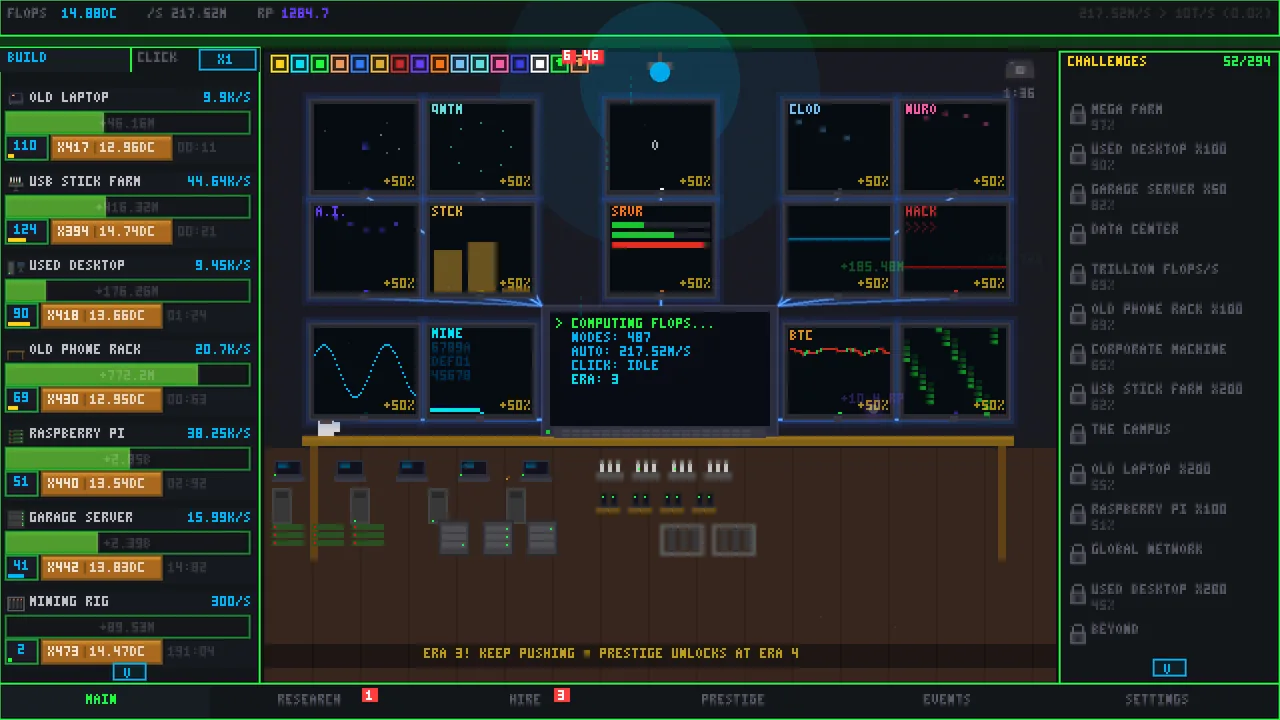
Server Farm IdleImage: Tadas Games via Steam -
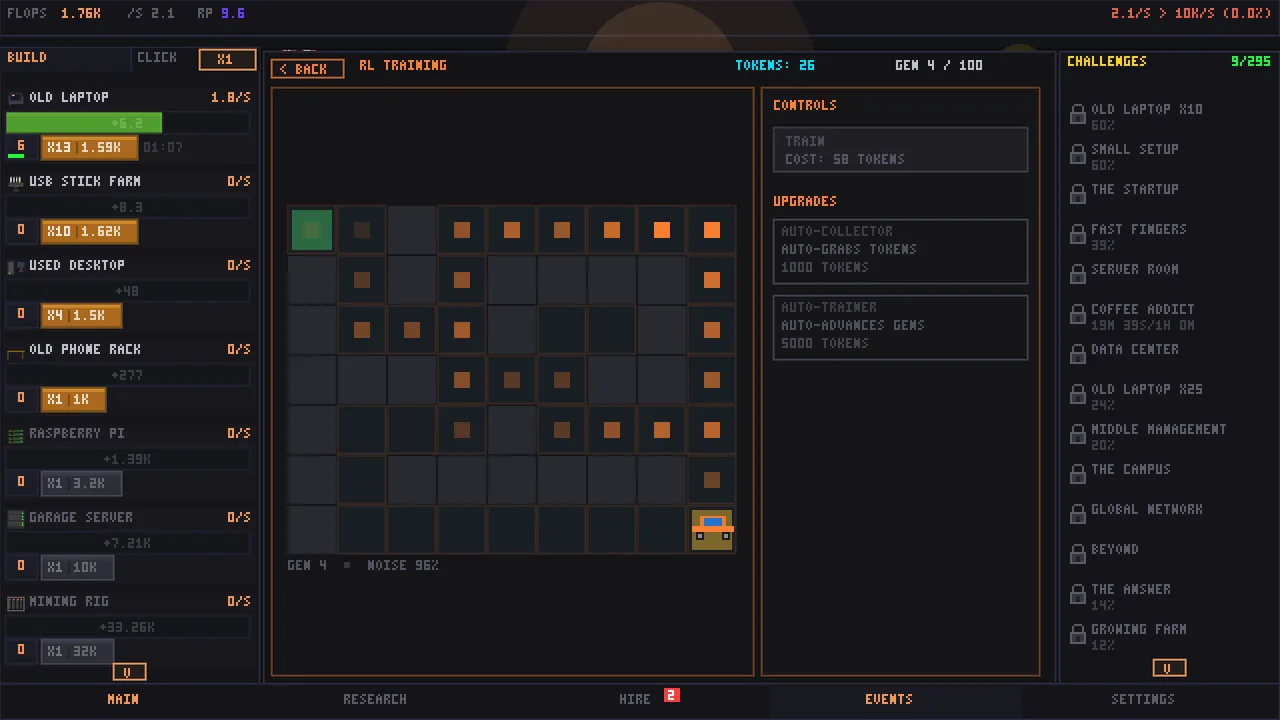
Server Farm IdleImage: Tadas Games via Steam -
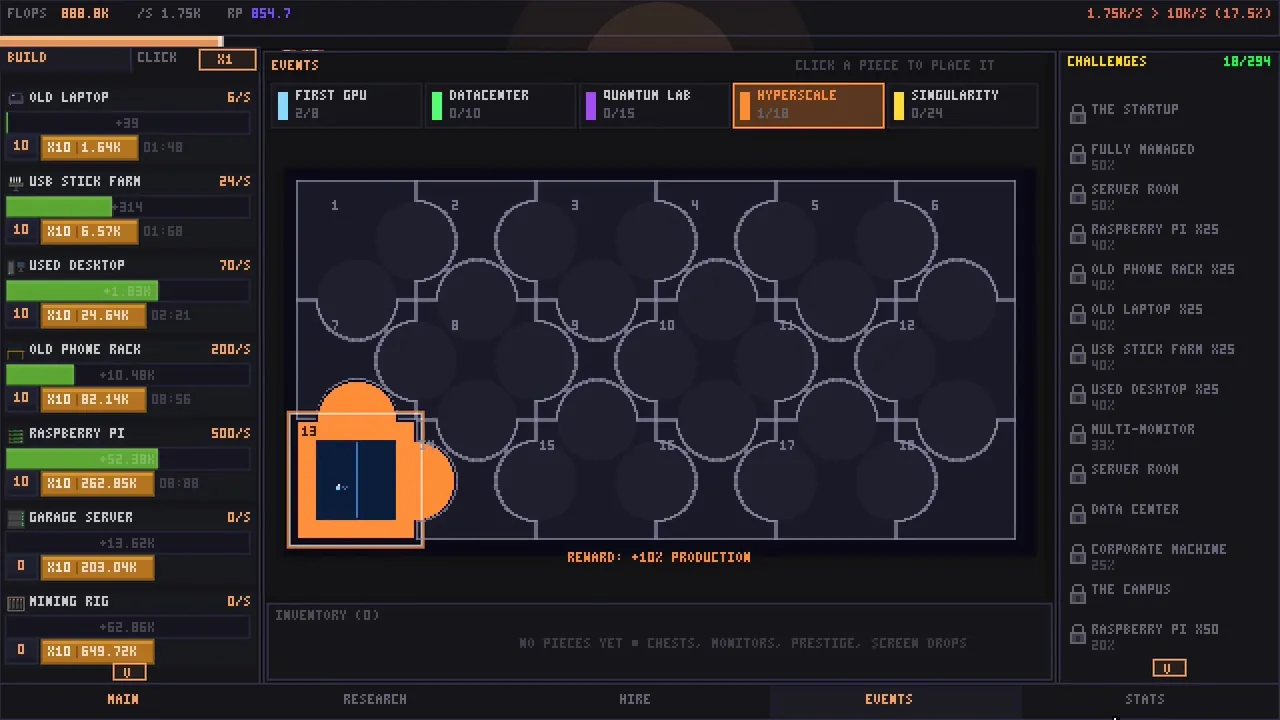
Server Farm IdleImage: Tadas Games via Steam -
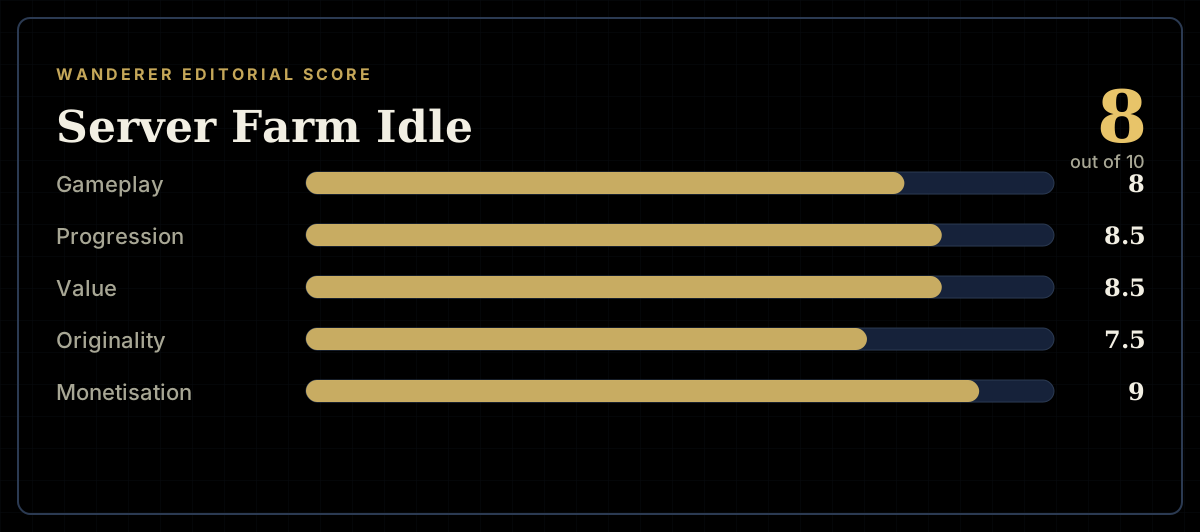
How the review scores each part of the gameWanderer Editorial -
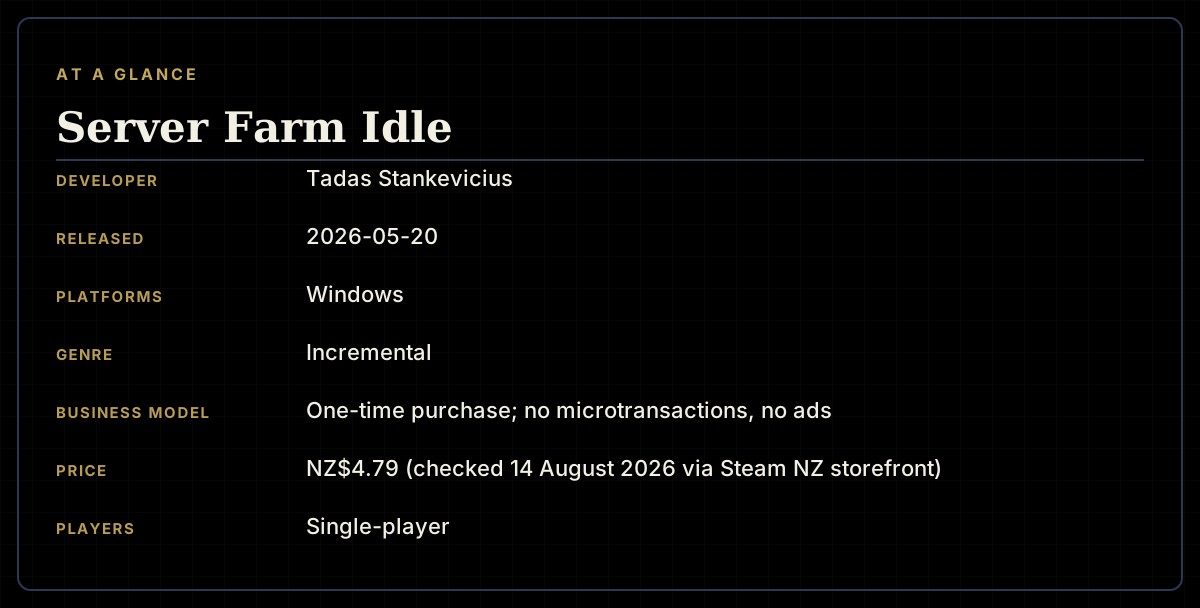
The essentials at a glanceWanderer Editorial -
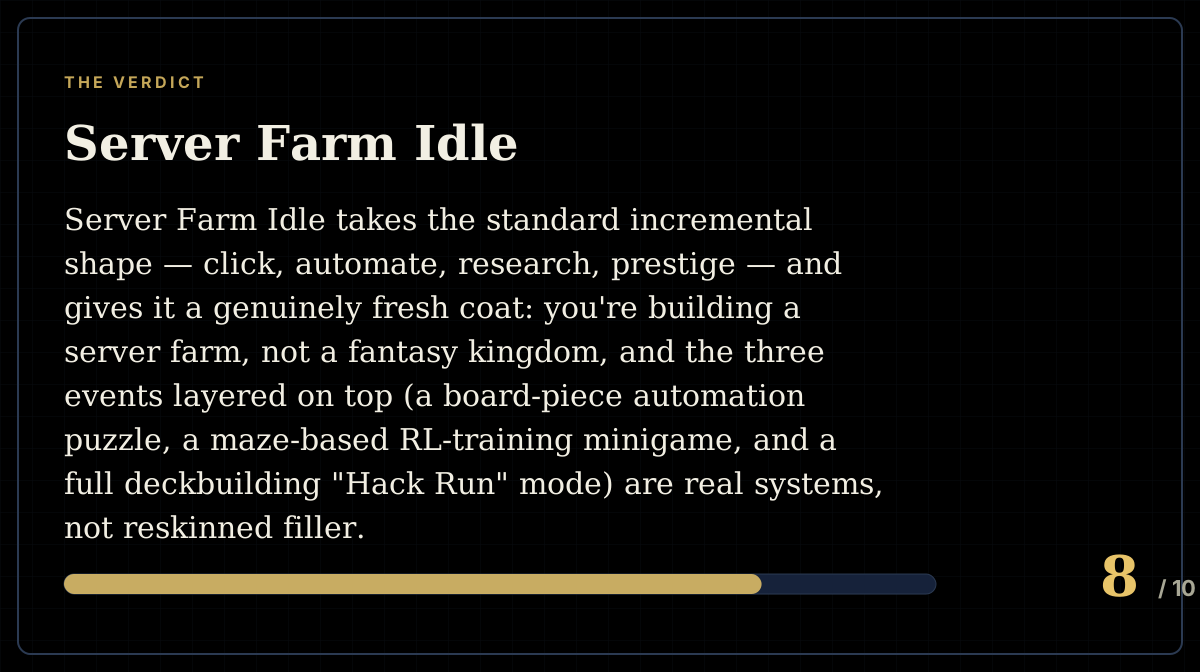
The short versionWanderer Editorial