The Wanderer reading room

Game Reviews

Idle RPGs, MMOs, browser games and mobile RPGs, taken apart properly. Every review carries a score out of 10, what the game does well, what it does badly, and the kind of player it is actually for.

Browse the reviews

Clicker Heroes 2

The paid sequel to one of idle gaming's founding games spent almost six years in Early Access, tore up its own design twice, and was quietly pulled from sale in 2024 without ever reaching version 1.0. A look at what it tried to build and why it never finished building it.

4 / 10

Reviewed

Read review of Clicker Heroes 2

Crush Crush

Sad Panda Studios' idle dating sim is a genuine time-blocking resource-allocation game wearing an anime pin-up costume, still shipping new characters and events after almost a decade — and still leaning on the same event-currency pressure its own players complain about.

7.5 / 10

Reviewed

Read review of Crush Crush

Cursemark

A rune-socketed action roguelite where the world gets more dangerous the more of it you uncover — a genuinely inventive build system wrapped around a dodge that refuses to behave like the souls-likes it keeps getting compared to.

7.5 / 10

Reviewed

Read review of Cursemark

Diablo III

Diablo III launched in 2012 with a real-money item market that quietly rewrote its own loot tables, then spent the next two years proving the fix was worth the wait. Fourteen years and thirty-nine seasons on, it's a cheap, complete, still-excellent action RPG stuck in maintenance mode — and still carrying an always-online rule it no longer has a reason for.

7.5 / 10

Reviewed

Read review of Diablo III

Diggin

A short, charming incremental about a young mole drilling into a meteor crater — genuinely distinctive for giving its dig-upgrade-repeat loop an actual story, but held back by spiky progression pacing and a back half that plays itself.

6.5 / 10

Reviewed

Read review of Diggin

Digseum

Rat Monthly's pocket-sized incremental has you excavating relics tile by tile and building a museum around them — a review of whether its two-to-three-hour runtime earns its Overwhelmingly Positive reputation, or just ends before the cracks show.

7.5 / 10

Reviewed

Read review of Digseum

Dragon Cliff

Meta Interaction's 2018 semi-idle RPG buries a genuinely deep itemization system — talent trees, enchanting, reforging, scrolls, gem sockets — under rough localization and RNG that can make its best ideas exhausting to reach.

7 / 10

Reviewed

Read review of Dragon Cliff

DragonSword : Awakening

An anime open-world action RPG that was built as a mobile gacha game, lost its publisher, won a legal fight to come back as a single-purchase Steam release, and still carries every scar of where it came from — for better and for worse.

7.2 / 10

Reviewed

Read review of DragonSword : Awakening

Endless Frontier

A 2018 Korean idle RPG that's still pulling a 4.3-star average from 153,000 Google Play reviews eight years on, built around a twelve-unit auto-battle roster and a genuinely layered guild-and-arena social game — undercut by a permanent roster cap, a bolted-on NFT feature, and a client that hasn't been updated since the studio's attention moved to its own sequel.

6 / 10

Reviewed

Read review of Endless Frontier

Erenshor

A single-player RPG built to feel like a classic MMORPG raid night, populated entirely by NPC "SimPlayers" who level, group up and loot alongside you — a genuinely novel hook wrapped around an Early Access game still finding its footing on UI, quest clarity and combat feedback.

7.5 / 10

Reviewed

Read review of Erenshor

EVE Online

A single-shard spaceship MMO where losses are permanent, the economy is entirely player-built, and your character keeps training on a real-world clock whether you're logged in or not. Twenty-three years old, recently rebranded by its own studio, and still the sharpest argument in the genre for why risk has to be real to mean anything.

8 / 10

Reviewed

Read review of EVE Online

Evolve

A free, open-source browser incremental that takes a species from primordial ooze to interstellar empire across thirteen distinct reset layers — one of the deepest idle games ever built, and one of the least interested in explaining any of it to you.

7.5 / 10

Reviewed

Read review of Evolve

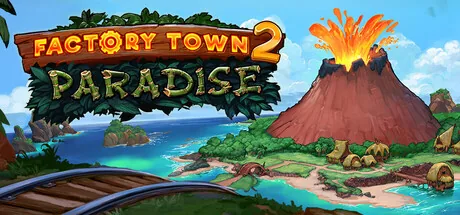
Factory Town 2: Paradise

Erik Asmussen rebuilds his own factory-town formula from the ground up around a controllable avatar, a hungry volcano deity and a full ocean of islands — a sequel that risks alienating veterans of the original in its opening hours before proving, mechanic by mechanic, that almost every change was worth making.

8 / 10

Reviewed

Read review of Factory Town 2: Paradise

Factory Town Idle

Erik Asmussen strips the conveyor belts and airships out of his own Factory Town and rebuilds the same economy as a menu-driven idle game — a genuinely distinct reimagining that nails offline progression but never quite explains the numbers it wants you to obsess over.

7.5 / 10

Reviewed

Read review of Factory Town Idle

Genshin Impact

The free open world is good enough to carry a full-price game on its own — climbing, gliding and elemental combat form one of the best traversal systems in the genre. What you pay for is everything above the story campaign, and the review is really about where that line sits.

8 / 10

Reviewed

Read review of Genshin Impact

Idle Apocalypse

Grumpy Rhino Games' 2018 cult-tycoon idler turns its tower into an actual production chain instead of an upgrade list, and its Idol-summoning prestige loop still holds up — but the studio has settled into bug-fix-only maintenance, and there's little new to chase for anyone who cleared the tower years ago.

6.5 / 10

Reviewed

Read review of Idle Apocalypse

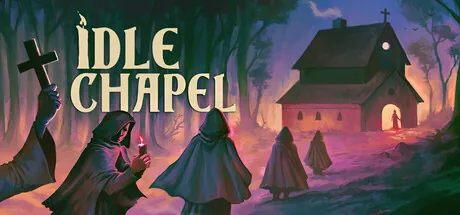
Idle Chapel

A budget dark-fantasy clicker where you tap cultists back into worshipers with a cross, told across twelve moody pixel-art areas — handsome and short enough not to overstay its welcome, but dogged by accusations that its loop is a close reskin of another incremental.

6.5 / 10

Reviewed

Read review of Idle Chapel

Idle Dice

A dice-rolling incremental from solo developer Lutsgames that sells itself on genuine randomness, then spends its entire upgrade tree quietly smoothing that randomness away — and the game is more interesting for admitting it can't have both.

6.5 / 10

Reviewed

Read review of Idle Dice