Game review
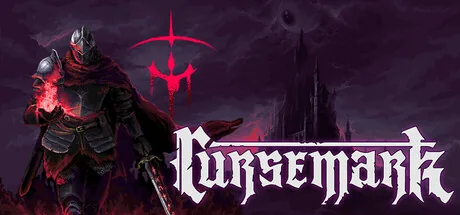
Cursemark
7.5 / 10
- Developer
- CLYDE games
- Publisher
- Mad Mushroom
- Released
- 8 June 2026
- Platforms
- Windows
- Genre
- Action RPG / Roguelite
- Monetisation
- One-time purchase, no in-app purchases, no ads, no subscription
- Players
- Single-player only
The short version
Cursemark builds its whole identity around a rune-socketing system that lets you rewire what every attack, spell, ward and ultimate actually does, and an exploration structure where the world's own curse grows stronger the more of it you uncover. Both ideas are genuinely distinctive two months into Early Access. What holds the package back is the combat feeding those systems — a dash with no invincibility frames and a long cooldown, fighting enemies that hit fast and often, which sits uneasily next to the souls-like comparisons its marketing and its players keep reaching for.
Biggest strengths
- The rune system lets you bolt effects like chain lightning, poison bursts or on-hit healing directly onto your sword, spells, wards and ultimate, producing builds that behave differently from run to run rather than just scaling bigger numbers
- The Curse Mark exploration structure — no map markers, world danger rising as you uncover more of it — rewards genuine curiosity, and multiple long-time players describe getting hooked on puzzling out the map itself as much as fighting through it
- Permanent shrines and forges give Early Access runs real between-attempt progression instead of resetting everything on death
Biggest weaknesses
- The dash has no invincibility frames and a long cooldown, and enemies routinely attack faster than it recovers — a real source of frustration for players who came in expecting the souls-like positioning the game invites through comparisons and its own combat framing
- Recent updates have introduced noticeable frame-rate drops and more frequent crashes for a share of players, a rough trade for a fantasy action game two months past its Early Access launch
- Non-English support is inconsistent with what the store page advertises — Simplified Chinese and French players in particular flag untranslated recent quests and items alongside unusually rich localisation for other languages
Who it's for: Players who want a roguelite they can spend hours theorycrafting rune combinations in, and who value a hostile, unmarked world worth puzzling out over one with waypoints and hand-holding. Best suited to people comfortable with Early Access rough edges and punishing difficulty spikes.
Our recommendation: Worth buying now if the rune-build hook and the risk-scaling exploration loop appeal to you — there's already a full early-access game's worth of content here. Players who want their dodge to actually dodge, or who'd rather wait for a more complete class roster and a settled patch cadence, should keep it wishlisted for now.
7.5 / 10
The pitch on Cursemark's store page calls it a "fantasy action roguelite," which undersells the one idea that actually makes it worth talking about two months into Early Access. This isn't a roguelite where runs get you bigger numbers and a new starting weapon. It's one where the map itself is cursed, growing more dangerous the further you dig into it, and where almost everything your character does — every sword swing, every spell, every ward, every ultimate — can be rewired by slotting runes into it. Cursemark is at its best when those two systems are working together. It's at its most frustrating when the combat holding them up doesn't quite keep pace.
A curse that punishes curiosity, and rewards it too
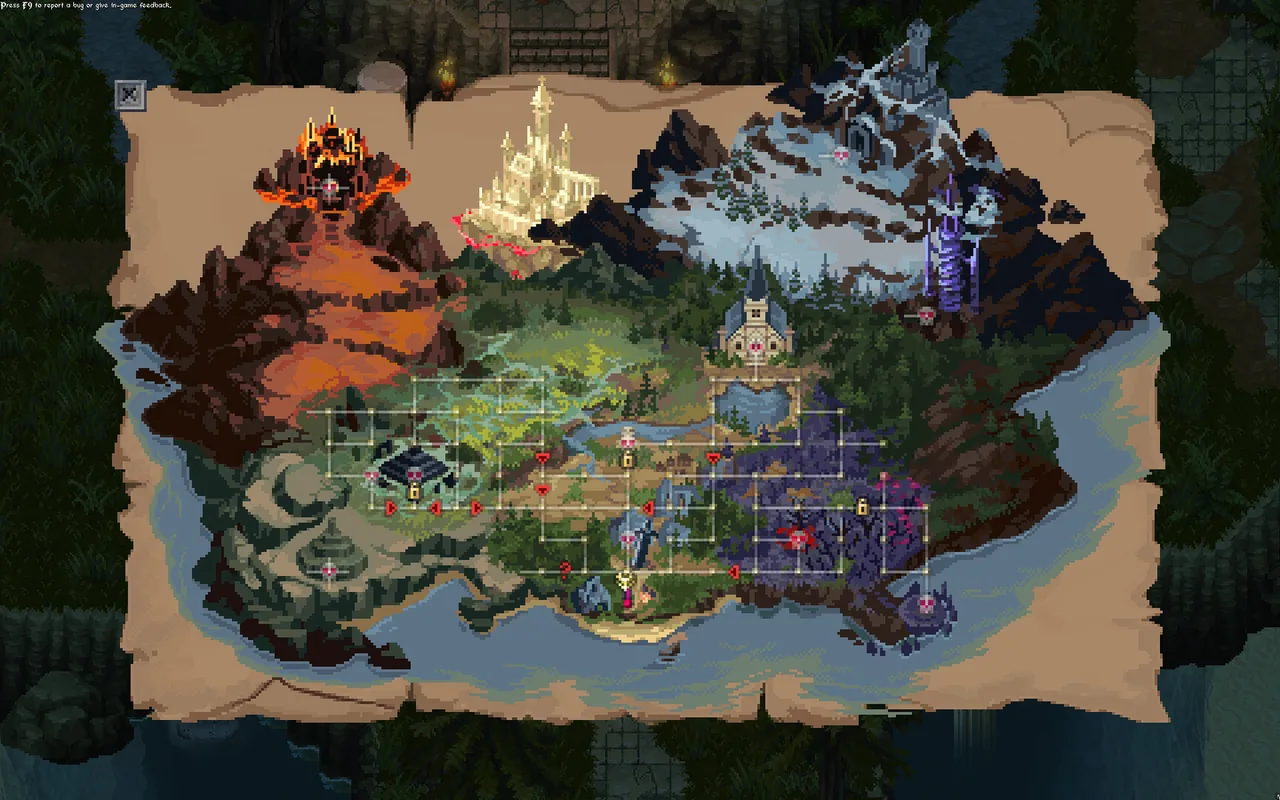
The Unknown Lands, Cursemark's setting, are built deliberately without map markers or waypoint hand-holding. What replaces that structure is the Curse Mark itself: the more of the world you uncover, the stronger it grows, turning exploration into a running bet against your own curiosity rather than a checklist of icons to clear. It's an unusual choice for a roguelite, where most games either gate content behind linear unlocks or throw the whole map open from the start, and it pays off in an unexpected way — several long-time players describe getting more attached to solving the world's riddles and finding its shortcuts than to the combat encounters along the way. That's a genuinely rare thing for an action roguelite to earn from its audience, and it says the exploration design is doing real work rather than just padding time between fights.
Permanent shrines and forges anchor that risk against total loss. Find one, and its blessings persist between runs, letting you target the upgrades your current build actually wants rather than starting from zero every time the Curse Mark catches up with you. It's a smart concession to a structure that could otherwise feel punishing for punishment's sake, and it's the main reason repeated deaths still feel like progress rather than a reset button.
Runes are the actual class system
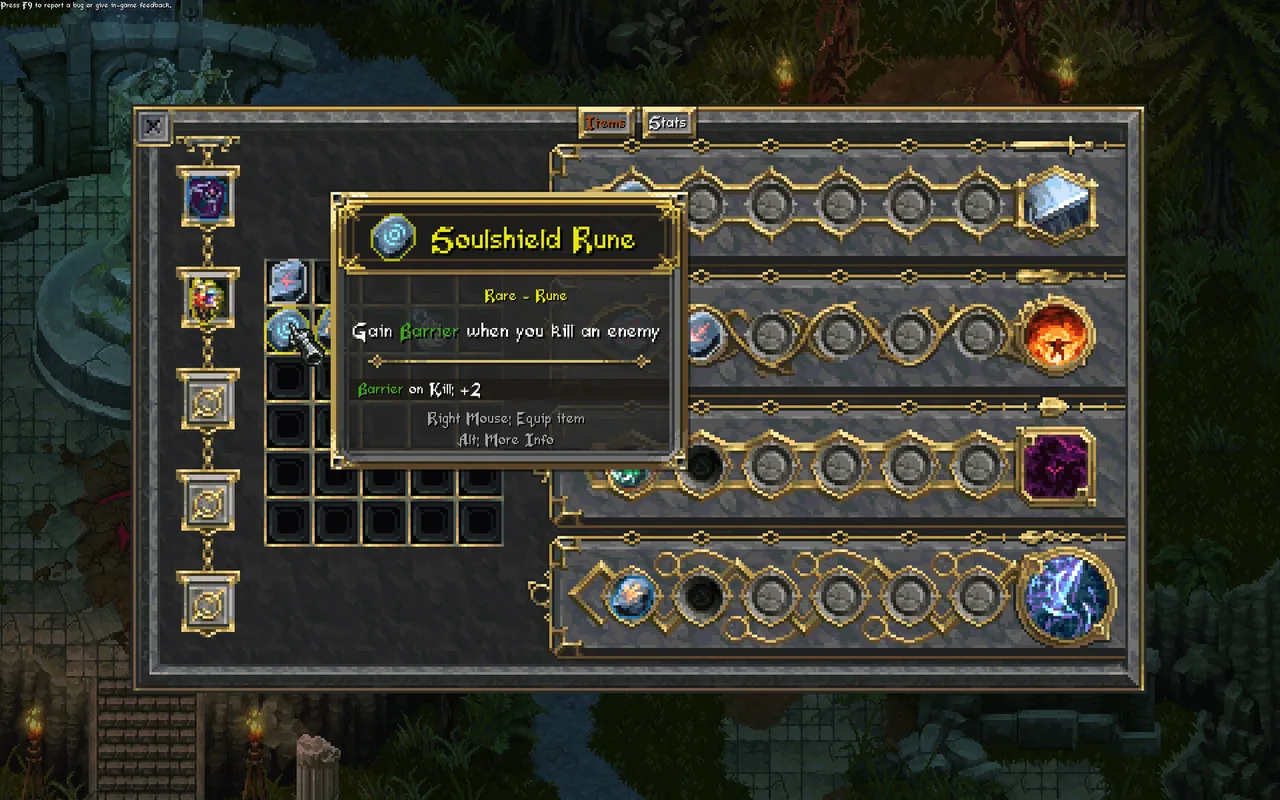
Where Cursemark distinguishes itself most clearly from the crowded action-roguelite field is its rune sockets. Runes don't sit in a separate passive-skill tree — they plug directly into your attacks, spells, wards and ultimate, changing what those abilities actually do rather than just how hard they hit. Add a rune to your sword and it can chain lightning between enemies or burst them into a poison cloud on a killing blow. Slot one into a fireball spell and it multiplies into several, or spikes ice pillars out of the ground on impact. A ward can start healing you every time it absorbs a hit. The permutations are the actual character-building layer, closer in spirit to Path of Exile's gem sockets than to a conventional skill tree, and it's the single feature Cursemark's own players cite most often as the reason they keep starting new runs.
It's genuinely deep enough to reward theorycrafting, and shallow enough in its early-game presentation that new players can start experimenting within their first hour rather than needing a wiki open beside the game. That balance is hard to strike, and Cursemark mostly gets it right — the caveat being that, this early in Early Access, all of that build variety currently comes from one mage-knight-style starting kit. The store page's roadmap promises a wider class roster to come; right now, runes are doing all the work a second or third class would normally share.
Combat: the part that divides the audience
This is also where Cursemark runs into its most consistent criticism. The dash — the game's only evasive tool — carries no invincibility frames and a cooldown long enough that enemies routinely land hits before it's ready again. For a game that draws constant comparisons to Dark Souls, Hades and Elden Ring from its own players, and that leans into that framing in places, a dodge that doesn't actually dodge is a real mismatch between what the game invites you to expect and what it delivers. Some players shrug it off as a deliberate positioning-over-invincibility design choice, closer to an action-RPG hack-and-slash than a true souls-like; others, including some who've put well over a thousand hours in, call it out directly as the game's weakest system and question why it wears the souls-like label at all.
Enemy design amplifies the friction. Attack speed and aggression scale up quickly, elite variants in particular chain attacks with little wind-up, and without a reliable defensive answer, fights can tip from manageable to overwhelming faster than the build-crafting half of the game seems to expect. None of that erases what works about the combat — boss fights in particular ask for real attention to timing and positioning, and the moment-to-moment feel is smooth enough that plenty of players describe it as satisfying rather than clunky. But it's a coin flip depending on what a given player wants from their evasive options, and that split shows up clearly across the current review base.
Presentation and stability
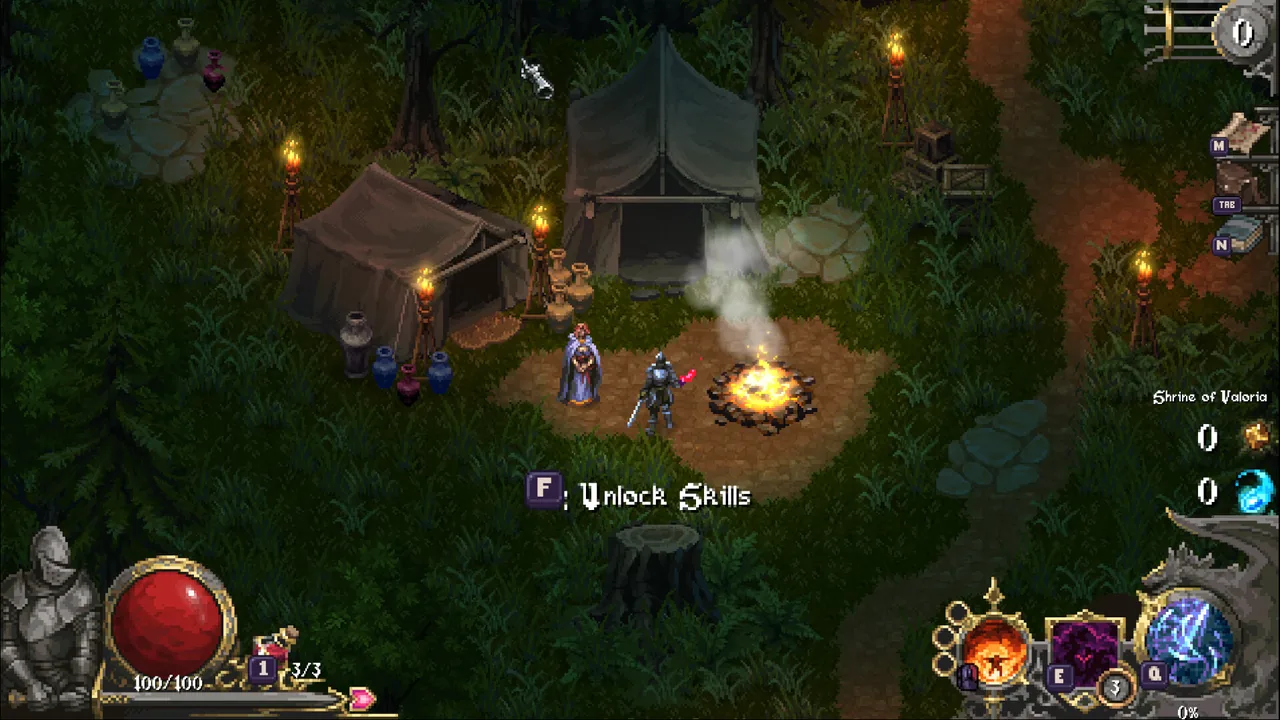
Cursemark's isometric pixel art holds together well under pressure — boss arenas stay legible even when several rune effects are triggering on screen at once, and the Unknown Lands carry enough environmental variety, from haunted forest camps to shrine-lit ruins, to make aimless exploration visually worthwhile on its own. It's a considered art direction rather than a generic dark-fantasy palette swap, and it's one of the few things almost nobody in the review base disputes.
Stability is a rougher story, and specifically a recent one. A meaningful number of players report that performance has gotten worse rather than better over the last few updates — frame drops that weren't there before, and crashes that some describe as new since a specific patch. That's a concerning direction for a two-month-old Early Access release to be trending, even allowing for the reality that active development inevitably introduces regressions alongside fixes. Localisation is a related sore spot: the store page lists twelve supported languages, but several non-English players, particularly in Simplified Chinese and French, report that recent content updates ship with untranslated quests and item text, leaving those languages visibly behind the English version.
Value and where Early Access stands
At roughly NZ$18.79 with no in-app purchases, battle pass or premium currency of any kind, Cursemark is a clean, honest purchase on its own terms — everything in the build system is earned through play, and there's nothing to buy your way past. Whether that price is worth paying right now depends heavily on your Early Access tolerance. There's already a full game's worth of rune combinations and Curse Mark exploration to dig into, and the developers appear active — frequent updates are one of the more consistently praised aspects of the whole review base — but the class roster is thin, the dash controversy is unresolved, and recent patches have traded some stability for new content rather than purely improving on what was there.
Verdict
Cursemark earns its 87% positive standing honestly. The rune-socketing system is one of the more interesting build mechanics an action roguelite has shipped recently, and pairing it with an exploration structure that punishes over-curiosity instead of rewarding checklist-clearing gives the game a genuine identity beyond "another isometric roguelite." What keeps it out of the higher bands is the combat underneath those systems — a dash that doesn't protect you the way its souls-like comparisons suggest it should, enemies aggressive enough to expose that gap repeatedly, and a stability trend that's currently moving the wrong direction.
If you're drawn to deep build experimentation and a world that expects you to figure it out rather than follow markers, Cursemark is worth buying into now, roadmap gaps and all. If a dependable dodge is non-negotiable for you, or you'd rather Early Access settle before you spend on it, this is an easy one to wishlist and revisit once the class roster and the patch cadence both look more finished.
Price and Steam review data checked 1 August 2026.
Players who want their build experimentation to keep paying off in a persistent world rather than resetting on every death might also want to look at Wanderer.
Pros and cons
Pros
- The rune system lets you bolt effects like chain lightning, poison bursts or on-hit healing directly onto your sword, spells, wards and ultimate, producing builds that behave differently from run to run rather than just scaling bigger numbers
- The Curse Mark exploration structure — no map markers, world danger rising as you uncover more of it — rewards genuine curiosity, and multiple long-time players describe getting hooked on puzzling out the map itself as much as fighting through it
- Permanent shrines and forges give Early Access runs real between-attempt progression instead of resetting everything on death
- The isometric pixel art holds up at a boss-encounter scale, with distinct enemy silhouettes and readable ability effects even when several rune procs are firing at once
- A clean one-time Steam purchase with no in-app purchases, battle pass or premium currency attached to any of the build systems
Cons
- The dash has no invincibility frames and a long cooldown, and enemies routinely attack faster than it recovers — a real source of frustration for players who came in expecting the souls-like positioning the game invites through comparisons and its own combat framing
- Recent updates have introduced noticeable frame-rate drops and more frequent crashes for a share of players, a rough trade for a fantasy action game two months past its Early Access launch
- Non-English support is inconsistent with what the store page advertises — Simplified Chinese and French players in particular flag untranslated recent quests and items alongside unusually rich localisation for other languages
- Death sends you back to repeat already-cleared trash encounters on the way to wherever you died, which wears thin once a build gets punished by a single late-fight mistake
- Early Access content is currently built around one mage-knight-style kit rather than the multiple classes the store page's roadmap promises, so build variety currently comes entirely from runes rather than a genuinely different starting kit
Screenshots
-
CursemarkImage: Mad Mushroom via Steam -
CursemarkImage: Mad Mushroom via Steam -
CursemarkImage: Mad Mushroom via Steam -
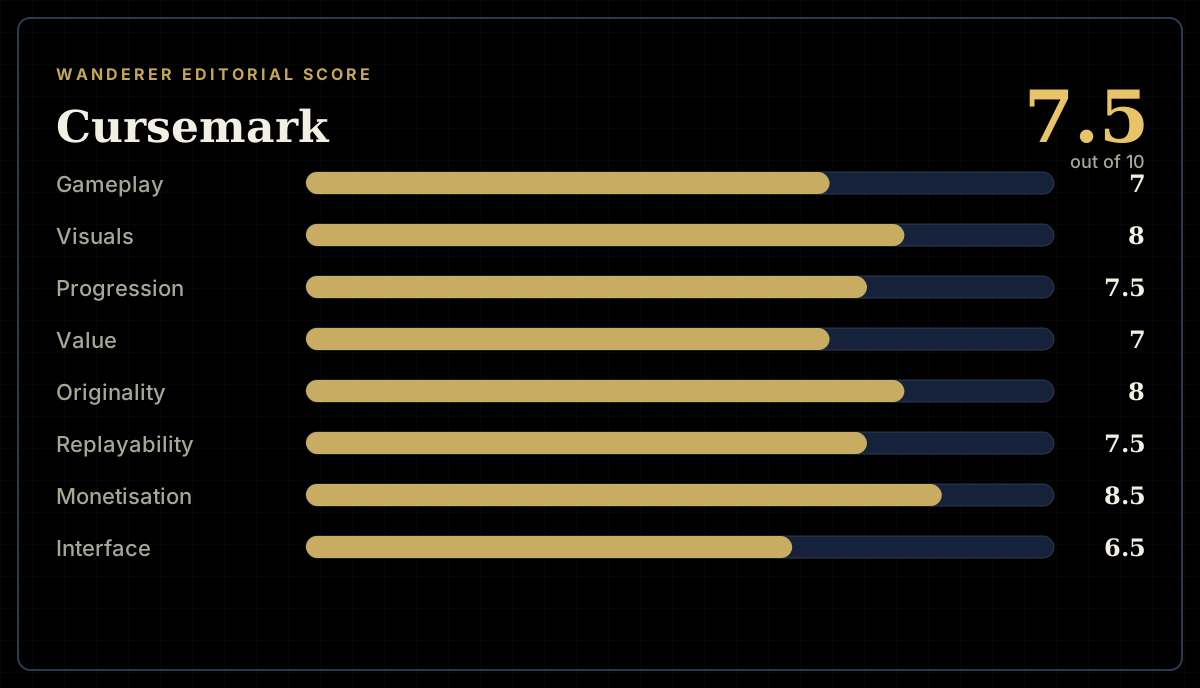
How the review scores each part of the gameWanderer Editorial -
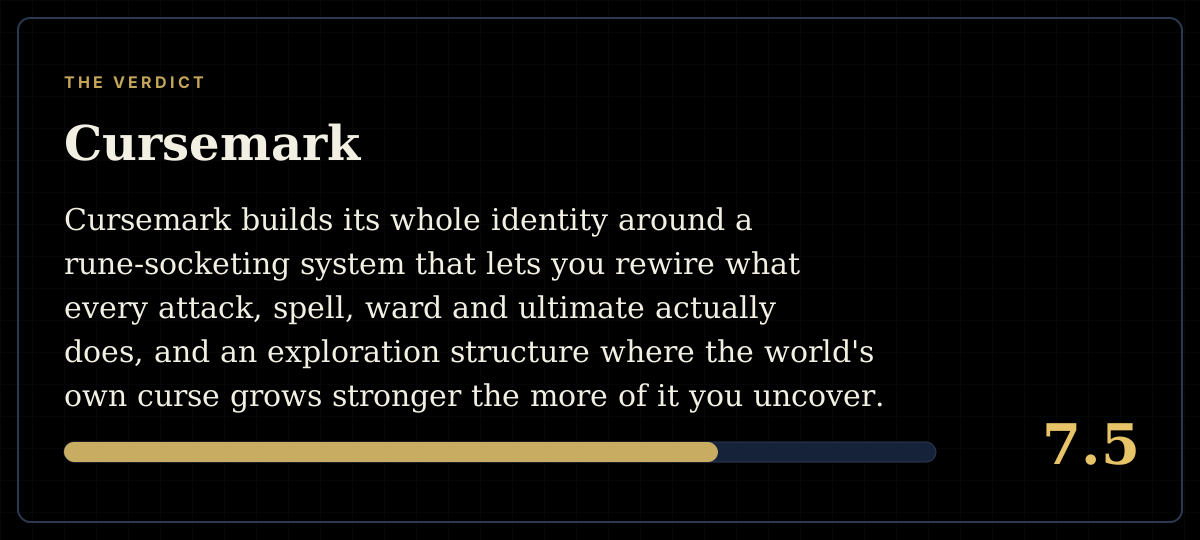
The short versionWanderer Editorial